Specs are compiled from manufacturer listings and verified buyer reviews and can change over time — please confirm the key details on the product page before buying.
Popping a bezel off a watch is the moment most home repair jobs go wrong, and the tool in your hand is the reason. A bezel removal tool is a small clamp with blades or jaws that slip under the bezel ring so you can lift it evenly instead of gouging the case with a knife.
This guide is built by comparing the manufacturers’ published specifications and the patterns across verified customer reviews, so you get each pick’s real strengths and trade-offs instead of marketing spin.
Check your case-back diameter against each tool’s stated range before you commit — this breakdown of the best watch bezel removal tool points you at the one that matches your case.
Top Picks
How To Choose The Best Watch Bezel Removal Tool
The first decision is not brand or budget — it is whether the tool is built to touch your watch at all. Bezel clamps grip the ring on the outside of the case, so the blade spread has to match the case diameter you own. Get that wrong and no amount of careful turning will save the job.
Match the stated diameter range to your case
Most of these clamps list a working range in millimetres, and that range is the whole ballgame. A tool rated for 38-40mm case backs simply will not seat on a 44mm diver, and forcing it invites a slipped blade. Measure your case back before you buy, then check the number against the listing.
Count the blades before you count the savings
A four-blade clamp puts pressure on four spots around the ring instead of two. That spreads the load and reduces the chance of a cocked bezel or a bent lip. Two-point pry tools are cheaper and workable on light jobs, but they demand steadier hands.
Look at the knob and the blade material
A knurled knob — a grip ring with fine ridges cut into it — lets you tighten in small, controlled turns. That fine control is what keeps the blades from biting unevenly and dragging across the ring. Stainless steel screws in an aluminium alloy body keep the clamp rigid without making it a brick to hold.
Side-by-Side Comparison
| Model | Best For | Case-Back Range | Blade Setup | Weight | Amazon |
|---|---|---|---|---|---|
| Watch Bezel Opener Removal Professional Workbench (Red)★ Best Overall | Simple single-ring lifts | 38-40mm | Single opener | 1.17 lb | Amazon |
| Brrnoo Watch Bezel Opener (Red) | Adjustable rotation knob | 38-40mm | Single opener | 1.3 lb | Amazon |
| Walfront Watch Bezel Remover Tool | Even four-point grip | 25-40mm | 4 round blades | 3.52 oz | Amazon |
| Watch Bezel Remover Alloy Ring Opener | Multiple ring sizes | Multiple sizes | Split rings | 1.01 lb | Amazon |
Detailed Reviews
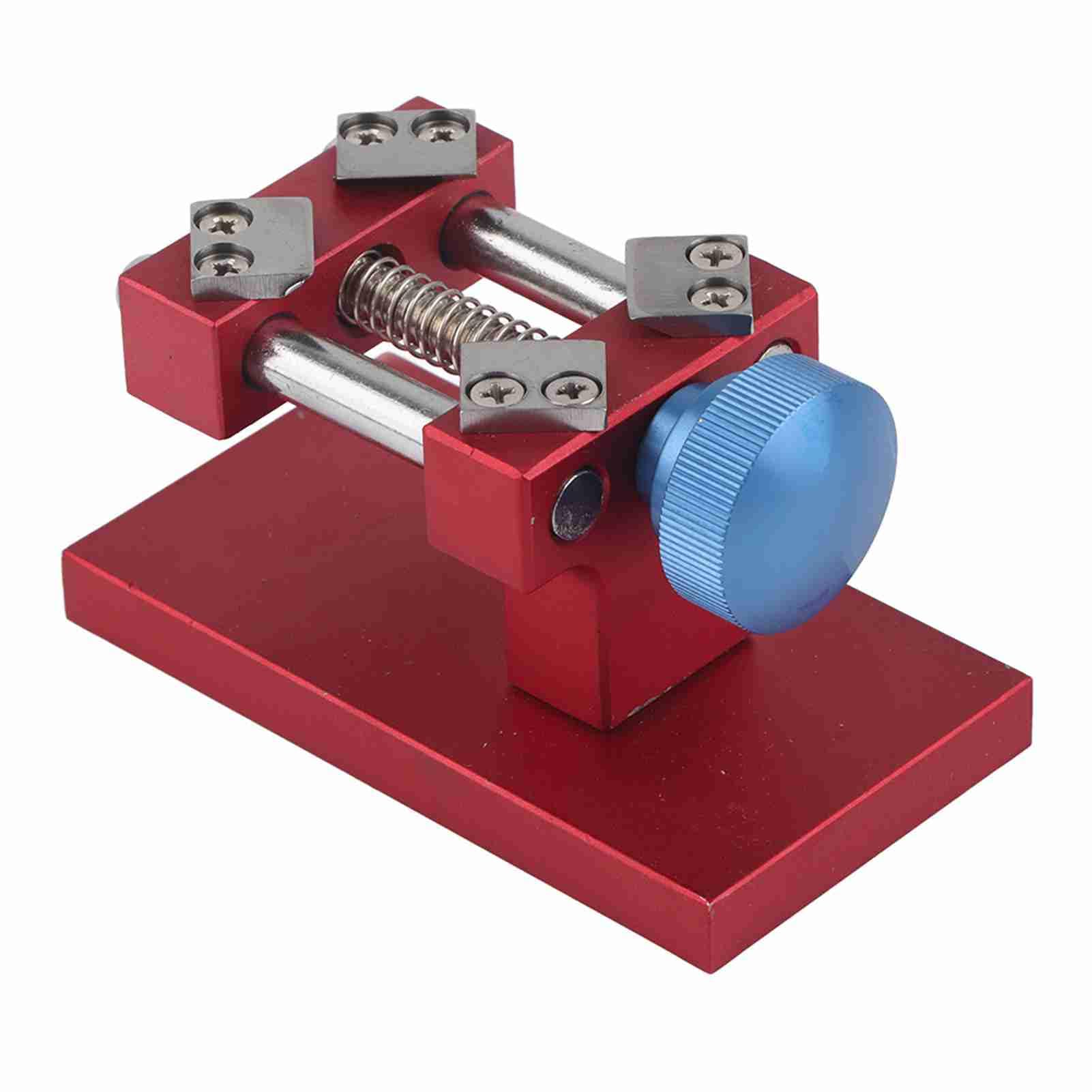
1. Watch Bezel Opener Removal Red
The workbench tool that handles the little jobs and keeps its bench footprint tight.
The first thing you need to know is the scope. This clamp is built around case backs of 38-40mm, which covers a wide slice of everyday dress and field watches. It is made from stainless steel and alloy, and the manufacturer describes it as a practical hand tool for watchmakers, jewellers, or amateurs. If your watch falls inside that range and you want one simple opener on the bench, this is the sensible start.
What the buyers signal loudest is that the fit has to be right or the tool does nothing useful. The reason is mechanical: a clamp sized for 38-40mm has no leverage on a case that sits outside that window. Check the diameter of your watch back before you order, and treat the range as a gate rather than a suggestion. Where the size lines up, the simple design and easy operation do the work you paid for.
The honest catch is the listing’s own note — the maker says the new and old type of this product get sent at random, and asks that you be fine with either. That is a real unknown on a tool where the blade contact point matters. Pair it with the correct case size and a slow hand, and this is a clean, uncomplicated bench opener.
What Lines Up
- Stainless steel and alloy build holds up to repeated bench use
- Simple single-tool design with nothing to assemble
- Covered for 38-40mm case backs — a common everyday watch size
What To Weigh
- Buyer consensus splits hard on whether it fits their watch at all
- New and old type ship at random per the manufacturer’s note
- No working range beyond 38-40mm case backs
Reach for this if: you own a 38-40mm watch and want one straightforward bench opener for occasional bezel and case-back work.
Look elsewhere if: your case is outside that diameter window — a wider-range clamp like the Walfront covers 25-40mm instead.
2. Brrnoo Watch Bezel Opener Red
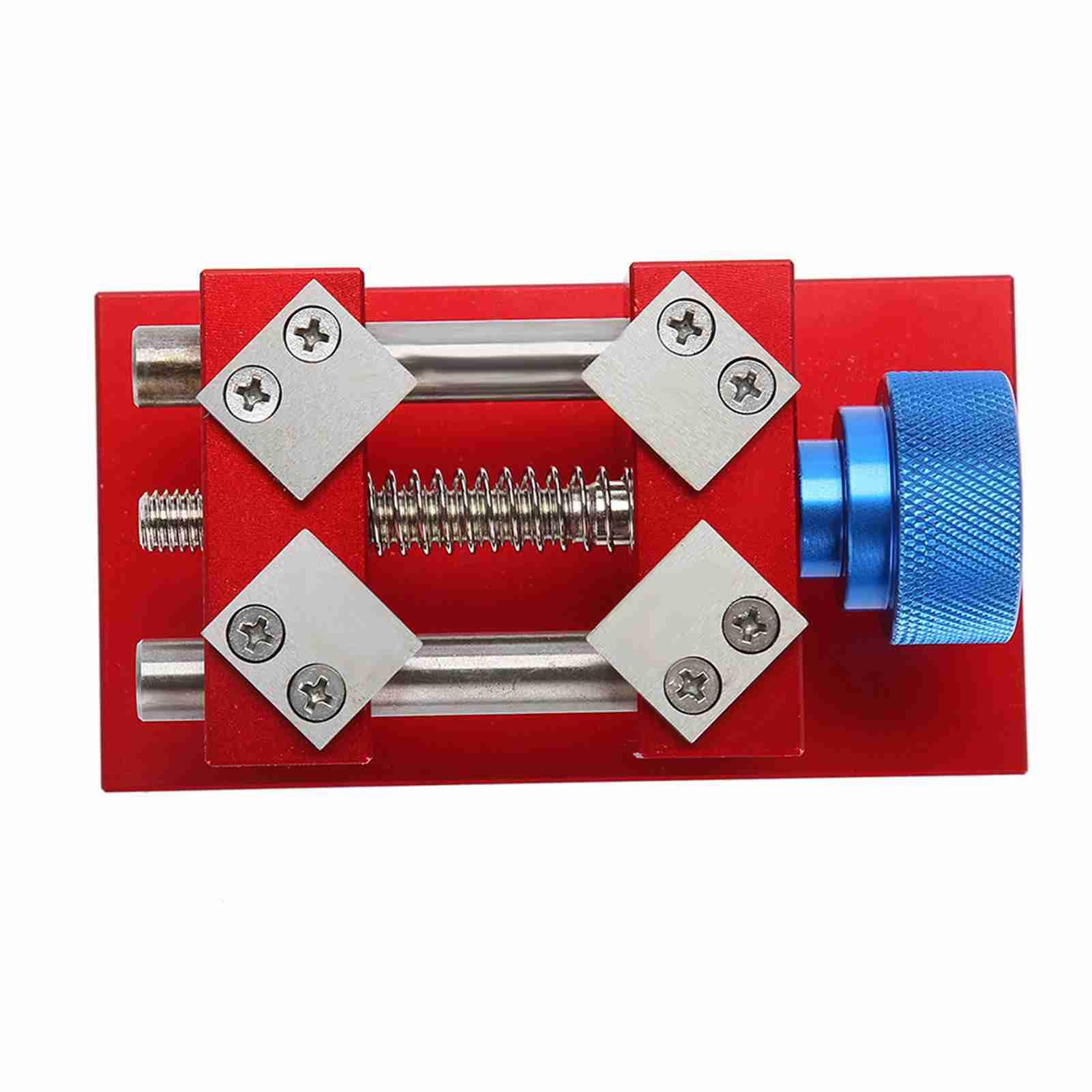
A rotation button for fine adjustment, aimed at the same 38-40mm watch backs.
Brrnoo’s take adds a rotation button, which lets you dial the jaws in by turning rather than forcing them. On paper that is the right idea for bezel work, where a fraction of a turn is the difference between a lift and a mark. The handle is shaped for a comfortable grip, and the stainless steel body is meant to last through repeated maintenance and battery swaps.
Compare the numbers to the workbench tool above and the difference is bulk. This one weighs 1.3 pounds against 1.01 pounds for the Watch Bezel Remover Alloy, and it is the heavier of the two to hold steady over a case. The tool also runs larger in the box — 5.51 x 3.62 x 3.54 inches versus 5.16 x 3.78 x 3.03 inches for the workbench pick. That extra heft steadies the clamp on a bench but makes it a poor fit for a travel bag.
What keeps it from the top of this list is consistency. The accounts of how it performs land all over the map — some report a perfect alignment, others say the blades never line up, and bezel damage comes up often enough to note. The fix is not complicated: test the blade contact on a scrap case or a cheap watch before you put it near something you care about, and tighten in small increments.
Where it earns its place: the rotation button gives you an adjustable grip that the fixed single-opener tools can’t match, and the ergonomic handle stays comfortable through a long battery-replacement session.
The honest trade-off: blade alignment is a coin flip across buyers, so line the jaws up by eye on a test piece before you commit the tool to a real bezel.
Worth a look when: you want a hand-adjustable opener and don’t mind verifying the blade alignment yourself first.
Better to skip when: you need a grab-and-go tool that seats correctly with zero fuss out of the wrapper.
3. Walfront Watch Bezel Remover 4 Round Blades

Four round blades on a 25-40mm spread — the widest coverage on this list.
Here is the pick that solves the biggest problem in this category: fit. Walfront rates the clamp for a 25-40mm diameter range, so it works on small vintage cases that the 38-40mm tools above cannot touch. The four round blades press on four points around the ring, and a knurled knob gives you the fine turns that keep the pressure even. Aluminium alloy body, stainless steel screws, and a build the maker describes as reliable in use.
The portability is the other standout. At 3.52 ounces it is the lightest tool reviewed here — the Brrnoo sits at 1.3 pounds for comparison — so it drops into a repair pouch without dragging it down. The package footprint matches: 6.34 x 2.87 x 2.24 inches, small enough to live in a drawer or a workshop case.
What wins people over is the way it actually pops bezels. Buyers praise its working ability most, and the accounts back it up — three bezels lifted without a fight in one case, and good value for the money in the consensus. The recurring downside is surface contact: some users report scratches where the blades meet the ring. That is a technique question as much as a tool question — seat all four blades flat before you apply torque, and the odds improve sharply.
Why It Leads The Pack
- 25-40mm range covers far more watch sizes than the 38-40mm tools
- Four round blades spread pressure around the ring
- Knurled knob gives accurate, gradual control
- 3.52 oz — lightest tool in this article
The Trade-Off To Know
- Surface marks on the bezel come up in buyer accounts
- Alloy body takes more care than a solid steel block
- Long-term durability splits opinion rather than settling it
My call for most benches: the four-blade, 25-40mm design gives you the widest fit and the finest control, which is exactly what bezel work needs.
Pause if: you want to bang a bezel off in a hurry — this tool rewards a patient, flatly seated blade over speed.
4. Watch Bezel Remover Alloy

A multi-ring kit in its own box, for the bench that sees more than one watch size.
Instead of one fixed clamp, this set gives you different ring sizes and types that adjust across a range of watches. The maker pitches it for both watch maintenance personnel and amateurs, and the plastic split rings are made of high-quality plastic rather than metal. That choice matters for one reason: plastic against a bezel is gentler than steel, and less likely to leave a mark on the ring’s finish.
The storage angle is real, not decoration. Everything packs into a plastic box, so the pieces stay together and portable instead of scattering across a drawer. Set that against its footprint — the box measures 11.61 x 8.31 x 2.13 inches, which is far larger than the Walfront’s 6.34 x 2.87 x 2.24 inches case. At 1.01 pounds the set itself is light for what you get, but the box is a shelf commitment rather than a pouch drop.
The tool’s job description is broader than pure bezel work. The maker notes it can remove the watch scale cover to get at the glass mirror and eases movement swaps, and the adjusting rings are meant to suit different watch sizes. If you service a mixed collection and want one kit that adapts, that flexibility earns its place. If you only ever pop one watch, a single-range clamp like the Walfront does the job with less to manage.
Where the kit shines: the plastic split rings and adjustable multiple sizes give you gentler contact and wider coverage, and the storage box keeps the whole set neat and portable.
The honest catch: the larger footprint makes it a bench fixture rather than a pocket tool, and the ring-based approach asks more patience per size than a single clamp does.
Made for the multi-watch owner: if you keep a handful of cases in different sizes and want one adaptable kit with its own storage.
Overkill if: you pop a single bezel now and then — a 25-40mm four-blade clamp gets there with less to manage.
Know the Specs
Case-Back Diameter Range
The diameter range is the millimetre window of watch case backs a clamp will seat on. A 38-40mm tool works on cases in that window only. A 25-40mm tool covers more ground, including small vintage cases. Measure your watch back first — a tool outside your range cannot grip the ring no matter how carefully you turn the knob.
Blade Count and Contact
Four round blades push on four points around the bezel ring, while a single opener presses on fewer spots. More contact points spread the load and lower the risk of a cocked bezel or a bent lip. Seat all blades flat before you tighten — an uneven start is where scratches come from.
Common Questions
Will a 38-40mm bezel tool work on my 42mm watch?
Is a four-blade bezel remover better than a single opener?
What actually causes scratches during bezel removal?
Do I need a knurled knob on a bezel removal tool?
Can a watch bezel removal tool open a case back too?
Is an aluminium alloy body strong enough for watch repair work?
How do I pick between the Walfront and the alloy ring kit?
Does the price tier tell me anything about scratch risk?
Can I use a bezel removal tool on a dive watch with a rotating bezel?
The Bottom Line
For most people working on a watch at home, the watch bezel removal tool winner is the Walfront Watch Bezel Remover Tool, because four round blades on a 25-40mm range cover more watch sizes and give you finer control than the fixed single openers. If you want an adjustable rotation knob on a stainless steel body, the Brrnoo Watch Bezel Opener is the one to reach for. And for a multi-size bench kit with plastic split rings and its own storage box, the Watch Bezel Remover Alloy Ring Opener set is the adaptable choice. Buy the tool whose stated diameter range covers your case back first — blade count and knob style only matter after that.
How we choose
We do not accept paid placement. Every pick is matched to a real buyer and a real use-case; we do not hands-on test units.
Sources
Specifications: manufacturer listings and product documentation. Review insights: verified customer reviews. Pricing: not shown on this page (it changes often); check the current price via the retailer link.
As an Amazon Associate, Tactical Gear Guy earns from qualifying purchases. This does not affect which products we feature.