Specs are compiled from manufacturer listings and verified buyer reviews and can change over time — please confirm the key details on the product page before buying.
If you want one watch that tracks your runs, reads your sleep and still has battery left on Friday, the Garmin Forerunner 570 is the pick most people should start with. It is the highest-scoring watch in this group and the strongest all-round athlete tool. The rest of this list splits into three clear jobs: featherweight race watches for runners, rugged outdoor watches that shrug off knocks, and big-screen smartwatches for people who want texts and calls on their wrist.
This guide is built by comparing the manufacturers’ published specifications and the patterns across verified customer reviews, so you get each pick’s real strengths and trade-offs instead of marketing spin.
Charging habits, GPS accuracy and phone pairing decide whether you will actually wear a tracker every day. Here is a plain-English breakdown of the strongest options for a watch and fitness tracker.
Top Picks

How To Choose The Best Watch and Fitness Tracker
The first question is not which brand you like. It is how often you are willing to plug the thing in. A tracker that dies mid-week gets left in a drawer, and no sensor accuracy fixes that. Decide your charging tolerance before anything else, then match the watch to your phone and your workouts.
Battery life in days, not hours
Most people underestimate how much a nightly bedtime routine depends on the watch staying alive. Watches here range from multi-week battery life on a big-screen model to roughly a day of normal use on the premium Apple pick. If you want sleep scores, pick a watch you only charge once a week or so — that means the 20-day Amazfit, the 16-day Garmin Instinct E, or the 11-day Forerunner 570.
GPS built in versus GPS from your phone
Built-in GPS means the watch tracks your route by itself, so you can leave the phone at home on a run. Every serious running option here has some form of GPS, and the Amazon and Garmin watches add route tools like back-to-start navigation. A cheaper activity band relies on your phone for that data, which is fine for gym work but annoying on a long run.
Match the watch to your phone first
This is the compatibility trap that catches first-time buyers: the watch and the phone must match. The Apple Watch Series 12 GPS pairs with an iPhone, while the Samsung Galaxy Watch models are built for Android. Garmin, Amazfit, Coros and Polar are the cross-platform names here that work with both iOS and Android. Check that line before you fall for a screen you like.
Water resistance for real life
Look for a stated rating, not a vague claim. The Garmin Instinct E carries a 10 ATM water rating and is built to MIL-STD-810 for thermal and shock resistance, while the Polar Street X lists 50 m water resistance with a shock-resistant build. Those numbers tell you the watch survives rain, sweat and impact — they do not mean you should press buttons underwater.
Side-by-Side Comparison
| Model | Best For | Battery Life | Phone Compatibility | Display | Amazon |
|---|---|---|---|---|---|
| Garmin Forerunner 570★ Best Overall | Serious training and recovery | Up to 11 days smartwatch mode | Pairs to smartphone | AMOLED touchscreen | Amazon |
| Amazfit Bip MaxBiggest Screen | Big screen and long battery | Up to 20 days typical use | iOS and Android | 2.07-inch AMOLED | Amazon |
| Google Fitbit Charge 6Slim Tracker | Slim everyday activity tracking | Up to 7 days | Google account, broad phone support | Standard tracker screen | Amazon |
| Garmin Instinct E | Rugged outdoor use | Up to 16 days | Pairs to smartphone | Button controls | Amazon |
| Polar Street X | Hybrid training and city runs | Up to 10 days | Bluetooth to smartphone or PC | AMOLED | Amazon |
| COROS PACE 4 | Race-weight running watch | Up to 19 days | Bluetooth to smartphone | AMOLED touchscreen | Amazon |
| Samsung Galaxy Watch Ultra | Titanium build with LTE | 590 mAh battery | Android | Smartwatch display | Amazon |
| Apple Watch Series 12 GPS | iPhone owners wanting full health insight | Up to 24 hours normal use | iPhone | 46 mm touchscreen | Amazon |
| Samsung Galaxy Watch 8 Classic | Style plus health coaching | Up to 30 hours | Android | Brighter screen, rotating bezel | Amazon |
Detailed Reviews
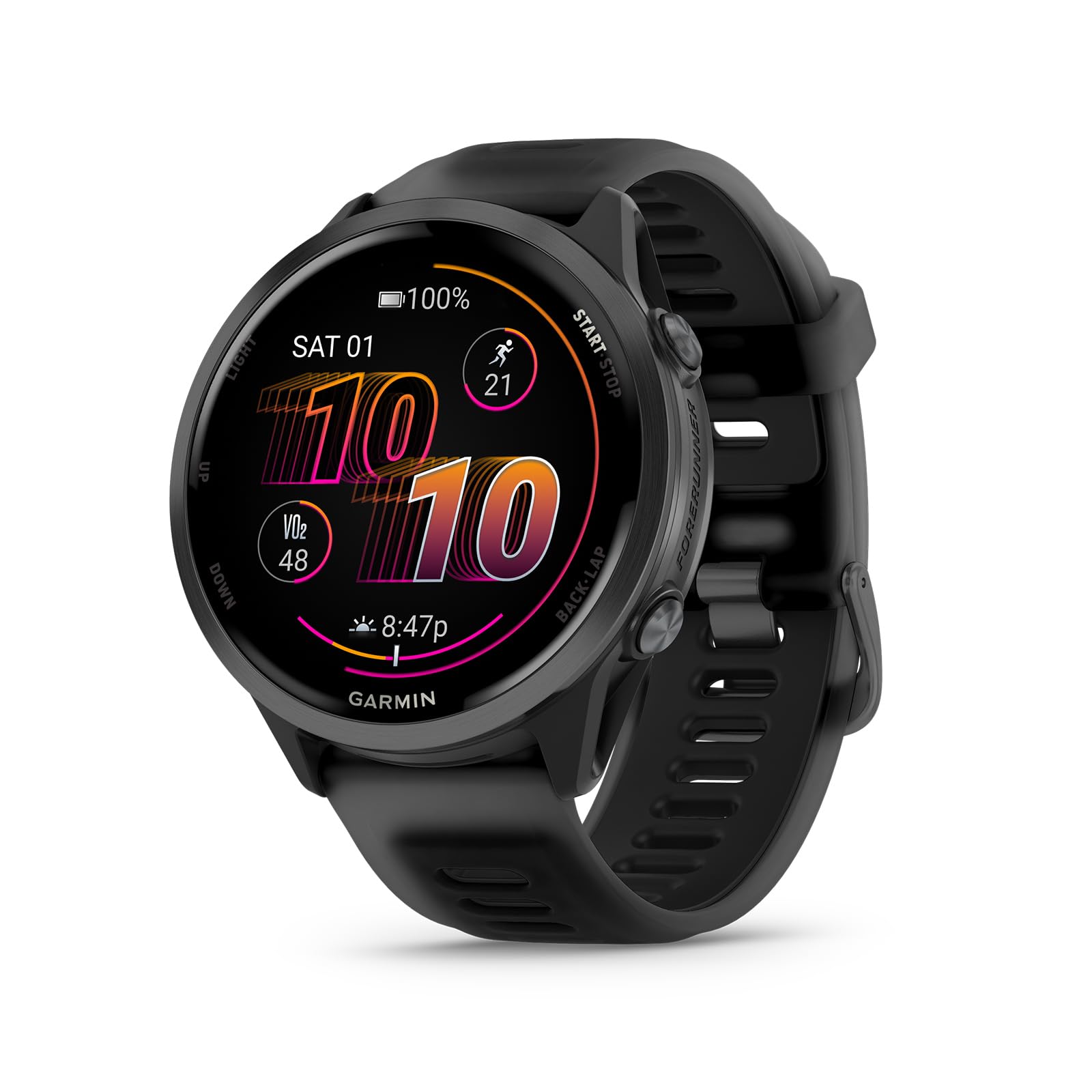
1. Garmin Forerunner 570, 47mm, Aluminum, Black
Our pick — 4.5+★ from 600+ verified ratings; the strongest balance of quality and price.
The training watch that tells you when to push and when to back off
You get up to 11 days of battery life in smartwatch mode and up to 18 hours in GPS mode — that means a week of runs plus overnight sleep tracking without hunting for the charging cable. During a long race day the GPS mode keeps the watch alive for the whole event. The 47 mm aluminum case with a silicone band in 22 millimeters width sits comfortably for most wrists, and button controls work with sweaty fingers when touchscreens do not.
The screen is Garmin’s brightest AMOLED touchscreen — an AMOLED panel lights each pixel individually, so it stays readable in direct sun and still dims properly at night. The training side is where this pick earns its spot. Training readiness combines sleep quality, recovery, training load and HRV status (heart-rate variability, a measure of strain between beats) to grade whether you are ready to go hard. Personalized daily suggested workouts adapt to your performance, and 30+ activity profiles cover running, triathlon, track running, cycling and open-water swimming.
What wins people over is the overall build-and-feel quality, and owners describe the GPS and sleep accuracy as reliable in everyday use. The battery does not disappoint either — buyers report charging only every 9 or 10 days. Calls work from the wrist through the built-in microphone and speaker when paired to your phone. The honest catch is that owners split on value for money, and the reliability record is not flawless. The debate is about price-to-feature, not function. Certified shortlist data notes 4.5+ stars across 600+ ratings, so most owners are happy, but if you only want a step counter this is more watch than you need.
What sets the pace
- Up to 11 days smartwatch mode and 18 hours GPS mode
- Training readiness and daily suggested workouts built in
- Built-in mic and speaker for wrist calls
- 30+ activity profiles including triathlon and track run
- Bright AMOLED touchscreen plus physical buttons
Where it asks more of you
- Overkill if you only want steps and sleep
- Value for money splits opinion among owners
- 47 mm case is large on slim wrists
Reach for this if: you train for events and want recovery guidance, GPS accuracy and wrist calls in one watch.
Think twice if: you only count steps — a simpler band covers that for far less complexity.
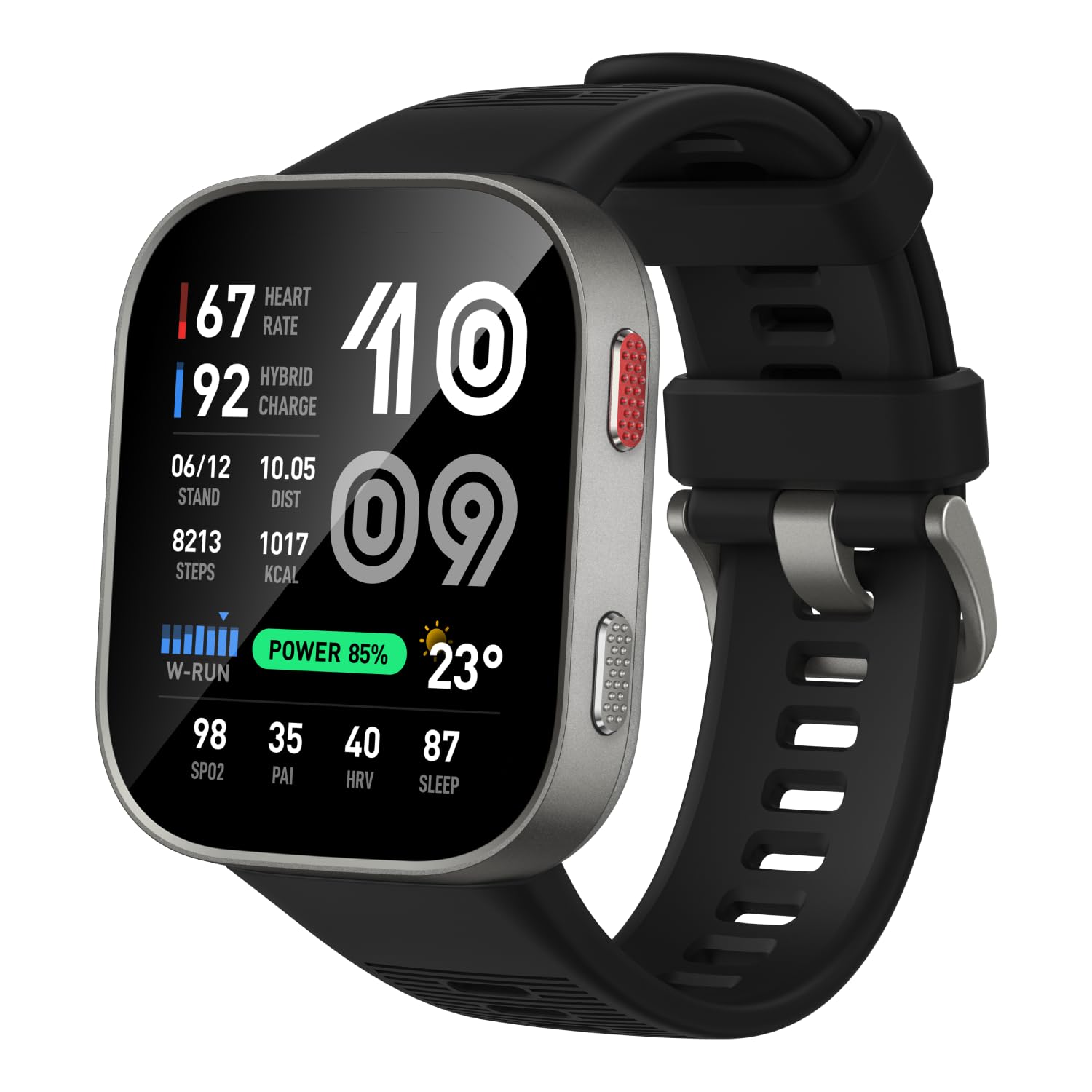
2. Amazfit Bip Max Smart Watch
A 2.07-inch AMOLED screen with a battery that laughs at your charger
Twenty days of typical use is the headline here, and it is the widest battery gap in this article. The Amazfit Bip Max lists up to 20 days where the Google Fitbit Charge 6 lists up to 7 days. Owners put it simply: they charge roughly once a week in real life, even with heavy use.
The screen is a 2.07-inch AMOLED with an always-on display option, which matters because it is the largest panel on this list. Everything from a GPS map to a workout summary is easy to glance at mid-stride. You get 4GB of onboard storage for offline maps, GPS backed by 5 satellite systems and route guidance pulled from the Zepp App with turn-by-turn directions. That means you can leave the phone at home and still find your way back.
The fitness side runs through the subscription-free Zepp App, with 150+ sport modes, adaptive Zepp Coach routines and a daily BioCharge recovery score based on sleep, workouts and stress. The aluminum alloy body and two-button layout keep it light on the wrist. The thing everyone raves about is the build quality, followed by the battery and that big screen; owners call the display clear and easy to read. If there is a catch, the hybrid training and recovery system lives inside the app, so the watch is only as smart as your willingness to check it.
The battery math: 20 days versus 7 days on the Fitbit Charge 6 is the single biggest reason to pick this — you can wear it to bed for sleep scores all week and still have charge left.
One trade-off worth naming: the biggest screen on this list is also the most surface to protect, so a screen protector is a sensible first accessory.
Best fit: anyone who wants one watch for daily wear and workouts without a nightly charging habit.
Look elsewhere if: you need the deep training ecosystem of a dedicated running watch — the Zepp App is broad, not specialist.
3. Google Fitbit Charge 6 – Fitness Tracker – Obsidian/Black
The slim band that reads your workouts and pays for your coffee
This is the pick for someone who wants a tracker band, not a smartwatch. The Charge 6 lists up to 7 days of battery life and a full charge in 2 hours — a short enough top-up that a Sunday routine keeps it running. It tracks calories, Active Zone Minutes, Daily Readiness and sleep, with 40+ exercise modes and automatic exercise detection. Built-in GPS means your run route logs without the phone.
Google features are the differentiator. You get turn-by-turn directions from Google Maps on the tracker during runs and rides, and tap-to-pay with Google Wallet. Linking the band to compatible exercise machines shows your heart rate in real time on the treadmill or elliptical. A stress management score and a nightly Sleep Score round out the picture.
Here is the fair warning. This is the most-discussed product on the list, and much of that talk is mixed on reliability — some units run for years while others stop working, and durability is the recurring concern. Charging is quick and the screen is easy to use. The quality of the core tracking earns strong praise. The honest framing is that this is a popular band with a real durability question mark, so a screen protector and careful handling help it last.
The Google edge: Wallet payments and Maps directions on a slim band are things most trackers here cannot do.
Pairing reality: the Charge 6 leans on your Google account, so the experience is smoothest if you already live inside Google’s apps.
Worth grabbing if: you want a slim band with Google Maps, Wallet and stress scoring on your wrist.
Go another way if: long-term durability is your top priority — the Garmin and Amazfit picks carry stronger reliability records.
4. Garmin Instinct® E, Rugged GPS Smartwatch, 45mm, Charcoal

Built to shrug off rocks, rain and week-long trips without a charge
Start with the numbers that matter for outdoor wear. The Instinct E carries a 10 ATM water rating — 10 atmospheres of pressure, which is the dive-watch tier — and is engineered to MIL-STD-810 for thermal and shock resistance. Those specs mean it handles rain, mud and a hard knock against a rock. Up to 16 days of battery life means a full hiking week with GPS routes logged and charge to spare.
The 45 mm fiber-reinforced polymer case keeps the weight down without going flimsy, and navigation runs on a 3-axis compass, a barometric altimeter and multi-GNSS support (positioning from several satellite systems at once, so your track holds up in valleys and tree cover). Health monitoring covers wrist-based heart rate, advanced sleep monitoring and Pulse Ox. Smart notifications and the Connect IQ Store let you add apps and watch faces when paired to your phone.
The quality of the watch earns the most praise, followed by functionality and battery life. Owners highlight that it stores step and heart rate data locally, and that its pacing system guides runs well. The one honest gripe is that some find the interface takes getting used to. That is a menu-learning curve, not a hardware fault — the build itself holds up.
Field-ready spec set: the compass, altimeter and multi-GNSS pairing make this the most trail-capable watch in this group outside the premium tier.
The first-week cost: expect a couple of sessions with the menu before it feels quick — that is the trade-off for an interface this configurable.
Made for: hikers, trail runners and anyone who treats a watch like a tool and knocks it around.
Skip the hassle if: you want a phone-like touchscreen experience — this one runs on buttons by design.
5. Polar Street X – GPS Running Sports Watch

The city runner that also covers the gym floor and the rainy commute
Built-in GPS handles distance, pace and performance tracking, and route guidance with back-to-start navigation means you can wander a new city and still find the way home. Up to 10 days of battery life and 43 hours of GPS tracking cover a full active week without a recharge.
The build leans toward versatility. A shock-resistant, 50 m water-resistant body takes gym sessions and rain, and it weighs 48 g for all-day wear. The AMOLED display stays visible outdoors, and button input on the interface keeps it usable with sweaty hands. There are 170+ sport profiles covering running, strength, HIIT and cycling, which is why this one fits a hybrid training schedule rather than a single sport.
Wrist-based heart rate tracked without a chest strap is a real convenience for managing effort across mixed workouts, and memory storage of 32 MB keeps your data on board for syncing later. The catch to know: this is a specialist hybrid watch, not a deep smartwatch. There is no map, and it is aimed at training rather than the notifications and app sprawl of the Samsung and Apple picks.
The spec that earns its place: 43 hours of GPS tracking is a long leash for a watch this light — enough for back-to-back long days on your feet.
Where it stays honest: at 32 MB of memory you are not storing music or route maps, so it is a training tool first.
Matches well with: runners who lift and do HIIT and want one watch covering all three plus a flashlight on the dark walk home.
Not the one if: you need onboard maps or app-store depth — this leans into training profiles instead.
6. COROS PACE 4 GPS Watch

A 33 g training watch that nearly disappears on race day
At just 33 g with the nylon band, the PACE 4 is one of the lightest GPS watches in this article. The 6000-series aluminum alloy bezel gives it a rigid frame without the heft, which matters when a watch that swings on your wrist over 42 kilometres starts to nag. Up to 19 days of daily battery life and 41 hours of continuous GPS use mean a marathon block never runs out of charge.
The AMOLED touchscreen has a tapered edge and a brighter, more detailed display than its predecessor. Control runs through a tactile digital crown, two easy-to-reach buttons and the touchscreen. There is a customizable Action Button for one-tap media controls, breadcrumb navigation or recording a Voice Pin. Voice recording lets you capture notes during a workout, and Voice Control can set an alarm or create a target workout by voice.
Training and recovery live in the COROS app, which tracks recovery time, sleep stages, HRV and menstrual cycles. The core strengths buyers value are functionality and value for money — quite a few feel it beats bigger-name devices they have owned. If you are an advanced data analyst, the app has fewer third-party integrations than some rivals — the watch is the star, not the ecosystem.
Weight math that matters: the PACE 4 weighs 33 g versus the 48 g Polar Street X, small on paper and noticeable over a long run.
The follow-up question: is 41 hours of GPS enough? For most marathon and triathlon training blocks, yes — charging becomes a weekend habit at most.
Great match for: race-focused runners who want a light watch and long GPS endurance.
More than you need if: you mostly walk — the COROS app depth is wasted on step tracking.
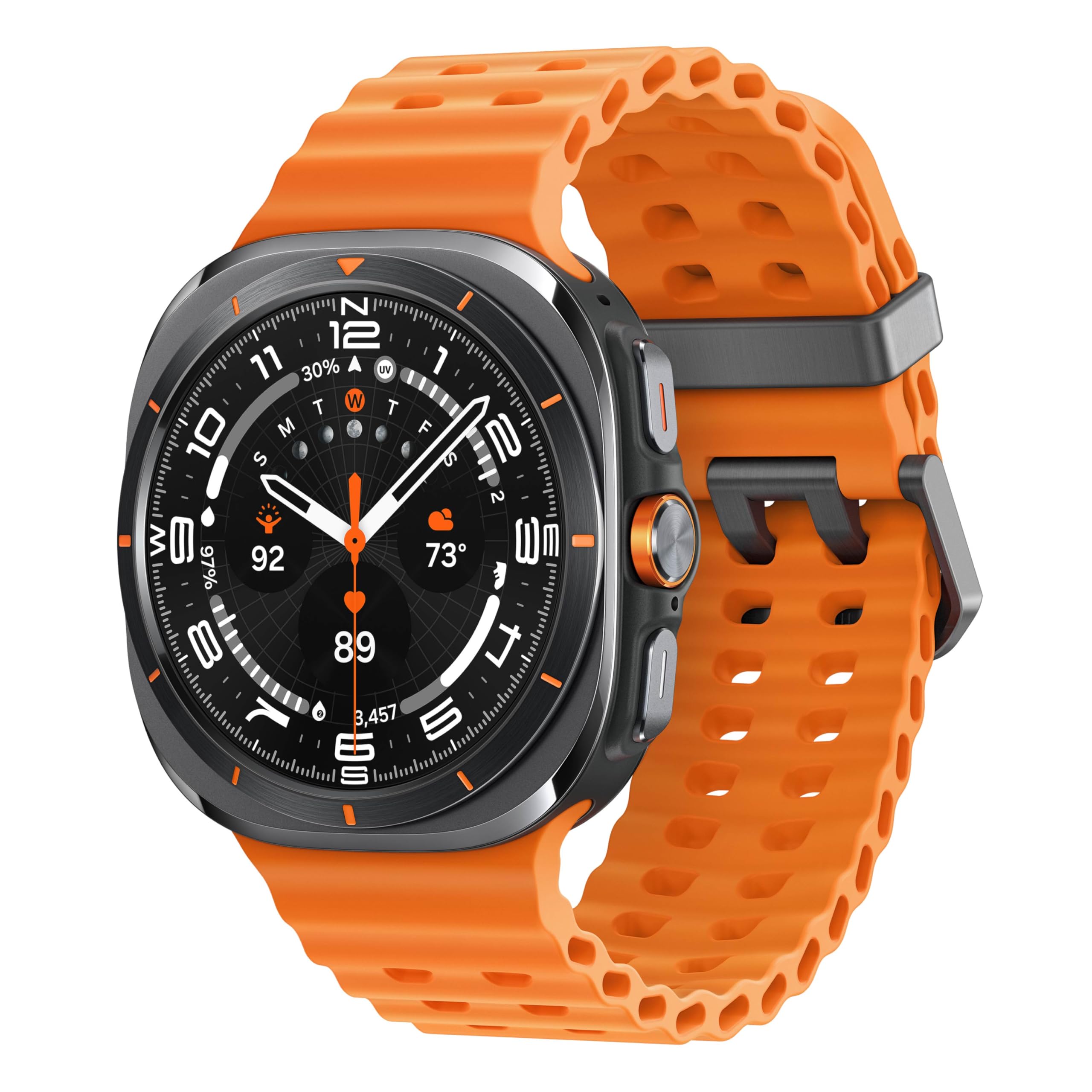
7. Samsung Galaxy Watch Ultra 47mm LTE Smartwatch
Titanium on the outside, cellular independence on the inside
The titanium case is the first thing you notice, and it is built to take a beating. A 50 m water resistance rating plus MIL-STD-810H compliance covers pool and gym. The 47 mm case is the largest in this list, but the titanium keeps the visual weight lower than the size suggests. The 590 mAh battery is the largest capacity in this article, so it carries heavy training and LTE use through a day.
Cellular LTE is what sets this watch apart. It talks to the network without your phone nearby, so a run leaves the handset behind and calls still arrive. Health tracking covers advanced sleep coaching, a running coach, an Energy Score, heart rate and ECG, with GPS navigation built in. The orange band and titanium gray body keep the look clean.
Owners praise the build quality first — the premium titanium case without being flashy is the recurring theme — then the workout mode variety and smooth phone connectivity. An honest note: this is a renewed unit, so check the condition before buying. The other point is that this is an Android phone partner, not an iPhone one, so it belongs with a Samsung or other Android handset.
What the case buys you: titanium plus MIL-STD-810H and 50 m water resistance is the toughest mix of looks and build here short of a dedicated outdoor watch.
The smartphone line: LTE and the full feature set are designed for Android, so iPhone owners should look at the Apple pick instead.
Built for: Android owners who want a tough, large-screened watch with standalone LTE and deep wellness tools.
Think twice when: you have an iPhone — pairing will not deliver the same experience.
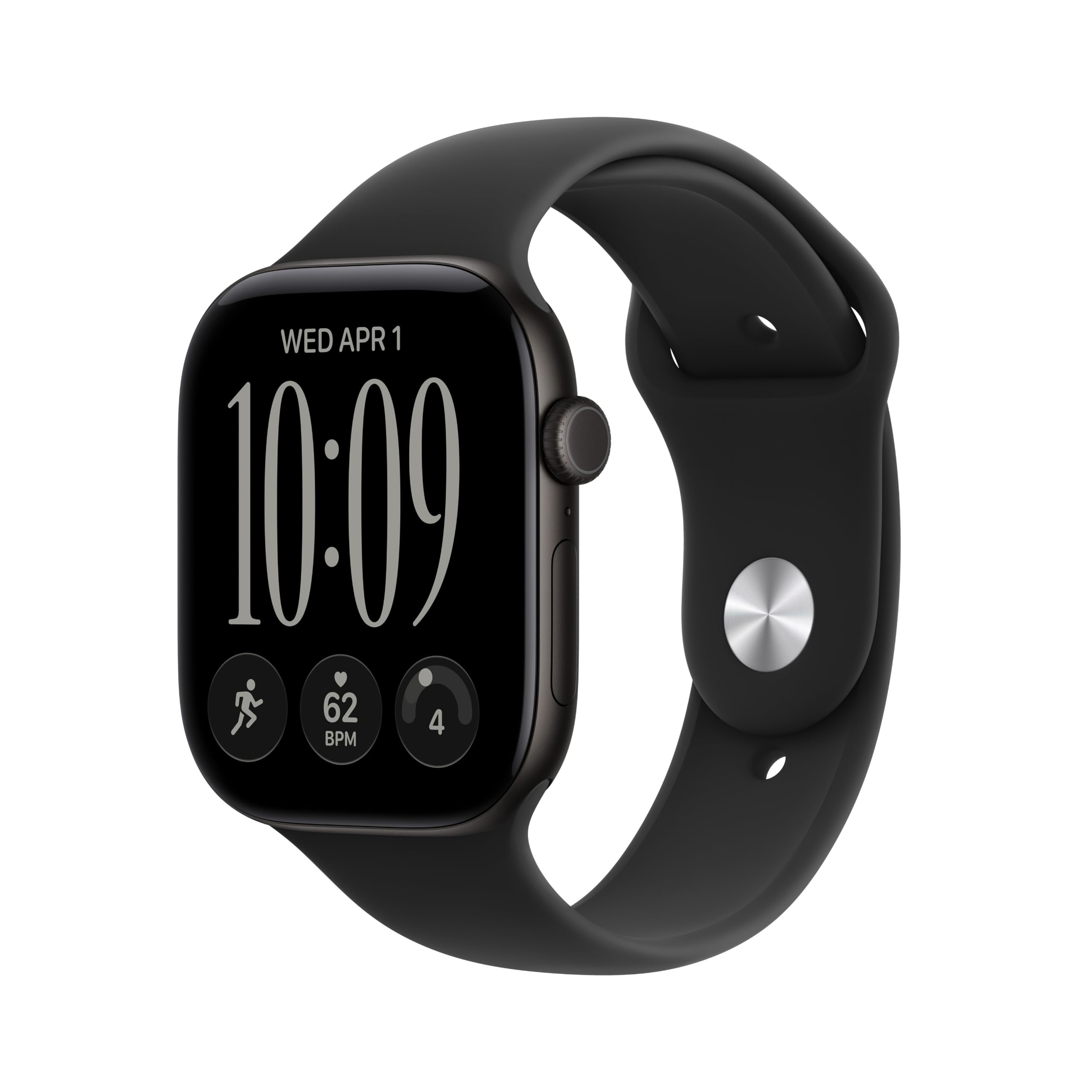
8. Apple Watch Series 12 GPS 46mm Smartwatch
The health-tracking screen that keeps you close to your phone
Heart rate sampling is the standout spec here. The Series 12 measures HRV as often as every five minutes and takes background heart rate readings every five seconds — that is a dense stream of data feeding the stress and recovery picture. The Vitals app pulls overnight metrics into one view with a daily sleep score, and the readiness experience uses recent activity, vitals and sleep to help you decide how hard to go.
The 46 mm case uses Ceramic Shield 2 on aluminum models, and titanium and ceramic versions get a crack-resistant sapphire crystal display. Fitness covers Pacer, Heart Rate Zones and Workout Buddy, with running, hiking and strength training all supported. Safety features detect a hard fall or severe car crash and can connect you with emergency services while notifying contacts. Battery is up to 24 hours of normal use, with a 15-minute fast-charge delivering up to 12 hours — enough for a sleep-tracked night and a morning gym session.
The design is what owners love most, followed by health monitoring and setup. The one honest note is size: a share of buyers find the screen smaller than they expected, so check the fit on your wrist before committing. This watch pairs with an iPhone, full stop — the GPS model works with your iPhone or Wi-Fi, and Android users should not go here.
Sampling that changes the picture: readings every five seconds mean the stress and recovery data is finely grained, which is the point of the Series 12.
The daily reality: 24 hours of use means a charge every day — the biggest contrast with the 19-day COROS PACE 4 on this list.
The clear choice for: iPhone owners who want the deepest health and safety features and do not mind a nightly charge.
Wrong lane if: you are on Android or want multi-day battery — the Forerunner 570 covers both.
9. Samsung Galaxy Watch 8 Classic 46mm Bluetooth Smartwatch
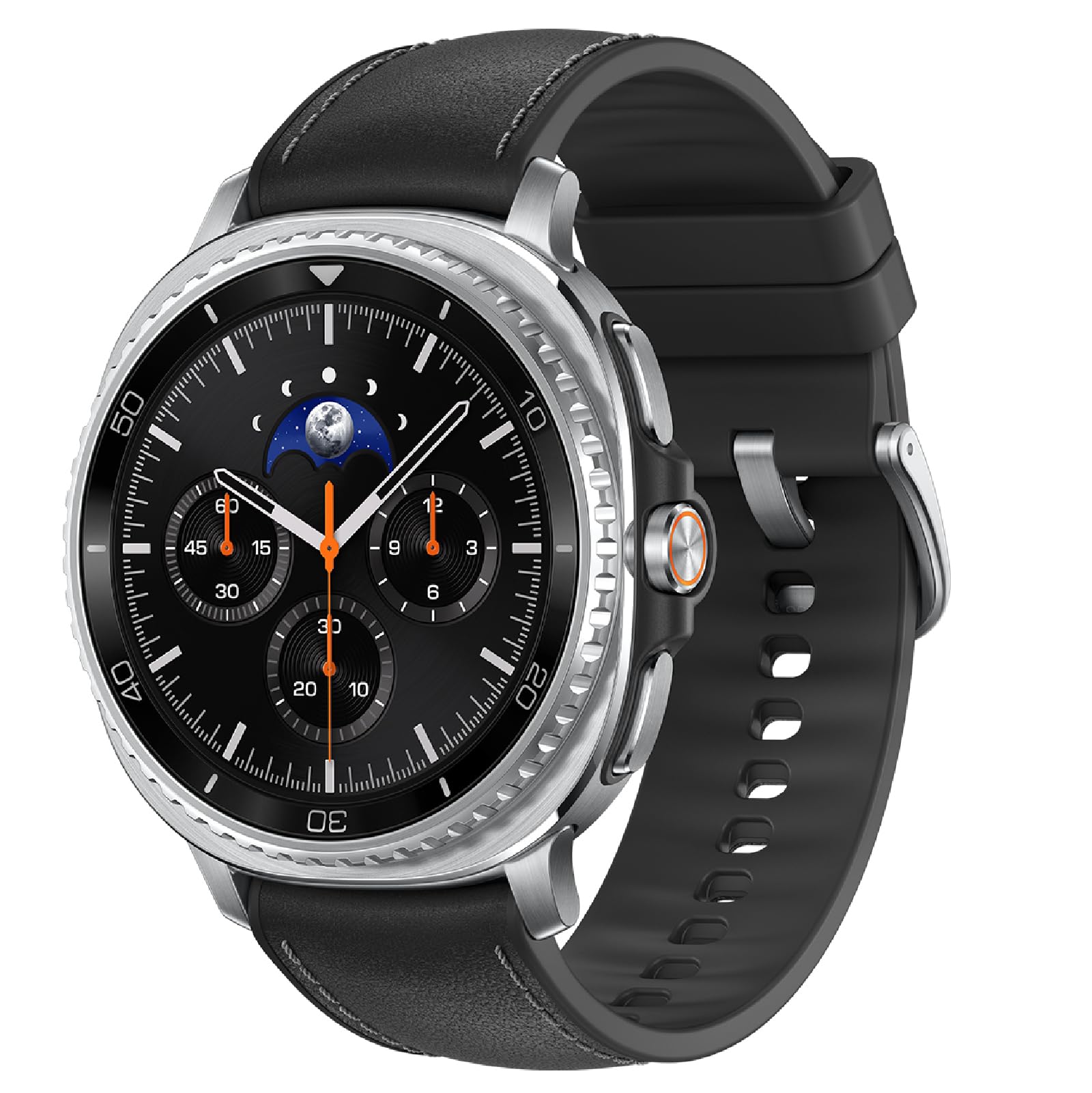
The rotating bezel that makes a smartwatch feel like a real watch
That physical bezel is the signature. A rotating ring gives you control of apps with a twist, and a brighter screen keeps everything readable. The 46 mm case pairs with an eco-leather band in 22 centimeters length and a black finish, plus a Quick Button and a new lug system for swapping bands. The battery is rated at 30 hours of average life from a 445 mAh cell, backed by the Amazon Exclusive 2Yr Warranty.
Health is where the feature list gets long. Advanced Sleep Coaching, a Running Coach that analyzes your age, weight, oxygen levels and heart rate, and an Energy Score built from yesterday’s sleep, activity and heart rate all run through Galaxy AI. Blood pressure tracking works after you calibrate against a cuff sold separately. A personal AI assistant takes spoken commands hands-free, and Now Bar keeps weather, news and updates on the main screen.
Appearance is what wins people over most — it does the premium watch look without shouting — and the functionality earns steady praise. The honest split is battery life: 30 hours means a nightly charge, so it is a daytime watch you top up overnight. Like the Galaxy Watch Ultra, this one is built for Android pairing, so Samsung and other Android phones get the full experience.
The physical advantage: the rotating bezel is the feature no other watch here offers, and it is genuinely faster than tapping through menus in cold or wet hands.
What to plan around: 30 hours of battery life is half a weekend — charge it while you shower and it will not bite into your day.
Suits you if: you want a stylish Android watch with a real rotating control and deep sleep coaching.
Look past it if: you want multi-day battery or an iPhone pairing — this one needs a nightly charge and an Android phone.
Know the Specs
Battery life (days and mode)
A stated battery life only means something when you know which mode it covers. A watch can claim up to 19 days in daily mode but only 41 hours in continuous GPS mode, and both figures belong to the same product. Charge time matters too: a full charge in 2 hours lets you top up in a lunch break. Wrist-based sleep tracking needs a watch that survives the night, so multi-day battery life is the spec that keeps the data flowing.
Heart rate and HRV
Wrist-based heart rate sensors read your pulse through the skin using light. HRV, or heart-rate variability, measures the tiny gaps between beats and is often used to gauge stress and recovery. Denser sampling — readings every five seconds or HRV checks every five minutes — gives a fuller picture, though every wearable maker presents these metrics as estimates, not medical results. Treat them as training guidance, not a doctor’s chart.
GPS and satellite systems
Built-in GPS means the watch locates you by satellite on its own, so a run needs no phone. Multi-GNSS support means the watch talks to several satellite systems at once, often sharpening your track in cities and tree cover. Route guidance and back-to-start navigation build on that data to lead you home. A 5-satellite connection, as on the Amazfit Bip Max, is a fast-lock feature, not a measurement of how many you need every second.
Water resistance ratings
Water resistance is rated in ATM (atmospheres) or in metres, and each tier sets a different expectation. A 50 m rating survives rain, sweat and splashes, while 10 ATM steps up to swim and dive-watch territory. A watch rated for 50 m should not be pressed into deep-water diving. Check the stated number rather than a general “waterproof” claim on the box.
Common Questions
Will a fitness tracker work with both an iPhone and an Android phone?
How long does a watch and fitness tracker battery actually last?
Do I need built-in GPS or is phone GPS enough?
What water resistance rating do I need for swimming?
Is a rugged GPS watch better than a smartwatch for trail running?
What does MIL-STD-810 mean on a fitness watch?
Does AMOLED help a watch screen outdoors?
Can a sports watch make phone calls without my phone?
How often should I charge a watch I wear to bed?
Is a renewed smartwatch worth buying?
The Bottom Line
The top pick for most people is the Garmin Forerunner 570 — it pairs an 11-day battery with an 18-hour GPS mode and the training readiness guidance that makes serious athletes stick with it. If you want a big screen and a longer battery instead, the Amazfit Bip Max delivers a 2.07-inch AMOLED panel and 20 days of use. For a tough outdoor tool, the Garmin Instinct E brings 10 ATM water resistance and MIL-STD-810 shock resistance. And if you are on an iPhone and want the deepest health tracking, the Apple Watch Series 12 gives you HRV checks every five minutes and background heart rate readings every five seconds — a strong reason to pair with the rest of your Apple gear.
How we choose
We do not accept paid placement. Every pick is matched to a real buyer and a real use-case; we do not hands-on test units.
Sources
Specifications: manufacturer listings and product documentation. Review insights: verified customer reviews, as of November 2026. Pricing: not shown on this page (it changes often); check the current price via the retailer link.
As an Amazon Associate, Tactical Gear Guy earns from qualifying purchases. This does not affect which products we feature.