Specs are compiled from manufacturer listings and verified buyer reviews and can change over time — please confirm the key details on the product page before buying.
Cold feet ruin a whole day faster than almost anything else, and the boots sold as “winter” shoes often carry barely enough insulation to hold heat on a real January walk. Three specs decide it: insulation grams, a genuinely waterproof shell, and an outsole that grips ice. This guide covers nine men’s winter boots that are genuinely built for cold, sorted so you can pick the right one for your climate and your stride.
This guide is built by comparing the manufacturers’ published specifications and the patterns across verified customer reviews, so you get each pick’s real strengths and trade-offs instead of marketing spin.
You will see exactly where a heavy insulation figure pays off and where a lighter, more flexible boot makes more sense for daily wear. Every pick below explains its warmth, waterproofing, and grip in plain terms, so you can match a boot to your own winter instead of guessing. These are the warmest winter shoes for men worth putting on your feet this season.
Top Picks

How to Choose the Warmest Winter Shoes for Men
Boot warmth comes from three things working together: insulation, a dry foot, and room for a warm air pocket around your toes. It is insulation plus a dry foot plus enough room to keep a pocket of warm air around your toes. Miss any one of the three and your feet go numb even in a boot that looked well built on the shelf.
Start with insulation grams
Insulation is measured in grams, and that number tells you how much thermal filler sits inside the boot. A 200 g boot (like the Merrell Coldpack 3 Thermo or The North Face Chilkat V) is a daily-wear winter boot — warm on a cold commute but not built for standing still in deep freeze. A 1200 g boot (the Rocky Blizzard Stalker) packs a much thicker layer for long hours outdoors in serious cold. Match the gram count to your typical winter days, not the coldest snap you can imagine.
Check that the shell is waterproof, not just water-resistant
“Waterproof” means the boot has a sealed barrier that keeps moisture out entirely; “water-resistant” means it shrugs off light snow but eventually soaks through. Wet insulation stops insulating, so a sealed membrane is what protects the warmth you paid for. Look for wording about a membrane or sealed construction, not just a treated upper.
Grip is half the safety story
A warm boot with no edge on ice is a fall waiting to happen. Soles described as non-slip, multi-directional, or built with a winter-specific compound (Merrell’s Vibram Arctic Grip is one example) are designed to bite into packed snow and slick pavement. If you walk plowed sidewalks or icy driveways, check the outsole compound before you buy.
Fit and width change how warm a boot feels
A boot that is too tight squeezes out the insulating air gap and can actually feel colder, while too much room lets your foot slide and rub. Wide-footed men often do better with a boot explicitly built on a wider last, like the FitVille or KEEN options. Size for the socks you plan to wear, and check whether the brand runs true to size.
Side-by-Side Comparison
| Model | Best For | Insulation | Waterproofing | Grip / Sole | Amazon |
|---|---|---|---|---|---|
| Columbia Men’s Firecamp Boots★ Best Overall | Everyday cold-weather wear | Low-bulk insulation | Waterproof construction | Multi-sport outsole | Amazon |
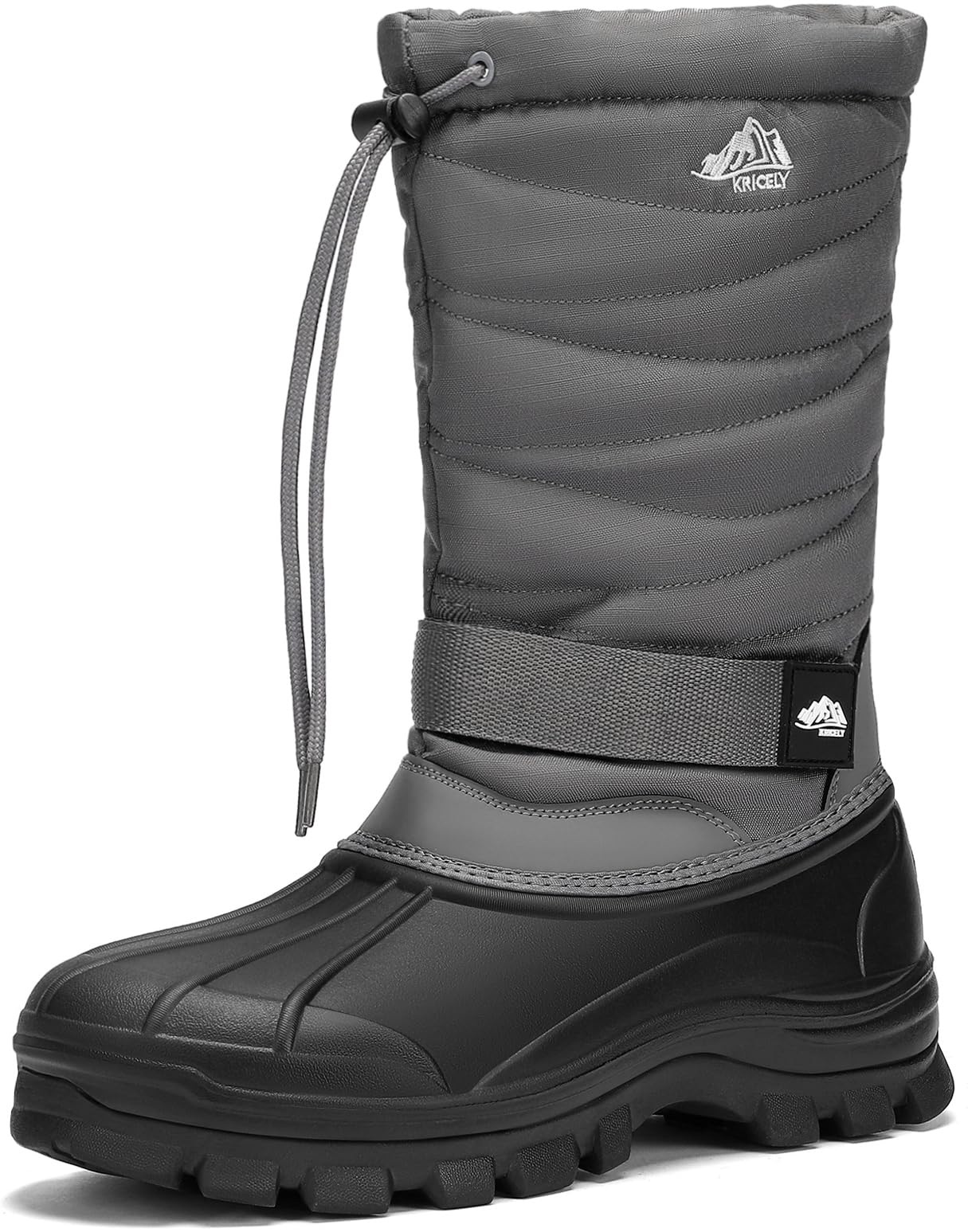
| Kricely Men’s Snow BootsDeep-Cold Value | Deep-cold value buy | 3M 400g Thinsulate, -40°F rated | Waterproof | Non-slip | Amazon |
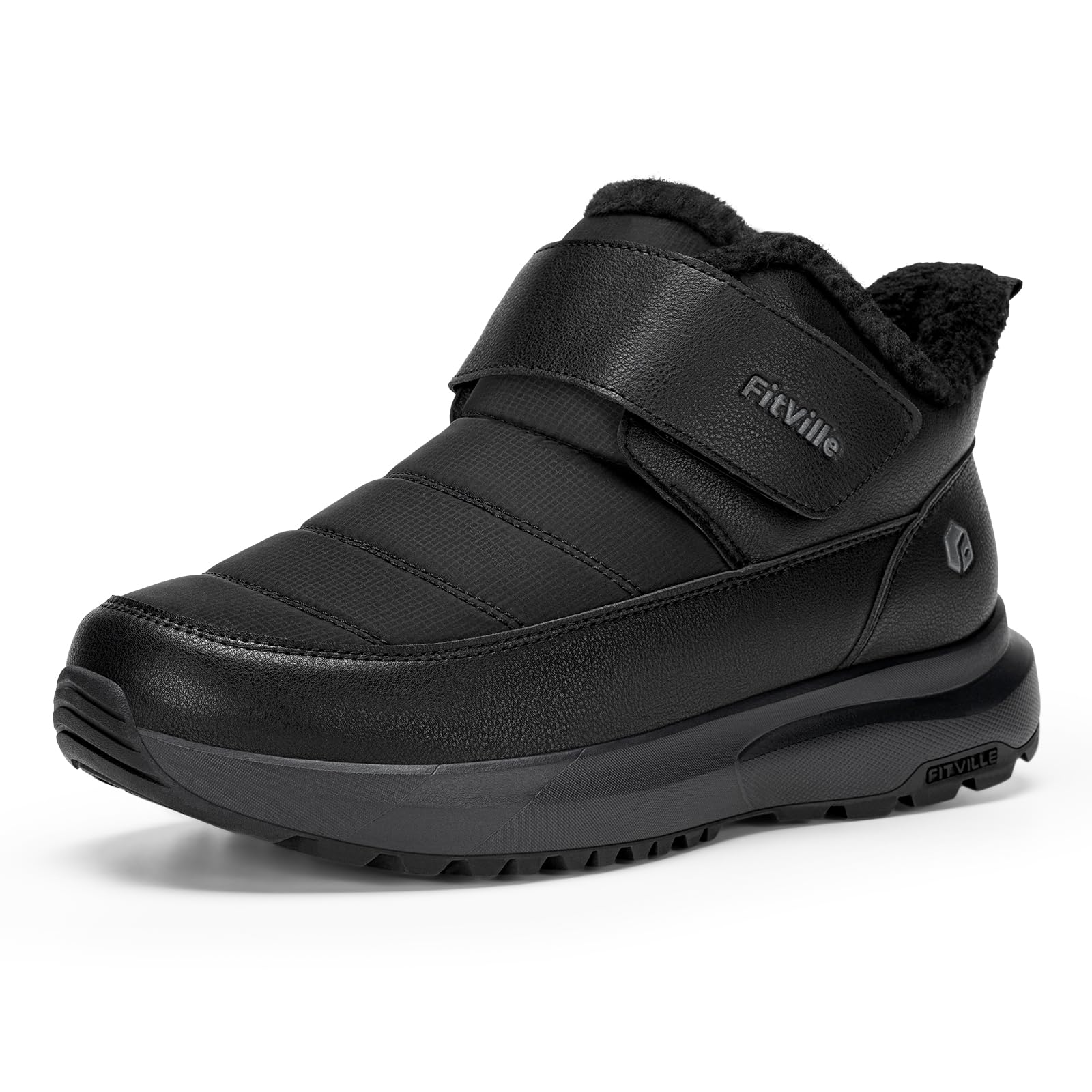
| FitVille Snow Boots for MenBest for Wide Feet | Wide feet | Fur lining, heat-lock build | Waterproof | Traction in slippery conditions | Amazon |
| HOBIBEAR Men’s Snow Boots | Style plus warmth | Plush faux fur lining | Waterproof shell | Non-slip rubber sole | Amazon |
| Kelway Men’s Winter Boots | All-rounder leather boot | 3M 200g Thinsulate | Waterproof membrane | Non-slip rubber sole | Amazon |
| ROCKY Blizzard Stalker | Long hours in deep cold | 1200g Thinsulate Ultra | Rocky Waterproof construction | Multi-directional Blizzard outsole | Amazon |
| The North Face Chilkat V | Winter hiking | 200g premium insulation | Waterproof | Lace-up winter outsole | Amazon |
| Merrell Coldpack 3 Thermo Mid | Ice and mixed winter | 200g insulation, fleece lining | Waterproof construction | Vibram Arctic Grip | Amazon |
| KEEN Revel IV High Polar | Deepest cold, widest fit | Warmest KEEN insulation, rated to -40°F | Waterproof leather and mesh | High-traction winter sole | Amazon |
Detailed Reviews
1. Columbia Men’s Firecamp Boots
Our pick — 4.5+★ from 950+ verified ratings; the strongest balance of quality and price.
The do-everything winter boot that stays light enough to forget you’re wearing it.
Most men want one boot for the school run, the dog walk, and the weekend trailhead — and the Firecamp is built exactly for that. It pairs a waterproof construction with low-bulk insulation, which means it keeps cold out without turning your foot into a heavy, stiff block. Plush cushioning underfoot adds comfort for long days standing or walking.
The crowd favorite is a good word for it here: 4.5+ stars across 900+ ratings makes this the strongest-scored pick on the list. What wins people over is the build quality — the quality of the boot is the thing owners praise most — followed closely by comfort and warmth. Socks staying dry in wet, slushy conditions comes up again and again, which is the waterproof shell doing its job.
Fit runs generous, with plenty of toe room noted by wearers, so it suits men who like a little wiggle space in thick socks. It is not the boot for standing still in deep sub-zero cold — that job belongs to a high-gram boot like the Rocky further down. Understand that and the Firecamp rewards you with year-after-year versatility. One caveat: the low-bulk insulation is tuned for active cold-weather wear, not extreme-cold idling.
What earns it the top slot
- Waterproof construction keeps socks dry in slush and wet snow
- Low-bulk insulation warms without the heavy, clunky feel
- Plush cushioning for all-day standing and walking
- Plenty of toe room for thicker winter socks
Where it stops short
- Built for active cold-weather wear, not standing still in extreme cold
- If you need a 1200 g deep-freeze boot, look further down the list
Reach for this if: you want one light, dry, comfortable boot for commuting, errands, and light trails in everyday winter.
Think twice if: you stand still for hours outdoors in hard freeze — you will want a heavier, higher-gram boot.
2. Kricely Men’s Snow Boots Waterproof Non-Slip
A budget boot that wears its cold-weather rating on its sleeve.
The spec to notice first is the insulation: 3M 400g Thinsulate, with the boot rated to -40°F. That is double the insulation of the 200 g Kelway and North Face boots in this lineup, and it puts serious cold-weather capability within reach at a budget-friendly tier. The fur lining and hook-and-loop plus zipper closure make it a grab-and-go boot when you are already late.
Owners agree it handles colder weather well and feels soft and well made inside, and slipping it on is one of the things people like most about it. So it does the two jobs that matter — warmth and easy entry — very well for the tier.
Here is the honest catch a few shoppers hit: sizing and fit get mixed reports, so some men find it runs small for the stated size. The zipper is the other soft spot, so treat it gently and don’t force it. Order carefully around your true size and this is a lot of warmth for a value boot. That warmth-to-cost ratio is the reason it earns a spot near the top.
Who this suits: a cold-climate man on a budget who wants real insulation and quick on-off in the driveway, not a slim fashion boot.
The honest trade: fit runs mixed and the zipper wants care, so size deliberately rather than assuming your usual number.
Best matched to: deep-cold commuters who want maximum warmth for an entry-level spend.
Look elsewhere if: you want a boot with fuss-free sizing you can order blind.
3. FitVille Snow Boots for Men
Built extra wide, so warm toes stop being a squeeze.
If most winter boots pinch across the ball of your foot, this one is worth your attention. The FitVille is cut as an extra-wide boot with a fur lining and heat-lock construction, so it holds warmth while giving your foot the room to actually feel it. Enough arch support and cotton insoles add warmth and comfort underfoot.
The thing everyone raves about is how true the fit runs for wide feet, and the winter-facing parts deliver — feet stay warm and dry in snowy, snowy weather, and traction holds up in slippery conditions. Ease of on-and-off is another point in its favor for a quick trip outside.
Quality is the aspect owners praise most, which tells you it holds up as a real boot rather than a flimsy bargain. If you have a narrow, average-width foot, though, that extra room may feel loose — this boot is tuned for the wide-footed man. Think of it as the fit-first pick of the list.
The standout: a genuine extra-wide build with fur lining and heat-lock warmth — a rare combination that keeps a wide foot warm without cramping.
The catch: the roomy last is a benefit for wide feet but can feel sloppy on an average-width foot.
Go for this if: your regular boots always pinch and you want warmth with breathing room.
Pass if: you have average or narrow feet and prefer a snug, locked-in feel.
4. HOBIBEAR Men’s Snow Boots

The winter boot that looks sharp while the plush lining does the warming.
Appearance is the aspect owners praise most here — this is a boot men actually reach for because they like how it looks, not just because it’s cold out. Under that look sits a soft plush faux fur lining and interlayer that holds warmth, so the visual appeal doesn’t cost you cosy toes. A waterproof shell keeps the inside dry, and a non-slip rubber sole grips the winter ground.
Warmth comes up as a strong suit too, with the boot holding heat well into negative temperatures. That combination of good looks and real warmth is why it earns its place — it doesn’t force you to choose one over the other.
The trade-off to know: durability gets mixed reports, so treat the boot as a solid daily wearer rather than an indestructible off-trail tank. Worn for commuting and errands it does well; hammered through rough brush it will show wear sooner. Choose it for city-and-driveway winter and it will serve you nicely.
Why it stands out: a plush faux fur lining and waterproof shell wrapped in a look men actually want to wear.
What to keep in mind: durability is fair rather than armor-tough, so match it to everyday wear, not hard off-trail abuse.
A smart buy for: the man who wants a winter boot that looks good and feels warm without a rugged hiking profile.
Not the pick if: you need a boot to survive years of heavy trail abuse.
5. Kelway Men’s Winter Boots

Full leather, a sealed membrane, and just enough insulation to stay nimble.
This is the boot for a man who wants cold-weather protection that still looks like a proper boot. The full leather upper with a molded TPU shell wraps a waterproof membrane that seals out moisture, and a non-slip outsole handles slippery ground. Inside, 3M 200g Thinsulate insulation keeps feet warm in wet, cold conditions.
The insulation numbers show what this boot is for. The Kelway packs 200 g of Thinsulate (a thin synthetic insulation measured in grams) — the Rocky Blizzard Stalker has 1200 g. That makes it a boot for moving in moderate cold, not for standing still in a deep freeze. On a commute, a walk, or light hiking it keeps you warm; for hours of ice fishing, look elsewhere.
Owners praise the quality and warmth, and the fit runs true to size, so you can order your usual number with confidence. The one honest wrinkle: sole feel gets mixed reports, so if a plush, cushy underfoot is top of your list, temper expectations. Otherwise this is a versatile leather winter boot that earns its keep.
The defining strength: full leather plus a sealed waterproof membrane — a dry foot is a warm foot, and this boot protects both.
The honest limit: 200 g of insulation is a moderate-cold amount; deep-freeze standing sessions call for a heavier boot.
Made for: the man who wants a leather winter boot for commuting, walking, and light trail use in moderate cold.
Not your boot if: you need maximum insulation for long stationary hours in extreme cold.
6. ROCKY Blizzard Stalker Waterproof 1200G Insulated Boot
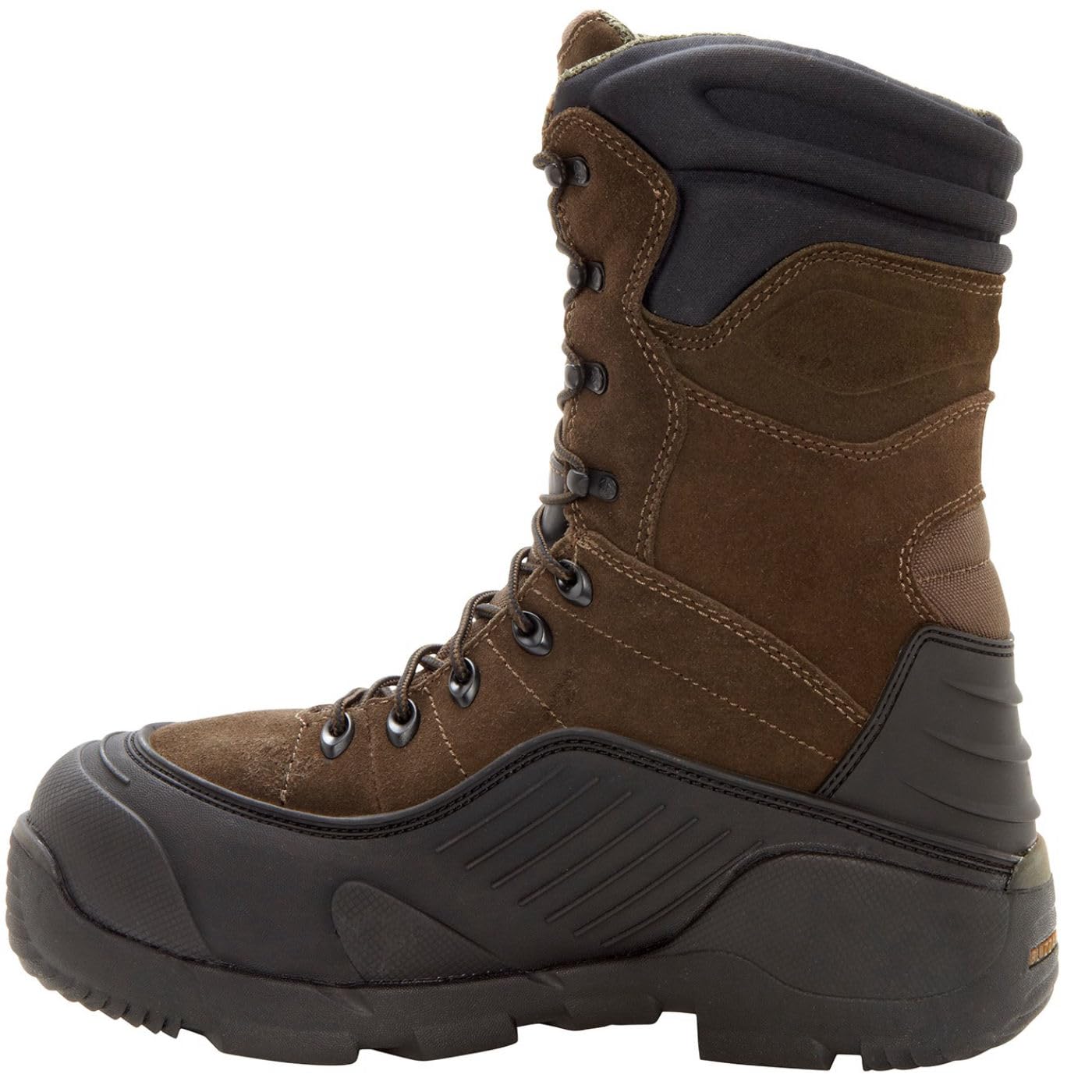
The heavyweight of the list — 1200 g of insulation for the truly brutal days.
When warmth is the whole assignment, the Blizzard Stalker answers with 1,200 grams of Thinsulate Ultra insulation. That is 6.0x the insulation of the 200 g Kelway and North Face boots here, and it is built for long hours outdoors in deep cold, not a quick dash to the car. Rocky Waterproof construction keeps feet dry, and a split suede with 900 denier textile upper resists scrapes and brush.
The multi-directional Blizzard outsole is designed to grip uneven, snow-covered, and icy ground, and a removable mesh PU footbed with TPU heel stabilizer keeps your heel locked in as you walk. Between the padded collar and the rubber vamp, it is built like a work boot for cold weather. Owners confirm it holds warmth and keeps feet dry with room for thick socks — exactly what you want from a heavy winter boot.
Two honest trade-offs come with all that insulation. It is heavy — around 5.4 pounds per pair in a size 10 — so it is not a boot you forget you’re wearing, and some men find the sizing runs off. Warmth like this also means you may not want it on a mild day. For genuine deep-freeze duty, though, it is the warmest tool on the list.
The case for the heavyweight
- 1200 g of Thinsulate Ultra — the highest insulation figure here
- Rocky Waterproof construction keeps feet dry in wet snow
- Multi-directional Blizzard outsole grips ice and uneven ground
- Removable PU footbed and TPU heel stabilizer for support
The weight you carry
- Heavy on foot — around 5.4 pounds per pair in a size 10
- Sizing runs mixed, so fit carefully around your true size
Pick this for: hunters, workers, and anyone standing outdoors for hours in serious cold where warmth is non-negotiable.
Skip the heavyweight if: you want a light everyday boot for quick errands in mild winter.
7. The North Face Men’s Chilkat V Lace-up Waterproof Snow Boot

The lace-up snow boot built to walk, not just stand around in.
The Chilkat V keeps you warm on the move with 200 g of premium insulation inside a waterproof build. That puts it in the same family as the Kelway and Merrell — a boot for active winter days, not for standing still in a deep freeze. The lace-up design lets you dial in a snug, trail-ready fit, and the boot handles dirt, mud, creeks, and light snow.
Owners describe it as comfortable and warm on cold days, and it earns praise for durability that holds up over a season of real use. It is lightweight for a winter boot, so long walks and hikes don’t drag your legs down. That combination of trail-ready grip and a waterproof, insulated upper is the heart of its appeal.
Where it differs from the heavy Rocky is in purpose: 200 g keeps an active foot warm, but it won’t match the Blizzard Stalker’s 1200 g for stationary deep-freeze warmth. Choose the Chilkat V when your winter involves walking, hiking, and mixed conditions; choose the Rocky when it involves standing still in brutal cold. Value and performance together make it a sensible premium-tier pick.
The trail-ready angle: a waterproof, 200 g-insulated boot built to handle dirt, mud, creeks, and light snow underfoot — light enough for long walks.
Know the limits: 200 g is active-wear warmth, not stand-still-in-the-freeze warmth.
Suits you if: your winter means walks, hikes, and unpredictable mixed conditions with a waterproof, insulated boot.
Not ideal if: you need maximum warmth for hours of standing in extreme cold.
8. Merrell Men’s Coldpack 3 Thermo Mid Waterproof

The traction specialist — built to keep you upright on bare ice.
Ice is where winter boots get people hurt, and the Coldpack 3 Thermo is built around that problem. A Vibram Arctic Grip outsole is designed to bite into slick winter surfaces, and owners single out its grip on bare ice as the standout trait. A waterproof construction keeps feet dry, while 200 g of insulation and a fleece lining keep them warm when the temperature drops.
Quality and warmth tie as its strongest qualities, backed by a comfortable, well-fitting feel with good room above the toes. For a mid-height boot that works in mixed winter conditions, it brings the two things that matter most — dryness and grip — together without bulk.
Compared with the 1200 g Rocky, the Merrell’s 200 g is a lighter, more active insulation level, so it shines on a moving errand or a slushy walk rather than a stationary deep-freeze stakeout. It is one of the premium picks here, and the ice grip plus fleece warmth justify the step up. If you walk on plowed, icy sidewalks regularly, this is a natural finalist.
The headline feature: Vibram Arctic Grip underfoot — traction aimed squarely at bare ice and slick pavement.
Set expectations right: 200 g of insulation is a moderate-cold amount, best for active wear rather than standing still in extreme cold.
Reach for this if: ice and slick pavement are your daily winter reality and you want sure footing plus warm feet.
Look past it if: your winters are deep-freeze cold and you need maximum stationary warmth.
9. KEEN Revel IV High Polar
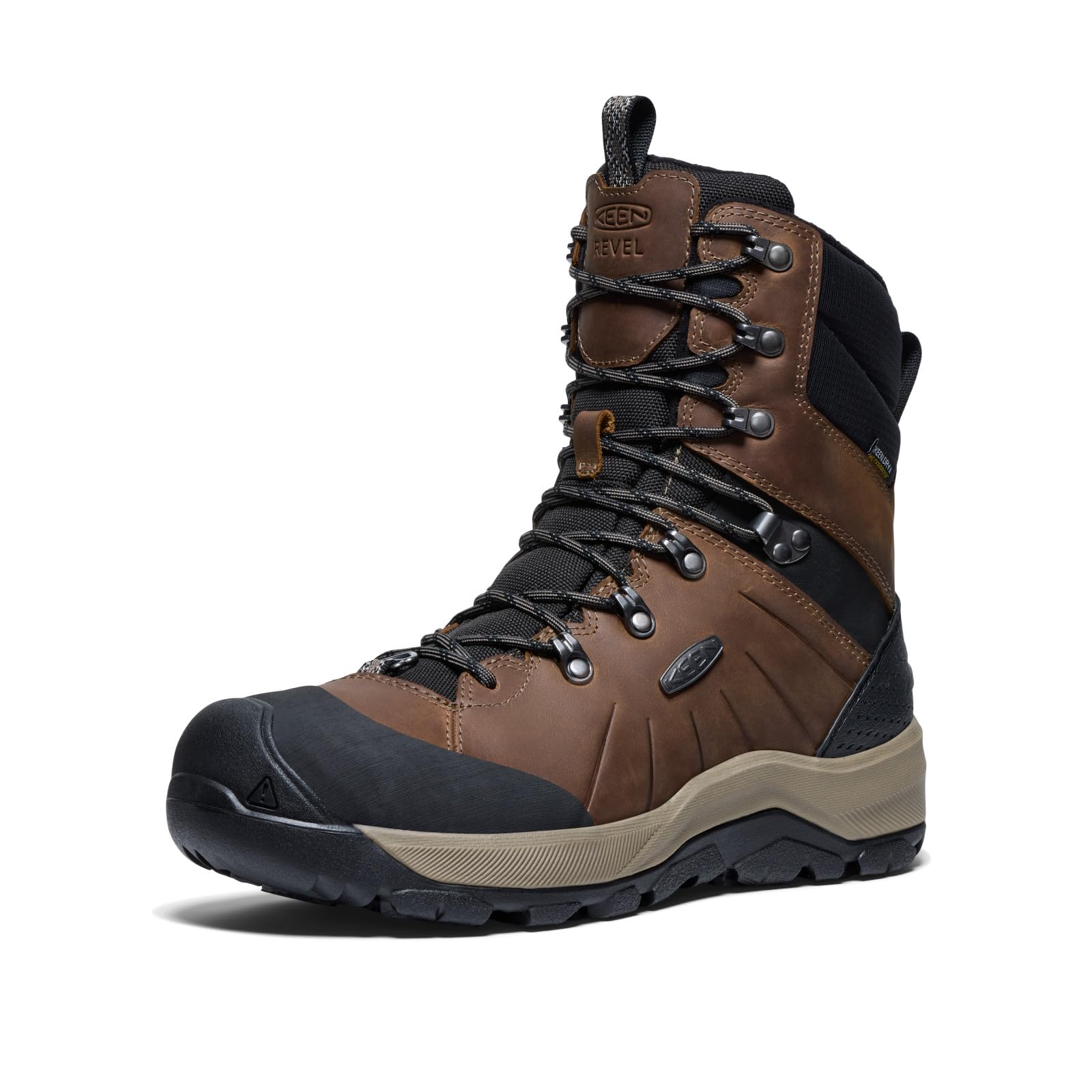
A high-profile, wide-fit polar boot that wears its -40°F rating like a badge.
The Revel IV High Polar is built for the deepest cold on this list. It carries KEEN’s warmest insulation, rated to -40°F, and a higher profile to keep deeper powder out. A waterproof leather and performance mesh upper keeps moisture away, so your feet stay warm and dry even when the snow piles up.
Warmth is what wins people over here, with comfort close behind — the boot feels well made, and traction on snow and ice holds up. It is built off KEEN’s traditional wider footwear form, which makes it a natural pick for men who find standard boots tight across the foot.
The one thing to plan around is the fit: it runs mixed, with some men finding it perfect and others saying it runs small, so size carefully — especially if you’re between sizes or wear thick socks. It’s a premium-tier boot, and the high-profile polar build plus the -40°F warmth rating are what you’re paying for. For the coldest climates, it’s a compelling finalist.
what separates it: a high-profile shell and a warmth rating of -40°F (that is -40°C too) — built for deep snow and hard cold, so your feet stay warm on the coldest days.
The fit note: sizing runs mixed, so measure and choose carefully rather than defaulting to your usual number.
Choose this if: you live in genuinely deep-cold, snowy country and want a wide-fit boot rated down to -40°F.
Hesitate if: you want a sure, true-to-size fit you can order without double-checking.
Know the Specs
Insulation Grams (Thinsulate and Similar)
The gram number is how much thermal filler lines the boot. A 200 g boot keeps an active foot warm in moderate cold, while a 1200 g boot packs in far more for long hours in deep freeze. Heavier insulation also adds weight and bulk, so match the grams to how still and how cold your outdoor time really is.
Waterproof vs. Water-Resistant
Waterproof means a sealed barrier (a membrane or sealed construction) keeps moisture out entirely; water-resistant just slows it down. Since wet insulation stops insulating, the sealed barrier is what protects warmth. A treated upper handles light snow; a full membrane handles slush and wet snow all day.
Temperature Ratings
A rating like -40°F is the manufacturer’s claim for the coldest condition the boot is built to handle. Treat it as a guide for the conditions the boot is designed around, not a guarantee your feet will feel toasty at that number — socks, activity level, and fit all change the real feel.
Outsole Grip on Ice
Soles labeled non-slip, multi-directional, or built with winter-specific compounds (Vibram Arctic Grip is one) are designed to bite into packed snow and slick pavement. For plowed sidewalks and icy driveways, the outsole is a deciding spec, not an afterthought — a warm boot that slides is a hazard.
Common Questions
How much insulation do I need for a really cold winter?
Is a 200 g insulated boot warm enough for snow?
How do I know these winter boots are truly waterproof?
Do these winter boots run true to size?
Can I wear these boots for hiking in winter?
What is the difference between Thinsulate and faux fur lining?
Will heavy insulation like 1200 g make my feet sweat?
How important is the outsole for winter walking?
Are wide-fit winter boots warmer than standard fit?
How do I care for waterproof winter boots so they stay warm?
The Bottom Line
The warmest winter shoes for men winner is the Columbia Firecamp Boots because it pairs waterproof construction with low-bulk insulation and plush cushioning — a light, dry, versatile boot that suits most men’s everyday winter. If you want the most warmth money can buy on this list, grab the ROCKY Blizzard Stalker and its 1200 g of Thinsulate Ultra. And for deep-cold climates with a wider foot, the KEEN Revel IV High Polar and its -40°F warmth rating is the one to reach for.
How we choose
We do not accept paid placement. Every pick is matched to a real buyer and a real use-case; we do not hands-on test units.
Sources
Specifications: manufacturer listings and product documentation. Review insights: verified customer reviews, as of November 2026. Pricing: not shown on this page (it changes often); check the current price via the retailer link.
As an Amazon Associate, Tactical Gear Guy earns from qualifying purchases. This does not affect which products we feature.