Specs are compiled from manufacturer listings and verified buyer reviews and can change over time — please confirm the key details on the product page before buying.
If you want the warmest base layers without turning into a sweaty, itchy mess, buy merino wool in a heavyweight knit and layer it under your normal clothes. That single choice solves the two problems that ruin cold-weather layering: synthetics trap sweat against your skin, and cheap wool scratches. The picks below cover both roads — pure merino for serious cold and fleece-lined synthetics for budget warmth — so you can match the fabric to how you actually spend your winter.
This guide is built by comparing the manufacturers’ published specifications and the patterns across verified customer reviews, so you get each pick’s real strengths and trade-offs instead of marketing spin.
Below you’ll find the weight ratings, fiber grades, and fit quirks that decide whether a base layer keeps you warm on a ridge or bunches up under your waders, plus the honest catch on each one. Read on for the warmest base layers that actually earn their place in your cold-weather kit.
Top Picks


How To Choose The Best Warmest Base Layers
Warmth in a base layer comes from two things: how heavy the knit is, and what fiber it’s made from. Get both right and you can stand still in freezing air for an hour. Get either wrong and you’ll either shiver or sweat through your midlayer.
Start With Fabric Weight, Not Brand
Base layers are graded by weight in grams per square meter (g/m²) — basically how much fabric sits in a square meter of the knit. A 165 g/m² layer suits active cold-weather work where you generate your own heat. A 250 g/m² layer handles sustained cold and low movement. A 400 g/m² layer is expedition territory: frost, standing around, and almost no sweat. If you run hot or move fast, go lighter than you think you need.
Understand Merino Microns Before You Buy Wool
Micron count measures how thick each wool fiber is. Standard wool sits at 25+ microns and scratches. Superfine merino at 17.5 microns is finer than a human hair, which is why it doesn’t itch even on sensitive skin. If a wool base layer doesn’t publish a micron number, treat the itch-free claim as unproven.
Fleece-Lined Synthetics: Warm, Cheap, But Watch The Sweat
A fleece-lined polyester set traps heat fast and costs far less than merino. The trade-off is moisture: synthetics hold sweat against your skin instead of moving it away, so they suit low-output cold (commuting, hunting stands, shoveling) better than hard climbs. Merino regulates moisture and resists odor across multiple wears; fleece linings need a wash after most sessions.
Fit: Snug, Not Tight
A base layer should sit against your skin with no loose folds, because trapped air pockets leak heat. But tight enough to restrict a squat or a ski turn is too tight. Check the sizing notes on each product — several here run small in specific sizes, and sizing down is the right call only when you want a snug under-jacket fit.
Side-by-Side Comparison
| Model | Best For | Fabric | Weight / Build | Pieces | Amazon |
|---|---|---|---|---|---|
| Minus33 Merino Wool Bottoms★ Best Overall | Serious cold, low sweat | 100% Merino Wool | Heavyweight knit, UPF 50+ | Bottoms only | Amazon |
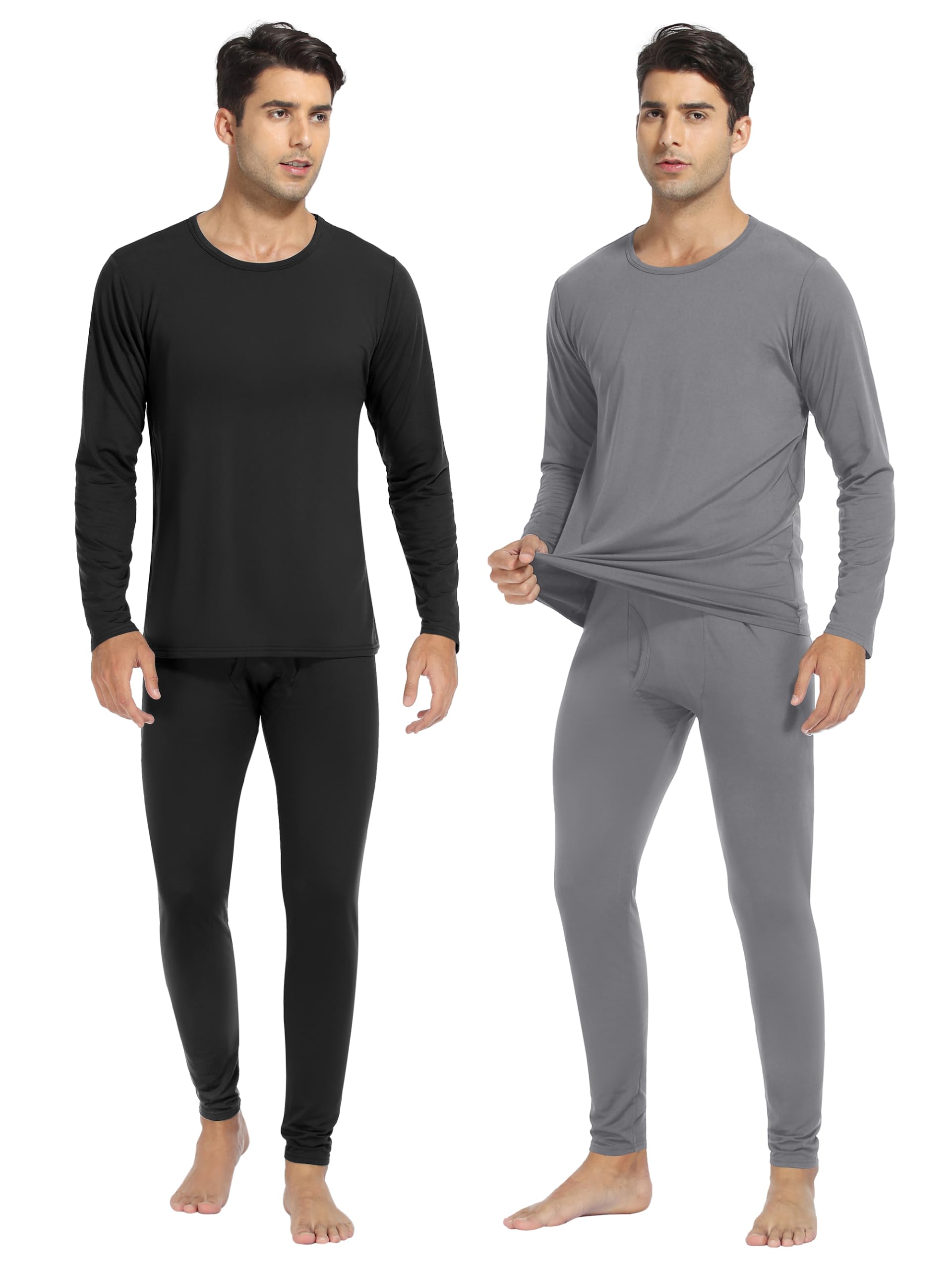
| Fleece-Lined Thermal Set (Hunting/Running/Skiing)Budget Full Set | Budget full-body warmth | Fleece-lined synthetic | Compression fit | Top + bottom | Amazon |
| URATOT 2 Sets Thermal UnderwearTwo-Set Value | Two-set value buy | 95% polyester, 5% spandex | Fleece lined | 2 full sets | Amazon |
| Mens Thermal Compression Shirt | Extended size range | Fleece-lined synthetic | Midweight to heavyweight | Top only | Amazon |
| LAPASA Women’s Thermal Set | Women’s three-weight choice | Fleece-lined synthetic | Light / Mid / Heavy options | Top + bottom | Amazon |
| Merino.tech Half Zip Sweater | Layering under jackets | 100% Merino Wool | 17.5 micron, OEKO-TEX | Top only | Amazon |
| MERINNOVATION Merino Set | Multi-day wear, no wash | 100% Merino Wool | 165gsm or 250gsm | Top + bottom | Amazon |
| Merino.tech Women’s Quarter Zip Set | Women’s wool set | 100% Merino Wool | UPF 50+, quarter zip | Top + bottom | Amazon |
| MERIWOOL Heavyweight 400g Pants | Deepest cold on legs | 100% Merino Wool | 400g heavyweight | Bottoms only | Amazon |
Detailed Reviews
1. Merino Wool Bottoms
Our pick — 4.5+★ from 950+ verified ratings; the strongest balance of quality and price.
Pure merino warmth on the legs, built by a wool house that has been spinning fiber since 1916.
This is the pick that settles the wool-versus-synthetic argument. The knit is 100% merino wool, and Minus33’s expedition-grade weights carry a UPF 50+ rating (a sun-blocking measure, useful on bright snow). Merino absorbs up to 30% of its weight in moisture without feeling wet, so your legs stay warm instead of turning clammy when you stop moving. Cotton and polyester can’t do that.
The review pages back it up. Quality and warmth are what people write home about, and the pants draw a huge volume of feedback for a base layer — nearly a thousand owners have weighed in, landing at 4.5+ stars. The fiber is genuinely itch-free, not just marketed that way. Owners wear these through Montana winters and stay warm without the bulk of a heavy pant. That said, merino wool at this level is not the cheapest route to warm legs — value is the one mixed note in the feedback.
Fit runs on the generous side for some, and merino does demand care: cold wash, lay flat to dry, and never tumble it. Size up if you plan to wear them under another pant and want room to move.
Where the wool delivers
- 100% merino wool that insulates even when damp, unlike cotton or polyester
- UPF 50+ on the expedition weights for sun on snow
- Itch-free fiber and a heavyweight knit that adds warmth without bulk
- Made by a family wool business with roots going back to 1916
What to weigh first
- Value is the split opinion — merino costs more than fleece-lined synthetics
- Lay flat to dry; machine drying damages merino fibers
Go for these: anyone facing real winter cold on the legs who wants to skip a bulky pant layer and stay warm while damp.
Think twice: if you need a budget full-body set today — the fleece-lined pick lower down covers top and bottom for far less.
2. Mens Thermal Underwear Set
A full fleece-lined set for the price of a single wool piece — and owners say the warmth punches above that.
Warmth is the headline here: 45 owners single it out, more than any other trait, with fit close behind at 26. It’s a compression fit, which means the fabric sits tight against your skin and holds warmth where you need it. The fleece lining is soft rather than scratchy, and buyers call it true to size. Thickness gets its own nods — this isn’t a paper-thin liner.
The set handles skiing, running, and hunting, and the compression angle gives muscle support during activity. Wash it after most sessions.
The trade-off that matters: value and warmth are both strong here, but you’re paying for heat, not breathability. If you sweat hard, merino wins on moisture control.
Fit note: compression cut and true-to-size feedback means order your normal size unless you want a looser fit under street clothes.
Reach for it if: you want a top-and-bottom base layer set for winter without spending a bundle — hunting, running, errands.
Look elsewhere if: you’re doing sustained hard effort and need fabric that won’t turn clammy.
3. URATOT 2 Sets Men’s Thermal Underwear Set Fleece Lined
Two complete thermal sets in one pack — so one can be in the wash while the other keeps you warm.
Quality is what earns the most praise here, with warmth not far behind. The build is 95% polyester and 5% spandex, so it stretches with you and holds its shape through the day. Softness and functionality get solid nods too, and the whole pack comes with two full suits — top and bottom each. That redundancy is the real draw for anyone who wears thermals daily in winter.
Where it needs honesty: fit splits the room. Some say the size is spot on, others find it off, so check the size chart carefully before ordering rather than assuming. It’s a straight fleece-lined synthetic like the set above, which means warmth without merino’s moisture regulation — fine for cold commutes, less ideal for heavy sweat.
What earns it a spot
- Two complete sets mean you always have a dry backup
- 95% polyester and 5% spandex gives stretch without sagging
- Quality and warmth are the two things buyers praise most
Read before you order
- Fit feedback is genuinely mixed — confirm your size against the chart
- Synthetic builds need a wash after heavy wear rather than multi-day re-wear
Smart buy for: someone who wants two everyday winter sets and doesn’t need wool.
The one caution: sizing is unpredictable, so measure rather than guess.
4. Mens Thermal Compression Shirts
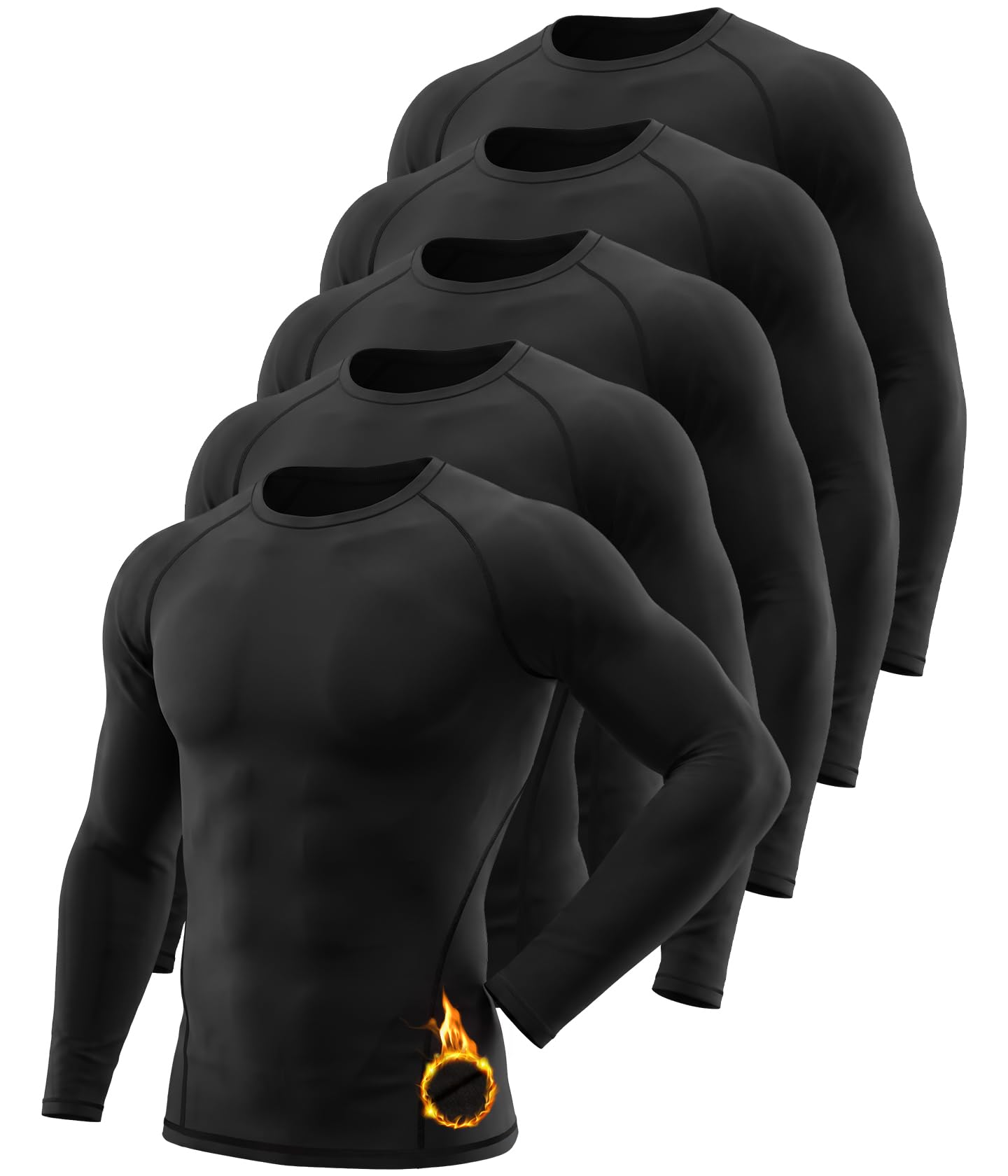
A top-only thermal that actually fits hard-to-size men, from XS up through 6XL.
You get a real size range here: 62 owners praise the fit, the most of any trait, and the run climbs from xs and small all the way to 6xl, plus 2x, 3x, 4x, and 5x in between. If standard thermals never quite fit your frame, this is where to start. It’s cut as midweight-to-heavyweight fleece-lined synthetic, so it works as an upper layer under a camo jacket or a motorcycle leather in the snow.
Warmth comes second in the feedback, and buyers report it holding up through a two-week elk hunt in sub-zero conditions. Color options run wide too — black, tactical camo, white, green, navy, and blue — so you can match a duty or hunting kit. The size note is the honest bit: some find the large runs small, so if you sit between sizes, go up.
Why it belongs here: the size range is the deciding factor. Few fleece-lined shirts cover a 6XL frame, and this one does.
The sizing catch: one size in the range (large) runs small by some accounts, and the pair-to-any-bottom pitch means you still need bottoms — this is a top only.
Best fit for: bigger or harder-to-fit men who need a warm thermal top and can’t find their size elsewhere.
Not for you if: you expect a full set — pair it with separate long johns.
5. LAPASA Women’s Thermal Underwear Set Light/Mid/Heavy Weight

One women’s set sold in three warmth levels, so you can match the layer to the forecast.
Warmth without bulk is the pitch that lands — comfort is the second most-praised trait, and the fleece lining isn’t itchy. The real flexibility here is the three weights: light for brisk days and activity, mid for cooler temps, and heavy for the coldest winter days. You pick your setting instead of settling for one knit. Stretchiness gets its own nods, so it moves with you on a run or under work clothes without bunching.
Sizing is the split opinion worth knowing about. Some find it true to size, others say it runs small and slightly short on the legs. That’s a fit mismatch rather than a defect, but it means checking the chart matters more here than usual. It also wears well as pajamas or loungewear, which buyers call out as a bonus use.
What makes it flexible
- Sold in light, mid, and heavy weights so you choose the warmth
- Fleece lining that’s soft, not scratchy
- Stretchy enough for skiing, running, cycling, or as pajamas
Fit reality check
- Sizing feedback is mixed — some find it short in the leg and small
- Synthetic blend, so heavy sweat needs a wash sooner than merino
Great fit for: women who want to dial warmth up or down and wear the same set for sport or sleep.
Go up a size if: you’re between sizes or want leg length to spare — that’s the recurring fit note.
6. Merino.tech 100% Merino Wool Half Zip Sweater Men
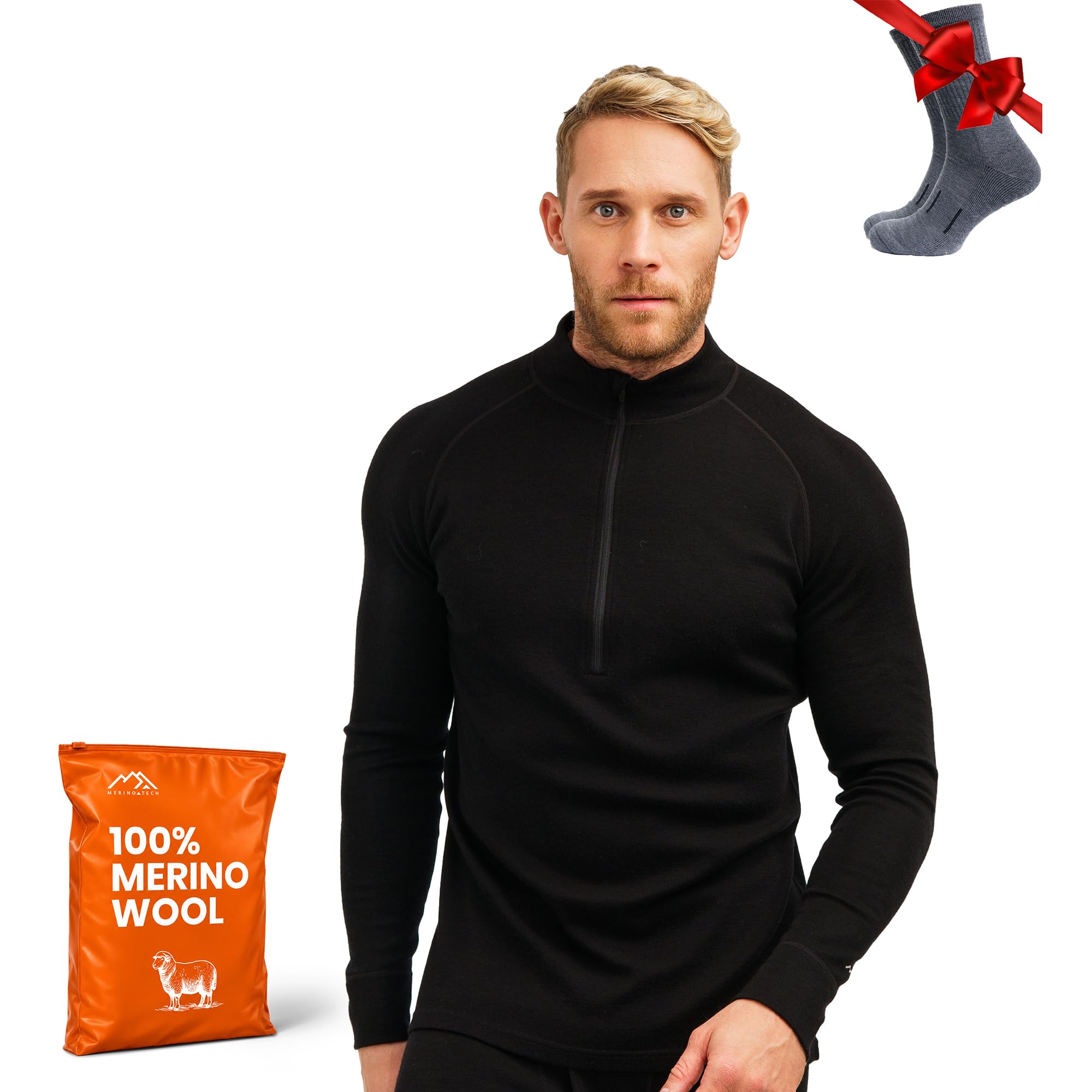
A half zip you can wear three days straight under a jacket and nobody will know — or smell it.
The half zip is what makes this different from a plain crew: you can vent at the neck when you heat up on the move, then seal it when you stop. The fiber is 17.5 micron merino (a finer grade than standard wool at 25+ microns, meaning it bends softly against skin instead of scratching) and it’s OEKO-TEX certified against 100+ substances. Merino’s natural odor resistance makes three to five days between washes realistic.
Weight flexibility runs from 165 g/m² for active pursuits and 40–60°F, up to 250 g/m² for cold weather, and 320 g/m² for 10–35°F and low activity. Sourced from Australian merino and RWS certified, it’s built for cold days that turn warm — the review pages praise it precisely for working in both. Value lands strong here, though durability is a mixed note: treat the knit gently and it holds shape.
The one number to know: 17.5 microns. That’s the itch-free promise in measurable form, and it’s a grade below standard wool.
Care warning: lay flat to dry — tumble drying permanently damages merino fibers. Get that wrong and a good sweater dies fast.
Worth grabbing if: you want a wool layer you’ll wear to the trailhead and then to dinner without changing.
Hold off if: you want a bottom too — this is the top half only.
7. MERINNOVATION Merino Wool Base Layer Set for Men
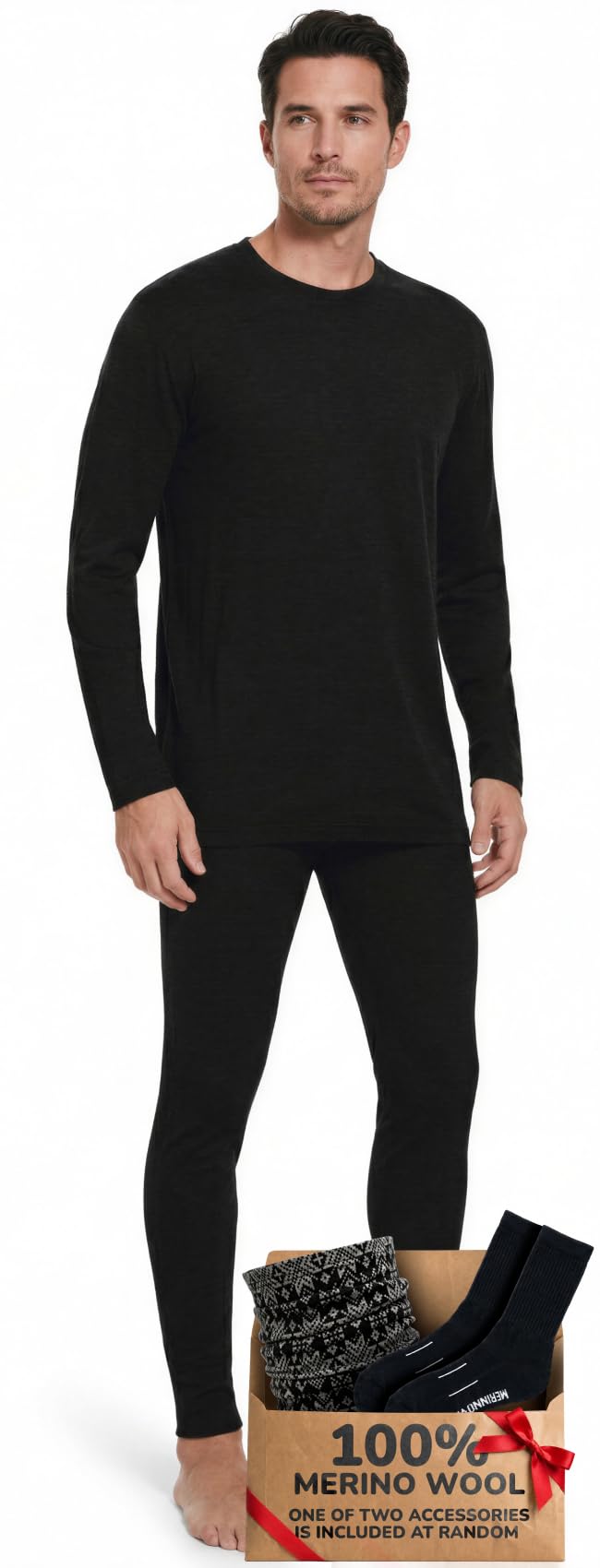
A full merino top-and-bottom set built for a week of wear without a wash.
Two weights, one construction. The 165gsm option targets higher-output days — running, skiing, active hiking where you’d overheat in anything heavier. The 250gsm handles sustained cold and deep winter layering. Both are 100% merino with the same fiber grade, so the only variable is warmth. The open knit vents heat as your output climbs, which is why it works from rest to effort without a mid-activity layer change.
This is the set for multi-day hikes and limited-luggage travel, because merino resists odor through consecutive days. Owners mention base-layer comfort in arctic cold, and the set includes a wool accessory. Sizing splits — some say true to size, others say it runs small — and durability is mixed, with hand washing keeping it in shape best.
Built for the backcountry
- 165gsm and 250gsm options cover active cold and deep winter
- Full set — long sleeve top and thermal bottom
- Merino odor resistance means fewer washes on the trail
Where it needs care
- Durability is mixed — wash by hand to keep the knit true
- Sizing feedback is split, so check the chart
Pick this if: you’re packing for a multi-day trip and can’t count on laundry access.
Be ready for: a size check and hand washing — that’s the upkeep a merino set asks.
8. Merino.tech Merino Wool Base Layer
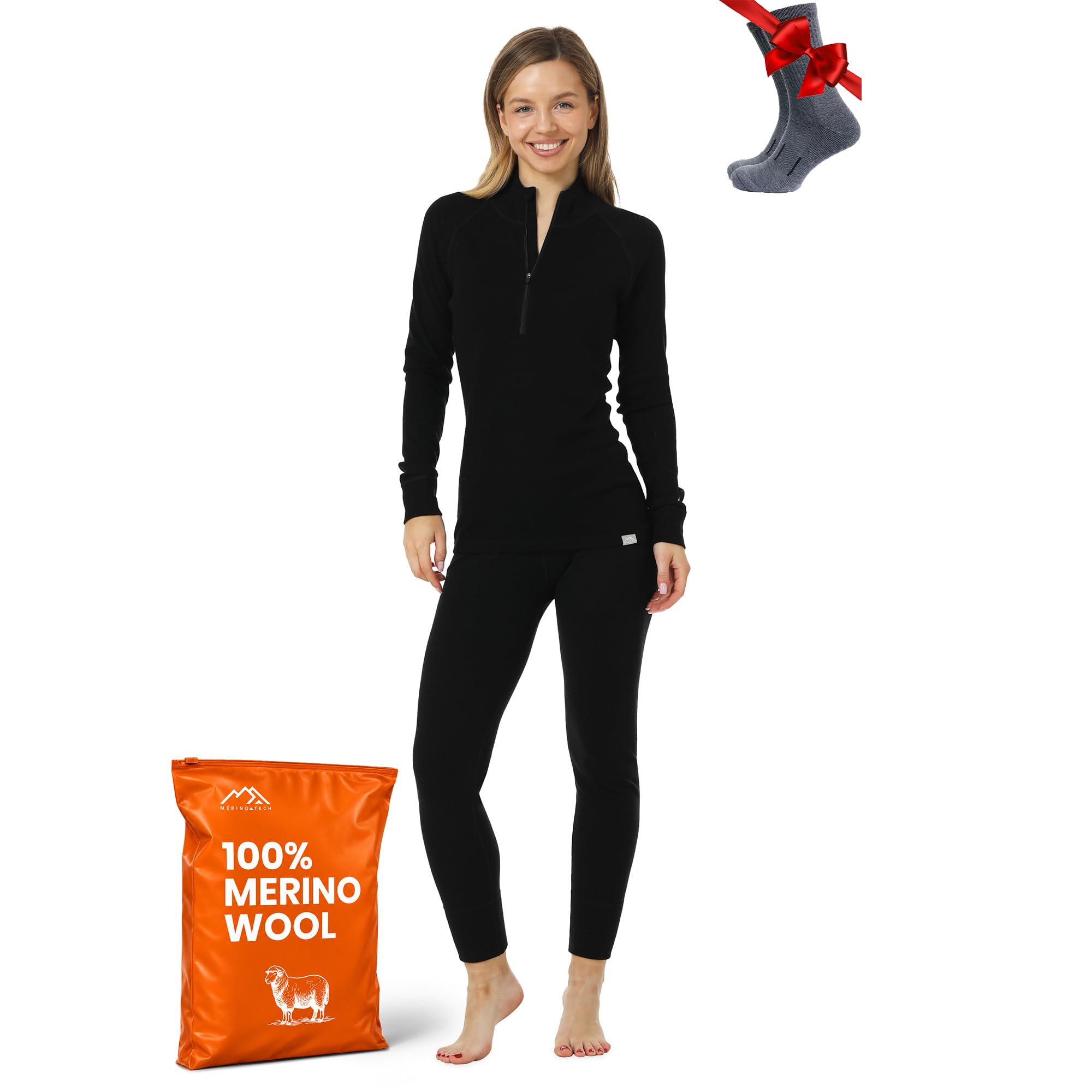
A women’s merino set with a quarter zip, so you can dump heat at the neck mid-run.
Warmth that doesn’t make you sweat is the standout here — the merino regulates temperature instead of trapping it, so you stay comfortable through cold-and-warm swings. The quarter zip gives you a vent on demand, and UPF 50+ blocks sun on bright snow days. Softness and appearance both rate well, and the fabric is itch-free 100% merino.
Quality is the most-praised trait overall, and it’s built for multi-day wear — naturally wrinkle resistant, which helps with travel. The fit column splits, though. Some find it true to size; others don’t, so treat the size chart as your guide rather than assuming. Durability also takes a little care: the maker recommends hand washing and laying flat to air dry for longer wear, while calling it washer/dryer safe at the same time — play it safe with hand washing.
The appeal: a complete women’s wool set — top and legging — with a quarter zip and sun protection, for trail or gym or hunting.
What to watch: mixed fit feedback and a hand-wash routine. Neither is a dealbreaker, but both reward a careful buyer.
Right choice for: women who want one merino set that works for skiing, fishing, the gym, or travel.
Consider a different route if: you want an easy machine-dry laundry cycle — merino asks for more care.
9. MERIWOOL Mens Base Layer

The heaviest wool on this list at 400g — built to sit still in serious cold and not flinch.
At 400g, these are the heavyweight base layer for frost, hunting stands, and low-movement days. The 100% merino knit is soft against skin — no itch — and adds real insulation under your hunting or ski pants. Merino adapts to your body’s temperature rather than trapping fixed heat, so you’re not too hot or too cold. Owners compare the warmth to a neoprene layer under your pants.
Buyers praise quality and fit most. The large size fits comfortably and feels great against the skin. Merino’s natural odor resistance lets you wear them repeatedly between washes, cutting laundry on a trip. One honest note: the 400g weight (grams per square meter, a measure of fabric thickness) means thickness is a trade-off — some find it heavier than expected, so these are for the coldest days rather than a mild-winter all-rounder. Value also splits, so weigh if you need this much warmth.
Why it’s the heavy hitter
- 400g heavyweight wool — the deepest warmth in the roundup
- Soft, itch-free 100% merino that adapts to body temperature
- Odor-resistant, so it goes multiple wears between washes
Honest limits
- Thickness and weight draw mixed notes — this is a cold-day pant, not a mild one
- Value is a split opinion against cheaper fleece options
Buy these for: late-season hunting, deep-winter skiing, or any sit-still cold where your legs need maximum insulation.
Skip for: mild-winter daily wear — you’ll want a lighter weight than 400g.
Know the Specs
Fabric Weight (g/m² and gsm)
Weight tells you how warm the knit is. A 165 g/m² layer is for higher-output cold where you make your own heat. A 250 g/m² layer handles sustained cold and low movement. A 400 g/m² layer is expedition gear for frost and standing around. Pick lighter for activity, heavier for stillness.
Micron Count and Itch
Microns measure fiber thickness. Standard wool at 25+ microns scratches. Superfine merino at 17.5 microns is finer than a human hair, so it bends softly against skin and doesn’t itch. Always look for a micron number when a wool layer claims to be itch-free.
Moisture Wicking vs Trap
Wool absorbs moisture and lets it evaporate, so it insulates even when damp. Fleece-lined synthetics trap sweat at the skin, which is fine for low-output cold but turns clammy on hard effort. Match the fabric to how much you’ll sweat.
UPF Rating
UPF is the sun-protection grade for fabric, like SPF for skin. A UPF 50+ rating blocks most UV rays — handy on bright snow where sun bounces back up at you. Not every base layer publishes one, but the wool picks here do.
Common Questions
Is merino wool warmer than fleece-lined synthetics?
Will wool base layers itch?
What fabric weight should I choose for my winter?
Can I wear a base layer more than once before washing?
How do I wash merino wool base layers without ruining them?
Should I size up or down in a thermal base layer?
Do I need a top and bottom, or can I buy one piece?
What does UPF 50+ mean on a base layer?
Are merino base layers worth the higher cost?
The Bottom Line
For most cold-weather uses, the warmest base layers winner is the Minus33 Merino Wool Bottoms because 100% merino (a fine wool that keeps you warm even when wet) insulates when damp, resists odor, and the weatherproof wool house has been spinning fiber since 1916. If you need a full set for the trail, grab the MERINNOVATION Merino Set. And for the deepest cold on your legs, the MERIWOOL 400g Pants is the one to reach for — at the heaviest weight in the roundup, it’s the pick for standing still in serious frost rather than a mild-winter all-rounder.
How we choose
We do not accept paid placement. Every pick is matched to a real buyer and a real use-case; we do not hands-on test units.
Sources
Specifications: manufacturer listings and product documentation. Review insights: verified customer reviews, as of November 2026. Pricing: not shown on this page (it changes often); check the current price via the retailer link.
As an Amazon Associate, Tactical Gear Guy earns from qualifying purchases. This does not affect which products we feature.