Specs are compiled from manufacturer listings and verified buyer reviews and can change over time — please confirm the key details on the product page before buying.
Cold legs and a sweaty back are the two things that ruin a ski day, and both come down to the layer touching your skin. A proper thermal base layer moves sweat away from your body and holds warmth even when you stop moving on the lift. Get that layer wrong and no jacket will save you; get it right and you can ski bell to bell without shivering or overheating.
This guide is built by comparing the manufacturers’ published specifications and the patterns across verified customer reviews, so you get each pick’s real strengths and trade-offs instead of marketing spin.
Below you’ll find merino wool sets and synthetic options ranked by how they actually perform in cold, wet mountain conditions. Pick one and your layering problems end: this breakdown covers the best warmest base layer for skiing.
Top Picks

How To Choose The Best Warmest Base Layer for Skiing
The single biggest mistake skiers make is buying a thin summer-weight liner and expecting it to hold heat at 10,000 feet. Warmth on the mountain comes from fabric weight, fiber, and full-body coverage. Here is what actually matters when you are standing in the cold comparing labels.
Fabric Weight Tells You The Temperature Range
Ski base layers are graded by weight, written as grams per square meter (g/m²) — the mass of fabric in one square meter. A midweight knit around 180 g/m² keeps you warm on an active bluebird day without cooking you. A heavyweight like 400g is built for the deep-freeze days when the lift chair feels like a park bench in a freezer. Match the g/m² to the forecast and your activity level, not to the marketing name.
Merino Wool Versus Synthetic Knits
Merino wool comes from a specific breed of sheep, and its fibers are far finer than regular wool — that fineness is what stops the itch. It also absorbs moisture vapor and keeps insulating even when damp, which matters when you sweat on the way down. Synthetics like polyester dry fast and often cost less, but they can hold odor over a multi-day trip. Neither is wrong; the trade-off is merino’s warmth-when-wet against polyester’s quick-dry and lower price.
Top And Bottom, Not Just A Top
Your legs lose heat just like your torso, and the thighs and seat are the first places to feel it on a slow chairlift. A matching top-and-bottom set gives you consistent coverage under ski trousers. If you run hot on the descent, you can still pair a heavy bottom with a lighter top for balance.
Side-by-Side Comparison
| Model | Best For | Fabric Weight | Material | Piece Count | Amazon |
|---|---|---|---|---|---|
| Minus33 Merino Wool Bottoms★ Best Overall | Cold legs on the lift | — | 100% Merino Wool | Bottom only | Amazon |
| LAPASA Women’s Thermal SetBest Value | Budget full set for women | — | Synthetic blend | Top + bottom | Amazon |
| DANISH ENDURANCE Merino SetTop Performer | Active skiers who sweat | 180 g/m² | 80% Merino / 20% Recycled Polyamide | Top + bottom | Amazon |
| Merino.tech Base Layer Set | Multi-day wear, no washing | — | 100% Merino Wool | Top + bottom + beanie | Amazon |
| MERIWOOL Women’s 400g Thermal Shirt | Deep-freeze days for women | 400g | 100% Merino Wool | Top only | Amazon |
| Smartwool Classic Thermal Bottom | Slim-fit merino legs | Midweight | 100% Merino Wool | Bottom only | Amazon |
| MERIWOOL Men’s 400g Pants | Heaviest wool legs for men | 400g | 100% Merino Wool | Bottom only | Amazon |
| Under Armour Base 4.0 Crew | Below-zero cold for men | — | 78% Polyester / 22% Elasterell | Top only | Amazon |
Detailed Reviews
1. Minus33 100% Merino Wool Bottoms
Our pick — 4.5+★ from 950+ verified ratings; the strongest balance of quality and price.
A pure merino leg layer built by wool specialists, and the one most skiers should start with.
The core of these bottoms is simple: it is 100% merino wool, no synthetic filler, which is what lets the fabric insulate even when it takes on moisture. That matters most in the leg zone, where sweat builds under bibs and then turns cold the moment you sit on a chairlift. A wool knit that keeps working when damp is exactly the trait you want under ski trousers.
The brand itself is a wool house first — Minus33 grew out of a family-owned textile business that has been in the wool trade, by its own account, since 1916. That heritage shows in the finishing: flat lock seams sit flush under a shell so they do not dig in when you bend into a turn. Owners are consistently won over by the same thing, that the quality and the warmth both hold up ride after ride, and comfort is right behind them in what gets talked about.
Here is the honest catch. These are bottoms only, so you still need a top to build a full system. A slice of owners also wish the value read a little better for a single leg layer. Both are fair notes, not flaws — you are paying for pure merino and a maker that lives in wool.
What earns the top spot
- Pure 100% merino wool insulates even when it gets damp from sweat
- Flat lock seams sit flush under ski trousers without rubbing
- Itch-free wool that owners find genuinely soft against the skin
- Warmth holds through repeated cold-weather days
What to weigh first
- Bottoms only — you will need a matching top
- One leg layer commands a premium-merino price
Go for it if: your legs are the first thing to go cold on the mountain and you want pure wool doing the work.
Pair it with: a merino top from this list, because this pick covers your legs but not your core.
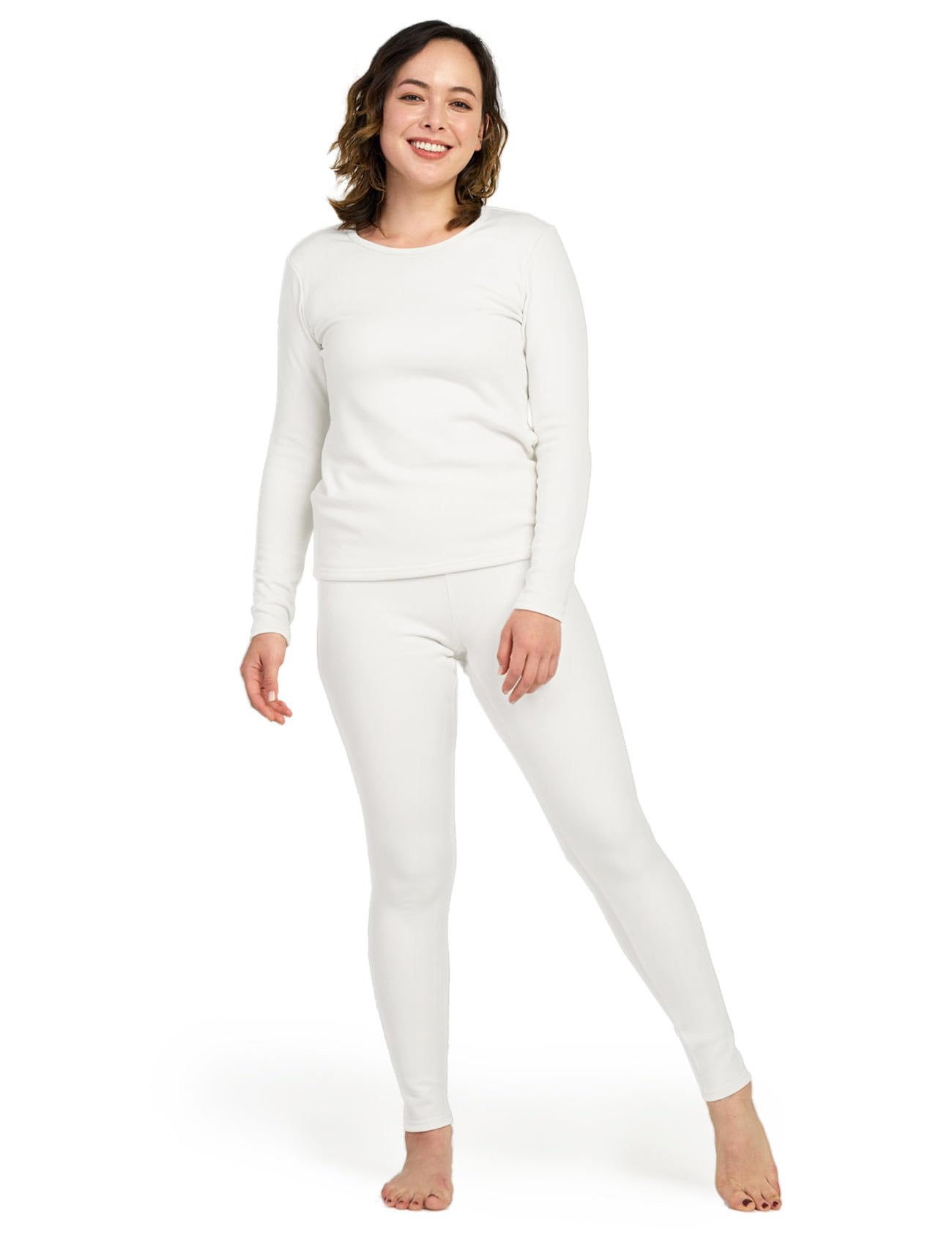
2. LAPASA Women’s Thermal Underwear Set
A whole top-and-bottom set that lets a casual skier cover both halves without paying merino money.
LAPASA sells this set in three weights — Light, Mid, and Heavy — and the Heavy version is the one to grab if you are matching it to cold ski days. Buying a matching set solves the coverage problem in one move: torso and legs get the same insulation, so you are not mixing a warm bottom with a thin top.
What people lean on here is how warm it runs without turning bulky under your shell, and the stretch that lets you move freely on the slopes. It pulls double duty around the lodge or as sleepwear on a ski trip, which stretches its usefulness past the mountain. The fabric is a synthetic knit rather than wool, so factor in the usual trade-off: it handles moisture differently than merino, which is worth knowing if you sweat hard.
Sizing is the one thing to get right. Some women find it runs a touch small, so check the size chart against your measurements rather than ordering your usual letter. Get that sorted and it is a sensible full-set entry point.
The set-value play: Two pieces for a budget-friendly outlay, with warm and stretchy fabric that moves with you and works as pajamas when the day is done.
The sizing note: It can run small for some body types, so measure first and size up if you are between letters.
Reach for this if: you want one purchase that covers top and bottom and you do not need wool.
Measure before you buy: the run-small feedback makes the size chart your friend here.
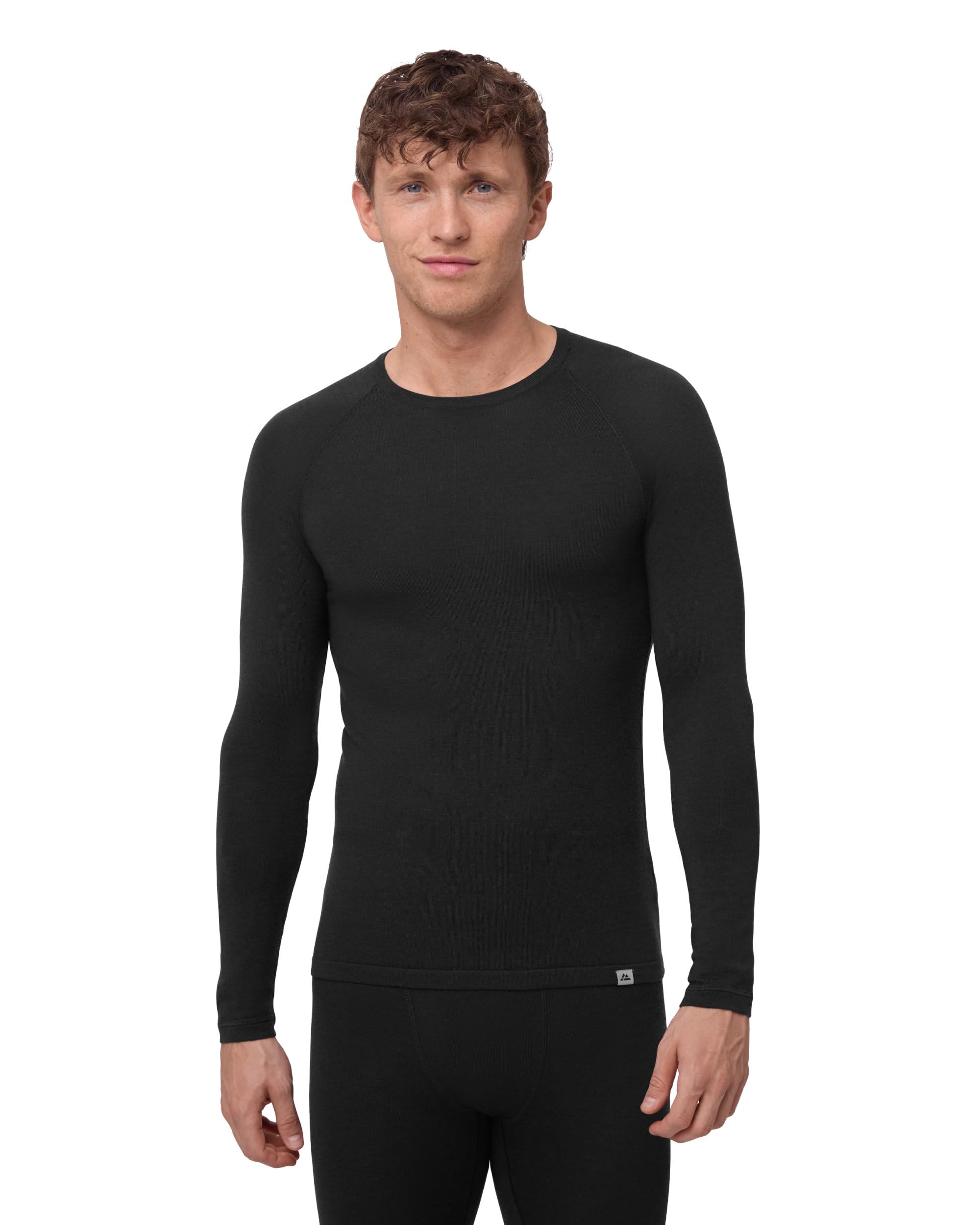
3. DANISH ENDURANCE Merino Wool Base Layer Set
A midweight merino set tuned for skiers who work up a sweat and need the layer to breathe with them.
You want a fabric weight of 180 g/m² (grams per square metre — how thick and warm the knit is). That midweight knit keeps you warm without overheating when you are skiing hard rather than sitting still. It suits active days, where a heavier layer can leave you sweating on the descent and then freezing on the next ride up.
The blend is 80% merino wool with 20% recycled polyamide, and that polyamide is there to add durability so the set keeps its shape through repeated use. Superfine 18.5-micron merino is what stops the itch — micron is just the fiber diameter, and the finer it is, the softer it feels against skin. Raglan sleeves and a stretchy knit let you reach and stride without restriction, and flat seams cut down on chafing on long days.
Unlike a plain synthetic set, merino naturally resists odor, so you get more wears between washes on a back-to-back ski trip. One care note: wash it cool on a gentle cycle with wool detergent and skip the tumble dryer, or you risk shrinking the wool. Follow that and the 180 g/m² knit keeps its shape for seasons, not a weekend.
Why active skiers like it: The 180 g/m² knit regulates heat during hard effort, the 18.5-micron merino stays itch-free, and it resists odor for multi-day trips.
The care deal: It is a wool garment, so cool gentle washing and air drying are non-negotiable if you want it to keep its fit.
Best for the skier who sweats: a balanced midweight set that breathes rather than bakes.
Know before you buy: it wants wool-cycle care, not a hot machine wash and dryer.
4. Merino.tech 100% Merino Wool Base Layer Set
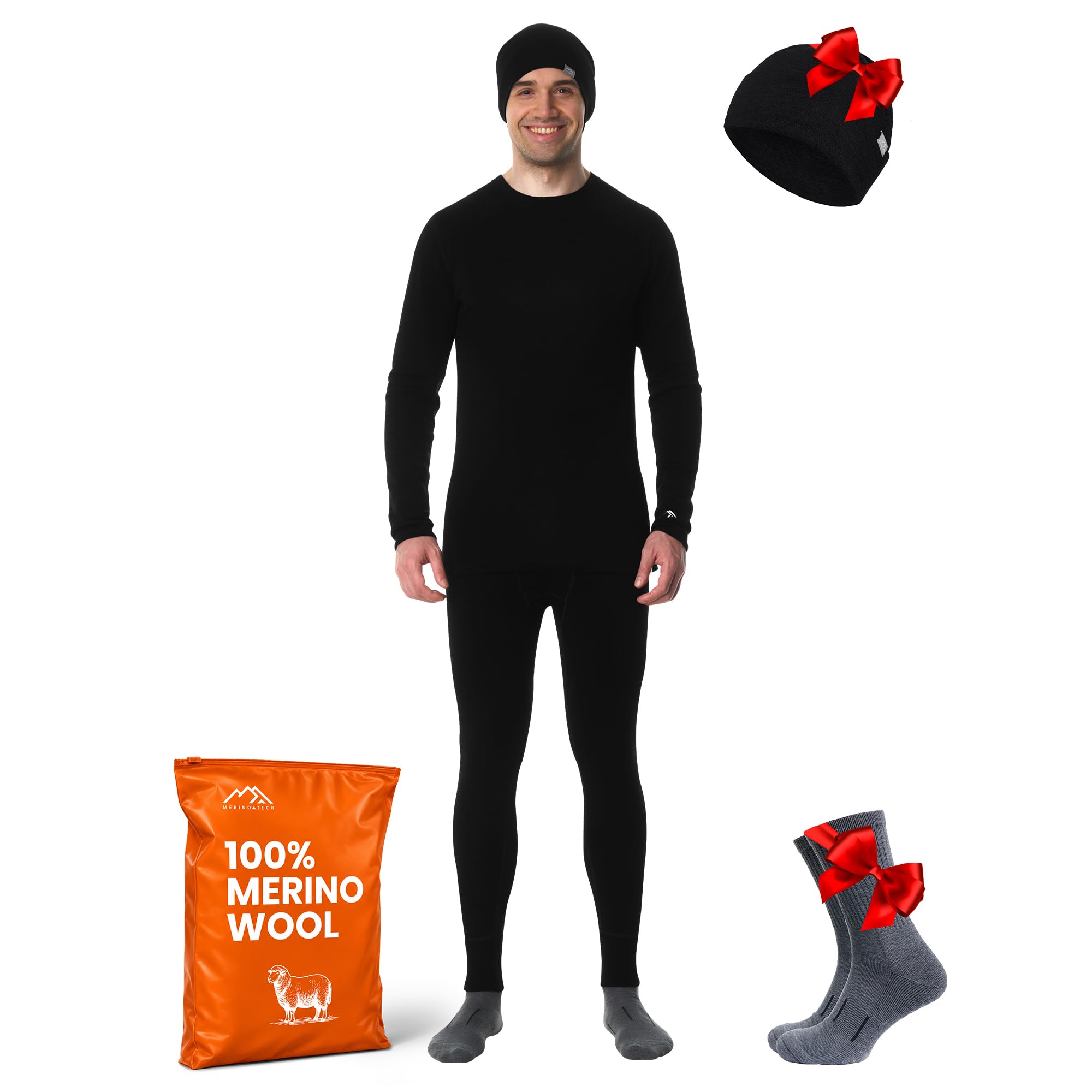
Three pieces of pure merino that cover head, torso, and legs — the multi-day traveler’s pick.
This is the only set here that throws in a beanie alongside the top and bottom, which turns a two-piece purchase into a complete next-to-skin kit for a ski trip. The fabric is 100% merino wool, so you get the same warmth-when-damp behavior that makes wool the go-to in cold, wet conditions.
What wins people over is the fabric quality — it feels soft against skin with no itch, and it fits true to size for most buyers. Merino’s natural odor resistance is the quiet hero on a trip: you can wear the set multiple days without it turning ripe, so you pack lighter for a weekend on the slopes. UPF 50+ sun protection is a small bonus for spring skiing days.
The midweight knit is meant for all-season layering, so on a genuinely brutal below-zero day you may want more insulation on top. The other thing to weigh is care: while it is washer and dryer safe according to the maker, hand washing and air drying will stretch its life. That is the price of keeping pure merino in shape.
Where it shines
- Three-piece kit with a beanie for full coverage
- 100% merino resists odor for multi-day wear
- Soft, itch-free feel that fits true to size
- UPF 50+ protection for sunny spring days
Where it asks more
- Midweight, so deep-cold days may need extra insulation
- Hand washing and air drying will extend its life
Pick it if: you want one purchase that covers head to legs in pure merino and travels light.
Layer more on brutal days: this is a midweight kit, so extreme cold calls for an extra mid-layer.
5. MERIWOOL Women’s 400g Merino Thermal Shirt

A 400g heavyweight wool top for women who feel the cold and want the thickest merino they can get.
For women who ski in genuine cold, this is the heavyweight option: a 400g wool top that is built to hold heat rather than barely cover you. It is 100% merino at 18.5-micron, so despite the weight it feels silky rather than scratchy — the fine fibers are what let a thick knit stay comfortable against bare skin.
The lifestyle flexibility is part of the draw. Pair it with layers on a frigid ski day, or wear it on its own for a cool evening out. Merino’s natural wicking and odor resistance keep you dry and fresh, which is why a top this warm does not turn clammy the way a heavy synthetic can.
A fair note: sizing runs mixed for some women, so check the chart before you order. And at 400g this is a winter-specific piece — it is overkill for mild spring skiing days, where a lighter top serves you better. But when the forecast is brutal, this 400g top does the heavy lifting.
The cold-day anchor: 400g of 18.5-micron merino delivers serious warmth while staying soft, and it works as a standalone top off the slopes.
The fit question: Sizing splits between buyers, so measure up rather than guessing your usual size.
Made for the always-cold skier: the heaviest merino top here, best on genuinely freezing days.
Not a spring piece: at 400g it is more insulation than a mild day needs.
6. Smartwool Men’s Classic Thermal Merino Bottom
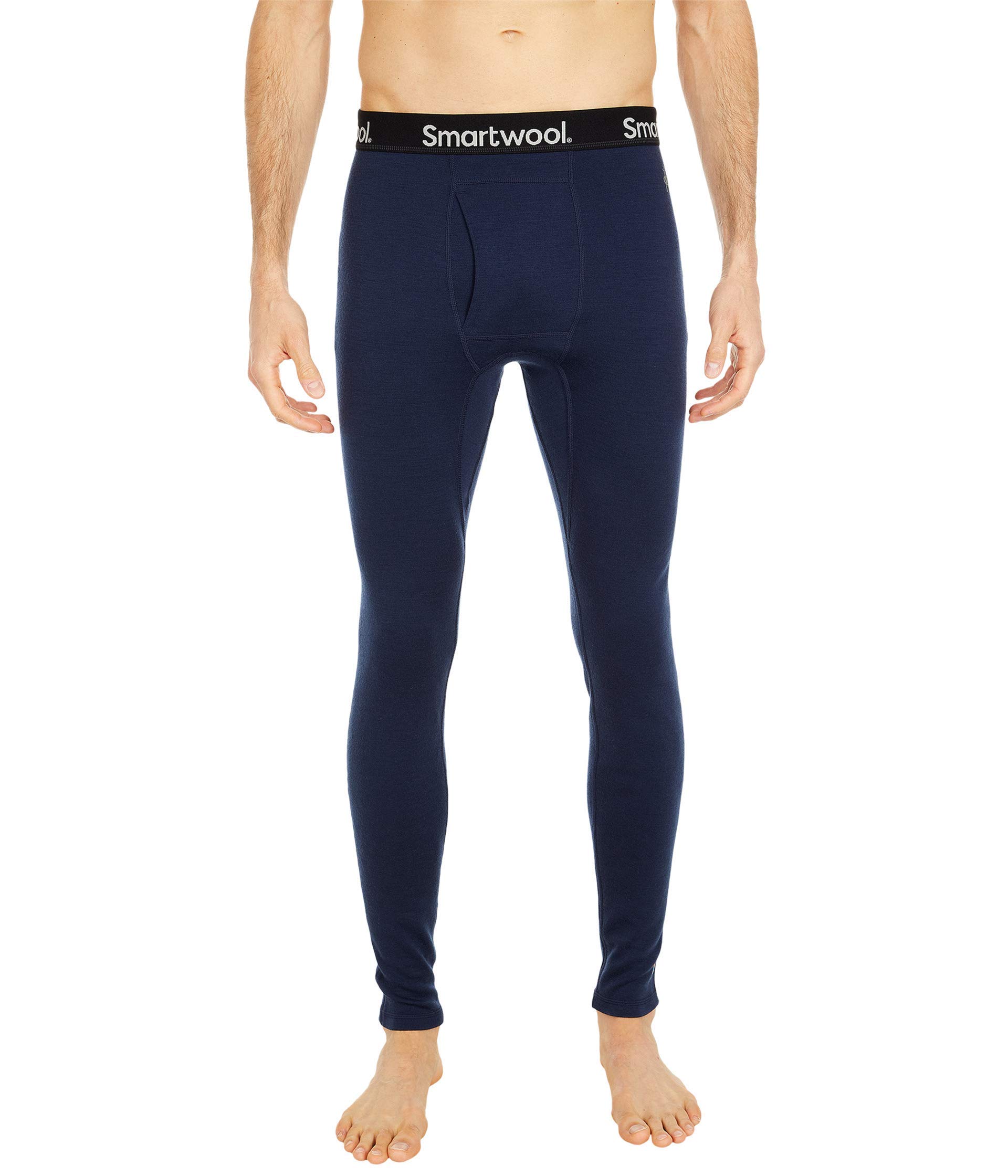
A slim-cut merino bottom that vanishes under ski trousers and moves with your legs.
Smartwool’s legend is in the knit, and this bottom uses a midweight 100% merino construction with interlock knitting that enhances breathability and moisture-wicking. In plain terms, the fabric moves sweat away from your skin as vapor so you stay warm and dry rather than chilled when you slow down.
The fit is the headline for a lot of buyers. It is cut slim to show a sleeker silhouette while still letting your legs move freely through the arms-to-legs motion of a turn. Flatlock seams cut chafing under a shell, and true-to-size fit means you can order your normal letter with some confidence.
The honest trade-off here is thickness. A share of owners find it thinner than they expected for a “thermal” bottom, and the value conversation splits — some see it as money well spent on merino, others less so. If you want maximum bulk and heat, look to the 400g options instead; if you want a refined slim layer that skis clean, this delivers.
The refined slim layer: Interlock-knit merino breathes and wicks, seams sit flat, and the slim fit slips under trousers without a wrinkle.
The thickness reality: It reads thinner than some expect for a thermal, so come to it for a slim midweight, not maximum bulk.
For skiers who want a clean slim fit: this bottom disappears under trousers and still wicks like wool should.
Skip if you want maximum bulk: the 400g wool bottoms deliver more sheer weight.
7. MERIWOOL Men’s 400g Merino Wool Thermal Pants
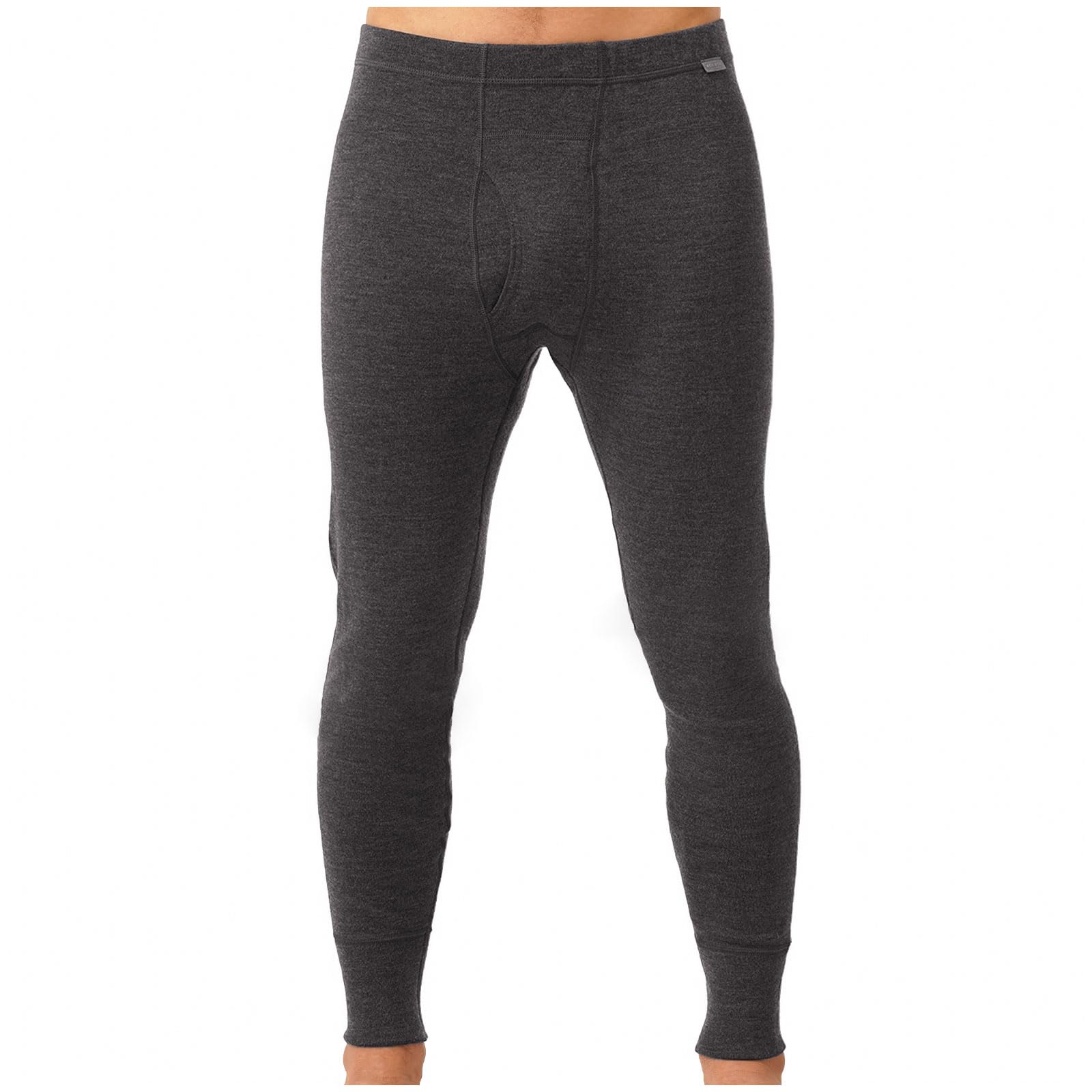
The thickest wool leg layer on the list, made for men who ski in serious cold and refuse to be cold.
If your legs are the weak point of your ski kit, this is the answer: 400g merino pants that put real weight of wool between your skin and the cold. The 400g knit is what makes a difference in freezing weather, holding warmth without restricting your range of motion under trousers.
What gets praised most here is the quality — pure 100% merino, soft against the skin and warm through the day. Merino’s natural odor resistance means you can wear them repeatedly between washes, which is handy on a multi-day trip. It adapts to your body temperature, so you are not stuck sweltering in the lodge either.
Two fair notes. A portion of buyers wish the value read better for the outlay, and the thickness conversation splits — some love the bulk, others find it more than they need. On a mild spring day, 400g is simply too much. On a deep-freeze day, it is exactly right, and that is the buyer this is built for.
Why it earns the heavyweight crown
- 400g merino holds serious warmth in freezing conditions
- 100% wool wicks sweat and resists odor for repeated wear
- Warmth without restricting range of motion
- Soft against skin with no itch
What to consider
- Value conversation splits for the price asked
- Real bulk — overkill for mild spring days
Buy it for the deep-freeze days: if cold legs ruin your day, 400g of pure merino fixes that.
Overkill for spring: save these for genuinely freezing conditions, not slush season.
8. Under Armour Men’s Base 4.0 Crew Shirt
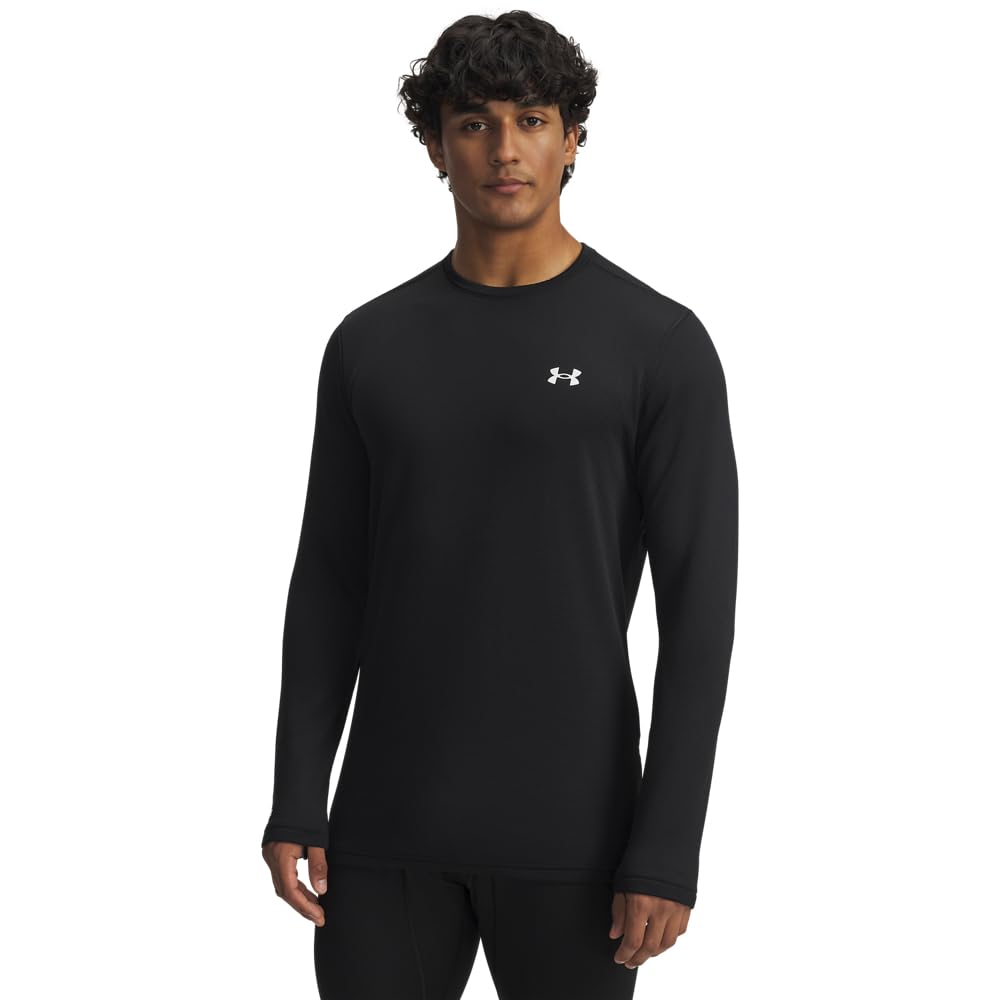
The synthetic top for stand-around cold — a brushed grid that traps heat without stacking bulk.
UA Base 4.0 is pitched at extreme cold and lower activity, which on a ski hill means slow chairlifts and long waits rather than hard charging. The trick is a soft, brushed grid interior that traps air to hold your body’s heat, so you stay warm without the thickness of a heavy wool knit.
It is 78% polyester with 22% Elasterell, a knit that wicks sweat and dries fast, and it moves with 4-way stretch rather than fighting you. Owners find it a solid base layer for cold-weather work and cold days on the slope, with a fit and comfort that lands right. Unlike wool, though, polyester can build odor over a long trip, so plan to wash it more often.
Value is the recurring question here — some find it worth it, others find it pricier than they would like for a synthetic. If you run cold when you are idle and want a technical synthetic that dries fast, this earns its place. If odor resistance over multiple wears matters most, wool is the better route.
Where it wins: The brushed grid traps heat without bulk, and the 4-way stretch polyester dries fast on hard-charging days.
The synthetic catch: Polyester holds odor more than wool, so it needs more frequent washing on long trips.
Get one if: you run cold standing around and want a fast-drying synthetic for extreme cold.
Go wool instead if: you want multi-day odor resistance without mid-trip laundry.
Know the Specs
Fabric Weight (g/m² and grams)
Weight is the grams of fabric per square meter — a higher number means more insulation. A 400g merino knit is a heavyweight built for freezing days, while a 180 g/m² merino is a midweight for active skiing where you sweat. Match the weight to how cold it is and how hard you will be working.
Micron And Itch
Micron is the diameter of a wool fiber. Merino at 18.5 microns is fine enough to feel smooth against bare skin rather than scratchy — that fineness is what separates a comfortable merino base layer from the coarse wool sweaters of old.
Moisture Wicking And Warmth When Wet
Wicking is a fabric’s ability to pull sweat off your skin and move it outward to evaporate. Merino keeps insulating even when it takes on moisture, which is why it holds warmth on a lift ride after a sweaty descent. Synthetics dry fast too, but they can build odor over repeated wears.
Full Set Versus Single Piece
A top-and-bottom set gives consistent coverage, so your legs and torso get the same insulation. A single piece is fine if you already own the other half or want to mix a heavy bottom with a lighter top to balance heat.
Common Questions
Is merino wool or synthetic warmer for skiing?
What fabric weight is warmest for a ski base layer?
Do I need a full set or just a top for skiing?
Will a merino base layer itch against my skin?
How should I wash a merino wool base layer?
How many days can I wear a merino base layer before washing?
Is a midweight or heavyweight base layer better for spring skiing?
Can I wear a merino base layer as everyday clothing?
Does a warm base layer work under ski trousers without adding bulk?
Which is better for cold legs, wool or a synthetic blend?
The Bottom Line
For most skiers, the warmest base layer for skiing depends on one reliable move: the Minus33 Merino Wool Bottoms. Pure merino (a soft, warm wool) keeps your legs warm even when sweat builds under your shell. If you want a full top-and-bottom set in merino that breathes during hard effort, grab the DANISH ENDURANCE Merino Set. And for the absolute coldest days when you refuse to be cold, the MERIWOOL 400g Pants are the heavyweight answer. Pick the weight for your forecast, keep the wool cool-washed, and your days on the mountain stop ending early because of the cold.
How we choose
We do not accept paid placement. Every pick is matched to a real buyer and a real use-case; we do not hands-on test units.
Sources
Specifications: manufacturer listings and product documentation. Review insights: verified customer reviews, as of July 2026. Pricing: not shown on this page (it changes often); check the current price via the retailer link.
As an Amazon Associate, Tactical Gear Guy earns from qualifying purchases. This does not affect which products we feature.