Specs are compiled from manufacturer listings and verified buyer reviews and can change over time — please confirm the key details on the product page before buying.
Cold, wet legs end a day outdoors faster than almost anything else. The fix is a pair that does two jobs: a shell that blocks rain, snow and wind, and a fleece or insulated lining that holds your body heat. This guide covers nine pairs that do both, sorted by who they actually suit.
This guide is built by comparing the manufacturers’ published specifications and the patterns across verified customer reviews, so you get each pick’s real strengths and trade-offs instead of marketing spin.
The biggest mistake buyers make is grabbing an unlined shell and calling it winter-ready. Below, you get warm linings plus real waterproofing, all in one place — these are the warm waterproof pants worth pulling on before you head out into the slush.
Top Picks
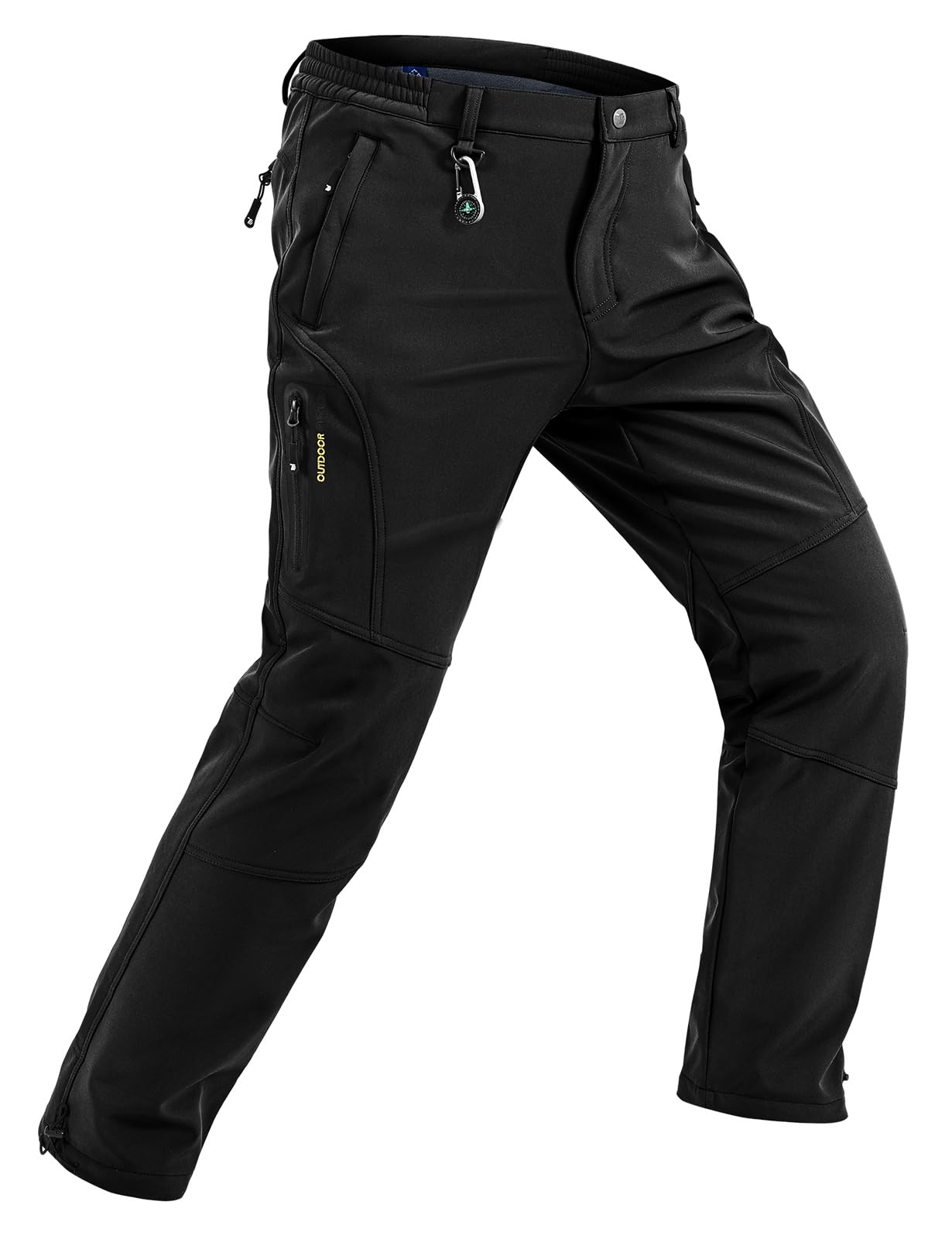
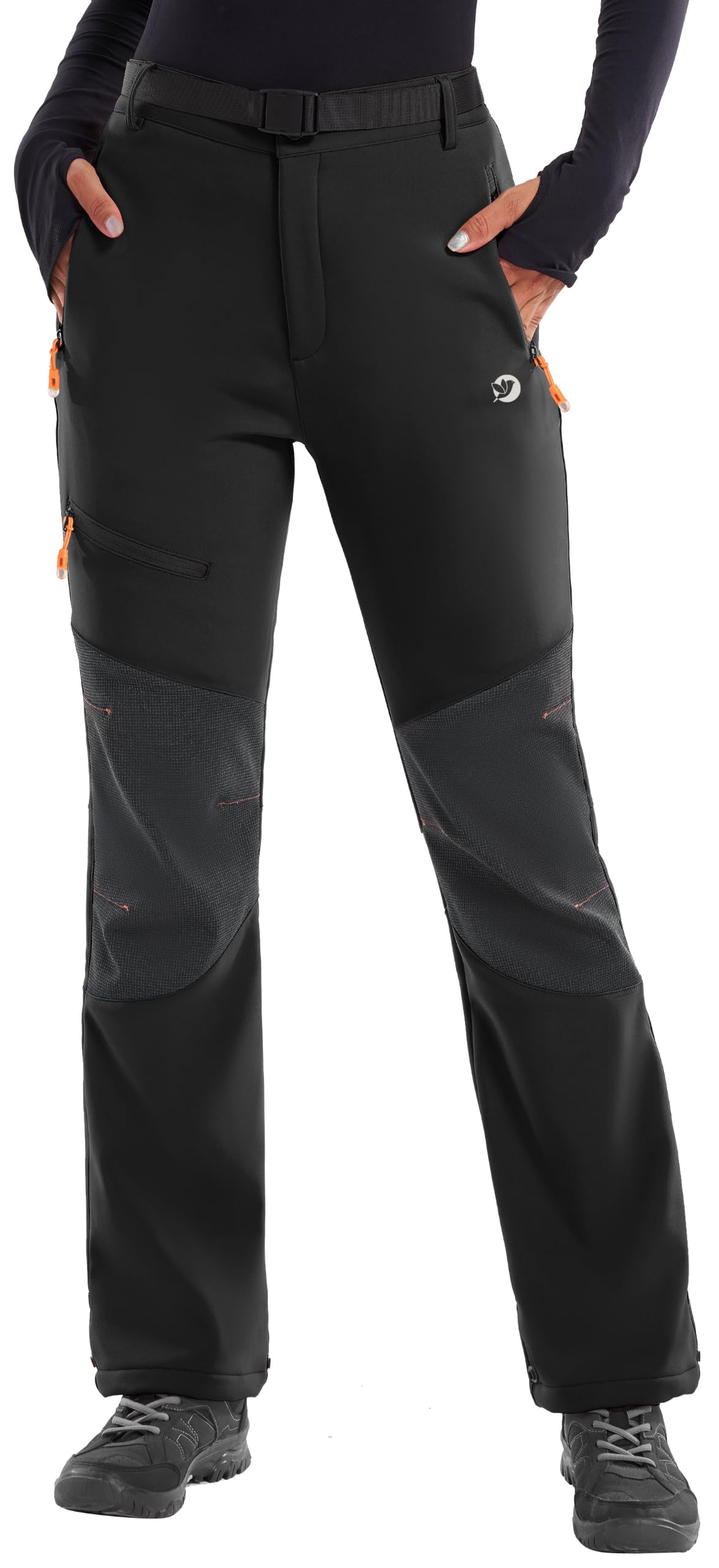

How To Choose The Best Warm Waterproof Pants
Two layers decide whether a pair of winter pants actually works: the outer shell that blocks water and wind, and the inner lining that traps your body heat. Nail the shell but skip the lining, and you will feel it within ten minutes outdoors.
Read the shell before the lining
Look for an explicit waterproof or water-resistant claim on the outer fabric, not just “winter pants” in the title. Many of these pairs use a softshell face backed by a TPU membrane — a thin plastic film that stops water droplets while letting sweat vapour pass out. Others use a DWR (durable water repellent) coating that makes water bead and roll off the surface. DWR is a coating, so it wears and washes off over time and needs re-treating; a membrane sits inside the fabric and is not affected the same way.
Match the lining to your activity level
A fleece lining traps warmth without much bulk, which suits hiking, snowshoeing and standing around in cold weather. Thicker insulated fills add more heat but cut down on how freely you can move. If you plan to climb or ski hard, a lighter fleece layer under a windproof shell usually beats a heavy fill, because you will overheat on the climb and chill on the lift.
Details that keep snow out
Boot gaiters (an inner cuff that wraps around the top of your boot) and zippered ankles are the two features that separate a real snow pant from a cold-weather trouser. Both let you get the pant leg over a bulky boot and seal the gap where snow sneaks in. Reinforced knee patches also matter if you kneel or scramble over rocks.
Side-by-Side Comparison
| Model | Best For | Lining | Water Protection | Fit Note | Amazon |
|---|---|---|---|---|---|
| TBMPOY Men’s Snow Pants★ Best Overall | All-round winter hiking | Fleece lined | Waterproof softshell | Snug below the knee | Amazon |
| IUGA Snow Pants WomensBest for Skiing | Skiing and snowboarding | Fleece lined | Waterproof softshell | Adjustable hemline | Amazon |
| Postropaky Mens Ski PantsBest Zippers | Cold-weather hiking | Insulated softshell | Waterproof | YKK zippers | Amazon |
| Heathyoga Snow Ski Pants Women | All-day movement | Fleece insulated | DWR water-repellent | Adjustable waist | Amazon |
| Mens Winter Hiking Snow Pants | Camping and cold hikes | Fleece lined | Water repellent | Runs small | Amazon |
| TACVASEN Men’s Ski Snow Pants | Ice fishing and travel | Fleece lining | Water and stain resistant | Five pockets | Amazon |
| BASUDAM Men’s Work Pants | Workwear and cycling | Fleece lined | TPU membrane | Elastic waistband | Amazon |
| Women’s Polar Fleece Lined Pants | Horseback and wet trails | Polar fleece lined | Water resistant | Check the size chart | Amazon |
| clothin Men’s Waterproof Ski Pants | Deep snow and skiing | Fleece lined | Fully seam-sealed | Boot gaiters | Amazon |
Detailed Reviews
1. TBMPOY Men’s Snow Pants
Our pick — 4.5+★ from 750+ verified ratings; the strongest balance of quality and price.
The pair that keeps your legs dry and warm through wet snow, wind and a full day outdoors.
A waterproof softshell outer with a fleece lining inside covers both jobs. The shell blocks snow, rain and wind, while the fleece traps the heat your legs already make, so you get insulation without a heavy fill. For hiking, shovelling or snow-shoeing in wet, windy cold, that combination is exactly what you want on your legs.
What wins people over here is warmth — it is far and away the most-praised trait, followed closely by how well the pants stay put on the trail. The lower legs are cut snug below the knee, which keeps the hem out of the way of your boots and stops drafts crawling up. Zippered pockets give you somewhere secure for keys and a phone, and a back zip pocket adds a little extra storage.
Honest heads-up on two fronts. Water resistance divides opinion — most find it holds up fine in snow, but a few have hit wet conditions that pushed it past its limit, so treat it as a winter shell rather than a downpour suit. And the fit is on the snug side through the lower leg, which suits a trim build better than a heavier thigh and calf. The tight hem is a feature on the trail; just be sure the sizing works for your build before you commit.
Why This One Leads
- Fleece lining plus a waterproof softshell keeps legs warm and dry together
- Warmth is the quality owners call out above everything else
- Snug lower leg stays out of your boots and blocks drafts
- Zippered pockets keep essentials secure on the move
Where It Wants Care
- The snug below-knee cut suits a trim build better than a heavier one
- Water resistance is a winter-shell level, not a heavy-rain level
Reach for this if: you want one pair that handles wet snow, wind and a long hike without fuss.
Look elsewhere if: you carry a lot of bulk through the calves and want a roomier leg.
2. IUGA Snow Pants Womens
Built for the lift line and the groomers, with the boot and knee details skiers actually need.
This one is aimed squarely at the slopes. A softshell face keeps water out while still letting the fabric breathe, and a fleece layer sits right against the skin for warmth without a puffy cut. Unlike a plain insulated trouser, it adds a boot gaiter and a reinforced knee patch — the gaiter wraps around your boot to seal the snow gap, and the knee patch takes the wear from kneeling and pole work.
The cuff snaps are a smart touch: they flip between two different hemline positions, so you can run the hem short over a ski boot or long for walking around the lodge. Four zippered pockets handle a pass, a phone and a snack. It is cut specifically for a woman’s frame, which is why the fit reads cleanly rather than boxy.
One thing to plan for: the maker states an allowance of up to 0.4 inches of size difference from manual measurement, so the sizing is not laser-exact. Order with that in mind rather than expecting a precise tailored feel.
Slope-ready details: boot gaiter, reinforced knee, two-position cuff snaps and four zip pockets give you a ski-specific setup rather than a generic winter pant.
The sizing caveat: allow for the stated 0.4-inch measurement variance and you will land a better fit first time.
The call: a natural fit for women heading to the mountain who want gaiter and knee protection baked in.
Second thought if: you need a precise tailored fit and cannot tolerate sizing variance.
3. Postropaky Mens Snow Ski Pants
An insulated softshell that holds warmth in 20-degree weather and gets you out of your boots in a hurry.
The number that matters on this pair is the ankle zipper. It runs down the bottom of the leg so you can get the pants on and off over a chunky boot without wrestling — the exact ritual that makes snow pants annoying. It pairs that with a YKK zipper up top and a large-capacity pocket for a phone or gloves.
Owners call these comfortable for cold-weather hiking and report staying warm at 20 degrees. Build quality is the standout — it leads the praise by a good margin, with warmth close behind. The plain softshell look also means they pass as everyday trousers off the trail, not just on it.
The one spot to watch is the zipper hardware. Most buyers have no trouble, but a minority report the zipper binding or failing early, so be a little gentle with the pull and do not force it over a bunched hem. Water resistance splits the same way: fine for snow and light wet, less certain in a sustained soaking.
What sells it: that bottom-leg zipper turns boot-on, boot-off into a two-second job, and the YKK hardware up top feels solid.
The trade-off: a small share of buyers report zipper trouble, so treat the pulls with a little care rather than yanking.
Pick it if: ease over boots and a sturdy insulated hike are your priorities.
Skip the rush if: you need proven bombproof zippers above all else.
4. Heathyoga Snow Ski Pants Women

The pair you forget you are wearing — fleece warmth without the bulk that fights your stride.
Where this pair stands apart is movement. The fabric is flexible, the knees are reinforced, and the cut is built to let a woman move naturally through skiing or hiking rather than waddling. A DWR coating (a water-repellent finish on the fabric surface) turns snow, wind and light rain aside, and the fleece interior adds warmth without turning the leg puffy.
The fit is the clear star of the show — it draws more praise than any other trait, with the quality itself close on its heels. There is plenty of room through the legs and hips, the waist adjusts, and ankle zipper openings make it easy to get the hem over ski boots while sealing out snow and wind. Buyers have put them to work camping in wet fall weather and in snow, which says a lot about how they hold up when conditions turn.
Because the DWR is a surface coating, it will wear off with use and washing over time. Plan to re-treat the fabric down the road to keep the water beading, or accept that heavy rain will eventually soak through.
What Women Keep Coming Back For
- Flexible fabric and reinforced knees let you move through skiing and hiking
- Generous room through the hip and leg, with an adjustable waist
- Ankle zips get the hem over boots and shut out snow and wind
- Fleece warmth without the bulk that fights your stride
The Honest Limits
- DWR is a surface finish and needs re-treating as it wears
- Light rain is handled; sustained soaking is a stretch
Best for: women who want warmth that moves with them, not against them.
Heads up: budget for re-treating the water-repellent coating to keep it working.
5. Mens Winter Hiking Snow Pants
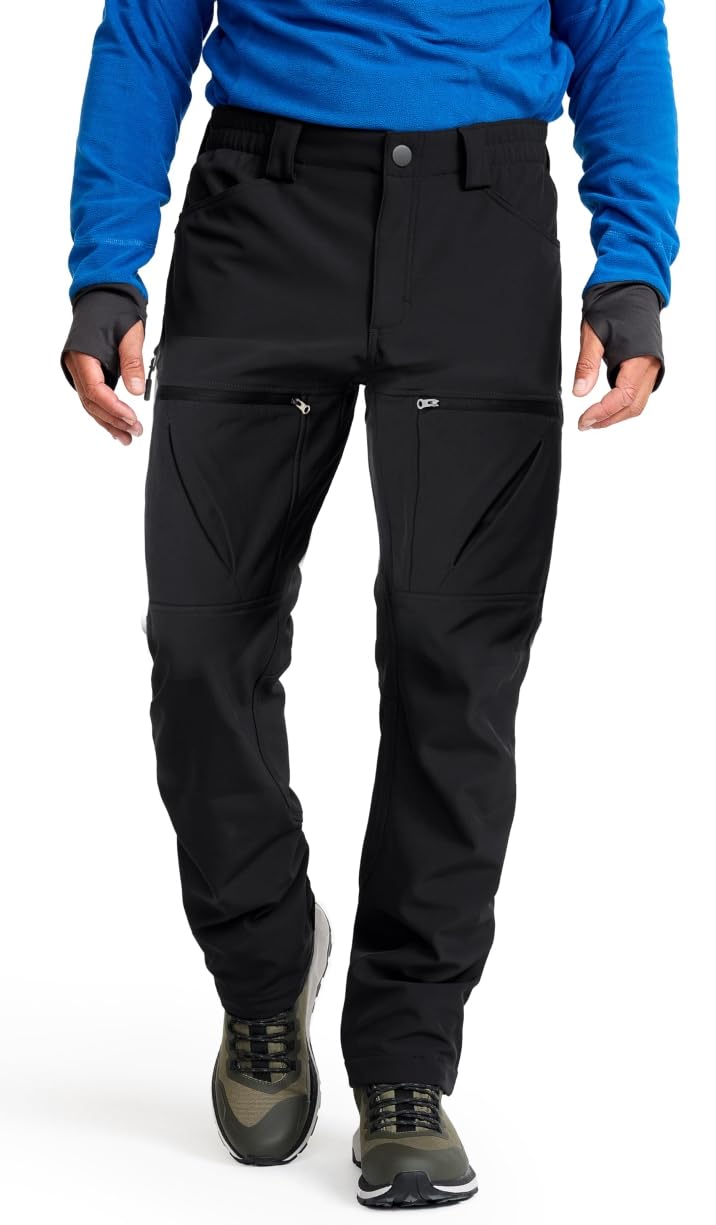
A cargo-pant take on the winter shell — warm, water-repellent and built for camp duty.
This is the softshell you toss in the truck for camping and cold hikes. The outer fabric sheds water while a fleece lining holds warmth, and the cargo styling gives you the pockets that a plain ski pant skips. For pitching a tent in the cold or a muddy trail walk, that combo covers the basics well.
Quality is the trait that draws the most praise here, with warmth and water resistance both landing well. Buyers describe the pants as comfortable and good value for what they cost, and the water-repellent finish handles light snow and drizzle without drama.
The catch to plan around is sizing. Several buyers find the pants run extremely small and feel tight through the thighs, so this is a pair to size up on rather than trust your usual number. Get the size right and the rest of the package works; get it wrong and the fit will fight you.
What it gets right: warmth, water repellency and cargo pockets for camp and cold-weather chores, at a value-tier cost.
Size up: the thighs and overall fit come in tight, so order a size larger than your usual.
Go for it if: you want an affordable lined shell for camping and don’t need a tailored ski fit.
Think twice if: your build runs roomy through the thighs and you dislike sizing up.
6. TACVASEN Men’s Ski Snow Pants
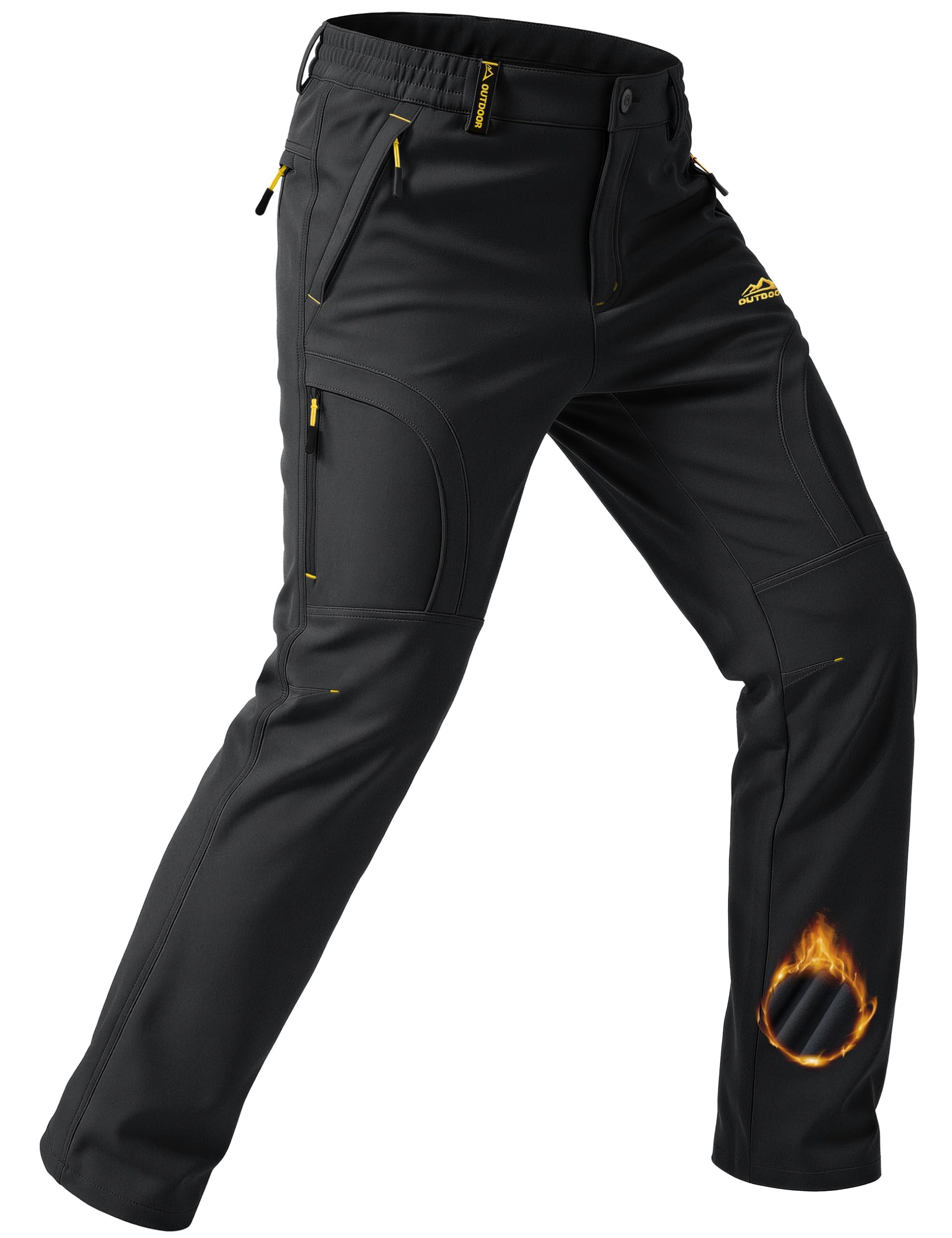
Five pockets, a fleece lining and a stain-resistant shell that jumps from hiking to ice fishing without complaint.
The headliner is flexibility of use. This is a softshell with a fleece lining and a face fabric that pushes water and stains away, so it works for winter hiking, skiing, travel and ice fishing — situations where you are standing around in cold or kneeling in slush. Breathability keeps sweat from building up under the shell, which matters once you start moving.
Warmth leads the praise, with fit right behind it, and buyers single it out for staying warm without feeling bulky. It dries fast, handles wind well, and the five pockets mean you can carry a phone, keys and a few small tools without a bag.
Do not expect the same water protection as a fully seam-sealed ski shell. This is water-resistant, which covers snow, spray and light rain comfortably but not a heavy sustained soaking.
Best trait: warmth without the bulk — it insulates while still letting you move, and the stain-resistant face shrugs off grime from ice fishing or trail work.
Reality check: water-resistant, not seam-sealed, so treat it as snow-and-spray gear rather than a rain shell.
Suits you if: you want one pair of lined pants for cold days across hiking, travel and fishing.
Not the one for: you if your winter means standing in hours of driving rain.
7. BASUDAM Men’s Work Pants
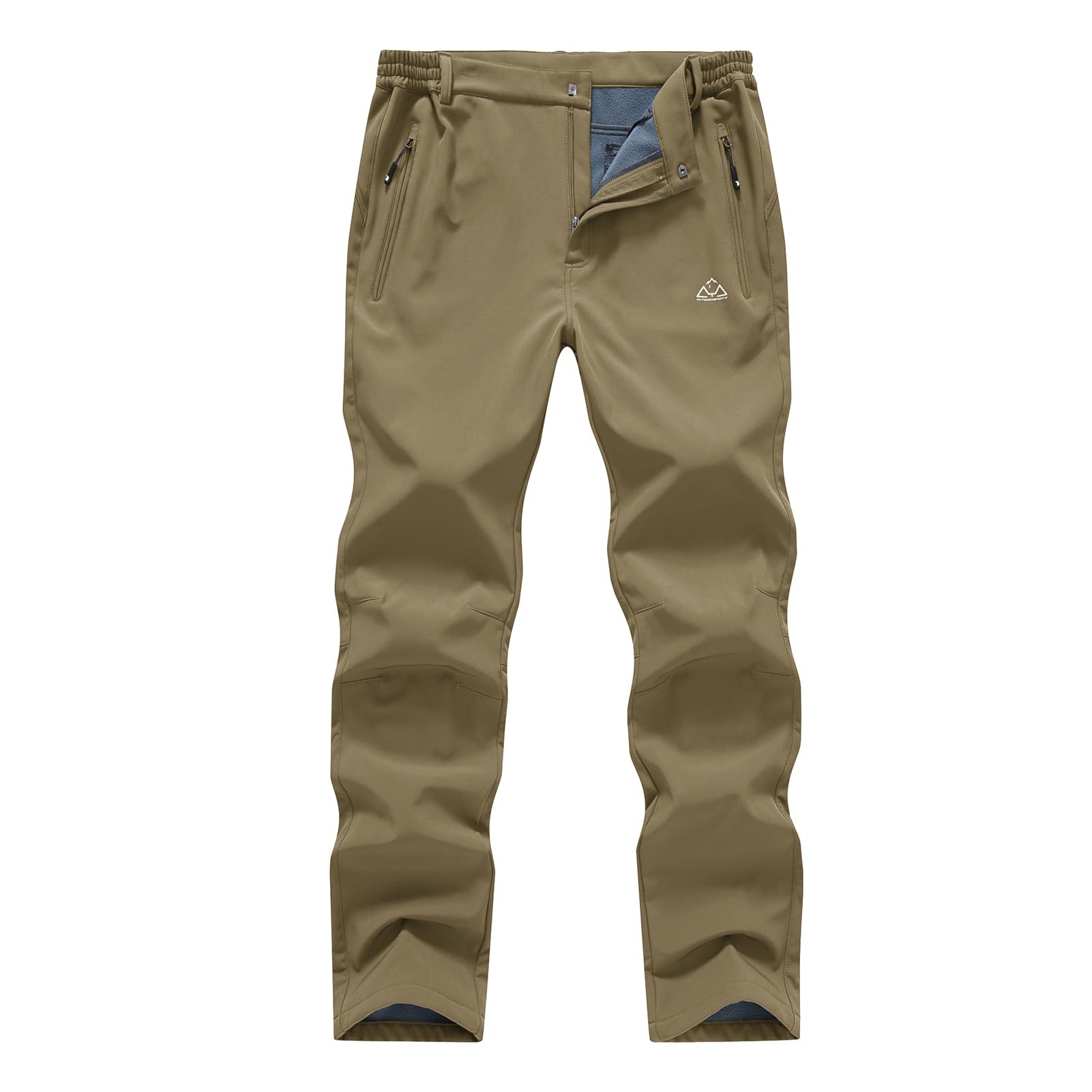
Workwear that keeps out water and wind while a fleece layer keeps the cold off your legs.
The build here is about blocking. A TPU membrane (a thin plastic film bonded inside the fabric) sits behind the outer shell to stop water droplets getting through, while the fleece lining adds warmth without turning the leg heavy. Pleats at the knee add flex, so you can kneel or climb without the fabric fighting back.
Fit is the trait buyers appreciate most, and warmth is next. An elastic band on the side of the waist gives a comfortable, regular cut, and multi-zipper pockets keep tools and a phone secure. The maker lists cycling, running, hiking, jogging, motorcycling, climbing and workwear as the intended uses, so it is a genuine all-rounder rather than a slope-only pant.
The trade-off is that “regular fit” means it is not cut for a slim leg. If you like a tailored silhouette, this will feel looser than you want; the pleats and elastic waist are there for comfort and freedom of movement, not a sharp look.
What Earns Its Keep
- TPU membrane and fleece lining block water and wind together
- Knee pleats let you kneel and climb without the fabric binding
- Elastic side waist gives a comfortable regular fit
- Multi-zip pockets keep tools and a phone locked down
The Honest Note
- The regular cut runs looser than a slim fit
- Fleece is described as enough for good warmth, not a heavy fill
Works for: workwear and active cold days where you need to kneel, climb and stay dry.
Look elsewhere if: you want a slim, tailored silhouette.
8. Women’s Hiking Pants

A polar-fleece-lined shell that women have put through wet horseback rides and still come back warm.
Polar fleece (a thicker, loftier fleece) sits inside a water-resistant softshell here, which is the combo that keeps you warm when wet weather rolls in. Quality is what stands out most, with comfort right behind it. Buyers have taken these through wet conditions on horseback and found them up to the job, and the water and wind protection draw steady praise.
Appearance matters too — the Army Green colorway gets singled out as a good-looking option, and buyers call them decent for what they cost. It is a hiking-first cut, not a ski bib, so it suits trail walks, riding and cold-weather camp more than high-alpine vertical.
Fit is where to slow down. Sizing runs inconsistent and the fit draws mixed feedback, plus length and pockets split opinion. Check the size chart against your measurements and plan on possibly exchanging — the garment itself is solid, but the sizing needs attention.
What holds up: polar fleece warmth behind a water-resistant shell, with the Army Green finish turning heads.
Sort the size first: the fit and length run inconsistent, so measure against the size chart before ordering.
One for: women who ride or hike through wet, cold weather and want fleece-backed warmth.
Second guess if: an exact fit on the first try is a must.
9. clothin Men’s Waterproof Ski Pants

Fully seam-sealed with boot gaiters — the deep-snow setup you want after a fresh dump.
This is the most weather-protective pair in this lineup. Every seam is fully seam-sealed so water cannot track through the stitching, and boot gaiters wrap around your boots to keep snow from packing in. Zippered cuffs open wide to fit around bulky boots, and an adjustable waist plus a fleece lining complete a proper ski build.
Owners mention the seam-sealed shell and windproof layer holding up down to 15° weather, and the deep zippered pockets draw steady praise. The appearance gets called out as looking fantastic, and it has been put to work snow tubing as well as skiing.
The catch is upkeep. The maker states plainly that DWR (the water-repellent surface coating) wears or washes off over time, so the water beading will fade with use unless you re-treat it. Keep that in mind and the seam-sealed shell underneath keeps doing its job.
Cold-weather proof: fully seam-sealed seams, boot gaiters and zippered cuffs make this the deep-snow pick.
Maintenance note: the DWR finish fades with wear and washing; re-treat it to keep water beading.
Made for: deep snow, ski days and anyone who wants the strongest weather protection here.
Caveat: expect to re-treat the water-repellent finish over time.
Know the Specs
These four terms come up again and again on winter pants, so here is what each one actually means for you on a cold, wet day.
Fleece lining vs insulated fill
Fleece is a soft, brushed inner layer that traps the warmth your body already makes, and it adds that warmth without much bulk. Insulated fill is a thicker padding that holds more heat but can feel stiffer. Fleece suits hiking and movement; fill suits standing around in serious cold.
DWR (durable water repellent)
DWR is a coating on the outer fabric that makes water bead and roll off. It is not the same as a membrane — it sits on the surface and wears or washes off over time, so plan to re-treat it to keep the water beading.
TPU membrane and seam sealing
A TPU membrane is a thin plastic film bonded inside the fabric that stops water droplets while letting sweat vapour pass. Fully seam-sealed means the stitching is taped so water cannot sneak through the needle holes — a big step up in real wet conditions.
Boot gaiters and ankle zippers
A boot gaiter is an inner cuff that wraps around the top of your boot to seal out snow. Ankle zippers open the hem so it slips over bulky boots. Together they are the single best defence against snow crawling up your leg.
Common Questions
Will warm waterproof pants keep me warm in 20-degree weather?
What is the difference between waterproof and water-resistant winter pants?
Do I need boot gaiters on a ski pant?
How should I wash pants with a DWR coating?
Do these winter pants run small?
Are fleece-lined pants too warm for active skiing?
Can I wear warm waterproof pants off the trail?
Why do some waterproof pants still soak through after a season?
How do I get snow pants over bulky ski boots?
The Bottom Line
For most people, the warm waterproof pants winner is the TBMPOY Men’s Snow Pants, because it pairs a waterproof softshell with a fleece lining and nails the two things that matter most — staying warm and staying dry. If ski-specific detail matters more, grab the IUGA Snow Pants with its boot gaiters and reinforced knees. And for the deepest snow, the clothin Men’s Waterproof Ski Pants is the one to reach for, thanks to its fully seam-sealed shell. Whichever warm waterproof pants you choose, match the lining to how hard you will be moving, and check the fit before you head out.
How we choose
We do not accept paid placement. Every pick is matched to a real buyer and a real use-case; we do not hands-on test units.
Sources
Specifications: manufacturer listings and product documentation. Review insights: verified customer reviews, as of November 2026. Pricing: not shown on this page (it changes often); check the current price via the retailer link.
As an Amazon Associate, Tactical Gear Guy earns from qualifying purchases. This does not affect which products we feature.