Specs are compiled from manufacturer listings and verified buyer reviews and can change over time — please confirm the key details on the product page before buying.
If your garage ceiling is cluttered with a rattling rail and a motor hanging over your car, a wall-mounted opener is the fix. These units bolt to the wall beside the door and drive the torsion bar directly, which clears the whole overhead area and cuts most of the noise. The catch: a wall-mounted opener only fits a torsion-spring door with a front-mount bar. Below you’ll find nine units ranked by how they actually perform, from a sub- newcomer to premium jackshaft machines.
This guide is built by comparing the manufacturers’ published specifications and the patterns across verified customer reviews, so you get each pick’s real strengths and trade-offs instead of marketing spin.
Wall-mounted openers only work on a torsion-spring door, so the first thing to check is your spring tube before anything else. The list ahead separates the units that fit almost any torsion setup from the ones that need specific hardware, and it flags the models where installation is the easy part. Here is the honest breakdown of the best wall mounted garage door openers.
Top Picks

How To Choose The Best Wall Mounted Garage Door Openers
The first decision isn’t brand or price — it’s whether your door can accept a side-mount unit at all. A wall-mounted opener drives the torsion bar (the horizontal shaft above your door that holds the springs), so it needs a front-mount torsion setup. Extension-spring doors, one-piece doors, and Wayne Dalton Torquemaster systems generally won’t work. Measure your spring tube and confirm the mount style before you buy anything.
Check the spring setup before anything else
A jackshaft opener clamps onto the torsion bar and turns it directly. That means the bar has to run across the front of the door, above the opening. If your springs are the older extension type running along the horizontal tracks, or if your door is a single-piece tilt-up, the wall-mount design has nothing to grab. The Genie units are explicit that reverse-wound springs and low-headroom outside hook-ups will not fit. Measure first, order second.
Headroom and side clearance decide the model
Because there’s no rail overhead, wall-mount units clear up ceiling space for storage racks — that’s the whole appeal. But the unit itself needs room on the wall. The Genie 6072H-O asks for only 2.5 inches above and 7 inches to the side of the spring tube, and the Chamberlain RJO20 needs a standard outlet nearby. Check that outlet placement before you fall in love with a model.
Safety features worth paying for
Every unit here includes reversing safety sensors that stop the door if something blocks the path. The differences show up in the extras: an automatic door lock that deadbolts every time the door closes, rolling-code remotes that generate a fresh code on each press, and internal cable-tension monitoring that pulses the door before travel. For a door that opens onto a living space, those features matter more than motor wattage.
Quiet operation and where the noise goes
A wall-mount opener eliminates the ceiling rail, which is where most of the vibration and rattle come from in a traditional unit. Owners routinely call them near-silent next to the chain-drive unit they replaced. If a bedroom sits above the garage, removing the ceiling rail is the biggest noise cut available.
Side-by-Side Comparison
| Model | Best For | Door Capacity | Item Weight | Smart Control | Amazon |
|---|---|---|---|---|---|
| Chamberlain RJO20★ Best Overall | All-around best | — | 30.7 lb | myQ app | Amazon |
| ZUMI Automatic OpenerBudget Entry Point | Budget entry point | — | 18.46 lb | — | Amazon |
| Skylink G2Best for Tall Doors | Tall doors up to 12 ft | Up to 12 ft high | — | Orbit app, built-in Wi-Fi | Amazon |
| Genie 6072H-O | Compact fit | 850 lb, up to 14 ft tall | 26.9 lb | — | Amazon |
| Genie B6172H | Smart home integration | 850 lb, up to 14 ft tall | 31.2 lb | Aladdin Connect, Alexa, Google | Amazon |
| Chamberlain RJO101MC | Battery backup | — | 33.9 lb | myQ app, built-in Wi-Fi | Amazon |
| LiftMaster 8500 Package | Roll-up doors | — | 31 lb | — | Amazon |
| LiftMaster 98022 w/ Battery Backup | Top-tier with backup | — | 33.7 lb | Wi-Fi app control | Amazon |
Detailed Reviews
1. Chamberlain Smart Garage Door Opener RJO20 Wall Mounted
Our pick — 4.5+★ from 1,500+ verified ratings; the strongest balance of quality and price.
The direct-drive unit that turns your ceiling back into usable storage space.
The RJO20 is the model most people end up recommending to a neighbor, and the reason is straightforward: it does the three things a wall-mount opener is supposed to do without fuss. It mounts on the wall next to the door with a direct-drive system, so there’s no rail overhead and no vibration traveling through the ceiling. The included automatic lock secures the door every time it closes. And the myQ app lets you open, close, and check status from your phone, with schedules and notifications built in.
Weight is 30.7 pounds, which tells you this is a substantial piece of hardware — not a plastic toy. That heft is the point. The heavy body and direct-drive gearing are why the noise drops so dramatically compared to an overhead chain unit. Owners describe the quiet as the first thing they notice, followed closely by how much floor and ceiling space suddenly opens up.
The trade-off is the app ecosystem. myQ has moved more core features behind a subscription in recent years, and the app experience is the most common gripe in the review pages even among people who love the hardware. If you want phone control without any chance of a paywall, look at the Genie B6172H with Aladdin Connect instead. If you mainly want a quiet, reliable, well-built opener and can live with the app as a bonus, this is the one.
What earns the top spot
- Direct-drive design eliminates the ceiling rail and most of the noise
- Automatic door lock engages every time the door closes
- myQ app handles open, close, status, and schedules from anywhere
- 30.7 lb build feels substantial and durable
Where it asks you to compromise
- myQ features have drifted toward subscription territory
- Heavier unit than the budget ZUMI — plan for a two-person lift
Reach for this if: you want the most complete wall-mount package with smart control, a door lock, and proven quiet operation in one box.
Think twice if: you refuse to depend on a subscription-backed app for basic door control.
2. ZUMI Automatic Wall-Mounted Garage Door Opener
The sub- newcomer that undercuts the name brands by a wide margin.
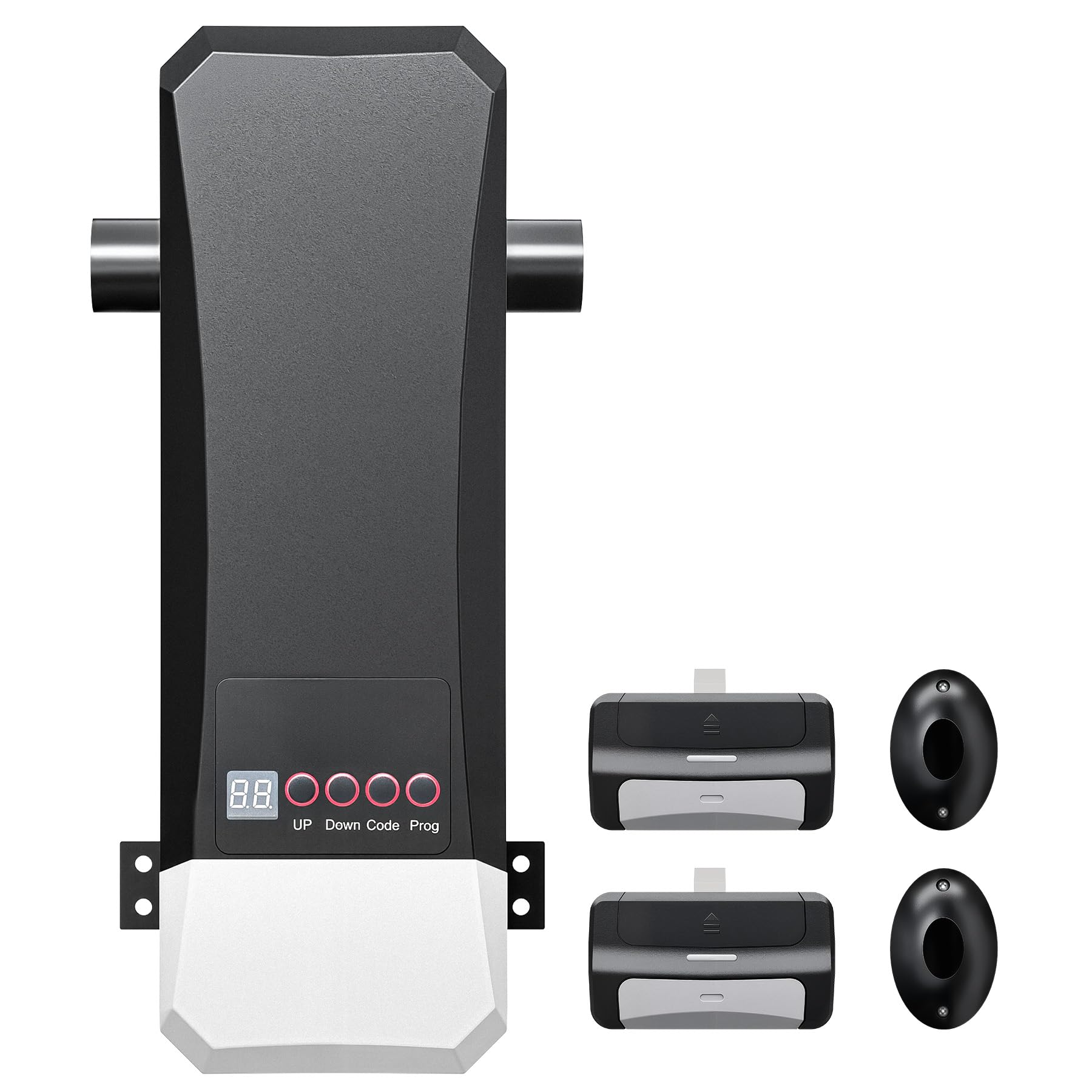
At 18.46 pounds, the ZUMI is noticeably lighter than the Genie B6172H at 31.2 pounds — a 12.74-pound gap that makes solo installation far less miserable. That lower weight also makes it the easiest unit here to get onto the wall bracket without a helper. The manual backup handle is a nice touch too: pull it and the opener disengages so you can lift the door by hand during a power failure or emergency.
Security is handled with a 128-bit rolling code that generates a fresh code on every open, so a captured signal can’t be replayed. Infrared sensors stop the door immediately if anything crosses the path. The motor is tuned for quiet operation, and the wall-mount design clears the ceiling just like the premium units.
Here’s the honest part. Performance and remote control are the two areas where feedback splits, and installation quality tends to determine which camp you land in. Get the bracket square and the travel limits dialed in properly and it runs fine. Rush the install and you’ll fight it. This is the pick for a budget-conscious DIYer who’s comfortable with a wrench and doesn’t need app control.
The value math: you’re getting a wall-mount opener with rolling-code security and a manual release for roughly half what the name brands charge. That’s roughly half the price of the name-brand units for the same wall-mount layout.
The honest caveat: no smartphone app, and the lighter build means the fit-and-finish won’t match a 30-pound Chamberlain. If you want set-and-forget polish, spend up.
Best for: the budget-minded DIYer installing their first wall-mount opener who wants the space savings without the premium tag.
Look elsewhere if: you need app control or you’d rather not touch the install yourself.
3. Skylink Smart Side Mount Garage Door Opener G2
A 12-foot door capacity and built-in Wi-Fi for less than the big names.
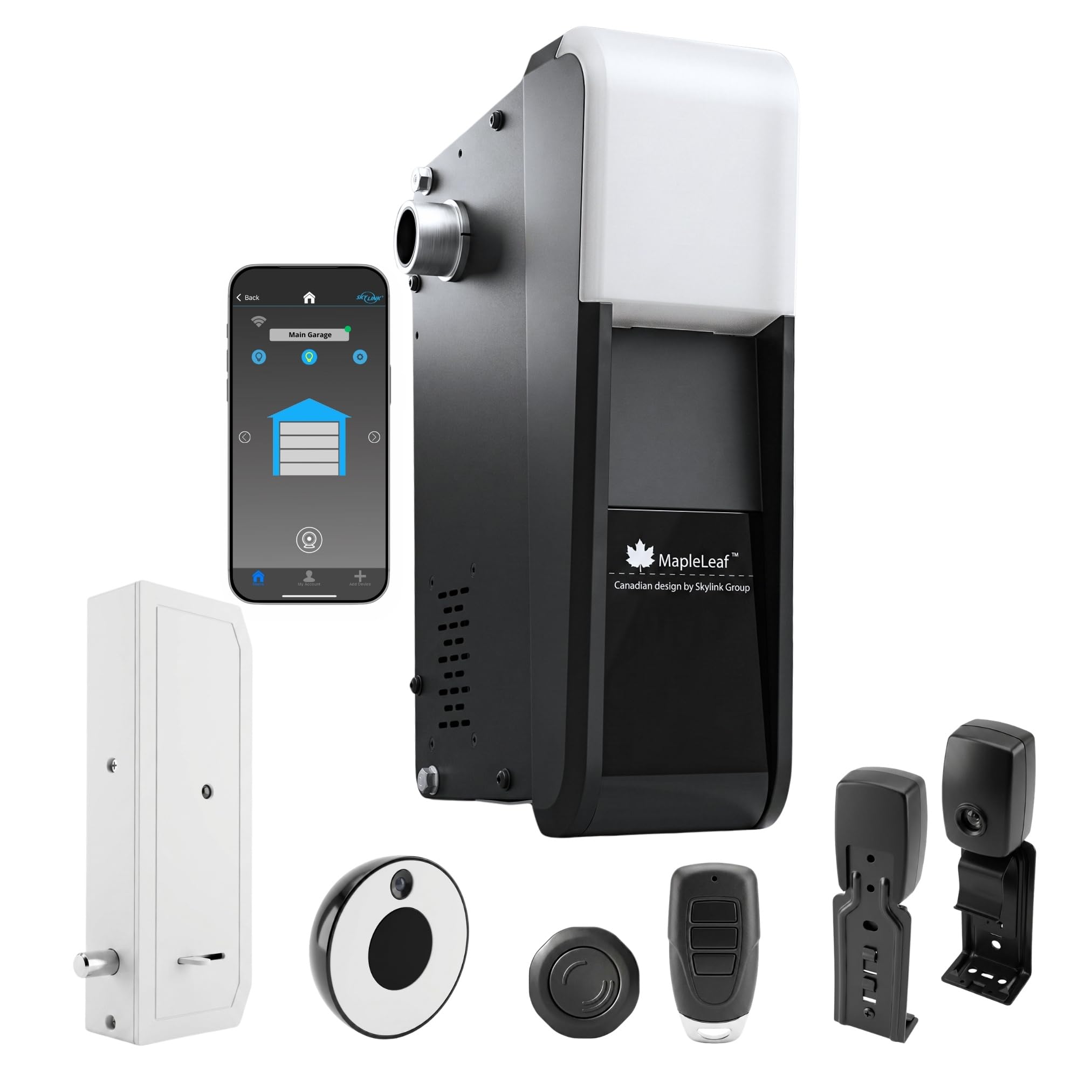
Most wall-mount openers top out around a standard residential door, but the Skylink G2 is rated for sectional doors up to 12 feet high. If you’ve got a taller-than-normal opening — a shop, a barn conversion, an oversized garage — this is one of the few side-mount units that lists that height. The high-torque DC motor uses soft start and soft stop to ease the door into position rather than slamming it, which cuts vibration and stress on the hardware.
The Orbit app runs over built-in Wi-Fi, so there’s no hub needed. You get real-time open and close alerts and full remote control from your phone. Security features include rolling code, reversing beam sensors, and an automatic door lock. A backup battery is available separately if you want outage protection — note it’s not included, unlike the Chamberlain RJO101MC.
Owner feedback on this one is almost uniformly positive on two fronts: it works the way it should, and the install is manageable. There’s a slight edge to how people describe the multiple ways to open the door — remote, wall console, app — which speaks to the flexibility. For a tall door on a mid-range budget, this is a strong answer. Just budget for the backup battery if power outages are a concern in your area.
The tall-door answer: 12-foot capacity is rare in this category, and the soft start/stop motor is gentler on heavy doors than a hard-start unit.
The catch: the backup battery is sold separately, so the outage protection the Chamberlain RJO101MC includes from the start is an extra purchase here.
Pick this when: your door is taller than standard and you want app control without paying premium-series prices.
Skip if: you need battery backup included in the box.
4. Genie 6072H-O Residential Wall Mounted Garage Door Opener

A 6.8-inch-wide body that tucks into tight wall space without complaint.
The 6072H-O measures 6.8 inches wide by 14.5 inches tall by 9 inches deep, and Genie calls it the smallest wall-mount opener available. That’s not just marketing — if your spring tube sits in a tight corner with a water heater or shelving nearby, a compact body is the difference between a clean install and a hack job. It needs only 2.5 inches above and 7 inches to the side of the spring tube, so it fits in spots the bigger units can’t.
Despite the small frame, it lifts up to 850 pounds on standard, high-lift, and vertical-lift doors up to 14 feet tall and up to 180 square feet. The Safe-T-Pulse system electronically monitors cable tension and pulses the door during initial travel to check for slack — a genuine safety feature, not a gimmick. You also get a wireless wall console, a wireless LED light, an Intellicode remote, and a remote door lock in the box.
What owners keep coming back to is how quiet it runs for such a small unit, and how straightforward the programming is once you’re past the physical mount. The catch is that the compact size leaves less room for error during installation — a standard outlet has to sit within 6 feet of the unit, and the spring geometry has to be exactly right.
The space-saver: at 6.8 inches wide, it’s the most compact option here and the answer for garages with an awkward spring-tube location.
The install reality: outlet within 6 feet, spring tube within spec — this unit rewards careful measurement and punishes improvisation.
Made for: tight garages where the wall beside the door is partly blocked and a full-size unit won’t fit.
Not for: anyone who wants app control — there’s no smartphone integration here.
5. Genie B6172H Wall Mount Smart Garage Door Opener

The opener that speaks to Alexa, Google, and SmartThings without a bridge.
If your garage is already part of a smart home, the B6172H is the easiest unit here to fold in. Aladdin Connect handles phone control, and it works directly with Amazon In-Garage Delivery, Alexa, Google Assistant, and SmartThings. That means you can ask your voice assistant to close the door, or check status without digging out your phone. The 24-volt DC motor lifts up to 850 pounds, works on standard, high-lift, and vertical-lift doors up to 14 feet tall, and covers up to 180 square feet.
The Safe-T-Pulse system measures cable slack electronically and pulses the door before closing, catching a slack cable before it becomes a problem. Battery backup is included, so the door still operates during an outage. The compact body measures 6.8 inches wide by 12 inches tall by 9 inches deep, and a standard outlet needs to sit within 6 feet.
What works well here is installation and quietness — those are the two things owners praise most, and with good reason. The honest caveat is reliability. A portion of feedback mentions doors that don’t close properly or slow opening over time, and connectivity occasionally drops. This is a unit that rewards a careful install and a strong Wi-Fi signal. Get those right and it earns its keep; rush either and the complaints you’ve read will start to sound familiar.
Why it’s worth a look
- Works with Alexa, Google Assistant, SmartThings, and Amazon In-Garage Delivery from the start
- Battery backup included for outage operation
- 850 lb lift capacity and 180 sq ft coverage
- Quiet, compact, and straightforward to install
What to plan around
- A real slice of feedback cites closing and slow-opening issues
- Needs a strong Wi-Fi signal to keep the smart features reliable
Go for it if: your home runs on Alexa or Google and you want a wall-mount opener that joins the ecosystem with battery backup included.
Hold off if: you’re not prepared to troubleshoot connectivity and prefer a simpler, less connected unit.
6. Chamberlain Wall Mount myQ Garage Door Opener RJO101MC

Battery backup and myQ in one unit, so an outage never leaves you locked out.
The RJO101MC is the newer, backup-equipped sibling of the RJO20, and it keeps the same core strengths. You get a space-saving wall-mount body that clears the ceiling, near-silent low-vibration operation, and myQ phone control through the Chamberlain app. The addition that matters is the integrated battery backup, which keeps the door working when the power goes out. For a garage that’s the primary entry to the house, that feature alone changes the ownership experience.
The package includes a motion-sensing wall control, a remote, and a smart LED light that floods the garage with coverage. At 33.9 pounds, it’s the heaviest Chamberlain here, so plan on a second set of hands during the wall mount. The myQ app ecosystem claims a large user base, which means plenty of integration options if you’re building out a smart home.
Owners consistently report an easy install and a genuinely quiet door, and the programming and control features earn praise too. The catch is the same one that follows Chamberlain across the line: the app is where the friction lives, and some features have shifted toward subscription. If you’re buying for the hardware and the backup, you’ll be happy. If the app is the main draw, read the fine print first.
Where it shines: the backup battery is the star — a power cut no longer means a manual release and a heavy lift.
Where it stumbles: the myQ app is the recurring annoyance, and it’s the one part of the package you can’t swap out.
Built for: households where the garage is the main door and losing power means losing access.
Less ideal if: you’re paying primarily for the app rather than the hardware.
7. LiftMaster 8500 Wall Mount Garage Door Opener Package

The jackshaft workhorse that roll-up door owners keep coming back to.
The 8500 Package is a classic for a reason: it works, it installs without drama, and it runs quiet. Owners with 12-foot roll-up doors are the most vocal fans — that’s a door type many residential openers can’t handle, and this one does it without complaint. The straightforward install process is the second thing people mention, with multiple reports of getting it done over a couple of afternoons at a relaxed pace.
At 31 pounds, it’s a substantial unit, but a jackshaft design means the weight sits on the wall bracket rather than hanging from a ceiling rail. Quiet operation is the selling point: with no ceiling rail, most of the rattle disappears. Owners describe barely hearing the door when it opens, which is a meaningful quality-of-life difference if a bedroom sits above the garage.
One thing to know before ordering: the listing notes you’ll receive the all-new 98022 that replaces the 8500. So the hardware you get is the newer model in the older package. If you specifically need the 8500 for a retrofit reason, confirm with the seller first. Otherwise, this is a solid, proven pick that handles roll-up doors better than most of the residential-focused units here.
The proven performer: functionality and installation are what buyers talk about most, and both hold up across a big body of feedback.
The fine print: the listing ships the 98022 replacement, so confirm the exact model if your door setup hinges on the 8500.
Right choice for: roll-up door owners and anyone who wants a no-surprises jackshaft install from a name they trust.
Check first if: your setup specifically requires the original 8500 hardware rather than the newer 98022.
8. LiftMaster 98022 Jackshaft Opener
The 98022 with a sealed lead-acid backup bolted on — top of the stack.
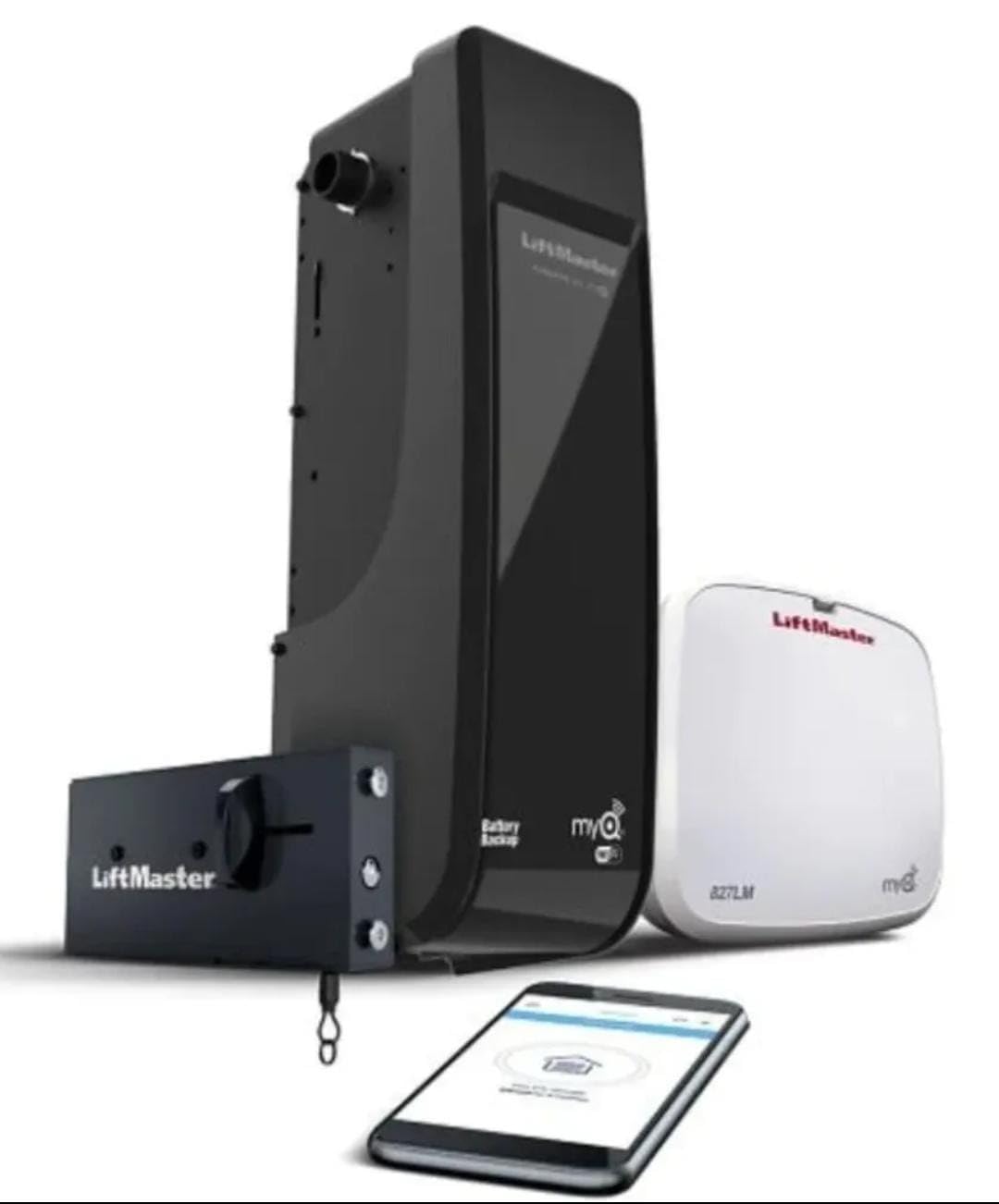
This is the same Premium Series jackshaft as the pick above, but with a 12-volt sealed lead-acid battery onboard so the door keeps working through a power cut. That’s the only meaningful difference, and it’s the difference that matters if you live somewhere outages are common. The unit itself is a compact wall-mounted steel body that frees the ceiling, runs smooth and quiet, and connects over Wi-Fi for remote monitoring and control from a smartphone app.
At 33.7 pounds, it’s heavier than the non-backup 98022 by a wide margin — the battery is most of that extra weight. That’s worth knowing if you’re mounting solo; plan for help. The hardware and instructions are included, and the installation method is jackshaft, so the same front-mount torsion requirement applies.
The 12V sealed lead-acid battery is the practical detail to check on a schedule. Unlike a lithium backup, it needs occasional attention to stay healthy, and it’s the component most likely to need replacing down the line. Feedback on this specific SKU is thin but positive, focused on quality and ease of installation. If you want the premium jackshaft experience with outage protection included, this is the complete package.
The full package: premium jackshaft hardware plus Wi-Fi control plus a 12V backup battery in one unit.
The maintenance note: a sealed lead-acid backup needs more care than a lithium one, so check it periodically.
Best for: buyers who want the premium LiftMaster jackshaft and refuse to be stranded by a power cut.
Not for: anyone who’d rather skip the periodic battery upkeep of a lead-acid backup.
Know the Specs
Jackshaft vs. Direct Drive
Both names describe a wall-mounted opener that turns your torsion bar instead of pulling a rail. A jackshaft unit clamps onto the bar and drives it directly; a direct-drive unit does the same job with the motor coupled straight to the bar. Either way, the ceiling rail disappears, which is where the space savings and the quiet come from. The term you’ll see most is jackshaft, and it’s the one that matters for fit — the unit needs a front-mount torsion bar to grab onto.
Door Capacity and Height
Door capacity is listed two ways: weight and height. The Genie units quote 850 pounds and up to 14 feet tall with 180 square feet of coverage; the Skylink G2 quotes up to 12 feet high. Match the number to your actual door, not your neighbor’s. A heavy insulated door needs more lift capacity than a lightweight single-panel one, and a tall door needs a unit rated for that height. Getting this wrong is the most common reason a wall-mount opener underperforms.
Torsion Spring Compatibility
This is the gate that stops more purchases than anything else. A wall-mount opener needs a torsion-spring door with the springs and bar running across the front, above the opening. Extension-spring doors, one-piece tilt-up doors, low-headroom track, and Wayne Dalton Torquemaster systems generally won’t accept a side-mount unit. Check your spring type and mount style before you order, or you’ll be returning a heavy box.
Rolling Code and App Control
Rolling code means the remote generates a fresh security code every time you press the button, so an old signal can’t be replayed to open your door. The ZUMI uses a 128-bit rolling code; LiftMaster uses Security 2.0; Chamberlain and Genie have their own equivalents. App control — myQ, Aladdin Connect, Orbit — lets you open, close, and check status from your phone. Features and pricing on those apps vary by brand, so read the current terms before you commit.
Common Questions
Will a wall mounted garage door opener work on my door?
What is a jackshaft garage door opener?
How much ceiling space does a wall mount opener actually free up?
Do I need a power outlet near the opener?
What happens during a power outage with these openers?
Can I install a wall mounted opener myself?
Is a wall mount opener quieter than a traditional one?
Do these openers work with Alexa or Google Assistant?
Will a wall mounted opener fit a 12-foot tall door?
What is rolling code security?
The Bottom Line
For most garages with a torsion-spring door, the Chamberlain RJO20 is the wall mounted garage door opener to beat. It combines the quiet direct-drive design, an automatic door lock, and myQ phone control in one well-built 30.7-pound package. If battery backup is non-negotiable, step up to the Chamberlain RJO101MC — same strengths, plus outage protection. And for a tall or roll-up door, the Skylink G2 or the LiftMaster 8500 Package are the ones that fit where others won’t. Measure your spring tube first — it’s the one step that decides everything else.
How we choose
We do not accept paid placement. Every pick is matched to a real buyer and a real use-case; we do not hands-on test units.
Sources
Specifications: manufacturer listings and product documentation. Review insights: verified customer reviews, as of November 2026. Pricing: not shown on this page (it changes often); check the current price via the retailer link.
As an Amazon Associate, Tactical Gear Guy earns from qualifying purchases. This does not affect which products we feature.