Specs are compiled from manufacturer listings and verified buyer reviews and can change over time — please confirm the key details on the product page before buying.
You have wet concrete setting right now, and you need to know which walk-behind power trowel actually floats and finishes a slab without fighting you. Short answer: the Stark USA 6.5HP is the one to buy first if you finish patios, driveways and small pours, the Tomahawk 36″ takes over once your slabs get wide, and the VEVOR 24″ sits between them with a Kohler engine and an adjustable blade pitch. Everything below explains why, in plain terms, with the real specs that separate these three machines.
This guide is built by comparing the manufacturers’ published specifications and the patterns across verified customer reviews, so you get each pick’s real strengths and trade-offs instead of marketing spin.
A walk-behind trowel is a gas engine on a handle that spins steel blades under a guard ring to smooth fresh cement. The three machines here differ most in working width, engine and weight, so the right one depends on how big your pours run. This breakdown of the walk-behind power trowel market keeps every number tied to the real listing data.
Top Picks
How To Choose The Best Walk-Behind Power Trowel
Buying a trowel is really three decisions: how wide a swath you need, how much engine you want pushing it, and how much machine you can lift and steer by hand.
Working width sets your pace
A 22-inch trowel like the Stark USA reaches into corners and tight patios that a wider machine simply cannot touch. A 36-inch machine like the Tomahawk covers a slab in fewer passes, which matters when a pour starts setting before you finish. Size the width to your typical pour, not the largest slab you might bid someday.
Engine and blade pitch change the finish
All three machines here run gas engines in the 6 to 6.5 HP range, so raw grunt is not the differentiator. Blade pitch is. The VEVOR and the Tomahawk both let you dial pitch from 0-28°, which lets you move from a flat float pass to a burnished finish on the same slab.
Weight is a control question, not just a spec
Heavier machines press the blades into wet cement with more authority but take more effort to steer and load. The Stark USA weighs 115 pounds and the Tomahawk 230 pounds — a real difference on a trailer ramp and at the end of a long day.
Side-by-Side Comparison
| Model | Best For | Working Width | Engine | Weight | Amazon |
|---|---|---|---|---|---|
| Stark USA 6.5HP Walk-Behind Power Trowel★ Best Overall | Small pours, patios and edges | 22 in | 6.5 HP, 196cc Loncin G200FA | 115 lb | Amazon |
| VEVOR 24” Walk-Behind Cement Trowel | Adjustable finish control | 24 in | 6 HP KOHLER, up to 3600 RPM | 125.2 lb | Amazon |
| Tomahawk 36″ Power Trowel | Wide slabs and big floors | 36 in | 6 HP Kohler CH260 | 230 lb | Amazon |
Detailed Reviews
1. Stark USA 6.5HP Walk-Behind Power Trowel
The compact finisher that gets into corners the big machines cannot reach.
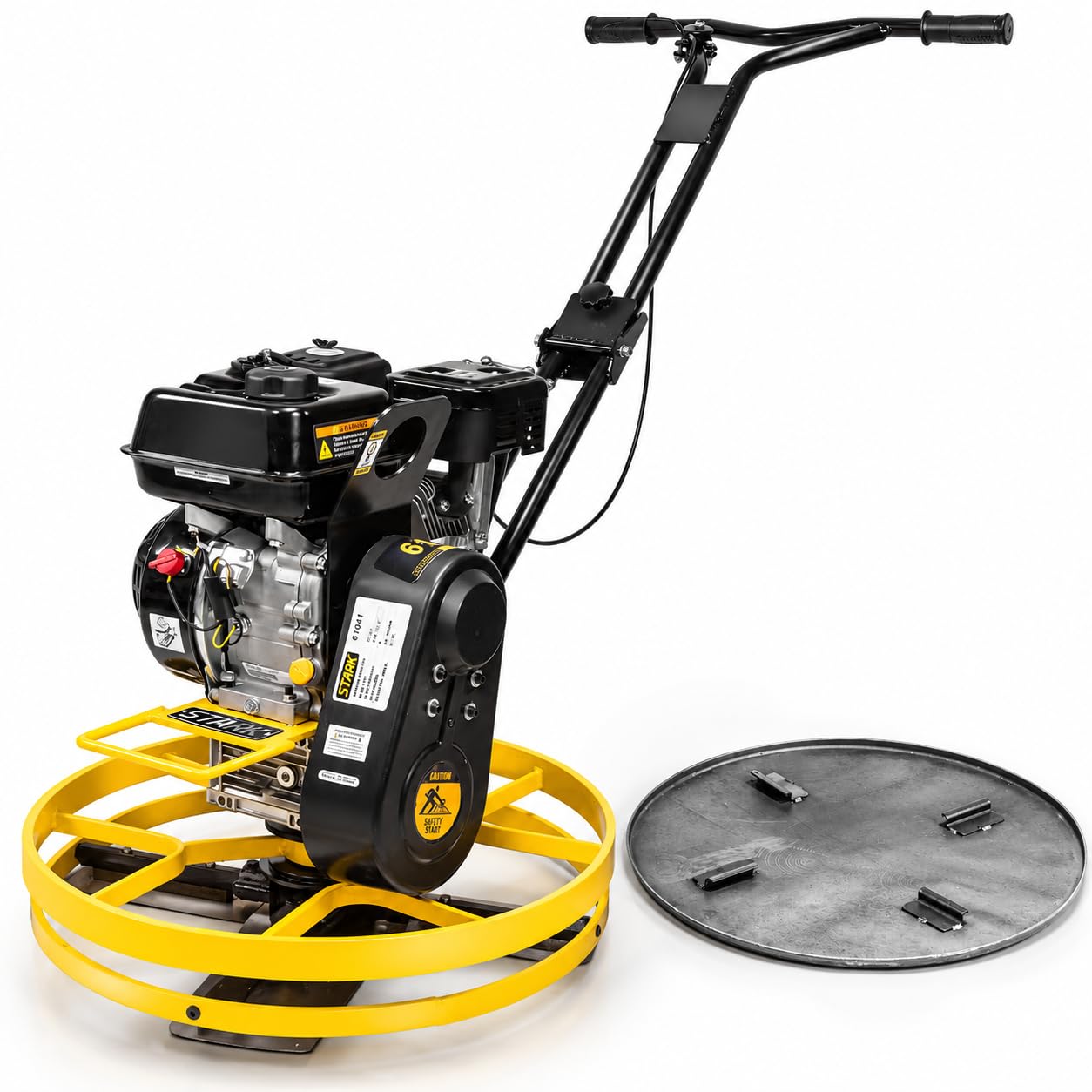
Start with the number that decides most small pours: a 22-inch working width. That narrower swath is exactly why this Stark USA handles patios, walkways and edges with the control a wide machine cannot offer, and it is the reason it sits at the top of this list. It is also the lightest of the three by a wide margin. At 115 pounds it is half the Tomahawk’s 230 pounds — light enough to load on a trailer without a second pair of hands, where the Tomahawk needs real muscle.
Under the guard ring sits a 196cc gas engine rated at 6.5 HP, the Loncin G200FA, spinning four blades across the float pan. That engine out-punches the 6 HP Kohler in the VEVOR. It also carries more punch than the Tomahawk’s 6 HP CH260 on paper. For a homeowner or a small crew finishing a driveway, that is more than enough motor to float and finish a slab in a couple of passes.
What wins people over here is the value. The recurring gripe across the listing is build quality, with mixed reports on how polished the machine feels — treat it as a tool that needs care rather than a job-site tank. The finish quality itself also draws divided opinions, so expect to spend a session learning the blade before the surface comes out clean. For a first trowel, that trade-off is fair: you are trading finish-shop refinement for a machine that starts and steers without a fight.
What earns it the top slot
- 22 in working width slips into patios and along edges a 36 in machine misses
- 115 lb — half the Tomahawk’s weight for trailer loading and steering
- 6.5 HP 196cc Loncin engine out-powers the 6 HP Kohler in the VEVOR
- Float pan and blade assembly for broad surface contact on a fresh pour
Where it asks patience
- Build quality draws mixed reports — this is a careful-owner machine
- Finish results are inconsistent until you learn its blade
- 22 in means more passes on a wide slab than a 36 in trowel
Grab this one if: you pour patios, driveways and small slabs and want a light trowel that fits tight spaces.
Think bigger if: your slabs run wide and you want fewer passes — the 36 in Tomahawk covers more ground.
2. VEVOR 24” Walk-Behind Cement Trowel

A dial-it-in finisher that lets you shift from matte float to polished shine.
The feature that sells this VEVOR is the 0-28° blade pitch lever — a simple adjustment that changes how aggressively the blades bite the cement. Set it flat for a matte float pass, then work the pitch up for a gentle shine. On a single slab, that means one machine covers the whole finish instead of two.
Power comes from a 6 HP KOHLER gasoline engine driving the polisher up to 3600 RPM, which is enough to smooth a wet slab without bogging down. It runs four hardened steel blades with blade guards fitted for safety. Its 24-inch working width sits just a step up from the Stark USA’s 22 inches, giving you a touch more coverage per pass while staying nimble around edges.
The honest catch is that VEVOR’s spec sheet is where most of the information lives. The listing is light on owner feedback, so you are buying largely on Kohler’s engine reputation and the pitch-adjust spec rather than a track record. The centrifugal ignition switch is a nice safeguard: it cuts the engine if you lose control, so the machine cannot run away on a slick slab. If you value a dialed finish over a proven review base, this is the middle pick.
Finish flexibility: The 0-28° pitch lever lets you shape the look of the slab, from a flat float to a higher-sheen burnish, all on the same machine.
Safety net: A centrifugal ignition switch shuts the engine down on loss of control, and blade guards ring all four hardened steel blades.
Reach for it if: variable blade pitch and a Kohler engine you trust matter more than a deep review history.
Hold off if: you want years of owner feedback behind the machine — the Stark USA has far more of it.
3. Tomahawk 36″ Power Trowel Walk Behind
The 36-inch workhorse for wide floors, if you can handle the heft.
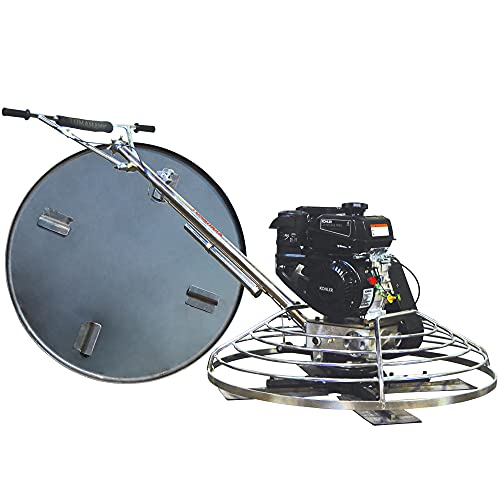
A 36-inch working width is the whole story here, and it is a big jump from the 22 inches on the Stark USA — this trowel covers far more slab per pass. Blades and float pan come included, so it floats and finishes without buying parts separately. For a large pour or a commercial floor, that coverage is the difference between keeping up with a set and falling behind it.
The 6 HP Kohler CH260 carries a 3-year engine warranty, the longest of the three machines here. Blade pitch adjusts from 0-28°, matching the VEVOR’s range, so you get the same matte-to-shine control on a much wider swath. Independent rotating flywheels let you work close to walls, edges and corners, where a rigid 36-inch machine would otherwise leave a strip unfinished.
Here is the real trade-off: at 230 pounds, this Tomahawk is the heaviest machine in the group and weighs exactly double the Stark USA. It needs a proper trailer ramp and two hands on the handle. Its owner feedback is also thin, so you are leaning on the Kohler warranty for confidence rather than a deep review base. Buy it for the coverage and the warranty, not as a one-person carry.
Where it pulls ahead
- 36 in working width — far more coverage per pass than the Stark USA’s 22 in
- 6 HP Kohler CH260 backed by a 3-year engine warranty
- 0-28° pitch adjustment matches the VEVOR’s finish range on a wider swath
- Independent rotating flywheels reach walls, edges and corners
The heft you accept
- 230 lb — exactly double the Stark USA, so bring a ramp and a helper
- Thin owner feedback means less real-world track record to lean on
- Overkill on patios and small pours where a 22 in machine fits better
The right call for: big floors and wide pours where coverage beats portability and the 3-year Kohler warranty is worth the weight.
Wrong tool if: you pour small patios solo — its 230 lb frame is more machine than a tight job needs.
Know the Specs
Working Width
The diameter the blades sweep under the guard ring, measured in inches. A wider width covers more cement per pass, which saves time on large pours. A narrower width like 22 inches fits tighter spaces and edges. Size the width to your typical pour, not your largest.
Blade Pitch
The angle the blades sit at, measured in degrees. A flat pitch floats the surface without overworking it. A steeper pitch presses harder for a burnished shine. The VEVOR and Tomahawk both adjust from 0-28°, so you can cover a whole finish with one machine.
Engine and HP
The gas motor that spins the blades, rated in horsepower. All three machines here run 6 to 6.5 HP, so power is close across the board. The Kohler CH260 on the Tomahawk carries a 3-year warranty, while the VEVOR also runs a Kohler.
Machine Weight
How heavy the trowel is in pounds. A heavier trowel presses into wet cement with more authority but takes more effort to steer and load. Lighter machines move solo but demand more operator feel. The range here runs from 115 to 230 pounds.
Common Questions
What is the difference between a float pan and a finish blade?
How wide a trowel do I need for a patio?
Can one person load and move a walk-behind power trowel?
What does blade pitch adjustment do to the finish?
Do I need a Kohler engine specifically?
How long does a walk-behind power trowel last?
Can I use a walk-behind trowel on a very wet slab?
What safety features should a trowel have?
Are wider trowels always better for big jobs?
The Bottom Line
For most buyers shopping the walk-behind power trowel market, the Stark USA 6.5HP is the machine to buy first — its 22-inch width and 115-pound build make it the easiest trowel here to steer and load, and the 6.5 HP Loncin engine pushes more punch than the 6 HP Kohler in the VEVOR. If you want dialed finish control on smaller pours, the VEVOR 24″ gives you the same 0-28° pitch range in a slightly larger footprint. And when your slabs run wide, the Tomahawk 36″ covers far more ground per pass, backed by a 3-year Kohler engine warranty — just bring a ramp and a helper for its 230-pound frame. Match the width to your typical pour and any of the three will float and finish a slab flat.
How we choose
We do not accept paid placement. Every pick is matched to a real buyer and a real use-case; we do not hands-on test units.
Sources
Specifications: manufacturer listings and product documentation. Review insights: verified customer reviews, as of November 2026. Pricing: not shown on this page (it changes often); check the current price via the retailer link.
As an Amazon Associate, Tactical Gear Guy earns from qualifying purchases. This does not affect which products we feature.