Specs are compiled from manufacturer listings and verified buyer reviews and can change over time — please confirm the key details on the product page before buying.
You want a straight answer before you read nine write-ups: the Meta Quest 3S is the smartest buy here for most people, and the DJI Neo combo is the drone that gets you flying fastest with the least fuss. Everything else on this list wins on one specific thing — image quality, flight time, or field of view — and each one is explained in plain terms below so you can match your budget and your routine. Two very different machines share this list, so the guide starts by separating the question.
This guide is built by comparing the manufacturers’ published specifications and the patterns across verified customer reviews, so you get each pick’s real strengths and trade-offs instead of marketing spin.
A VR headset puts a whole screen over your eyes. A drone puts a camera into the sky. Your choice depends on where your budget does more work, and this rundown covers both paths in simple terms for anyone weighing a purchase.
Top Picks


How To Choose The Best VR Headset and Drone
Decide what you are actually buying before you compare numbers. A headset is a screen you wear — its value lives in resolution per eye, refresh rate, and how much software you can run. A drone is a flying camera — its value lives in weight class, flight time, and the stability of the footage. Shopping both at once only works if you separate those two questions first.
For headsets, look at the panel before the games list
Resolution per eye is what you burn into your eyes every session, and a panel with a high refresh rate (how many times a second the screen redraws — more frames, less visible flicker) feels smoother in motion. If you play seated and wired to a computer, low latency and a wide field of view matter more than built-in tracking. If you want to move around a room, built-in cameras and a wireless mode carry the day.
For drones, weight class decides legal paperwork
A drone under 249 grams often skips FAA registration and Remote ID in the US, which is why so many models advertise that exact figure. Heavier drones can carry more camera hardware and bigger batteries, so they fly longer, but they come with more regulation to satisfy. Know which side of that line you need to live on before you fall for a spec sheet.
The number everyone under-reads: flight time
Flight time is stated per battery in almost every listing. A combo pack with multiple batteries multiplies the total — check whether the seller is quoting one battery or the full kit before you compare two drones side by side. Battery capacity in milliamp-hours (mAh, roughly a fuel-tank size rating) tells part of the story, but a heavier body drains faster, so trust the minutes.
Side-by-Side Comparison
| Model | Best For | Type | Key Spec | Who It Fits | Amazon |
|---|---|---|---|---|---|
| Meta Quest 3S 128GB★ Best Overall | Most buyers | VR headset | 1832 x 1920 per eye | First-timers who want to move around freely | Amazon |
| DJI Neo Three-Battery ComboPocket Flyer | Pocket-sized flying | Mini drone | 135 g, 2600 mAh | Beginners who want footage with zero setup | Amazon |
| Potensic ATOM SEEndurance Pick | Long flight time | Foldable drone | 62 mins total, 2500 mAh | Travelers who want two batteries in the box | Amazon |
| Holy Stone HS900 | Learning to fly | GPS drone | 48MP photos, 20,000 ft range | First-time pilots who want a safety net | Amazon |
| Ruko F11PRO 2 | Family flying | GPS drone | 70 mins total, 3200 mAh | Casual pilots who want long sessions | Amazon |
| Bwine F7GB2 Pro | Altitude and wind | GPS drone | 75 mins total, 3 batteries | Pilots flying open, exposed terrain | Amazon |
| Meta Quest 3 512GB | Sharper VR | VR headset | 120 Hz, 4K+ display | Mixed-reality play and a bigger game library | Amazon |
| DJI Mini 5 Pro Fly More Combo | Serious filming | Camera drone | 1-inch CMOS, 50MP, 2788 mAh | Anyone selling or grading their aerial footage | Amazon |
| Pimax Crystal Super | PC flight sims | PC-tethered headset | 3840 x 3840 per eye | Sim users chasing maximum pixel density | Amazon |
Detailed Reviews
1. Meta Quest 3S 128GB VR Headset
Our pick — 4.5+★ from 6,500+ verified ratings; the strongest balance of quality and price.
The cord-free VR starter that most people should buy without a second thought.
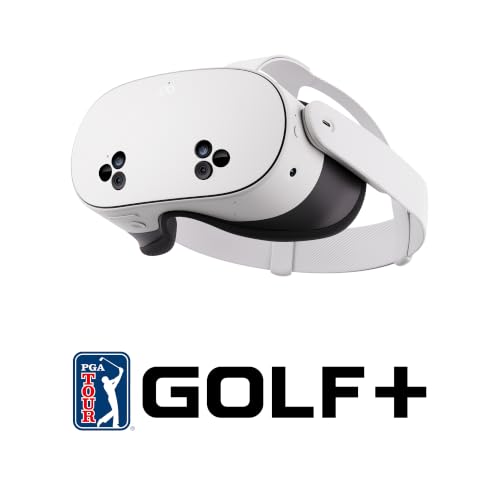
Two RGB color cameras on the front of the Quest 3S let you see your real room in full color before you put a virtual game board on your coffee table — that is what makes mixed reality feel usable rather than gimmicky. Each eye gets 1832 x 1920 pixels, and the 110-degree field of view spreads that image wide enough that you stop noticing the edges. The 60 Hz refresh rate is the lower end for motion comfort, so fast racing or boxing games are less silky than on the pricier Meta Quest 3 further down this list.
The headset runs on the Snapdragon XR2 Gen 2 processor, which the maker measures as 2x the graphical processing power, and 8GB of RAM — 33% more memory in Meta’s own framing for smoother visuals. In practice that means bigger games load without the stutter that ruins a rhythm title. Meta includes a 3-month trial to a catalog it lists as 100+ games, so the shelf is stocked on day one. A GOLF+ bundle with 1,800 in-game credits arrives via pairing with the Meta Horizon app, which you claim during setup.
The catch is endurance. Meta states 2+ hours of battery, and the spec sheet lists 2.5 hours average life — which lands as a couple of hours of real play. The other recurring thread through owner feedback is long-term reliability: most units behave, and a rare one develops a fault. Treat this as “the good one that needs to be charged every session,” not a fault-free guarantee. What wins people over is plain enjoyment — by a wide margin the most-praised thing about this headset is how much fun the family gets out of it.
What earns its spot up top
- Full-color Passthrough from two RGB cameras blends your room with the game world.
- Snapdragon XR2 Gen 2 chip brings lightning-fast load times into an entry-level headset.
- 110-degree field of view is wide enough that the screen edges fade from attention.
- No cords, so you can swing, walk, and turn without a tether dragging you back.
The honest caveats
- 2.5 hours average battery life means a recharge between sessions, not all-day play.
- 60 Hz refresh rate trails the 120 Hz panel on the pricier Quest 3 model.
- Owner reports mostly celebrate how much kids enjoy it, which cuts both ways on sharing.
Buy this one if: you want a cord-free first headset with a built-in game trial and no extra hardware.
Look elsewhere for: all-night sessions — the couple-of-hours battery will interrupt them.
2. DJI Neo Three-Battery Combo
The self-flying palm drone that turns a hike into a film shoot with one button press.
At 135 grams, Neo is lighter than most phones — which means no FAA registration and no Remote ID in the US. That single weight figure is why it fits in a jacket pocket, and why you can fly it at a family barbecue without paperwork on your mind. Compare it to the Potensic ATOM SE in the next review: Neo is only 6.2 inches long folded, against the Potensic’s 11.81 inches, so the difference is the difference between a pocket and a bag.
Palm takeoff is the headline party piece. Push the button, it lifts off your hand, and eight QuickShots modes fly pre-set camera moves while you stand still. 4K stabilized video holds up in level-4 wind, and full-coverage propeller guards mean you can dip around branches without nerves. The three-battery combo with a Two-Way Charging Hub stretches flight to 54 minutes — and each battery holds 2600 mAh, a touch above the Potensic’s 2500 mAh.
Where Neo shows its limits is control in wind and the fact that its stabilization is digital rather than mechanical. The recurring note among owners is reliability — most flights are clean, but a minority report a unit that does not operate right. Footage quality is what the review pages talk about most, and it is not hype: the 4K video really does look steady for a drone this small.
Why it earns a slot: palm launch plus 135 g plus a charger that tops three batteries is a travel kit that lives in a coat pocket.
Yes for: anyone who wants to film the moment without learning to fly first.
Not ideal for: gusty days — level-4 wind resistance is a ceiling, not a comfort zone.
3. Potensic ATOM SE GPS Drone
Two batteries and 62 total minutes make this the drone that outlasts the afternoon.
The ATOM SE arrives with two 2500 mAh batteries rated 31 minutes each, and Potensic lists 62 minutes of combined flight. That is the figure to buy on. Longer flights mean fewer landing breaks to swap packs, and more chances to catch the light you came out for. Folded, it fits a jacket pocket at a listed 8.8 ounces, so “under 249g” is not just a legal fine print — it is what lets the drone ride along.
The camera is a 1/3-inch CMOS Sony sensor shooting 12MP stills and 4K at 30fps, stabilized by ShakeVanish software inside a 118-degree field of view. The gimbal tilts from +20 to -90 degrees so you can point it straight down for top-down shots. Range is listed at 4 km / 13,123 feet via PixSync 2.0 — and GPS Auto Return brings it home if the signal drops or the battery runs low. Sport Mode, Video Mode, and Normal Mode give you a ladder to climb as your skills grow.
The honest trade-off is wind. Potensic claims level-5 resistance, which is respectable for a sub-250 g airframe, but the same small body that keeps you legal also gets pushed around in a stiff gust. Telemetry confirms the rest: the drone flies smoothly even at high altitude and delivers crisp, steady 4K footage, and it is considered an easy flier for beginners.
The real draw: 62 minutes of flight and 4 km transmission from an airframe under 249 grams is the combination that makes this a go-to day-trip drone.
Reach for it if: you want the most airtime in the box for a first serious drone.
Skip the pitch if: you need a mechanical gimbal — this one stabilizes electronically, not physically.
4. Holy Stone HS900 Drone with Camera

A beginner airframe with a real three-axis gimbal and a range figure that surprises.
Holy Stone’s HS900 packs a 1/2.3-inch Sony CMOS sensor and an f/2.6 aperture (a wider opening grabs more light for brighter shots) into a 249-gram body that also dodges FAA registration. It shoots 48MP stills and 4K at 30fps, or drops to 1080p at 60fps for smoother motion — enough resolution to crop into a frame later and still have detail. The 3-axis brushless gimbal physically steadies the camera and Holy Stone lists level-5 wind resistance up to 38 kph.
Where this one earns its place is the transmission figure: 20,000 feet or 6 km of control range. That is the kind of number you notice when you are flying over a river valley and want to keep the drone in view without it dropping from the screen. GPS Auto Return and Follow Me round it out, and the Holy Stone Sirius app generates videos you can post straight from the field. Charging is quick too — 1.33 hours with a 5V 3A or 9V 2A QC 3.0 charger, or 1.16 hours on the optional hub.
The battery is a 2250 mAh lithium polymer, the smallest in this group, so plan your flight tighter than you would on the Ruko or the Bwine. Owner feedback splits on stability — most flights are smooth, some run into issues — so treat it as a drone that behaves when you fly within its envelope. What it does best is teach you: beginner suitability and ease of use are near the top of the owner conversation, and it is priced like a starting point.
Where it wins
- Three-axis brushless gimbal on a 249 g airframe is unusual at this position on the list.
- 20,000-foot (6 km) transmission gives headroom for longer scouting runs.
- 48MP stills mean you can crop down to a usable frame without losing detail.
- Fast recharge at 1.33 hours means shorter downtime between flights.
Where it asks patience
- 2250 mAh battery is the smallest unit here, so flight windows are shorter.
- Some owners hit stability or reliability trouble; the majority fly without incident.
- Range is generous but only useful if you are willing to keep it in sight.
The right fit: a first drone pilot who wants a real gimbal and a long reach.
The mismatch: anyone chasing maximum flight minutes per battery.
5. Ruko F11PRO 2 Drone

The weekend drone that trades pocket-size for 70 minutes in the air.
Ruko’s two 3200 mAh batteries are the largest in this group and they add up to 70 minutes of flight — almost double some of the smaller options here. That is the number to buy on if you take long road trips or scout a farm. A 3-axis mechanical gimbal holds the picture steady in wind and pulls 4K at 30fps video with 6K photos. One-Key Takeoff and Landing plus a Beginner Mode mean you can hand the controller to someone who has never flown and still get clean footage.
GPS Auto Return kicks in automatically when the battery runs low or the signal drops, which is the safety net a family drone needs. Smart modes — GPS Follow, Waypoint Flight, Cruise Control, and Orbit Mode — do the fancy moves for you, and the 10,000-foot transmission range keeps the live view clear across a large property. A dedicated carrying shell case is in the box, along with a rechargeable remote controller.
The honest trade-off is footprint. Folded or not, this is a 357-gram drone at a listed 15.16 inches long — noticeably chunkier than the DJI Neo’s 135 grams, so it does not ride in a pocket. What it does buy you is airtime and a mechanical gimbal. The review pages echo that trade: owners describe it as easy to learn, with quality as the most-praised attribute and battery life a genuine strength.
Buy it for the duration: a 70-minute combo from two 3200 mAh batteries and a mechanical gimbal is what a full afternoon of family filming looks like.
Choose it when: long sessions and easy controls matter more than pocketability.
Pass it up if: you want something you can slip in a jacket and forget about.
6. Bwine F7GB2 Pro Drone

A 2,000-metre-rated climber with three batteries and a 4K camera on a mechanical gimbal.
Bwine’s F7GB2 Pro is the one for exposed terrain. It has a 1806 brushless motor, compass, gyroscope, and barometer, and a flight ceiling listed at 2,000 m. Wind resistance is rated at level 6. Control range runs 3,000 m with an ideal band of 9,800 to 10,000 feet. The three 2600 mAh batteries give you 75 minutes of total airtime, and if you want faster top-ups the maker lists a 65W fast charger that completes a battery in an average of 1.5 hours.
Imaging is a detachable 4K camera with a 120-degree field of view, a larger CMOS sensor than the smaller drones here, and a 3-axis gimbal with 5x digital zoom. That zoom is software, not optical, so expect some softness when you push it. GPS Auto Return, follow-me, waypoint, and orbit modes cover the automated flight patterns. The drone is FCC Remote ID certified — registration is done, not something you chase later.
The catches are size and app setup. At a listed 550 grams the F7GB2 Pro is the heaviest drone on this list, so it demands a case and a bit of space. Owners split on the app connection — some pair without trouble, others wrestle with it — so plan on a setup evening. Quality is what owners praise most, and the picture quality and wind-holding notes line up with the spec.
One-line verdict: if you fly on ridges and need altitude headroom, the 2,000 m ceiling plus level-6 wind resistance plus 75 minutes is a serious set of numbers.
It suits: pilots working open land, farms, or high hillsides.
Think hard about it if: you mostly fly low in a city yard — the extra weight and size cost you portability you do not need to give up.
7. Meta Quest 3 512GB
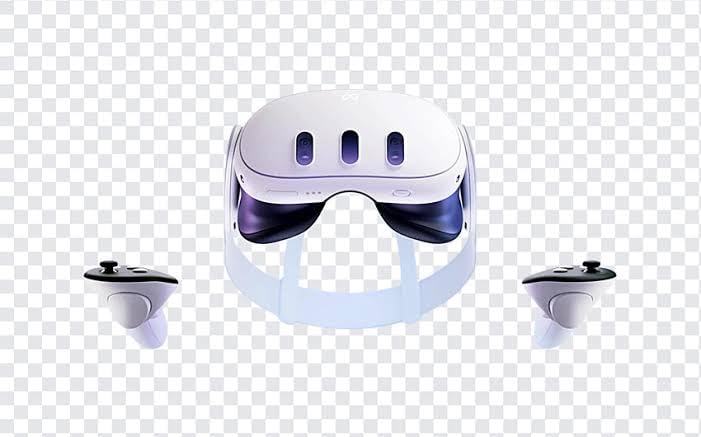
Twice the storage and double the refresh rate of the Best Overall, for a pricier ride.
The 120 Hz refresh rate here is the difference between “smooth” and “buttery,” especially in games where you swing or race. The Quest 3S at the top of this list runs at 60 Hz. Meta describes the display as a nearly 30% leap in resolution with a sharp 4K Infinite panel, and the same Snapdragon XR2 Gen 2 chip with 8GB of RAM powers it. 512GB of storage is the other headline — roughly four times the 128GB base model, though Meta calls that upgrade 33% more memory where it refers to RAM, not disk.
The same dual RGB color cameras and full-color Passthrough come along, so you can blend virtual objects with your room. A 3-month trial open up a catalog Meta lists as 40+ games here, versus 100+ in the Quest 3S listing — read that carefully before you assume it is an upgrade. The listing is a Renewed Premium unit, so it is a factory refresh, and the built-in media slot is an AC adapter only — no enclosed controllers beyond listed Touch Plus.
The trade-offs are real. Some owners find it comfortable, others hit headaches, and reliability is a mixed bag with a small set of units unable to run at all. Performance is the most-praised quality by a clear margin, and entertainment plus value follow.
Worth the step up: 120 Hz and 512GB make this the one to pick if you plan to live in VR and want fewer compromises. The 4.0+ rated Quest 3S has a far larger owner fan base and a higher star score, so the Quest 3 buys you a 120 Hz panel and 512GB, not better ratings.
Yes for: players who want a 120 Hz panel and more storage than they know what to do with.
Not for: first-timers — a renewed unit is a specialist’s move, not a starter’s.
8. DJI Mini 5 Pro Fly More Combo

The serious camera on this list, and the one that makes other drones’ footage look flat.
A 1-inch CMOS sensor in a 249 g body is the headline. It shoots 4K at 60fps HDR, captures 50MP stills, and can swing its gimbal 225 degrees for vertical or upward angles that most drones cannot reach. The battery capacity is 2788 mAh, the largest on this list, and DJI lists up to 36 minutes of flight from a single Intelligent Flight Battery. Three batteries plus the Two-Way Charging Hub reach a full charge in about 115 minutes.
Nightscape Omnidirectional Obstacle Sensing uses a forward-facing LiDAR and vision sensors to detect obstacles in all directions, which is what makes low-light flights and return-to-home landings worth attempting. ActiveTrack 360° follows subjects with customizable tracking modes. The DJI RC 2 remote has a built-in screen so you are not tethering a phone. The kit also includes an ND filter set, spare propellers, and a shoulder bag — the whole fly-more package.
At 249.9 g ± 4 g the drone clears the FAA registration threshold, but just barely. The honest trade is temperament: at this price you will want to fly carefully, download the DJI Fly app from the DJI site (not Google Play), and respect local night-flying rules. Quality is what owners praise first, and the 50MP camera complaints simply are not in the feedback — the camera is the star.
Why creators reach for it
- 1-inch CMOS and 50MP stills give real latitude for cropping and post work.
- 225° gimbal roll opens vertical and upward framing that most drones miss.
- LiDAR plus vision sensors make obstacle avoidance a real feature, not a checklist item.
- 249.9 g keeps you under the weight line most buyers care about.
What you should plan around
- Tops the list on cost, so it is a tool for people making footage, not just watching it.
- 36 minutes per battery is generous but not class-leading — three batteries help.
- App must come from DJI directly, not Google Play, which is a setup extra step.
Buy if: you grade and publish your aerial footage and want a 1-inch sensor in a 249 g airframe.
Better option elsewhere: casual weekend shots — the DJI Neo gets them with less fuss and far less gear to manage.
9. Pimax Crystal Super VR Headset

For flight-sim pilots who measure their world in pixels per degree.
Pimax builds this for a specific buyer: the PC-tethered sim user who wants to read every instrument without leaning in. The panel delivers 3840 x 3840 resolution per eye through a QLED + MiniLED display with local dimming, and 57PPD (pixels per degree — how much detail lands in each slice of your field of view). A wider field of view here is listed at 106 degrees horizontal. Variable refresh runs at 72 Hz and 90 Hz. For flight sims, where fine cockpit detail and stability matter, those numbers matter.
Comfort has been engineered: automatic IPD adjustment from 58 to 72mm adapts to most face widths without a manual dial, and there is a replaceable facial interface plus removable head cushion for extended sessions. Eye tracking and Lighthouse tracker support (the same base-station system PC VR setups use) are on board. A high-fidelity microphone and 3D spatial audio over built-in speakers round it out. It connects by USB and works with a PC only — this is not a standalone headset.
Owners praise the hardware above all, with image quality close behind. But this is a specialist product with a narrow audience: hardware quality plus image quality do not, on their own, make it a first headset. It is a second purchase for someone who already owns a gaming PC and a reason to use it.
The long view: 3840 x 3840 per eye, 57PPD, and 106 degrees horizontal are numbers that mean something only with a gaming rig to drive them.
The buyer who should pick it: a sim enthusiast with a gaming PC and an appetite for the highest pixel density on this list.
The buyer who should not: anyone who wants standalone VR — this needs a computer and, for full tracking, base stations.
Know the Specs
Resolution per eye and pixels per degree
Resolution per eye is the pixel count each eye gets — 1832 x 1920 on the Quest 3S, for example. Pixels per degree (PPD) is how many of those pixels land in each slice of your field of view. A higher PPD tends to feel sharper because there is less empty space between pixels, and beyond roughly 30 PPD, individual pixels tend to disappear to the eye. On headsets, a wide field of view plus a high resolution is the combination to watch.
Battery capacity and flight time
Battery capacity in milliamp-hours (mAh) is a rough fuel-tank size — bigger number, more energy stored. But a heavier body drains faster, so check the maker’s stated flight minutes, not just the mAh rating. A combo pack with two or three batteries multiplies total airtime; a single battery listing quotes a per-battery figure. Always compare the same unit: per-battery versus total kit.
Gimbal: mechanical versus electronic
A mechanical gimbal physically stabilizes the camera on tiny motors — money buys you steadiness in wind. An electronic gimbal (often called EIS) uses software to smooth the picture after the fact. The mechanical version holds up better in motion and in wind; the electronic version keeps the drone lighter and cheaper. Both are shown on this list, and the price difference largely reflects which you get.
The 249-gram line
In the US, drones under 249 grams typically do not need FAA registration or Remote ID. That is why so many drones advertise “under 249g” and why every 250-gram-ish listing on this page is in a specific legal bracket. Go above the line and you may need to register — and while that is not hard, it is a step you should plan for. Weight is not just portability here; it is paperwork.
Common Questions
Do I need FAA registration for a drone under 249 grams?
What does “PPD” mean on a VR headset?
Does a mechanical gimbal really make footage steadier?
Is flight time per battery or total?
Can a drone shoot 4K at 60fps in this list?
Is the Meta Quest 3 a standalone headset or does it need a PC?
Will the Quest 3S run games for my children?
Does the Pimax Crystal Super work without a gaming PC?
Which drone is best to fly near saltwater and wind?
The Bottom Line
If the question is “which VR Headset and Drone should I buy,” the winner is the Meta Quest 3S 128GB. It carries the highest star rating in this group at 4.5+ stars across thousands of owners, and its 100+ game trial gives it the biggest software library of any headset here. If your priority is the sharpest possible picture and you already own a gaming PC, the Pimax Crystal Super delivers 3840 x 3840 per eye and 57PPD that no standalone can match. And if you want to film from the air without a setup ritual, the DJI Neo Three-Battery Combo at 135 grams is the one that comes along on every hike.
One honest nudge: the Quest 3S is the lowest-rated of the headsets that sit at or near 4.5 and above, so if sharper visuals matter to you and you can spend more, step up to the Quest 3 — you trade a slightly larger price for a 120 Hz panel and 512GB of storage. If budget wins, the Quest 3S is not a compromise that shows up in daily use.
How we choose
We do not accept paid placement. Every pick is matched to a real buyer and a real use-case; we do not hands-on test units.
Sources
Specifications: manufacturer listings and product documentation. Review insights: verified customer reviews, as of November 2026. Pricing: not shown on this page (it changes often); check the current price via the retailer link.
As an Amazon Associate, Tactical Gear Guy earns from qualifying purchases. This does not affect which products we feature.