Specs are compiled from manufacturer listings and verified buyer reviews and can change over time — please confirm the key details on the product page before buying.
You cannot groove a swing when the ball never arrives in the same spot twice. A spike trainer solves that by holding the ball at a set height, so you can repeat the same approach, arm swing and contact point. This guide separates the rebound nets that send the ball back at you from the fixed-ball holders that let you hit a stationary target, because those two designs train completely different skills. Most beginners buy a rebounder when they actually need a holder, then wonder why their timing never improves.
This guide is built by comparing the manufacturers’ published specifications and the patterns across verified customer reviews, so you get each pick’s real strengths and trade-offs instead of marketing spin.
Your first decision is simple: do you want the ball fed back at you, or parked in a fixed hitting zone? Answer that and the shortlist narrows to a handful of models. Height range, base weight and reload speed then finish the job, and this breakdown of the volleyball spike trainer market covers all three in plain terms.
Top Picks
How To Choose The Best Volleyball Spike Trainer
The honest first question is not which trainer is best — it is what you want the trainer to hold. A net that bounces the ball back at you gives you a live moving target, so you practise reading and reacting. A pole or frame with a fixed ball lets you freeze the ball at your contact point, so you can drill the approach steps and the arm swing without a moving variable. Pick the wrong type and you will spend weeks drilling reaction when you meant to drill contact point.
Match the height range to the jump you have
Height adjustment decides whether a trainer still fits you next season. A pole you extend by hand covers a span of set heights, and the number of stops between those heights sets how fine the tuning is. Buying for a teenager who is still growing? A wide adjustable span stretches the useful life of the tool. An adult with a settled jump can go narrower, as long as the span clears your reach.
Weigh portability against stability
A trainer that rolls and adjusts is easier to train on but harder to carry, and a trainer you can sling over a shoulder travels anywhere but can slide when you land a hard spike. Look at how the base is held down — sandbags, ground stakes, or an extra-wide rear frame all fight the same problem. If you train in a driveway or on a gym floor, a weighted base matters more than a folding frame.
Decide how much reload time you can stand
Every repetition costs you a second or two of putting the ball back. A tilt-and-reset holder lets you lean the frame forward with one hand and drop a ball in, which keeps a solo session moving. A trainer that parks a ball in a fixed cup with no reload motion is simpler but slower per rep. That gap only shows up over a long session, but it adds up to dozens of lost reps.
Side-by-Side Comparison
| Model | Best For | Type | Height / Size | Ball Included | Amazon |
|---|---|---|---|---|---|
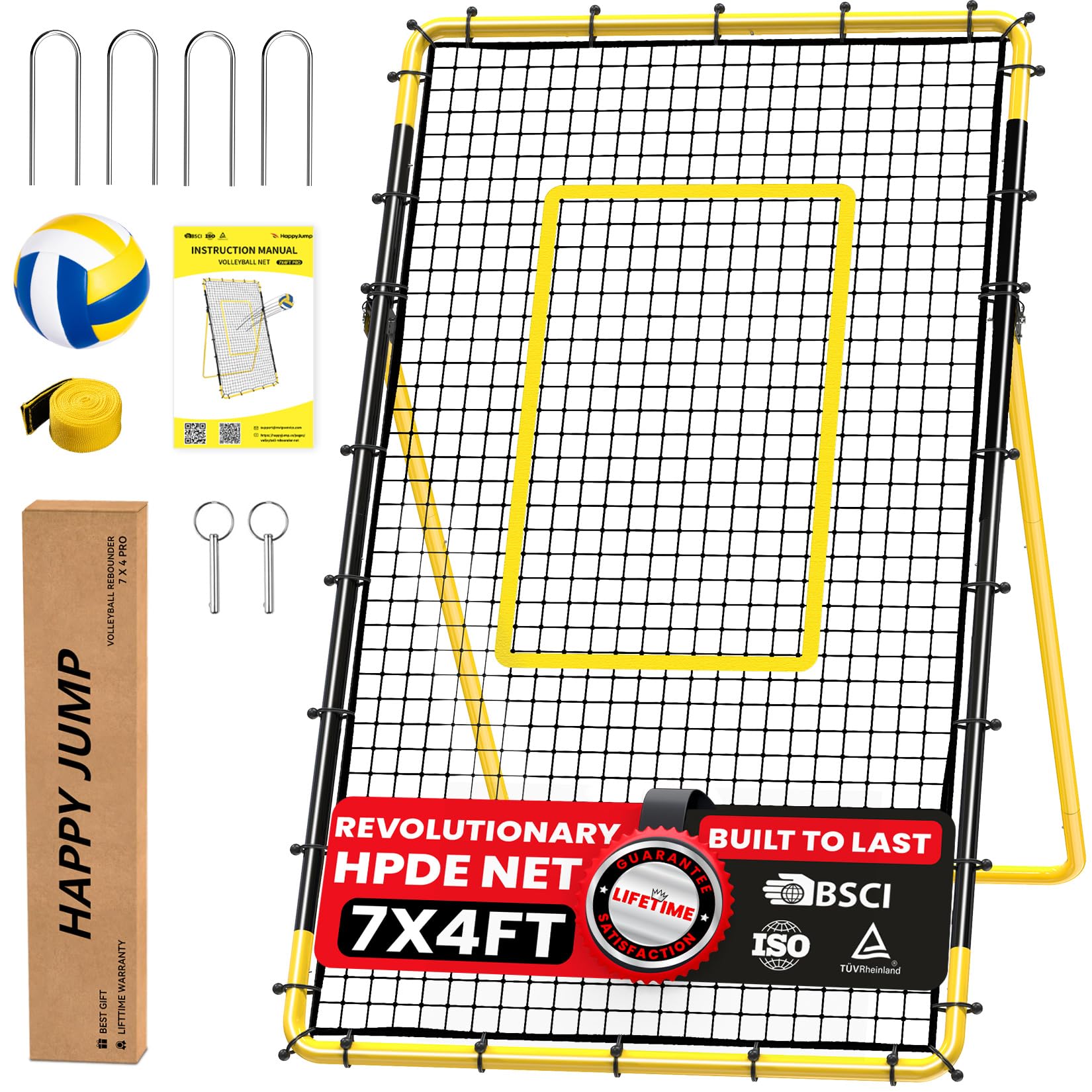
| Happy Jump 7×4 FT Volleyball Rebounder Net★ Best Overall | All-round backyard and gym training | Rebounder net | 7×4 FT, 5 angles | Yes | Amazon |
| Tandem Sport Collapsible Spike TrainerBest Full-Size Surface | Hitting placement drills | Pole holder | 63.7″ extended | No | Amazon |
| JOLORLY Volleyball Setter Spike Trainer | Fine-tuned height for tall players | Free-standing station | 6 ft to 11 ft, 18 positions | No | Amazon |
| Apex Sports Spike Trainer | Heavy-duty weighted base | Free-standing station | 6 ft to 11 ft, 3″ intervals | No | Amazon |
| AugFir 2-in-1 Setter & Spike Trainer | High-volume ball feeds | Free-standing station | 93″ to 135″ | No | Amazon |
Detailed Reviews
1. Happy Jump 7×4 FT Volleyball Rebounder Net
Our pick — 4.0+★ from 100+ verified ratings; the strongest balance of quality and price.
Five angles, 28 square feet of target, and a ball in the box.
This is the pick that covers the most ground for one household, because it hands you a rebounder and a usable training ball at the same time. The surface spans 7×4 FT, giving you a 28 square rebound area to aim at, and the frame shifts between five angles — 0, 35, 55, 80 and 110 degrees. Set it low and the ball comes back flat for digs and passing; push it steep and it lobs up for spike approaches. That single angle dial is what lets one net serve a beginner learning contact and an adult working on a hard-driven spike.
Build-wise it is heavier than a carry-anywhere pole, and that is deliberate. The frame runs on thickened 1.2mm anti-rust coated powder steel, and the manufacturer compares that against thinner 0.8mm frames elsewhere. The netting itself is a 45-ply HPDE polyester, held in tension by 30 imported bungee cords so the rebound stays even across the face. Weighing 19 pounds, it is not a trainer you hike to the beach on your back — but that mass is what keeps the surface from flapping when a hard spike lands.
A detachable target zone is included for aim work, and it packs into a travel bag without tools for setup. The trade-off is the one you would expect from a 19-pound frame: it is a park-the-car-and-set-up proposition, not a toss-it-in-a-duffel tool. If you want something that lives in a gym bag, the SOEZmm pole trainer further down this list is the opposite end of that scale. For a family or a small squad training in one place, the coverage and the included ball make this the one to beat.
Why It Takes The Top Spot
- Five angle settings (0/35/55/80/110) let one frame serve digs, passes and spike approaches
- 28 square rebound surface in a 7×4 FT footprint gives you room to aim
- 45-ply HPDE polyester net held by 30 bungee cords for even tension
- Ball and inflation pump included, so a beginner can train the day it arrives
- No tools needed to set up, and a carry bag is in the box
Where It Pushes Back
- At 19 pounds it stays put in one location — this is not a bag-and-go trainer
- A rebounder returns a moving ball, so it does not hold the ball still for pure contact-point work
- The included ball is a training ball, not your match ball
Buy it if: you train in one spot — backyard, garage or gym — and want a net that doubles as a ball supply and works on reaction as well as form.
Look elsewhere if: you need to freeze the ball at a fixed contact point; a holder design does that and this does not.
2. AugFir Volleyball Spike Trainer Holder for Solo Practice
Built to stop the ball-chasing loop that eats a solo session alive.
The pitch here is reps, and it is a fair one. In a normal solo drill you spike, the ball rolls away, you walk, you pick it up, you walk back. This trainer is designed so you can work with several balls at once, which means the fetching happens in one batch instead of after every contact. If your sessions stall on ball-chasing rather than fatigue, that faster rep rhythm is what you are paying for.
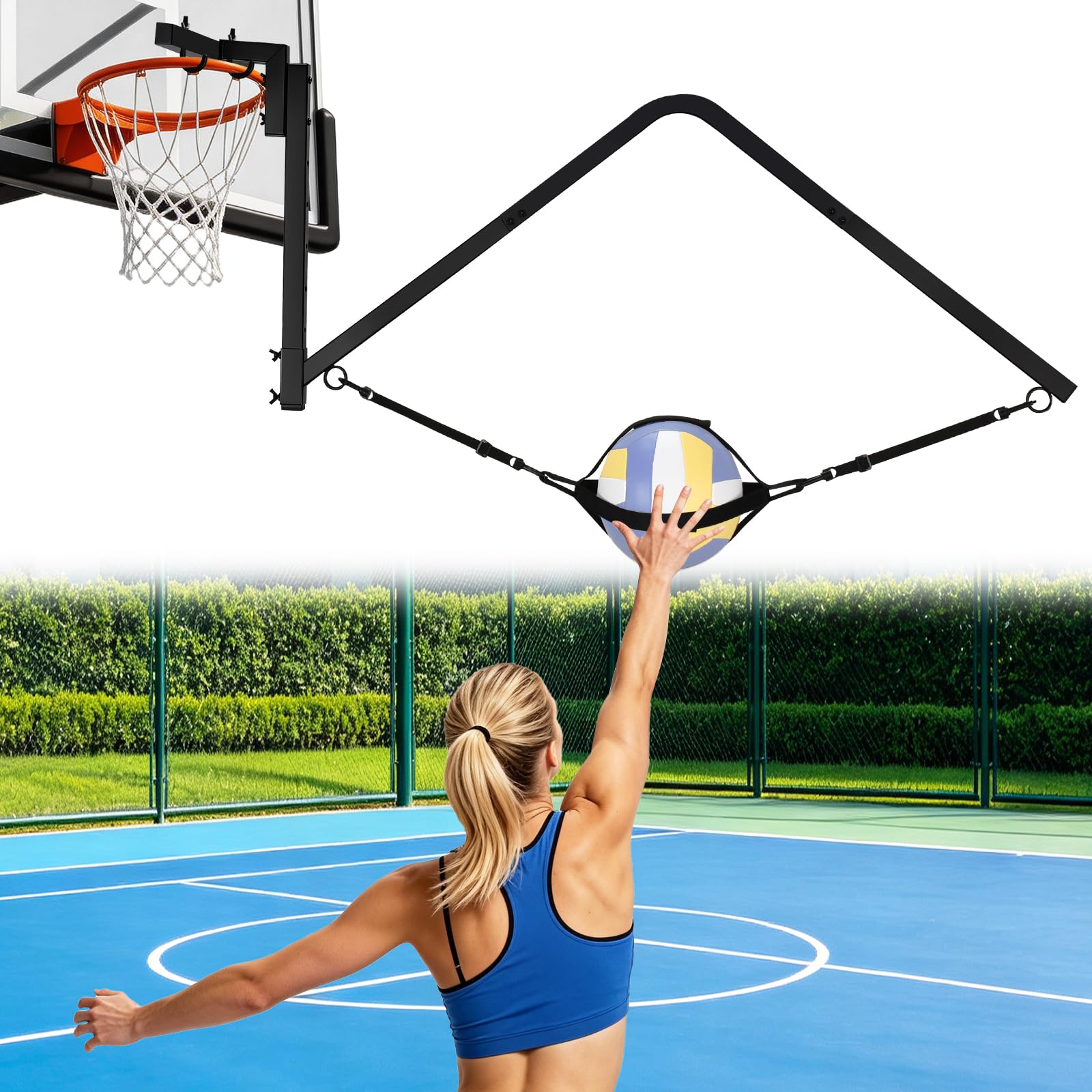
Mounting is on a standard 18-inch basketball rim, using metal hooks and mounting screws, with a locked fixed design so the frame does not shift mid-swing. Height works in three settings: 85 inches, 91 inches and 99 inches above the ground. That spread is aimed at different jump levels rather than fine tuning, so think of it as three tiers — a lower tier for younger or shorter players and the top tier for a fuller jump. It is rated for both regular and professional volleyballs.
Where this one asks for patience is durability confidence. The lower score here sits below the other holders on this list, so read it as a trainer that wants sensible handling rather than a workout mule. The frame is described as advanced hard metal and the mounting is a fixed locked design, so treat the clamp check as part of your routine before a hard session. Buy it for the multi-ball rep flow, not for heavy-duty durability.
What Makes It Different
- Designed for training with multiple balls at once, cutting the pick-up loop between reps
- Three fixed heights — 85″, 91″ and 99″ above ground — for different jump levels
- Metal hooks and screws lock onto a standard 18-inch basketball rim
- Handles regular and professional volleyballs
What To Plan Around
- Three coarse height steps rather than fine adjustment
- Needs an 18-inch rim to mount — no free-standing option
- Lower owner confidence on long-term toughness than the other hoop trainers here, so check the mount before hard sessions
Right choice when: your solo practice keeps stalling on ball retrieval and you have a rim available to hang it from.
Think twice when: you want stepless height tuning or a trainer that stands on its own.
3. ZVFOTN Volleyball Rebounder Net, Portable 7×4 ft
A pole that breaks down to 45.2 inches and holds a ball for swing work.
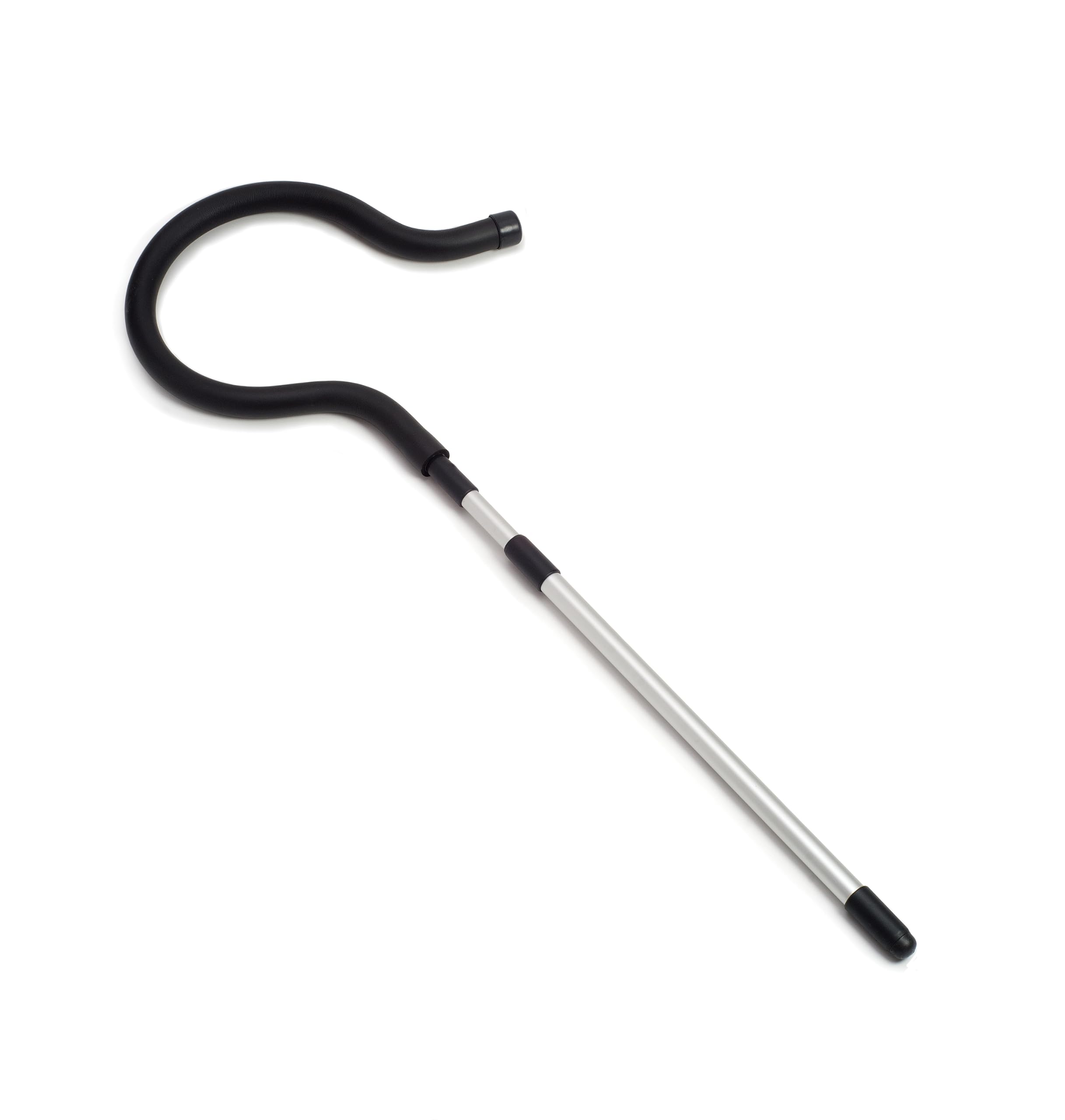
This one is a single-purpose tool and says so plainly. It holds a volleyball in place so a player can rehearse arm swing, ball contact and footwork — the three things you cannot fix when a ball is flying at you. The aluminum pole extends to 63.7 inches and collapses to 45.2 inches, which is the feature that makes it a travel option rather than a fixture. Collapsed, it is short enough to slide into a kit bag or a car boot alongside the rest of your gear.
Where it sits on this list is a judgement call you should make with your eyes open. The rating here is the lowest of the nine, so it earns sixth place rather than a top slot. That does not make it a bad trainer — it makes it a specialist. If your goal is specifically hitting placement drills, the fixed-ball design does that job and the collapsible build means you can take it to a gym, a park or a friend’s driveway. If you want a trainer that can also feed you a moving ball or absorb repeated heavy contact, spend your attention on a rebounder or a weighted station instead.
The maker has been supplying volleyball and training gear since 1989, and the spec sheet is refreshingly simple: extended pole, collapsible pole, aluminum, done. No pump, no ball, no bag listed. Treat this as the spare-in-the-trunk trainer for a coach who wants a fixed ball at a moment’s notice, and it will do exactly what it promises.
Its one job: park a ball at height so a player can drill arm swing, contact and footwork without a partner — that is what the fixed holder is for.
Size that matters: 63.7 inches extended and 45.2 inches collapsed is the practical difference between a bag trainer and a permanent one.
Fits best: hitting-placement drills and coaches who want a collapsible fixed ball they can carry.
Look past it if: you want the higher owner confidence of the poles ranked above — this sits lowest of the nine on that measure.
4. JOLORLY Volleyball Setter Spike Trainer

Eighteen stops between 6 ft and 11 ft — and a foam pad where your hand lands.
Height tuning is where this trainer earns its spot: it moves through 18 height settings from 6 ft to 11 ft, in 3-inch steps. That is more stops than any other pick on this list. It also splits into two height modes, so a youth beginner and a pro-level athlete each get their own sensible range. If you have been guessing at your contact point, or you coach a group of mixed heights, those fine steps let you dial in the exact reach instead of settling for the nearest coarse setting.
The reload method is the same one-hand trick the Apex uses: lean the frame forward, place the ball, reset. What JOLORLY adds is impact-absorbing foam wrap around the holder. That foam does two things — it holds the ball firmly at the contact point and it protects your hand if you misjudge a swing and land on the frame instead of the ball. A padded miss is a much better outcome than a metal one. The base is an extra-wide reinforced rear frame with fillable sandbags and ground stakes for indoor and outdoor sessions.
What buyers respond to most here is the quality of the build, and easy assembly is the close second — a pattern that matches the solid first impression. The sturdiness conversation is more mixed, so weigh that honestly: some players find it planted, others want it more rigid under hard contact. Use the sandbags and the stakes rather than trusting the bare frame, and the wobble question largely answers itself. It carries a lifetime warranty, which is a strong signal for a trainer you plan to leave set up.
What Earns It Seventh Place
- 18 height positions from 6 ft to 11 ft, in 3-inch steps — the finest tuning here
- Two height modes split youth and pro-level ranges
- Impact-absorbing foam wrap protects hands and holds the ball firm
- Fillable sandbags and ground stakes included for indoor and outdoor use
- Lifetime warranty
Set It Up Properly
- Sturdiness draws mixed reactions, so fill the sandbags and stake it down
- No ball in the box
- The large frame is a permanent-ish fixture, not a bag carry
Worth it for: a coach or tall player who needs a specific contact height and wants the padded holder for safe misses.
Be ready to: fill the sandbags and stake the frame — the trainer is only as steady as you make the base.
5. Apex Sports Volleyball Spike Trainer
A 25-pound base doing its best to stay still under a hard swing.
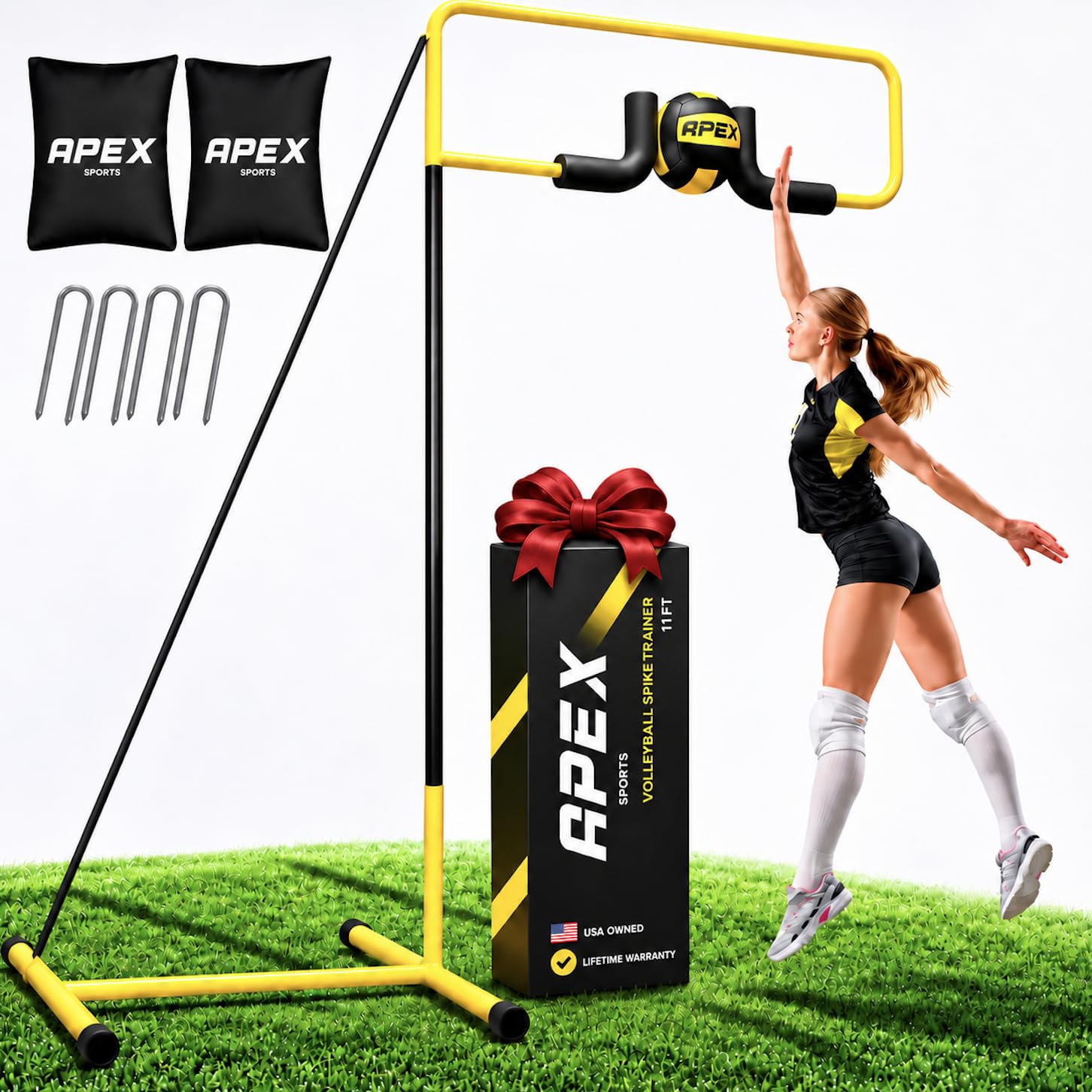
Where the JOLORLY gives you fine height steps, Apex gives you mass. The base weighs 25 pounds, which is the feature that matters when you are landing a full-power swing and the last thing you want is the trainer walking across the gym floor. The adjustable arm reaches contact points from 6 ft to 11 ft in 3-inch intervals, so the height range matches the other free-standing stations here. It is built on alloy steel and ships with a 12-month warranty.
Reloading is faster thanks to the U-shaped ball holder, which the maker lists as a patent-pending design. You drop the ball into the open U instead of threading it through a closed cup, so you reset quicker between reps. The whole flow is one-handed: tip the frame, place the ball, reset, spike. Apex also positions this to pair with its separate training station, so the spike trainer handles form and power while the station handles catching and feeding. Know that before you buy, because the catch system is not in this box.
The recurring honest note on this one is stability and durability under sustained hard contact — some players find it planted and others think it shifts more than they want. Because the base is 25 pounds rather than a sandbag-fillable frame, you cannot add weight after the fact, so position it where you want it and check the footprint before you start. Set up properly, the mass does the job; expect it to hold its ground through a full session rather than a competition-level barrage.
The number that decides it: a 25 lb base is the counterweight under your swing — heavier than a pole, lighter than a fillable sandbag station loaded up.
One thing to plan: the companion catch station is sold separately, so the closed-loop reload loop the maker describes is not in this box.
Best match for: a player who wants a fixed ball with genuine base weight and does not want to fill sandbags.
Check before buying: where it will stand — the base weight is fixed, so a sloped or slick surface works against it.
6. AugFir 2-in-1 Volleyball Setter & Spike Trainer
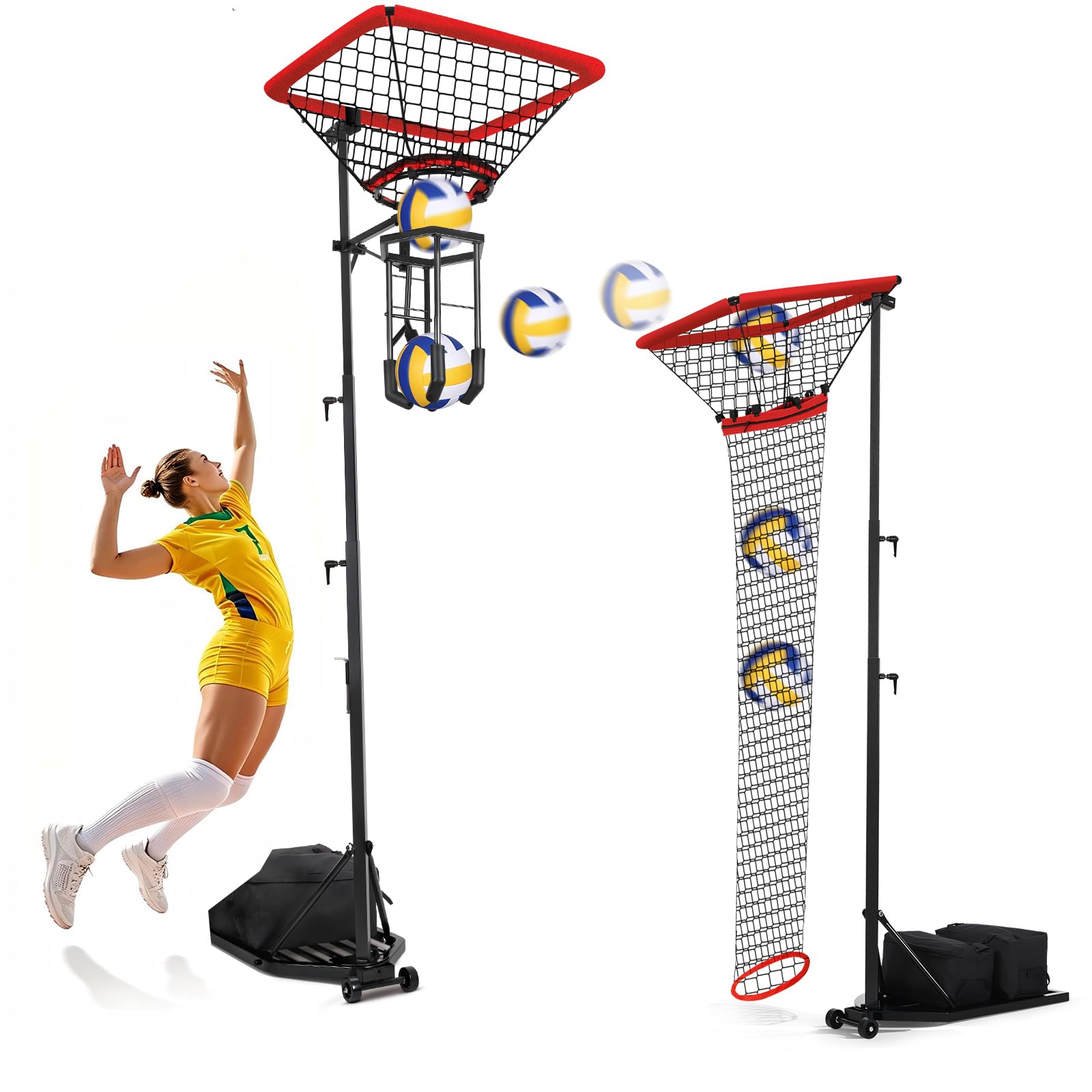
Feed balls from a basket, hit them, then swap the head for a retrieval net.
This is the only trainer here that solves the ball-supply problem in the same frame. An integrated collection basket holds several balls and drops them one at a time onto the rolling ball holder, so you can keep hitting without a break to collect. That is a different proposition from a fixed single-ball holder: instead of reloading by hand between reps, the station feeds you and you keep swinging. For high-volume work — a hundred contacts in a session rather than twenty — that changes how much of your practice time is actually spent hitting.
The second half of the design is the swap. Detach the central hitting device, attach the included extended retrieval net, and the same frame becomes a ball collection system. That is why it is called 2-in-1 rather than a spiking trainer alone. Height ranges from 93 inches to 135 inches across a three-section adjustable design. The large frame is held down by an 88LBS sandbag base — and sand is not included, so factor a bag of it into your setup. Two fixed wheels let you roll the whole thing from the garage to the driveway without lifting.
The trade-off is footprint and cost of entry. This is the largest station here, and a frame that spans that height range with an 88LBS base is a piece of kit you park, not one you fold away. It also carries the smallest body of owner experience of the nine, so there is less long-run feedback to lean on. A player or coach running serious solo volumes at one location gets the most complete training loop on this list, thanks to the automatic feed plus the retrieval swap.
Why It Stands Alone
- Integrated basket feeds balls automatically onto the hitting mechanism — no hand reloads
- Detachable hitting head swaps for an extended retrieval net, giving two tools in one frame
- Height adjusts 93″ to 135″ across three sections
- 88LBS sandbag base with two fixed wheels for rolling it into place
Plan Before You Order
- Sand is not included — you must fill the 88LBS base yourself
- The biggest frame here, so it wants a permanent spot
- Thinner owner feedback than the other picks, so long-run durability is less well evidenced
Choose this when: volume is the goal and you can leave a large station set up in one place.
Weigh this first: you will be buying and hauling sand, and the frame is not coming in and out of a bag.
Know the Specs
Rebound Angle Settings
On a rebound net, the angle is the frame’s tilt — how steeply the surface leans back. It decides where the ball goes when it comes off. A flat angle sends the ball back low so you can dig and pass; a steep angle pops it up so you can work a spike approach. The nets here that list five settings let you change the difficulty of a drill without moving the frame at all, which is the practical value of the adjustment.
Height Range and Step Size
Height range is the span between the lowest and highest contact point a trainer can hold. Step size is the gap between one setting and the next. A pole that runs 40″ to 71.6″ covers a wide span, and a station with 18 stops across 6 ft to 11 ft gives you 3-inch jumps between them. A young player whose jump changes every season benefits from a wide span; a settled adult benefits from fine steps.
Base Weight and Sandbag Fill
A free-standing trainer is only as steady as what holds it down. Some designs ship a fixed base — the Apex carries a 25 lb base — and others give you a sandbag you fill yourself, like the 88LBS base on the AugFir 2-in-1. A fillable base lets you add or remove weight, which helps on grass or a slick gym floor. A fixed base needs no preparation but cannot be adjusted later.
Ball Holder and Reload System
The holder is the part that grips the ball at your contact point. An open shape lets you drop a ball in fast, while a closed cup is slower but simpler. The reload motion is what a solo session lives or dies on: a tilt-and-reset frame lets you lean it forward with one hand, place a ball, and go again. Elastic straps that hold the ball wear out first, which is why some sets ship with spares.
Common Questions
Will a spike trainer work on a standard basketball hoop?
Is a rebound net or a fixed-ball holder better for fixing my spike form?
How high should a spike trainer go for an adult player?
Do these trainers come with a volleyball?
Will a Size 4 youth ball fit the same trainer as a Size 5 match ball?
How do I stop a free-standing trainer from moving during hard spikes?
What does the reload system actually change about a session?
Are these trainers safe to leave outdoors?
Can I carry a spike trainer to a gym or a park?
What should I check first on a trainer that arrives flat-packed?
The Bottom Line
For most households, the smart buy among these volleyball spike trainer options is the Happy Jump 7×4 FT Rebounder Net. It gives you five rebound angles across a 28 square foot face and includes the ball and pump, so a beginner can train on day one. If your problem is contact point rather than reaction, reach for the AugFir Hoop Holder — it stops the ball dead at a fixed height and takes both Size 4 and Size 5 volleyballs. And if you want a complete training loop at one location, the AugFir 2-in-1 Setter & Spike Trainer feeds balls from its own basket and then swaps into a retrieval net.
One honest nudge before you close the tab: pick your training spot first, then buy. A 19-pound net that lives in the backyard will get more use than a 1.4-pound pole you keep forgetting in the car. And the AugFir holder only makes sense if a rim is already part of your week.
How we choose
We do not accept paid placement. Every pick is matched to a real buyer and a real use-case; we do not hands-on test units.
Sources
Specifications: manufacturer listings and product documentation. Review insights: verified customer reviews, as of November 2026. Pricing: not shown on this page (it changes often); check the current price via the retailer link.
As an Amazon Associate, Tactical Gear Guy earns from qualifying purchases. This does not affect which products we feature.