Specs are compiled from manufacturer listings and verified buyer reviews and can change over time — please confirm the key details on the product page before buying.
Your phone already holds the movie, the game, and the 360-degree travel clip — a virtual reality viewer is just the shell that turns that flat screen into something you look around inside. The trap most first-time buyers fall into is buying a shell that fogs up, pinches the bridge of your nose, or refuses to fit the phone already in your pocket. That is what this page fixes.
This guide is built by comparing the manufacturers’ published specifications and the patterns across verified customer reviews, so you get each pick’s real strengths and trade-offs instead of marketing spin.
Below you’ll find the honest split between self-contained headsets and slip-in phone shells, plus which one earns its place on your shelf. Read on for the straight answer on the best Virtual Reality Viewer for how you actually plan to use one.
Top Picks

How To Choose The Best Virtual Reality Viewer
Two very different products hide under the same name. One is a standalone headset with its own processor, battery, and store full of games. The other is a shell you slide your own smartphone into, where your phone supplies the screen and the processing. Decide which one you are actually shopping for before anything else, because every other spec changes with that answer.
Standalone headset or phone shell?
A standalone headset runs everything itself — no phone needed, no cable, and it lasts as long as its built-in battery. A phone shell costs far less and works with the handset you already own, but it is only as good as that phone’s screen, and it needs the phone charged. If you want zero setup friction and a library of built-in games, go standalone. If you want a cheap way to try 3D movies and YouTube VR clips, a shell is enough.
The field of view number
Field of view, usually written FOV, is the width of the picture you see through the lenses, measured in degrees. A wider number spreads the image toward your peripheral vision and feels more like being inside the scene. A narrower number can feel like watching a screen through a tunnel. It is the single spec most likely to make or break the sensation of presence, so compare it directly across picks.
Lens adjustment and pupil distance
Every pair of eyes sits a different distance apart, and that distance is called pupil distance. A viewer with adjustable lenses lets you line up the image so it looks sharp instead of doubled or soft at the edges. Focal adjustment does the same job for people who normally wear glasses — it shifts the focus so you can often use the viewer without them. Skip these adjustments and you inherit blur that no app can fix.
Fit, weight, and straps
A viewer presses on your face for the whole session, so weight and strap design decide whether you last ten minutes or an hour. Adjustable headbands share the load across your skull instead of your nose. A soft face pad keeps the frame from digging in. If you plan to hand it to kids, the strap has to shrink small enough, which is worth checking before you commit.
Side-by-Side Comparison
| Model | Best For | Type | Field Of View | Display / Battery | Amazon |
|---|---|---|---|---|---|
| Meta Quest 3S 256GB★ Best Overall | All-in-one gaming | Standalone | — | 1832 x 1920 per eye / 2 hours | Amazon |
| Google Daydream View (Slate)Best Value | Light phone-based viewing | Phone shell | — | 1920 x 1080 per eye / 12 hours | Amazon |
| TECKNET VR Headset for Phone | Wide phone compatibility | Phone shell | 90–110 degrees | Phone-supplied screen | Amazon |
| REALITEX 3D VR Headset for Kids | Beginners and gifts | Phone shell | — | Phone-supplied screen | Amazon |
| Heromask VR Headset for Kids 5-12 | Geography learning | Phone shell | — | Phone-supplied screen | Amazon |
| TiCCoonuts VR Headset with Bluetooth Headphones | Built-in audio | Phone shell | 120 degrees | 1920 x 1080 / phone-supplied screen | Amazon |
| Meta Quest 2 256GB (Renewed) | Renewed standalone value | Standalone | 90 degrees | 1832 x 1920 per eye | Amazon |
Detailed Reviews
1. Meta Quest 3S 256GB VR Headset
Our pick — 4.5+★ from 100+ verified ratings; the strongest balance of quality and price.
The standalone headset that runs its own games with no phone, cable, or pairing step.
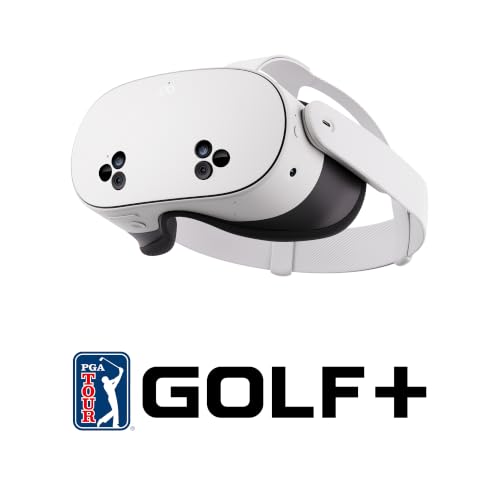
You put this headset on and you are already inside a game, because the Meta Quest 3S runs everything on its own — no phone slot, no app pairing dance, no cable tethering you to a desk. The chip doing that work is a Snapdragon XR2 Gen 2 (a processor built for VR headsets), and it keeps load times and graphics smooth rather than laggy, so a golf swing or a fast game still feels responsive.
Its battery runs 2 hours per charge, and that sits at the short end of the list next to the Google Daydream View’s 12 hours. The tradeoffs are different, though: the Daydream borrows your phone’s power while this headset carries its own, so those 2 hours are fully untethered gameplay rather than a phone shell sitting idle with its screen on. Memory is 8GB of RAM, and Meta claims that 8GB gives 33% more memory than the previous model, which keeps larger games running smoothly. Each eye gets a 1832 x 1920 display, which means a clear, resolution-dense image rather than a stretched phone screen.
The passthrough is the part that changes how the headset feels in a room. Two RGB color cameras (they capture full color, not grainy grey) blend your real surroundings into the virtual scene, so you can see your living room while a virtual object floats in it. Performance is what buyers talk about most, and the fun factor trails right behind — this is a device people keep reaching for. What genuinely surprises is the free content: GOLF+ is included with 1,800 in-game credits, plus a 3-month trial that opens a catalog of 100+ games. The lens is the one place to temper expectations, since fogging comes up in owner feedback — let the headset warm to room temperature before a session and it settles.
Why it wins the top slot
- Runs standalone, so no phone and no cable in the middle of a session
- Snapdragon XR2 Gen 2 processor keeps load times short and motion smooth
- 1832 x 1920 per eye puts a crisp image in front of each eye
- Dual RGB color cameras blend your real room into the virtual scene
- GOLF+ with 1,800 credits plus a 3-month trial of 100+ games is packed in
Worth knowing before you commit
- 2 hours of battery per charge is short against the phone-shell picks
- Lens fogging shows up in owner feedback — a warm-up helps
- It costs more than any slip-in phone viewer here
Go this way if: you want a complete VR setup in one box that works without borrowing your phone.
Reconsider if: you only want to watch 3D clips occasionally and would rather spend far less on a shell.
2. Google Daydream View – VR Headset for Smartphone (Slate)
A fabric-wrapped shell that turns a compatible phone into a 360-degree front-row seat.
If you already own a Daydream-ready phone, this is the cheapest genuine step into VR on the entire page, and it does not feel cheap in the hand. The headset is wrapped in soft, breathable fabric rather than hard plastic, which matters the moment you wear it long enough for your face to warm up. It is a phone shell, not a standalone, so your handset supplies both the screen and the processing.
Google rates the battery at 12 hours against the Meta Quest 3S’s 2 hours, because the shell draws almost nothing and leaves the work to your phone. The reason is simple and worth understanding: the shell itself draws almost nothing, so all that runtime is your phone sitting in the cradle rather than the viewer draining a pack. The display is rated at 3840 x 1080, which splits into 1920 x 1080 per eye — plenty for films and panoramic clips, and a clear enough image for casual game sessions. It also connects over Bluetooth and includes a handheld motion controller, so your hand movements translate into the scene.
The fit is the honest catch here. This headset is built for Daydream-ready phones specifically, so it will not swallow just any handset — check your model against Google’s compatibility list before you buy, because no amount of strap adjustment will fix the wrong phone. That narrow compatibility is why the rating sits lower than the standalone picks despite owners calling the experience excellent and fun. Understand what you are buying — a fabric shell for a specific set of phones — and it delivers the best seat-in-the-house feel for concerts, sports, and panoramic video.
The comfortable classic: breathable fabric and a bundled motion controller make this the friendliest low-cost way to try phone-based VR.
The compatibility gate: it is limited to Daydream-ready phones, and that single requirement rules out most modern handsets.
Fits you if: a Daydream-ready phone is already in your pocket and you want a soft, low-cost shell.
Not the one to grab if: your phone is not on Google’s supported list — the TECKNET below fits far more handsets.
3. TECKNET VR Headset for Phone with Controller
The universal fit that swallows almost any handset you can name.
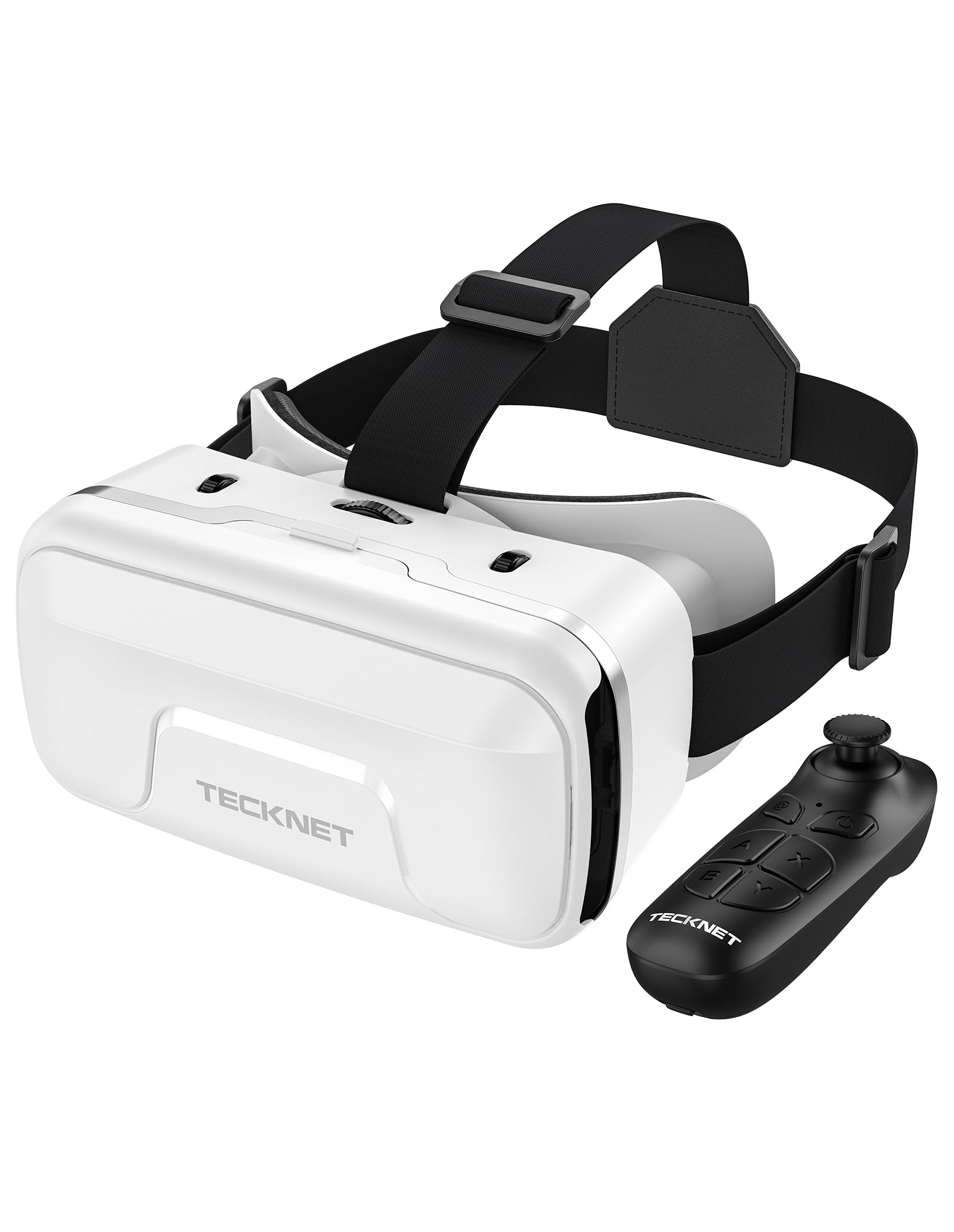
Most phone viewers live or die on one question: does my phone fit? This one answers it with a 4.7 to 7.2 inch screen range, which spans the iPhone 16 and 15 families, the Samsung S23 and S22 line, and Google Pixel among many others. Draw the line at 6.2 inches and larger and the screen frame comes off for a tighter fit and better heat dissipation — a small design detail that keeps the phone from cooking during a long session. Weighing 268 grams, it stays light enough to wear without your neck noticing.
The picture spreads wider than a standard phone shell thanks to a 90- to 110-degree field of view (how wide the scene reaches into your peripheral vision), and it avoids the extreme edge distortion a wider lens can bring. The lenses block blue light, and independent pupil-distance and focal-length dials keep the image sharp for different eyes, including myopia up to 600° without glasses. A Bluetooth controller comes in the box for moving through games and video. Registering the headset extends the warranty to 36 months, well beyond the 12 months typical at this price.
The honest caveat is that the VR effect is your phone’s job, not the headset’s. It will not convert flat images into 3D by itself — you need apps with 3D content or panoramic clips to get the payoff. Some buyers also report units that stop working after a few weeks, so treat the warranty as the reason you are covered rather than a reason to worry. For a first viewer that fits nearly any phone, this is the practical choice.
The budget-friendly pick for mixed households: a wide screen range, a bundled Bluetooth controller, and adjustable lenses for young and old eyes alike.
Where it falls short: it cannot create 3D from flat content, so pair it with a real VR app or video library from day one.
4. REALITEX 3D VR Headset for Kids + Android Remote
The beginner bundle that ships with VR apps, videos, and a tutorial link already lined up for iPhone and Android.
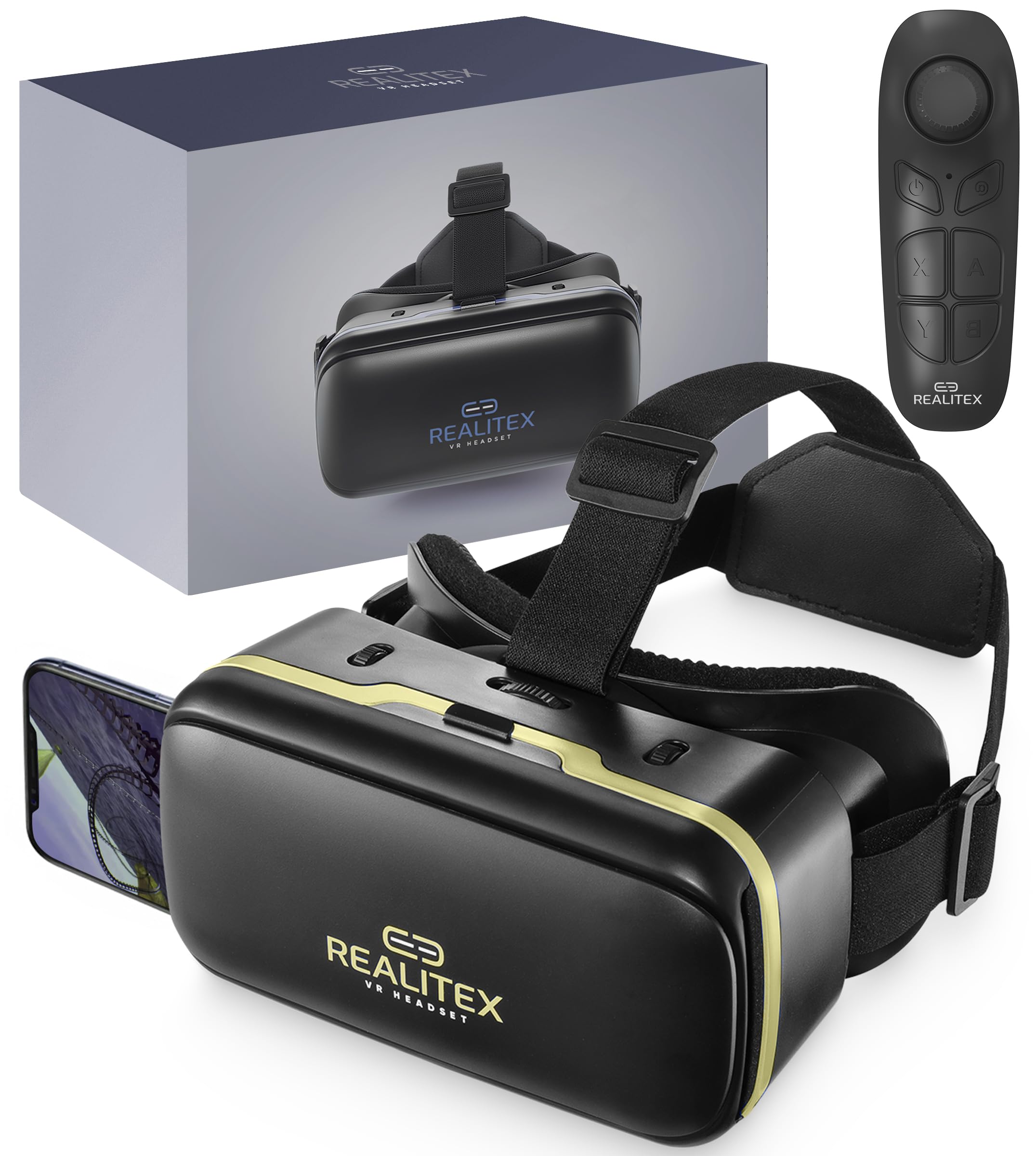
For the household that has never done VR before, the setup is usually where enthusiasm dies. This one takes that on directly: it ships with VR apps and videos already lined up for both iPhone and Android, and a “how to use” tutorial link tucked inside the box. You are not hunting for content — you are opening a box and starting. It works across both platforms and lands in a champagne finish that looks like a present rather than a gadget.
Bigger lenses and more face padding than a basic shell do the heavy lifting on comfort, and that is what a kid notices first over a long session. Build quality is where the confidence shows, with a patented built-in button on the frame to interact with the scene. Owners describe a high-end feel, a fit that lands right the first time, and a 3D experience that turns even a YouTube VR video into something worth passing around. It has also been used as family entertainment — a shared afternoon, not a solo screen.
One thing buyers should understand: this is a phone shell, not a standalone headset. Every bit of the 3D experience runs through your phone, so the older the handset, the simpler the experience will feel. The bright side of that is cost and flexibility — you upgrade your phone, the viewer keeps up.
What makes it a great first gift
- Comes loaded with VR app and video links for iPhone and Android
- In-box tutorial link removes the guesswork for new users
- Larger lenses and more face padding than a basic shell
- Patented built-in button for interacting with the scene
What to weigh honestly
- Fewer owners behind the rating than the major players on this page
- No standalone processing — the phone does all the work
- Screen size limits depend entirely on your handset model
Best for birthdays: a beginner bundle that makes a child’s first VR afternoon easy.
Think twice if: you are outfitting a tech-savvy teenager who would notice the missing built-in processing.
5. Heromask VR Headset for Kids 5-12 · Geography Games

A kids’ headset whose games teach countries, capitals, flags, and landmarks through laser-beam play.
Kids raised on games will spend hours on a screen if the game pulls them in, and this headset is built entirely around that instinct. It hands them countries and capitals, world flags, continents, oceans, famous landmarks and cultural facts, then lets them fire laser beams at the answers instead of reading a textbook. It targets ages five to twelve, and teachers designed every game to build memory and general knowledge.
Adjustable lenses line up the image, and the headset itself is comfortable and durable. The control is a mechanical button on the frame that needs no batteries, so nothing dies mid-session and you skip a battery run to the store. Pop in a smartphone and the room becomes a 3D trip around the world. It works with most Android and iOS handsets and runs offline once the app is installed, so a long car ride or a plane trip still works — just register the product and download the free app to start.
The value here is that the headset and the curriculum come as one unit — you are buying a guided experience, not a blank shell that needs you to find content. That is also the honest limit. It is not a general-purpose gaming headset you hand to a teenager; the pull is the learning angle. If you want a first VR experience that earns back a little screen time with something educational, this is the one designed from the ground up for it.
The parent’s angle: teachers designed the games, the button never needs a battery, and it runs offline once the app is installed.
The narrow band: ages five to twelve is the balance — older kids will want more open-ended gaming than this delivers.
Reach for this if: you want a first headset where the kids learn capitals and flags without realizing they are learning.
Look elsewhere if: the goal is action games and free-roaming play — a standalone headset serves that better.
6. TiCCoonuts VR Headset with Bluetooth Headphones
The only pick here that puts the headphones inside the headset.
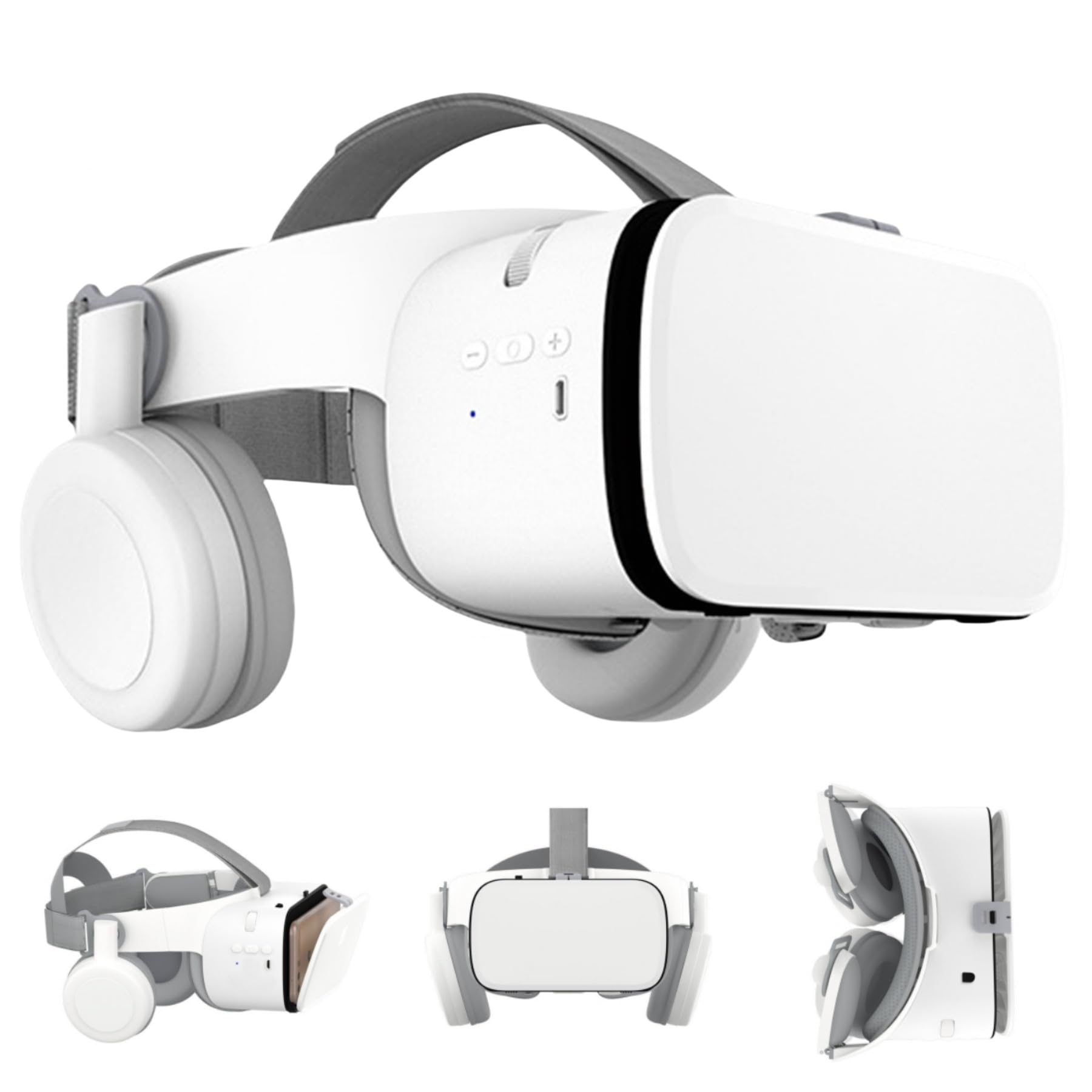
Anyone who has worn a phone viewer knows the weak link: your earbuds trail a cable down from the headset and snag on everything. This headset fixes that with built-in foldable Bluetooth headphones mounted right on the frame, so the audio arrives with the picture and nothing dangles. It pairs with 4.7 to 6.5 inch phones, spanning the iPhone 16 down to the 7 Plus and the Samsung Galaxy S25 back through the Note and A-series.
The picture stretches out toward your peripheral vision at a 120-degree field of view (how wide the scene reaches past your direct line of sight) — the widest figure on this list, and the spec that sells this unit. That width comes across a 1920 x 1080 maximum display resolution. Inside, 3D spatial audio (sound that seems to come from around you) handles the rich side, and both the straps and the focal settings adjust — the latter lets different eyes find their sharp point. When you are done, the headphones fold away into the frame so it packs down smaller.
Now the honest part. This is one of the rare cases where the rating tells you to be careful rather than feel confident — buyer sentiment leans negative on overall quality. The wide FOV and integrated audio are real advantages, but the execution around them has not satisfied everyone who paid for it. Approach it as a wide-view, all-in-one audio experiment rather than a safe bet. If the built-in headphones are the feature you cannot live without, understand you are trading reliability for that convenience.
The bold audio experiment: a foldable headphone design and 120-degree view that no other pick here offers.
Go in eyes open: quality feedback has been mixed, so it suits buyers who need the integrated audio and will accept the risk.
7. Meta Quest 2 — 256 GB (Renewed)

A standalone veteran at a renewed price, with the storage to hold a real library.
You get a self-contained headset without paying the newest-model tier — a sensible middle path. It runs everything itself with a faster processor and top hand-tracking, and needs no phone. The display puts 1832 x 1920 pixels in front of each eye at a 90 Hz refresh rate (Hz — how many times per second the image refreshes, so higher numbers read smoother), and the field of view is 90 degrees. Storage is a base 256GB, enough room to keep a lot of installed games on deck instead of deleting one to fit the next.
The package throws in creature comforts you usually buy separately. Silicone grip covers on the controllers block sweat and dust while anti-slip bumps keep your hands from sliding mid-swing, and the knuckle straps are adjustable PU so you can relax your grip without dropping a controller. It weighs 1.8 pounds — light enough to wear through a session. Quality is what owners single out as the strongest part of the experience, with gaming and even a meditation app getting callouts. The honest gap is that functionality reports split, and a few units arrive failing to work, so a renewed headset demands a careful first power-on and a quick check of the return window.
The older lens tech and lower refresh rate mean it will not feel as crisp as the Meta Quest 3S at the top of this list. But as a refurbished route onto a well-supported library, it earns its place — you get the storage, the comfort extras, and the standalone freedom.
Why a renewed Quest 2 makes sense
- Standalone processing and hand tracking with no phone or cable
- 256GB of storage for a sizeable installed game library
- 1832 x 1920 per eye at a 90 Hz refresh rate
- Grip covers and adjustable PU knuckle straps included
The renewed reality
- It is a renewed unit, so check condition on arrival
- 90-degree FOV and 90 Hz fall short of the newer Meta headset
- Functionality reports are split across owner feedback
Smart buy if: you want the standalone experience and the storage headroom without the top-tier cost.
Alternate route: spend for the Meta Quest 3S and you get the sharper imaging and passthrough cameras instead.
Know the Specs
Field of view (FOV)
Field of view is the width of the picture you see through the lenses, measured in degrees. A wider number spreads the scene into your peripheral vision and feels more rich, while a narrow one feels like watching a screen through a tunnel. The picks here range from 90 degrees on the Meta Quest 2 to 120 degrees on the TiCCoonuts shell — check the number if presence matters to you.
Display resolution per eye
This is how many pixels sit in front of each eye, written as two numbers like 1832 x 1920. More pixels means a sharper image with less visible grid. The Meta Quest 3S and Meta Quest 2 both list 1832 x 1920 per eye, while phone shells depend on your handset’s screen — the shell’s spec is the maximum it can pass through.
Refresh rate in Hz
Hertz (Hz) counts how many times per second the image refreshes. A higher figure makes fast motion feel smoother and more natural. The Meta Quest 2 lists 90 Hz. If you plan to watch fast-paced games or sports, the refresh rate is what keeps it from looking choppy.
Battery and processors
A standalone headset carries its own battery and processor, which is why it works without a phone and lasts a set number of hours — the Meta Quest 3S lists 2 hours. A phone shell draws power from your handset instead, which is why the Google Daydream View lists 12 hours. Understand which of the two you are buying and the numbers make sense.
Common Questions
Will my smartphone fit inside a virtual reality viewer?
What is the difference between a standalone headset and a phone viewer?
Do I need a VR app or does the headset make 3D by itself?
Can I use a VR viewer without wearing my glasses?
Why do my VR lenses fog up and how do I stop it?
How long does the battery last on a standalone headset?
Is a wider field of view always better?
Is a renewed headset a safe buy?
What age is a VR headset for kids appropriate for?
Do phone viewers work with any Android or iPhone model?
The Bottom Line
For most people, the best virtual reality viewer is the Meta Quest 3S 256GB — it runs everything itself, packs a Snapdragon XR2 Gen 2 processor and two RGB passthrough cameras, and throws in GOLF+ and a games trial so day one is full. If your priority is spending less and your phone supports it, the Google Daydream View gives the soft fabric feel and a long 12-hour battery at a modest outlay. And for a kid-friendly first step, the REALITEX bundle with its included apps and tutorial is the easiest on-ramp.
One honest nudge: the crowd’s favorite is the Meta Quest 3S at 4.5+ stars across 100+ ratings, so if you can stretch to it, that is where the experience and the support meet. Everything else here is a real option for a real budget — just match the field of view, the phone fit, and the battery to how you will actually use it.
How we choose
We do not accept paid placement. Every pick is matched to a real buyer and a real use-case; we do not hands-on test units.
Sources
Specifications: manufacturer listings and product documentation. Review insights: verified customer reviews, as of November 2026. Pricing: not shown on this page (it changes often); check the current price via the retailer link.
As an Amazon Associate, Tactical Gear Guy earns from qualifying purchases. This does not affect which products we feature.