Specs are compiled from manufacturer listings and verified buyer reviews and can change over time — please confirm the key details on the product page before buying.
Air bubbles and curling edges are the two things that ruin a vinyl floor install, and both trace back to the same step you skipped: pressing the sheet evenly into the adhesive. A proper floor roller spreads your body weight across a wide, smooth drum so the glue grabs everywhere at once. Below you get seven rollers sorted by what they actually do — light countertop units, mid-weight sheet vinyl drums, and the heavy steel brutes — so you can match the tool to the job instead of guessing.
This guide is built by comparing the manufacturers’ published specifications and the patterns across verified customer reviews, so you get each pick’s real strengths and trade-offs instead of marketing spin.
Some rollers are built to glide over countertops, others to crush a full sheet of vinyl into glue, and the difference shows up in weight, drum width and handle design. Here is how to pick the right vinyl floor roller for the surface you are actually covering.
Top Picks

How To Choose The Best Vinyl Floor Roller
The mistake most first-timers make is buying the heaviest roller they can find, assuming more weight always means a better bond. Weight helps — up to a point. Past that point you are just hauling steel around a room and risking a scuffed wall. Match the roller to the surface first, then to your arms.
Match the load capacity to what you are pressing
Load capacity is the pounds of downward pressure the roller is built to deliver onto the flooring. A 35-pound roller is enough to press sheet vinyl or carpet into adhesive on a normal residential job. A 75-pound roller or a 100-pound roller is the tool for thick commercial vinyl and jobs where the adhesive needs a hard, even squeeze. Going heavier than the material needs just tires you out faster.
Decide on rolling width before anything else
Rolling width is how many inches of flooring the drum touches in one pass. A wide drum covers a sheet fast, but it will not fit into a tight corner or against a back splash. Narrow heads reach those spots but take more passes. If you are only doing countertops or wall seams, a small-diameter head is the smarter tool. If you are laying a full room of sheet goods, the wide segmented drums save real time.
Look at how the handle and axles handle walls
Inset axles keep the metal ends of the drum away from the wall so you do not scuff paint or baseboard as you roll. A removable handle lets a heavy roller break down for transport and storage. Rubber grips matter more than they sound once you are pushing a weighted drum across a whole room.
Side-by-Side Comparison
| Model | Best For | Load Capacity | Rolling Width | Item Weight | Amazon |
|---|---|---|---|---|---|
| Roberts 10-950★ Best Overall | Full sheet vinyl and linoleum jobs | 75 pounds | — | — | Amazon |
| Marshalltown E225DDetail Specialist | Seams, veneer and tight detail work | — | 1 1/8″ head | 6.2 ounces | Amazon |
| Bon Tool 24-165 | Countertops and walls with reach | — | 1.5 inches | 2.6 pounds | Amazon |
| Roberts 10-935 | Lightweight sheet vinyl and carpet | 35 pounds | 15-3/8 inches | 37 pounds | Amazon |
| Schluter DITRA-ROLLER | Embedding DITRA membrane in bond coat | — | 14-1/2 inches | — | Amazon |
| Bon 14-556 | Heavy commercial linoleum | 100 pounds | — | — | Amazon |
| Linoleum Floor Roller 100 lbs. | Big-room installs with transport needs | 100 pound | — | 102 pounds | Amazon |
Detailed Reviews
1. Roberts 10-950 75-Pound Heavy Duty Vinyl and Linoleum Floor Rollers
Our pick — 4.0+★ from 200+ verified ratings; the strongest balance of quality and price.
A 75-pound steel drum that presses sheet vinyl flat without making you fight it.
Seventy-five pounds is the load capacity here — the amount of downward force this roller puts into the adhesive as you push. That is the number that matters for full-sheet vinyl and linoleum, because it is heavy enough to squeeze glue evenly across a wide surface without being the kind of tool you need two people to lift. For a working installer or a serious DIYer covering a floor, this is the sensible middle.
You get a metal build throughout, and the auxiliary rollers (the small extra wheels that help guide the tool) are the part that keeps earning its keep. Buyers report that the quality of the whole assembly is what wins them over — it is the aspect owners bring up more than any other. They point to the rollers tracking smoothly through a full room as the specific benefit. The auxiliary rollers keep the drum tracking straight so the sheet feeds under it without snagging.
The catch is the size. The package arrives at 104.14 cms in length, so you need somewhere to store a long tool between jobs — a garage wall or a truck bed rather than a shelf. It is not a tool you tuck in a drawer. If you only lay a vinyl countertop once, this is more roller than the job asks for.
What earns the top spot
- 75-pound load capacity puts real pressure into the adhesive across a full sheet
- Metal construction holds up to repeated jobsite use
- Auxiliary rollers track smoothly and are the standout owners call out
- Quality and function are the two things the review pages keep returning to
Where it asks more of you
- Long package length means it needs real storage space
- More pressure than a single countertop or seam job requires
Worth it for: anyone laying full sheets of vinyl or linoleum who wants the adhesive pressed evenly on the first pass.
Think twice if: you are only doing small countertop or seam work — the smaller rollers below suit that better.
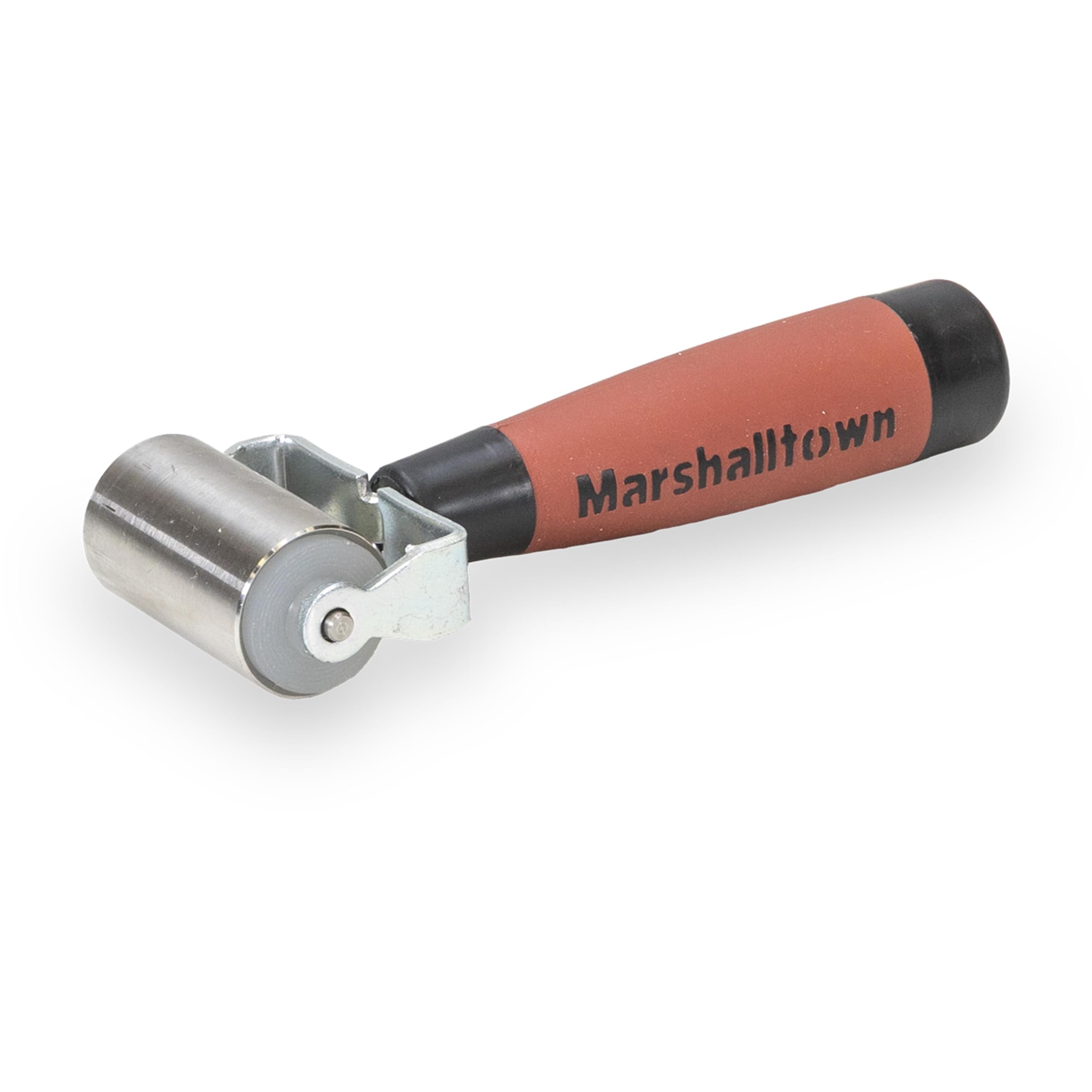
2. MARSHALLTOWN Steel Sound Deadening Roller
A 6.2-ounce stainless seam roller for the corners the big drums cannot reach.
This is not the roller you push across a whole room — it is the one you reach for once the sheet is down and the edges need work. The head measures 1 1/8 inches, which is narrow enough to press vinyl, laminate and veneer into seams and tight runs where a wide drum simply will not fit. Stainless steel means the head and roller will not rust, and it resists water and solvents, so getting adhesive on it is not a disaster.
Handling is light — 6.2 ounces of stainless with a flat handle, powered by hand. The head is built to resist damage from surface irregularities, so a less-than-perfect subfloor does not chew it up. Owners mention the seam work itself functions well, and that is the part you are buying it for.
The honest limit is that quality and sturdiness split opinion: plenty of buyers find it good and sturdy, while others feel it could be better built. Durability is a mixed picture too, with some units lasting and others not. Treat it as a specialty detail tool at a light weight rather than a heavy-duty room roller. For seam and veneer pressing, the 1 1/8-inch stainless head does the narrow work a wide drum cannot.
Why keep it on the list: the stainless head handles adhesive, water and solvent without rusting, and the narrow 1 1/8″ profile gets into seams and set-in details no full-size drum can touch.
Set your expectation honestly: the stainless construction is a deliberate trade against mass — this is a finishing tool, not a floor-wide press, and build feedback is genuinely split.
Reach for this if: your vinyl job is done and the seams, veneer edges and tight runs still need a firm, rust-proof press.
Look elsewhere if: you need one tool to roll a whole sheet — a wide drum from this list does that job.
3. Bon Tool Roller with Extension Handle

Three recessed rollers on an extension handle, built to roll right up against a back splash.
Rolling a countertop or a wall seam means working in a space your body does not fit — which is exactly where this Bon Tool earns its keep. It carries three non-marking solid rollers recessed on the end, so you can run the drum right up near a wall or back splash without leaving a black streak on the surface. The rollers are 1.5 inches in diameter, which keeps the pressure tight and controlled rather than spread thin.
At 2.6 pounds it is light enough to work overhead or at arm’s length for a stretch, and the extension handle gives you the reach those spaces demand. For countertop laminate, wall vinyl and backing work where a full-size floor drum is simply too big, this is the right shape of tool.
The limitation is obvious once you picture it: 2.6 pounds will not press a full sheet of flooring into adhesive with the force a weighted drum delivers. It is a reach-and-detail roller, not a room roller. For countertop laminate and back-splash edges, its 1.5-inch recessed rollers reach where a full-size drum cannot.
Built for the awkward spots
- Recessed roller ends let you work flush to walls and back splashes
- Non-marking solid rollers protect finished surfaces
- Extension handle adds reach on countertops and walls
- 2.6-pound body keeps overhead work manageable
The trade you are accepting
- Light 2.6-pound build cannot press full sheet flooring with heavy-drum force
- Three small rollers cover ground slower than one wide drum
The job it owns: countertops, wall vinyl and back-splash edges where you need reach plus a clean, non-marking roll.
Not the one for: a whole-room sheet vinyl install — bring in a weighted drum for that.
4. ROBERTS 10-935 Flooring Roller

Fifteen inches of rolling width and a handle you can pull off for storage.
A 15-3/8-inch rolling width is the headline — that is a genuinely wide pass, and it is the reason you can work across a sheet of vinyl or carpet quickly instead of inching side to side. The segmented, chrome-plated rollers are the second useful bit: they spread the pressure so adhesive transfers evenly to the flooring, which is what stops the edges from lifting a week later. Inset axles keep the ends off the wall as you go.
The 35-pound load capacity tells you what it is for. This is a lightweight roller — 37 pounds total — meant for pressing flooring evenly into adhesive on residential sheet vinyl and carpet, not for crushing thick commercial goods. Carrying it on and off a jobsite is the point, and the removable 30-inch handle plus rubber grips make that easier on your hands.
Owners consistently rate it a good, functional roller that presses sheet vinyl and carpet evenly. The chrome-plated rollers and the limited lifetime warranty backing it round out a tool that is easy to live with. At 37 pounds with a removable 30-inch handle, it breaks down for shelf storage and is light enough to carry solo.
The everyday read: wide, chrome-plated rollers plus inset axles mean a fast, even pass that leaves your walls alone — and the removable handle makes a 37-pound tool behave like a lighter one between jobs.
The one thing to weigh: 35 pounds of load capacity is tuned for residential sheet vinyl and carpet, so it is not the roller for thick commercial flooring.
the balance for: home installers laying sheet vinyl or carpet who want a wide, even pass and easy storage afterward.
Step up if: your material is heavy commercial vinyl — the 75-pound rollers above deliver the extra press.
5. DITRA-ROLLER – Embedding Roller

A 14-1/2-inch Schluter drum made to press uncoupling membrane into the bond coat.
This one has a narrow, specific purpose: embedding DITRA or DITRA-XL membrane into the bond coat. The drum spans 14-1/2 inches, which gives you a wide, even press across the membrane as you work. It is lightweight, and it disassembles for transport and storage, so moving it between a truck and a tiled room is not a chore.
Owners find the quality of the roller good, and the wide drum does the wide-sweep pressing its design calls for. If you are installing uncoupling membrane before tile, this is the specific tool rather than a general-purpose floor roller, and it is built by Schluter Systems for exactly that step.
Where it needs care is the roller attachment itself. Multiple customers note that the roller falls off during the first two minutes of use, so the connection is the weak point to watch. Set it up carefully, check the roller is seated before you start pressing, and this drum does the embed job it was made for. The 10+ owners who rate the quality positively are matched against that same durability gripe — treat it as a tool that needs a pre-flight check.
What it is built to do
- 14-1/2-inch drum presses DITRA and DITRA-XL membrane into the bond coat
- Lightweight enough to work with through a full tile room
- Disassembles for transport and storage between jobs
- Quality is the aspect owners rate positively
The weak point to inspect
- Roller attachment is the recurring concern — it can come loose early in use
- Single-purpose design, not a general sheet vinyl or carpet roller
Buy it for: embedding uncoupling membrane before tile, where a wide, disassemblable drum is what the step calls for.
Check before you roll: seat the roller firmly and glance at the attachment as you work — it is the part to keep an eye on.
6. Bon 14-556 Linoleum Floor Roller

A hundred pounds of solid steel that lets each roller float over a bad subfloor.
This is a professional installers’ tool, and the 100-pound solid steel body is the whole idea. That much mass presses linoleum or thick vinyl into the adhesive with force a light roller cannot match, which is why contractors reach for it on commercial jobs. The construction is solid steel for repeated jobsite use.
The smart engineering is underneath. Each roller floats independently on the axle, so the rolling sections adjust individually as you move and compensate for inconsistencies in the floor. That means a slightly uneven subfloor does not leave a ridge of unbonded material. The smooth roller surfaces and rounded corners are there to protect what you are covering from marks or damage from sharp edges, and the yoke and handle are painted to help prevent rust.
The one thing to plan for is handling. At 100 pounds this is not a tool you carry solo up a flight of stairs without thinking it through. A transporter is a separate accessory and is not included with this standalone roller, so budget the transport logistics before it arrives. On commercial linoleum, the 100-pound steel body is what delivers the hard, even squeeze the adhesive needs.
The engineering that matters: independent floating rollers plus rounded corners mean even pressure over an imperfect subfloor without marking the surface.
Plan the logistics: a 100-pound steel body needs a transport plan, and the roller transporter is sold separately, not in the box.
For the pro: commercial linoleum and heavy vinyl installs where 100 pounds of even pressure is what the adhesive needs.
Not for the one-off: if you cannot move 100 pounds around the room safely, drop to a lighter roller above.
7. Linoleum Floor Roller, 100 lbs.
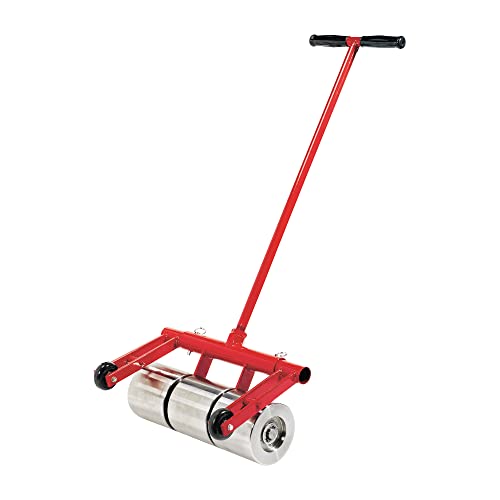
A 102-pound roller that ships with its own wheels so you can actually move it.
Here is the number that separates this one from every other heavy roller: it weighs 102 pounds and is rated to a 100-pound load capacity, and it brings a detachable transport wheel assembly kit in the box. That kit is the whole point — it gives you a way to roll the tool upright and move it without carrying dead weight, and it protects the segmented rollers while stored. Compared to the Bon 14-556 at 100 pounds with its transporter sold separately, this one hands you the transport solution up front.
The working end is the same proven setup: segmented, chrome-plated rollers that spread the pressure and transfer adhesive evenly to the flooring, a removable 30-inch handle for transport and storage, and rubber grips for comfort. It is built for pressing flooring evenly into adhesive across a big room, and the quality wins people over — owners note it is a nicer tool than the beat-up, rusted alternatives they have worked with before.
The weight is also the honest catch. Several owners describe it as heavy, which it plainly is at 102 pounds, so this is a two-person lift or a wheels-on-the-ground tool rather than something you hop up a ladder with. On a large job, the included transport wheel kit lets you roll the 102-pound unit upright instead of carrying it. If you are working solo in a tight space, the lighter Roberts above is the calmer choice.
Why the big job goes easier
- 100-pound load capacity presses flooring into adhesive with serious force
- Detachable transport wheel kit included, unlike the Bon 14-556
- Segmented chrome-plated rollers transfer adhesive evenly
- Removable 30-inch handle and rubber grips make handling bearable
What you are signing up for
- 102 pounds is genuinely heavy — plan a two-person lift or use the wheels
- Overkill for small rooms or countertop work
The right call for: large-room installs where you need 100 pounds of pressing force and the included wheels to move it around.
Pass it by if: you are working solo and cramped — a 35-pound roller handles a residential room without the back strain.
Know the Specs
Load Capacity
Load capacity is the pounds of downward force the roller delivers onto the flooring when you press down. A 35-pound roller is a residential sheet vinyl and carpet tool. A 75-pound or 100-pound roller is the commercial and heavy-linoleum end of the scale. The amount of force you need is set by how thick the material is and how hard the adhesive needs squeezing — more is not automatically better, because a heavy roller you cannot control presses unevenly.
Rolling Width and Roller Design
Rolling width is how many inches of flooring the drum touches in a single pass. Wide drums like the 15-3/8-inch Roberts or the 14-1/2-inch Schluter cover a room fast. Narrow heads like the 1 1/8-inch Marshalltown reach seams and edges. Segmented and chrome-plated rollers matter because the segments spread pressure evenly and the chrome keeps adhesive from clinging, so the material presses flat instead of dragging.
Common Questions
What weight floor roller do I need for sheet vinyl?
Can a floor roller be used on carpet as well as vinyl?
What does a recessed roller end actually do?
Is a 100-pound floor roller too heavy to use alone?
Why do segmented chrome-plated rollers press better than one solid drum?
Can I use a floor roller to embed DITRA membrane?
Do I need a removable handle on a floor roller?
Will a floor roller leave marks or scuff my wall?
How do I store a heavy floor roller between jobs?
The Bottom Line
For most people laying vinyl or linoleum, the vinyl floor roller that balances force and control is the Roberts 10-950. Its 75-pound load capacity delivers real pressure into the adhesive without the handling burden of a 100-pound steel drum. If you want a wide, easy-to-store roller for a residential sheet vinyl or carpet job, grab the Roberts 10-935 with its 15-3/8-inch chrome-plated rollers and removable handle. For a large commercial install where you need maximum pressing force with a way to move it, reach for the Linoleum Floor Roller at 100 pounds with its included transport wheel kit. Match the load capacity to your material — 35 pounds for residential sheet vinyl, 75 to 100 pounds for commercial linoleum — and the roller presses the adhesive evenly.
How we choose
We do not accept paid placement. Every pick is matched to a real buyer and a real use-case; we do not hands-on test units.
Sources
Specifications: manufacturer listings and product documentation. Review insights: verified customer reviews, as of November 2026. Pricing: not shown on this page (it changes often); check the current price via the retailer link.
As an Amazon Associate, Tactical Gear Guy earns from qualifying purchases. This does not affect which products we feature.