Specs are compiled from manufacturer listings and verified buyer reviews and can change over time — please confirm the key details on the product page before buying.
If you have ever done the slow, arms-out shuffle across a wet parking lot in January, you already know why the outsole matters more than anything else. Vibram Arctic Grip Boots are built around a rubber compound that grips wet ice, and that single feature is the difference between walking confidently and walking scared. This guide covers what each pair actually holds up to, where the warmth ratings land, and which pairs real owners keep reaching for.
This guide is built by comparing the manufacturers’ published specifications and the patterns across verified customer reviews, so you get each pick’s real strengths and trade-offs instead of marketing spin.
The category leader by owner approval is the Muck Arctic Ice Extreme Conditions Tall boot, at 4.5+ stars across 900+ ratings. Below you will find that pair plus eight more options, each rated on grip, warmth, and how well the boot stays intact season after season. What follows is a straight read on the vibram arctic grip boots worth pulling on before the first freeze hits your driveway.
Top Picks

How To Choose The Best Vibram Arctic Grip Boots
The first thing to settle is what you are actually walking on. Wet ice, black ice, and packed snow all behave differently underfoot, and the boot you pick should match the surface you meet most mornings.
Read the outsole label, not just the brand
Vibram makes dozens of soles. What you want is the compound named for cold-weather grip — Arctic Grip or Arctic Grip All Terrain. The All Terrain version pairs the ice compound with XS Trek Evo rubber, which is designed to hold up on mixed ground like gravel, hard pack, and loose snow, not just wet ice. If a listing only says “Vibram” without naming the Arctic Grip compound, you are looking at a different sole entirely.
Match the comfort rating to your winter
Boots in this group publish temperature ranges, and those numbers describe the cold end of what the insulation handles. A pair rated to -60 °F is built for deep cold and long stretches outdoors. A pair rated to -40 °F covers most commutes and errands with room to spare. Pick a rating colder than your worst normal day and the insulation still vents enough for milder afternoons.
Height, calf room, and getting them on
Tall rubber shafts keep snow out when you are wading through drifts, but they also need to clear your calf. Check the listed calf circumference before you commit — a snug top-line binding seals out cold air, and a tight one will fight you every time you pull them on. Shorter ankle and mid boots suit shoveled sidewalks and car commutes, where deep snow never reaches your shin.
Side-by-Side Comparison
| Model | Best For | Arctic Grip Outsole | Insulation | Weight | Amazon |
|---|---|---|---|---|---|
| Muck Arctic Ice Extreme Conditions Tall★ Best Overall | Deep cold and wet ice | Arctic Grip with Icetrek base layer | Heavy-duty 8 neoprene, fleece lining | 5.5 pounds | Amazon |
| MUCK Men’s Arctic Ice 16″ InsulatedBest Tall Rubber | Snowbanks and deep drifts | Arctic Grip A.T. | Soft insulation, bioDEWIX footbed | 6.1 pounds | Amazon |
| Merrell Men’s Coldpack 3 Thermo Mid | Trail and town crossover | Arctic Grip | 200 grams insulation, fleece lining | — | Amazon |
| Merrell Coldpack 3 Thermo Tall Zip | Deep snow with easy entry | Arctic Grip | 200 grams insulation, fleece lining | — | Amazon |
| Danner Arctic 600 Side-Zip 7″ | Winter hiking and trail work | Vibram Nisqually Arctic Grip | 200G PrimaLoft, Danner Dry | — | Amazon |
Detailed Reviews
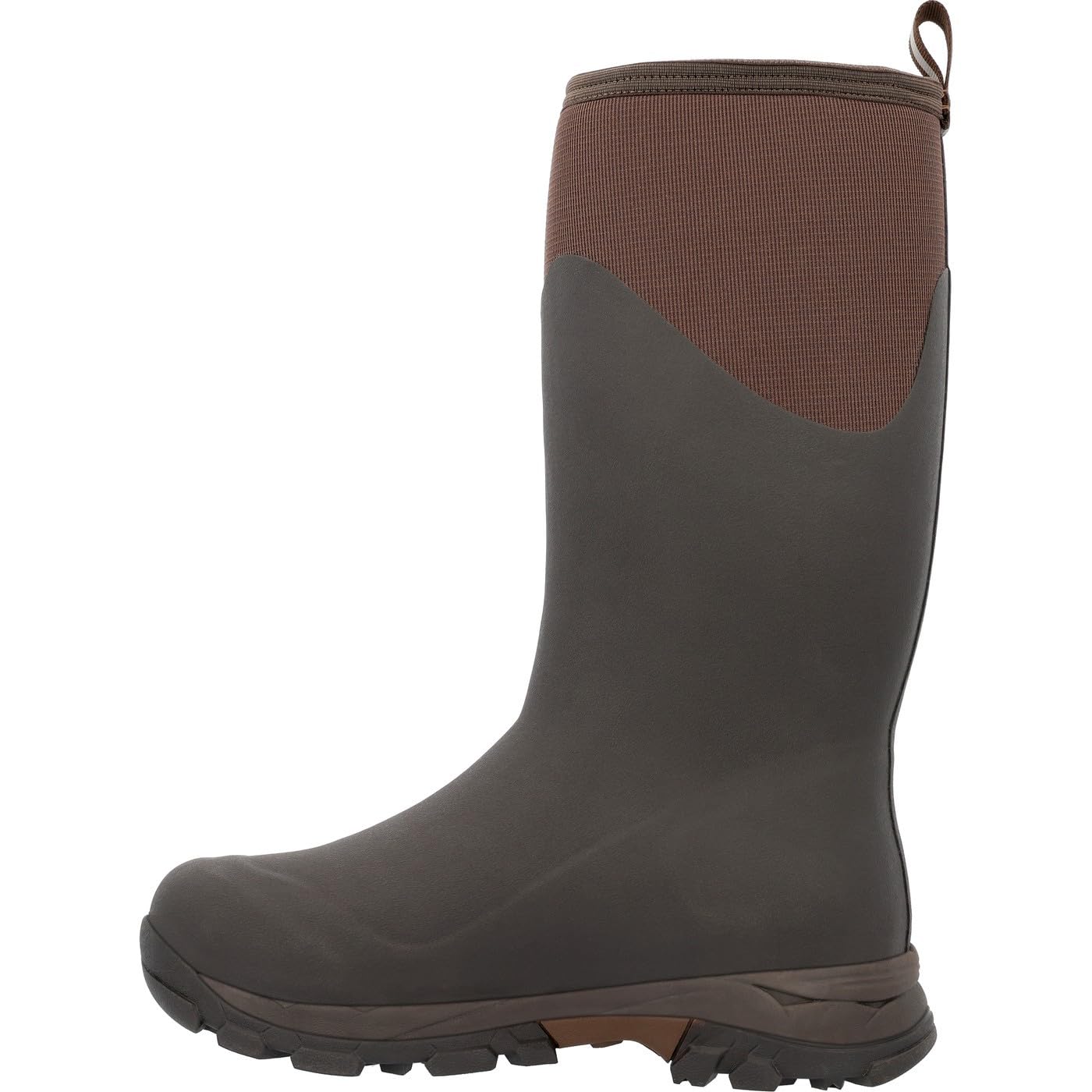
1. Muck Arctic Ice Tall Rubber Men’s Winter Boots
Our pick — 4.5+★ from 900+ verified ratings; the strongest balance of quality and price.
The tall rubber tank that treats a frozen driveway like dry pavement.
Comfort is what wins people over here, and it is not a softness thing — it is the fact that you can stand in the cold for hours and forget your feet are in a boot. The heavy-duty 8 neoprene (a thick waterproof foam shell that traps body heat) delivers a comfort rating of -60 °F to 30 °F, so a bitter morning is squarely inside its range. A fleece lining backs that up, and the fit leaves real room in the calf for heavy socks and tucked-in pants.
Traction is where this pair earns its place at the top of the list. The Vibram Arctic Grip outsole pods are engineered for wet ice, and the multi-direction lug pattern keeps footing sure when you move between ice, packed snow, and cleared concrete. Underneath that sits a Vibram Icetrek full base layer, which addresses the slicker dry-ice surface that trips up softer soles. In plain terms, the boot has two separate ice answers stacked in one outsole.
Tough Spandura and an extended rubber shaft complete the cold-weather coverage, and a rear pull loop makes getting them on quick with gloves. One honest note: durability is the split opinion on this boot, with some owners reporting seams starting to come apart over time. That is the trade-off on a rubber shell this soft and flexible — it feels great on day one, and it asks for reasonable care rather than abuse.
What earns it the top spot
- A -60 °F to 30 °F comfort rating covers serious cold without a battery or heat pack
- Arctic Grip pods plus a Vibram Icetrek base layer handle wet ice and dry ice, not just snow
- Fleece lining and calf room that fits thick wool socks and tucked pants
- Rear pull loop for easy on and off with gloves on
Where it asks for care
- Durability is the one mixed signal — rubber and stitching want sensible treatment
- 5.5 pounds per boot is real weight on a long walk
Buy it for: anyone facing genuine deep cold who wants the most complete ice-grip setup in this group.
Think twice about: a long-distance walker who wants a light boot — the 5.5-pound build is built for standing and working, not striding miles.
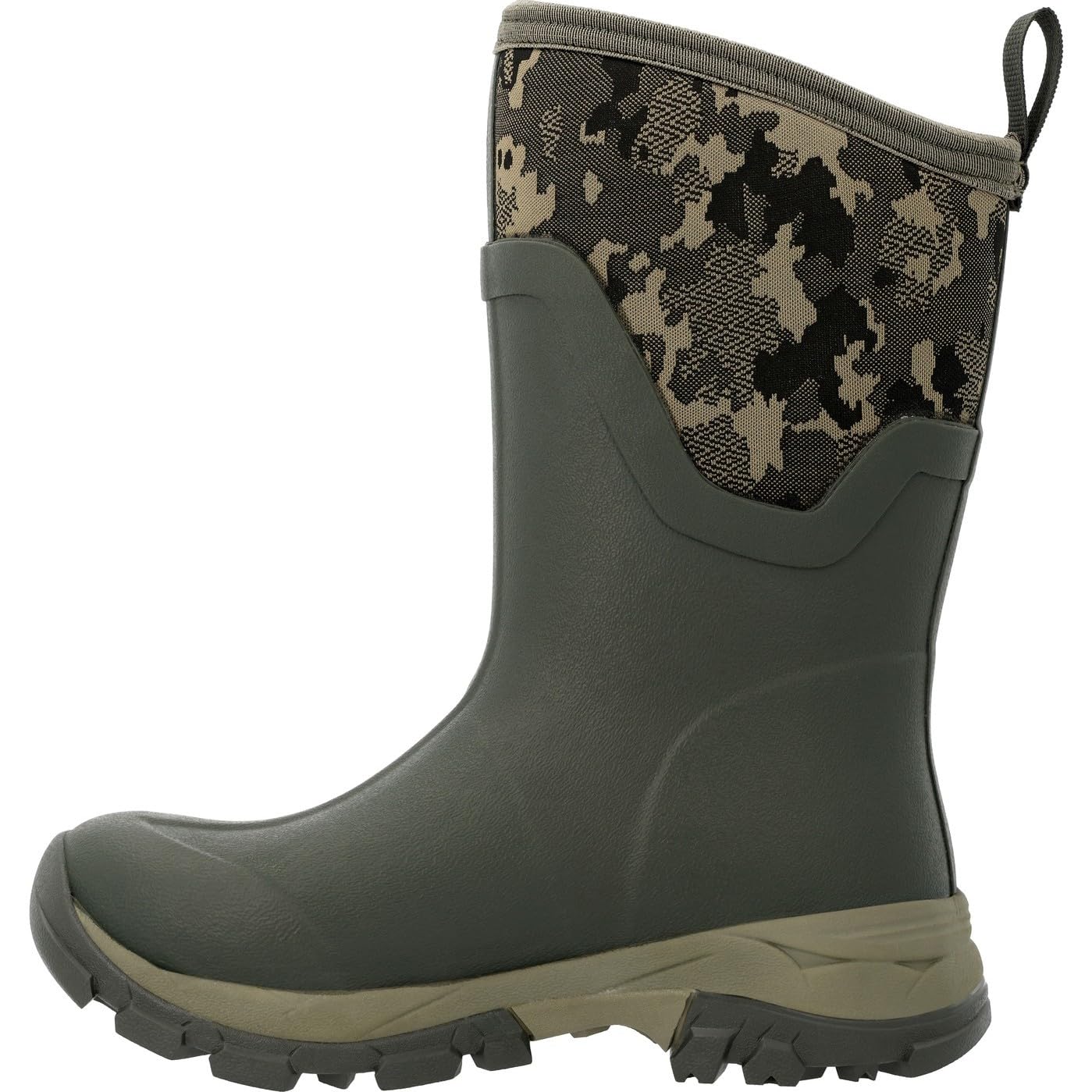
2. MUCK Women’s Arctic Ice Mid Boot + Vibram Arctic Grip A.T.
The lightest pair in this group swaps rubber-boot bulk for a hiking-boot build.
At 4 pounds, this is the boot you actually want for moving, not standing. Set that against the Muck Men’s Arctic Ice 16″ at 6.1 pounds and the difference underfoot is obvious on a long trail — the Propet is 2.1 pounds lighter per boot, and your legs know it by mid-afternoon. If your winter involves walking a dog through the woods more than waiting in a frozen lot, this is the smarter shape.
Construction is a waterproof bootie nested inside a suede nubuck and mesh upper, with a padded collar and tongue and an abrasion-resistant rubber toe cap for the front of the boot that takes the kicks. The OrthoLite X40 footbed carries an elasticity rating over 40 percent, meaning it springs back under your heel instead of flattening out. The Vibram Arctic Grip three-season outsole with Wet-Ice Technology gives you the same ice compound family as the rubber boots, just wrapped in a hiking silhouette.
Fit is the one thing to plan around. The listing calls this diabetic friendly and the footbed is removable, so if you wear inserts, you can swap them in without fighting the shoe. But sizing splits — some owners say it runs true, others find it small and narrow. Try your normal size first, and go up a half if you have a wide foot.
On value: For a hiking upper paired with an Arctic Grip outsole, the build quality outruns the price tier, with even, clean stitching.
The catch: The narrow fit and mixed sizing reports mean you should order carefully and expect a break-in on the first long walk.
Worth grabbing if: you split your winter between trails, town, and a lightweight daily boot you can leave on indoors.
Move on if: you need a tall shaft for snowbanks — this ankle height will not save your shin from a drift.
3. Muck Boot mens Arctic Ice Tall Snow Boot
A 16-inch shaft built to walk through drifts, not around them.
Depth of snow is what this boot is answering. The 16-inch shaft takes you well past the shin, so the snow that swallows ankle boots is simply not a problem. On top of the height, the insulation and soft warm lining keep feet comfortable in freezing weather, and the fit has room for thick wool socks — the kind of detail that matters when you live in a boot for the whole season.
Underneath, the Vibram Arctic Grip A.T. outsole handles wet ice and mixed surfaces. A lightweight EVA midsole adds cushioning for longer hours on your feet, and the bioDEWIX Dry footbed insert with odor control and moisture management helps when you are in them all day. Extended rubber coverage protects the lower boot where snow, salt, and slush test the fabric first.
Weight is the honest number to know: 6.1 pounds per boot. That is a serious boot, and it is the price you pay for a tall insulated shell. Buyers report it goes on and off easily and stays warm and dry through a real winter, but if you are covering serious mileage on foot, a lighter mid-height boot will serve you better.
What stands out: The 16-inch height and insulated lining turn the worst storm day into a normal walk, and the easy on and off is a real convenience in gloves.
Know before you buy: 6.1 pounds per boot is heavy — great for standing and strolling, tiring over long miles.
The one to choose if: you live where the snow gets deep and your morning walk starts in a drift.
Skip if: your commute is a short stroll to a cleared sidewalk — you would pay the weight for height you do not need.
4. Merrell Men’s Coldpack 3 Thermo Mid Waterproof

The trail boot that keeps its shape from the trailhead to the school pickup.
This is the pick for anyone whose winter is a mix of hikes and errands, because it is built like a hiking boot first. Waterproof construction blocks the slush, and the Vibram Arctic Grip outsole sits underfoot for traction whatever the weather dishes out. The 200 grams of insulation (a measure of how much warmth material is packed into the lining) paired with a fleece lining keeps feet warm when temperatures drop, without turning the boot into a rubbery oven for a short walk.
What owners talk about most is the overall quality — it behaves like a carefully built boot, and the shape holds up. Comfort follows close behind, and the fit gives room above the toes, which matters when you add a thicker sock. The traction on bare ice earns real praise, which is exactly what the Arctic Grip name is supposed to deliver, and the waterproof build keeps the snowmelt out.
The mid height is a deliberate choice rather than a shortfall. It keeps the boot light enough for a real walk and out of the way around town, but it will not handle knee-deep drifts the way a 16-inch boot will. Pick it for active winter days, not for wading.
Why it earns top performer
- 200 grams of insulation and a fleece lining keep it warm without bulk
- Vibram Arctic Grip holds on bare ice — the surface that defeats soft soles
- Waterproof construction and room above the toes for thick socks
- The hiking-boot shape works as well on a trail as on a sidewalk
The trade-offs to weigh
- The mid height will not clear deep snow — drifts are not its problem to solve
- Warmth is tuned for active days, not for sitting still in extreme cold
Pick this one for: the winter hiker who wants one boot that works from the trail to the store.
Pass on it if: your snow is deep — you want the extra shaft height of a tall boot.
5. Merrell Men’s Coldpack 3 Thermo Tall Zip Waterproof Snow Boots
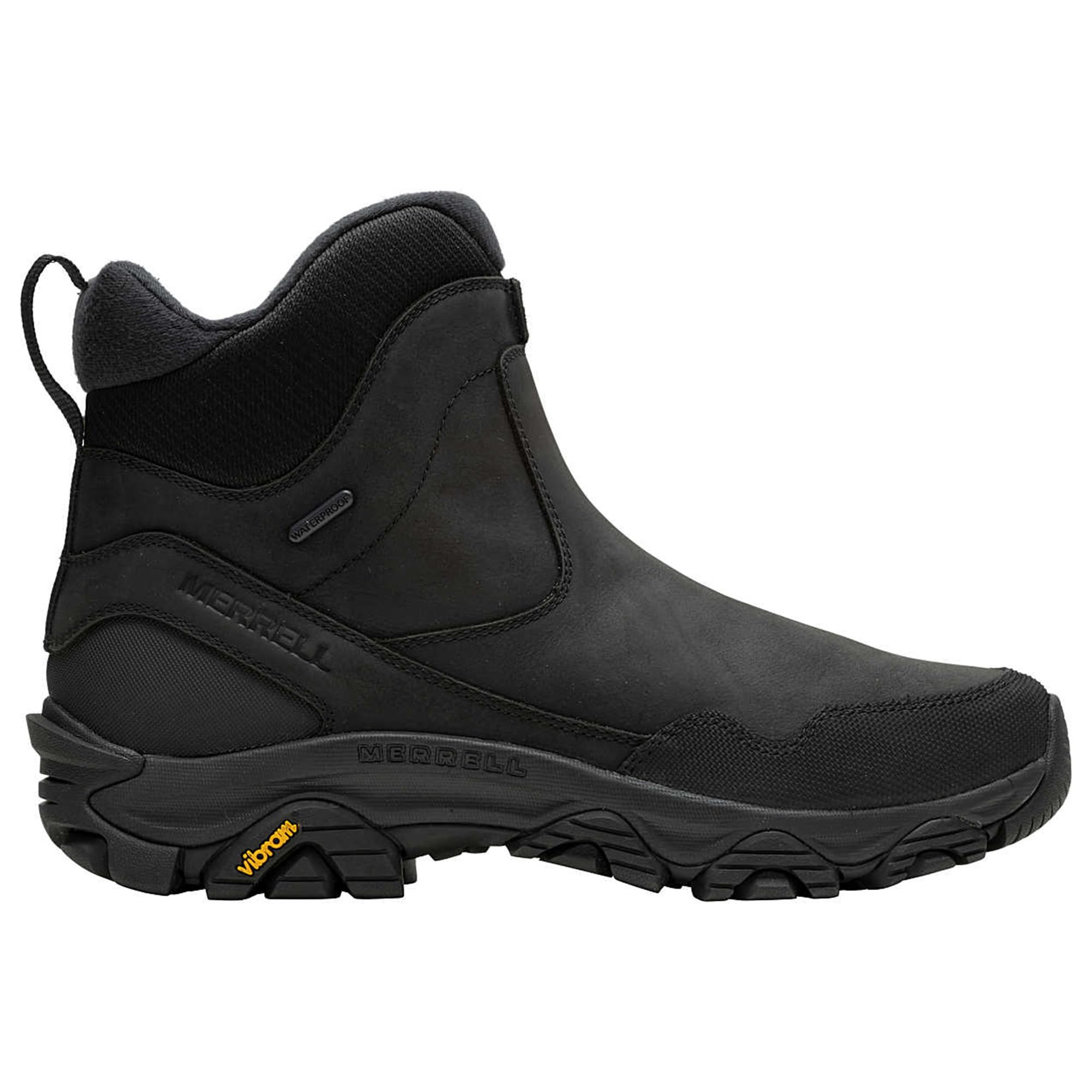
Tall coverage with a side zipper that gets you out the door fast.
The zip is the whole idea here. A tall boot normally means a wrestling match at the door, but the side zipper on this pair drops the entry time to seconds. Flip that advantage against its honest cost: the zipper is the most-discussed weak point, with some wearers finding it does not stay shut through a walk. If you are hard on zippers, plan to check the closure before you rely on it.
Setting that aside, the rest is solid winter kit. The waterproof upper and Vibram Arctic Grip sole deliver traction in whatever the weather throws at you. 200 grams of insulation and a fleece lining keep the warmth in, and the boot is stable in snow — the kind of steady feel that lets you walk the shoveled path without watching your feet. The synthetic build is made for a distinct look, and it holds up to the wear the season throws at it.
Fit is the other strong card, and the full coverage is what makes this the deep-snow alternative to the Merrell mid above. If you love the mid but need height, this is your upgrade — same family, more shaft, easier entry. Just factor in the zipper as the part to watch.
The smart choice if: you want tall winter coverage without dreading the doorway every morning.
Weigh carefully if: zipper reliability is a deal for you — this is the one part of the boot with split feedback.
6. Danner Unisex-Adult Arctic 600 Side-Zip 7″ Brown/Red 200g

The trail-grade winter boot for people who keep hiking through February.
For the hiker who does not stop when the snow arrives, this is the serious option. The Arctic 600 pairs a Vibram Nisqually Arctic Grip outsole with a Vibram SPE midsole — a soft, cushioned layer that takes the sting out of hard, frozen ground over miles. It is the kind of setup you feel on a long trail day rather than on a quick errand, and it is built to keep going.
Warmth and dryness come from 200G of PrimaLoft insulation (a synthetic insulation that holds heat even as the temperature drops) combined with Danner Dry waterproof protection and a side zip for easy entry. Owners lean on the quality most — it carries the feel of the Danner name — and the fit earns consistent praise, with comfort and warmth close behind. Feet stay warm and dry across a full winter adventure, which is the entire promise of the boot.
The trade is simple. This is the premium option, so you pay for the trail pedigree, the cushioned midsole, and the build quality. If you hike through winter, the trail pedigree justifies the premium.
Standout spec: The Vibram Nisqually Arctic Grip outsole with a Vibram SPE midsole is the most trail-focused grip-and-cushion setup in this group, and it shows over a long distance.
Who it rewards: The dedicated winter hiker who wants one boot to trust on the trail, not the shortest path through the parking lot.
The investment pick for: hikers who keep going when the trail ices over and want the best underfoot feel doing it.
Give it a pass if: you mostly need a boot for shoveling a driveway — you would be paying for trail engineering you will not use.
Know the Specs
Arctic Grip Outsole vs. Standard Vibram
Arctic Grip is a specific rubber compound Vibram formulates to hold wet ice. Standard Vibram soles are excellent on rock and trail but can skate on a slick, wet surface. The label to look for is the compound name itself, not just the brand. Some boots add a second layer, like a Vibram Icetrek base, to grip dry ice as well. That stacked setup covers more conditions, which matters if your winters bring black ice as often as snow.
Insulation Weight and Comfort Ratings
Two different numbers describe warmth. Comfort ratings give a temperature range — a -60 °F to 30 °F boot is built for deep cold. Insulation weight, measured in grams like 200 grams, tells you how much warmth material is packed in. Higher insulation usually means a bulkier, warmer boot; a lower number suits active movement where you generate your own heat. Match the rating to your coldest normal day, and a boot rated only slightly colder will still keep you comfortable.
Common Questions
What makes Vibram Arctic Grip different from a regular winter boot sole?
Do Arctic Grip boots work on dry pavement and indoor floors?
Will the Arctic Grip outsole wear out from walking on dry ground?
What does a comfort rating like -60 °F to 30 °F actually mean?
How do I pick the right height for my winter conditions?
Do these boots run true to size?
How much insulation do I need for an active winter hike?
Can I wear thick wool socks with these boots?
Are Arctic Grip boots fully waterproof, or only water resistant?
Is a lighter hiking boot better than a tall rubber boot for winter?
The Bottom Line
For most winters, the vibram arctic grip boots winner is the Muck Arctic Ice Extreme Conditions Tall, because it pairs the two-layer Arctic Grip and Icetrek setup with a -60 °F to 30 °F comfort rating that covers the worst a driveway or job site will throw at you. If you want a lighter boot for trails instead of standing, the Merrell Coldpack 3 Thermo Mid is the standout. And for the hiker who refuses to stop when the trail freezes, the Danner Arctic 600 is the one to pull on. The top pick backs that up with 4.5+ stars across 900+ ratings.
How we choose
We do not accept paid placement. Every pick is matched to a real buyer and a real use-case; we do not hands-on test units.
Sources
Specifications: manufacturer listings and product documentation. Review insights: verified customer reviews, as of November 2026. Pricing: not shown on this page (it changes often); check the current price via the retailer link.
As an Amazon Associate, Tactical Gear Guy earns from qualifying purchases. This does not affect which products we feature.