Specs are compiled from manufacturer listings and verified buyer reviews and can change over time — please confirm the key details on the product page before buying.
A ventless washer-dryer combo is the one appliance that lets you wash and dry a full load in a space with no outside duct — a closet, a condo, a basement, a boat. The catch is that these machines dry slowly compared with a standard vented dryer, and the drying half is exactly where most of them fall short. So the smart buy is not the biggest drum or the fanciest screen; it is the combo whose drying cycle actually finishes the job. Below you will find the eight ventless combos worth your attention, sorted by what they genuinely do well, with the real trade-offs spelled out.
This guide is built by comparing the manufacturers’ published specifications and the patterns across verified customer reviews, so you get each pick’s real strengths and trade-offs instead of marketing spin.
Every pick here runs on a standard household outlet and needs no exterior exhaust, so you can install one almost anywhere. Here is how each combo actually behaves once the door closes on a wet load of laundry.
Top Picks

How To Choose The Best Ventless Washing Machine
You already know you have no duct to work with. That single fact decides most of the shopping. A ventless combo has to condense the moisture out of the hot air itself and send it down the drain, and doing that takes longer than blowing it out a wall. So pick the combo whose drying approach and capacity match how you actually do laundry — not the one with the longest feature list.
Heat pump drying versus plain condensing
A heat pump dryer moves heat with a sealed refrigerant loop instead of a big electric element, which is why a heat pump model tends to sip power compared with a conventional dryer. A plain condensing combo still uses a heating element and cools the damp air with water or room air. Both need no vent. The heat pump route generally treats fabric gently and runs cheap over a year; the condensing route is usually the simpler, more compact build. Check which one you are buying before you compare anything else.
Wash capacity is not dry capacity
Almost every combo washes more than it dries. A machine rated for 26 pounds of washing may only dry 13 pounds of that same load. In plain terms, you can fill the drum for a wash, then have to pull half the load out before it will dry properly. Decide your real dry-load size first — a couple of towels and a week of shirts, or a family’s worth — and buy for that number, not the wash figure on the badge.
Where it plugs in and where it drains
The best combos run on a standard 120V household outlet, so you do not need to call an electrician or add a dedicated circuit. That is a different story from a conventional electric dryer, which usually wants a heavier circuit. You still need a cold-water supply and a drain, so a closet, a bathroom, or a kitchen slot near plumbing is the natural home. Measure the depth with the door open as well as closed — a front-loader needs swing room to load.
Side-by-Side Comparison
| Model | Best For | Capacity | Energy Use | Weight | Amazon |
|---|---|---|---|---|---|
| Samsung Bespoke AI Laundry Combo★ Best Overall | Full-size families | 5.3 cubic feet | 103 kWh per year | 317 pounds | Amazon |
| GE Profile PFQ97HSPVDSTop Performer | Big loads, smart controls | 4.8 cubic feet | 535 kWh per year | 323 pounds | Amazon |
| Sekido All-in-One Washer DryerBest for Pet Homes | Pet households | 15 pounds | — | 161 pounds | Amazon |
| Equator All-in-One Washer Dryer | RVs and tiny homes | 1.6 cubic feet | — | 161 pounds | Amazon |
| Conserv All-in-One Washer Dryer | Small loads on a budget | 1.6 cubic feet | 96 kWh | — | Amazon |
| BLACK+DECKER BCW27MW | Kitchen-slot installs | 2.7 cubic feet | 90 kWh | 160 pounds | Amazon |
| Magic Chef All in One Combo | Fast spin, tight budgets | 2.7 cubic feet | 90 kWh per year | — | Amazon |
| COMFEE’ 24″ Combo | Overnight unattended cycles | 26 pounds | 90 kWh per year | 161 pounds | Amazon |
Detailed Reviews
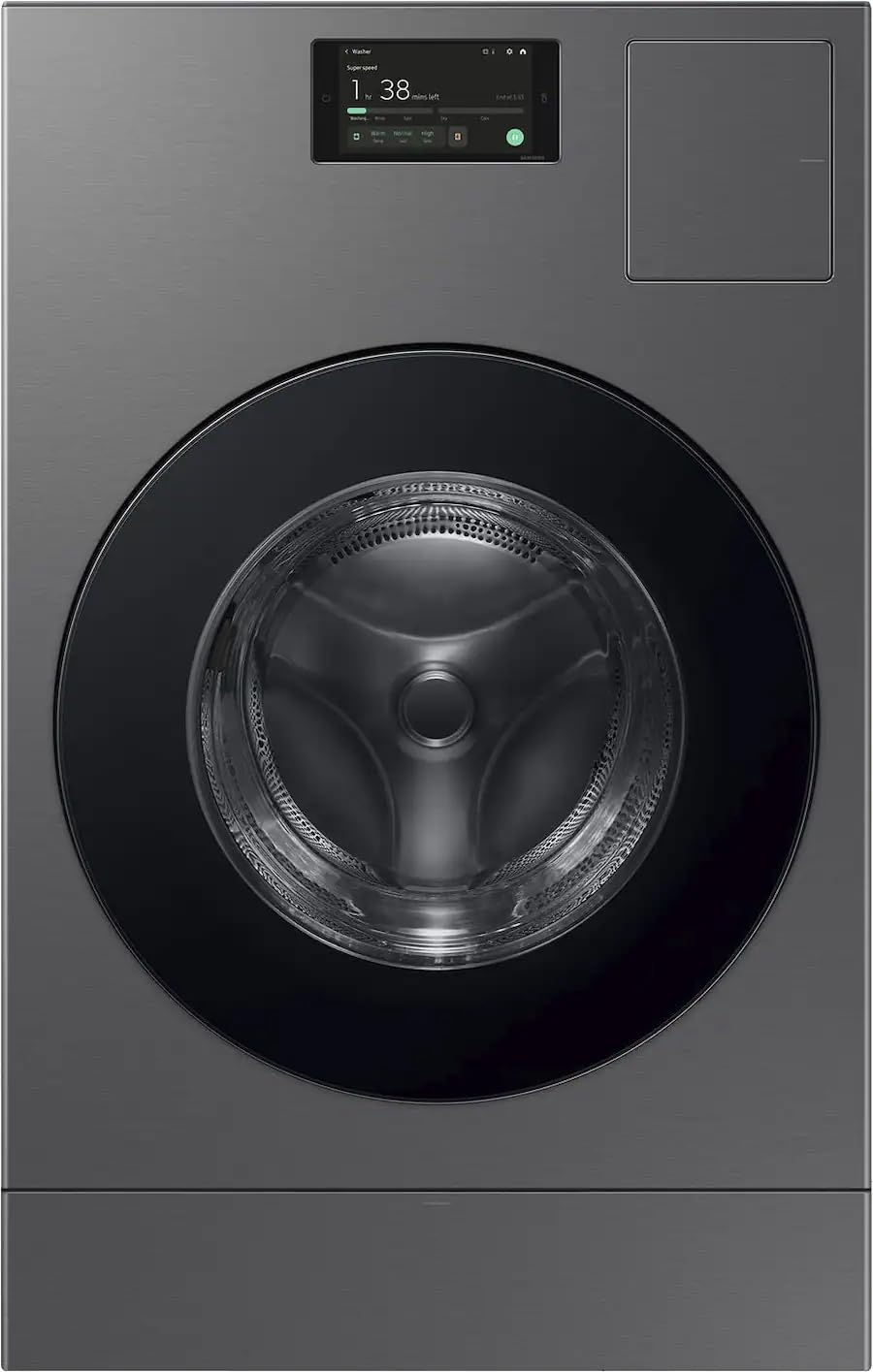
1. Samsung Bespoke AI Laundry Dryer Combo
Our pick — 4.0+★ from 30+ verified ratings; the strongest balance of quality and price.
The only combo here with a 5.3 cu. ft. drum that washes and dries a full family load in one pass.
It tops this list because a 5.3 cubic-foot drum is paired with a heat pump dryer, a sealed refrigerant loop that moves heat instead of burning it in an element. That pairing washes and dries a genuine family load in one go, which the 1.6 to 2.7 cubic-foot compact combos here cannot match. Samsung rates the full wash-and-dry cycle at 98 minutes.
It also installs like a normal appliance: a plain 120V wall socket powers it, so no exterior vent and no dedicated heavy circuit. The Flex Auto Dispense reservoir holds enough detergent for up to 47 loads, or 34 loads of softener plus 25 loads of detergent. AI Opti Wash & Dry reads soil level and fabric type and adjusts the wash and dry settings mid-cycle. Annual energy use comes in at 103 kilowatt hours per year — a low figure for a machine this size, and the direct result of the heat pump. Compare that with the GE Profile further down, which is rated at 535 kilowatt hours per year.
The honest catch is physical: at 317 pounds it is the heaviest thing here and wants a proper install and ideally two people. Its footprint of 34.4 inches deep by 27 inches wide by 43.7 inches tall also means you should measure the door swing before ordering. And it is a major purchase, so the up-front outlay lands in the premium bracket even though the running cost is low.
What earns it the crown
- 5.3 cubic-foot drum washes and dries a whole family load in one pass
- Heat pump drying keeps annual energy at 103 kilowatt hours per year
- Flex Auto Dispense covers up to 47 loads of detergent unattended
- Runs on a standard 120V outlet with zero exterior vent
Weigh this before you buy
- 317 pounds — a two-person, plan-ahead installation
- Premium-tier outlay and a footprint that needs swing room
- An internet-connected appliance, so lean on the app for the AI features
Made for: a household that does full-sized loads and wants the wash and dry finished in one cycle with a low yearly energy draw.
Look past it if: you need a machine that slides into a closet or an RV — the compact picks below are the honest answer there.
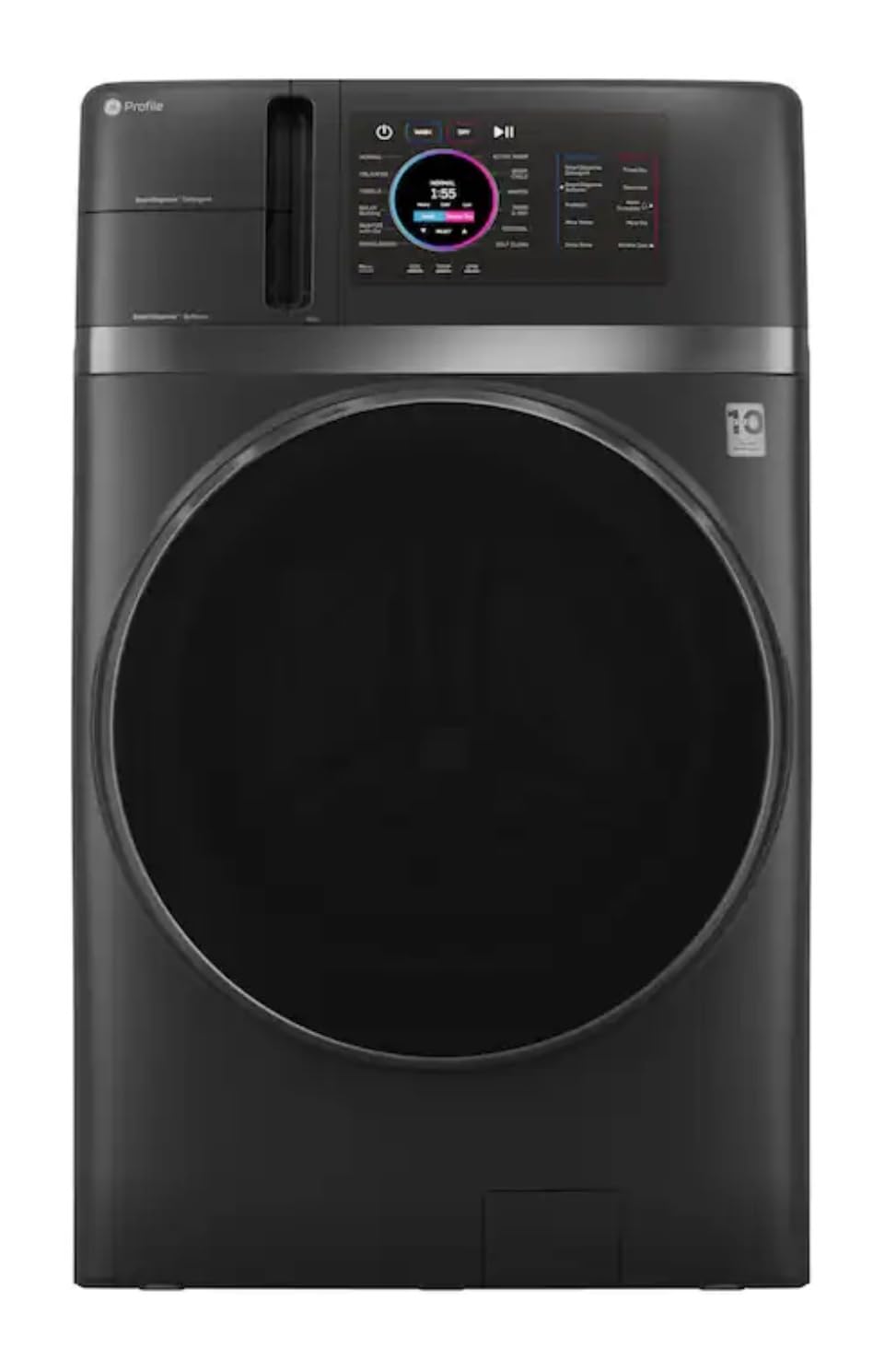
2. GE Profile PFQ97HSPVDS Washer/Dryer Combo
Program-rich and big-drummed, with more cycles to dial in than anything else on this list.
Where the Samsung gives you one smart auto cycle, the GE Profile hands you the controls: 12 wash cycles and 14 dryer cycles, plus a Fast Airflow Drying System and a ventless heat pump dryer underneath it all. Its 4.8 cubic-foot drum is just short of the Samsung’s 5.3, so it handles a heavy family load with a little less headroom. That breadth of programs is what buyers reward here — the performance and cleaning results are the two things that land hardest in the reviews, and the convenience of a wash-and-dry in one box runs a close third.
There is a cost to that heat pump, though, and it shows up in the numbers. GE rates the machine at 535 kilowatt hours per year, against the Samsung’s 103 — a real difference on your annual bill if you run it hard. Drying performance splits opinion: plenty find it dries clothes properly, while some find it leaves them damp. Durability and drying time also draw a fair share of grumbles, so set your expectations on the longer cycle times that heat pump drying brings. The price lands in the premium bracket.
On size, it is a big machine — 28 inches wide, 46.7 inches tall, and 323 pounds. That is heavier even than the Samsung, and effectively the same depth once the door swings to 54.5 inches open. It is a strong pick for a dedicated laundry room or a large closet where you want to choose the exact cycle for silk versus denim.
What it does best: the sheer program count — 12 wash and 14 dry cycles let you match the setting to the fabric instead of improvising, and the 4.8 cubic-foot drum keeps a family’s wash day to one pass.
The honest trade: 535 kilowatt hours per year is a heavy energy figure next to the Samsung’s 103, and drying performance is the split decision on this model — worth pairing with a shorter dry load if you can.
Reach for this if: you want hands-on control over every cycle and have the room for a 4.8 cubic-foot drum.
Think twice about: running it constantly — the yearly energy draw is far higher than the best heat pump pick here.
3. Sekido All-in-One Washer Dryer
A compact combo with a dedicated pet cycle that pulls hair off fabrics instead of leaving it behind.
If you share your home with a dog or a cat, the Sekido’s headline is a Pet Cycle built to clear hair from fabrics — a small thing until you have pulled a freshly washed fleece out hair-side-up. It also adds a two-minute Winterize Cycle for cold weather, Oversuds Control that catches excess detergent automatically, and a Child Lock. Controls are touch buttons, and 15 programs span the wash and dry sides.
At 15 pounds, it is a true compact — you will likely split a family’s weekly wash across two smaller loads. As a size reference, the COMFEE’ below is rated for 26 pounds, so this one leans toward apartment and small-household duty. Its drum material is stainless steel, and the space-saving build is aimed squarely at places where a full-size machine will not fit.
The honest trade is the drying side: this is a convertible venting machine that offers both ventless and vented drying, so you want to confirm which setup matches your space before relying on it. Stick with the ventless condensing route if you have no vent, and expect the longer cycle times that come with it. If fresh sheets and towels in one uninterrupted pass matter most, size up.
Best for: pet households in compact spaces who want a real pet cycle and winterize protection baked in.
Something to note: at 15 pounds it handles smaller loads — plan for two cycles where a full-size drum would take one.
4. Equator All-in-One Washer Dryer VENTLESS/VENTED PET Cycle

Built for RV, condo, and tiny-home life, with a 1400 RPM spin to pull water out before the dry.
The Equator is the machine you buy when the space is the constraint, not the laundry. Its 1.6 cubic-foot drum and 1400 RPM spin speed (the faster the drum spins, the more water gets flung out so the dryer has less to do) make it a fit for apartments, condos, RVs, tiny homes, and small living spaces. A 110V convertible system lets it dry either vented or ventless, so installation stays flexible.
It is a practical little unit: an Add-a-Sock option for a forgotten item mid-cycle, an easy-open coin trap for maintenance, adjustable leveling legs for uneven floors, and an end-of-cycle chime so you know the load is done. There is a dedicated PET cycle for hair and odor on fabrics. The drum and finish are stainless steel.
Be honest about the drying side going in. Reliability is the area that divides opinion, and drying performance is where the split tends to show up — some runs dry well, some take far longer than you would like. Long cycle times are the common thread across these compact combos, so plan your laundry around unattended cycles rather than quick turnarounds. For a weekend cabin or a full-time RV, that is a fine bargain; for a busy family it is a stretch.
Why it earns a spot: the 1400 RPM spin is fast for the compact class, and the convertible ventless-or-vented setup plus adjustable legs means it fits into awkward spaces a full-size combo never would.
Where owners get cautious: reliability and drying time are the mixed notes on this model — treat the dry cycle as a long, set-and-forget one, not a fast finish.
Choose it for: an RV, a condo, or a tiny home where compact size and a fast spin matter more than laundry speed.
Not the right call if: you expect a big load dried in a hurry — the cycle times here are long by design.
5. Conserv All-in-One Washer Dryer

Two years of warranty and a full 15-program laundry kit, in a compact 110V footprint.
The Conserv bundles the kind of coverage you rarely see on a compact combo: a 2-year comprehensive warranty plus White Glove Delivery Service. That is a meaningful cushion for a small appliance that lives in a tight space and does a lot of work. It runs on 110V, so a standard outlet powers it, and it airs both ventless and vented drying through a convertible condensing setup.
Strip out the warranty and you still have a well-equipped machine: 15 programs including Prewash, Sanitize, Allergen, Sensor Dry, and Quiet, plus a dedicated Pet Cycle for dog and cat hair, touch button controls, a Child Lock, and Oversuds Control. The dimensions come in at 33.5 inches high by 23.5 inches wide by 22 inches deep, and annual energy use is rated at 96 kilowatt hours per year — low, which is the payoff of compact size.
What you give up is capacity. The 13-pound load rating means smaller wash-day batches, and the compact footprint that makes it easy to tuck away is exactly what keeps that number down. The 2-year warranty softens that concern nicely. For a couple in an apartment who does a load every other day, the compact size is a feature rather than a limitation.
Standout: the two-year warranty and White Glove delivery turn a small-appliance gamble into a safer bet, and 96 kilowatt hours per year keeps running costs modest.
Know the ceiling: the 13-pound load rating is the limit to plan around — it is built for regular small loads, not a family’s whole week in one go.
A strong match for: renters and couples in tight spaces who want warranty backup and a full cycle menu.
Skip the upgrade thought if: you need big-load throughput — 13 pounds caps you to smaller batches.
6. BLACK+DECKER Washer and Dryer Combo BCW27MW

A 2.7 cubic-foot combo that installs like a dishwasher and plugs into a normal wall socket.
The BLACK+DECKER’s appeal is placement. Its 23.4 by 23.1 by 33.5-inch body is sized so it can slot into a kitchen like a dishwasher, and the ventless 120V dryer needs no exhaust to outdoors, so it can go in any room in a house, apartment, or condo. No contractors, no venting run — plug it in and go. The stainless steel tub washes up to 26.5 pounds and dries up to 13.2 pounds.
You get 16 cycles to choose from, including Quick Wash, Delicates, Wool, Baby Wear, Sanitary, Heavy Duty, and Bulky/Large, plus Auto Dry and Timed Dry on the drying side. The transparent loading lid lets you watch the load through the cycle. Annual energy comes in at 90 kilowatt hours, among the lowest ratings here, helped by the fact that a 2.7 cubic-foot drum has less to heat than a full-size one.
The drying half deserves a plain warning, and it comes straight from the buyer feedback: “However, the wash performance receives mixed feedback, with some saying it washes great while others report it takes several hours to complete each load.” That matches what these compact condensing combos deliver, long cycle time included. Set the load going and walk away rather than standing on the finish. Small spaces and the dishwasher-style fit are the real payoffs.
Pick this when: you want a compact combo that drops into a kitchen slot with a standard 120V plug and no exterior vent.
Just know: a full cycle can run several hours end to end, so it suits unattended laundry days rather than quick turnarounds.
7. Magic Chef 2.7 cu. ft. Washer Dryer Combo

Spin speeds up to 1300 RPM for better water extraction, in a modest 2.7 cubic-foot footprint.
The Magic Chef makes its case on the spin. Speeds up to 1300 RPM pull more water out of the load before the dry cycle starts, which gives the condensing dryer less to do. The tub holds 2.7 cubic feet, the same as the BLACK+DECKER above. Around it you get 16 wash cycles, five wash and rinse temperatures, three soil level settings, and a Delay Start that runs anywhere from one to 24 hours.
It is a straightforward, hands-on machine: a knob-and-touch control panel with LED display, a Tub Clean cycle to clear residue, and a De-Wrinkle option to smooth out clothes before they come out. On energy, it is rated at 90 kilowatt hours per year, one of the lowest figures on this page. The stainless steel drum keeps things durable and the white finish keeps it unobtrusive.
The trade is the drying side, and it is the same honest note that runs through this whole compact class: the ventless condensing dryer is slower than a vented machine, so give the cycle time. At 23.4 inches wide and 33.5 inches high it is genuinely compact, which makes it a natural fit for a closet or a corner. Depth runs 23.4 inches closed and 42.5 inches with the door open, so leave room for the swing.
The winning detail: spin speeds up to 1300 RPM pull out extra water before drying, and delay start from 1 to 24 hours lets you queue a load overnight.
The thing to plan for: condensing drying takes patience — this is a machine you load and forget, not one you watch.
Built for: buyers who want a compact 2.7 cubic-foot combo with a fast spin and a low 90 kilowatt-hour annual rating.
Look elsewhere if: you want a machine that finishes a wet load fast — the condensing dry here runs long.
8. COMFEE’ 24″ Washer and Dryer Combo 2.7 cu.ft

Set it at night, wake up to dry clothes — an overnight cycle built for people who do not stand and wait.
The COMFEE’ leans into the slow-drying reality instead of fighting it. Its Overnight Wash and Dry setting washes and dries a load in one uninterrupted cycle, so you load it before bed and pull out dry, clean clothes the next morning. That is the smart way to live with a ventless combo, and this machine builds the habit in. It pairs that with Steam Care, which runs steam through fabrics for over 30 minutes to loosen dust and cut wrinkles and odor, plus wool, quick wash, pre-wash, delay start, and child lock settings.
It is a capable washer by the numbers: a 26-pound wash rating and a 13-pound dry rating, an inverter motor for better energy efficiency, and 90 kilowatt hours per year on the energy label. The 23 by 25 by 34-inch body keeps it snug in a 24-inch space, so it suits a dorm, an apartment laundry nook, or a small closet.
Two honest notes. First, the 13-pound dry limit is the number that matters — fill for the wash and you will still be pulling clothes out for the dry. Second, “Moreover, the machine takes nearly 9 hours to dry clothes and shakes violently during operation.” The fix for the shake is in the manual and easy to overlook: remove the transport bolts before the first run. Skip that and the drum will thump, so read the setup steps. Set expectation on the long overnight cycle too — that is the trade for drying without a vent.
Worth it when: you want to load at night and pull dry clothes out in the morning, with steam care to trim wrinkles and odor.
Do this first: pull the transport bolts before the first cycle and give the dry load only what the 13-pound rating will finish.
Know the Specs
Heat Pump vs Condensing Drying
A heat pump dryer uses a sealed refrigerant loop to move heat into the drum rather than burning it in a big element, which is why it tends to use less electricity and go easier on fabric. A condensing dryer still uses a heating element and cools the damp air with water or room air. Both dry without a vent. On this list the Samsung is the clearest heat pump example at 103 kilowatt hours per year, while the GE Profile heat pump combo is rated at 535. Match the approach to how often you run the machine.
Wash Load vs Dry Load
Nearly every combo washes more than it dries, so the two figures on the badge describe different limits. The COMFEE’ is rated for 26 pounds of washing but only 13 pounds of drying, meaning a quarter of your wash may need to come out before the dry begins. Plan around the dry number. If your weekly laundry is a couple of towels and some shirts, a compact 15-pound machine like the Sekido is plenty; if it is a family’s worth, look to the 5.3 cubic-foot Samsung.
Annual Energy Consumption
Annual energy consumption is measured in kilowatt hours per year — the electricity the machine is expected to draw across a year of typical use. Lower is cheaper to run. The numbers here spread from 90 up to 535, and the gap is mostly down to whether the dryer uses a heat pump or a plain element. A machine at 90 kilowatt hours per year will cost a lot less on the bill than one at 535, so weigh the up-front outlay against the yearly draw.
Spin Speed and Water Extraction
Spin speed is measured in RPM — revolutions per minute the drum turns during the spin. A faster spin flings more water out of the fabric, which hands the dryer an easier job. The Magic Chef goes up to 1300 RPM and the Equator up to 1400. Faster spin usually means less drying time, which matters most on compact condensing machines where drying is the slow part.
Common Questions
Does a ventless washer-dryer combo really need no outside duct?
Why does my ventless combo take so long to dry a load?
Can I wash a full load and dry all of it in the same cycle?
What plug does a ventless combo need?
Is a heat pump dryer better than a plain condensing dryer?
Why does my combo shake badly during the spin?
How much space do I need to leave around a ventless combo?
Can a ventless combo go in an RV or tiny home?
Do ventless combos need special detergent?
The Bottom Line
For a household that wants a real family load washed and dried in one machine without an outside vent, the strongest pick for a ventless washing machine is the Samsung Bespoke AI Laundry Combo — its 5.3 cubic-foot drum and heat pump dryer combine to keep the yearly draw at 103 kilowatt hours while still finishing a whole load in one pass. If you would rather have hands-on control over 12 wash and 14 dry cycles and have the room for a 4.8 cubic-foot drum, the GE Profile is the one to reach for. And for an RV, condo, or tiny home, the compact Equator fits where a full-size machine never will. Whatever you choose, load to the dry rating, not the wash rating, and give these duct-free dryers the time they need.
How we choose
We do not accept paid placement. Every pick is matched to a real buyer and a real use-case; we do not hands-on test units.
Sources
Specifications: manufacturer listings and product documentation. Review insights: verified customer reviews, as of November 2026. Pricing: not shown on this page (it changes often); check the current price via the retailer link.
As an Amazon Associate, Tactical Gear Guy earns from qualifying purchases. This does not affect which products we feature.