Specs are compiled from manufacturer listings and verified buyer reviews and can change over time — please confirm the key details on the product page before buying.
A mailbox lock is a ten-dollar part, but the wrong rotation direction costs you a week of trips to the post office. The best-built USPS mailbox lock won’t help if it turns the wrong way. Most curbside boxes and cluster boxes open either clockwise or counter-clockwise, and that one detail decides whether your new lock works on day one or sits in a drawer. This guide covers rotation direction, included cam tabs and hardware, and which locks hold up past the first winter.
This guide is built by comparing the manufacturers’ published specifications and the patterns across verified customer reviews, so you get each pick’s real strengths and trade-offs instead of marketing spin.
You’ll learn how a cylinder taper, a stainless plug, and drain holes affect daily use, and how to check your old key before you order anything at all. Below are seven USPS mailbox locks worth comparing, sorted by rotation direction and included parts.
Top Picks


How To Choose The Best USPS Mailbox Lock
Start with the box, not the lock. Walk out to your mailbox and turn your current key slowly while you watch the cam. The direction that key travels is the direction your replacement has to travel, and no finish or material upgrade makes up for getting it backwards. A clockwise unit on a counter-clockwise box simply will not latch.
Read the old part number first
Pull the lock and look for a stamped code. The L-1172C and C9100 codes show up across cluster boxes and curbside mailboxes alike, and the picks below are built around those same codes. If your old lock has a quarter-turn cam and a clip holding it in from behind, you are almost certainly in this family. A matching number saves you a return shipping label.
Check the cylinder taper and drain holes
A cylinder with a tapered head lets the key enter even when the lock has shifted slightly in the door. Drain holes on the bottom of the cylinder matter anywhere rain hits the face, because standing water in the barrel is what freezes a key in place. Nickel finishes resist corrosion over time, which is the difference between a lock that still turns in year three and one that needs a nudge every time.
Count what comes in the box
Some locks ship with a mounting nut, a spring clip, and three keys. Others include five shaped locking tabs to cover different cam arrangements. If your mailbox needs a specific cam offset, the tab set is what saves a second order. Three keyed-alike keys mean you can hand one to a family member without cutting a duplicate.
Side-by-Side Comparison
| Model | Best For | Rotation | Included Parts | Material / Finish | Amazon |
|---|---|---|---|---|---|
| Mailbox Lock 4C Style Clockwise Brushed Nickel★ Best Overall | Clockwise 4C doors | Clockwise | Key lock, stainless steel plug | Nickel | Amazon |
| L-1172C National Mailbox Lock (VIDABTE)Cluster Box Match | Cluster box replacement | 90 degrees clockwise | 1 spring clip, 1 nut, 1 lock, 3 keys | Powder coated | Amazon |
| 1 Pack Mailbox Lock with Key (Ymtzfu) | Neat, complete hardware kit | Not listed | 1 cylinder, 3 keys, 5 lock plates, clip, nut | Metal with nickel plating | Amazon |
| 1570 Mailbox Lock for Florence F Series | Florence F and 4C CBU boxes | Clockwise | 3 keys, latch, lock | Metal, powder coated | Amazon |
| National Mailbox Lock C9200 | Long-haul build quality | Counter-clockwise to lock | 3 keys, mounting nut, clip | Metal, nickel | Amazon |
| Compx National Mailbox Lock 4C Style Counter Clockwise | Counter-clockwise 4C doors | Counter-clockwise | Hardware set | Metal, brushed nickel | Amazon |
Detailed Reviews
1. Mailbox Lock 4C Style Clockwise Brushed Nickel Key Lock
Our pick — 4.5+★ from 350+ verified ratings; the strongest balance of quality and price.
A clockwise 4C lock with a tapered head that guides the key in cold weather.
If your current key turns to the right to open, this is the pick that gets you the least hassle for the money. The 4C Style from Compx National turns clockwise, and the cylinder head carries a 12 degree taper — a slight bevel at the front that funnels the key toward the pin chamber instead of letting it catch on the rim. In plain terms, you spend less time jiggling the key when it’s dark and your hands are full.
The plug is stainless steel rather than plain brass, and there are drain holes at the bottom of the cylinder so water runs out instead of pooling behind the pins. That is the part that matters in a wet climate, because a barrel holding water is a barrel that freezes shut. The unit weighs 2.88 ounces, so it adds no meaningful load to a thin stamped door.
The finish and the install win people over — the brushed nickel wipes clean and the swap is quick enough to do between coffee and leaving for work. The fair caveat sits with the build itself: some units satisfy and some don’t, and a handful of buyers end up with a box that won’t latch. Treat that as a fit risk rather than a guarantee, and confirm your rotation direction before ordering. What you get for the money is a metal-bodied lock with a real taper on the head, which is more engineering than most boxes ever had.
Where it earns its place
- 12 degree taper on the cylinder head guides the key in without hunting for the slot
- Stainless steel plug resists wear at the pin chamber
- Drain holes at the base let water escape instead of freezing the barrel
- Clockwise rotation matches the most common curbside door layout
What to weigh before you commit
- Build quality draws split reactions, so inspect the latch action as soon as it arrives
- Wrong rotation direction is a real miss — verify your old key first
Go with this if: your key turns right to open and you want a tapered, drain-ported cylinder without chasing a specialty part number.
Hold off if: your box opens counter-clockwise — the Compx counter-clockwise 4C further down is built for that door.
2. L-1172C National Mailbox Lock
A quarter-turn pin tumbler built specifically for NDCBU and CBU cluster rows.
Cluster mailboxes are the hardest boxes to fit because the lock sits recessed behind a bank of doors and a wrong cam angle means the whole row stays shut. This VIDABTE unit is designed for exactly that setting, replacing the COMPX National USPS-L-1172C C9100 with a defined 90 degrees clockwise throw. A quarter turn is short and decisive — you feel the cam land rather than wrestle it.
The lock body is a pin tumbler rather than a wafer or cam design, and the listing states that each lock carries a different unique keying to meet USPS standards. That matters in a cluster row where neighbors share a wall: your key opens your box and nobody else’s. At 0.07 kg it keeps a tired door from sagging under extra front weight.
Installation earns the strongest reaction from buyers, and fit follows close behind — the recurring experience is that it drops into an existing cluster cutout without modification. Where the story splits is durability. Some units work perfectly and keep working; others quit after a stretch, with one theme surfacing that the lock only works about half the time. That’s not a reason to rule it out, but it is a reason to test the turn and latch the day it lands, while a return is still easy.
Best suited to: a cluster or NDCBU row that spec’d the L-1172C, where a defined 90-degree clockwise throw and unique keying are the deciding factors.
Worth knowing: reliability is the one spec the listing can’t promise, so check the action immediately after install.
Pick it when: your cluster box calls for the C9100 code and you want a quarter-turn lock with its own unique key.
Think twice if: your door is a standalone curbside box rather than a shared cluster row.
3. 1 Pack Mailbox Lock
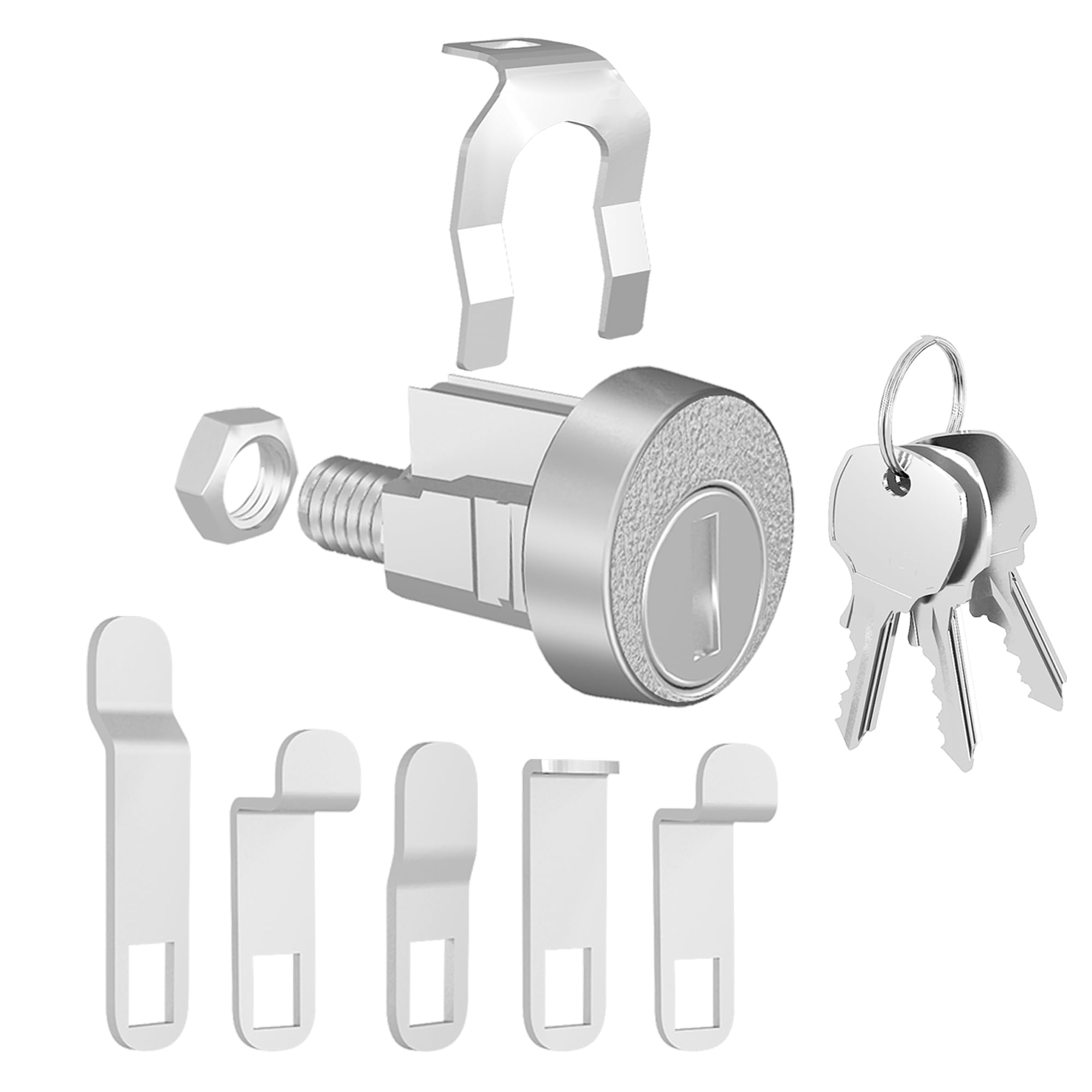
Fit is the headline here — buyers report it drops straight into an existing cutout.
What sells this one is simple: it goes in without a fight. The Ymtzfu L-1172C replacement is cut to 1.36 x 1.03 x 0.7 inches, close enough to the standard bore (the factory-drilled hole in your door) that it seats cleanly. Owners mention the same thing again and again — a lock that fits properly and turns as it should. If your old lock slid out easily, this is the shape that slides back in.
The metal body wears a nickel plated finish, and the listing also calls out dust and water resistance plus anti-corrosion — useful if your box faces the street where grit and rain hit the keyhole. The kit is complete: one cylinder, three identical keys cut to a unique number, five different lock plates, one clip, and one nut. As with the other multi-key sets here, ordering two packs gives you two separate key numbers, so they will not pass through to each other.
The finish, fit, and function all land on the positive side of buyer experience, and the build reads as well made rather than flimsy in the hand. There isn’t much of a downside to report from the data here — the likeliest friction is simply picking the wrong cams from the five plates if you don’t check your door first. Line the new cam up against the old one before you tighten anything and the five-minute install estimate holds.
Reasons this one works
- Seats in a standard bore without modification, based on buyer fit feedback
- Dust and water resistance plus anti-corrosion in the stated features
- Five locking plates cover different cam offsets in one order
- Three identical keys cut to a unique number
The honest trade-off
- You must match the right plate to your cam before tightening, or the cutout won’t latch
Best bet for: anyone who wants a clean-seating L-1172C replacement with weather protection built into the spec.
Skip only if: you’d rather have an explicitly stated rotation direction in the listing before you buy.
4. 1570 Mailbox Lock

Built for Florence F Series doors, with a latch in the box so the cam hardware is covered.
If your cluster unit is a Florence F Series or a 4C CBU, this is the one sized for that specific door rather than a general fit. The 1570 from Xinxinlin replaces the L-1172C C9100 pattern and turns clockwise. It arrives with three keys plus a latch, so the small cam piece your old lock may be missing is already in the box.
Keying is the security angle. Each lock ships keyed different (KD), meaning no two units share a cut, so a neighbor’s key won’t work in your box. That’s worth having in a CBU row where dozens of doors sit side by side. The body is metal with a powder coated finish, and at 0.12 kg it’s a substantial piece rather than a featherweight — you feel the heft when you hold it.
Customers note the install as the best part: it goes in without a specialist call. The construction itself draws mixed reactions, with some units feeling poorly put together next to others that pass without complaint. That split usually depends on which batch you land in, so give the key a full turn before you close the door behind it. For a Florence F door, though, the specific fit is the thing a generic lock can’t fake.
What sets it up: a named fit for Florence F Series and 4C CBU units, keyed-different security, and a latch included so nothing is left to buy separately.
The caveat to size: construction quality varies between units, so inspect and test the turn as soon as it’s in.
The right call for: Florence F Series and 4C CBU owners who want a keyed-different lock with the latch included.
Not the pick for: a standalone curbside box where the C9100 fit doesn’t apply.
5. National Mailbox Lock C9200 (with Keys)
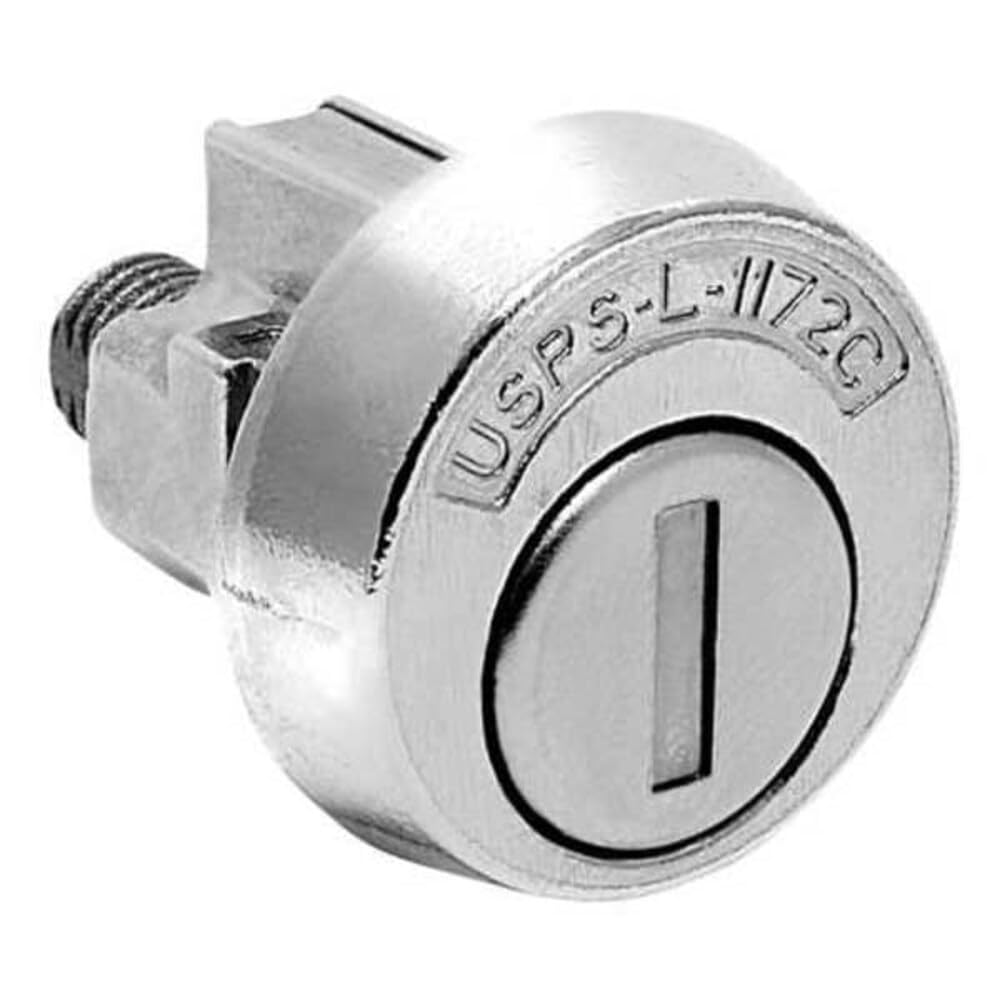
The original-style C9200 that meets COM-C9200 — the longest track record in this lineup.
This is the lock most people picture when they hear “National C9200.” The maker claims it’s the only mailbox lock built to meet and exceed the USPS COM-C9200 specification for cluster mailbox locks. That’s a standards claim from the brand, and it’s the reason this unit has stuck around long enough to build a deep body of buyer experience behind it.
What shows up in the long-run feedback is quality and smooth operation — the cylinder turns cleanly, and setup is described as about a 5-minute job. The kit is stripped down and complete: three keys, a mounting nut, and a clip. Note the KIT includes the mounting hardware you need but not the five lock plates some competitors throw in — if your cam needs an offset plate, this one doesn’t supply it.
There is one real trap to know before you order. This C9200 turns counter-clockwise to lock, and that trips people up who expected clockwise. A second friction point that recurs is keys hanging up inside the lock over time — the barrel doesn’t always stay forgiving, so keep the keyway clear. Neither of those makes it a bad lock, but both are reasons to confirm your rotation and to keep a spare key handy rather than assume the turn will stay smooth forever.
Why the track record holds
- Stated to meet and exceed USPS COM-C9200 specification
- Cylinder operates smoothly, with setup handled in about 5 minutes
- Three keys, mounting nut, and clip all in the box
- Metal body in a nickel finish
Where it can trip you
- Turns counter-clockwise to lock, which catches out clockwise expectations
- Keys can hang up over time; no locking plates included in the kit
Reach for this if: you want the standard C9200 pattern and a lock built to a stated USPS spec, counter-clockwise turn included.
Hold off if: your door needs extra locking plates or you expect a clockwise throw.
6. Compx National Mailbox Lock 4C Style Counter Clockwise

The mirror-image of the Best Overall — same 4C family, opposite turn, for left-turning doors.
That “4C Style Counter Clockwise” in the name is the entire reason this pick exists. The brushed nickel Compx Security unit turns left to open, which is the exact door the clockwise Best Overall above cannot serve. If your key travels counter-clockwise and you’ve been frustrated shopping clockwise-only listings, this is the fix — same compact round shape, same family of hardware, opposite hand.
The build is solid metal with a polished finish, and the lock uses a cylindrical key lock mechanism with a small round face designed to sit flush and disappear into the door. Compx backs it with a 1 Year manufacturer warranty, longer than most locks in this lineup state. Install runs quick — under 5 minutes is the common experience — and all the necessary hardware comes with it.
The honest split here is in quality and reliability: it works well for many owners, but a recurring complaint is a key getting stuck in the barrel. That’s the same weak point the other Compx-family locks show, so treat the keyway as something to keep clean and dry rather than something you can ignore. For a left-turning 4C door where no clockwise lock will do, though, the trade is worth it — a lock that fits the wrong way is no lock at all.
The one job it nails: a counter-clockwise 4C door that every clockwise listing leaves you stuck with, plus a stated 1 Year manufacturer warranty.
The recurring gripe: keys can stick in the barrel over time — keep the keyway clear and dry.
Choose it for: a left-turning 4C door and someone who wants the Compx name with warranty coverage behind it.
Only skip if: your door turns clockwise — then the Best Overall above is your direct match.
Know the Specs
Rotation Direction (Clockwise vs Counter-Clockwise)
The direction your key turns to open up or lock is the single spec that decides fit. A clockwise lock on a counter-clockwise door won’t latch, no matter how well it’s built. Check your current key’s travel before you order — the C9200 and the Compx 4C Counter Clockwise both turn counter-clockwise, while the 4C Style Clockwise and the 1570 turn clockwise. Confirm the direction, then buy.
Cylinder Taper, Plug Material, and Drain Holes
A 12 degree taper on the cylinder head funnels the key toward the pin chamber instead of catching on the rim, which matters most when it’s cold and dark. A stainless steel plug resists wear at the pins better than softer metal. Drain holes at the bottom of the cylinder let water escape so it doesn’t freeze the barrel shut — the difference between a smooth turn in January and a stuck key.
Included Parts: Tabs, Nuts, Clips, and Keys
What ships in the box can save a second order. Some kits include five locking tabs to match different cam offsets — useful when you don’t know your door’s cam angle. Others include just a mounting nut and clip. Three keyed-alike keys are standard, and sets bought separately carry different key numbers, so they won’t cross. Match the included parts to what your old lock used.
Lock Mechanism Type
Pin tumbler locks use a set of pins that must align before the barrel turns, while cylindrical and wafer designs work differently. Each type has its own feel and its own weak point. The recurring theme across these picks is the barrel itself — keys can hang up over time, so a clean, dry keyway matters more than the mechanism label on the box.
Common Questions
How do I know if my mailbox lock is clockwise or counter-clockwise?
Will a C9100 lock fit my L-1172C mailbox?
What does USPS-compliant actually mean for a mailbox lock?
Can I use one key for two mailbox locks if I buy two packs?
How long does a mailbox lock usually last?
Do I need a locksmith to replace a USPS mailbox lock?
What are the five locking tabs in some kits for?
Why does my key get stuck in the mailbox lock?
Can I use a 4C Style lock on a cluster mailbox rather than a curbside box?
What should I check the day my new mailbox lock arrives?
The Bottom Line
For most buyers, the usps mailbox lock to start with is the 4C Style Clockwise Brushed Nickel — the crowd favorite at 4.5+ stars across 300+ owners — because its 12 degree taper and drain holes handle the two things that actually break a mailbox lock: cold keys and standing water. If your old key turns counter-clockwise, go straight to the Compx 4C Counter Clockwise, which is the mirror image of the top pick. And if you don’t know your cam layout yet, the NBPLUS L-1172C ships five locking tabs so the first install works without a second order.
One honest note before you decide anything: verify the rotation direction and the cam shape on your own box first. Every pick here is a good lock, but none of them can compensate for buying the wrong hand. Get those two details right and the install is a five-minute job.
How we choose
We do not accept paid placement. Every pick is matched to a real buyer and a real use-case; we do not hands-on test units.
Sources
Specifications: manufacturer listings and product documentation. Review insights: verified customer reviews, as of November 2026. Pricing: not shown on this page (it changes often); check the current price via the retailer link.
As an Amazon Associate, Tactical Gear Guy earns from qualifying purchases. This does not affect which products we feature.