Specs are compiled from manufacturer listings and verified buyer reviews and can change over time — please confirm the key details on the product page before buying.
Here is the short answer: buy for the laptop you actually own, not for the biggest number on the box. A charger that lists 100W or 120W can drop to a fraction of that speed the moment two ports share the load, and a charger that lists 20W cannot push a MacBook Air through a heavy session at all. The right pick depends on two things — how many watts your biggest device really asks for, and whether the charger can hold that number while your phone sits plugged in beside it.
This guide is built by comparing the manufacturers’ published specifications and the patterns across verified customer reviews, so you get each pick’s real strengths and trade-offs instead of marketing spin.
Below you will find nine chargers checked against their own port splits, heat behavior, and foldable-plug durability, so you can match one to your bag without reading a spec sheet yourself. What follows is a straight comparison of the best USB-C fast charger options for phones, tablets, and laptops.
Top Picks

How To Choose The Best USB-C Fast Charger
The number printed largest on the box is almost never the number your device receives. Wattage is a total the charger can hand out across all its ports at once, and the split changes the second you add a second cable. Read the port breakdown before the headline figure and you avoid most bad buys.
Match the wattage to your biggest device
A phone tops out fast — most modern handsets pull their maximum somewhere around the 20W to 45W range, so a huge block does not make a phone charge faster than a smaller one that supports the same standard. A laptop is the device that sets your floor. If you carry a USB-C laptop, look for a single port rated at 60W or above so it can keep up under load rather than trickling. If you only charge phones, tablets, and earbuds, a compact 20W or 45W block saves bag space for nothing lost.
Read the port split, not just the total
Multi-port blocks advertise a big combined figure, then quietly divide it. A three-port unit may run one port at full power alone but cut that figure roughly in half when the second port wakes up. That is fine if you are charging a phone and earbuds overnight. It is a problem if you expect a laptop to hold speed while your phone is plugged in — check the printed split before you trust the headline.
Know what PD and PPS actually do
Power Delivery (PD) is the shared language that lets a charger and a device agree on voltage and current. Without it, a charger defaults to a slow safe trickle. PPS, or Programmable Power Supply, is a tuning layer on top that lets certain Android phones adjust voltage in fine steps, which is what open up their fastest mode. If your phone supports PPS, a charger that names it will charge noticeably quicker than one that does not. If you use an iPhone, PD alone is enough.
Treat heat and prong design as buying decisions
A charger converts wall power and sheds the waste as heat, so a compact brick running a laptop will feel warm — that is normal, not a fault. What matters is whether the charger throttles itself down when it heats up. A foldable plug matters just as much for travel: prongs that fold flat stop snagging on bag lining, and a plug that rotates or folds 180° handles tight wall sockets and crowded power strips better than a fixed one.
Side-by-Side Comparison
| Model | Best For | Max Output | Ports | Plug Type | Amazon |
|---|---|---|---|---|---|
| UGREEN Nexode 65W★ Best Overall | One charger for laptop and phone | 65W | 2 USB-C + 1 USB-A | Foldable | Amazon |
| Anker Nano Charger NeoCompact Pick | Small-bag travel and tight sockets | 65W max (dynamic 45W-65W) | 1 USB-C | 180° foldable | Amazon |
| Hzevn 2Pack 85WBest Two-Room Value | Two rooms, one purchase | 65W USB-C port | 2 USB-C + 1 USB-A | Fixed | Amazon |
| STAKYCET USB C Charger Block | Spare blocks for the whole house | 20W | 1 USB-C + 1 USB-A | Fixed | Amazon |
| ANWPF 2 Pack 60W | Cable included, couch reach | 60W | USB-C | Fixed | Amazon |
| DERANOR 60W | Samsung super fast charging | 60W | USB-C | Fixed | Amazon |
| Belkin 45W Compact (2 Pack) | Travel pair with cables in the box | 45W | USB-C | Fixed | Amazon |
| Amazon Basics 120W Nano GaN | Three devices at once on a desk | 100W single port, 120W total | 2 USB-C + 1 USB-A | Foldable | Amazon |
| Lenovo USB-C 65W | Replacing a ThinkPad charger | 65W | USB-C | Fixed | Amazon |
Detailed Reviews
1. UGREEN Nexode 65W USB C Charger Block
Our pick — 4.5+★ from 13,500+ verified ratings; the strongest balance of quality and price.
The one block that replaces the laptop brick, the phone plug, and the travel adapter in a single hit.
Sixty-five watts across a 3-port layout is the number that earns this the top slot. It runs 2 USB-C ports and 1 USB-A port at once, so a MacBook, a phone, and a watch can all sit on the same charger overnight. That single-port figure is what matters for a laptop, and UGREEN states the 65W USB-C port takes a MacBook Air M3 to 51% in 30 minutes. For a machine that normally needs its own fat brick, a block this size is the whole reason GaN exists.
The GaN chip is the other half of the story — a gallium nitride internal design that the maker reports runs 50% smaller than the original 61W USB-C charger it replaces. Smaller matters in a real way here: this thing drops into a jacket pocket instead of claiming a bag compartment, and the foldable plug keeps it from snagging on the way out. Heat is the honest trade-off of any compact high-wattage block, and this one runs warm when a laptop is pulling hard — the cooler-running design helps, but a pocket-pickup still gives you a warm palm.
What wins people over is build and reliability over time, and the speed is close behind. It has the familiarity of a charger people already own and re-buy, which is the real signal. Compare it with the Anker Nano Charger Neo below: the UGREEN runs 65W at 1.8 A while the Anker is a higher-current 3.25 A single-port design, so the Anker is the pick for one phone at speed and the UGREEN is the pick for a laptop plus friends.
Where it earns its keep
- 65W on one USB-C port — enough to run a MacBook Air M3 to 51% in 30 minutes
- 2 USB-C + 1 USB-A fills a desk with one charger instead of three
- GaN design reported 50% smaller than the 61W block it replaces, with a foldable plug
- Steam Deck and iPad Pro sit in the supported device list alongside phones and laptops
What to weigh
- Runs warm under a sustained laptop pull — normal for a block this small, but noticeable
- The 65W total is shared across ports, so a second device pulls the laptop’s figure down
Worth it if: you carry one laptop and a couple of small devices and want a single block to cover all of them.
Think twice if: you need every port at full speed at the same moment — no 3-port block in this list does that.
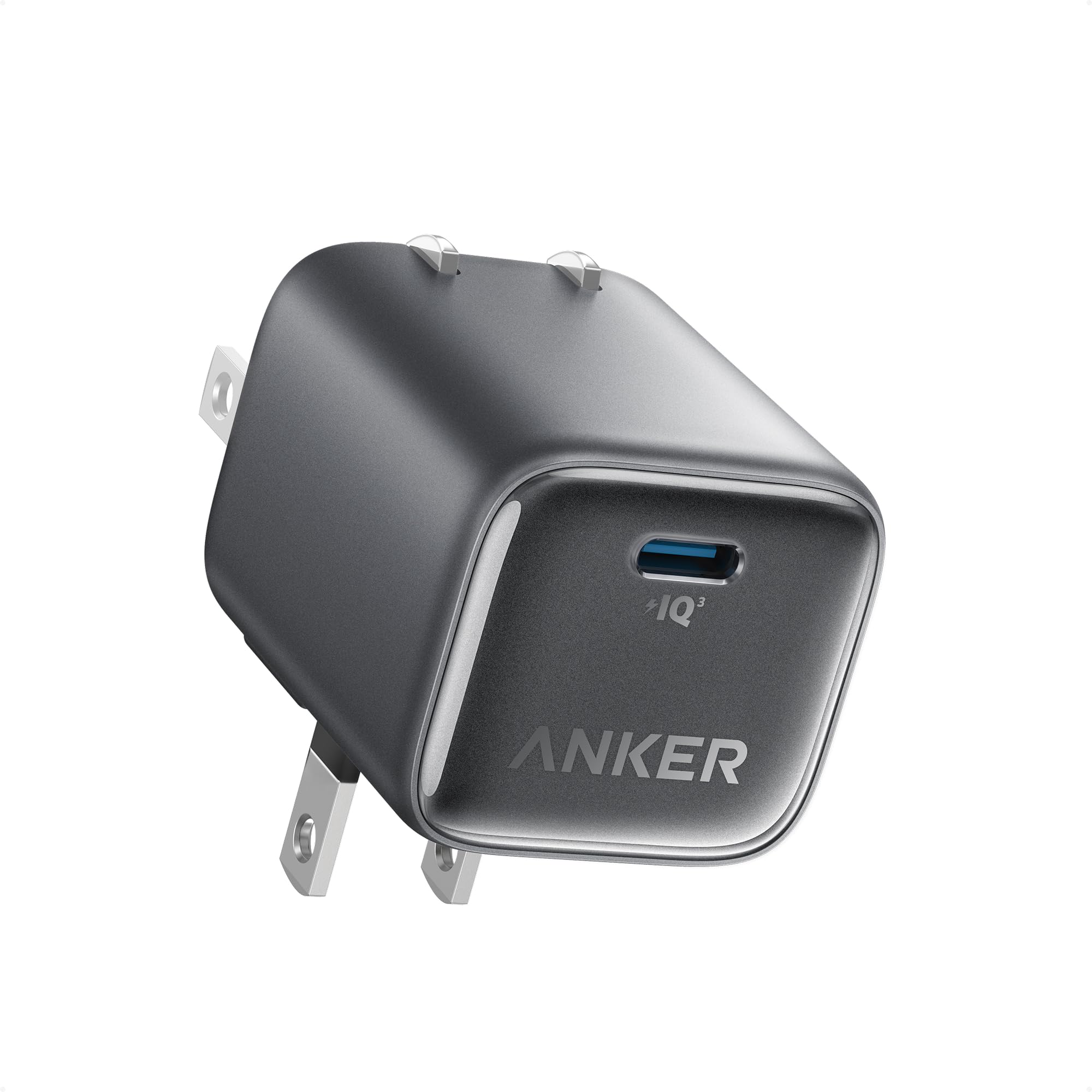
2. Anker Nano Charger Neo 45W
Eighty grams of charger with a plug that bends 180° to fit places a fixed brick simply will not.
The prong hinge is the feature you notice first. Anker rates the 180° foldable plug for 4 folds a day over 8 years. — plug it in twice a day, fold it twice a day, and it outlasts most bags you will put it in. That hinge is why this earns a spot for anyone charging from a crowded power strip or a socket tucked behind furniture. It is also where the compatibility praise lands hardest, since a plug with two usable orientations clears a wall where a standard block would block the next outlet.
Speed is dynamic here — the block moves between 45W and 65W depending on what it is feeding. Anker claims 80% on an iPhone 18 Pro Max in 32 minutes and 60% on an iPhone 17 Pro Max in 30 minutes. The amp figure is the one to note against the UGREEN above: this runs at 3.25 A while the UGREEN lists 1.8 A, so this is the higher-current single-port design of the two — built to push one phone hard rather than split itself three ways.
Heat gets its own attention. Anker states the iPhone 18 Pro Max peaked at 117℉ (47℃), which it puts 54°F (30°C) below the 170°F (77°C) safety standard. The ActiveShield 4.0 chipset checks temperature 10 million times a day. Take that as the maker’s claim rather than a lab test you ran — but it is one of the few chargers here that puts a real temperature number in front of you. The limit is the single port: no second device, no USB-A, one cable only.
Pocket-first engineering: at 80 g with a 180° hinge, this is the charger for a jacket pocket and a plane seat, not a full desk setup.
The honest catch: one USB-C port means everything queues — a phone and a pair of earbuds cannot share it.
One-phone travellers, this is your block: light, hinged, and rated for years of daily folding.
Setup builders skip it: the single port hands the job back to a multi-port pick.
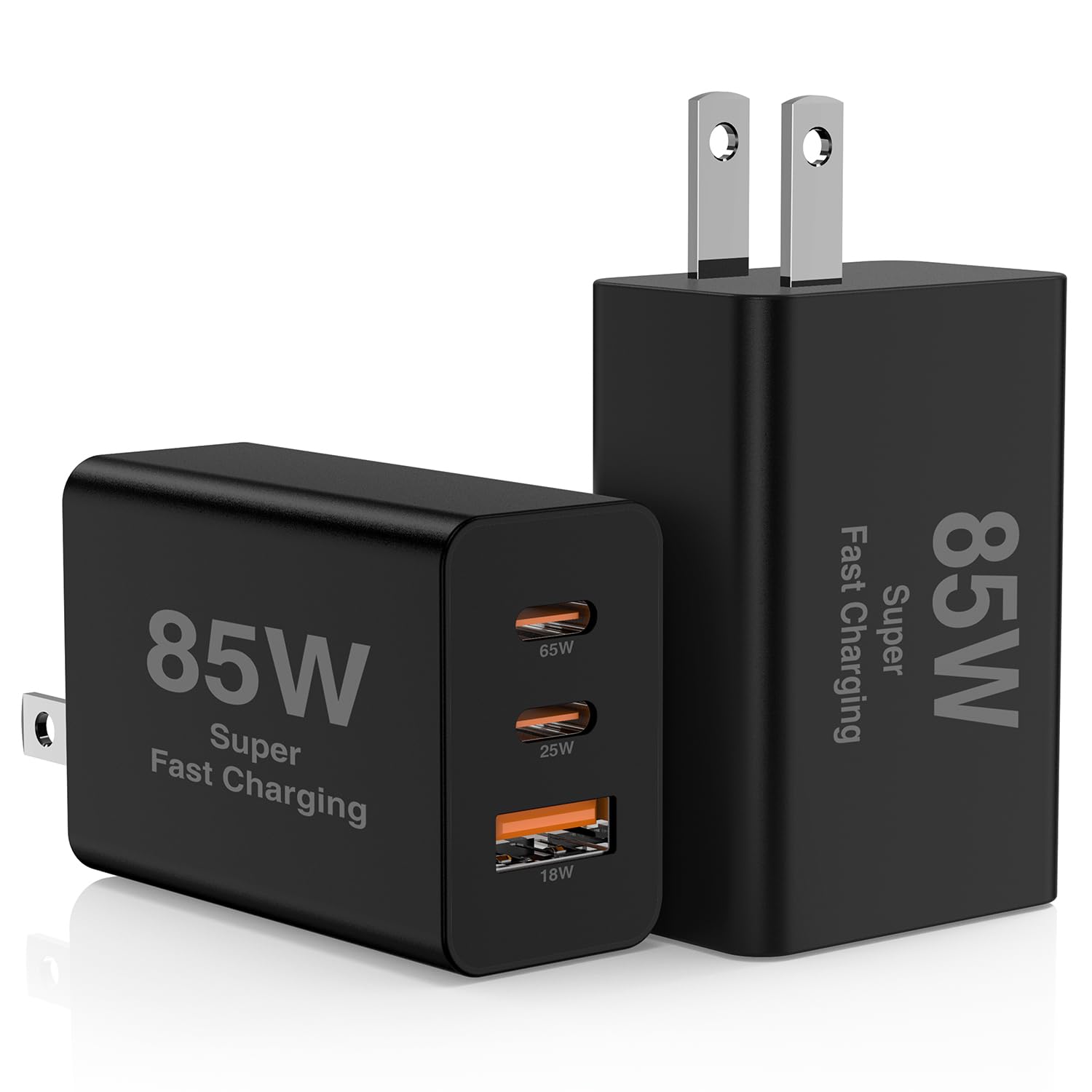
3. 2Pack 85W USB C Wall Charger Block
Two three-port blocks in one box — one for the desk, one already waiting in the travel bag.
Buying two identical chargers sounds like a small thing until you stop unplugging the one behind the sofa. This pack gives you a 65W USB-C port on each block, a second USB-C rated at 20W, and an 18W USB-A, so each unit can take a laptop plus a phone plus earbuds. Hzevn claims the 65W port takes a MacBook Pro to 50% in 30 minutes. That is laptop-grade on a charger you bought twice over, which is why the value read is strong here.
The safety line is worth a mention because it is specific: intelligent thermal sensors hold the block under 115°F, with protection against over-current, over-voltage, overheating, and short circuits, built in flame-retardant material. Compared with the single-port Anker above, this is the opposite trade — less peak current, but three ports and a second spare charger in the box.
Now the honest part. The most-discussed weakness on this one is power output — some buyers report the 65W figure falling short once the block is loaded across ports. That is the standard multi-port squeeze, and it is worth sizing it correctly: if your laptop sits on the 65W port alone, it does what it says; if you spread a laptop and a tablet across two ports, expect the split. Port availability shows up as a mixed point too, so plan your cable layout before you commit.
Two chargers, one purchase: the duplicate is the point — leave one at home, one in the bag, and never unplug the sofa outlet again.
Watch the load: the headline wattage belongs to a single port; the split arrives when you add devices.
Best for: households with a laptop, a phone, and a tablet that live in two different rooms.
Look elsewhere if: you need one charger to feed everything at full speed simultaneously.
4. USB C Charger Block Multiport Adapter
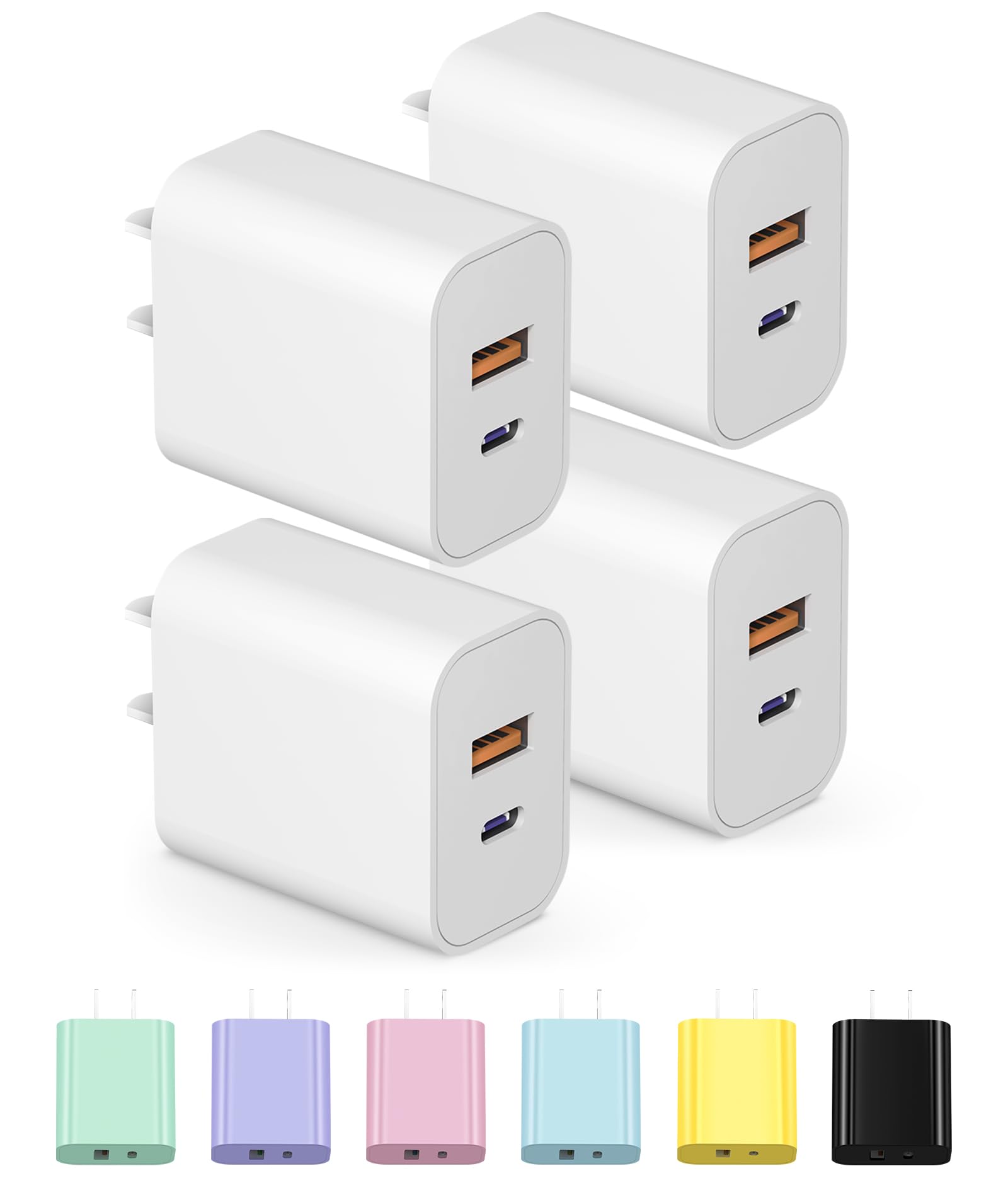
Four 20W cubes in one box, built for filling every outlet you own with a spare.
This is not a laptop charger and it never claims to be. The 20W output is phone and earbud territory, and the 4A current rating pairs with a USB-C and a USB-A port so two devices share the block. Where it earns its place is quantity: four identical blocks means the kitchen, the bedroom, the office drawer, and the car all get one without you ever unplugging anything. For a house full of phones, that is the whole value.
The reported complaints on this one are worth knowing up front. Functionality and charging speed come through as mixed — some units reportedly have a port that does not work, and some buyers find the charging slower than expected. That is the honest picture on a budget four-pack, and it comes with the territory of buying four of anything at a low cost. The strength is quality of the housing and the price-to-count ratio, which is why it stays in a shortlist for spare blocks rather than primary chargers.
Think of it as the outlet-filler, not the hero. In a bag where the UGREEN above handles the laptop, one of these four handles the phone and never needs to be thought about again.
Fill every room: four 20W blocks solve the “where is the charger” problem for good.
Not your laptop charger: 20W will trickle a USB-C laptop, not power it.
5. 2 Pack 60w Super Fast Usb C Charger
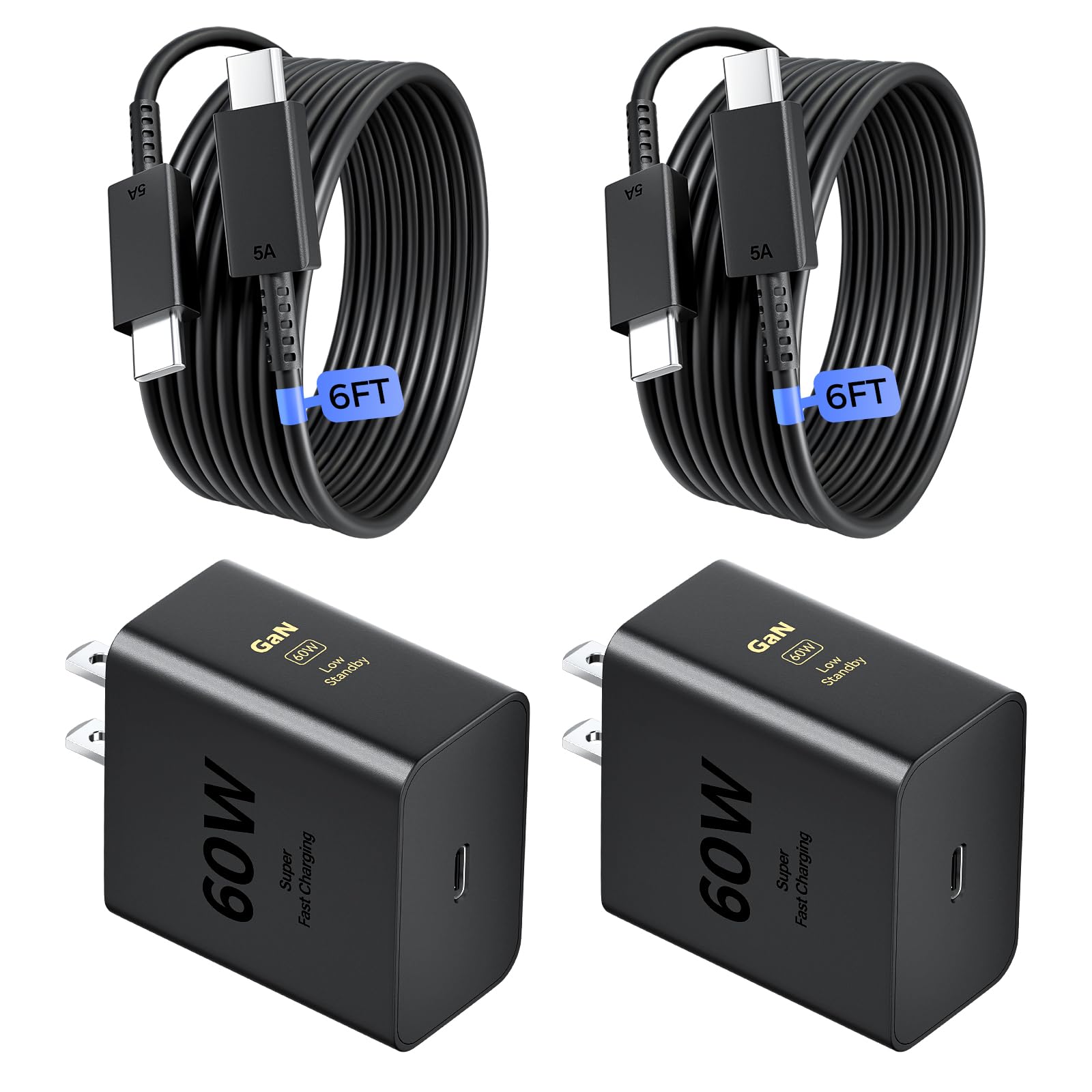
Two 60W blocks with two six-foot cables — the kit that reaches the couch without a fight.
Sixty watts on the block, and two 6FT USB-C to USB-C cables in the box carrying a 5A current. That cable length is the quiet selling point: six feet from the outlet to the sofa cushion, or from the office wall to the desk chair, without a slack extension cord in between. Both cables have a reversible connector and a detachable design, so they pack flat instead of coiling into a knot.
Safety here is a chip that watches for over-charge, over-voltage, over-current, short circuit, and high temperature, and ANWPF says the block stops charging once the battery is full. Overnight charging is the use case this is aimed at, and stopping at full is the behavior you want if the phone sits plugged in until morning. The 2-pack splits cleanly into a home unit and a travel unit, one for your desk and one for on the go.
Where it sits against the DERANOR below: both are 60W two-packs with 6-foot-ish cables, but this one lists a 4 A current rating while the DERANOR lists 5 A and adds PPS. If your phone is a Samsung that wants PPS, that difference matters. If it is an iPhone or a Pixel, both do the job and the cable-included bundle is what you are choosing on.
Reach for this if: you want the cable sorted at the same time as the charger, no separate order.
skip it if: you carry a Samsung flagship chasing PPS peak speed — the DERANOR handles that profile.
6. 60W USB C Charger with 2X 6.6FT Cable
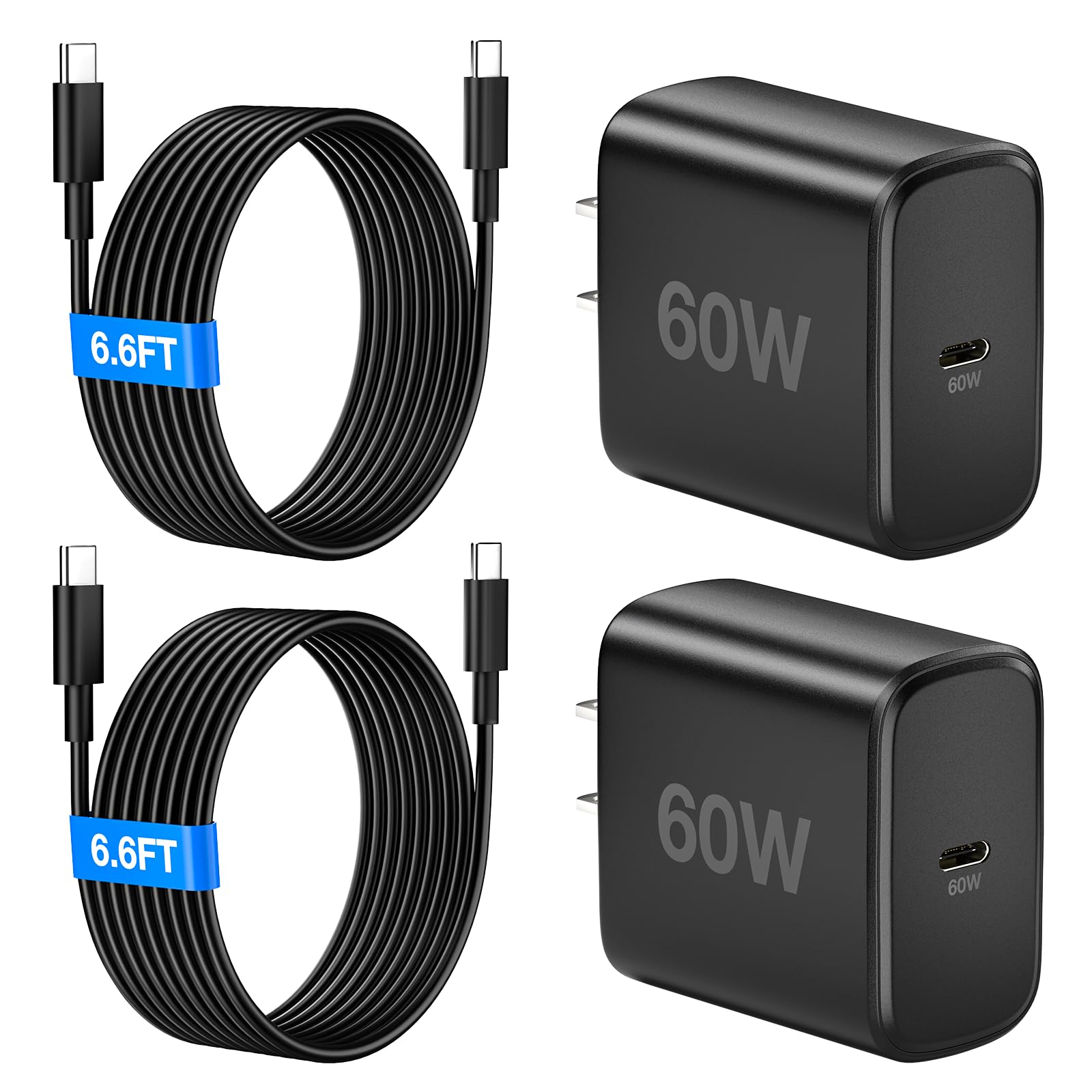
Built around PPS, so a Samsung flagship gets its own top speed rather than a generic fast charge.
PPS is the reason this one exists. It stands for Programmable Power Supply — a layer on top of PD that lets the charger adjust voltage in fine steps, which is exactly what Samsung’s phones want before they will pull their full rate. DERANOR names Super Fast Charging 3.0 for the Galaxy S26 Ultra and claims 0 to 80% in 30 minutes on its 5000mAh battery, full in under an hour. It also lists MacBook Air going 0 to 52% in 30 minutes.
The bundle is the second draw. You get 2 chargers and 2 cables, each 6.6FT and rated for 5A current, which is longer than the 6FT cables on the ANWPF above — a small margin that shows up when the couch is further from the outlet than you planned. Safety is stated as FCC, CE, and UL certifications with the usual over-current, over-voltage, over-heat, and over-charge protection.
Durability is the one genuine flag, and it is worth taking seriously rather than dismissing. Cables and blocks in this bundle are reported by some as short-lived, which is a recurring note rather than a one-off. If you want a set to live permanently on a desk, that concern matters less; if it will be yanked in and out of a backpack daily, treat the cables as replaceable and keep a spare.
Why Samsung owners like it: PPS support plus Super Fast Charging 3.0 is the exact combination a Galaxy phone needs for its fastest wired rate.
The one watch point: some report the cables and blocks do not last as long as hoped — plan for the cable to be the part that gives first.
Made for Galaxy: if PPS is on your phone’s spec sheet, this is the bundle that feeds it properly.
Mixed-bag households look wider: the single USB-C port and durability notes make it a weaker fit for shared desks.
7. Belkin 45W Compact USB C Charger Block

Two 45W blocks with a cable in each — a travel kit that is complete before you pack.
Forty-five watts is the balance for phone-plus-tablet travel. Belkin claims 0 to 50% in 28 minutes on an iPhone 16 Pro, 30 minutes on a Samsung S23, 37 minutes on a Chromebook ThinkPad C13 Yoga Gen 1, and 38 minutes on an iPad Pro 11″. That spread — phone, tablet, and a light laptop — is the exact mix most travel bags carry.
The included cable is what makes the 2-pack feel finished. Each block ships with a 1M / 3.3ft C-C cable, so nothing extra needs ordering for a trip. The PD 3.1 chipset is named as certified, which ties directly to the heat question — Belkin says the certified design reduces heat output as it delivers high power, and heat is the one place budget blocks in this list get called out.
Two smaller notes put the 45W ceiling in context. Heat dissipation and cord length show as mixed points, so the 3.3ft cable is shorter than the 6FT and 6.6FT cables on the two-pack options above — fine at a hotel desk, tight if the outlet is across the room. And at 45W this is below the 60W and 65W laptop tiers, so a MacBook Air is covered but a heavier laptop will charge slower than on the UGREEN or the Lenovo.
Why it travels well
- Cable included on both blocks — a complete kit in one box
- 45W covers phone, tablet, and a light laptop like a Chromebook or MacBook Air
- PD 3.1 certified chipset named, with heat output a stated design concern
Where it stops short
- 3.3ft cables are short for a hotel room with a distant outlet
- 45W is under the laptop tier, so heavy laptops charge slower
Pack-and-go pick: two certified 45W chargers with cables, ready for a phone, a tablet, and a light laptop.
Heavy laptop owners: step up to a 65W or 100W block instead.
8. Amazon Basics 120W USB-C Nano GaN Wall Charger
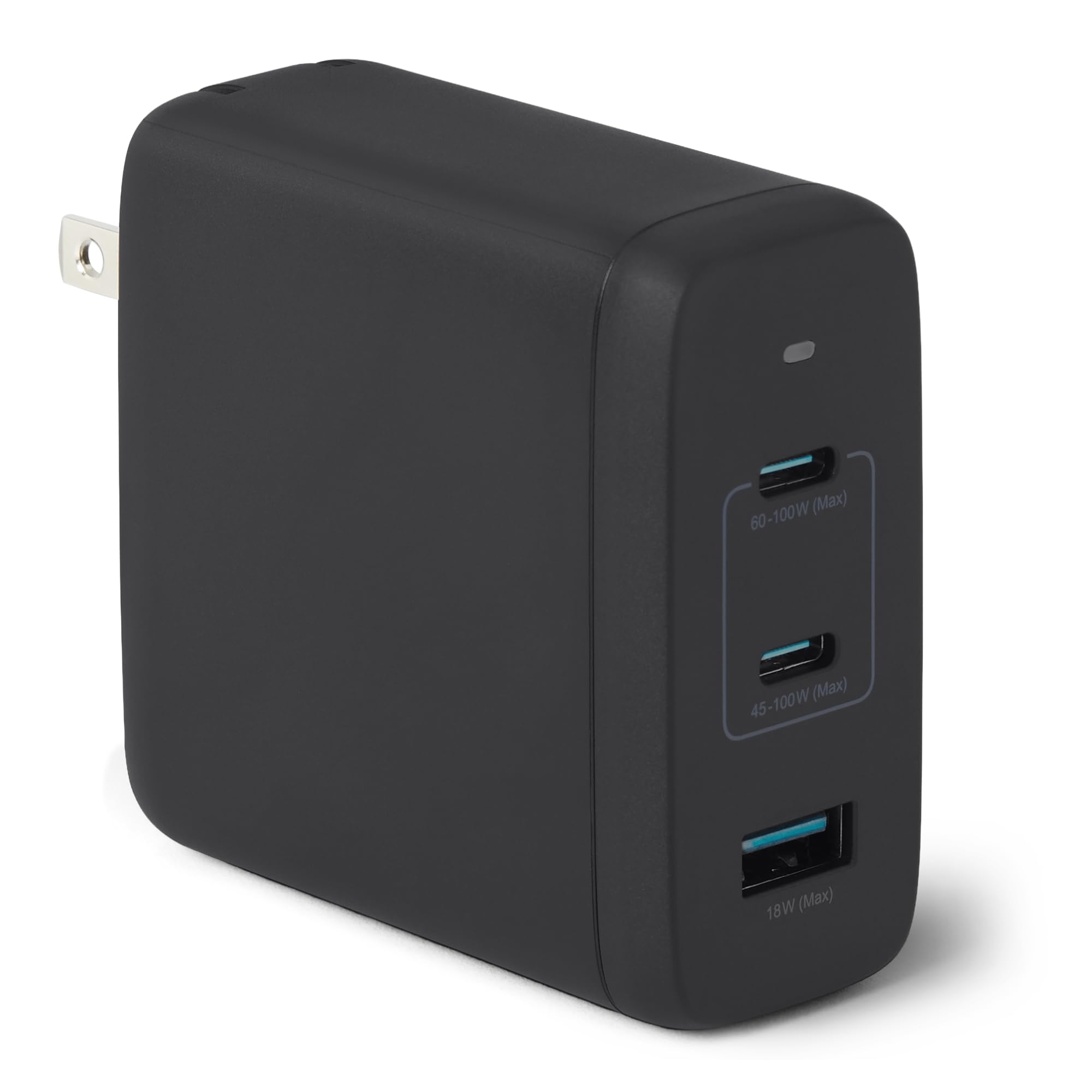
The biggest number here — 120W total, but know the port split before you buy it.
This is the highest-output charger in the group and the only one that names its splits outright. Single USB-C port: up to 100W. Two ports (C1+C2): 60W+60W. C1 or C2 plus USB-A: 100W+12W. Three ports: 60W+45W+12W. That is the rare case where the split is printed for you, and it changes the read entirely — with one cable the laptop gets 100W, and the moment a second device lands you are at 60W on the laptop port. Compared with the 65W UGREEN above, that 100W single-port figure is a real step up for heavy laptops.
The GaN build keeps it compact — Amazon lists it at 2.7 x 2.7 x 1.3 inches with a foldable plug, and universal input voltage of 100-240 volts, which means a plug adapter is all you need abroad. Two USB-C and one USB-A covers a laptop, a phone, and earbuds or a watch at once.
The honest note is power output. This is the lowest-rated charger on the list, and the mixed signal is the same one that follows every high-wattage claim — some owners mention it delivers the advertised figure, others say it does not reach 120 watts. The split table above explains why that happens in practice: 120W is the total across three ports, not one. Read it as a three-device desk charger, not a laptop-first charger.
Desk hub energy: 100W on one port and a printed three-port split make this the pick for a station that charges everything at once.
Just one laptop, no frills: the 65W UGREEN does it in a smaller body without paying for headroom you will not use.
9. Lenovo USB-C 65W Wall Charger, PD 3.0, with 5.9 Foot Cable
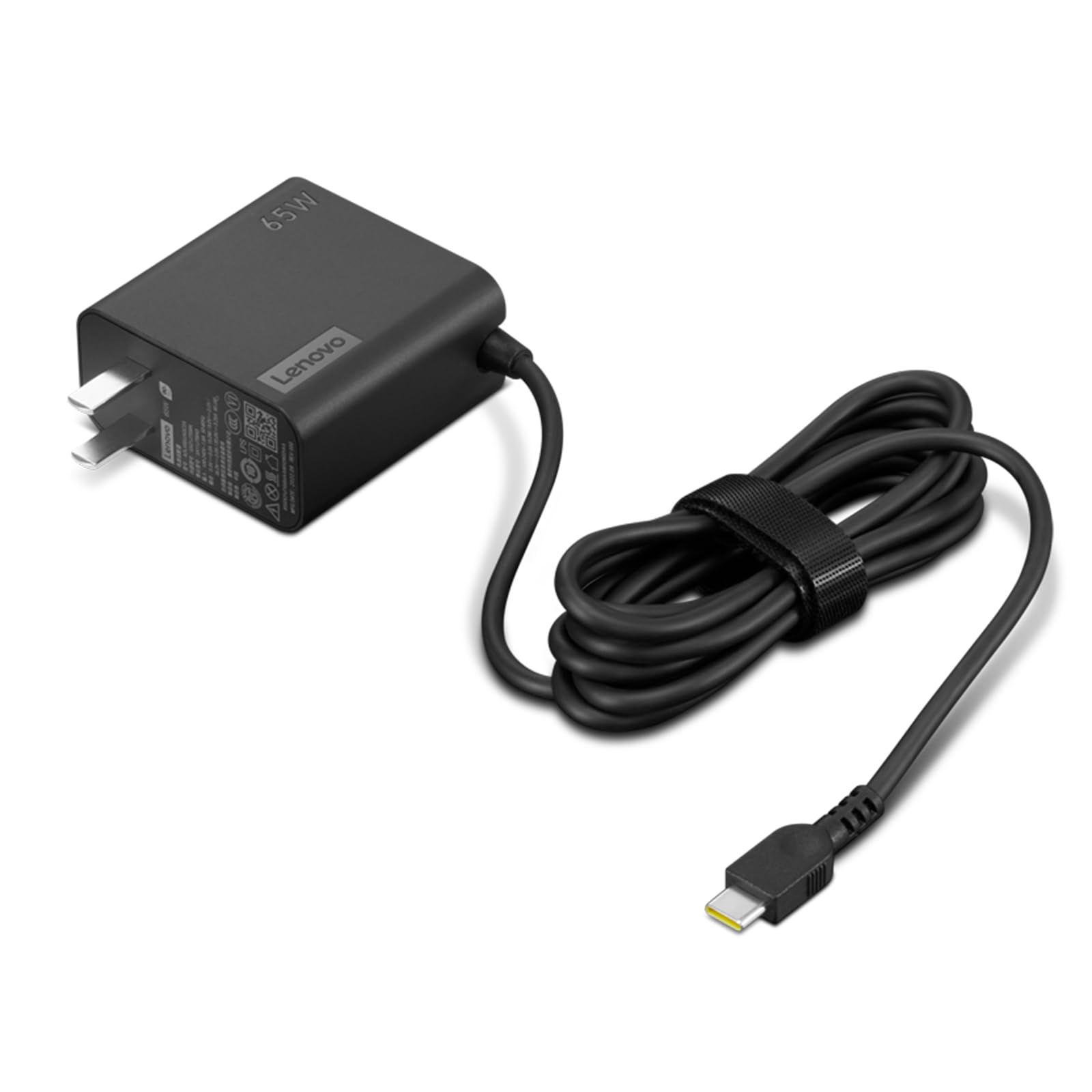
The straightforward ThinkPad replacement — one cable, 65W, no port math to do.
This is the charger for one job: replacing the block that came with a Lenovo USB-C laptop. It delivers up to 65W over PD 3.0, and Lenovo names its compatible line directly — ThinkPad, Yoga, IdeaPad, and ThinkBook laptops that charge over USB-C. The 1.7m (5.9ft) cable is built in, so there is no separate cord to lose, and the multi-voltage output steps through 5V, 9V, 15V, and 20V so each device gets the profile it supports.
Speed is modest by the standards of the biggest blocks in this list, but it does what it says. Customers describe going from 15% to 100% in under an hour. Note it is a single USB-C port with a fixed cable, so it charges one thing at a time — the opposite design to the three-port Amazon Basics and the UGREEN above, which is a fair trade if portability and simplicity beat flexibility.
Reliability is the spot to weigh. Some customers note it working perfectly for a long stretch; others report it stopping working after about an hour of use. That mixed signal means buying this as a dedicated spare for a Lenovo laptop makes sense, and buying it as your only charger for a critical work trip is riskier than the multi-port picks that carry more buyer history.
Fits the socket, not the feature list: a 5.9ft fixed cable and a 65W PD 3.0 output that goes straight into a Lenovo barrel-free port is the whole pitch.
What to plan around: the fixed cable cannot be swapped, so if it fails the block goes with it — a spare-in-the-bag strategy beats a single point of failure.
Buy as the spare: ideal as a second charger for a ThinkPad or Yoga, left in the office or the travel bag.
Not for a mixed desk: one fixed port and mixed reliability reports make it the wrong choice for charging several things nightly.
Know the Specs
Wattage and the port split
Wattage (W) is the ceiling on power the charger can hand out in total. On a single-port block, that figure is what your device can pull. On a multi-port block, the total is divided, so the printed 120W may run as 100W on one port alone but 60W per port once two are live. The number to read is the split table, not the headline. A laptop needs its port to hold roughly 60W and up to keep charging under load; a phone needs nowhere near that.
PD, PPS, and why they matter
Power Delivery (PD) is the handshake that lets a charger and a device agree on voltage and current, and it is why a compatible block charges fast instead of trickling. PPS (Programmable Power Supply) adds fine voltage tuning on top, which certain Android phones need to hit their top rate. A charger that names PD 3.0 or PD 3.1 and supports PPS is the safe bet for a mixed house of phone brands; an iPhone charges fast on PD alone.
GaN: small and cool
GaN (gallium nitride) is the semiconductor material inside the newer compact blocks. It switches power more efficiently than the older silicon design, so the charger runs smaller and sheds less heat for the same wattage. That is why a 65W GaN block can fit a jacket pocket while an older brick the same power cannot. A GaN charger running a laptop will still feel warm — that is normal — but the design point is cooler, smaller, and lighter.
Foldable plugs and cable length
A foldable plug tucks its prongs flat so the block does not snag on a bag lining, and some hinges rotate 180° so the block can sit either way up in a tight socket. Cable length matters for the same daily reason: 3.3ft suits a hotel desk, 6ft reaches the couch, and anything longer means you are not hunting for an extension cord. If the cable is built in rather than detachable, treat the block and cable as one replaceable unit.
Common Questions
Will a 65W USB-C charger charge my laptop and my phone at the same time?
Do I need PPS if I own a Samsung Galaxy phone?
Why does my charger get warm while charging a laptop?
Is a 20W charger enough for my phone, or do I need a bigger one?
What does the foldable plug actually do for travel?
Can I use these chargers overseas with a plug adapter?
Does a longer USB-C cable slow down the charge?
Is a GaN charger better than a standard silicon one?
Should I leave my charger plugged in overnight?
Why does my 100W charger feel like it charge slower than the number says?
The Bottom Line
The safest pick for most people is the UGREEN Nexode 65W. It does the job that matters — 65W to a laptop, three ports across a desk — in a body small enough to travel with, and the buyer history behind it is deep enough to lean on. If you only ever charge one phone and want it in a jacket pocket, the hinged Anker Nano Charger Neo earns its place by fitting where a fixed block will not. For a house that needs a charger in every room without thinking about it, the Hzevn 2-pack delivers two three-port blocks in one box and saves the unplugging entirely. And if your desk grows to a laptop, a tablet, and a phone at the same time, the Amazon Basics 120W is the only one here that prints its split and gives you 100W on one port alone — just read that split before you buy it.
How we choose
We do not accept paid placement. Every pick is matched to a real buyer and a real use-case; we do not hands-on test units.
Sources
Specifications: manufacturer listings and product documentation. Review insights: verified customer reviews, as of November 2026. Pricing: not shown on this page (it changes often); check the current price via the retailer link.
As an Amazon Associate, Tactical Gear Guy earns from qualifying purchases. This does not affect which products we feature.