Specs are compiled from manufacturer listings and verified buyer reviews and can change over time — please confirm the key details on the product page before buying.
If your toes feel pinched by lunchtime and your arches ache after a normal walk, the fix is usually a flatter shoe with a roomier front — and that is exactly what a barefoot shoe gives you. The short answer: pick a pair with a zero-drop sole (heel and toe sit at the same height) and a wide toe box (a foot-shaped front that lets your toes spread). Everything below is sorted by how well it does those two things in real life.
This guide is built by comparing the manufacturers’ published specifications and the patterns across verified customer reviews, so you get each pick’s real strengths and trade-offs instead of marketing spin.
Some pairs here are tough leather boots built for trail work, others are sock-soft walkers for recovery days. The trick is matching the sole thickness and upper material to where you actually walk, and this roundup of the unisex barefoot shoes covers both ends of that range so you can choose with confidence.
Top Picks


How To Choose The Best Unisex Barefoot Shoes
A barefoot shoe is not a softer version of a normal sneaker. It removes the things a normal sneaker adds — a raised heel, a stiff arch, a tapered toe — so your foot does the work again. That shift is the whole point, and it is also where most buyers go wrong on the first purchase.
Start with the drop, not the cushion
Drop is how much higher the heel sits than the toe. A zero-drop sole keeps both ends level so your ankle, knee and hip stack in a straight line. If you have worn raised heels for years, expect your calves to feel the change for the first week or two — build up slowly instead of walking a full day straight away.
Measure the front of your foot, not just the length
The wide toe box is the feature you will feel first. Trace your foot on paper while standing and measure across the widest part at the ball of your foot. Compare that to the shoe’s stated width rather than trusting your usual sneaker size, because a tapered toe in your old pair may have been hiding how wide you really are.
Match sole thickness to your surface
A thin sole gives you more ground feel and better balance on uneven ground. A thicker, more cushioned sole is kinder on concrete and long city days. For trail work, look for a grippy rubber outsole; for indoor recovery walking, a soft knit upper matters more than tread depth.
Side-by-Side Comparison
| Model | Best For | Drop | Toe Box | Upper | Amazon |
|---|---|---|---|---|---|
| JIM GREEN African Ranger★ Best Overall | Trail work and daily wear | Zero drop (flat) | Wide, roomy front | Full grain leather | Amazon |
| Flux Adapt Graphene XTTop Performer | Gym and cross-training | Zero drop | Wide toe box | Graphene-enhanced | Amazon |
| Vibram FiveFingers V-AlphaBest for Trails | Trails and wet ground | Flat (minimal) | Five-toe split | Wool/synthetic blend | Amazon |
| Vivobarefoot Primus Trail III | Wet-weather trail running | Zero drop (minimal) | Foot-shaped | Recycled water-resistant | Amazon |
| Xero Shoes HFS II | Running and cross-training | Zero drop | Wide, foot-shaped | Breathable mesh | Amazon |
| Hike Footwear HF Shade | Everyday walking | Zero drop | Wide (runs small) | Knit | Amazon |
| Hike Footwear Comforto Max | Recovery and indoor wear | Zero drop | Wide toe box | Wool knit | Amazon |
| Binienty Zero Drop Sneaker | Casual flat wear | Zero drop | Wide front | PU leather | Amazon |
| Barefoot Magic Claw | Light travel and indoor | Flat (minimal) | Five-finger split | Woven knit | Amazon |
Detailed Reviews
1. JIM GREEN Men’s Barefoot African Ranger Boot
Our pick — 4.5+★ from 300+ verified ratings; the strongest balance of quality and price.
The leather boot that lets your toes spread on rough ground
Most barefoot shoes are flimsy little things that fold in half. This one is a real full grain leather work boot with a flat sole, which is the combination that makes it the pick here. The upper is water resistant leather, so wet grass and light rain bead off instead of soaking straight through.
The feature people talk about most is the build: solid leather, stitched to last, holding up to walking, driving and outdoor work. Comfort runs close behind, and the fit gets steady praise for a front that gives your big toe and pinky toe room to sit flat instead of squeezing against the sides. The sole is thin on purpose. You feel the ground under you, and the whole boot bends and twists the way your foot would.
What you give up is springiness. There is no cushioned heel and no arch support built in, so a long day on packed concrete will feel harder than it would in a padded sneaker. That firmness is the barefoot trade-off, not a defect. Treat it as a boot you break in on soft ground first, then wear everywhere.
Leather Ranger Build
- Water resistant full grain leather handles wet morning grass and muck
- Wide toe box that lets wide feet sit flat
- Thin, flexible sole you can feel the ground through
- Built to take work-site and trail abuse
Break-In Required
- No heel lift or arch support, so concrete days feel firmer
- Leather needs breaking in before it softens
Buy for Trails: trail days, outdoor work and anyone who wants a barefoot feel wrapped in real leather.
Skip for Office: you need instant cushioning for long hours on hard pavement.
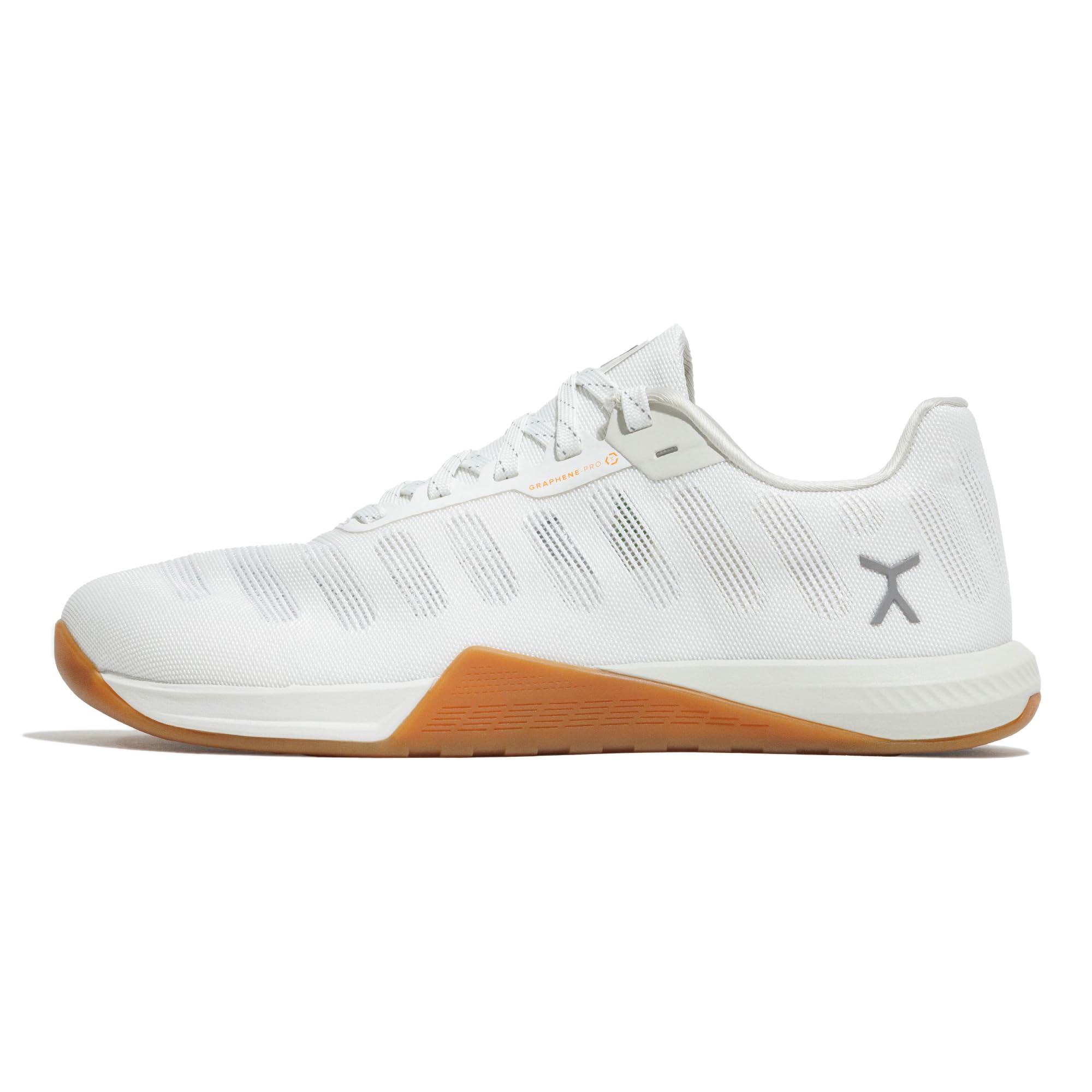
2. Flux Footwear Adapt Graphene XT
The gym-day barefoot trainer that holds up under barbells
Where the JIM GREEN above is a trail boot, this one is built for the weight room — lifting, CrossFit, and functional training where a zero-drop sole and a wide, planted toe box are exactly what you want under a loaded barbell. A flat base keeps you level and stable instead of pitched forward on a raised heel.
The upper uses graphene, a carbon layer the maker describes as thin, light and extremely strong, aimed at durability and a responsive feel. The thing that wins people over is comfort during hard sessions, and versatility is a close second — the same shoe works for lifting and everyday wear. The maker flags that it fits small and suggests going up a half size, so measure before you commit.
Wide-footed lifters should eye this one with care. The fit feedback splits between true-to-size and tight for broad feet, so if your forefoot already spills out of standard trainers, try before you buy. On everything else, it swings well above its training-shoe peers for a barefoot-style gym shoe.
Graphene Sole Grip: a lightweight, durable upper that takes gym abuse and still lets your toes spread in the front.
Narrow Toe Box: the small sizing and the mixed fit for wide feet mean you should confirm the half-size-up before ordering.
Pick for Speed: you lift, do CrossFit or train with weights and want a level, wide base.
Avoid for Wide Feet: you already know your feet run very wide — the front can feel snug.
3. Vibram FiveFingers V-Alpha
Five toes, one thin grippy sole, the closest thing to barefoot on wet rock
The number that tells you everything here is the 3.7 mm rubber outsole — thin enough that you feel every root and rock, thick enough to protect you from a sharp stone. Add the Megagrip rubber compound and you get traction on both wet and dry ground, which is what makes this the trail pick.
Each toe sits in its own slot, so the whole foot spreads and grips instead of sitting in a single sock of upper. It is the most extreme interpretation of the barefoot idea in this list, and the look is what gets commented on most. A wool-and-synthetic upper helps with breathability and odor.
The catch is durability and fit. Fit runs slightly bigger than expected, comfort is mixed — some find it great, others report foot pain on longer outings — and the quick lace and stitching have drawn complaints over time. Wear it short-distance first and dial in the toggle so the toe slots sit right before a big day out.
Great for Gyms: you hike, scramble or run soft, uneven ground and want maximum ground feel and grip.
Poor on Gravel: the toe-split design takes getting used to, and the fit runs a touch big.
4. Vivobarefoot Primus Trail III
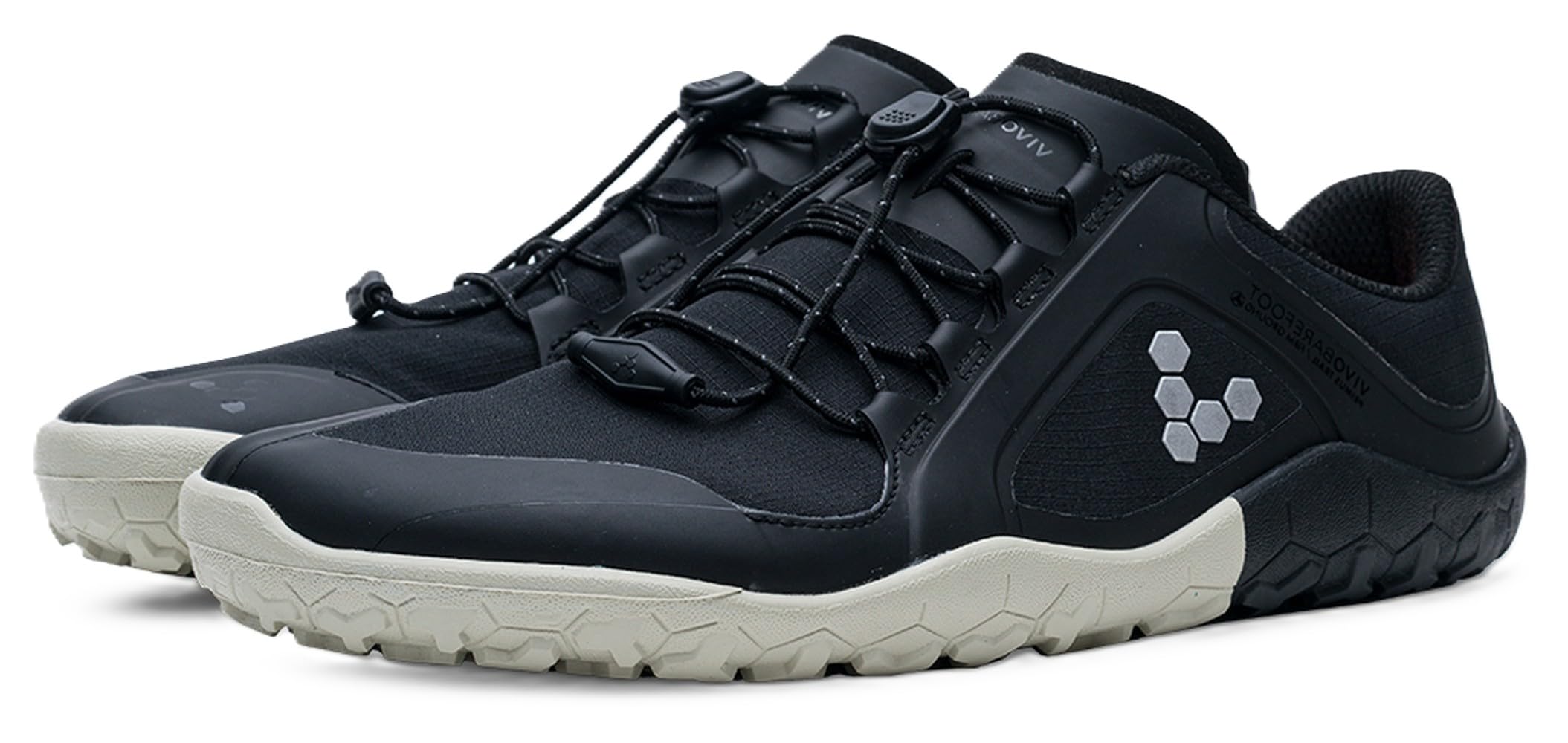
A minimalist trail runner built for cold, wet, grimy conditions
Where the V-Alpha is all feel, this one adds weather protection. The upper is recycled and water resistant, so it blocks moisture while still letting air move — the difference between a damp foot and a soaked one on a wet trail run. A quick-lace system pulls tight and stays put so you are not retying mid-run.
The outsole is a “firm ground” design, aimed at hard, compacted surfaces rather than loose mud. Build quality is the standout, and the shoe is versatile enough to move from running to disc golf to general outdoor use. It handles longer efforts too — the trail-run feedback notes it performing well over a 30 km outing.
The honest limit is fit and durability. Buyers split on how it fits and how long it lasts, and some feel the value is mixed for what they get. Buy it for wet, cool-weather trail running, not as your only pair of everyday sneakers.
Grippy Wet Traction: the water-resistant recycled upper is the reason to choose this over the V-Alpha for cold, wet trails.
Snug Heel Fit: sizing and long-term durability opinions are divided, so confirm the fit and expect a specialist’s lifespan.
Choose for Mud: you run or fastpack hard trails in cool, wet conditions and want a minimal sole with weather cover.
Pass for Roads: you want one do-everything shoe or have tricky sizing needs.
5. Xero Shoes Women’s HFS II
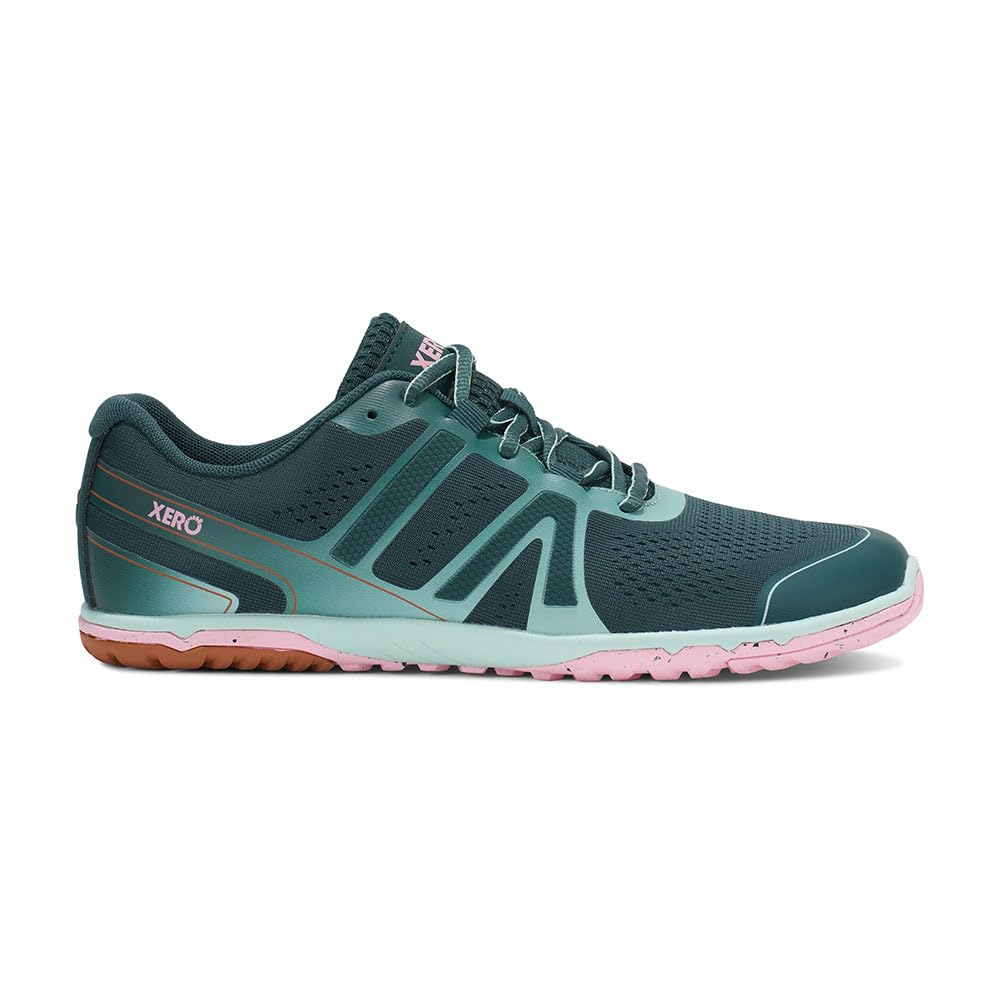
The crossover shoe that walks the dog and hits the gym on the same day
If you want one pair that handles a run, a gym session and errands without swapping shoes, this is the most flexible pick in the mix. The zero-drop sole keeps you level, the mesh upper breathes, and the fit is the thing people praise most — a wide, foot-shaped front that makes your feet feel barefoot rather than boxed in.
Comfort comes close behind in what buyers notice, and the colors and tread style get steady love too. It is genuinely light on the foot. Against the dedicated trail shoes above, it sits in a different lane: it trades the aggressive grip and weather shell for versatility and everyday comfort.
Long-term durability is the mixed note — some put serious miles on theirs happily, while harder use erodes that confidence. If you plan to abuse them on rough trails weekly, expect to replace sooner. For mixed walk-and-train use, it is the balance you want.
Ideal First Pair: one shoe for walking, running and light training with a wide, comfy front.
Weak for Long Runs: rough-trail durability is a question mark, so keep the hard abuse for a dedicated trail shoe.
6. Hike Footwear HF Shade
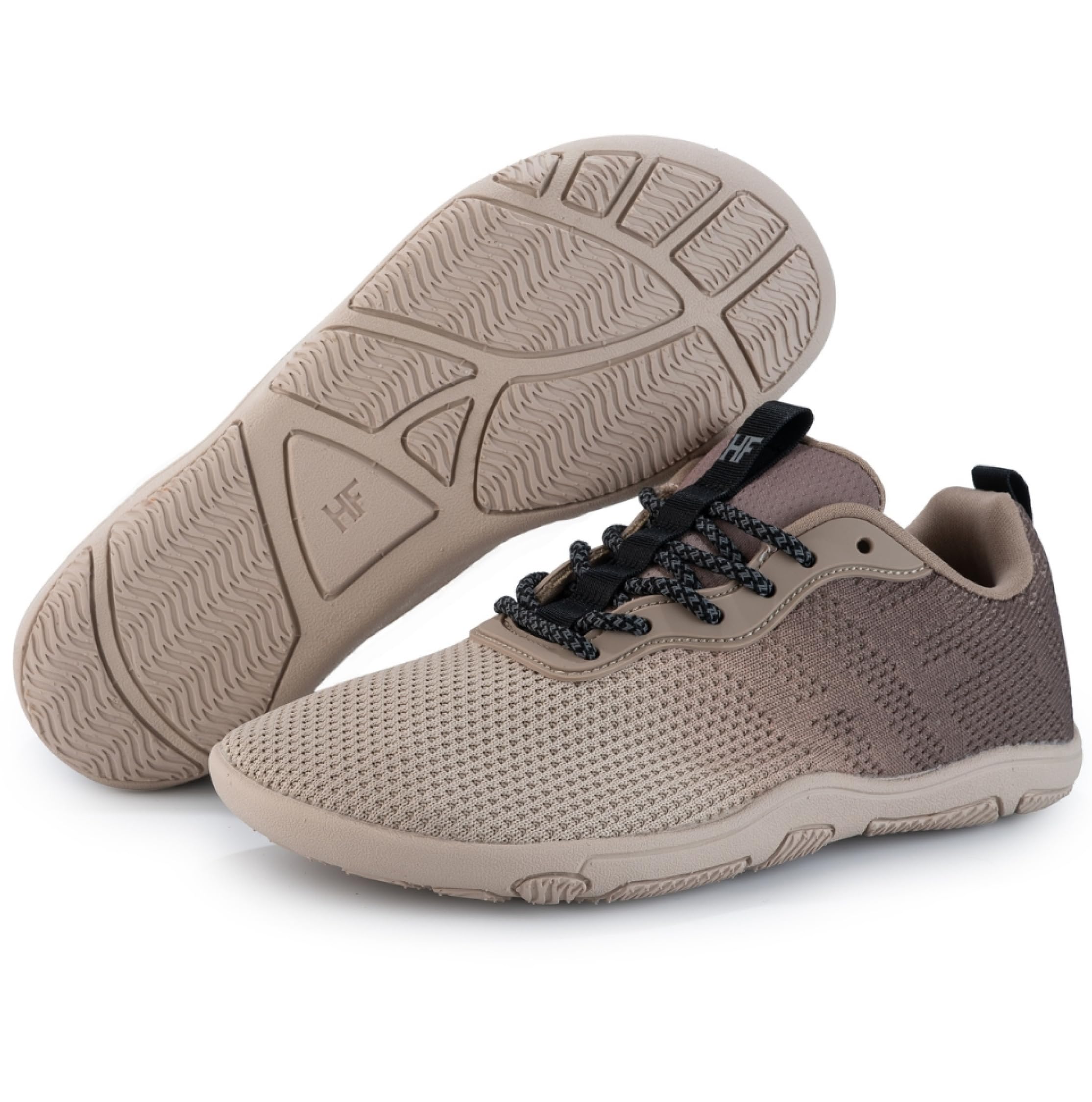
A soft, light walker for neighborhood miles and travel days
This is the pair to reach for when your day is mostly walking rather than training. The zero-drop sole and wide toe box let your foot spread, flex and stabilize on its own, which is the whole barefoot principle in a softer, friendlier shell. Comfort is what buyers call out most, and the look comes right alongside it.
It stays light, so it packs well for travel and works for short runs, errands and wandering. Keep your expectations honest on sizing — the toe box runs snug for some wide-footed wearers, so if you are on the wider side, size up rather than squeeze. The soles are also not built for heavy daily pounding over years; they wear faster under constant hard use.
Buy it as a light everyday walker for errands, travel and short runs. Don’t buy it as a bombproof trail shoe or a marathon trainer. Keep it to casual miles and errands, where the soft knit and light build make sense.
Try Half Up: your days are walking, travel and light activity and you want soft, barefoot-style comfort.
Order True Size: wide forefeet should size up, and heavy-use buyers should expect to replace sooner.
7. Hike Footwear Comforto Max

Sock-soft on tired feet, for slow indoor days and recovery walks
The upper is a wool-knit that gently stretches and adapts, so swollen or sensitive feet slide in without pressure points. Pair that with the wide toe box and the zero-drop sole and you have a shoe built for slow living — recovery walking, indoor wear, travel and low-impact days. It is Hike’s lightest, softest barefoot model.
Comfort is what people feel most, and the lightweight build is noticed right behind it. It packs small for travel and is easy to live in around the house or on a gentle afternoon walk. It carries the brand’s signature thin ground feel rather than padding the foot into a cushion.
The catch is fit. The fit count runs high but split, so sizing is the real variable here — order carefully and expect the knit to stretch to your foot over a few wears. Balance and cushioning opinions also divide, which is fair for a shoe this minimal. Buy it for recovery walks and indoor wear, not for hard training sessions.
Soft Cushioned Ride: the wool-knit upper adapts to your foot instead of clamping it, which is why tired and swollen feet like it.
Flexes Too Much: sizing is genuinely hit or miss for some feet, so check the size guide and lean toward your measured width.
Built for Standing: indoor wear, recovery walks and travel where softness and light weight beat structure.
Not for Hiking: you need firm support for long training or heavy outdoor use.
8. Binienty Zero Drop Sneaker

An entry-level flat sneaker for casual barefoot-style wear
If you want to try the flat, wide-toe feel without spending much, this is the low-risk way in. The zero-drop PU leather sneaker keeps your heel and toe level and gives the toes room at the front. Appearance is what buyers like most — it looks like a clean everyday sneaker rather than a specialized barefoot shoe.
Quality and comfort both land on the positive side, and the barefoot wider toe box style is what drew many to it. It works as a walking-around shoe for low-key days.
The catch is the material and finish. Some find the upper a step below what the photos suggest, and the color has run off in person with edges showing bright white. Sizing also runs big for a share of buyers, so measure rather than assume. At this price, treat it as a fair-weather casual sneaker for pavement and errands, not trail work.
Start Here Cheaply: casual, budget-friendly barefoot-style wear for light everyday use.
Expect Grip Limits: sizing runs big for some and the material may not match the photos.
9. Barefoot Magic Claw Five Finger Shoes

A sock-soft travel shoe that rolls up small and lives in a bag
This is the least shoe-y of the bunch and that is its selling point. An ultra-light, breathable woven upper wraps the foot without squeezing, and a liquid latex insole adds a little cushioning underfoot. It is built to pack flat and go wherever you do — home, indoor, beach, or a lightweight travel day.
Comfort is what buyers notice first — it feels close to true barefoot — and the grippy soles give real traction on slick surfaces. It handles wide feet and big feet without pressing at the sides, which makes it an easy one to hand to a guest or keep in a suitcase.
It is not a substitute for a structured shoe. There is no support for long hard days, and the whole appeal is softness over substance. Treat it as packable footwear for indoor use, beaches and light travel days, not for a tough hike.
Toss in Bag: travel, indoor use and light water wear where packable softness wins.
Avoid Wet Floors: structured support or cushioning for long trail days — it is a minimalist, portable shoe.
Know the Specs
Zero Drop vs Raised Heel
Drop is the height difference between the heel and the toe. A zero-drop sole keeps them level, so your ankle, knee and hip stack straight and your foot controls the motion. Most everyday sneakers raise the heel, which tilts you forward and shortens the calf. If you have worn raised heels for years, ease into zero drop gradually.
Wide Toe Box and Foot Shape
A wide toe box is a foot-shaped front that lets the toes spread flat instead of pressing together. Measure across the ball of your foot while standing and compare it to the shoe’s stated width. When feet run wide, sizing up often fixes a snug front — but only if the shape itself is right.
Common Questions
How long does it take to get used to zero-drop shoes?
Will a wide toe box fit my wide feet?
Are barefoot shoes good for running on pavement?
Can I wear these for hiking and trails?
Do barefoot shoes run true to size?
Are toe-split shoes worth it for everyday wear?
How do I keep leather barefoot boots from getting stiff?
What is the difference between graphene and regular shoe materials?
Can I wear barefoot shoes on wet or rainy days?
How long do minimalist barefoot shoes last?
The Bottom Line
The strongest barefoot pick here is the JIM GREEN African Ranger because it does the two core things — a flat heel-to-toe sole and a wide, roomy front — in a water resistant leather boot that takes real outdoor use. If you want a single shoe for walking and light gym days, the Xero Shoes HFS II is the versatile middle ground. And for wet-weather trail running or soft recovery days, the Vivobarefoot Primus Trail III and the Hike Footwear Comforto Max cover those ends without compromise. Whichever you pick, start with short walks and let your calves adapt to the flat sole before you go long.
How we choose
We do not accept paid placement. Every pick is matched to a real buyer and a real use-case; we do not hands-on test units.
Sources
Specifications: manufacturer listings and product documentation. Review insights: verified customer reviews, as of November 2026. Pricing: not shown on this page (it changes often); check the current price via the retailer link.
As an Amazon Associate, Tactical Gear Guy earns from qualifying purchases. This does not affect which products we feature.