Specs are compiled from manufacturer listings and verified buyer reviews and can change over time — please confirm the key details on the product page before buying.
Burying a wire to a shed, a gate, a lamp post or an EV charger? What decides whether that run survives is the conduit’s jacket and its burial rating, not the brand name on the box. Buy a flexible non-metallic liquid-tight run (a sealed plastic jacket that keeps water out) that is explicitly rated for direct burial, size it to your wire, and match the connectors to the same trade size. Get those three right and the run stays sealed.
This guide is built by comparing the manufacturers’ published specifications and the patterns across verified customer reviews, so you get each pick’s real strengths and trade-offs instead of marketing spin.
Below you will find the trade-size, wall thickness and burial rating that actually matter, laid out so a first-time digger can pick with confidence. Every pick here is a flexible non-metallic liquid-tight conduit rated for direct burial, which is exactly what you want from underground wire conduit.
Top Picks


How To Choose The Best Underground Wire Conduit
Underground conduit has one job: keep dirt, water and grinding grit away from your conductors while the wire inside stays pullable. A flexible non-metallic liquid-tight jacket does that with a smooth PVC (a hard plastic) interior and a sealed outer wall. The buying decision depends on four numbers on the spec sheet, and none of them are marketing claims.
Trade size and inside diameter come first
Match the conduit’s inside diameter to the wire bundle you are pulling, not to the outside look of the coil. A 1/2-inch trade size is the common pick for a single low-voltage run or a light circuit. A 3/4-inch trade size gives you more room for thicker conductors or several wires at once. One owner found the limit the hard way — 12/2 wire went in only about 8 to 10 feet before it bound up. When you are close to the edge, step up a size.
Wall thickness is your crush protection
Wall thickness, measured in millimeters, is what stands up to a shovel nick or a heavy wheelbarrow rolling over backfilled soil. A 2.5 mm wall is a stout jacket for a flexible PVC run. Thinner walls still bend fine, but they give less resistance to crushing and abrasion. Compare wall thickness in millimeters, not coil appearance, when two jackets look alike.
Direct burial and sunlight ratings are not the same thing
A jacket can shrug off rain and still not be rated to sit under soil. Look for the words “direct burial” and “sunlight resistant” separately. The first tells you it belongs in the trench. The second tells you it survives the exposed run up the side of a shed or along a fence. Temperature ratings matter too — a range like -30°C to 80°C covers cold snaps and hot attic pulls.
Check the connector fittings before you buy the kit
Liquid-tight conduit is only as sealed as its fittings. Kits that bundle straight and 90-degree connectors save you a second shopping trip and a sizing mismatch. Confirm the fittings match the conduit’s trade size exactly. A coil that does not thread into its own connectors is useless in the trench, and a few buyers have hit exactly that mismatch.
Side-by-Side Comparison
| Model | Best For | Trade Size / Length | Wall Thickness | Outside Diameter | Amazon |
|---|---|---|---|---|---|
| Sealproof Type B 3/4 in. x 25 ft★ Best Overall | Overall best for most burial runs | 3/4 in. / 25 ft | 0.104 in. | 0.83 in. | Amazon |
| AISIMEE 3/4 in. 25 ft KitKit With Fittings | Kit with fittings included | 3/4 in. / 25 ft | — | 1 in. | Amazon |
| Elecoman 3/4 in. 25 ft Kit | Best value kit | 3/4 in. / 25 ft | 2.5 mm | 1 in. | Amazon |
| Southwire Ultratite 3/4 in. 50 ft | Long concrete-encased runs | 3/4 in. / 50 ft | — | — | Amazon |
| YesBes 1/2 in. 100 ft Kit | Long low-voltage pulls | 1/2 in. / 100 ft | 2.5 mm | 0.83 in. | Amazon |
| Southwire Ultratite 1/2 in. 25 ft | Budget single-circuit run | 1/2 in. / 25 ft | — | 0.5 in. | Amazon |
Detailed Reviews
1. Sealproof Type B 3/4 inch x 25 FT
Our pick — 4.5+★ from 950+ verified ratings; the strongest balance of quality and price.
A 3/4-inch Type B coil with a 0.104-inch wall that handles the trench and the pull without drama.
Start with the wall. This Sealproof run measures 0.104 inches of PVC around a 0.83-inch outside diameter, so backfilled soil and a stray shovel blade meet real material rather than a thin shell. Its 3/4-inch trade size suits thicker conductors and multi-wire bundles that would bind in a 1/2-inch run. At 4.5 pounds for the 25-foot coil, one person can carry it out to the trench and unroll it without help.
It is made in the USA from virgin PVC and rated for direct burial and sunlight exposure, with a UL rating of 80°C dry and 60°C wet plus a 70°C oil resistance. Cut it with a utility knife or PVC cutter — there are no sharp edges or burrs to nick insulation on the way through. The smooth interior is the part that wins people over most; the quality of the jacket is the thing owners come back to praise, and the pull-ease follows from it.
The honest catch is sizing ambition. One owner could only feed 12/2 wire about 8 to 10 feet into a coil before it stopped, so plan the pull direction and keep bends gentle. Compare the coil weight against the AISIMEE 3/4-inch kit at 2.66 kg and you have 4.5 pounds here versus 2.66 kg there — similar class, less bulk in the hand.
Where It Earns The Top Spot
- 0.104-inch wall thickness for crush and abrasion resistance in backfilled soil
- Rated for direct burial plus sunlight exposure on exposed runs
- UL Listed and CSA certified, made in the USA from virgin PVC
- Smooth interior and no burrs, so wire pulls clean without insulation damage
What To Plan Around
- Connectors are sold separately, so add the matching Type B fittings to your order
- Long pulls of thick wire can bind inside the coil if you fight the bends
Reach for this if: you want one proven 3/4-inch burial coil with a stout wall and a clean pull, and you are happy to add fittings yourself.
Look elsewhere if: you need the connectors in the box the same day — the Elecoman or AISIMEE kits ship with them.
2. AISIMEE 3/4inch 25FT Conduit and Connector Kit
Everything in one box: 25 feet of 3/4-inch flex plus eight fittings, so the job never stalls on a missing connector.
The inside diameter on this AISIMEE coil is 3/4 inch and the outside diameter is 1 inch, which is wider than the Southwire 1/2-inch Ultratite at 0.5 inches outside diameter. That extra girth is what lets a thicker single conductor or a small bundle pass without fighting the wall. The kit ships with 5 straight and 3 90-degree connectors, enough to land both ends and turn a corner without a second order.
One owner ran 6AWG to an EV wall charger and reported the 3/4-inch ID fit correctly. The PVC jacket resists corrosion, water, oil and abrasion, and the run is rated for outdoor sunlight and direct burial. Fittings install without tools — you push the conduit onto the ferrule and tighten the dome nut by hand. Thick, sturdy stock is the theme: the coil feels substantial in the hand, and the connectors thread on clean.
The trade-off is that a full kit of fittings is more than many single-run jobs actually need. Several buyers end up with spare connectors sitting in a drawer after one trench. That is a mild annoyance rather than a problem, and the durability complaints are limited to a small minority against the wider pattern.
Where the kit pays off: the bundled 5 straight and 3 x 90-degree fittings, matching a 3/4-inch ID to a 1-inch OD jacket, take one shopping trip out of the job. For a run that turns a corner, that saves a return visit.
The size check to make: a small number of buyers reported a coil that did not match the connectors they expected. Measure the inside diameter against your wire bundle before you cut the coil, so a mismatch surfaces early rather than mid-trench.
The right call when: you want the fittings included and a 3/4-inch jacket with room for a thicker conductor.
Think twice if: your run is a single short pull — the spare connectors are more kit than you will use.
3. Elecoman 3/4inch 25ft Conduit and Connector Kit
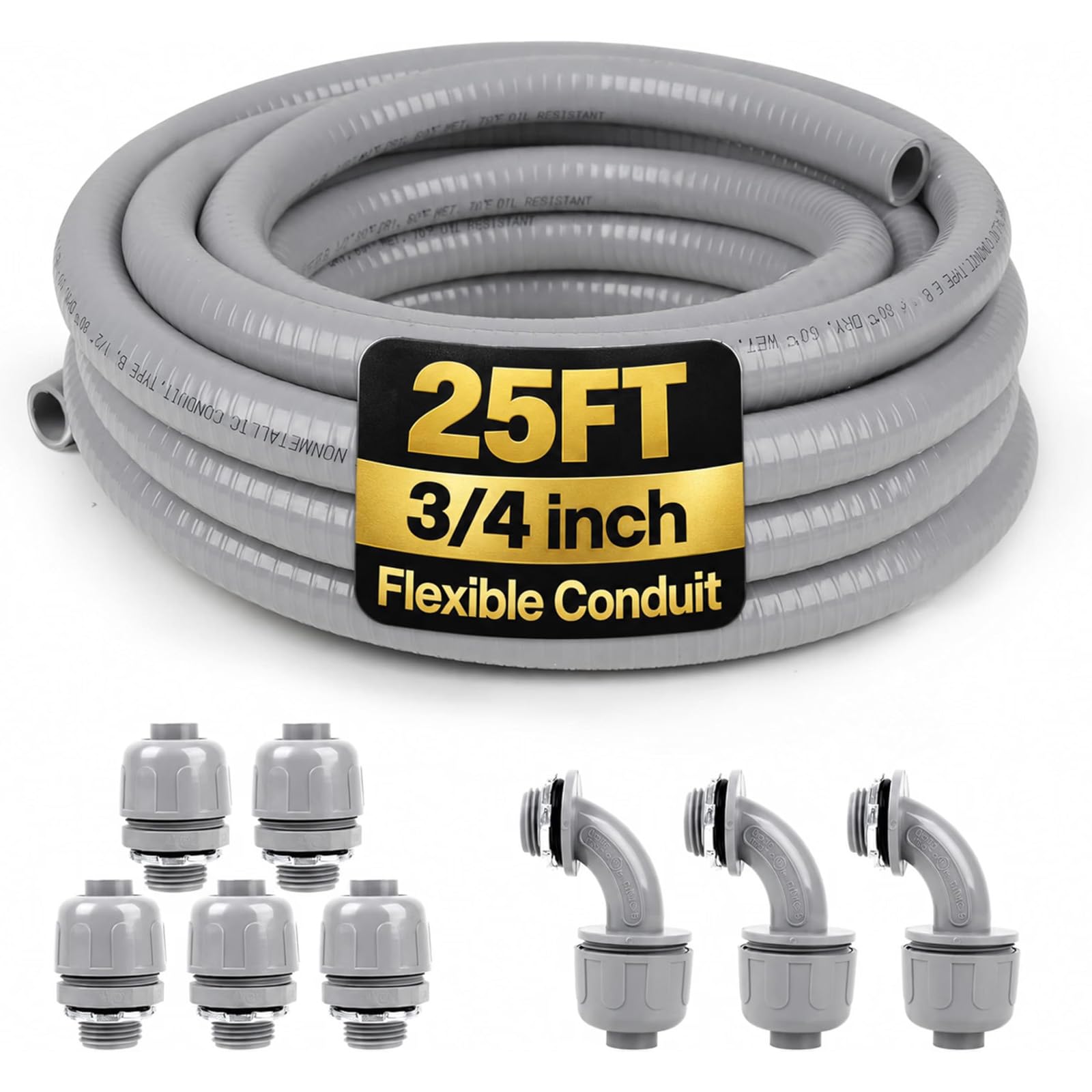
A 2.5 mm wall, eight fittings and UL Listing in one coil — the value pick that still feels built.
Wall thickness is the spec that separates this coil from the rest of the shelf. At 2.5 mm of PVC around a 1-inch outside diameter, this jacket is thick enough to take a hit and keep its shape in backfilled soil. The 3/4-inch inside diameter matches the fitting set — 5 straight and 3 x 90-degree connectors — so a corner turn or a wall entry is covered without buying extra parts.
UL Listing under File No. E529256 is stamped on this run, and the jacket resists corrosion, oil, water and abrasion. It is rated for direct burial and sunlight, and the maker claims it is 50% lighter than metallic conduit. One owner left it in direct sun for nearly a year and reported the jacket still looked sound. A PVC cutter goes through clean, and the fittings thread by hand without tools.
The catch is mostly a fit issue. A minority report that the coil will not bend past 90 degrees easily, and a few found a coil that did not match the connectors they expected. Neither pattern is common against the bulk of the feedback. On the weight side, this 2.66 kg kit is far easier to haul to the trench than the 6.28 kg YesBes 100-foot kit — less than half, if you are counting coil weight on the walk out.
Why It Wins On Value
- 2.5 mm wall thickness against a 1-inch outside diameter, stout for a flexible run
- Eight fittings in the box, UL Listed, and no tools needed for the connectors
- Easy to cut and easy to haul — 2.66 kg for the full 25 feet
The Size To Double-Check
- Tight bends past 90 degrees take effort, so plan corners before you cut
- A small share of buyers hit a coil that did not match their connectors
First pick for most: you want a complete 3/4-inch kit with a thick wall and the fittings already inside.
Skip the temptation to force: it around sharp corners — plan the turn radius before you unroll the coil.
4. Southwire Ultratite 3/4″ 50 ft 55094322
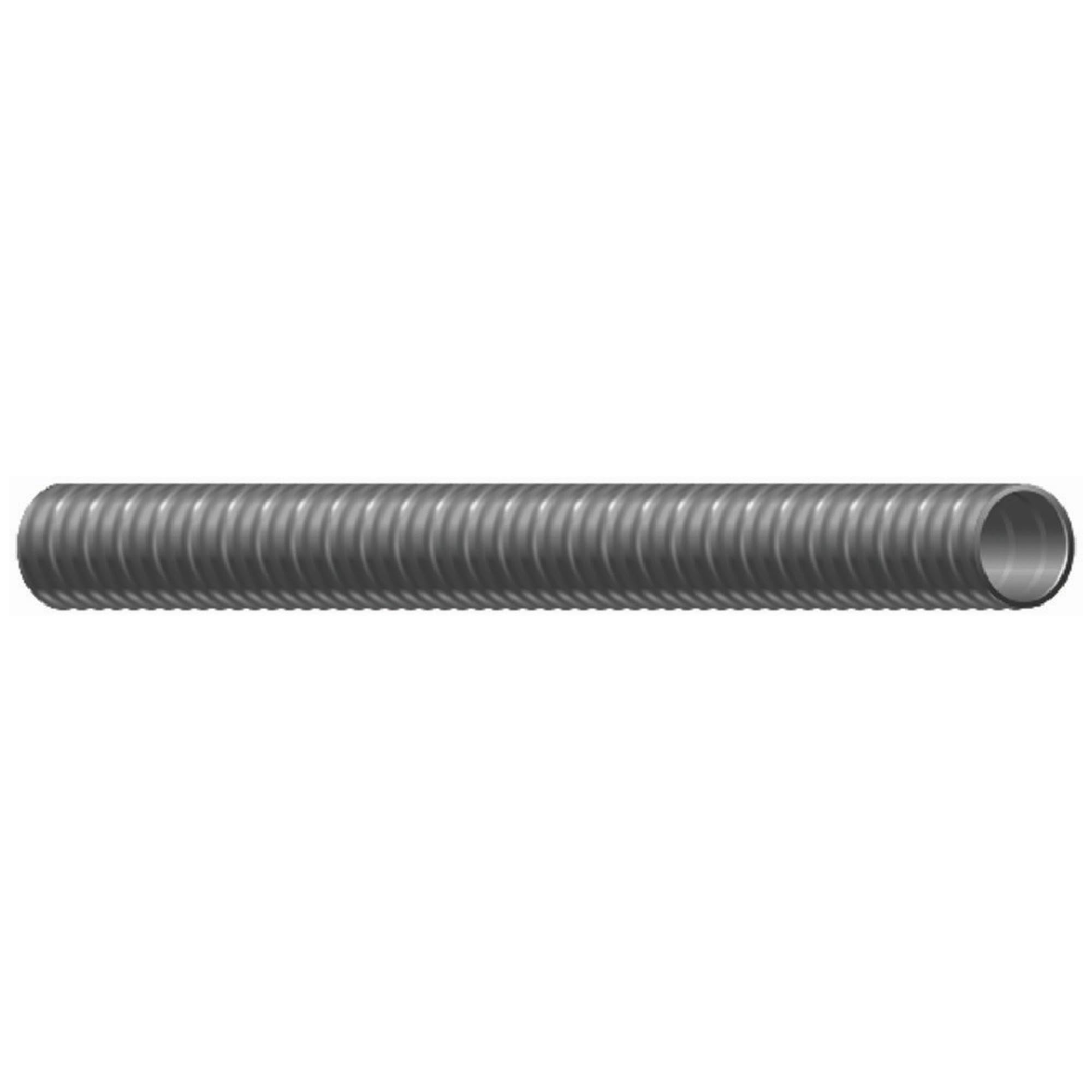
Fifty feet of 3/4-inch Ultratite for the run that has to survive concrete poured over it.
Two features put this coil in a different job class. It is rated for direct burial and for concrete-encased applications, which means it is built to sit under a slab and take the load. And at 8.5 pounds for 50 feet of 3/4-inch coil, you are hauling a serious run out to the site — plan for a two-trip carry or a helper on the walk. The flexible PVC construction resists impact damage and crushing, so a wheelbarrow over fresh backfill is not the threat it is with a thinner jacket.
This is the industrial and commercial side of the line: conveyors, blowers, cranes, air conditioners, machine tooling and lubrication equipment all show up in the application list. The country of origin is the United States, and the 3/4-inch trade size lines up with standard liquid-tight fittings.
The honest note is that at -ish value tier, you are paying for a longer coil and a heavier-duty burial rating, and for a short garden run you would be over-buying. Weigh that against the Elecoman 3/4-inch 25-foot kit at 2.66 kg — this one is a much heftier coil and carries a concrete-encased rating the shorter kit does not list. Buy the 50-footer only when the trench actually runs long.
Where the length earns its keep: a 50-foot coil with a concrete-encased rating means you land a full driveway run without a splice in the middle. That single-feature advantage is what justifies the step up from the 25-foot kits.
The weight reality: 8.5 pounds of coil is a real carry out to the trench. If your run is short and the slab is not involved, the 25-foot kits do the same job with less to haul.
Made for the driveway: a long run that crosses a poured slab or a heavy-traffic strip wants this coil’s burial and concrete rating.
Not worth the coil if: your run is 25 feet or less and never sees concrete — the shorter kits cover you.
5. YesBes 100FT 1/2 Conduit and Connector Kit

A hundred feet of 1/2-inch flex with fittings — the coil that turns one trench into a full property run.
Inside diameter is 0.63 inch and outside diameter is 0.83 inch, with a 2.5 mm wall around the jacket. That is the same outside diameter the Sealproof 3/4-inch coil runs, but this is a 1/2-inch trade size — so it is sized for a single low-voltage or light circuit run, not a fat bundle. One hundred feet on a single coil means you can pull from the house to the far gate or the back shed without a splice, and the fittings bundle 5 straight and 3 x 90-degree connectors to match.
The PVC jacket resists corrosion, water, oil, abrasion and acid, and the coil is rated for outdoor, sunlight and direct burial use. At 6.28 kg, this is the heavy coil to plan for — significantly heavier than the AISIMEE 3/4-inch 25-foot kit at 2.66 kg. Owners call out the material quality first, with the value as a close second. The smooth interior helps the pull, and the fittings tighten by hand.
The catch is the weight and the 1/2-inch size together. At 6.28 kg for 100 feet, hauling this out to the back of the property is a two-hand job. And if your wire is thick, the 1/2-inch inside diameter sets the ceiling — the same constraint one Sealproof owner hit pulling 12/2 wire. Size your wire first, then buy the coil.
What The Long Coil Delivers
- 100 feet per coil, so long runs land without a splice
- 2.5 mm wall on a 0.83-inch outside diameter jacket
- Rated for direct burial and sunlight, with eight fittings included
The Two Limits
- 6.28 kg coil is heavy to carry to a far trench
- 1/2-inch inside diameter rules out thick conductors or fat bundles
Takes the far run: one continuous 100-foot pull for a gate light, a long low-voltage line or a shed feed.
Pick a 3/4-inch instead if: your wire is thick — this 1/2-inch ID is sized for lighter runs.
6. Southwire 55094221 25-Feet 1/2-Inch Conduit
The 1/2-inch budget coil for a short single circuit — light, sealed and rated for wet outdoor burial.
At 3 pounds for the 25-foot coil, this is the easy carry of the group, and it is sized for a single short run rather than a bundle. The 0.5-inch outside diameter lines up with standard liquid-tight fittings for LFNC-B. It seals out water, liquids, abrasives, coolants, grease, mineral acids, petroleum oils and salt air, and the manufacturer rates it for wet and outdoor locations and direct burial.
Temperature range is genuinely wide: -30°C to 80°C, with a 60°C oil rating. The smooth interior gives you a clean pull, and UV sunlight resistance covers the exposed run up a wall. One owner reported it holding up four years in harsh sun with no odor. For a garden light or a short shed pull, that is plenty of jacket for the job.
The honest caveat is flexibility. The coil can arrive with a curl, and straightening it takes effort before the run lies flat in the trench. A handful of owners find it stiff from the start, and a small number report it breaking if forced hard. Treat it with patience, lay it out in the sun for a couple of hours before you pull, and it behaves. That is the trade for a 3-pound coil that handles a short run with ease.
The short-run value: 25 feet of 1/2-inch LFNC-B at 3 pounds, rated for wet location and direct burial. For a single light circuit, that is exactly enough jacket without the weight of a longer coil.
The straightening step: leave the coil in the sun for a couple of hours before you lay it out. That curl is the one recurring complaint, and it is easy to plan around.
A fit for one circuit: the short, single run to a light or a small shed where 25 feet of 1/2-inch is enough.
Better elsewhere if: your wire is thick or your run is long — the 3/4-inch kits and the 50-foot coil carry more.
Know the Specs
Trade Size and Inside Diameter
Trade size is the nominal label on the coil — 1/2 inch or 3/4 inch — and the inside diameter is the actual opening your wire passes through. A 1/2-inch trade size with a 0.63-inch inside diameter handles a single light circuit or a low-voltage line. A 3/4-inch trade size with more room takes thicker conductors or a small multi-wire bundle. Match the inside diameter to your wire count before you buy. If the bundle fills the opening, the pull binds and you are stuck mid-run.
Wall Thickness in Millimeters and Inches
Wall thickness is the PVC shell between the wire and the soil. A 2.5 mm wall or a 0.104-inch wall resists crushing, abrasion and shovel nicks in a trench. Thinner walls still bend and pull fine — they just take less punishment from backfill and heavy traffic over the soil. This is the number to compare when two coils look identical on the shelf.
Common Questions
Is flexible non-metallic conduit rated for direct burial?
How much wire can a 1/2-inch conduit take?
Do liquid-tight conduit fittings come with the coil?
Can I cut flexible liquid-tight conduit with a knife?
What does the wall thickness number actually do?
Will this conduit survive a cold winter buried in soil?
Is sunlight resistance the same as burial rating?
Can I pour concrete over flexible non-metallic conduit?
Why does the coil arrive curled and hard to straighten?
How do I connect two lengths of flexible conduit?
The Bottom Line
For most burial runs, the winner is the Sealproof Type B 3/4-inch x 25-foot coil. Its 0.104-inch wall, direct-burial rating and USA-made virgin PVC cover a standard trench from shed to house, and the smooth interior keeps the pull clean. If you want the connectors in the box, the Elecoman 3/4-inch kit pairs a 2.5 mm wall with eight fittings at the value tier. And for the long or concrete-encased run, the Southwire Ultratite 50-foot coil carries the burial and slab rating that the shorter kits do not. Buy the trade size and wall thickness your wire and trench need, not the cheapest coil on the shelf.
How we choose
We do not accept paid placement. Every pick is matched to a real buyer and a real use-case; we do not hands-on test units.
Sources
Specifications: manufacturer listings and product documentation. Review insights: verified customer reviews, as of November 2026. Pricing: not shown on this page (it changes often); check the current price via the retailer link.
As an Amazon Associate, Tactical Gear Guy earns from qualifying purchases. This does not affect which products we feature.