Specs are compiled from manufacturer listings and verified buyer reviews and can change over time — please confirm the key details on the product page before buying.
You are carrying everything on your back, so an air mattress that weighs nothing and still keeps you warm is the whole game. The short answer: the Big Agnes Divide Insulated is the one to buy for most backpackers. It pairs a 4.0 rating (a measure of how well it holds heat) with a 30 oz packed weight and 3.25 inches of cushion. Below you get nine pads that actually qualify as ultralight, each tied to one job, and you will see which one matches your trip.
This guide is built by comparing the manufacturers’ published specifications and the patterns across verified customer reviews, so you get each pick’s real strengths and trade-offs instead of marketing spin.
Weight, warmth, and packed girth are the three numbers that decide whether a pad earns its place in your pack. Every pick here has one clear strength and one honest catch you should know before you commit. This breakdown of the best ultralight air mattress options focuses on real packed weight and warmth, not glossy catalog photos.
Top Picks


How To Choose The Best Ultralight Air Mattress
The biggest mistake first-time backpackers make is chasing the lightest pad on the shelf and ignoring R-value, width, and packed size. A pad that shaves grams but leaves you shivering at 3 a.m. costs you more in lost sleep than it saves in pack weight. Pick the pad whose R-value, packed ounces, and rolled size match your coldest expected trip, not the lightest one on the shelf.
Start with the R-value, not the weight
R-value is a number for how well a pad resists heat loss to the cold ground — the higher it climbs, the colder the conditions it can handle. A low R-value pad is fine for summer lowlands. A high R-value pad, like one rated 6.2 or 7.3, is built for shoulder seasons and winter nights. Match this number to your coldest expected trip before you look at anything else.
Then weigh the packed ounces against your pack
Packed weight in ounces is where ultralight pads separate. The lightest options here sit near 15.7 oz, while a wider padded pad can run 30 oz or more. That gap matters on a multi-day trek where every ounce compounds. Also check the packed length and girth — a pad that rolls to the size of a water bottle leaves real room in your pack for food and layers.
Decide how much thickness and width you need
Thickness in inches tells you how far your hips stay off the rocks and roots. A 2-inch pad cushions lightly; a 3.25-inch or 3.5-inch pad cradles you more and hides uneven ground. Width matters too — a 20-inch pad is narrow and easy to roll off, while a 25-inch pad gives you more room to move without sliding off the edge.
Side-by-Side Comparison
| Model | Best For | R-Value | Packed Weight | Thickness | Amazon |
|---|---|---|---|---|---|
| Big Agnes Divide Insulated★ Best Overall | All-around 3-season backpacking | 4.0 | 30 oz | 3.25 in | Amazon |
| MOBI GARDEN Gennye Pro R3.9Featherweight Pick | Ounce-counters who want quiet | 3.9 | 15.7 oz | 3.15 in | Amazon |
| Sleepingo Ultralight Sleeping MatBudget Champion | Budget-friendly first pad | — | 0.91 kg | 2 in | Amazon |
| Hikenture R6.2 Insulated | Cold-weather warmth on a value tier | 6.2 | 1.53 lb | 3.2 in | Amazon |
| ONETIGRIS Obsidian | Four-season trips with room to move | 5.2 | 2.05 lb | 3.15 in | Amazon |
| NEMO Tensor Trail | Quiet lightweight summer backpacking | — | — | 3.5 in | Amazon |
| NEMO Tensor All-Season | Wider sleepers wanting quiet warmth | — | 590 g | 3.5 in | Amazon |
| Therm-a-Rest NeoAir Xlite NXT | Minimal weight, year-round warmth | 4.5 | 11.5 oz | 3 in | Amazon |
| Therm-a-Rest NeoAir XTherm NXT | Extreme cold and expedition use | 7.3 | 20 oz | 3 in | Amazon |
Detailed Reviews
1. Big Agnes Divide Insulated
Our pick — 4.5+★ from 100+ verified ratings; the strongest balance of quality and price.
A wide, warm, three-season pad that stays just light enough for a real backpack.
The defining number here is the 4.0 R-value, the measure of how well the pad stops cold from the ground stealing your body heat. That rating is what makes it a true three-season pad, not just a summer cushion. Insulation called THERMOLITE works with a heat-reflective film to bounce your own warmth back at you as the temperature drops.
What wins people over is the build. The pad uses an I-Beam construction (internal walls that hold the surface flat and stable), so it does not squirm under you all night. It sits 3.25 inches thick, with slightly larger 3.5-inch outer chambers that keep you cradled toward the middle. The wide regular footprint of 25 by 72 inches gives you room to roll without hanging off the edge. The size feedback cuts both ways: some sleepers find it perfect for two, others find it a touch bigger than they need. If a leaner pad fits your pack better, the MOBI GARDEN Gennye Pro R3.9 comes in at 15.7 oz against this pad’s 30 oz.
The catch is the weight — 30 oz is light for a 25-inch insulated pad, but the 15.7 oz MOBI GARDEN and 11.5 oz Xlite NXT undercut it. Packing down to 5.5 by 8 inches, it still slots neatly into a pack side pocket. A pump sack is included so you are not dizzy from blowing it up, and the high-volume valves with micro adjustments let you fine-tune firmness fast. The recycled nylon ripstop shell with aviation-grade TPU lamination is built to shrug off campsite abuse, and the lifetime warranty backs that up.
Three-season warmth
- 4.0 R-value keeps you warm through three-season nights
- 25-inch wide regular size gives real roll-around room
- 3.25-inch thickness with raised outer chambers cradles you
- Pump sack included — no lung-busting inflation
Pack size tradeoff
- 30 oz is heavier than the ounce-counting picks here
- Some sleepers find the wide size more than they need
Buy for spring: backpackers who want one warm, stable, wide pad to cover spring, summer, and fall.
Skip for winter: every ounce is sacred and you would rather trade width for a lighter carry.
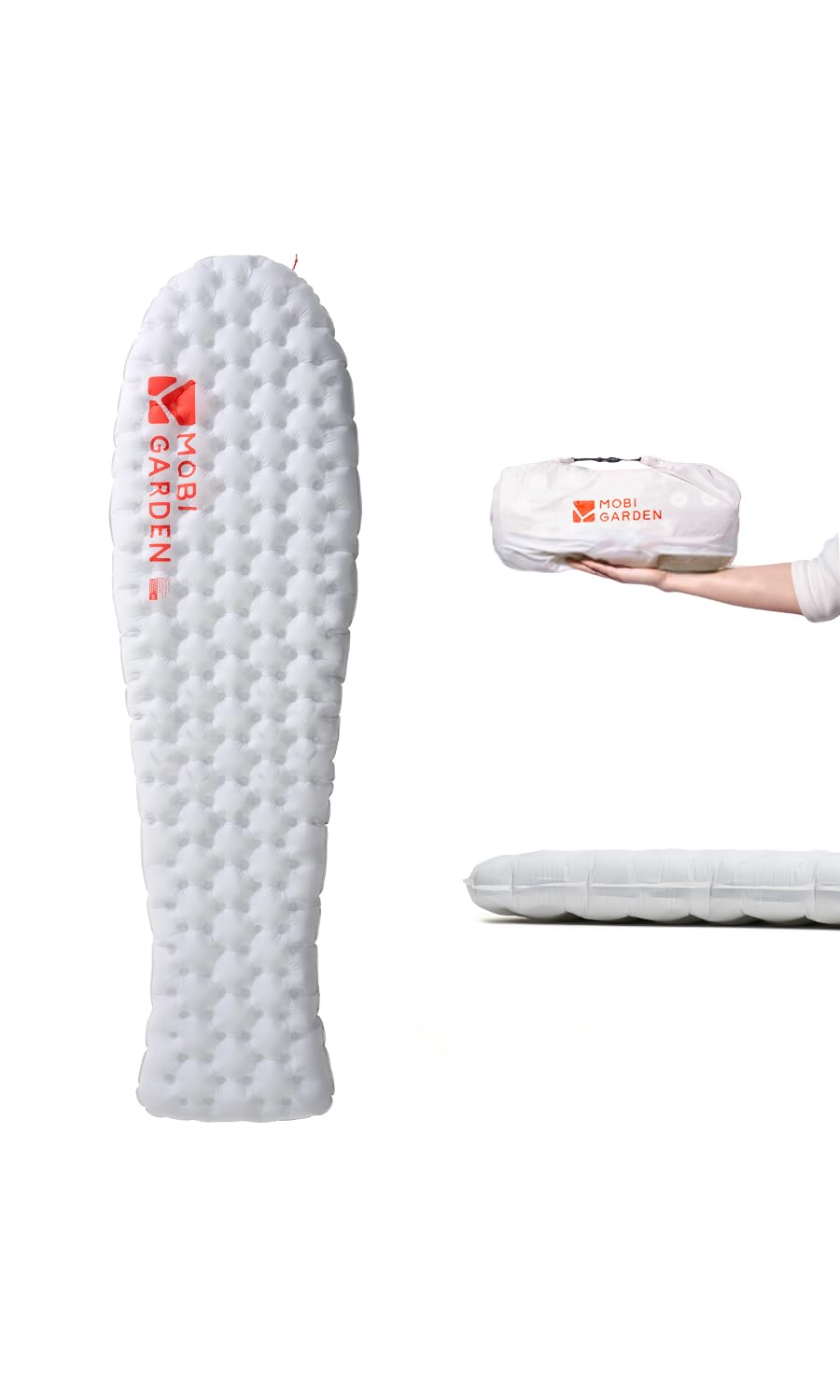
2. MOBI GARDEN Gennye Pro R3.9
The mummy-cut pad that brings the weight down without giving up the quiet.
If you count grams, the number is 15.7 oz against the 30 oz of the Big Agnes Divide Insulated above. The tapered mummy shape is how it gets there, trimming material around the edges while keeping warmth under your core. It rolls down to about the size of a water bottle, so it disappears into an ultralight pack with room to spare for food and layers.
The trick most foil-insulated pads get wrong is noise, and this one addresses it directly. A specialized internal noise-reduction coating dampens the crinkle that keeps tent-mates awake. Silicone anti-slip printing at the hip area stops you sliding off mid-night on a sloped pitch. Add a 3.15-inch thickness and that is a lot of comfort for a pad this light.
Mummy shape retention: the mummy taper and lighter fabric are the trade for that low weight — this is a pad for sleepers who stay put, not thrashers who sprawl. The 20D nylon with TPU lamination is durable for its class, but treat sharp ground with care.
Heavier than rivals: the flat multi-function valve lets you inflate and deflate fast, which matters most when you are breaking camp in the cold. A pump sack that doubles as the storage bag and a repair patch come in the box.
Pick for comfort: you are hiking long miles and want quiet, warm sleep at minimal carry weight.
Pass for ultralight: you want a wide, sprawling surface and are willing to carry more ounces for it.
3. Sleepingo Ultralight Sleeping Mat
The entry-tier mat that thousands of first-time backpackers cut their teeth on.
The specification that tells the story is the 73.5 by 21.5 inch inflated surface — a full-length pad you can stretch out on. At 2 inches thick, it cushions you over rocks and roots rather than fully hiding them. The camping-grade ripstop nylon shell is the kind of tough, tear-resistant fabric that handles rough ground and repeated packing.
Comfort is what carries this mat for most buyers, and the inflation is genuinely easy — it pumps up in just a few breaths and holds firm through the night. That matters when you are setting up in the dark after a long day. It packs small enough to compare with a water bottle, and the included carry bag keeps it tidy in your pack.
The honest catch is warmth: with no R-value listed, this is a summer and mild-weather mat, not a cold-weather pad. This is a summer and mild-weather mat, not a cold-weather pad — for frosty nights you want something with a real R-value, like the Hikenture R6.2 further down. The 2-inch thickness is also less protective than the 3.25-inch Big Agnes if you sleep on really gnarly ground.
Great first pad: budget-minded hikers and first-timers who want a full-length pad that inflates easily.
Avoid for cold: your trips run into cold weather and you need insulation under you.
4. Hikenture R6.2 Insulated Sleeping Pad

A genuinely warm pad that punches far above its tier on cold-weather insulation.
Here is the number that sets this pad apart: an R-value of 6.2, tested to the ASTM F3340-22 standard and built with a reflective aluminum film that bounces body heat back at you. Compare that to the 4.0 of the Big Agnes Divide Insulated — this pad is rated for significantly colder ground. For a mid-tier pad, that warmth is the reason to pick it.
Air retention is the thing owners trust it for, and the pad is built to hold its charge through the night. The 3.2-inch thickness with an airbag structure spreads your weight so you do not feel the ground through it. At 1.53 lb it still carries easily, and the 2-in-1 storage bag doubles as a 40L pump sack — three pumps and you are done.
High R-value warmth: noise splits opinion — the reflective construction is silent for some and noticeable for others, so it is a personal fit rather than a flaw. If a whisper-quiet pad is your priority, the MOBI GARDEN above targets that directly.
Bulky when packed: two repair patches and a TPU liner round out a package made to last, backed by a 12-month warranty.
Choose for chill: campers who sleep out in shoulder-season or genuinely cold conditions and want high warmth without the top-tier tag.
Not for gram counters: light sleepers who are bothered by any rustle under them.
5. ONETIGRIS Obsidian Ultralight Sleeping Pad

A roomy four-season pad with real warmth and a generous sleeping surface.
A 5.2 R-value makes this a genuine four-season pad — the reflective aluminum-coated TPU layers are there to hold heat in when the ground turns cold. The 74.4 by 24.8 inch surface is one of the roomier footprints here, giving you space to stretch out beyond the 20-inch narrow pads. It weighs 2.05 lb, so it carries without drama on anything but the most gram-obsessed trips.
Warmth and comfort are what this pad does best. The 20D nylon shell (a lightweight, durable fabric) with a firm 3.15-inch profile keeps you off the cold ground. The setup kit is thoughtful: an air pumping device fills it in 4-5 pumps, and two tear-repair patches come in the box for confidence. It rolls to a compact 11 by 5.1 by 5.1 inches.
The follow-up question is inflation reliability. Inflation is the weak spot in the feedback — some find it hard to fill and slow to stay firm, so check the valve seating before you head out. Durability and weight draw split views too, with some calling it tough and others wanting more. For the warmth per ounce, though, it is a sensible four-season option.
Go for stealth: cold-weather camping and backpacking where a wide, warm surface beats shaving ounces.
Skip for side sleepers: you want guaranteed fuss-free inflation — test the valve early and keep a patch handy.
6. NEMO Equipment Tensor Trail Regular
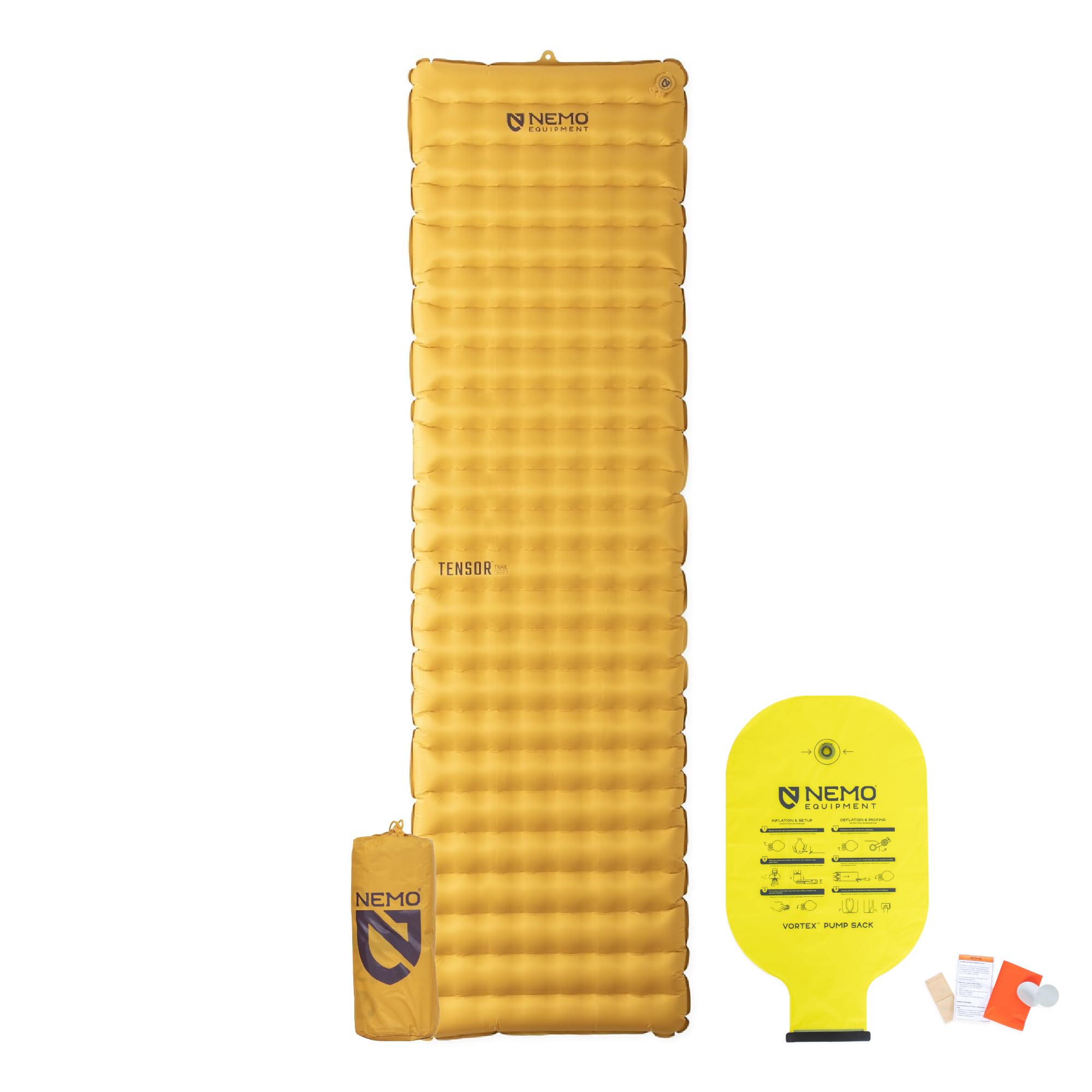
The plush-loft pad for warm-weather trips where quiet matters as much as weight.
Comfort is the whole pitch here, and it starts with 3.5 inches of stable, cushioned loft — more thickness than the 3.25-inch Big Agnes Divide Insulated. A single layer of floating Thermal Mirror metallized film provides quiet insulation, so the pad reflects warmth back without the crinkle that keeps tent-mates awake. Spaceframe baffles — low-stretch internal trusses — hold the surface flat and eliminate the springiness that makes inflatable pads feel unstable.
The nylon fabrics are bluesign approved and cut grams while resisting punctures and tears. That balance of low weight and real comfort is exactly what a summer or warm-weather backpacker wants. It fills from the included Vortex pump bag, so setup is fast at the end of a long hike.
One caution: this is a Trail model aimed at warm-weather and mild trips, so it is not the pad to reach for on frosty ground — the higher-rated Hikenture and ONETIGRIS pads cover that. The narrow 20-inch regular width also suits sleepers who stay put. If you need a wider surface for the same quiet build, the Tensor All-Season below is the roomier sibling.
Ideal summer pad: warm-weather backpackers and thru-hikers who want silence and a plush 3.5-inch surface.
Look past for winter: you sleep cold or sprawl wide — go warmer or wider instead.
7. NEMO Equipment Tensor All-Season Reg W

The wider, warmer Tensor that keeps the quiet night and adds shoulder room.
Where the Trail model runs 20 inches wide, this All-Season Regular Wide version gives you 25 inches — the same generous width as the Big Agnes Divide, at a listed weight of 590 g. Two layers of floating Thermal Mirror metallized film provide quiet insulation, doubling up the reflective warmth compared to a single layer. That combination of wide surface and quiet warmth is what makes it the pick for sleepers who move around at night.
The build quality is where this pad earns trust, and the Spaceframe baffles deliver stability without the springy wobble. The 3.5-inch loft cushions your hips and shoulders for a night that feels like a real mattress. The nylon fabrics are bluesign approved and take punctures and tears well, and the package includes a repair kit, stuff sack, velcro strap, and Vortex pump sack.
The honest limit is weight: 590 g is reasonable for a 25-inch insulated pad, but the 11.5 oz Xlite NXT and 15.7 oz MOBI GARDEN carry far less. For the quietness and room, though, it is a straightforward call for anyone who has ever rolled off a narrow pad.
Built for cold nights: side-sleepers and active sleepers who want a wide, quiet, warm pad for backpacking and camping.
Consider cheaper options: it carries more material than lean pads, so it suits comfort-first trips over pure gram-shaving.
8. Therm-a-Rest NeoAir Xlite NXT

The gram-shaver’s benchmark: 11.5 oz with a 4.5 R-value under you.
Two numbers define this pad. It weighs 11.5 oz (330 g) in the Regular Small size — lighter than any other pad on this list. And it carries a 4.5 R-value, warm enough for year-round adventures thanks to Reflective ThermaCapture technology that traps radiant heat while the Triangular Core Matrix construction limits convective heat loss. Warmth this high at this weight is the reason it is the standard for ultralight backpacking.
The 3-inch thick, baffled internal structure delivers stable support so your hips do not bottom out. Two features keep setup easy: a dependable WingLock valve for easy inflation and lightning-fast deflation, and an included pump sack, stuff sack, and patch kit. The dimensions are a compact 20 by 66 inches for the Regular Small — a short, narrow pad for sleepers who prioritize carry weight.
The catch is the fit and the price — the 66-inch length and 20-inch width suit still sleepers, not sprawlers, and the premium tier is a stretch for some. If you want more surface for the same warmth, the wider NEMO All-Season above gives you 25 inches. But on raw warmth-to-weight, nothing here tops this pad.
Made for thru-hikes: backpackers who will trade size and spend for the lightest possible warm pad.
Think again for quiet: you need a long or wide surface — this compact cut rewards still, small sleepers.
9. Therm-a-Rest NeoAir XTherm NXT

Expedition-grade warmth at a 7.3 R-value, built for the coldest nights out.
The highest R-value on this list sits right here at 7.3 — a pad rated for extreme conditions and trusted by alpinists and mountaineers who need warmth and durability in the backcountry. Reflective ThermaCapture technology traps radiant heat while the Triangular Core Matrix construction minimizes convective heat loss. Compare that warmth to the 4.5 of the Xlite NXT above and it is clear this is the pad for serious cold.
It is a foam-free NeoAir design that weighs 20 oz (570 g) in size Large and rolls up as small as a conventional 1-liter bottle. The bottom is a tough 70D ripstop nylon that resists punctures and stands up to extended expedition use. A rugged WingLock valve is easy to work even in freezing conditions, and the stuff sack uses a PFAS-free DWR coating that keeps gear dry.
Where this pad draws honest pushback is durability and value — a few report holes and question the premium tier for the price. Treat it with care on abrasive ground and carry the included patch kit. For a mountaineer heading into real cold, that 7.3 R-value is exactly what you are paying for.
Extreme cold rating: if your trips run into deep cold and you want class-leading warmth in a packable pad, this is the one to beat — just budget care for the shell.
Right for deep winter: mountaineers, alpinists, and winter campers who need maximum warmth from a packable pad.
Rethink for mild trips: you camp mild and want the durability guarantee of a heavier shell over the highest warmth number.
Know the Specs
R-Value — How Warm the Pad Sleeps
R-value measures how well a pad stops heat escaping into the cold ground — the higher the number, the colder the night it can handle. A pad rated around 4.0 suits three-season trips, while one rated 6.2 or 7.3 is built for winter and expedition use. Match the number to your coldest expected night, not your warmest.
Packed Weight — What It Costs Your Back
Packed weight in ounces is the everyday penalty you carry on every step of a trek. The lightest pads here sit near 11.5 to 15.7 oz, while a wide, well-padded option can run 30 oz. A pump sack adds almost nothing to the carry but saves you the breath of inflating by mouth.
Thickness and Width — How You Sleep
Thickness in inches decides how far your hips stay off rocks and roots; a 2-inch pad cushions lightly, a 3.25-inch to 3.5-inch pad cradles more. Width in inches keeps you on the pad — a 20-inch cut is narrow and easy to roll off, while a 25-inch pad gives room to move. Heavier sleepers often want both more thickness and more width.
Valves and Pump Sacks — Setup Speed
A dual valve or WingLock valve lets air rush in and out fast, so you can inflate and pack up without a fight. A pump sack — a bag you fill with air and roll — fills the pad in a few pumps and spares your lungs. Look for a pad that includes one if you plan to set up in the dark or the cold.
Common Questions
What R-value do I need for cold-weather backpacking?
How much does an ultralight air mattress really weigh?
Will an ultralight pad keep me warm sleeping on frozen ground?
How long does it take to inflate an ultralight sleeping pad?
Is a wider pad worth the extra weight for a side sleeper?
Are ultralight pads noisy to sleep on?
How do I pack an ultralight sleeping pad small enough for a backpack?
Can I use a three-season pad for winter camping?
Is a thicker pad better, or a lighter one?
What accessories should I bring with an ultralight pad?
The Bottom Line
For most backpackers, the winner is the Big Agnes Divide Insulated — a 4.0 R-value, 25-inch wide regular surface, and 30 oz packed weight make it the warm, stable, three-season pad that fits the widest range of trips. If every ounce counts, the MOBI GARDEN Gennye Pro R3.9 comes in at 15.7 oz versus that 30 oz and tunes out the crinkle. For cold ground without the steepest premium, the Hikenture R6.2 is the value pick that keeps you warm. And if your plans run into deep winter, the Therm-a-Rest XTherm NXT and its 7.3 R-value is the pad to reach for.
Match the R-value to your coldest expected ground and the packed ounces to your carry limit, then choose width and thickness. Buy for your coldest expected night and the pad covers every milder trip in between.
How we choose
We do not accept paid placement. Every pick is matched to a real buyer and a real use-case; we do not hands-on test units.
Sources
Specifications: manufacturer listings and product documentation. Review insights: verified customer reviews, as of November 2026. Pricing: not shown on this page (it changes often); check the current price via the retailer link.
As an Amazon Associate, Tactical Gear Guy earns from qualifying purchases. This does not affect which products we feature.