Specs are compiled from manufacturer listings and verified buyer reviews and can change over time — please confirm the key details on the product page before buying.
Pick the wrong card and your camera stops recording in the middle of a take. The fix is simpler than most people think: match the card’s video speed class to your camera’s recording bitrate. If you shoot 4K video or long bursts of raw photos, you need a V60 card like the SanDisk 128GB Extreme PRO UHS-II. If you mainly shoot stills and the odd clip, a well-priced V30 card does the job fine. This guide sorts nine UHS cards — the interface standard that lets a card move data fast enough for modern cameras — by what each one is genuinely good at.
This guide is built by comparing the manufacturers’ published specifications and the patterns across verified customer reviews, so you get each pick’s real strengths and trade-offs instead of marketing spin.
Every pick below is a UHS card worth owning; the trick is matching its bus type and video class to your camera.
Top Picks


How To Choose The Best UHS SD Card
Start with your camera, not the card. The SD slot in your body has a ceiling — a UHS-I slot cannot use the extra speed of a UHS-II card, so paying for UHS-II on a UHS-I camera buys you nothing in-camera. Check your manual for the bus type first, then shop inside that limit.
Match the video speed class to what you record
The video speed class is the guaranteed sustained write rate, measured in megabytes per second. A V30 card guarantees 30MB/s and is built for 4K UHD recording on most mirrorless bodies. A V60 card guarantees 60MB/s, which is the safer floor for high-bitrate 4K and for cameras that clear their buffer slowly. If your camera writes big files fast, a V30 card can fill up and stall while a V60 keeps going.
Read speed governs offload time, write speed governs burst depth
Read speed decides how long you sit waiting when you offload a shoot to your editing drive. Write speed decides whether the camera keeps up when you hold the shutter down or record a long take. Buy for the write number first, then enjoy the read number when you offload.
Capacity and the card-in-your-bag math
One big card is convenient until it fails and takes a whole shoot with it. Two medium cards let you split a job and swap mid-shoot. For raw stills and 4K video, lean toward 128GB or 256GB per card so a single failure never wipes an entire day of work.
Side-by-Side Comparison
| Model | Best For | Capacity | Max Read | Video Class | Amazon |
|---|---|---|---|---|---|
| SANDISK 128GB Extreme PRO UHS-II★ Best Overall | Pro video and burst shooting | 128 GB | 280 MB/s | V60 | Amazon |
| PNY 128GB Elite-X UHS-IEveryday Value | Everyday stills and 4K clips | 128 GB | 100 MB/s | V30 | Amazon |
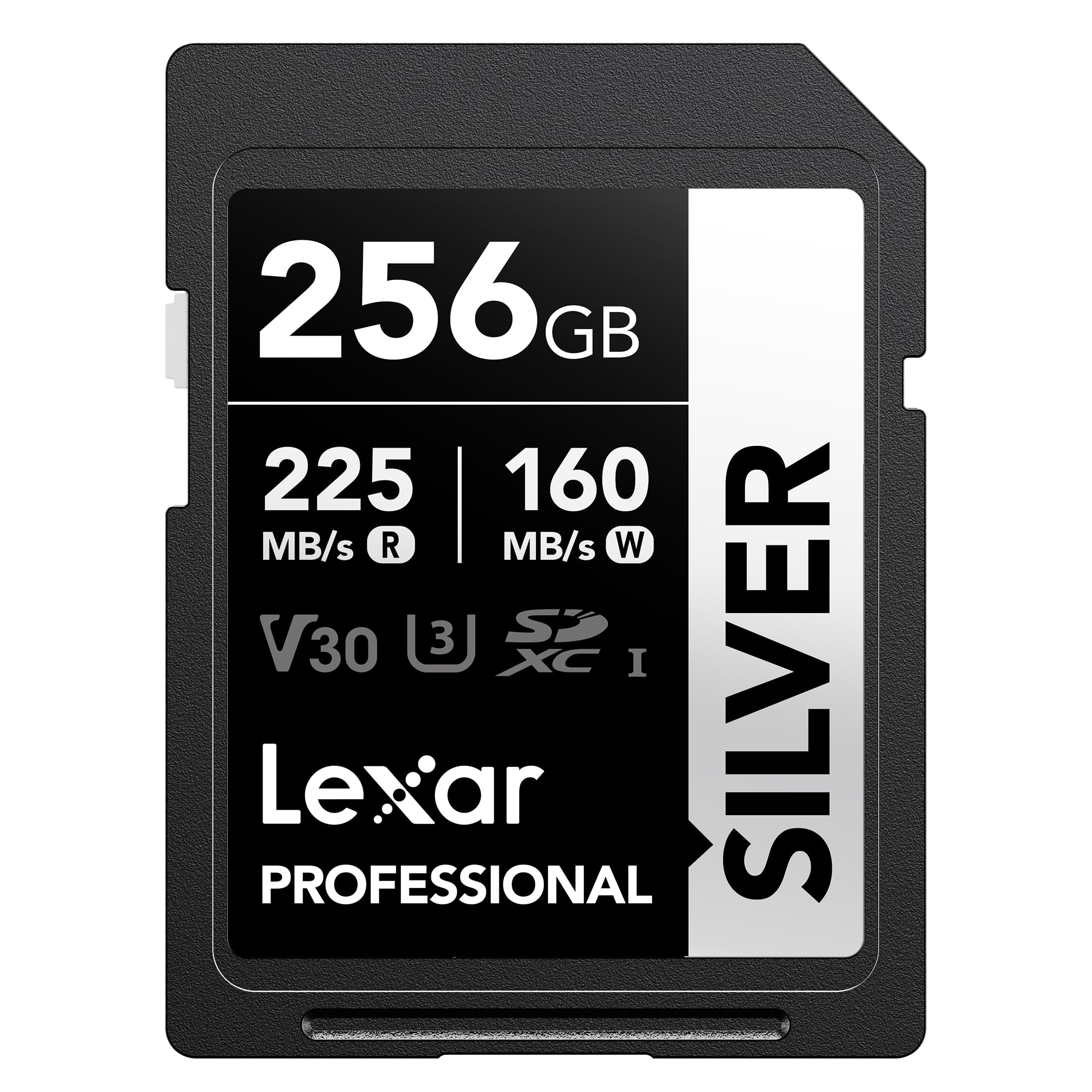
| Lexar 256GB SILVER UHS-ILong-Shoot Pick | Long shoots and value | 256 GB | 225 MB/s | V30 | Amazon |
| SANDISK 256GB Extreme PRO UHS-I | High-res stills and 4K | 256 GB | 200 MB/s | V30 | Amazon |
| Lexar 128GB Professional 1800x UHS-II | Fast offloads on UHS-II bodies | 128 GB | 280 MB/s | V60 | Amazon |
| Nextorage Japan UHS-II 256GB | Long 4K sessions | 256 GB | 280 MB/s | V60 | Amazon |
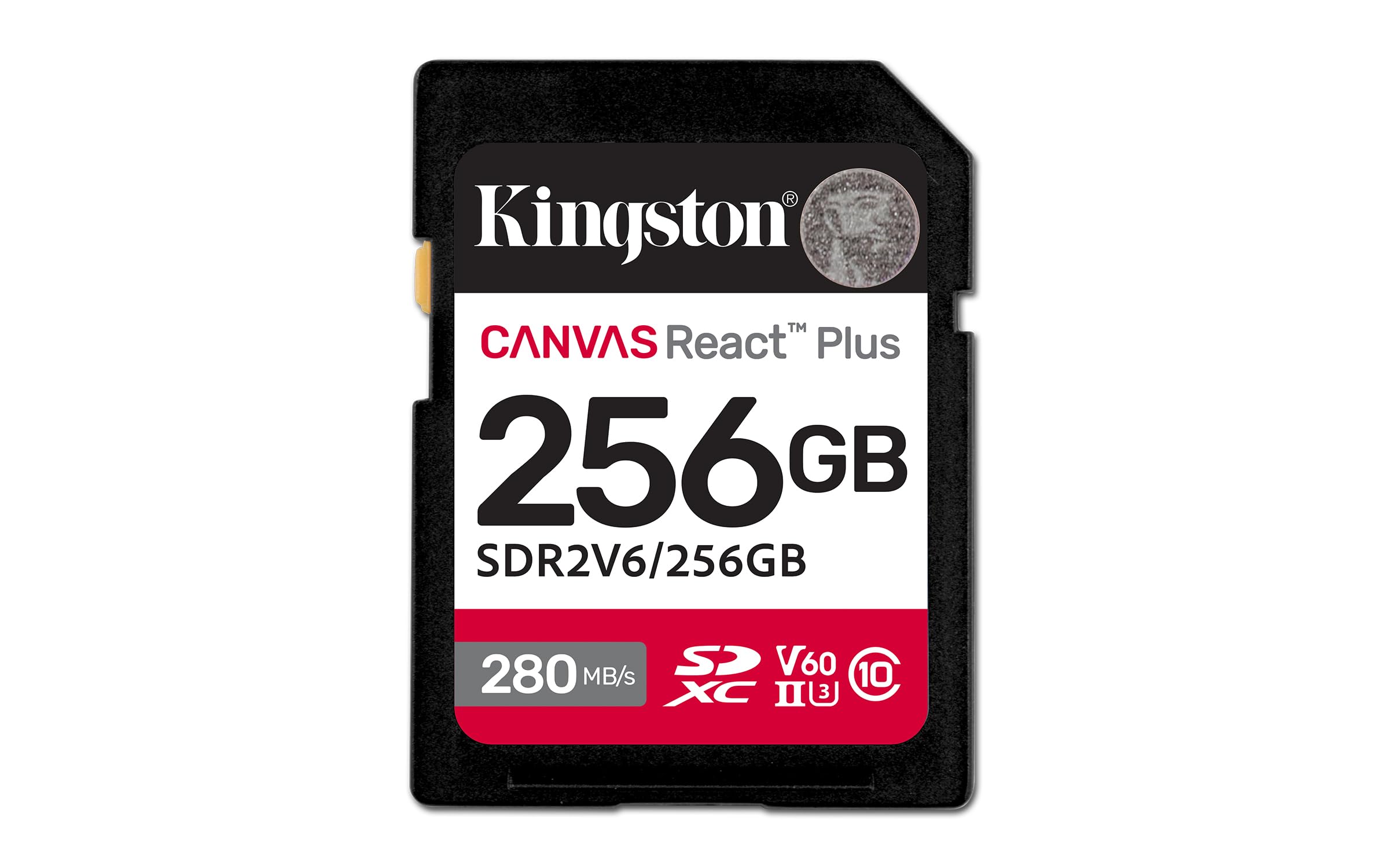
| Kingston 256GB Canvas React Plus | Rugged field use | 256 GB | 280 MB/s | V60 | Amazon |
| GIGASTONE 512GB 4K Pro Series | Budget-friendly storage | 512 GB | 170 MB/s | V30 | Amazon |
| GIGASTONE 1TB 4K Pro Series | Maximum capacity | 1 TB | 150 MB/s | V30 | Amazon |
Detailed Reviews
1. SANDISK 128GB Extreme PRO SD Memory Card
Our pick — 4.5+★ from 3,500+ verified ratings; the strongest balance of quality and price.
The card that keeps recording when your camera is writing hard and your buffer is full.
If you shoot cinema or high-frame-rate stills on a mirrorless or DSLR body, this is the one to reach for. It moves data at up to 280MB/s on the read side, so a full card offloads to your editing drive in a fraction of the time a UHS-I card needs. Its shot speed reaches 100MB/s, which is the number that keeps burst mode and long continuous recording running without the camera pausing to catch up.
The video speed class here is V60 — a guaranteed sustained write floor of 60MB/s. That is the class the manufacturer built it for recording 6K and 4K UHD on cameras that ask for it. It also carries the U3 and C10 labels, and the maker lists 6K (6144×3160) and 4K UHD (3840×2160) support. Compare that to the PNY Elite-X, a V30 card, and you are looking at a 2.0x step up in the guaranteed video write floor — V60 versus V30. For a camera that records high-bitrate footage, that gap is the difference between smooth capture and a dropped frame.
Reliability is the thing owners love most about this card, and it holds up across a range of bodies. Photographers use it in Fujifilm X-H2, Nikon D780 and 4K video rigs, and the consistency is what keeps them coming back. The card is also built to survive rough treatment — the maker lists it as drop proof, temperature proof, water proof, X-ray proof and magnetic proof. The catch is capacity: 128GB goes fast if you shoot raw bursts and 6K all day, so pack a second card for long assignments.
Why this card earns the top spot
- V60 video class guarantees a 60MB/s sustained write floor for high-bitrate recording
- Up to 280MB/s read speed cuts offload time versus UHS-I cards dramatically
- Rated drop, temperature, water, X-ray and magnetic proof for field use
- Stable in a wide range of professional bodies, from Fujifilm to Nikon to cinema rigs
What to keep in mind
- 128GB is a modest capacity if you shoot 6K or raw bursts all day
- UHS-II speed only pays off on a body with a UHS-II slot
Buy this if: you shoot professional video or fast continuous stills on a UHS-II camera and need a card that never stalls.
Think twice if: your camera is UHS-I only, because you cannot tap the extra speed.
2. PNY 128GB Elite-X SDXC Flash Memory Card
The budget-friendly standby that loads a full day of vlogging and stills without complaint.
For a point-and-shoot, a DSLR, or a mirrorless body used mostly for stills and the occasional 4K clip, this PNY is a sensible daily card. It runs UHS-I with a V30 rating and read speeds up to 100MB/s, so it clears a card of photos quickly on a transfer. On the read side it is the slower end of the group — the Lexar 1800x runs 280MB/s versus its 100MB/s, a 2.8x difference — but for stills work most people will not notice.
What wins buyers over here is the sheer practicality. It handles burst HD photography and 4K UHD videography, formats without fuss in DSLR bodies, and holds a comfortable amount for a full day of shooting. One thing to keep honest: the same card is reported as a touch slow for high-speed burst on demanding bodies like a 7D Mark II, so if you machine-gun the shutter, look at a V60 card instead.
At 5 g the card is light but you will never feel it anyway once it is seated in the camera. It is listed as magnet, shock, temperature and water proof, so a bit of weather on a walk-around day is not a worry. Best for the buyer who wants a dependable everyday card and does not need pro-level speed.
Where it shines: A genuine workhorse for stills-first shooters — V30, up to 100MB/s reads, and enough capacity for a full day of vlogging.
Honest limit: Burst speed can fall short on aggressive continuous shooting, and a small number of units have arrived with formatting or recognition trouble in specific devices, so buy from a source that stands behind returns.
Good match for: DSLR and point-and-shoot owners who want a reliable, budget-friendly card for stills and casual 4K.
Pick something faster if: you shoot high-speed bursts on a demanding body and need every frame to write cleanly.
3. Lexar 256GB SILVER SD Memory Card
Double the capacity of most cards here, with a read speed that makes offload day feel quick.
Two hundred fifty-six gigabytes on a UHS-I card is the story. It reads at up to 225MB/s and writes at up to 160MB/s, both strong for the UHS-I tier. It is V30 rated, so it handles 4K up to 60fps smoothly. For a wedding or event shooter who wants fewer card changes mid-job, this is a smart call — one card covers a lot of jpeg shooting without a swap.
Performance across different camera bodies is what earns the praise here. It works in everything from a Canon G7X Mark III to a DSLR to a computer card reader, and the responsiveness is consistent across all of them. It is built tough too — wear proof, drop proof, temperature proof, X-ray proof, shockproof, magnetic proof and vibration resistant.
Worth flagging honestly: video quality and long-term durability get more mixed reactions than pure speed. A few buyers report the card failing and losing client photos after a stretch of use, so it is worth pairing this with a backup card and a regular offload habit rather than trusting every shoot to one chip. It is not a reason to avoid it — the vast majority of buyers are happy — but it is a reminder to treat any single card as one part of a backup plan.
Why it earns a place: 256GB of UHS-I storage is a rarity in this lineup, and the 225MB/s read speed keeps offloads quick for a large card.
The trade-off to know: When you are trusting a big card with a whole shoot, always carry a backup — durability after long-term use is the one thing a minority of owners question.
Suited to: Event and portrait shooters who would rather carry one large card than swap mid-job.
Not the one for: High-bitrate video shooters who need a guaranteed V60 floor.
4. SANDISK 256GB Extreme PRO SD Memory Card

The highest-rated card in the lineup, and it earns the crowd favor with 256GB of dependable storage.
This is the crowd favorite — 4.5+ stars across 71,000+ owners, and that consensus starts with reliability. Wedding photographers and working pros talk about it as their go-to for the day of the event, which is the clearest sign a card will not let you down under pressure. It writes at up to 140MB/s and reads at up to 200MB/s, both solid for UHS-I.
The capacity is real. 256GB is double the 128GB version, and it lets a high-res or 4K shooter work multiple shoots without filling the card. The maker engineers it with QuickFlow Technology to reach 200MB/s on compatible devices, and V30 plus U3 cover 4K UHD recording. It is listed as temperature, water and X-ray proof, and the 2 g weight makes it essentially invisible in the slot.
At 2 g it is the lightest card on the list, though weight is honestly irrelevant on a card that never leaves the camera. Compatibility is the one aspect worth mentioning so you are not caught out — the card performs as promised in a wide range of bodies, but always confirm your camera’s slot type before buying. For most shooters, this is a straightforward, trustworthy pick.
What makes it a default choice
- 4.5+ star reliability record over tens of thousands of owners
- 256GB of storage doubles the 128GB version and keeps a shoot on one card
- 200MB/s read and 140MB/s write cover high-res stills and 4K video
- Used as a daily go-to by wedding and event photographers
Where it stops short
- UHS-I only, so it cannot tap UHS-II speeds on the faster bodies
- V30, not V60 — fine for most 4K, tight for high-bitrate recording
Lean this way if: you want the safest, best-loved UHS-I card for stills and 4K video and do not need UHS-II throughput.
Look at the other extreme if: your camera records at high bitrate and demands a guaranteed V60 floor.
5. Lexar 128GB Professional 1800x SDXC Memory Card

Shoots at 210MB/s and reads at 280MB/s — a card for cutting minutes off your workflow.
For a UHS-II camera body, this Lexar Gold Series turns offload into a quick job instead of a coffee break. It writes at up to 210MB/s and reads at up to 280MB/s. That write speed is a 2.1x step over the SanDisk 128GB Extreme PRO UHS-I card’s 100MB/s — if your body can use UHS-II, that gap shows up every time you hold the shutter down. V60 supports 4K UHD and Full HD, and the card carries Class 10, U3 and V60 ratings.
What wins people over is pure file speed. It suits an OM-5 or a Sony a7R III, and it clears buffer without delay at more than 10 frames a second in the field. The card is built to work from 32°F to 158°F and survive storage from -13°F to 185°F, and it backs that with a lifetime limited warranty.
The obvious follow-up: this is 128GB, so a heavy raw day can fill it. Pair it with a second card or plan to offload more often. On a body without a UHS-II slot, you get zero of the speed benefit, so check your camera’s bus type before spending on it.
Best reason to buy it: 210MB/s write speed keeps continuous shooting and high-bitrate capture flowing on UHS-II bodies, and the 280MB/s read cuts offload time to near nothing.
Watch for: 128GB is modest for raw-heavy days, and the speed premium is wasted on a UHS-I camera.
Reach for this if: you shoot a UHS-II body and want the fastest card-to-editor workflow in this lineup.
Pass it over if: your camera tops out at UHS-I and you would never see the extra speed.
6. Nextorage Japan SD Card UHS-II 256GB Memory Card

UHS-II speed and 256GB of headroom — the combo for long shooting days away from your laptop.
Two hundred fifty-six gigabytes on a UHS-II card moves this out of the worry-about-space tier. It writes at up to 170MB/s and reads at up to 280MB/s, so offloading a full card of high-res photos and heavy 4K just goes faster. That 170MB/s write is 1.7x the SanDisk 128GB Extreme PRO UHS-I’s 100MB/s, and the V60 certification guarantees the 60MB/s sustained floor high-bitrate 4K needs.
Durability is where this card earns its keep. The maker lists 10 toughness tests — waterproof to IPX7, dustproof to IP5X, 1.5m drop shockproof, 10N bend resistance, X-ray, UV, anti-magnetic and electrostatic resistance — plus a write-protect switch. That makes it a good field companion when you shoot outdoors in weather. It also includes free downloadable data recovery software for the accidental delete.
One caveat worth knowing: the card reads up to 280MB/s in the lab, but real-world reads depend heavily on your card reader and how the testing was done, so do not expect the same figure on a slow USB hub. Real-world reports describe it as a solid V60 card that runs stable without quality issues. If high-speed continuous shooting is your priority, the UHS-II interface here minimizes buffer clearing too.
Where it earns its keep: 256GB plus a V60 rating plus 10 ruggedness tests makes it the all-rounder for outdoor 4K shooters who want one card that lasts the day.
The honest limit: Your offload speed is capped by your card reader, so the 280MB/s figure is only as good as the rest of your chain.
Right for this buyer: landscape and event photographers who shoot outdoors and want UHS-II speed with the capacity to match.
Skip if: you shoot mirrorless video on a tight turnaround, where a faster write card gives you a wider margin.
7. Kingston 256GB Canvas React Plus SD Card
A 256GB UHS-II card built for Blackmagic rigs and high-frame-rate Sony bodies without a hitch.
If your camera body writes to a UHS-II slot and you need 256GB with a V60 rating, this Kingston is a serious contender. It reads at up to 280MB/s and carries a Class 10, U3 and V60 rating. It is the card people happily use instead of the hard-to-find SanDisk that a camera recommends. Fine for basic 4K, and reported to shoot 4K 60fps in a Sony A7CII with no trouble.
Value sits at the top of what buyers talk about here. It is fast enough for 10-bit video on an A6700 and rocks up as a straight replacement for expensive options. The card is listed as temperature proof, and at 256GB you get a full shoot’s worth of storage without a swap.
The one thing to watch honestly: a handful of owners mention the card ran hot and failed under sustained load, so if you push long continuous recording in an enclosed rig, keep an eye on temperature. For most shooting days, it runs reliably and fast. This is a solid mid-to-high pick for pros who want capacity and speed without paying the absolute top of the market.
Why it works: 256GB, 280MB/s reads and a V60 rating cover pro mirrorless and Blackmagic bodies comfortably, and the value is a genuine reason to choose it.
One note: Sustained heavy recording in tight enclosures is where a minor heat concern shows up, so give your rig some airflow if you are pushing long takes.
Best for: Hybrid shooters running UHS-II Sony bodies or Blackmagic rigs who want capacity and speed at fair value.
Consider elsewhere if: your work is long continuous recording where thermal headroom is critical.
8. GIGASTONE 512GB SD Card 4K Pro Series

Half a terabyte of V30 storage for shooters who would rather not swap a card at all.
Five hundred twelve gigabytes is the headline, and for a point-and-shoot, a DSLR or an HD camcorder it is a lot of room. This is a UHS-I card with a V30 rating and read speeds up to 170MB/s, and it handles 4K UHD video. It is a full-size SD (32mm x 24mm) in SDXC format, so it fits the standard slot on your camera or PC. The A1 rating (a small performance label for app and random access) adds a little responsiveness when you use it beyond a camera.
What earns the praise here is plain quality and reliability. It holds up in Canon bodies and Sony cameras and has performed well for high-quality 4K in daily use. It is listed as waterproof, temperature proof, X-ray proof, shockproof and magnetic proof, and comes with a mini case to keep the card out of harm’s way in a bag.
The honest trade-off is the UHS-I ceiling. A V30 card is built for 4K, not for the very highest-bitrate recording, so if you shoot demanding pro video, you will want a V60 card instead. And 512GB on one chip concentrates a lot of data in one place, so offload often and keep a second card. For a budget-conscious shooter who wants capacity above all, this delivers.
Where the value lives: 512GB of V30-rated SDXC storage at a budget-friendly tier is a lot of capacity for the money, and it is rated for water, temperature, X-ray, shock and magnetic resistance.
Where it plateaus: UHS-I and V30 cap the top-end write speed, so high-bitrate video shooters should look upward.
Match for: family shooters, hobbyists and camcorder owners who want a huge card and rarely change it.
Not for: pro video work where a V60 sustained floor is non-negotiable.
9. GIGASTONE 1TB SDXC Memory Card 4K Pro Series

A full terabyte on a single SD card — storage you basically stop thinking about.
One terabyte. If you have ever run out of room mid-shoot and had to juggle cards, this GIGASTONE takes that problem off the table. It reads at up to 150MB/s and is a UHS-I card with V30, A1 and Class 10 ratings for 4K UHD video. It is the same full-size SDXC format as the smaller GIGASTONE, and it comes with a mini case for storage.
Quality and function are what carry it. It works like an oversized flash drive in the camera, stores photos easily, and reads back without fuss. It is rated for water, X-ray, temperature and shock resistance. The 5-year limited warranty on the card is note for a capacity this large.
The real question is whether one terabyte on a single card is the right structure for your work. All your eggs sit in one basket, so back up promptly. And as with its 512GB sibling, V30 and UHS-I cap the sustained write speed, so it is built for stills and standard 4K rather than high-bitrate pro recording. For the price tier it is a lot of storage in one place, but pair it with a backup routine.
The draw: A full 1TB of V30 storage with a 5-year limited warranty and A1, Class 10 ratings — capacity that eliminates mid-shoot card swaps.
The caveat: Putting an entire project on one card concentrates risk, and the UHS-I, V30 ceiling keeps it out of the high-bitrate pro tier.
Go for it if: you want one card you can leave in a travel or hobby camera for weeks without rotating.
Steer clear if: you shoot professional video where the highest sustained write speed matters.
Know the Specs
UHS-I vs UHS-II: the bus interface
UHS stands for Ultra High Speed, the electrical interface that determines the maximum data rate your card and camera can pass between them. UHS-I tops out lower than UHS-II, and the two are physically the same card shape, so a UHS-II card fits a UHS-I slot but runs at the slower rate. If your camera body is UHS-I only, you gain nothing from buying a UHS-II card. Check your camera manual for the bus type before choosing.
Video speed class: V30 and V60
The video speed class is the guaranteed minimum sustained write rate. V30 guarantees 30MB/s and V60 guarantees 60MB/s. A camera that records high-bitrate 4K writes big files fast, and a V30 card can fill its buffer and stall. A V60 card keeps a steady floor of 60MB/s, so high-bitrate recording stays smooth. If your camera tops out at 4K UHD, V30 is often enough. If you record 6K or very high bitrate, aim for V60.
Read speed and write speed
Read speed is how fast data moves off the card into your computer, so it sets how long a full-card offload takes. Write speed is how fast the camera saves files to the card, so it sets burst depth and whether a long recording stalls. Buy for the write number if you shoot video or bursts; enjoy the read number when you offload to your edit drive.
Capacity in gigabytes and what it buys
Capacity is how much you can store before a card swap. Raw stills and 4K video eat space quickly, so a 128GB card may cover only part of a heavy day. A 256GB card splits the difference. A 512GB or 1TB card reduces swaps but puts more data on one chip, so pair big capacity with a regular offload and a backup card.
Common Questions
Will a UHS-II card work in my UHS-I camera?
Do I need a V60 card for 4K video?
Is a UHS-II card wasted if my camera has only a UHS-I slot?
What is the difference between read and write speed on an SD card?
How many raw photos can a 128GB SD card hold?
Should I buy one big card or two medium cards?
Does card capacity affect write speed on a UHS card?
Will a V60 card make my existing UHS-I camera record faster?
What does the A1 rating on an SD card mean?
The Bottom Line
The best uhs sd card for most shooters is the SanDisk 128GB Extreme PRO UHS-II. Its V60 rating and 280MB/s read speed keep high-bitrate recording and long bursts running, and its reliability record is why pro bodies get filled with it. If you want the best-loved UHS-I card with huge reach and 256GB of headroom, the SanDisk 256GB Extreme PRO UHS-I is the crowd favorite. And for a rugged UHS-II card that runs outdoors and shoots all day, the Nextorage 256GB UHS-II is the one to reach for. If you would rather spend on capacity than speed, the budget-friendly GIGASTONE cards are worth a look — but pair any large single card with a backup and a regular offload.
How we choose
We do not accept paid placement. Every pick is matched to a real buyer and a real use-case; we do not hands-on test units.
Sources
Specifications: manufacturer listings and product documentation. Review insights: verified customer reviews, as of November 2026. Pricing: not shown on this page (it changes often); check the current price via the retailer link.
As an Amazon Associate, Tactical Gear Guy earns from qualifying purchases. This does not affect which products we feature.