Specs are compiled from manufacturer listings and verified buyer reviews and can change over time — please confirm the key details on the product page before buying.
Buying the wrong type of electric saw wastes a whole Saturday — the blade wanders, the motor bogs down in a 2-inch board, and the wrong form factor simply cannot make the cut you bought it for. The thing most people get wrong is thinking a bigger amp number means a better saw. What actually decides your result is whether the saw’s type matches the job: a reciprocating saw for demolition and pipe, a circular for long straight rips, an oscillating multi-tool for flush cuts and sanding, a miter saw for repeat angles. Match the type first and the spec second, and the cut follows.
This guide is built by comparing the manufacturers’ published specifications and the patterns across verified customer reviews, so you get each pick’s real strengths and trade-offs instead of marketing spin.
Saw types do completely different jobs, so this breakdown groups them by the cut they are built to make, from demolition blades to angle-perfect trim work. Below are the saw types that hold up on real job sites and weekend projects alike.
Top Picks


How To Choose The Best Type of Electric Saws
Start with the cut, not the motor. A saw type is really a cutting motion: reciprocating blades push back and forth, circular blades spin through long straight lines, miter saws drop down at set angles, and oscillating tools buzz a small blade side to side for flush and detail work. Pick the motion your most common job needs, then compare the numbers under it. Trying to pick a favorite type before naming the job is how people end up with a shelf of tools that each do one thing badly.
Match the blade and stroke to the material
For demolition, pruning, and cutting pipe or studs in place, a reciprocating saw wins because the blade reaches into tight spots a spinning disc cannot. Its stroke length — the distance the blade travels each pass — sets how fast it eats material, and the DEWALT at position 1 runs a 1-1/8″ stroke with an 8-inch blade. For long straight rips and crosscuts in sheet goods, a circular saw is the correct tool, and blade size plus bevel range decide how deep and how angled you can go.
Read the amp number correctly
Amp rating tells you how much current the motor draws, which loosely hints at how much load it can carry before it stalls. It is not a direct score of cutting speed. A 15-amp motor with a well-geared drive can outlast a bigger motor in a badly geared housing. Look at amps alongside speed (SPM or RPM), blade size, and how the tool is geared.
Side-by-Side Comparison
| Model | Best For | Saw Type | Motor | Weight | Amazon |
|---|---|---|---|---|---|
| DEWALT DWE305 Reciprocating Saw★ Best Overall | Demolition and pipe cuts | Reciprocating | 12 A | 8 lb | Amazon |
| JORGENSEN Corded Oscillating Multi ToolMost Versatile | Flush cuts and sanding | Oscillating multi-tool | — | 4.71 lb | Amazon |
| SKIL 5180-01 Circular SawBudget Champion | Budget straight rips | Circular | 14 A | 7.2 lb | Amazon |
| Ryobi CSB135L Circular Saw | Laser-guided cuts | Circular | 14 A | 7.4 lb | Amazon |
| SKIL SPT44A-00 Reciprocating Saw | Low-vibration demo work | Reciprocating | 13 A | 9 lb | Amazon |
| SKILSAW SPT67WL-01 Sidewinder | Light professional circular | Sidewinder circular | 15 A | 8.6 lb | Amazon |
| Metabo HPT C10FCG2 Miter Saw | Repeat angle cuts | Compound miter | 15 A | 24.2 lb | Amazon |
| SKILSAW SPT78W-01 Worm Drive | Relentless framing power | Worm drive circular | 15 A | 18.5 lb | Amazon |
| Makita 5377MG Hypoid Saw | Hardwood and daily framing | Hypoid circular | 15 A | 13.2 lb | Amazon |
Detailed Reviews
1. DEWALT DWE305 Reciprocating Saw
Our pick — 4.5+★ from 3,500+ verified ratings; the strongest balance of quality and price.
The demolition saw that chews through studs and pipe without a stall.
If you tear things out more than you build them, this is the saw type to buy. The DEWALT DWE305 puts a 12-amp motor behind a 0-2,900 SPM stroke rate — SPM meaning strokes per minute, how many back-and-forth passes the blade makes each minute — and pairs it with a 1-1/8″ stroke length. Stroke length is the distance the blade travels per pass, so a 1-1/8″ throw means each pass bites a big scoop of material instead of nibbling at it. That combination is why it swallows demolition work that makes smaller saws whine.
The 4-position blade clamp is the feature that separates it from a plain reciprocating saw. It lets the blade rotate into several orientations so you can lay the tool flat and cut flush against a surface, or reach into a corner a fixed clamp could never touch. Blade swaps are keyless and lever-action, so you go from wood blade to metal blade without hunting for an Allen key. The variable speed trigger gives you instant control — feather it for a clean start in plastic, squeeze hard for full-speed lumber. It is a 19.38″ long, 8-pound tool, so expect some heft in the hand during overhead or long one-handed cuts.
What has built this saw its following is how long it keeps working, not how it looks on day one. It carries 4.5+ stars across 3,900+ ratings, and owners keep citing the same reason: it survives years of demolition. Plenty of owners run it through demolition and heavier remodeling without it quitting. The honest trade-off is weight — 8 pounds of saw wants two hands on tough cuts, and long overhead sessions will tell your shoulders about it. That is a form-factor cost of reciprocating saws, not a defect here.
high torque output
- 12-amp motor at 0-2,900 SPM powers through demolition-grade material
- 4-position blade clamp open up flush cutting a fixed clamp cannot do
- Keyless lever blade change keeps swaps fast between wood and metal
heavy at arm’s length
- 8-pound body is a two-hand tool on long or overhead cuts
- Corded, so you need a nearby outlet or extension run
framing and demo: anyone whose jobs involve cutting out, cutting off, or cutting into things — studs, pipe, pallets, shrubs.
corded only: you mostly make finished straight cuts in sheet goods; a circular saw is the correct type for that instead.
2. JORGENSEN Corded Oscillating Multi Tool
One buzzing blade that flush-cuts, scrapes, sands, and sneaks into corners.
This is the saw type you grab when a spinning blade physically cannot reach the cut. An oscillating tool swings a small blade in a tight arc instead of spinning it, so you can lay it flat on a floor or press it against a baseboard and slice flush. The JORGENSEN runs a 5° oscillating angle, which the maker claims is 4-5 times more efficient than a standard oscillating tool. It adjusts across 7 speed positions from 8,000-16,000 OPM — oscillations per minute, the number of side-to-side swings each minute — so you can dial gentle for plastic and full speed for trim.
The kit is where it earns its keep. You get 16 pieces including a 1-5/16″ flush-cut wood blade, a 1-5/16″ bi-metal flush-cut universal blade, a 2-11/16″ flush-cut wood blade, a 3-1/2″ flush-cut blade, a scraper, a sanding pad, and 10 sanding papers across 60, 80, 120, 180 and 240 grit. That is a cutting tool and a detail sander in one box. Blade changes are quick-release, and there is a locking bracket that guards your fingers during the swap. At 4.71 pounds it is the lightest saw here by far — the SKIL reciprocating saw at position 5 weighs 9 pounds, so this slips into a toolbox and overhead work far easier.
variable speed control: undercutting door jambs, trimming baseboard, and cutting a notch in installed cabinetry are all flush-cut jobs a circular saw cannot attempt. The universal fit system also takes most brands of blades, so you are not locked into one accessory line.
blade changes slow: buyers report that while the tool is solidly built, some have seen it burn up after 2 hours of use. Treat it as a light-to-medium duty tool for household projects rather than a continuous-run production machine, and let it rest during long sanding sessions.
trim and cutouts: you own a home and keep meeting cuts where nothing else fits — flush trimming, plunge cuts in flooring, sanding in corners.
heavy daily use: you need to cut framing lumber all day; that is reciprocating or circular territory.
3. SKIL 14 Amp 7-1/4-Inch Circular Saw – 5180-01
The entry circular saw that gets straight cuts done without drama.
A 14-amp motor in a circular saw is the classic workhorse pairing, and SKIL rates it more powerful than the older 5480 while trimming 15% of the weight. That weight drop is a real thing if you spend an afternoon cutting sheet goods — the saw is 7.2 pounds, and your arm notices the difference near the end of a long rip. The 51-degree bevel with a positive stop at 45 degrees opens up angled cuts, and the positive stop means you do not have to eyeball a common 45 when you hit it. A 20-tooth carbide blade comes in the box, so it is ready to cut the first day.
The dust blower is one of those small features you only appreciate when it is missing. It keeps the sawdust off your cut line, which keeps the blade on the pencil mark instead of floating blind. Blade changes are tools-light and simple enough that a first-time circular saw user can manage them. A 4.5+ star consensus sits behind this saw, and owners keep praising its power and ease of use for the price rather than extras.
The honest catch is where this saw sits in the durability pecking order. Cutting performance and build quality draw more mixed notes than its raw power does, so treat it as a solid budget saw rather than a lifelong pro tool. For weekend deck boards, garden projects, and trim, that is a fair trade. For daily job-site abuse, the premium circulars below earn their keep.
deck and framing: the first-time circular saw buyer or the homeowner who needs a reliable saw for occasional and weekend projects.
fine finish work: anyone cutting every day for a living — the professional-grade circulars here are built for that pace.
4. Ryobi CSB135L Circular Saw

A circular saw that shines a line where the blade is about to go.
The Exactline laser is the whole pitch here, and for good reason. It projects a beam on the workpiece that shows where the blade will cut, so you line up the beam rather than leaning over the housing to catch the blade notch. For a homeowner cutting the first set of shelves or a garden gate, that visual aid cuts down mis-cuts. The saw pairs that with a 14-amp motor and a 7-1/4″ blade, the standard circular setup for framing and sheet goods. It is 7.4 pounds, and an adjustable bevel lets you angle cuts to suit the project.
What the owner feedback keeps returning to is steady performance rather than raw flash. The motor holds speed through thick stock — owners mention that it doesn’t bog down on 2X8s. A 2×8 is heavy stock for a circular saw, and holding speed through it is exactly the test that separates a competent saw from a weak one. Handling gets steady approval too, and the value story is good for a corded saw of this amp class. The laser guide does the job of a speed square marking session and, unlike a pencil line, it is always right where your blade is pointing.
adjustable bevel ease: users describe it as easy to maneuver, which is what matters when you are walking a long straight cut with one hand steadying the shoe. The laser alone is worth considering if your cuts have historically wandered away from the pencil line.
thin base plate: the saw itself is straightforward and no-frills, so you are buying the laser guidance and the 14-amp muscle, not extra accessories. The included case keeps it tidy between jobs.
weekend projects: the DIYer who wants a cut line glowing on the board instead of squinting along the blade.
prolonged cutting: you need beveled precision at extreme angles on professional framing runs — the higher-tier circulars handle that demand better.
5. SKIL SPT44A-00 Reciprocating Saw
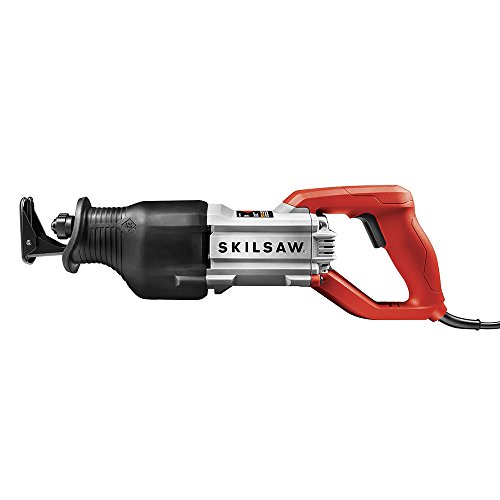
All the demolition bite of a recip saw, with most of the shake engineered out.
Reciprocating saws are famous for punishing vibration, and that is the exact problem SKIL set out to solve here. Its patented Buzzkill technology is built to cut vibration up to 35% versus the competition, per the maker. If you have ever spent ten minutes cutting out a cast-iron drain and felt your hands buzzing an hour later, that percentage matters. A 13-amp motor supplies plenty of power for tearing through stud walls, PVC, and framing cuts, and a variable speed trigger lets you ease into materials like plastic pipe without cracking them.
The blade system is built for hard use. A tool-less clamp holds blades securely under jobsite abuse, so you are not fighting a worn clamp mid-cut. The oversize trigger lets you grip and cut from several positions — useful when you are upside-down under a sink or reaching into a stud bay. The saw is an 8-inch blade model and it does come at some weight: at 9 pounds it outweighs the JORGENSEN multi-tool here, which weighs 4.71 pounds. That heft is the price of the bigger motor and the vibration control.
What wins people over is the caliber of the cut versus the price bracket. Review consensus credits it with pro-grade power and multi-year durability, and singles out the vibration control as working as advertised. It carries 4.5+ stars across 900+ ratings, with vibration control the most-praised feature. The one thing to size for yourself is weight — a few note it is on the heavy side, so plan two hands for long overhead sessions. That is consistent with what a powerful recip saw is, and it is not a fault.
demolition work: remodelers and DIYers cutting out old work who want less hand-aching vibration while they do it.
tight spaces: your cutting is all light and occasional, and a lighter, simpler saw would serve you just as well.
6. SKILSAW SPT67WL-01 15 Amp 7-1/4 In. Sidewinder Circular Saw

The pro circular saw that keeps its cool and stays out of your way.
Heat is what kills circular saw motors, and SKILSAW attacks it head-on with a Dual-Field motor designed to dissipate heat so the motor runs cooler and lasts longer. That is the difference between a saw you finish a framing job with and one that smells hot at lunchtime. The 15-amp motor drives demanding cuts, and at 8.6 pounds the maker calls it the lightest professional circular saw in its class. For a pro-grade tool, that weight is genuinely comfortable to carry up a ladder.
The bevel capacity is where it beats its budget sibling. This saw swings a 56-degree bevel with a positive stop at 45 degrees — against the SKIL 5180-01 at position 3, which offers a 51-degree bevel. That extra range means steeper angled cuts on rafters and trim. A 10-foot cord is long enough you are not constantly moving an extension cord, which keeps the saw from hanging up on sheet goods. The 15-amp motor’s current rating sits above the DEWALT reciprocating saw’s 12 A, so it carries more motor muscle than that demolition tool.
true worm drive power: the magnesium platform keeps it light for the power, and the Dual-Field cooling means longer cutting sessions without a forced rest. Owners praise the smooth, buttery cuts and the solid build — a tool that behaves like a pro saw for everyday jobs.
loud under load: durability notes are more mixed than the raw quality praise, so treat it as a strong mid-tier pro saw, not the last circular you will ever own. The lighter-gauge body is part of why it carries so easily.
framing crews: you want a pro-class circular with real bevel range that will not fatigue you during a day of framing.
light duty: you need maximum cut depth in hardwoods — that calls for a worm drive or hypoid build.
7. Metabo HPT C10FCG2 Compound Miter Saw
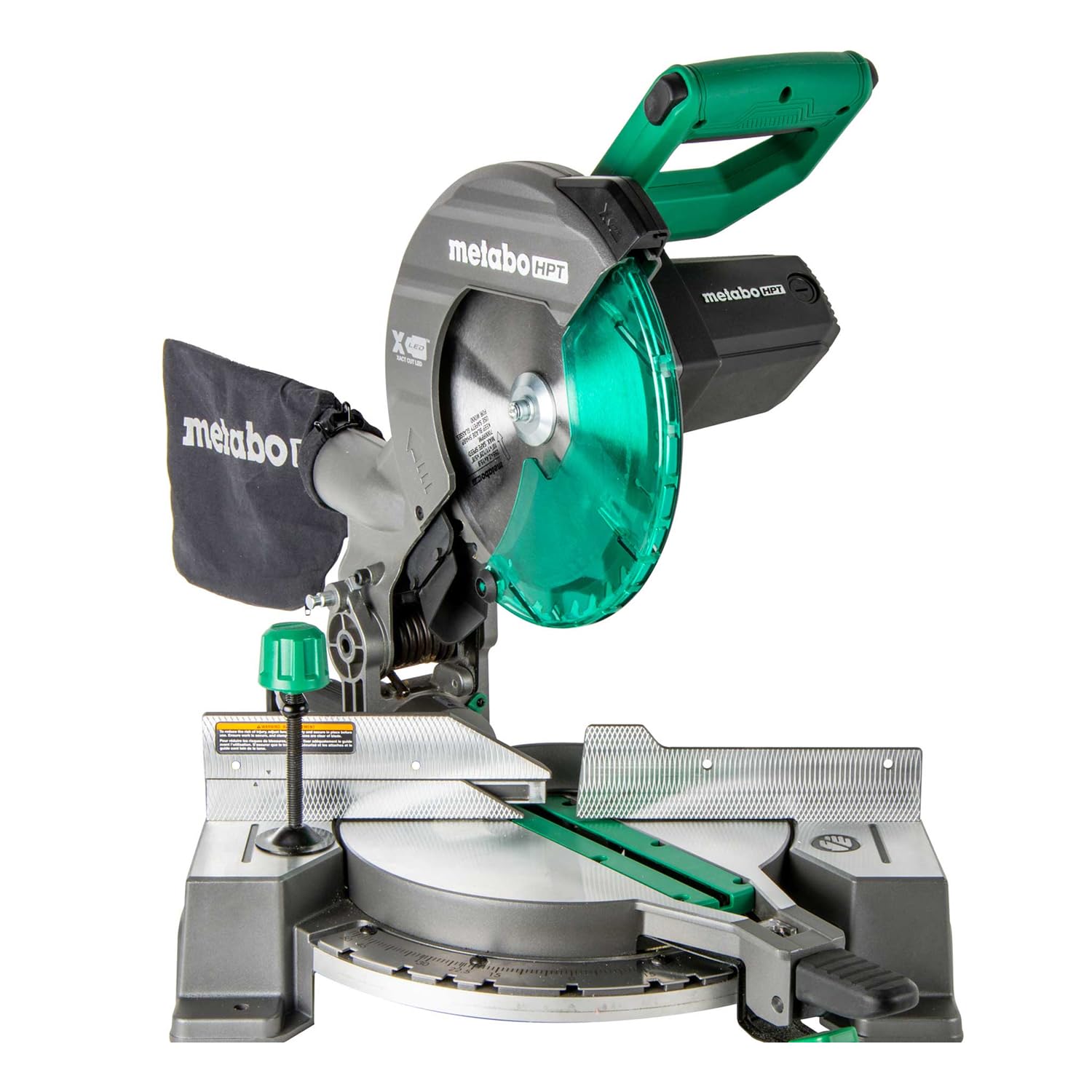
The bench saw that repeats the same angle cut after cut after cut.
If your project is trim, baseboard, framing, or anything measured in repeated angles, a compound miter saw is the type to own. This Metabo HPT runs a 15-amp motor at up to 5,000 RPM no-load speed, and it swings a 10-inch blade. The draw is repeatability: set the angle once, and it holds while you feed board after board. The miter scale is improved for accurate adjustments, and the vice clamping system secures the workpiece so the stock does not creep mid-cut. That clamping is what keeps a cut square when you are feeding a long board one-handed.
The angle range is deep for the price tier. It covers 0-52° miter left and right plus an adjustable bevel of 0-45° left, with bevel stops for precision. That covers crown molding and picture-frame style work without fussing. At 24.2 pounds it is the heaviest saw in this list, and that weight is exactly why it stays put — a miter saw that walks across the bench is useless. It is compact enough to carry to a site or stash under a bench. A 24T tungsten carbide blade comes included, so it is ready to test-cut from the start.
This miter saw delivers what the feedback calls like a high-dollar brand name for a mid-range buy — cutting 2×6 lumber and composite boards clean. It comes with a 5-year Metabo HPT warranty, which is a long safety net on a power tool. The single-bevel limitation is the honest line: bevels go left only, so if you frequently cut both-sided bevels, you will want a dual-bevel model.
trim and decks: anyone making repeated 45s and miters — trim work, deck framing, and simple furniture builds.
crown molding: your work regularly calls for bevel cuts on both sides of a piece.
8. SKILSAW SPT78W-01 Circular Saw

A worm drive built to keep pulling torque through whatever you feed it.
Worm drive saws put the blade on the left and route the motor through a geared drive, and that gearing is why they have framed American homes for generations. This SKILSAW runs a high-torque 15-amp Dual-Field motor built for relentless power, with precision-machined worm drive gears meant to last. An 8-1/4″ blade sits on it — a size up from the standard 7-1/4″ circulars, which is the point for deep framing cuts. The 60-degree bevel opens up wider angled cuts with stops at 0° and 45°.
At 18.5 pounds this is a heavy saw, and the worm drive configuration puts more of that mass forward, which helps it track through thick lumber rather than skipping. An anti-snag lower guard keeps small cut-off pieces from catching the guard, so you can finish a cut cleanly instead of fighting it. Die-cast aluminum motor and gear housings add durability. Customers note that it powers through even tropical hardwoods — the kind of stock that makes lesser saws stall and smoke.
aluminum worm drive build
- High-torque 15-amp motor holds power through hard, thick lumber
- 8-1/4″ blade gives extra cut depth over a 7-1/4″ saw
- Machined worm drive gears and die-cast aluminum housings for long life
heavy to carry
- 18.5 pounds is a lot to lift one-handed up a ladder
- Cutting depth gets mixed feedback — some find it cuts deep, one notes it struggles against rip boards
framing and siding: you frame, cut heavy hardwoods, or want a saw with the torque to keep going when the material fights back.
overhead work: you are doing light trim and sheet goods — a lighter 7-1/4″ sidewinder handles that with far less arm strain.
9. Makita 5377MG 7-1/4″ Magnesium Hypoid Saw
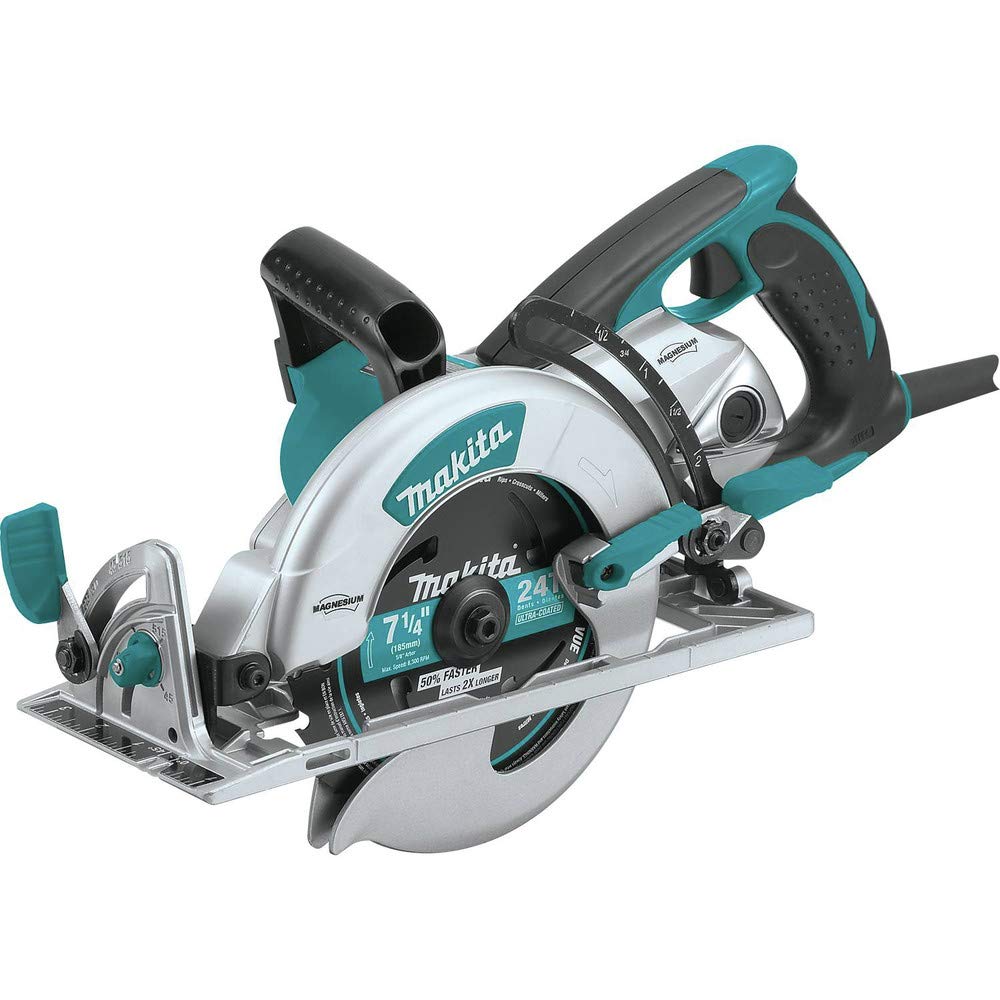
Hypoid gearing and a magnesium body for the long, straight, controlled cut.
Hypoid gearing is the middle ground between a sidewinder and a worm drive — it drives the blade through angled gears for more torque than a direct-drive circular, without the full bulk of a traditional worm drive. Makita wraps that drive in magnesium components, which keep the saw at 13.2 pounds even with the heavier hypoid build. That is lighter than the SKILSAW worm drive at position 8, which weighs 18.5 pounds. For a saw with this much torque, that matters when you are cutting overhead or walking a run of rafters.
The maintenance story is the oil-bath technology: a built-in fan and sealed gear housing keep 100% oil surface coating on the gears, which means less maintenance over the tool’s life. Heat-treated hypoid steel gears are made to resist the premature wear that traditional bronze-alloy worm drive gears can suffer. Cutting capacity reaches 2-3/8″ at 90°, with positive stops at 22.5°, 45°, and 51.5°. A 15-amp motor gives it strong power for hardwood, and the reinforced power cord is built to take jobsite abuse. A 1-year warranty covers it.
Owners describe the cut as smooth and, crucially, easy to control — it tracks straight down the line without the blade wandering. That control is the whole point of the hypoid layout, and it makes hardwoods and long rips feel predictable. The weight is where expectations separate from reality: at 13.2 pounds it is not a featherweight, and a few find it heavy, while durability gets a more mixed read than the quality praise. That is a fair warning to size against your own strength and how much you cut.
framing and ripping: the woodworker or pro who wants torque and straight tracking in hardwoods with less physical lifting than a full worm drive demands.
budget buyers: you need featherweight portability or expect zero maintenance over a very long service life.
Know the Specs
Amps and motor type
Amps measure how much current the motor draws, which hints at load capacity — not top speed. A 15-amp motor is the ceiling on most circular saws here, while the DEWALT reciprocating saw runs 12 amps. What matters alongside amps is how the saw is geared: a worm drive or hypoid routes that current through angled gears for more sustained torque than a direct-drive sidewinder, so a 15-amp worm drive pulls harder in thick hardwood than a 15-amp sidewinder. Match the motor type to the material you cut most, not just the amp number.
Bevel range and blade size
Bevel is the angle the saw can tilt its blade to, and a wider range means more angled cuts. The SKILSAW SPT67WL-01 offers 56 degrees, and the SKIL 5180-01 at position 3 offers 51 degrees. Positive stops — fixed detents at common angles like 45 degrees — let you lock a frequent angle without eyeballing it. Blade size sets both cut depth and how big a bite each pass takes: 7-1/4″ is the standard framing size, 8-1/4″ gives extra depth, and 10″ is miter-saw territory. A larger blade cuts deeper but asks for more motor and more care.
Common Questions
Which saw type should I buy first as a homeowner?
Will a 7-1/4-inch circular saw cut through a 2×4 in one pass?
What is the difference between a worm drive saw and a sidewinder?
Can an oscillating multi-tool replace a circular saw?
How long does a reciprocating saw blade last?
Do I need a miter saw if I already own a circular saw?
What does SPM or OPM mean on a saw spec sheet?
Are corded electric saws more powerful than battery ones?
Does a laser guide on a circular saw really help?
How much does saw weight matter on the job?
The Bottom Line
For most people, the type of electric saw that earns the top pick is the DEWALT DWE305 reciprocating saw — it handles the widest spread of real jobs, from demolition to pipe to rough cuts, and it has the strongest owner record here. If you want straight cuts in sheet goods with a glowing guide line, grab the Ryobi CSB135L circular saw. For flush cuts, corners, and detail sanding nothing else reaches, the JORGENSEN oscillating multi-tool is the pick. And if repeat angles are your daily reality, the Metabo HPT C10FCG2 miter saw is the bench tool to reach for.
How we choose
We do not accept paid placement. Every pick is matched to a real buyer and a real use-case; we do not hands-on test units.
Sources
Specifications: manufacturer listings and product documentation. Review insights: verified customer reviews, as of November 2026. Pricing: not shown on this page (it changes often); check the current price via the retailer link.
As an Amazon Associate, Tactical Gear Guy earns from qualifying purchases. This does not affect which products we feature.