Specs are compiled from manufacturer listings and verified buyer reviews and can change over time — please confirm the key details on the product page before buying.
You want earbuds that stay in your ears, block the commute, and don’t die mid-podcast. App features, touch panels, and case screens only count once the fit, the seal, and the battery hold up. Below you’ll find nine true wireless pairs that real buyers keep coming back to, sorted by what each one actually does best, with the honest trade-offs spelled out so you don’t buy the wrong shape for your ears.
This guide is built by comparing the manufacturers’ published specifications and the patterns across verified customer reviews, so you get each pick’s real strengths and trade-offs instead of marketing spin.
The specs that matter are single-charge playtime, ANC depth in decibels, and tip sizes in the box. Start with single-charge playtime, ANC depth, and tip selection — the three specs that decide daily use. Here is the honest breakdown of the best TWS Wireless Earbuds for real, everyday listening.
Top Picks
How To Choose The Best TWS Wireless Earbuds
Two pairs with the same battery figure can behave completely differently, because one number covers a single session and the other covers the case refills. Check whether the quoted hours cover one session or the case refills before you compare two pairs. Four specs decide it: single-charge playtime, ANC depth, Bluetooth version, and tip selection.
Playtime Per Charge Beats Total Playtime
A total figure states how long the earbuds run when you count every refill from the charging case. A single-charge figure tells you what you get before you have to drop them back in the case. If you wear them through a full workday, the single-charge figure is the one that decides your day.
Look for the parenthetical caveat. Many pairs quote a bigger number with noise cancellation off and a smaller one with it on, and noise cancellation is the whole reason you bought them. Plan around the active number, not the headline one.
Noise Cancellation Depth And Where It Fails
Noise cancellation is measured in decibels (dB, the unit for how loud a sound is), and it tells you how much steady low noise the microphones can cancel — engine drone, air conditioning, train rumble. It works less well on sudden sounds like a door slam or a baby crying. A pair listing 42dB or 45dB handles commuting hum well, so a bus engine fades to a whisper. Wind is a separate problem, and it depends on microphone placement rather than depth.
Bluetooth Version, Range, And Multipoint
A newer Bluetooth version generally means cleaner pairing and lower latency for video. Version 6.1 sits above 5.3 and 6.0, which matters mainly for sync on video and games. Range is quoted in meters and describes the open-air distance before the signal drops, so a 20-meter pair tolerates leaving your phone on a desk while you walk to another room. Multipoint — the ability to hold two devices at once — is the feature laptop-and-phone users miss most when it’s absent.
Fit, Tips, And Ear Shape
No spec sheet can promise a fit. What it can tell you is how many tip sizes ship in the box and whether foam tips are included, since foam molds to the ear canal and silicone sits on the surface. If your ears have never held a hard-shell bud well, start with the pair that gives you the widest tip selection.
Water And Dust Ratings In Plain Terms
An IP rating has two numbers: solids first, liquids second. IPX8 means the water number is the only one specified — protection against sustained immersion. IP55 means limited dust ingress plus protection against water jets. IP57 means dust-protected plus temporary immersion. For running and rain, anything at IPX4 or above keeps you covered. For pool-side or sweaty gym sessions, aim higher.
Side-by-Side Comparison
| Model | Best For | Stated Battery Life | Bluetooth Version | Water Rating | Amazon |
|---|---|---|---|---|---|
| Samsung Galaxy Buds 4 Pro★ Best Overall | Android owners who want refinement | 8 hours | 6.1 | — | Amazon |
| TOZO NC9Budget Champion | All-week playtime on a lean budget | 60 hours | 5.3 | IPX8 | Amazon |
| Moondrop Space Travel 2Audiophile Value | Sound-first listeners and gamers | — | 6 | — | Amazon |
| soundcore P30i | Phone-stand case and big-case runtime | 120 hours | 5 | Water resistant | Amazon |
| JVC ANC True Wireless | Tip-tinkerers who need a secure seal | 28 hours | 5.3 | IPX4 | Amazon |
| Apple AirPods 5 | iPhone owners inside Apple’s ecosystem | 22 hours total / 5 hours ANC | — | IP57 | Amazon |
| JBL Tour Pro 3 | A screen on the case and Hi-Res codecs | 40 hours | 5 | — | Amazon |
| Status Pro X | Triple-driver detail and secure fit | 32 hours with case | 5.3 | IP55 | Amazon |
| soundcore Liberty 5 Pro Max | Recording meetings with AI notes | 28 hours with case / 6.5 hours ANC | 6.1 | — | Amazon |
Detailed Reviews
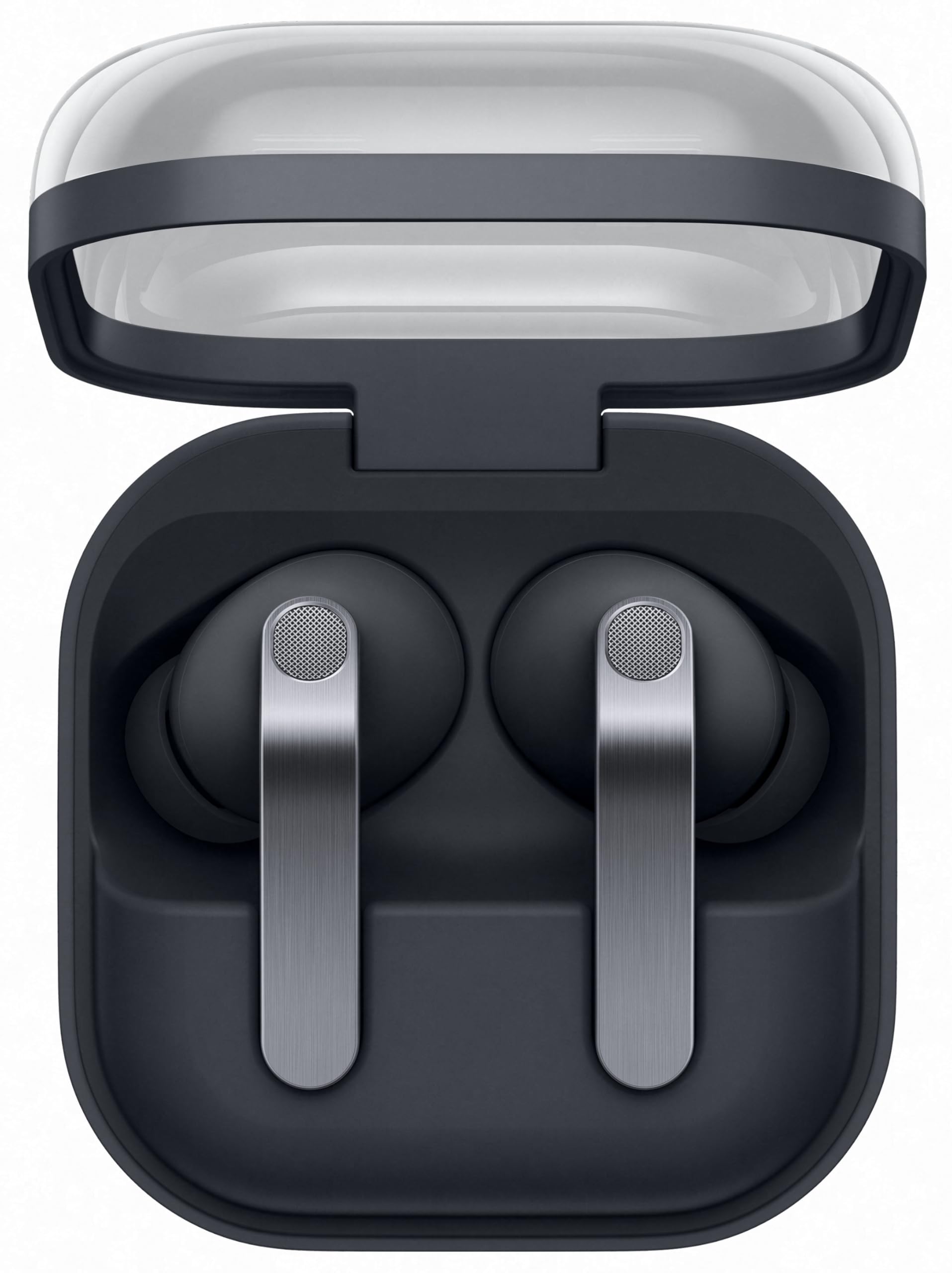
1. Samsung Galaxy Buds 4 Pro SM-R640
Our pick — 4.5+★ from 650+ verified ratings; the strongest balance of quality and price.
Android-flavored earbuds that make calls sound like you’re standing in a quiet room.
The thing that wins people over here is the call and music quality — the largest share of buyer feedback lands there, and the bass has a tight, punchy snap rather than a muddy thump. The three-microphone setup plus ambient sound control is what does the work, keeping your voice forward even on a busy street. If most of your listening happens on an Android phone, this is the pair that feels finished.
Bluetooth 6.1 is the newest version in this lineup, and it pairs quickly. Here is the honest split against the budget champ: the TOZO NC9 quotes 60 hours of battery and 20 meters of range, while the Galaxy Buds 4 Pro states 8 hours and 10 meters. The TOZO also charges in 2 hours versus 1.5 hours here. Samsung wins on connectivity standard, not on endurance — know which one you care about.
The catch is that this is an international version with no domestic warranty, and some features — ANC customization and 360 Audio — only open up on Galaxy devices. iPhone owners can connect over Bluetooth, but the extras narrow. Fit also divides people; if your ears are shallow, plan on trying the supplied cushions before a long day.
Where It Earns Its Place
- Bluetooth 6.1 is the newest standard among the picks here, so pairing is quick and stable.
- Three microphones with ambient sound control keep calls clear in traffic.
- Planar magnetic drivers give the bass a tight, punchy character instead of a drone.
- Recharges in 1.5 hours — one of the faster charge times on this list.
What To Weigh First
- International version, so no local warranty comes with it.
- 360 Audio and ANC customization stay locked to Galaxy Android phones.
- 8 hours on a charge is modest next to the 60-hour TOZO NC9.
Reach for these if: your daily phone is a Samsung and you want the cleanest calls and most modern Bluetooth on the list.
Look elsewhere if: you need warranty coverage at home or you rely on an iPhone for the full feature set.
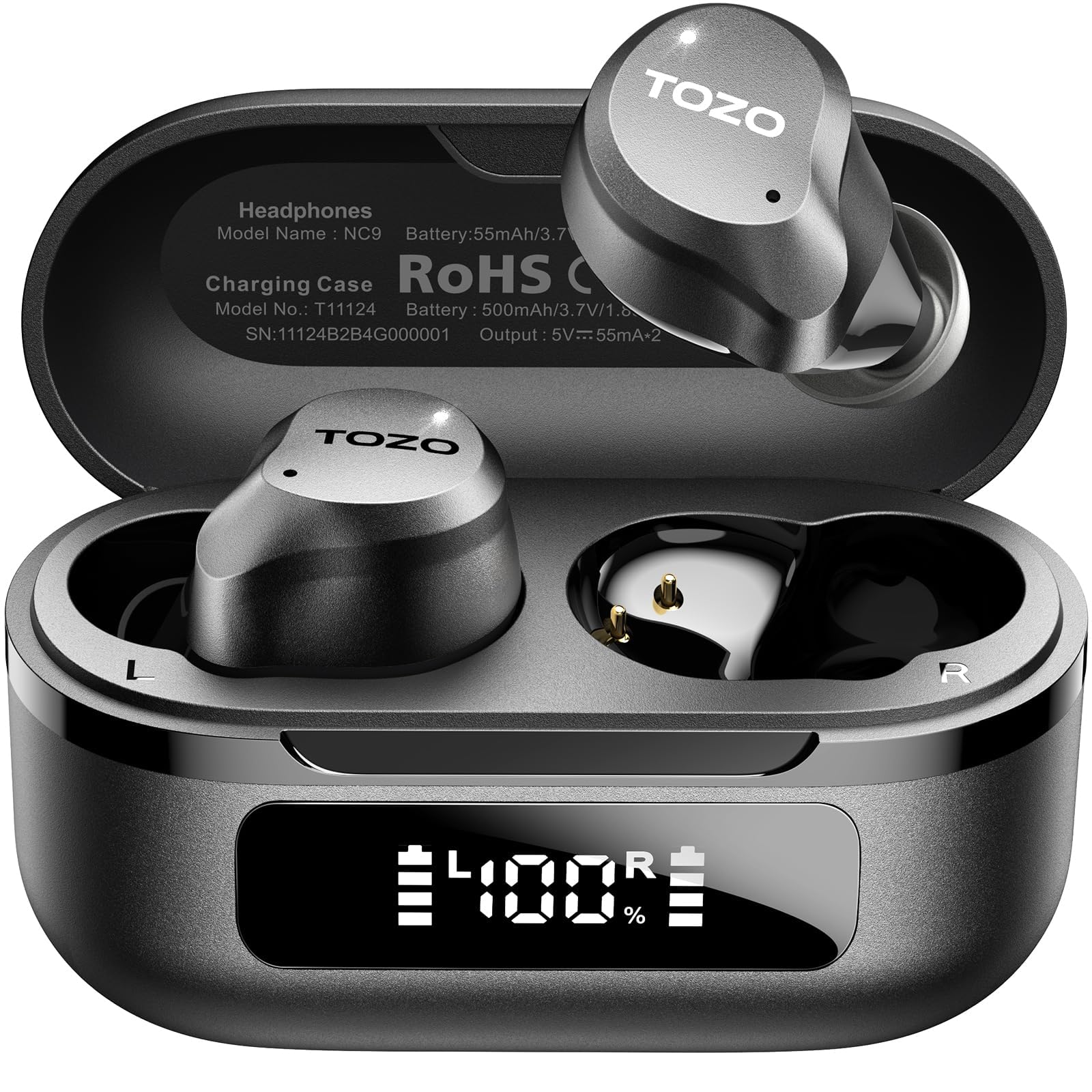
2. TOZO NC9
Sixty hours of playtime and IPX8 water protection for the price of a takeaway dinner.
This is the endurance play. The charging case runs 60 hours with noise cancellation off and 40 hours with it on, and a single session gives you 14 hours or 10 hours with ANC active. The case has an LED display so you can see the remaining charge instead of guessing. That is the single biggest reason this pair earns a spot — you charge it twice a month, not twice a week.
Cancellation reaches 45dB, which covers engine drone and office air handling well. The six-microphone array with environmental noise reduction is aimed at calls, and the 10mm drivers with OrigX Acoustic 2.0 push deep bass. You also get 32 EQ presets in the TOZO app and an EQ-sharing zone if you like trading settings. IPX8 means it survives sweat, rain, and a drop in a puddle.
The recurring gripe is fit — some ears hold these firmly and others find they work loose on a run. Six earcap sizes help, and that is more than most pairs here ship. The other honest note: a small share of units quit in one ear over time. With a crowd this large behind a 4.0+ star score, that reads as a normal manufacturing spread, not a pattern.
Why it wins the value vote: 60 hours of case charge and an IPX8 rating at entry-level cost is a combination nothing else here matches. Bluetooth 5.3 with a 20-meter range is the widest quoted range on this list, and latency sits at 60 milliseconds, which is low enough that lip-sync on video holds.
The fair caveat: fit decides everything with these. If your ears are unusually shaped, the tip assortment does more for you than any spec on the page.
Best match for: commuters, gym-goers, and anyone who resents charging a case every other day.
Think twice if: you have a history of earbuds slipping loose — this shell shape repeats that risk.
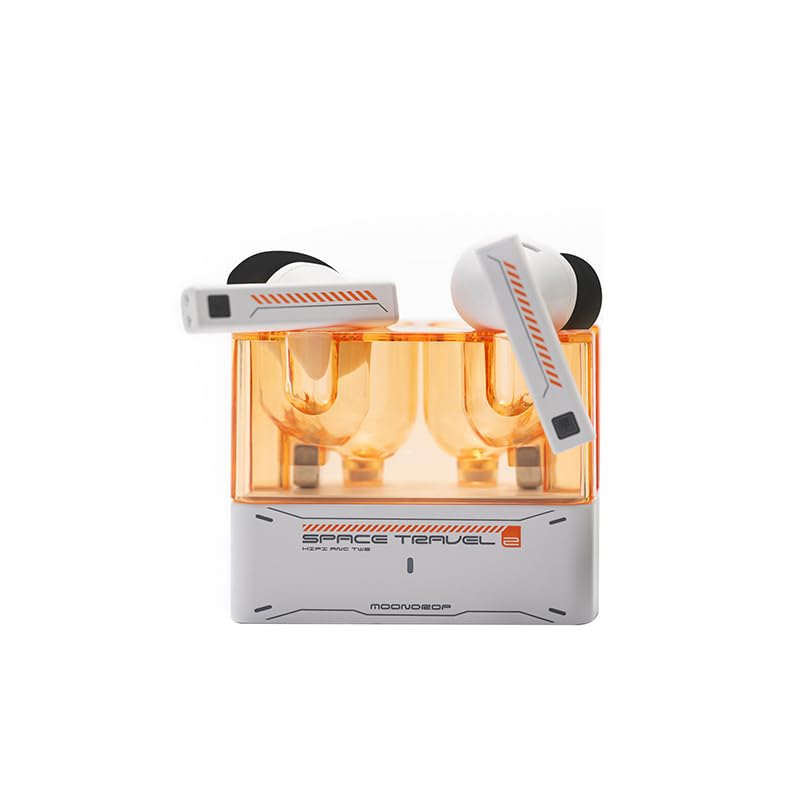
3. Moondrop Space Travel 2
A 13mm beryllium-coated driver in a case that costs less than a takeaway for two.
Moondrop came from the wired in-ear world, and that shows in the tuning. The 13mm dynamic driver uses a beryllium-plated dome on a composite suspension diaphragm, which is the sort of construction that tends to extend treble detail and keep bass controlled rather than bloated. Sound quality is what buyers single out most, and the phrase that keeps showing up is that it trades blows with sets costing far more.
For gamers, tapping the touch faceplate four times drops latency to 55 milliseconds. That is a specific number worth knowing — it sits well under the threshold where audio lags behind screen motion. You also get a one-button EQ in the MOONDROP Link app, plus customizable touch controls for ANC, transparency, and standard mode. Bluetooth 6.0 is one step behind the Samsung’s 6.1 but ahead of the 5.3 pair from TOZO.
Be realistic about the ANC. It uses a single feedforward system with a built-in neural processing unit and AI-driven environmental cancellation for voice clarity, and the result is functional rather than deep — wind noise still gets through. Getting the buds out of the case also draws complaints for being fiddly. Battery runs roughly 4+ hours per session, which is short.
The sound-first read: if your priority is musical detail at a low outlay, this is the most interesting pair here. The 10-meter Bluetooth range matches Samsung’s and falls short of the TOZO’s 20 meters, so keep your phone nearby.
Choose these if: you care more about how a track sounds than about how deep the silence gets.
Pass if: you need serious noise blocking on a flight or you want the case to open without a fight.
4. soundcore P30i

The case doubles as a phone stand, and the earbuds run longer than most flagships.
Open the back panel of the charging case, prop your phone in it, and you have a viewing stand for a flight or a kitchen counter. That is a genuinely different trick and nothing else here does it. The audio underneath is respectable too — 10mm drivers with BassUp technology give the low end a push, and 4 microphones with an AI algorithm handle calls.
Cancellation is rated at up to 42dB, and the adaptive system samples outside sound and picks its own level rather than making you cycle modes. Playtime runs up to 10 hours per charge or 6 with ANC on, and up to 45 hours with the case or 25 with ANC. A 10-minute top-up buys you 2 hours. Bluetooth 5.4 handles the pairing.
Wind is the honest weak point — gusty days can push noise through the microphones. Static has also come up. Against the TOZO NC9, this case runtime of 45 hours trails the 60-hour figure, though a single 10-hour session beats the TOZO’s 14-hour claim only when you factor cancellation. Buy it for the stand and the adaptive ANC, not for the longest number.
The Case Trick Pays Off
- Charging case flips into a phone stand for hands-free viewing.
- Adaptive ANC at up to 42dB adjusts itself instead of asking you to fiddle.
- 10-minute charge yields 2 hours of listening.
- 10 hours per charge, 45 hours with the case.
Where It Gives Ground
- Wind noise intrudes on calls and outdoor listening.
- 45 hours of case charge sits under the 60-hour TOZO NC9.
- Some units have been reported to develop static.
Pick this for: travel and desk use where you want a stand and a long single session.
Skip the stand premium if: your listening is mostly outdoors in wind.
5. JVC Active Noise Cancelling True Wireless Earbuds
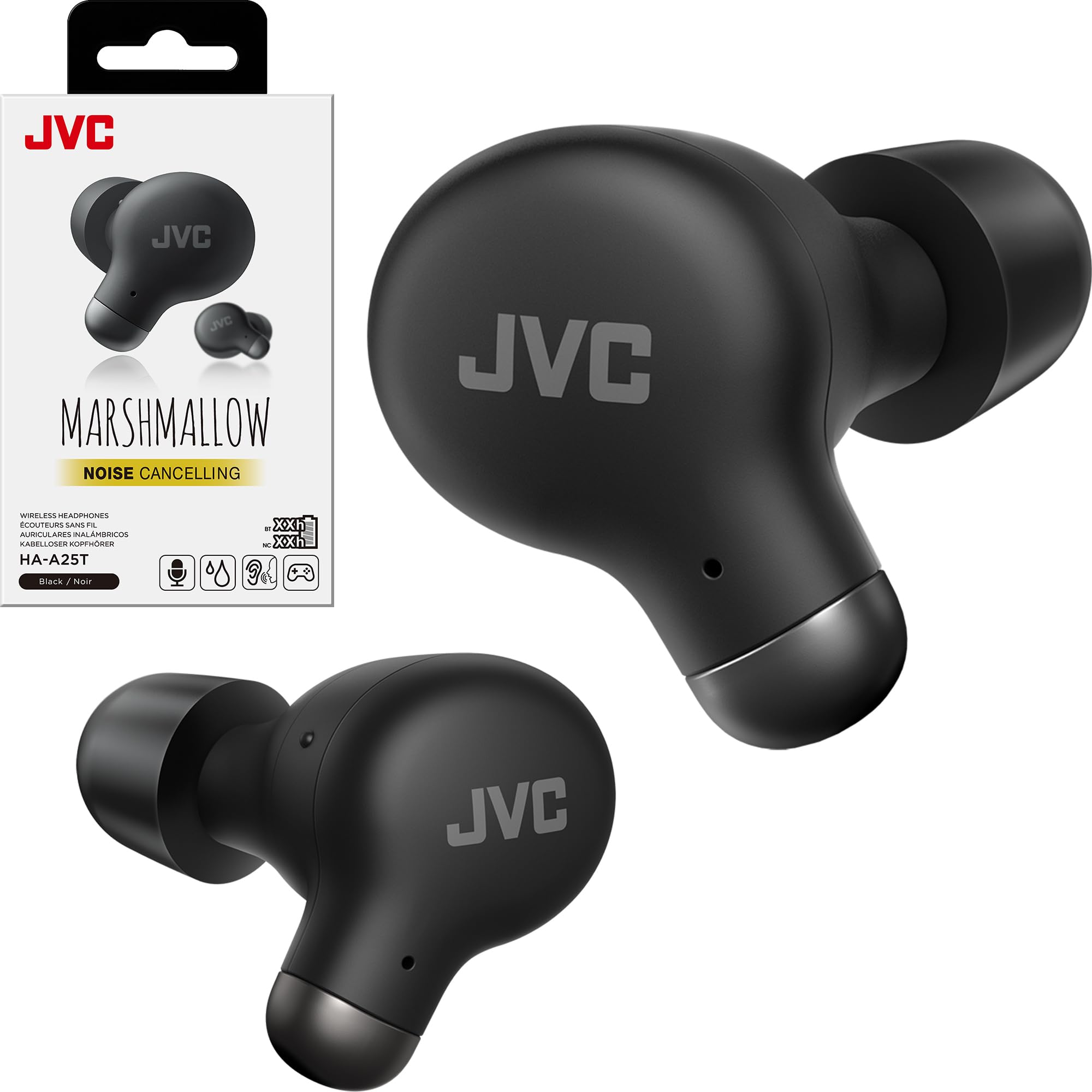
Silicone and memory foam tips in the box, for ears that reject everything else.
Most pairs give you three silicone sizes and call it a day. JVC ships S/M/L silicone plus memory foam earpieces, and foam is the material that molds to the canal instead of resting against it. That foam also adds passive isolation under the active system, so quiet rooms get quieter. If you have ever given up on earbuds because nothing stayed in, this is the pair built for that problem.
Cancellation targets low-frequency noise such as traffic and office hum, which is the range an active system handles best. You get touch controls and three sound modes — Normal, Bass, and Clear — so you can push low end or pull vocals forward. Playback runs 28 hours with the compact case, and the case itself carries 22 hours. IPX4 covers sweat and light rain. Bluetooth 5.3 pairs reliably.
The trade-off is that fit is not solved for everyone even with six tip options — foam can feel too tight for some canals while silicone slips for others. A few units have also been noted to cut out or drop their phone connection. Sound quality is praised by the largest group of buyers, mostly as good-enough-for-daily-use rather than audiophile-grade.
The fit-first argument: six tip options on a 28-hour pair is the most generous tip selection on this list. If the Samsung or TOZO shell leaves you adjusting all day, the memory foam here is the practical fix.
The honest limit: 28 hours of playback sits under the soundcore P30i’s 45-hour case figure, so this is a fit purchase, not an endurance one.
Right for you when: ear shape has been your blocker and you want foam to do the holding.
Wrong pick if: you want the deepest silence or the longest runtime.
6. Apple AirPods 5
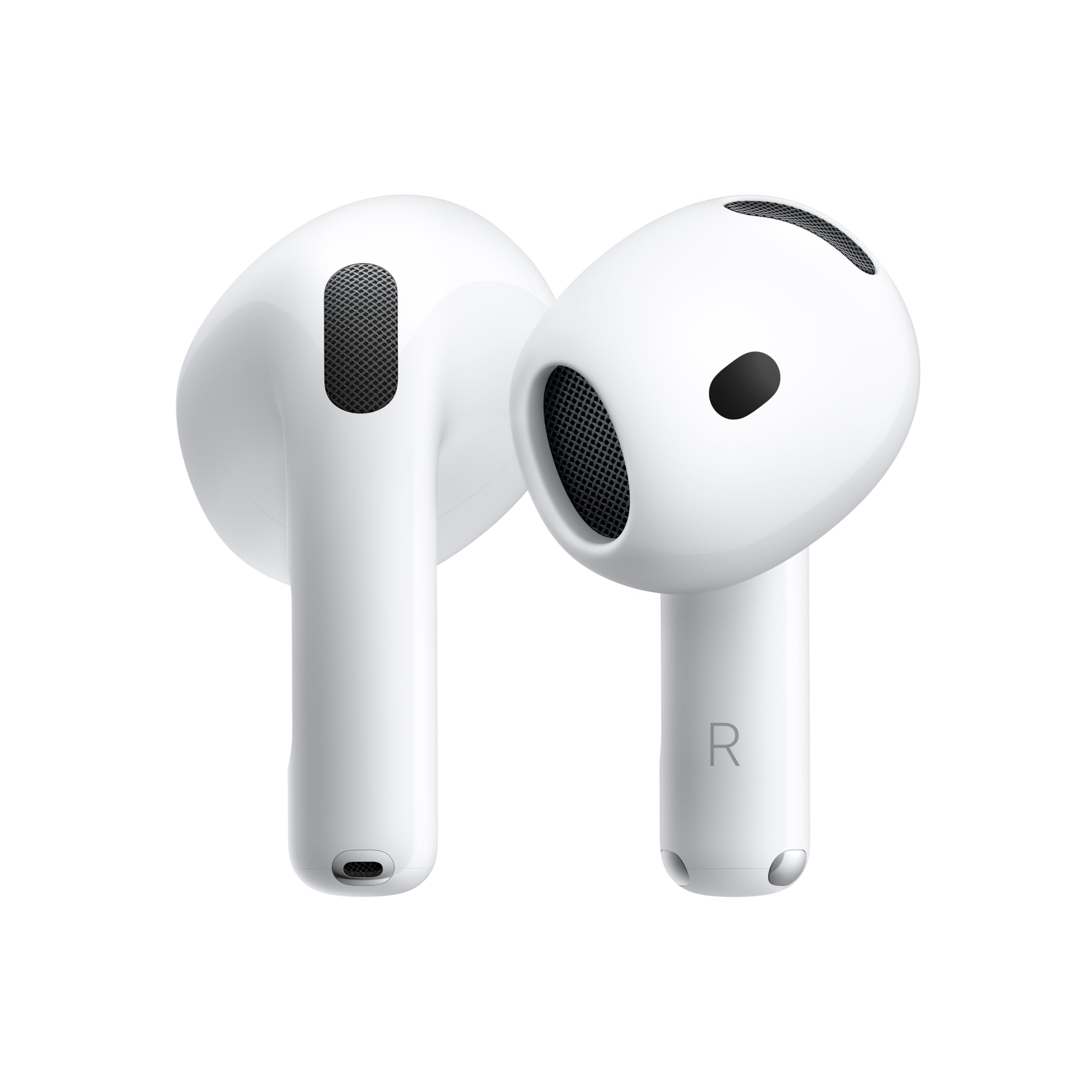
Open-ear shells that never press on your canal, with Apple’s ecosystem doing the heavy lifting.
These do not seal into the ear at all, which is why they stay comfortable for hours and why they leak more sound than any sealed pair here. In exchange you get Adaptive Audio, which blends cancellation and transparency automatically, plus Conversation Awareness that drops your volume when you start speaking. Live Translation through Apple Intelligence and the new Siri assistant are the features iPhone owners actually notice.
The IP57 rating is the standout spec — dust-protected plus temporary immersion. That covers rain and heavy sweat better than the IPX4 JVC pair. Battery runs up to 5 hours with cancellation on and up to 22 hours counting case refills. A force sensor with swipe control handles volume without reaching for your phone. The case charges over USB-C, Apple Watch chargers, or any Qi pad.
Fit is the split. Some ears hold the open design comfortably and others find them on the verge of slipping. Battery has drawn mixed notes too, and the honest one: 5 hours with cancellation is the shortest single-session number among the premium picks here. If you want all-day, the TOZO NC9 at 60 hours is a different sport entirely.
The ecosystem dividend: if you carry an iPhone and a Mac, pairing is instant and the assistants are useful rather than gimmicky. That convenience is the product, and it is not something the Status Pro X or JBL Tour Pro 3 can copy on Apple hardware.
What you give up: an open-ear design does not block a noisy train the way a sealed pair does, so quiet carriage listening is not the strength.
Belongs in your pocket if: you live in Apple’s world and value comfort over silence.
Keep shopping if: you want deep noise blocking or a long per-charge session.
7. JBL Tour Pro 3

A 1.57-inch touchscreen on the charging case, so your phone can stay in your pocket.
The case is the headline. A 1.57-inch touch screen lets you control music, read battery, see who is calling, and change settings without pulling out your phone. It also supports wireless charging. Under that, the audio hardware is two drivers per ear — a balanced armature for highs and a 10.2mm dynamic driver for bass — with LDAC Hi-Res wireless carrying the signal at higher data density than standard Bluetooth.
True Adaptive Noise Cancelling 2.0 adjusts in real time, and you control how much of the world comes in. JBL Spatial 360 with head tracking anchors sound around you rather than inside your head. Six microphones with Crystal AI handle calls, and the package carries Zoom certification for the work-from-home crowd. Battery stretches to 40 hours in total. Six eartips plus a set of foam tips ship in the box.
Reality check on the connection: this uses Bluetooth 5, the older standard in a lineup where Samsung and the Liberty 5 Pro Max both run 6.1. Pairing and the occasional dropout in the right earbud come up. Value draws mixed notes at the premium tier, and a few units have been reported to fail early. Fit runs both ways — some ears lock in, others lose them.
The Screen Sells Itself
- 1.57″ touchscreen case controls music, calls, and settings without a phone.
- Dual drivers per ear with LDAC for Hi-Res wireless audio.
- Zoom certification and six mics with Crystal AI for work calls.
- 40 hours total playback with wireless charging support.
The Honest Fine Print
- Bluetooth 5 trails the 6.1 on both the Samsung and the Liberty 5 Pro Max.
- Connectivity complaints center on the right earbud.
- Fit and durability divide buyers at this premium tier.
This is your pair if: you want to leave the phone in your bag and still skip tracks on a flight.
Not for you if: you want the newest Bluetooth standard or flawless long-term reliability above all.
8. Status Pro X

Three drivers per ear and 52dB of cancellation — the deepest silence in this lineup.
Each earbud packs a 12mm dynamic driver plus dual Knowles balanced armature drivers, with LDAC carrying the Hi-Res signal. That is three separate speakers per ear covering bass, mids, and detail, and the result is the most-praised sound profile in this group. The fit earns its own nods — buyers consistently report the shells stay locked during movement, which is unusual for a set this loaded.
The 52dB hybrid cancellation figure is the highest number on this page, and it also ships with Ambient Aware mode for hearing the world. Six beamforming microphones with VoiceLoom AI speech enhancement handle calls. Bluetooth 5.3 covers multipoint, LE Audio, LC3, and Auracast, so you can hold a phone and a laptop at once and tap into broadcast audio where it is available.
Runtime is 8 hours per charge and 32 hours with the case, with IP55 dust and water protection plus Qi wireless charging and Find My Earbuds support. The wrinkle: a chunk of listeners report closer to 4-5 hours before needing a charge, which is well short of the stated 8. Reliability and connectivity also carry mixed notes, with some early failures. Buy this for the audio, and treat the runtime claim with caution.
Where the money goes: the triple-driver array and 52dB cancellation are real engineering, and this beats the JBL Tour Pro 3’s quoted depth on paper. Bluetooth 5.3 also tops the JBL’s older 5.
The trade-off to accept: battery is the weak link. If you need a full workday from one charge, the TOZO NC9’s 14-hour single session is the safer read.
Worth it if: detail and deep cancellation matter more than squeezing every hour of runtime out.
Look elsewhere if: you are away from a charger for 6+ hours a day.
9. Soundcore Liberty 5 Pro Max
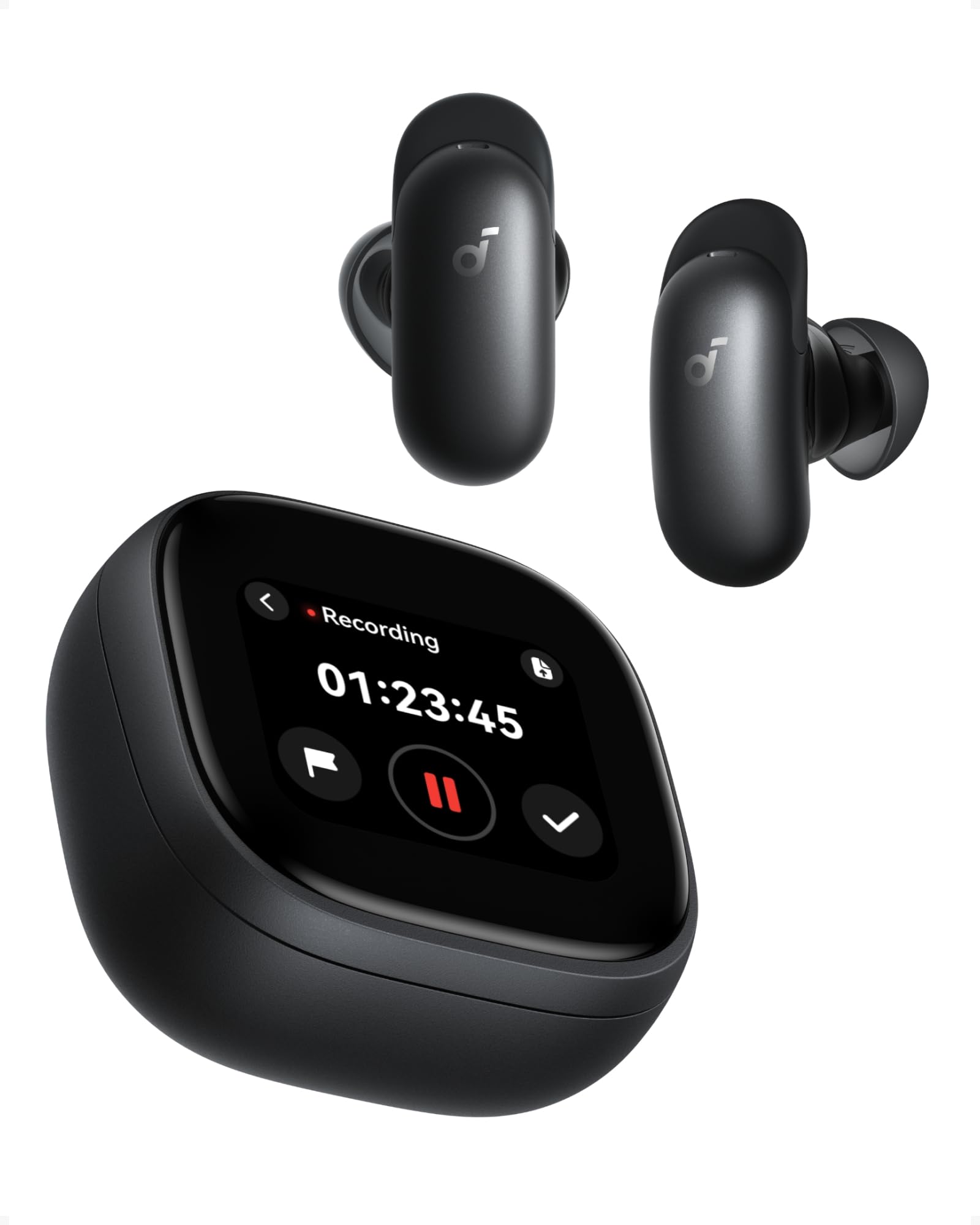
The case records meetings in the room and turns them into notes with action items.
This is the only pair here built for a work problem rather than a listening one. The charging case carries its own microphone and records in-person meetings and interviews, then transcribes and generates AI summaries with key points and action items. It handles in-room audio only — not online calls or phone calls. You manage it from the soundcore app or a desktop web portal. The free Starter Plan includes 120 minutes of AI transcription per month for 24 months, with paid tiers above that.
A 1.78-inch AMOLED display on the case runs the recorder, adjusts cancellation, and manages settings, and you can set your own wallpapers. Cancellation uses 8 sensors and the Thus AI Chip to process 384K+ noise signals per second, and soundcore claims it is twice as effective as its previous flagship. Ten sensors with the same chip handle calls in 100dB+ noise. With ANC on you get 6.5 hours per charge and 28 hours with the case, and a 5-minute top-up gives 4 hours.
The catch is that the AI features and battery both split opinion. Some buyers report transcription runs smoothly, while others hit the system quitting mid-session. Runtime has been reported anywhere from 6 hours down to 1-2 hours. Bluetooth 6.1 (the wireless standard that links earbuds to your phone) matches Samsung’s newest standard here, and HearID 5.0 (a feature that tunes the EQ, or sound balance, to your hearing) personalizes the sound. Note that Extreme mode drops you to 2.5 hours per charge and 10.5 with the case when multiple features run.
The office case: privacy is taken seriously — AES-256 local encryption and a stated compliance list including ISO 27001/27701 and SOC 2 Type 1 for anyone handling sensitive conversations. Nothing else in this lineup does this job.
What to check: the 5-minute-for-4-hours top-up is the real battery story. A full charge is variable in practice, so treat the case as your buffer.
Right tool for: anyone who runs in-person meetings and needs a record without a second device.
Not the pair for: pure music buyers — you would pay for a recorder you never use.
Know the Specs
Battery Life Figures And What They Include
A stated battery life often combines the earbuds and the charging case into one number. The figure that governs your day is the single-charge number, not the case total. Watch for the ANC-off and ANC-on split too — noise cancellation draws power, so the active figure is the one you’ll live with. Charge time matters for the same reason: a pair that refills in 1.5 hours fits a lunch break better than one that needs 2.5.
Bluetooth Version And Range
Bluetooth versions rise in steps, and each newer one generally brings cleaner pairing and lower latency. A 6.1 pair like the Samsung or Liberty 5 Pro Max is ahead of a 5.3 pair, which in turn edges the older 5. Range is separate — it is the open-air distance before the signal drops. A 20-meter pair tolerates walking to another room; a 10-meter pair wants your phone within reach. Multipoint, the ability to hold two devices at once, is a separate feature and is not guaranteed by version alone.
Water And Dust Ratings Decoded
An IP rating lists solids first and liquids second. IPX8 means only the water number is specified, covering sustained immersion. IP55 means limited dust ingress plus water-jet protection. IP57 means dust-protected plus temporary immersion. IPX4 covers sweat and light rain. If you run or lift, anything at IPX4 and up works. If you swim or work in dust, look for the second digit to be a 5 or higher.
Noise Cancellation In Decibels
Cancellation depth is quoted in decibels, and higher numbers indicate more low-frequency noise removed. The values here range from around 42dB to 52dB. That difference shows up most on planes and buses. Depth says little about wind noise, which depends on microphone placement and wind guards. Some pairs pair depth with adaptive tech that samples your surroundings and picks a level automatically, which saves you from cycling modes by hand.
Common Questions
Will these TWS earbuds work with both an iPhone and an Android phone?
What does an IPX8 rating actually protect against?
Why does one pair claim 60 hours while another claims 8?
Can the soundcore Liberty 5 Pro Max record a video call?
How do I stop earbuds from falling out while running?
Is LDAC worth having over standard Bluetooth audio?
What is the difference between adaptive and fixed noise cancellation?
Do multipoint earbuds stay connected to a phone and a laptop at once?
How long should TWS earbuds last before the battery weakens?
Can I use ANC earbuds in the rain?
The Bottom Line
For most people, the winner among these tws wireless earbuds is the Samsung Galaxy Buds 4 Pro — Bluetooth 6.1, three microphones, and a refined sound on Galaxy hardware. If endurance is your priority, the TOZO NC9 delivers 60 hours with the case and an IPX8 rating that shrugs off rain. And for anyone who needs to record in-person meetings without a second device, the soundcore Liberty 5 Pro Max turns conversation into notes on its own.
One last nudge worth raising: sound quality draws far more praise than any other trait across these picks. The Status Pro X pairs a triple-driver setup (three speakers per earbud for more detail) with 52dB cancellation, so quiet passages and busy commutes both come through clearly. Match the tip material to your ear canal and the battery figure to your longest day without a charger.
How we choose
We do not accept paid placement. Every pick is matched to a real buyer and a real use-case; we do not hands-on test units.
Sources
Specifications: manufacturer listings and product documentation. Review insights: verified customer reviews, as of November 2026. Pricing: not shown on this page (it changes often); check the current price via the retailer link.
As an Amazon Associate, Tactical Gear Guy earns from qualifying purchases. This does not affect which products we feature.