Specs are compiled from manufacturer listings and verified buyer reviews and can change over time — please confirm the key details on the product page before buying.
If you are drilling stainless, hardened steel, or cast iron and your bits keep dulling or snapping, the fix is almost always the cutting material — solid tungsten carbide holds an edge in hard metal where coated high-speed steel dulls. This guide covers five carbide sets that actually hold an edge in hard metal, and it tells you plainly which one suits which job so you do not buy the wrong size range or the wrong geometry.
This guide is built by comparing the manufacturers’ published specifications and the patterns across verified customer reviews, so you get each pick’s real strengths and trade-offs instead of marketing spin.
Carbide is brittle, so the wrong bit for your material is the most common reason a purchase disappoints. Below you will find the geometry, coating, and size range that matter, plus a straight answer on which of these Tungsten Carbide Drill Bits fits your bench.
Top Picks
How To Choose The Best Tungsten Carbide Drill Bits
Carbide bits rarely fail from bad steel — they chip or dull when run in the wrong material or without a rigid setup. Match the carbide grade and point geometry to the metal and one bit outlasts a drawer of cheap high-speed-steel bits.
Match the bit to the metal, not to the label
Solid carbide is extremely hard, which is why it bites into stainless and hardened steel. The trade-off is brittleness — it does not flex, so any side load or wobble can chip or snap the edge. Bits rated for “cast iron, aluminum, copper, brass” are built for softer metals. Running one of those into hardened stainless wears the edge fast. Reading the maker’s material list before you buy is the single most useful habit here.
The point angle and split point change how the hole starts
A 118-degree point is the common general-purpose angle for metal. A split point adds a small notch at the tip, so the bit self-centers instead of skating across the surface — so you do not need a center punch on flat stock. If your drill press wanders on every hole, a split point is the spec to hunt for.
Coating and finish decide heat tolerance
A bright, uncoated finish lets chips slide clear quickly, which keeps heat down on high-speed cuts. A TiSiN coating (titanium silicon nitride — a hard thin layer baked onto the bit) adds wear resistance for hotter, harder work. Neither coating rescues a bit being run too slow or without coolant.
Size range and shank type
A 1/16-inch bit is for small precise holes in tight spaces. A set spanning 3 to 15 millimeters covers workshop-size work in one box. Round shanks clamp in a standard chuck; hex shanks lock into quick-change holders without slipping. Decide the holes you drill before you decide the set.
Side-by-Side Comparison
| Model | Best For | Cutting Diameter | Pieces | Point / Finish | Amazon |
|---|---|---|---|---|---|
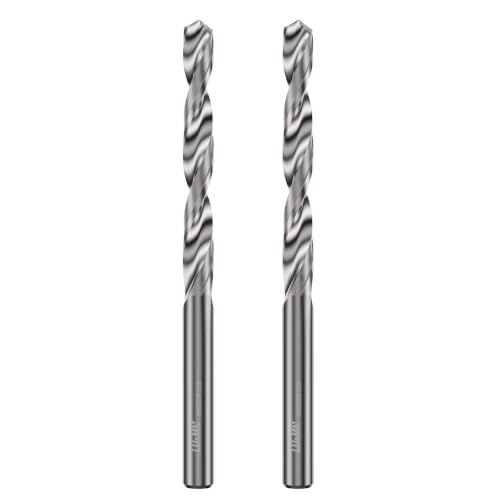
| LU&MN Solid Carbide Jobber Drill Bit, 3/16″★ Best Overall | Hardened steel and CNC work | 4.76 millimeters | 2 | 118° split point / bright | Amazon |
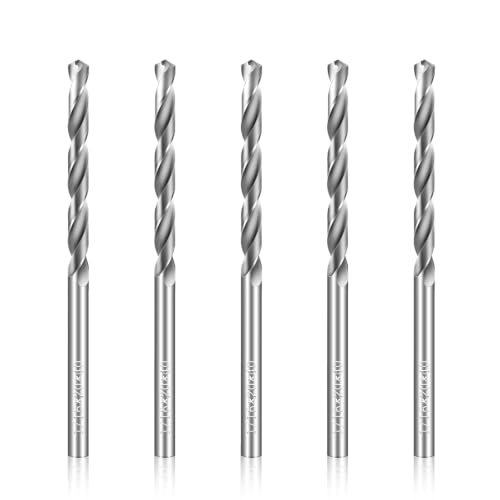
| HOYUSK 1/16″ Solid Carbide SetTop Performer | Small precise holes in stainless | 1.59 millimeters | 5 | 118° split point / uncoated | Amazon |
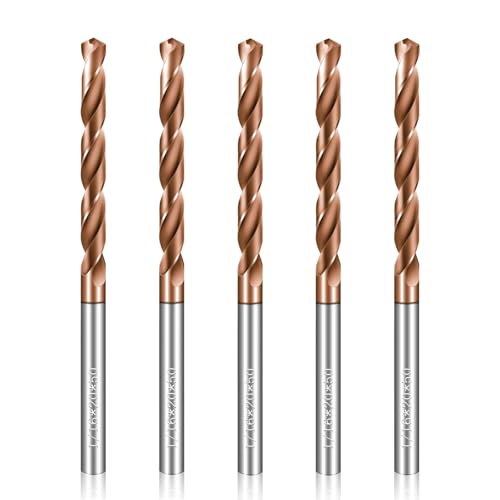
| HOYUSK TiSiN Coated 1/16″ Set | Hot, repetitive drilling | 1.59 millimeters | 5 | Spiral flute / TiSiN coated | Amazon |
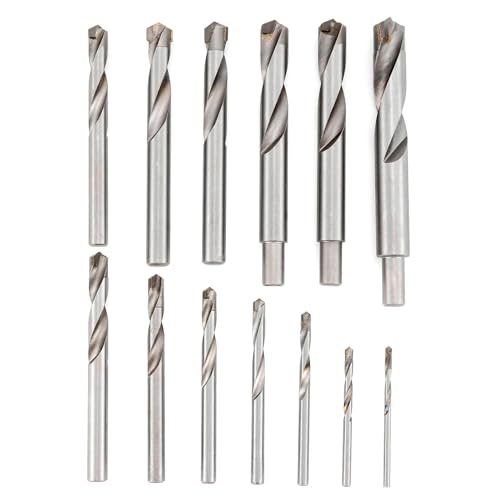
| JIUWU 13 Pack Hex Shank Set | One box for the whole workshop | 15 millimeters | 13 | Split point / chrome | Amazon |
| Drill America DMOD1/4 Solid Carbide | Abrasive and non-ferrous stock | 0.25 inches | 1 | 118° / uncoated | Amazon |
Detailed Reviews
1. LU&MN Solid Carbide Jobber Drill Bit, 3/16″ Dia, 2 Pcs
Our pick — 4.0+★ from 350+ verified ratings; the strongest balance of quality and price.
Ground to a mirror finish, this is the bit that keeps cutting after the heat builds.
What separates the LU&MN from the cheaper carbide on this list is how the edge is made, not just what it is made of. The bit is cut from ultra-fine micro grain carbide — a carbide made of very small particles, which is what lets the cutting edge stay sharp under high heat instead of dulling out. It is then ground on Swiss 5-axis CNC machines, so the diameter is tight and repeatable hole to hole. At 4.76 millimeters across (a 3/16-inch bit), it is the big-hole option here: the JIUWU set reaches 15 millimeters at its top end, but this is a precision-ground jobber bit rather than a bulk assortment.
The geometry earns its keep on hard metal. A subtle reverse taper keeps the body of the bit off the hole walls, so there is less rubbing, less friction, and less heat. The 118-degree split point bites instead of skating, which means fewer ruined starts on stainless. Drilling in stainless steel, aluminum, copper, brass, and plastics all fall inside its range — and it will take materials up to HRC52 (a hardness scale reading; 52 is genuinely hard steel).
The honest catch is durability at the small end of the work — carbide this hard will chip if you lean on it or let the bit chatter. Run it in a rigid holder, keep the feed steady, and it rewards you with clean holes. As owners put it, buyers report it cutting semi-hardened steel cleanly and holding up in hardened stock; treat it as a precision tool, not a beater, and it holds its edge.
What earns it the top spot
- Micro grain carbide holds its edge under high heat — the reason it keeps cutting where softer bits quit
- Swiss 5-axis grinding gives tight, consistent diameter hole after hole
- Reverse taper cuts friction and heat so the body does not rub the hole wall
- Mirror bright finish clears chips fast for cleaner holes at speed
- 118-degree split point starts the hole without skating
Where it asks for care
- Two bits per pack — you get precision, not a drawer full of sizes
- Solid carbide is brittle; side load or chatter chips the edge
- Needs a rigid tool holder to perform as intended
Reach for this if: you drill stainless, hardened steel, or non-ferrous metal and want the cleanest, most repeatable hole from a bit that stays sharp.
Look elsewhere if: you need a spread of sizes in one box — this is a two-piece precision pack, not an assortment.
2. HOYUSK 1/16″ Solid Carbide Drill Bit Set, 5 Pcs
Five tiny carbide bits that get into places a full-size drill never will.
Precision work in tight quarters is where this set lives. The diameter is 1.59 millimeters — a 1/16-inch bit — with a 0.78-inch flute length and a 1.57-inch overall length, so it reaches into recessed holes and small assemblies. Compared with the LU&MN’s 4.76-millimeter cutting diameter, this is four times narrower in the hole it makes, which is the whole point: it is built for fine detail, not for hogging out big holes.
The carbide itself is 0.6-micron micro-particle cemented carbide, a very fine grain structure that gives strong wear resistance in high-speed cutting. The sharp spiral flutes clear chips through a large groove with low cutting force, which keeps drilling heat down. The round shank clamps securely to stop the bit shaking or slipping mid-hole, and the split point helps it start clean. Stainless steel, aluminum alloy, cast iron, mold steel, and copper are all on the maker’s list.
Small carbide bits are where breakage shows up most, and this set is no exception — the fine diameters demand a light, steady hand and a rigid chuck. Quality and cutting performance are what win people over; the recurring note is that the smallest bits need respect. Run them slow, let the flutes clear, and the set does exactly what a 1/16-inch carbide bit should.
Precision-first design: The 0.78-inch flute and 1.57-inch overall length let you reach into tight, shallow work where a longer bit will not fit — a real advantage on small assemblies and repair jobs.
The trade-off to know: At 1.59 millimeters these bits are delicate by nature. Feed them gently and keep the chuck rigid; that is the price of precision at this diameter.
Built for detail work: small holes in stainless, cast iron, and copper where accuracy matters more than speed.
Skip the heavy hand: if you need to drill fast and deep in thick plate, step up to a larger-diameter bit instead.
3. HOYUSK TiSiN Coated 1/16″ Solid Carbide Set, 5 Pcs
The same 1/16-inch precision, wrapped in a coating built to shrug off heat.
Here is the closest head-to-head on this list: the HOYUSK coated set and the HOYUSK uncoated set above share the same 1.59-millimeter cutting diameter and five-piece count. The difference is the finish. This one wears a titanium silicon nitride coating — TiSiN, a hard thin layer that resists wear at higher temperatures — and the maker lists it under Micro nano brass coated tungsten steel construction. If you are drilling repetitive holes and the bit is getting hot between cuts, the coating is the reason to pick this version over the plain one.
The rest of the build follows the same playbook. Sharp spiral flutes push chips out through a wide groove with low cutting force, which keeps the hole walls clean and reduces the breakage rate. The round shank clamps firmly to stop slip. It is aimed at stainless, bearing steel, cast iron, mold steel, and carbon steel, and the 1.59-millimeter size makes it a natural for tight, precise holes.
The thing to plan around is that a 1/16-inch bit in any material is small, and quick breakage of the smallest bits is the honest caveat to budget for. Owners find heaps of quality and performance here — owners describe it cutting hardened steel with little resistance — and the coating adds a real margin on hot, repetitive work. Buy it knowing the 1/16-inch diameter is delicate, not that the carbide is weak.
Why owners rate the cut: The sharp spiral flute and low cutting force deliver smooth, burr-free holes, and the TiSiN coating holds up better when the bit runs hot through repeated passes.
Size it before you commit: Five 1.59-millimeter bits are perfect for detail holes and useless for anything wider — check your job’s diameter first.
Go coated when: you drill the same small hole over and over in hardened steel or cast iron and want the extra heat margin.
Go uncoated when: your work is light and infrequent — the plain HOYUSK above does the same hole without the coating premium.
4. JIUWU 13 Pack Solid Carbide Twist Drill Bits, Hex Shank
Thirteen sizes in one box, so you stop hunting for the right diameter mid-job.
Coverage is the whole argument here. You get 13 bits spanning 3, 4, 5, 6, 7, 8, 9, 10, 11, 12, 13.5, 14, and 15 millimeters, which is six and a half times the piece count of the two-bit LU&MN pack — and the top end reaches 15 millimeters against the LU&MN’s 4.76 millimeters. For a workshop that drills a range of hole sizes, this is the set that saves you buying bits one at a time.
The bits are cemented carbide with a chrome finish and a split point for clean starts, held in a hex shank that locks into a quick-change holder without spinning. That hex shank is the practical detail: swap sizes fast between holes instead of re-chucking a round bit every time. The maker is specific about materials — mild steel sheet, cast iron, iron plate, aluminum alloys, thin copper, and thin brass are the targets.
Here is the boundary that matters most: this set is not designed for stainless or hardened steel. Running one of these into stainless is exactly how you get premature wear or a snapped edge. Used inside its lane, with moderate-to-high speed and a coolant or lubricant (water works), with intermittent cooling to avoid thermal shock, it earns its place. Drill performance is the standout in owner feedback, and the value story is clear for the size range.
Why the drawer stays full
- 13 diameters from 3 up to 15 millimeters cover most workshop and DIY holes in one box
- Hex shank swaps fast in a quick-change holder without slipping
- Split point starts clean on flat stock
- Solid value for the size spread — no buying bits individually
The line you cannot cross
- Not designed for stainless or hardened steel — use the wrong metal and the edge wears fast
- Needs coolant or lubricant and intermittent cooling to hold its edge
- Softer-metal set, so it is not a substitute for a hardened-steel bit
Best for the general workshop: mild steel, aluminum, cast iron, and brass jobs where you need a spread of sizes on hand.
Not your stainless bit: if hardened or stainless steel is the job, step up to the LU&MN or a coated HOYUSK instead.
5. Drill America DMOD1/4 1/4″ Solid Carbide Drill Bit
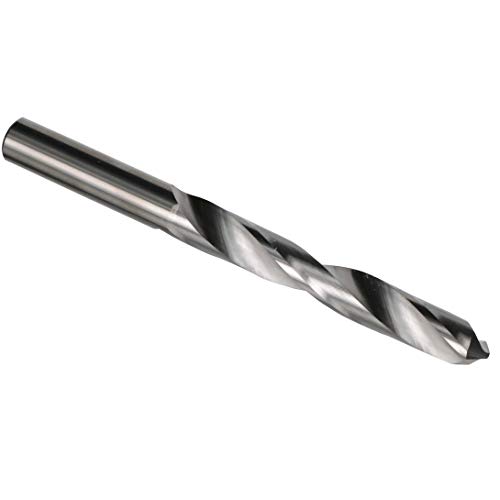
One quarter-inch carbide bit built for abrasive stock and hot, accurate drilling.
This is a specialist single bit, not a set. At 0.25 inches it cuts the widest hole of any single bit here, and it is aimed squarely at abrasive materials where accuracy must hold — cast iron, non-ferrous alloys, high-silicon aluminum, copper, plastics, bronze, hard rubber, and plexiglass. It is also rated for high-temperature drilling applications. The 118-degree point and two flutes are the standard metal-drilling geometry, and at 1.6 ounces it is light enough that the bit does the work, not your wrist.
Drill America states the trade-off openly: solid carbide gives long tool life and faster cutting speeds than other substrates, but it is more brittle. That is not a flaw — it is the physics of the material. The maker also specifies a rigid tool-holding system, which tells you exactly how to run it: a tight chuck, no wobble, steady feed. Some owners mention it drilled hardened 1095 quickly and finished a job in minutes; others found it dull or lost it on annealed steel. A rigid setup separates those two outcomes.
The bit is strongest on abrasive non-ferrous work and cast iron, where its accuracy and heat tolerance shine. It is not the pick for snapping through hardened stainless — carbide that hard is more brittle, so chatter is its enemy. Keep it rigid and let the edge cut.
Made for the tough-but-abrasive stock: high-silicon aluminum, bronze, cast iron, and hard rubber are where this bit’s accuracy and heat rating do their best work.
One bit, one diameter: there is no set here — you buy a single quarter-inch bit, so confirm that is the hole you need before committing.
Pick this for: abrasive non-ferrous stock and cast iron where a single precise 1/4-inch hole is the goal and the setup is rigid.
Pass on it if: you want a range of sizes or regular stainless drilling — a set or a stainless-rated bit serves you better.
Know the Specs
Cutting Diameter
The width of the hole the bit makes. A 1/16-inch bit measures 1.59 millimeters; a 3/16-inch bit measures 4.76 millimeters; the JIUWU set reaches 15 millimeters at its top end. Match this to the fastener or hole you need, because a bit cannot drill wider than its own diameter.
Point Angle and Split Point
The angle at the tip — 118 degrees is the common metal-drilling angle. A split point adds a small self-centering notch so the bit starts without wandering, which saves you a center punch on flat stock.
Coating and Finish
A bright, uncoated finish clears chips fast and runs cool at speed. A TiSiN coating adds a hard wear-resistant layer for hotter, harder, repetitive work. Neither coating replaces coolant or a steady feed.
Shank Type
The base that grips in your drill. A round shank clamps in a standard chuck; a hex shank locks into a quick-change holder so you can swap sizes fast without slipping. Rigid holding matters — solid carbide is brittle and chatter chips it.
Common Questions
Will a 1/16-inch carbide bit fit a standard drill chuck?
Can these bits drill stainless steel?
Why do my carbide bits keep breaking?
Do I need coolant when drilling with carbide?
What is the difference between the two HOYUSK 1/16-inch sets?
What does HRC52 mean on a drill bit listing?
Is a split point better than a standard point?
Can I use these on wood or plastic?
Do the hex shank bits work in a standard drill?
How many sizes do I need in a set?
The Bottom Line
For most people buying tungsten carbide drill bits, the LU&MN two-pack takes it because the micro grain carbide and Swiss-ground edge keep cutting stainless and hardened steel where other bits dull out. If your holes are small and precise, the HOYUSK uncoated 1/16-inch set gets into tight spaces, and its TiSiN-coated sibling adds real heat margin for repetitive work. Want one box that covers the whole workshop in softer metals? The JIUWU 13-pack brings the size range — just keep it away from stainless. And for a single precise hole in abrasive non-ferrous stock, the Drill America 1/4-inch bit does the job. Start with the LU&MN and let the job pick the rest.
How we choose
We do not accept paid placement. Every pick is matched to a real buyer and a real use-case; we do not hands-on test units.
Sources
Specifications: manufacturer listings and product documentation. Review insights: verified customer reviews, as of November 2026. Pricing: not shown on this page (it changes often); check the current price via the retailer link.
As an Amazon Associate, Tactical Gear Guy earns from qualifying purchases. This does not affect which products we feature.