Specs are compiled from manufacturer listings and verified buyer reviews and can change over time — please confirm the key details on the product page before buying.
If your heel lifts during squats or your toes slide forward on lateral lunges, you are not bad at lifting — you are standing in the wrong shoe. The right training gym shoes make a stable base under a heavy bar, cushion the landing on a box jump, and still let your foot flex when you sprint out a conditioning finisher. This guide breaks down nine pairs by what each one genuinely does best, from budget-friendly trainers to premium picks for tactical and functional work.
This guide is built by comparing the manufacturers’ published specifications and the patterns across verified customer reviews, so you get each pick’s real strengths and trade-offs instead of marketing spin.
You’ll see which pairs run wide, which ones lock the heel, and which ones stay put through rope climbs. A stable, flat-soled shoe can be the difference between a solid squat and a shaky one, so here is the honest breakdown of the best training gym shoes.
Top Picks
How To Choose The Best Training Gym Shoes
Gym shoes are not running shoes with a different label. A run calls for cushioning that pushes you forward. A lift calls for a flat, firm platform that keeps your weight over your midfoot. Buy one pair to do both and you usually get a shoe that does neither well. Start by deciding what most of your sessions actually look like.
Match the shoe to your main session
If you spend most of your time under a barbell, you want a firm heel and a low, flat base so your weight does not rock. If your training is classes, circuits, and short runs, a more flexible forefoot and lighter build will feel better on your feet. The Nike Free Metcon 5, for example, is built with a flexible chain mesh upper and a reinforced heel designed for heavier sets — a hybrid approach. Pure lifting shoes go flatter and stiffer. The point is not which style is better — it is which one matches the sessions you actually train.
Check the toe box before anything else
Your toes need room to spread when you squat, and a cramped toe box turns every rep into a pinching contest. The Under Armour TriBase Reign 6 gets mentioned for its wide toe box, and Altro’s FootShape design on the Solstice XT 3 is built around extra room at the front. A shoe that runs narrow will feel tight even if the length is right, so pay attention to width notes as much as size.
Look at the heel hold
A lifting shoe lives or dies by its heel lock — the firm heel counter and padded collar that keep your heel from sliding up during a squat. A firm heel counter, a padded collar, and a secure lace system all help. The Reebok Nano X5 and the Under Armour TriBase Reign 6 both build in heel structure for this reason. If your heel lifts out of the shoe when you drive out of the bottom of a squat, swap to a pair with a firmer heel counter before adding weight.
Side-by-Side Comparison
| Model | Best For | Lateral Support | Toe Box | Weight | Amazon |
|---|---|---|---|---|---|
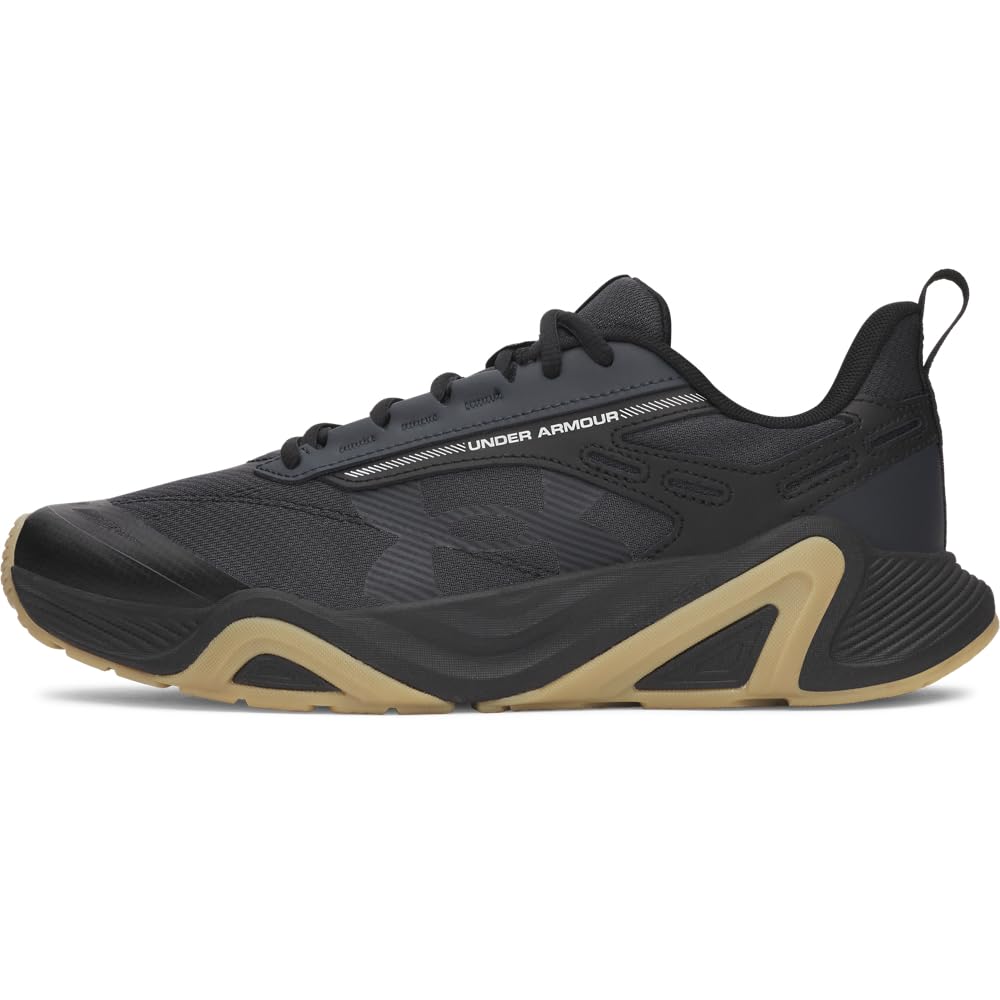
| Under Armour Charged Commit Trainer 5★ Best Overall | All-around gym sessions | Charged Cushioning | Roomy toe box | — | Amazon |
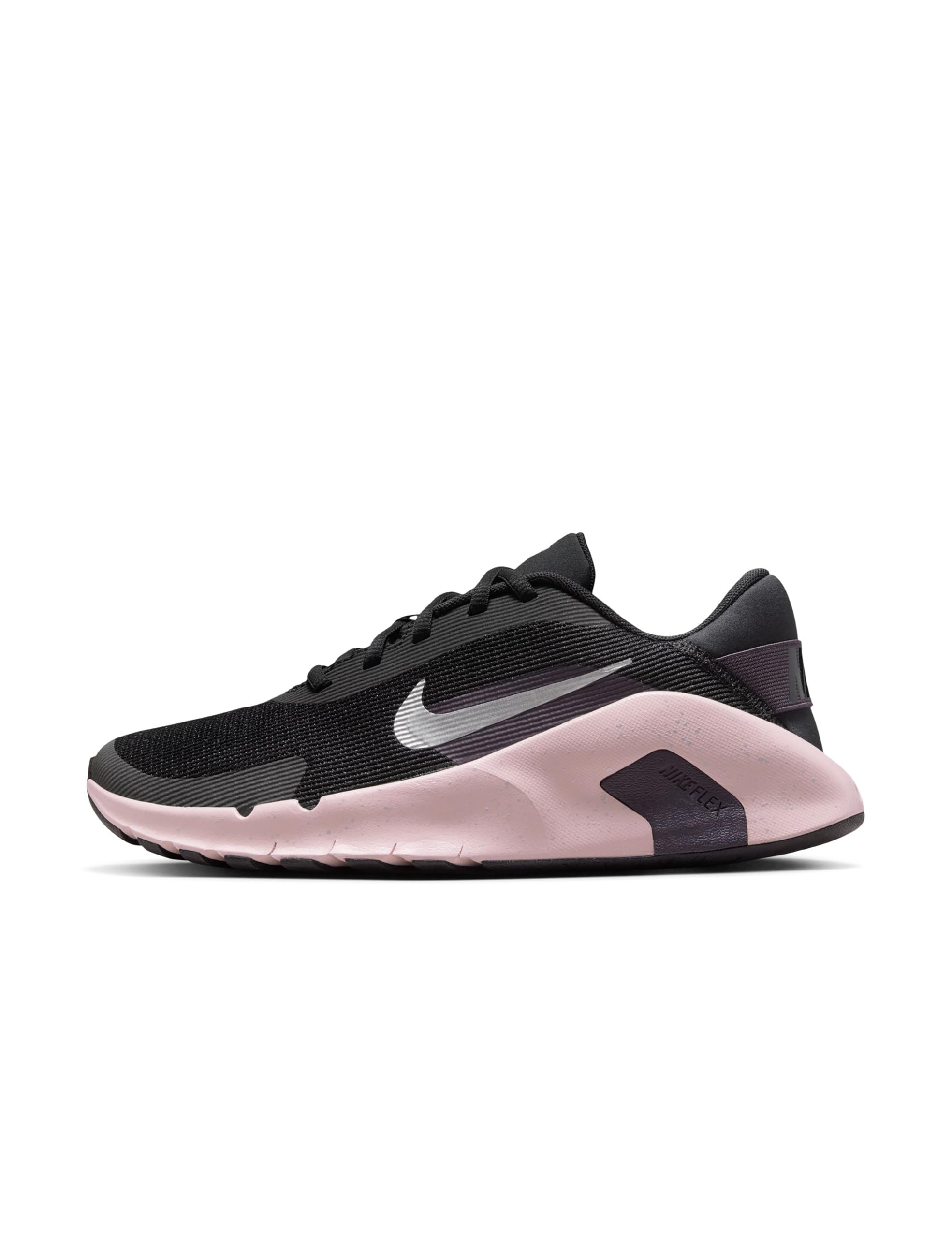
| Nike Women’s Flex Train Training/Workout ShoesBest Value | Flexible cardio and classes | Flexible rubber outsole | Soft mesh upper | — | Amazon |
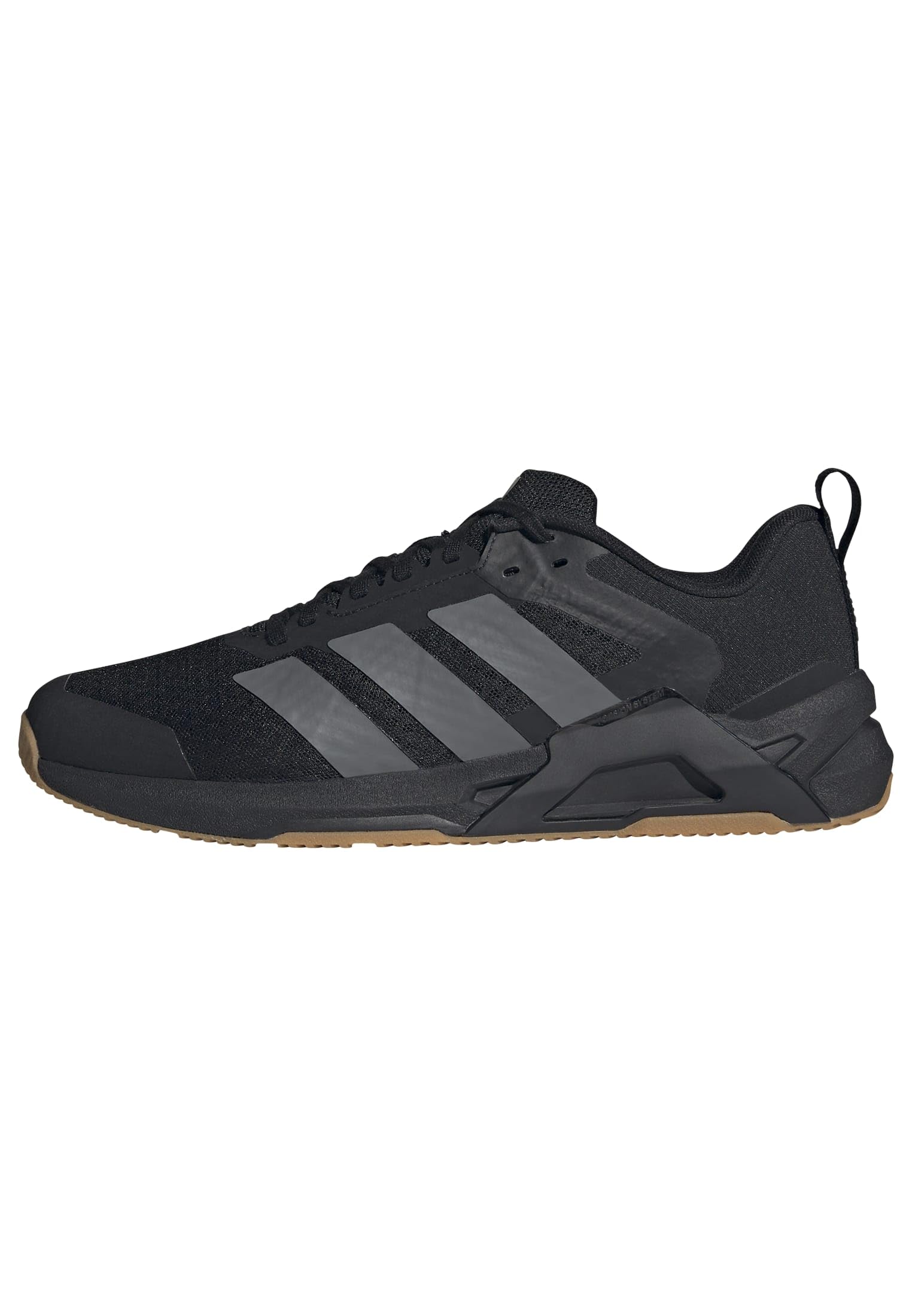
| adidas Men’s Dropset Vario TrainingTop Performer | Heavy lifting days | TPU midfoot torsion | Wide-fit construction | — | Amazon |
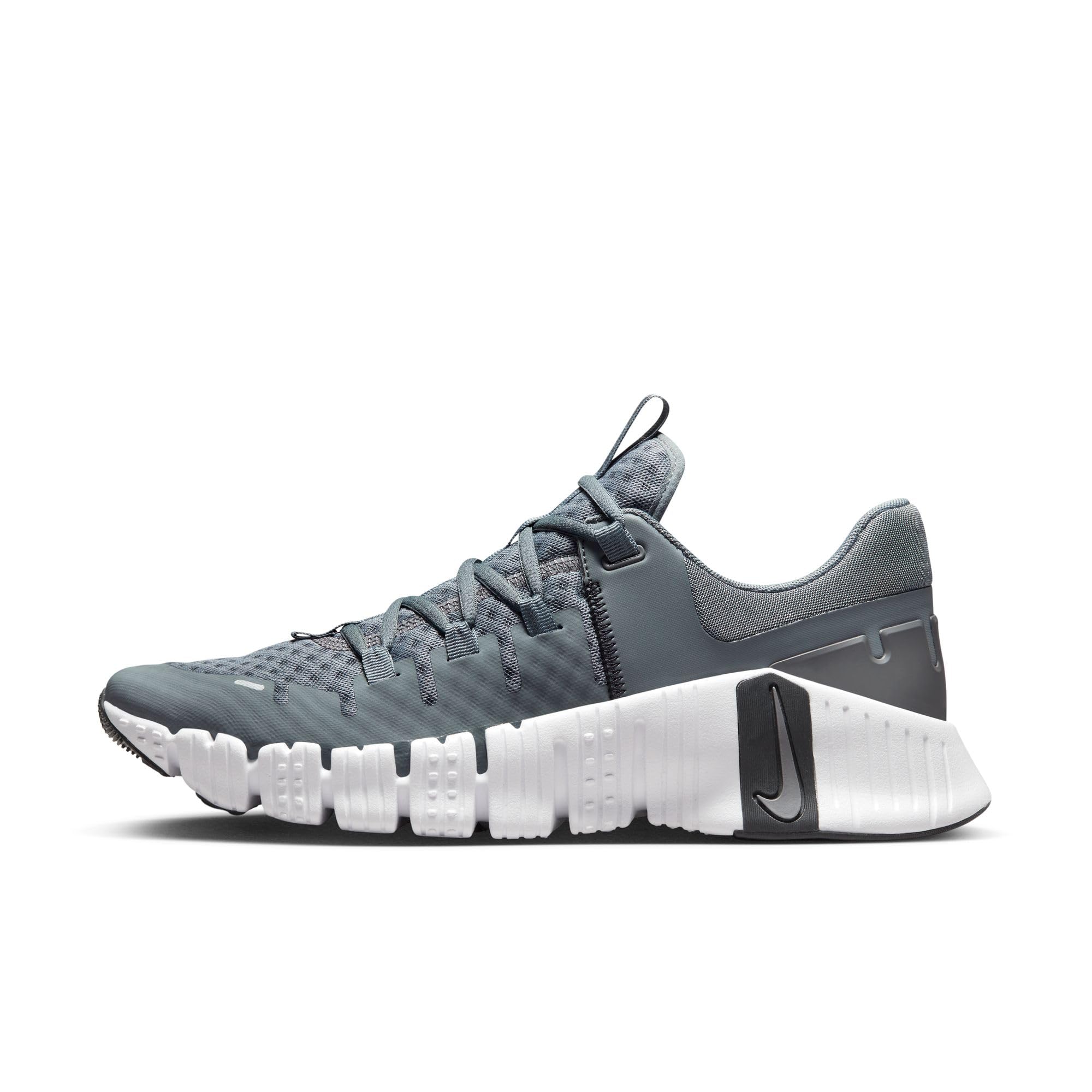
| Nike Mens Nike Free Metcon 5Sneaker | Agility and lifting mix | Medial and heel support | Chain mesh upper | 3 pounds | Amazon |
| Under Armour Men’s TriBase Reign 6 Trainer Shoes | All-around cross-training | External heel clip | Wide toe box | 2.4 pounds | Amazon |
| Nike Womens Free Metcon 6 | Dynamic workouts and cardio | Reinforced heel foam | Forefoot flexibility | — | Amazon |
| ALTRA Men’s Solstice XT 3 Cross Training Shoe | Natural movement and wide feet | A-frame quarter panel | FootShape toe box | 9.5 oz | Amazon |
| Reebok Nano X5 Men’s Shoes | CrossFit and functional workouts | Stable base | Toe box width | — | Amazon |
| On Women’s Cloud X 4 Sneakers | Cardio and HIIT | Speedboard forefoot | Toe room | 1.56 pounds | Amazon |
Detailed Reviews
1. Under Armour Charged Commit Trainer 5
Our pick — 4.5+★ from 450+ verified ratings; the strongest balance of quality and price.
The everyday trainer that does a bit of everything without asking for a premium price. It is the pick for someone who lifts, walks, and plays a little pickle ball on the side.
Under Armour’s Charged Commit Trainer 5 takes a sensible middle route. There is leather laid over the top of your foot — a strip of stiff material that keeps you steady when you load one leg — and flex grooves cut into the bottom so your foot can bend on a lunge. Charged Cushioning handles the impact so your knees are not absorbing every landing.
What wins people over is the build. Across 450+ owners, the shoe holds a 4.5+ star average, and the thing praised most is the quality of the materials and stitching. It is note this is the highest-rated pick in the entire group. The wide, roomy toe box is another recurring point — a pair you can wear for a full session without your toes feeling pinched.
One honest caveat: the Charged line leans toward cushioning rather than a rock-hard platform, so if you chase a dead-flat, unforgiving lifting feel, this is softer than a dedicated squat shoe. For a blended week of lifting, walking, and court sessions, that softer ride is a feature rather than a flaw.
The case for it
- Leather overlay and flex grooves balance stability with movement
- Roomy toe box that suits a variety of foot shapes
- Holds up across lifting, walking, running, and pickle ball
- Highest-rated shoe in this group
Where it softens
- More cushion than a dedicated lifter for maximum weight days
- Not built for true sprint work
Reach for this if: you want one pair that handles lifting, casual gym classes, and the occasional court session without a big spend.
Look elsewhere if: your training is almost entirely heavy barbell work, where a flatter, firmer sole serves you better.
2. Nike Women’s Flex Train Training/Workout Shoes
Built for the class-goer who bounces through cardio and still wants a shoe that won’t flatten their budget.
The Flex Train leans into flexibility. Rubber cutouts in the outsole let the shoe bend with your foot, and a full-length foam midsole cushions each step. A soft mesh upper keeps air moving so your feet do not overheat during a sweaty circuit. That combination suits dance-style classes, box jumps, and the sort of training where your feet are constantly changing direction.
Comfort is the standout — owners repeatedly note their toes are not bunched or pinched. The build quality earns solid marks too, and plenty plan to buy another pair. Fit is where it splits: some find it true to size with a supportive arch, while others find it runs big and a little narrow, and arch support draws mixed reactions. Try it on if you can, or size with care if your foot is wide.
Light on the foot: the mesh construction makes this one of the easier pairs to forget you are wearing mid-session, and it is budget-friendly for a branded trainer.
Fit is a wildcard: narrow-footed and average-arch buyers tend to be happy; very wide feet or high arches are the ones who end up returning it.
Best for: women whose week is mostly aerobic classes, light resistance, and treadmill warm-ups.
Look elsewhere if: you need a wide fit or strong arch support right from the start.
3. adidas Men’s Dropset Vario Training
A deliberately flat, grounded pair for lifters who want to feel the floor through the whole rep.
adidas built the Dropset Vario around one idea: stay planted. Repetitor Foam gives a consistent, responsive platform so the sole does not mush under a heavy squat. The wide-fit construction broadens your base, and a low-profile design keeps you close to the ground. A TPU midfoot torsion system — a stiff plastic piece under the arch — stops your midfoot from twisting during lateral movements without locking out your natural foot motion. The breathable mesh upper keeps airflow going through long sessions.
Owners describe these as well-made and comfortable, and the stability shows up most on weight training and ankle support. It transitions cleanly from warm-ups to heavy sets to a conditioning finisher. Two trade-offs show up in the feedback. The fit across the toes is narrow for some wider-footed lifters, and a portion of buyers report the thin fabric tearing over time, so treat the upper gently if you train in them daily.
Grounded platform: the low-profile sole plus the torsion system is the combination that makes this feel steady under a bar.
Watch the upper: the mesh is thin, and durability on the fabric is the point most likely to disappoint over a long season.
Pick this if: squats, deadlifts, and compound lifts are the core of your program and you want a shoe that keeps your weight centered.
skip it if: your feet run wide across the toes or you need a shoe that survives years of daily abuse.
4. Nike Mens Nike Free Metcon 5Sneaker
The hybrid that handles a heavy set and a sprint drill in the same session without complaining.
The Free Metcon 5 is Nike’s answer to the all-purpose gym shoe. An upgraded chain mesh upper flexes during agility drills, and the medial and heel support are built for heavier sets in the weight room. It is designed to move between running, lifting, and Cross-fit without feeling like a compromise at either end. That flexibility is the whole pitch — one pair that covers lifting, agility drills, and short runs in the same training week.
Weight is the trade-off to know about. At 3 pounds on the spec sheet, this is noticeably heavier than the Under Armour TriBase Reign 6 at 2.4 pounds — a real gap if you are sprinting or doing a lot of jumping. Owners praise the quality and the support, with the appearance and versatility also earning strong marks. Sizing is the mixed part: several owners mention they run smaller than expected, so consider going up if you sit between sizes.
What it does well
- Flexible chain mesh upper for agility work
- Heel and medial support for heavy sets
- Suited to running, lifting, and Cross-fit in one shoe
- Strong build quality across hundreds of owners
What to plan for
- Heavier at 3 pounds than the TriBase Reign 6 at 2.4 pounds
- Runs small for some buyers
The right fit: the mixed-training athlete who does some of everything and wants a durable, flexible shoe to match.
The wrong fit: speed-focused sprinters who will feel the extra heft.
5. Under Armour Men’s TriBase Reign 6 Trainer Shoes
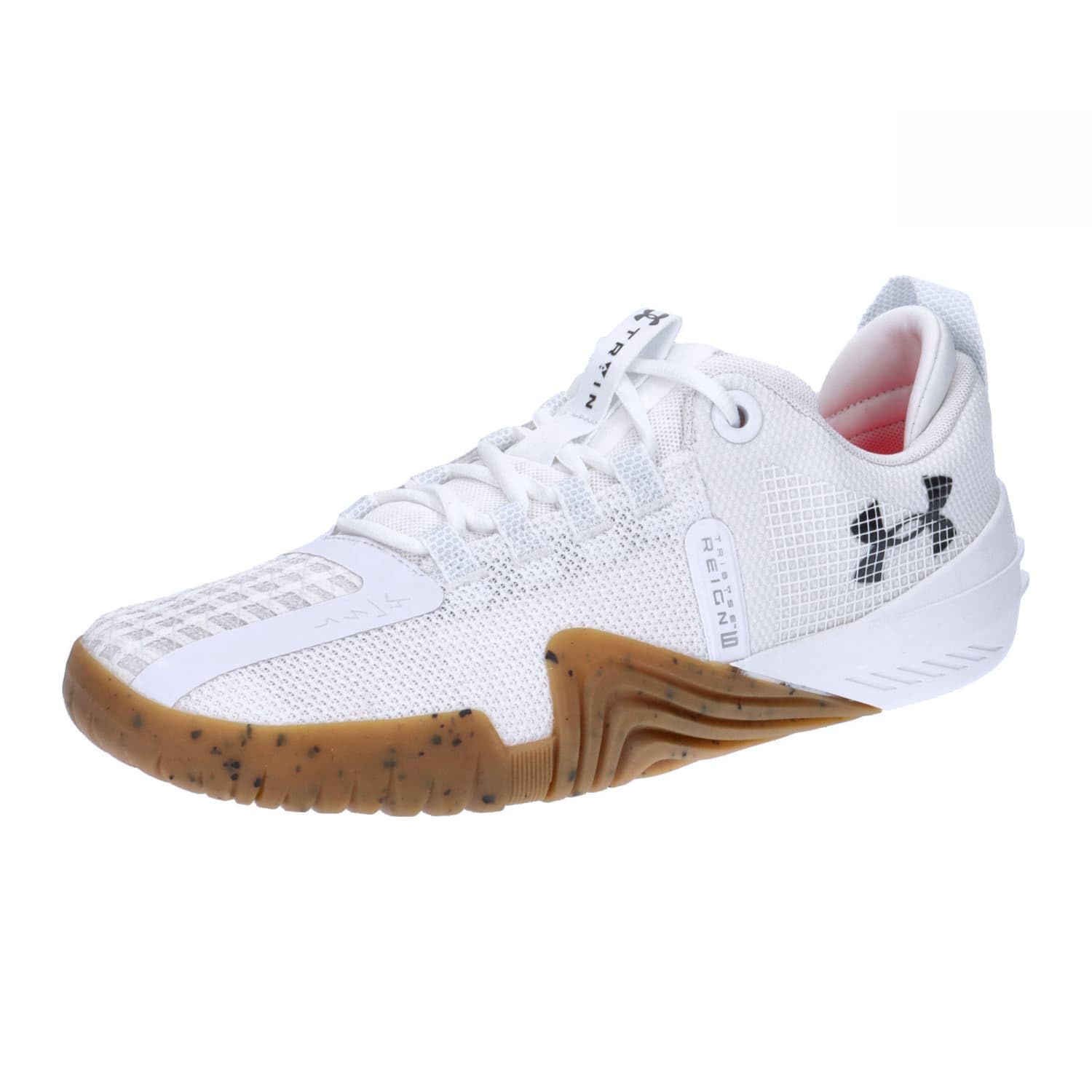
Three points of ground contact and a heel that stays put — this is the stability pick for serious lifters.
The TriBase Reign 6 is built around grip and lockdown. Three points of ground contact keep you anchored, and the updated UA TriBase design promotes natural motion while letting your foot grip during lifts. A thermoplastic polyurethane mesh upper (a tough, breathable synthetic) provides support in dynamic movements. An external heel clip and internal heel counter lock the back of your foot so it does not slide during a squat. A dual-density midsole is softer in the forefoot and firmer in the heel for support where you need it most.
At 2.4 pounds, this is lighter than the Nike Free Metcon 5 at 3 pounds — a difference you feel over a long session. The full-rubber outsole wraps up the sides for abrasion resistance and includes a medial rope grip, so rope climbs are less likely to chew through the shoe. Owners single out quality above all, followed by comfort, and it works well for low arches and flat feet thanks to the wide toe box.
The fit feedback is positive but not universal — a small share of buyers find the toe box tighter than expected, so size with your foot width in mind. For a shoe that carries a 4.5+ star average across hundreds of owners, that is a fit note rather than a flaw.
Built for the platform: the heel clip, dual-density midsole, and medial rope grip make it a genuine functional-fitness shoe rather than a rebadged runner.
The honest limit: it is a stability-first shoe, so runners who want a cushioned ride will find it firmer than they like.
Choose this if: you lift, do rope climbs, and want a shoe that stays glued to your heel through every rep.
Keep looking if: your main goal is long-distance running comfort rather than ground feel.
6. Nike Womens Free Metcon 6
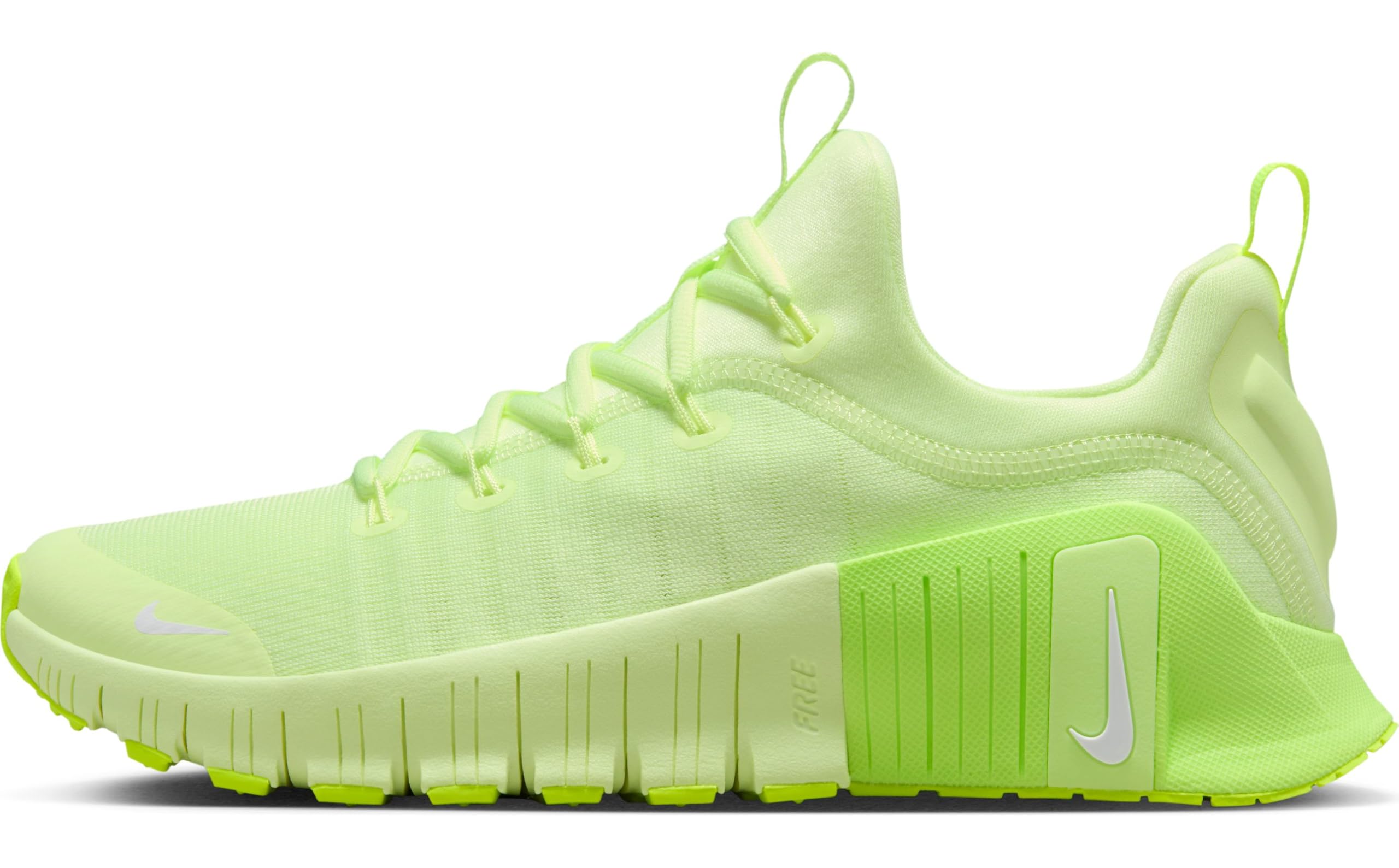
More forefoot flex and extra foam in the heel — the Metcon line softened up for class-heavy training weeks.
The Free Metcon 6 takes the Metcon formula and makes it more adaptable. Nike added even more forefoot flexibility for plyos and cardio classes, then reinforced the heel with extra foam for a stable base under weights. It is the shoe for someone splitting time between jump-heavy circuits and a moderate dumbbell session, rather than a pure powerlifter chasing a dead-flat sole.
Owners rank the look highly and the comfort comes in strong too, with arch support noted as a plus. Two things to weigh before you buy. The fit splits between buyers who find it true to size and those who say it runs small, so sizing is a real decision. Durability also divides opinion — a share of customers note theirs did not last, and some find the shoe tricky to pull on compared to simpler designs. At the premium end of this list, those are the points worth knowing up front.
The draw: the extra forefoot flex plus the reinforced heel gives you both dynamic movement and a stable lifting base, which is a hard balance to strike.
Be honest about wear: this is a shoe for training sessions, not a daily driver you wear everywhere — durability is the thing most likely to disappoint.
Good match for: women whose sessions mix cardio classes, plyometrics, and moderate strength work.
Less suited to: anyone who wants a fuss-free shoe that pulls on fast and lasts multiple seasons.
7. ALTRA Men’s Solstice XT 3 Cross Training Shoe

Zero drop and a FootShape toe box that lets your toes spread — the natural-movement choice for wide feet.
The Solstice XT 3 is built on Altra’s signature ideas. A zero-drop platform — where the heel and forefoot sit at the same height — keeps you level and connected to the floor during lifts. The FootShape fit gives you room at the front while the midfoot stays secure, and the A-frame quarter panel adds stability for lateral movements. An InnerFlex midsole with grid-like grooves helps the shoe flex, and a padded heel collar keeps the back comfortable. This one weighs 9.5 oz on the spec sheet.
What lands with owners is the look and the comfort — the shoe earns praise for how it feels on longer days, and for its stability in dynamic movements. The wide toe space is the reason many buyers choose it. The fit is genuinely mixed, though: some buyers find the dorsal area (the top of the foot) too tight and report the shoe not staying in place. Durability also divides, with outsole peeling reported by a share of buyers. If you have wide, high-volume feet, this is worth a try — just check the return terms.
For the wide-footed lifter: zero drop and the roomy FootShape toe box suit feet that feel cramped in standard trainers.
Not for everyone: the zero-drop platform takes adaptation if you are used to a raised heel, and the fit can run tight across the top of the foot.
8. Reebok Nano X5 Men’s Shoes, Cross Training Sneakers for Men
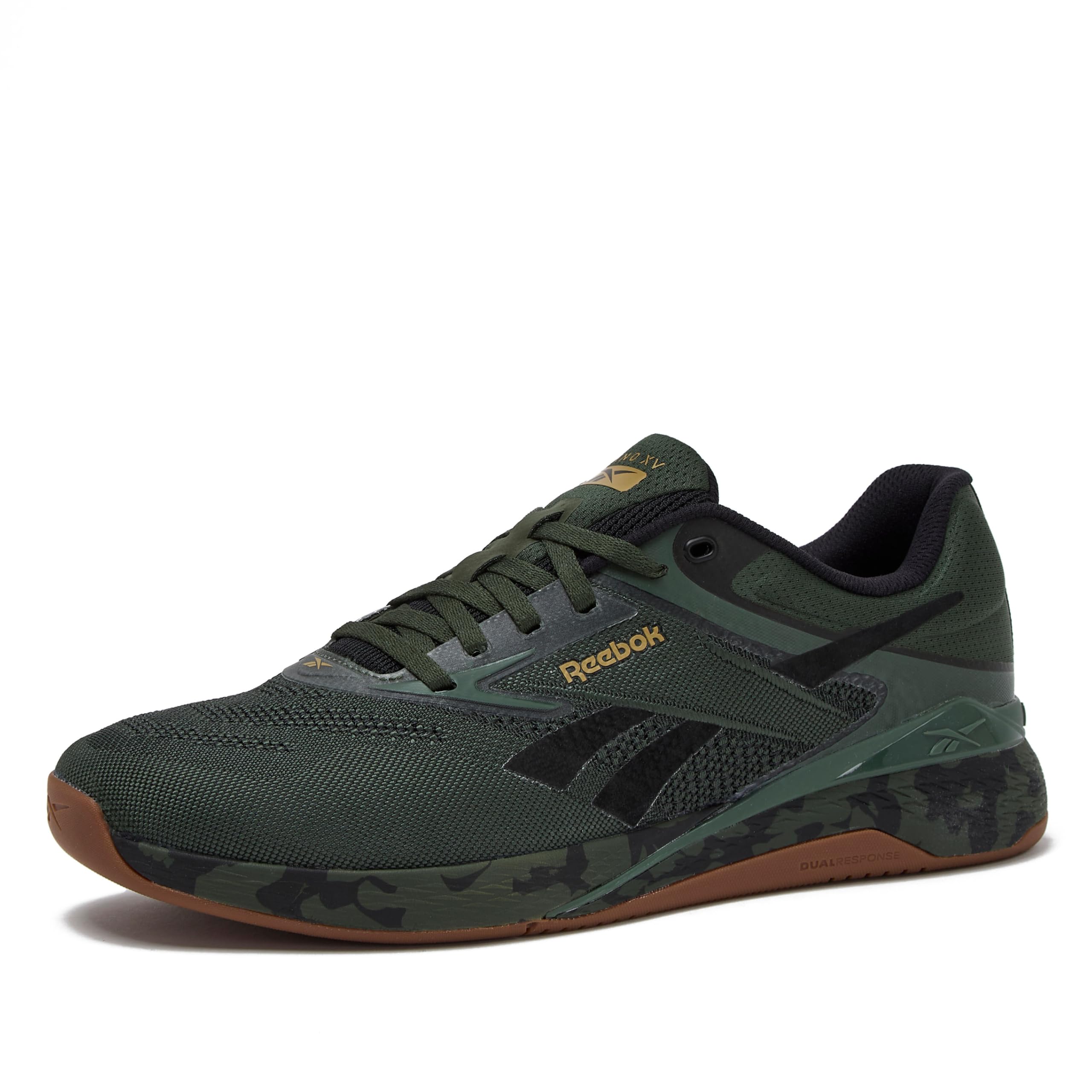
The CrossFit-flavored pick for box jumps, barbell work, and HIIT rounds in the same hour.
The Nano line has long been a staple of functional fitness, and the X5 carries that reputation into this list. Build quality is the strength owners talk about most — this is a shoe that feels solid underfoot during high-intensity work. Stability draws praise for HIIT and support, and the toe box width suits those who need more room at the front. It looks sharp too, with a colorway many buyers call out as a favorite.
The fit is the honest variable. Some buyers appreciate the toe box width, while others find it runs too narrow — a split that matters if your feet are on the wider side. Durability is the other mixed point, with a share of buyers reporting the sole coming apart over time. Neither is universal, but both are worth knowing before you commit. If you’re a CrossFitter who wants a stable, well-built shoe for box jumps and barbell work, this belongs on your shortlist.
Why it earns its spot
- Build quality is the standout strength
- Stable for HIIT and functional work
- Toe box width suits some buyers well
- Appearance and value both earn praise
Where it wobbles
- Fit is a split — narrow for some, roomy for others
- Durability on the sole is mixed
Solid choice for: CrossFit athletes doing a mix of lifting, jumping, and conditioning who want a proven functional-fitness build.
Try before you buy if: your feet run wide — the width is not universal.
9. On Women’s Cloud X 4 Sneakers
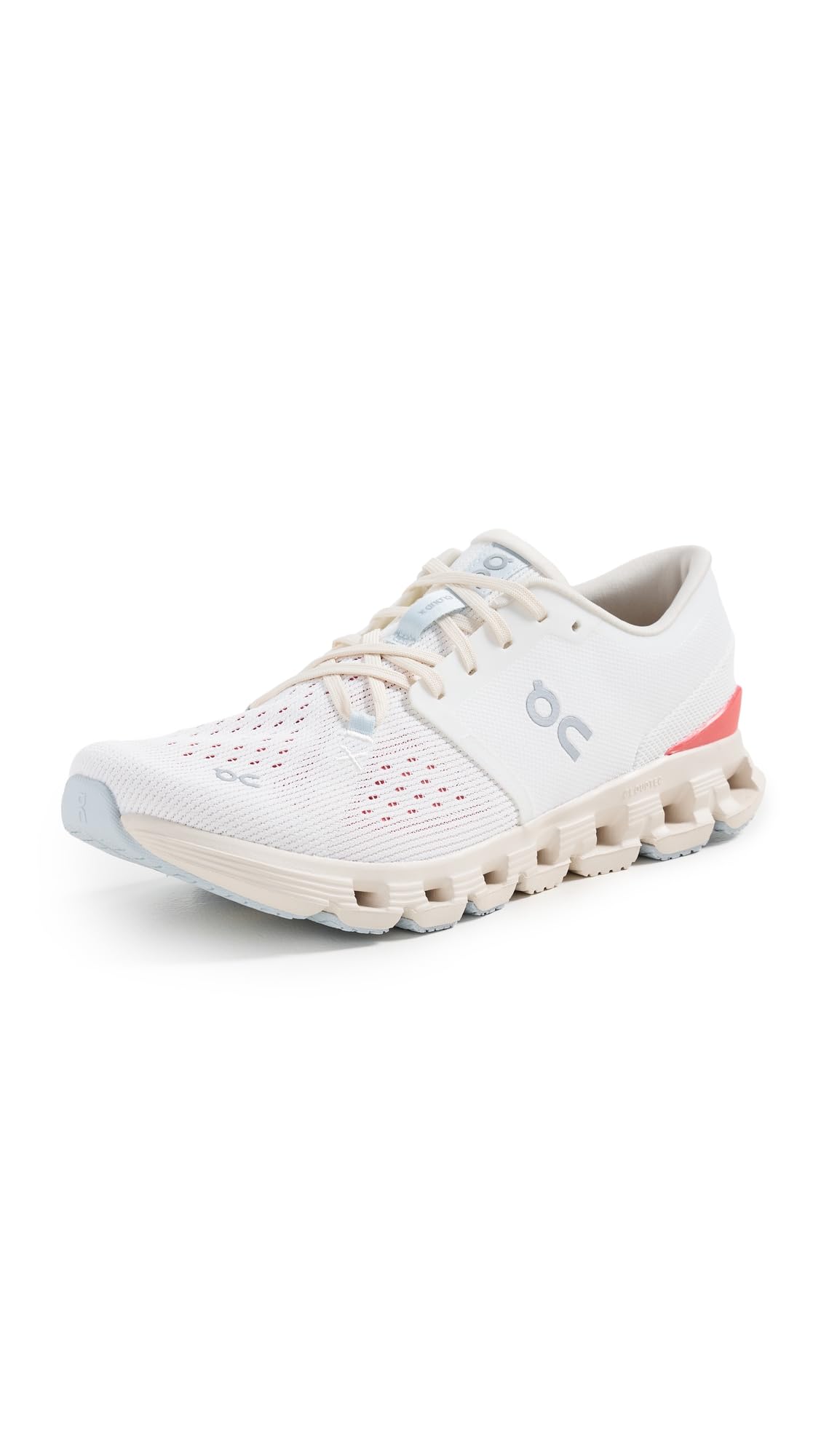
Born from running, tuned for the gym floor — light enough for cardio and flexible enough for class work.
The Cloud X 4 sits in the premium tier for a reason. On redesigned the Speedboard — a flexible plate running through the shoe — for better forefoot flex, and added softer, more cushioned foam underfoot. It is built for workouts, cardio, HIIT, and short runs, which makes it a good fit for the class-goer who also does some light lifting. At 1.56 pounds, this is the lightest pick on the list, and the upper uses 92% recycled polyester and 37% recycled thermoplastic polyurethane.
Owners love how it looks and how it feels on the foot, and the lightweight build is a frequent point of praise. The value question is where opinions split — some feel it is worth the spend for the brand and the feel, while others find it steep for what it is. The fit is also mixed, with some buyers getting a true-to-size fit with toe room while others find it narrow, and durability is reported as variable. If you want an elegant cardio-and-class shoe and you are comfortable with a premium outlay, it delivers on the feel.
Light and lively: the recycled upper and Speedboard flex keep the shoe feeling quick on HIIT rounds and short runs.
The reality check: premium pricing with durability that some buyers question means this is one to treat as a gym shoe, not a daily beater.
Made for: women whose training is cardio-forward — HIIT, classes, and short runs — who want a light, flexible shoe.
Think twice if: you are a dedicated lifter who needs a firm, flat platform under heavy squats.
Know the Specs
Heel-to-toe drop
Drop is the height difference between the heel and the forefoot. A zero-drop shoe like the Altra Solstice XT 3 puts both at the same height, which keeps your weight level and helps you feel the floor. A raised heel tilts you slightly forward, which some runners like and some lifters find unstable. For lifting, a low or zero drop tends to feel more grounded.
Toe box width
The toe box is the room at the front of the shoe. It matters because your toes naturally spread when you squat, and a cramped box pinches that movement. A wide box, like the one on the Under Armour TriBase Reign 6, suits wider feet and flat arches. A narrower box can feel locked-in but tight for someone with a broad foot.
Midfoot support and torsion
A torsion plate — a stiff insert under the arch, like the TPU system in the adidas Dropset Vario — resists twisting during lateral cuts. It keeps your midfoot stable when you pivot or lunge sideways. Too much stiffness can feel awkward in a sprint; too little can roll during a lateral move. Look for a plate that supports without locking out natural motion.
Upper material and breathability
The upper is the part of the shoe above the sole. A mesh upper breathes, which matters during long, sweaty sessions. A leather overlay, like on the Charged Commit Trainer 5, adds structure and stability under a load. The trade-off is warmth and flexibility — leather feels firmer, mesh feels cooler and more pliable.
Common Questions
Can I wear training gym shoes for running?
Should I size up or down in training shoes?
What is the difference between zero-drop and raised-heel training shoes?
Are wide toe box shoes better for squats?
How long do training gym shoes typically last?
Are these shoes good for CrossFit and rope climbs?
Do I need different shoes for lifting and cardio?
What should I look for in the heel of a training shoe?
Are these training shoes suitable for flat feet?
Can training gym shoes be used for walking and everyday wear?
The Bottom Line
For most people, the best training gym shoes on this list are the Under Armour Charged Commit Trainer 5. A 4.5+ star average from 450+ owners puts it at the top of the group, and its leather-overlay upper with flex grooves balances stability against the movement a full training week demands. If your program is all barbell work, the Under Armour TriBase Reign 6 is the stronger call — the heel clip, dual-density midsole, and medial rope grip are built for the platform. And if your sessions lean cardio and class-heavy, the On Cloud X 4 earns its spot with a light build and a flexible Speedboard underfoot.
How we choose
We do not accept paid placement. Every pick is matched to a real buyer and a real use-case; we do not hands-on test units.
Sources
Specifications: manufacturer listings and product documentation. Review insights: verified customer reviews, as of November 2026. Pricing: not shown on this page (it changes often); check the current price via the retailer link.
As an Amazon Associate, Tactical Gear Guy earns from qualifying purchases. This does not affect which products we feature.