Specs are compiled from manufacturer listings and verified buyer reviews and can change over time — please confirm the key details on the product page before buying.
Boarding at a wet ramp shouldn’t mean balancing on a cooler or jumping onto the tongue. The right trailer step bolts to your frame, gives you a flat anti-slip platform underfoot, and usually adds a handrail you can actually grab when the ramp is slick. Below are eight bolt-on and clamp-on picks that mount to a boat trailer frame, sorted by what each one does best — plus a straight note on fitment before you buy.
This guide is built by comparing the manufacturers’ published specifications and the patterns across verified customer reviews, so you get each pick’s real strengths and trade-offs instead of marketing spin.
Fitment matters more than anything here, so this list uses flexible matching — the nearest same-type step for your frame width, not always the exact model you searched. Read on for the trailer steps for boat trailer picks that match your tongue size and mounting style.
Top Picks

How To Choose The Best Trailer Steps for Boat Trailer
Most people buy the wrong step for one reason: they measure the boat, not the steel it has to clamp onto. Before you read a single listing, grab a tape and check the width and height of the frame or tongue where the step will sit. Every pick below lists the frame size it fits, and that number is the make-or-break spec.
Measure the frame, not the boat
A step rated for a 3″ x 4″ tongue will not clamp onto a 3″ x 5″ crossmember without slop. Check both numbers — width and height — because a fit that is loose will rock under your weight every time you board. If your trailer has a custom-built frame, go with a step that lists the widest range of mounting sizes rather than a single fixed dimension.
Weight capacity and how you board
The capacity rating tells you how much the step is built to hold, and the spread across this list runs from 275 pounds up to 450 pounds. If you are loading gear and coolers while climbing, aim higher than your own body weight. A two-step or three-step ladder gives you a gentler climb than a single platform, which matters most when your boat sits high on the trailer.
Steel, aluminum, and the rust question
Steel steps are heavier and typically powder coated black to fight corrosion. Aluminum steps weigh far less and resist rust by nature, but they can flex under a hard stomp. If your trailer lives outside near salt water, weight the finish and material as heavily as the price tier — a rust-resistant coating is what keeps the step usable season after season.
Grip, handrail, and solo launching
Wet ramp, wet boots, wet step — that is the real condition you are buying for. Look for an anti-slip pad or grip tape on the tread, a wider pedal for your whole foot, and a handrail you can grab without it blocking the boat hull. A handrail that mounts left or right is worth seeking out if your hull edge sits close to the frame.
Side-by-Side Comparison
| Model | Best For | Capacity | Step Format | Weight | Amazon |
|---|---|---|---|---|---|
| MEGAWARE KEELGUARD FlexStep★ Best Overall | Adjustable all-rounder | 300 lbs | Single, 16 positions | 7.7 lbs | Amazon |
| MECTL Frame Mounted Step (2 Pack)Best Value | Budget two-step set | 300 lbs | Single surface, 2 pack | — | Amazon |
| Extreme Max 3006.6824 GalvanizedPremium Pick | Rust-focused single step | 275 lbs | Single, galvanized | 12.73 lbs | Amazon |
| Extreme Max 3006.6857 Aluminum | Wide platform, light weight | — | 6″ x 20″ single | 5 lbs | Amazon |
| Aupar 3-Step with Handle | Three-step climb with rail | — | Three steps + handrail | 18 lbs | Amazon |
| OUTPRIZE 3-Step Ladder | Heavy load, solo launching | 450 lbs | Three steps + handrail | 25 lbs | Amazon |
| VEVOR 4-Step with Handle | Maximum step count | — | Four steps + handrail | 22.9 lbs | Amazon |
| Omega Boat Step (Made in USA) | Bass boat fit, US steel | — | Two steps + grab pole | — | Amazon |
Detailed Reviews
1. MEGAWARE KEELGUARD FlexStep, Adjustable Boat Trailer Step
Our pick — 4.5+★ from 200+ verified ratings; the strongest balance of quality and price.
The step that swivels to any angle, so you can put your foot exactly where the boat edge leaves room.
What wins people over here is the adjustability — the FlexStep locks into 16 different positions, and the step reaches from 17 to 21 inches so you can line it up with the exact spot you want to plant a boot. Instead of forcing your body to match a fixed platform, you angle the platform to match your hull. It mounts to most trailer frames with four bolts, so the install is a single afternoon job rather than a fabrication project.
The build is lightweight high-tensile 6063-T6 anodized aluminum at 7.7 pounds, and it is rated to hold up to 300 lbs. Anodized aluminum resists rust without a coating to chip, and the low weight means the step is not adding heft to your tongue. The single-pin quick detach lets you pull the step off for travel or storage — handy if your setup lives on a trailer that sees highway miles and tight ramps.
The catch is that a single step still leaves a bigger gap to the boat than a multi-step ladder, so if your deck sits high you may want a three-step frame instead. Against the Extreme Max aluminum step below, this one adds 2.7 pounds more weight but swaps the fixed platform for that 16-position pivot. As owners put it: “well-built and easy to install, taking less than 15 minutes to set up.”
What earns its keep
- 16 locking positions let you aim the step at any angle your frame allows
- Reaches 17 to 21 inches, so it lines up with where you actually step
- Anodized 6063-T6 aluminum — 7.7 lbs, rated to 300 lbs, rust-resistant
- Four-bolt mount and single-pin removal for storage or travel
Worth knowing before you bolt
- One platform, not a ladder — a tall deck still needs a big first step
- Heavier than the fixed aluminum step; verify your frame bolts line up
Reach for this if: your hull edge sits at an awkward angle and no fixed step quite lines up.
Look elsewhere if: you need a three-step ladder for a high, hard-to-reach deck.
2. Frame Mounted Step 2 Pack
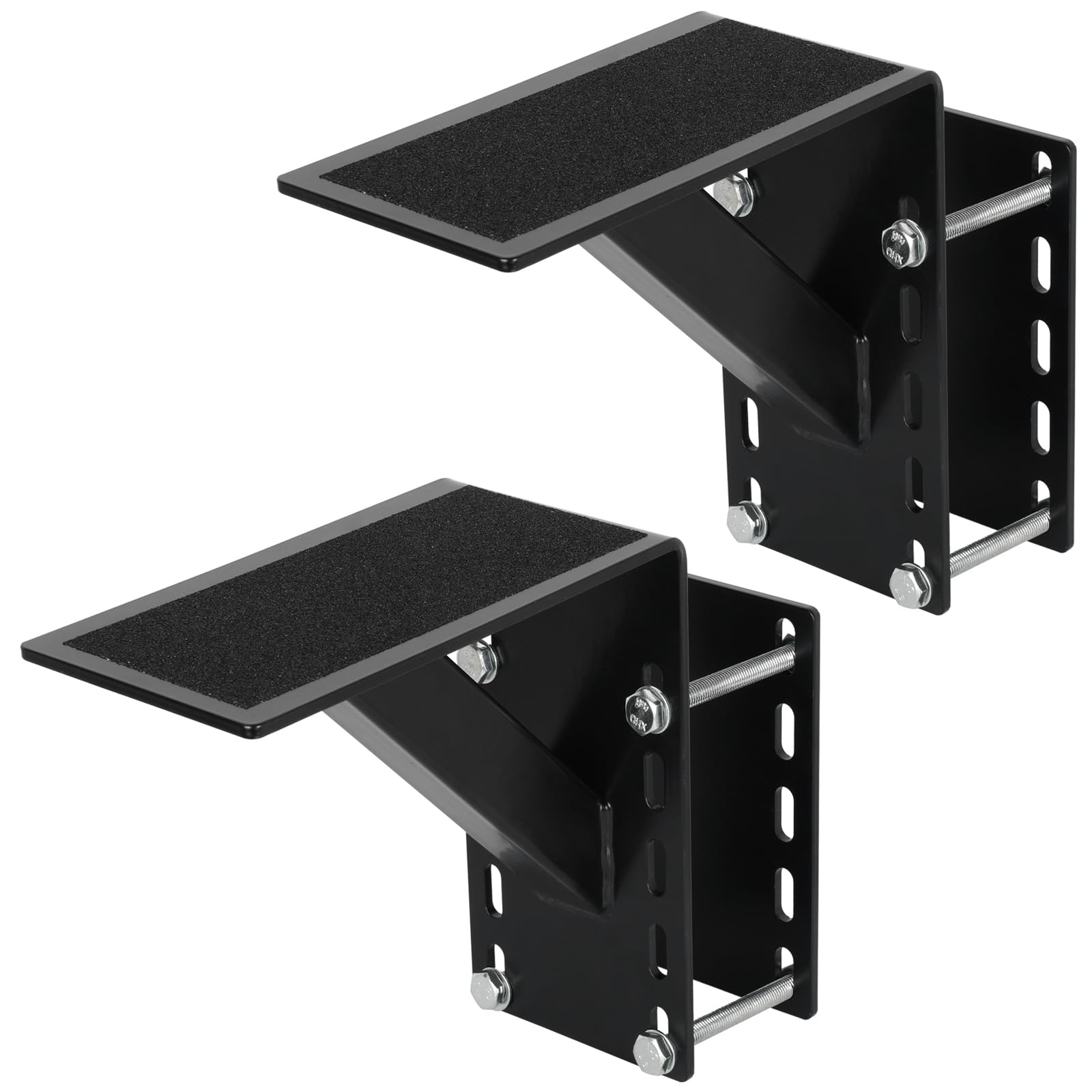
Two non-slip pads you bolt on in minutes — the practical fix for a tongue that offers no foothold.
Each surface measures 4″ x 7″ and carries a non-slip pad, which is exactly the size you want for a wet ramp footing. The body is industrial-grade solid iron with a black powder coating that fends off rust, and the whole thing is rated to hold up to 300 lbs.
The install is the real draw here — bolt-on mounting with no fabrication, and the package goes on quickly enough to be done before you back down the ramp. Because you get two, you can put one near the tongue and a second where you actually swing your leg over. The 9.45 x 5.04 x 9.45 inch footprint keeps each step compact so it does not crowd the frame.
The plain spot is the hardware reputation — mounting bolts land in the mixed column of owner feedback, so check them for tightness after the first few launches. A worthwhile confidence point is that the surface is a mid-size platform rather than a huge one, so it fits tight trailer setups without overhang. Buy it if two simple bolt-on footholds are all your boarding needs.
What it does well: two 4″ x 7″ non-slip surfaces, 300 lbs capacity, and a fast bolt-on install for a 3″ x 5″ frame — a lot of practical footing for the entry tier.
Set your expectations: the mounting hardware has the mixed end of owner reports, so retighten after your first few ramp runs.
Buy it for: a tight budget and a frame that needs a simple bolt-on foothold, not a ladder.
Step up instead if: you want a handrail to grab while you climb.
3. Extreme Max 3006.6824 Galvanized Trailer Tongue Step
Galvanized steel and grip tape — the step built to shrug off salt air and wet boots.
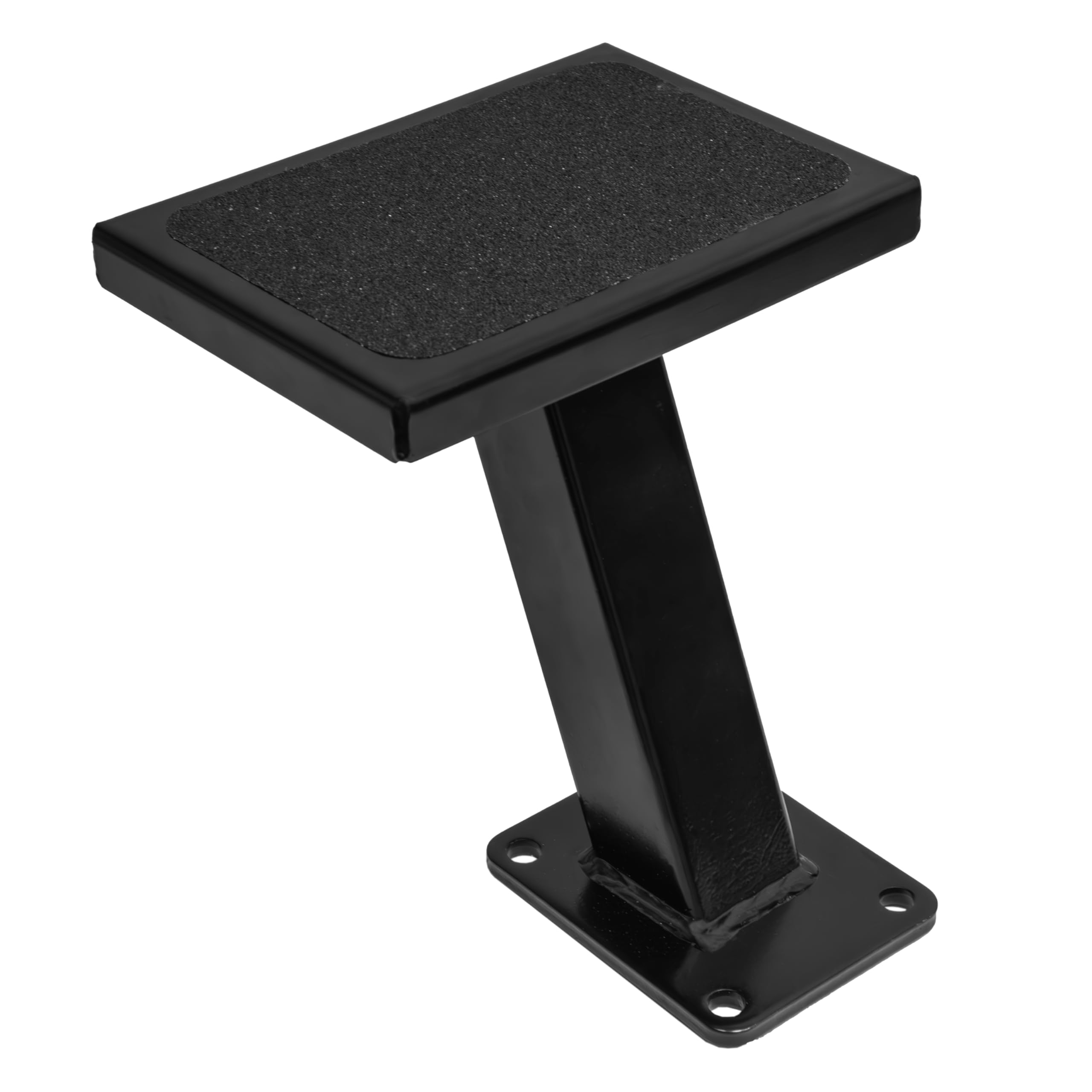
Galvanized means the steel gets a zinc coating, so rust has a much harder time getting a toehold than it does on bare painted metal. That is a real advantage on a trailer that lives outdoors and gets dunked at the ramp. The step fits trailer tongues up to 3″ x 4″, and it comes with anti-slip grip tape already applied to the stepping surface, so you are not hunting for traction at the water line.
Build-wise it runs 12.73 pounds with a rugged steel body and includes all the mounting hardware in the box. Owner feedback treats it as heavy-duty and well-built, with a fit that suits custom trailer setups well. One thing to plan around is that the tongue step is meant to supplement entry leverage, so it works best paired with your existing setup rather than replacing a full ladder.
Goes without saying: if your tongue measures wider than 3″ x 4″, you will need a different step. As buyers report, “it supports up to 275 pounds,” which is the mid-range of this list’s capacity spread and fine for most boarding needs. For a 3″ x 4″ tongue and a rust-resistant finish, this is the durable single-step pick.
Why it earns the premium slot: galvanized corrosion resistance, anti-slip grip tape, hardware included, and a fit for tongues up to 3″ x 4″ — durable where marine use punishes steel.
Where it stops: it is one step, not a ladder, so measure your tongue width before ordering.
The fit: a trailer that sits outdoors with a 3″ x 4″ tongue and a need for one solid, rust-resistant step.
The mismatch: a tongue wider than 3″ x 4″, or a deck so high you need multiple steps.
4. Extreme Max 3006.6857 Aluminum Boat Trailer Step

A 6″ x 20″ aluminum platform that weighs just 5 pounds — room for the whole family to board.
The number worth circling is that 6″ x 20″ step surface — it is a long platform, not a small pad, so two feet, a cooler hand-off, or a wet dog can all share the space. Diamond plate finish on the aluminum gives you a textured grip surface that stays useful with spray on it. And at 5 pounds it is the featherweight of this whole group, which keeps your tongue load down.
Mounting is a clamp-style fit for trailer frames up to 3″ wide x 4″ tall, so it slides onto most common tongue dimensions. On the weight question, this is 13 pounds lighter than the Aupar three-step above — an easy carry-on if you remove it between trips. Owners praise the wide diamond-plate platform for making launch and load easier.
Be honest about the aluminum trade: the end of the step can bend under a hard strike, so treat that edge gently rather than dropping the tongue onto it. For most buyers the flat platform and low weight are worth that caution. It comes with a 2-year warranty, which is a fair safety net on the one area owners flag.
The big quiet win: a 6″ x 20″ diamond-plate aluminum platform at only 5 pounds — maximum footing for minimum tongue weight.
The trade: that same thin aluminum edge can bend, so ease the trailer down rather than clanging it on.
Pick this when: you want a wide, easy platform and care about keeping the tongue light.
Skip this when: your work style is hard and fast and you need a step that never flinches.
5. Boat Trailer Tongue Steps with Handle 3 Step

A three-step steel ladder with a handrail — climbing in should not feel like an act of faith.
Three steps, a secure handrail bar, and a triangular support underneath — this is the step you buy when you are done hopping. The adjustable bracket mounts on trailer tongue crossmembers from 3″ x 3″ up to 3″ x 5″, so it adapts across a range of frame dimensions rather than a single one. Solid steel, black powder coated, built to resist corrosion in harsh weather.
At 18 pounds it has real heft, which is what you want in a ladder that your body weight is going to load on every launch. The anti-slip surface handles wet and rainy footing, and it lists as compatible with most bass boat trailers. Build quality is the aspect buyers single out most, with a solid second showing on sturdiness, and it arrives ready for a straightforward install.
The honest wrinkle is the top step placement — a recurring note is that the highest step sits very close to the boat, so check your hull clearance before you commit. For a trailer where the boat edge gives that top step room, it gives you a proper climb instead of a single leap. It is the pick for someone who wants a genuine three-step ascent and a rail to hold.
Where it shines
- Three steps plus a handrail bar for a real climbing path, not a hop
- Adjustable bracket fits 3″ x 3″, 4″ x 4″, and 3″ x 5″ crossmembers
- Anti-slip surface for wet-ramp footing
- 18 lbs of powder-coated solid steel with triangular support
Check before you buy
- The top step sits close to the boat — confirm hull clearance
- Heftier install than a single bolt-on pad
Made for: owners who want a three-step climb with a grab bar and flexible frame fitment.
Pause if: your boat edge crowds the top step and needs more clearance.
6. OUTPRIZE Boat Trailer Step 3 Steps Ladder
450 pounds of rated steel and a handrail that swaps sides — the solo-launcher’s ladder.
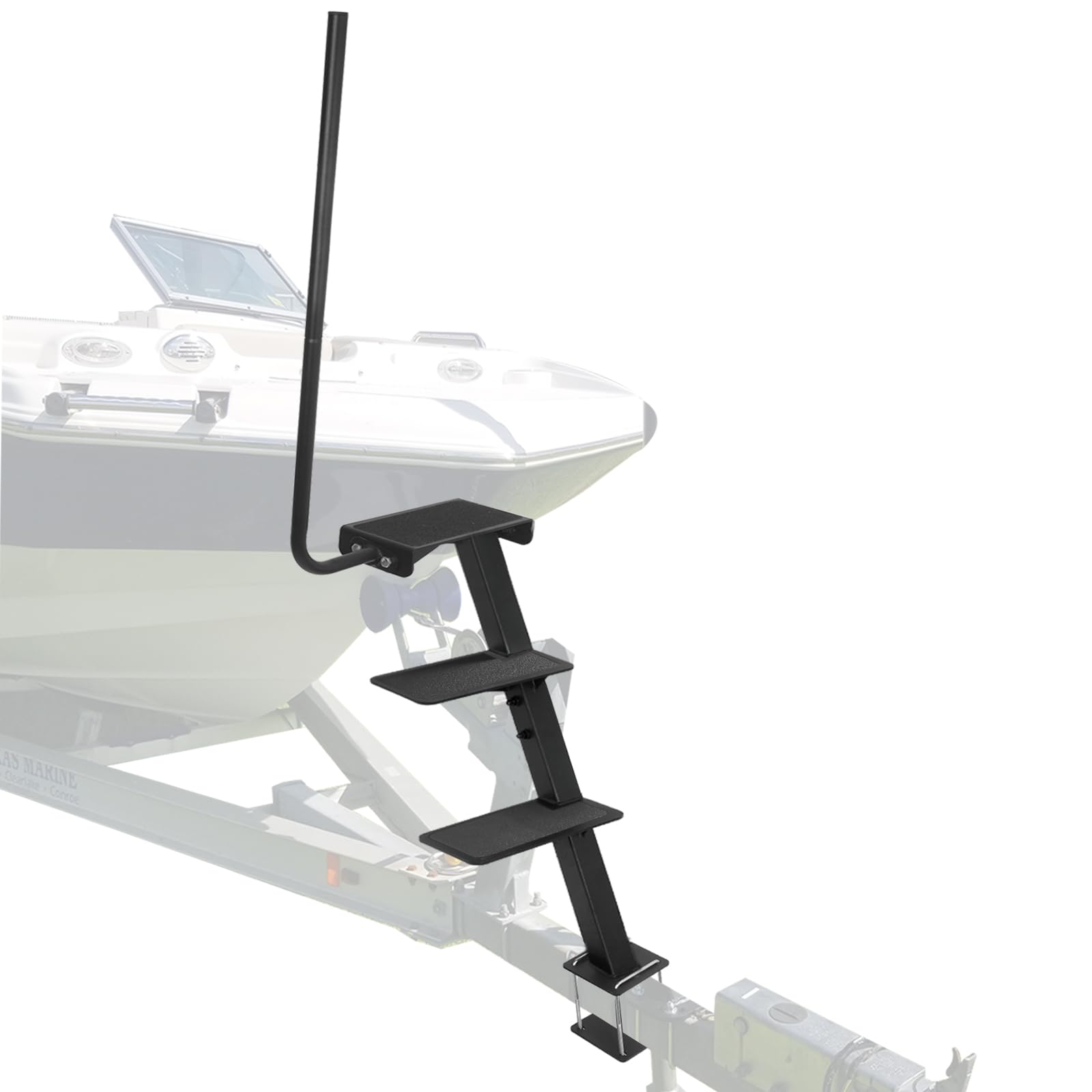
The headline figure is the 450 lbs capacity — the highest rating on this list, and it means the frame is built with headroom for a heavy load plus gear. The heavy-duty steel frame carries a premium powder coating for rust and corrosion resistance in tough conditions, and it weighs 25 pounds, so the step feels planted rather than tippy.
The handrail is the smart bit: it mounts on the left or right side, so you can route it away from your boat edge and stop the rail from fighting the hull. Reinforced triangle supports and a wider pedal with an anti-slip pad round out the safety-focused build. Owners say the rail makes solo launches steadier when no one is holding the boat.
The fit spec to check is the tongue size: it works on tongues up to 5″ tall and at least 3.2″ wide, so measure before ordering. With only that single frame requirement to clear, it suits a wide spread of vessels. For anyone who boards alone and wants a rail they can lean on, this is the top of the ladder class.
Where the money goes: a 450 lbs rating, heavy steel with powder coating, and a left- or right-mount handrail that steers clear of your boat edge.
The one box to tick: confirm your tongue is 5″ tall or less and at least 3.2″ wide.
Worth it for: a solo launcher who wants the highest capacity here and an adjustable rail.
Not the pick if: your tongue exceeds 5″ tall and simply will not take the mount.
7. VEVOR Boat Trailer Steps with Handle
Four steps instead of three, with a 70° angled mount — the gentlest climb of the group.
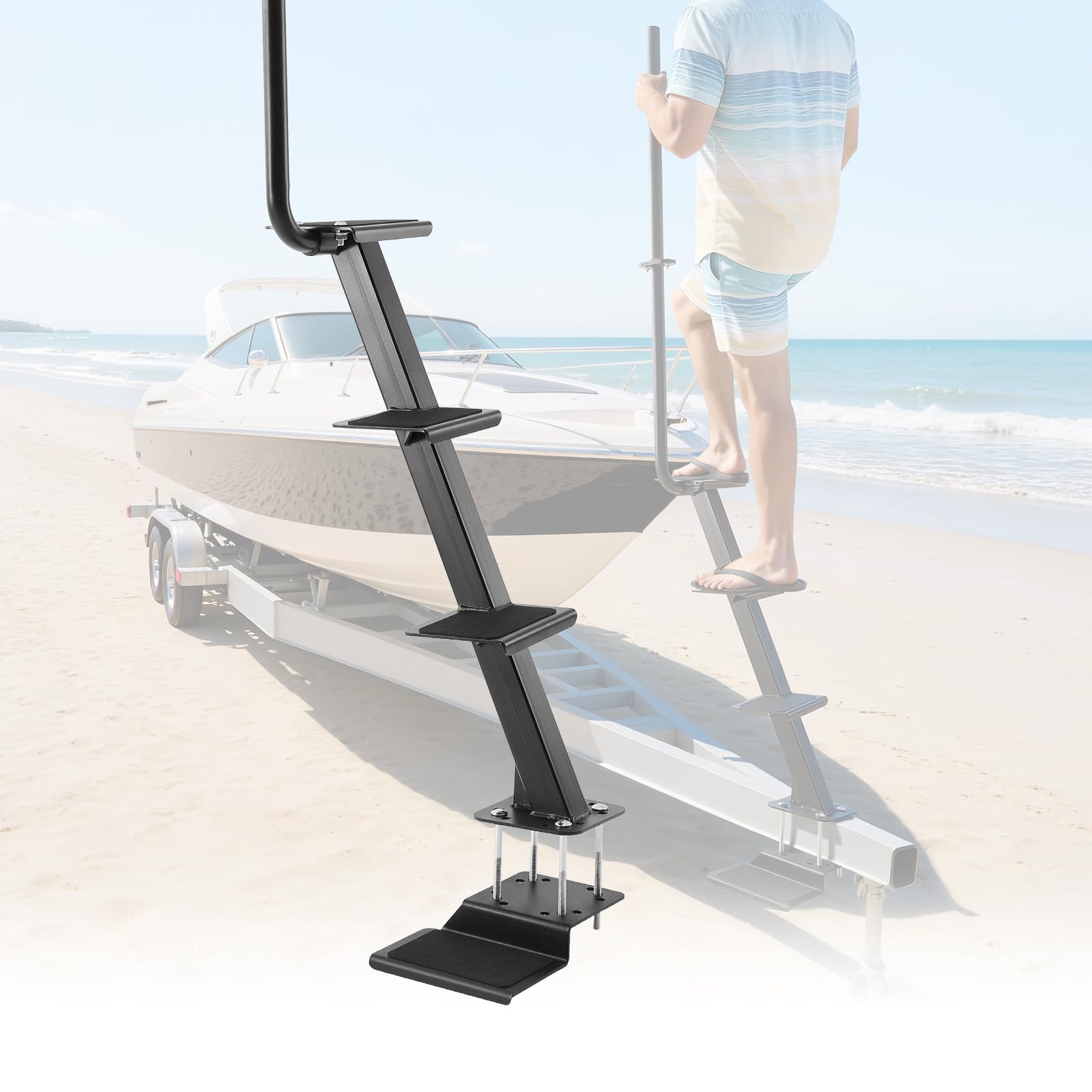
Count the steps: this is a four-step ladder, the highest step count here, which makes each rise shorter and the climb easier on your knees. Each step carries a non-slip surface for wet conditions, plus a handrail for a secure grip and rounded edges to take the sting out of a knock. The triangular support structure underneath is what keeps the whole thing steady underfoot.
Mounting flexibility is where it pulls ahead — the base has multiple holes for 3″ x 3″, 3″ x 5″, or 4″ x 4″ trailer cross beams, and the bottom-mount sits at a 70° angle for a stable connection. The Q235B carbon steel body is built to resist deformation, with a rust-resistant coating for marine weather. At 22.9 pounds it feels substantial without being the heaviest on the list.
One practical note: it is designed for owners who struggle with the height of climbing onto a boat, so the extra step really is the reason to buy it. Check the dimensions against your trailer before ordering, since the mounting footprint is the variable here. On a high deck, the fourth step shortens each rise and eases the climb.
The standout: four non-slip steps and a 70° angled bottom mount for easier boarding — the extra rise shortens each climb.
Do first: verify the cross-beam size and mounting footprint against your trailer before you buy.
Best for: anyone climbing onto a high deck who wants the shortest step-up between each rung.
Think twice if: your trailer frame falls outside the 3″ x 3″, 3″ x 5″, or 4″ x 4″ beam sizes.
8. Omega Boat Step 2 Steps with Grab Pole

Solid welded US steel and a grab pole — a two-step step built for bass boats specifically.
Two steps, a grab pole, and a frame that mounts on top of your trailer tongue — this one is aimed squarely at bass boats, and it fits most of them on the market today. The construction is welded solid structural steel, media blasted and powder coated black, all made in the USA. Anti-slip grip tape comes pre-installed on every step, so traction is handled before your first launch.
All mounting hardware is in the box, and the top-of-tongue design installs in minutes rather than hours. Owners rate the quality and sturdiness as its strongest suits, and it works well with hulls like a Tracker PT-185. Two grip-taped steps and a grab pole give you a steady handhold at the ramp.
The natural question is the fit — because it mounts on top of the tongue, the geometry suits bass boat trailers best rather than every hull out there. If your trailer is a different style, measure carefully against the 5 x 4.99 x 20.25 inch footprint. For a bass boat owner who wants US-welded steel and a grab pole, this is the match.
Why bass boaters like it
- Welded US structural steel, media blasted and powder coated black
- Two steps plus a grab pole, with anti-slip grip tape pre-installed
- Mounts on top of the trailer tongue; hardware included, installs in minutes
Measure first
- Top-of-tongue design suits bass boat trailers best, not every hull style
- Verify the footprint against your tongue before ordering
Match made for: a bass boat owner who wants two US-made steel steps and a grab pole.
Wrong trailer? A non-bass-boat hull on a different tongue style may not line up as cleanly.
Know the Specs
Weight capacity rating
This is the load the step is built to hold, and it matters because every launch puts your full body weight on it in motion. The picks here range from 275 lbs up to 450 lbs. Choose a rating with headroom above your own weight, especially if you climb while hauling gear.
Frame or tongue fit size
The step has to clamp onto a frame of a specific width and height — sizes like 3″ x 4″, 3″ x 5″, or 4″ x 4″. A step that is too loose rocks underfoot, so measure both dimensions where the step will sit and match them to the listing before you buy.
Step surface and anti-slip grip
The step surface is the platform under your foot. A wider surface gives more room to plant a boot, and grip tape or a non-slip pad keeps that surface useful when it is wet. Wet ramps are the real condition, so grip is not a luxury.
Material and finish
Steel brings weight and strength; aluminum brings light weight and natural rust resistance. A powder coat or galvanized finish on steel is what slows corrosion near salt water. Match the material to how often your trailer sits outdoors.
Common Questions
How do I know which trailer step will fit my boat trailer frame?
Is a single step or a multi-step ladder better for getting into a boat?
Can a trailer step hold my weight plus gear?
Will a steel trailer step rust in saltwater conditions?
Do I need a handrail on a boat trailer step?
How long does it take to install a boat trailer step?
Can I remove the step for travel or storage?
What is the difference between a tongue step and a frame-mounted step?
Will an aluminum step bend under heavy use?
Does a wider step surface actually help on a wet ramp?
The Bottom Line
For most trailers, the trailer steps for boat trailer winner is the MEGAWARE KEELGUARD FlexStep because its 16 locking positions let you aim the step at the exact spot your hull allows, and the 7.7-pound anodized aluminum holds up to 300 lbs. If a wide, light platform is what your tongue needs, grab the Extreme Max 3006.6857 with its 6″ x 20″ surface at 5 pounds. And for a solo launcher who wants the highest capacity here, the OUTPRIZE 3-Step carries a 450 lbs rating and a handrail that swaps sides.
How we choose
We do not accept paid placement. Every pick is matched to a real buyer and a real use-case; we do not hands-on test units.
Sources
Specifications: manufacturer listings and product documentation. Review insights: verified customer reviews, as of November 2026. Pricing: not shown on this page (it changes often); check the current price via the retailer link.
As an Amazon Associate, Tactical Gear Guy earns from qualifying purchases. This does not affect which products we feature.