Specs are compiled from manufacturer listings and verified buyer reviews and can change over time — please confirm the key details on the product page before buying.
You bought a truck or an SUV, and now you are climbing through the tailgate instead of stepping onto a proper platform. A hitch attachment changes that. It turns the empty square hole under your bumper into a step, a cargo basket, a recovery point, or a workbench. The trick is picking the right one for the square hole your vehicle actually has and the weight you plan to put on it.
This guide is built by comparing the manufacturers’ published specifications and the patterns across verified customer reviews, so you get each pick’s real strengths and trade-offs instead of marketing spin.
You get the most from a trailer hitch attachment when it matches the job you actually do, not the photo on the box. So before you buy, decide if you need a step, a carrier, or a foldout extender.
Top Picks


How To Choose The Best Trailer Hitch Attachments
The first decision is not about the product at all — it is about the hole in your bumper. Nearly every hitch accessory sold today assumes a 2-inch receiver, which is the standard square tube on a Class III or Class IV hitch setup. If your vehicle uses a smaller tube, none of these will slot in cleanly.
Match the attachment to the job, not the price tag
A step is for getting in and out of the bed. A cargo basket is for hauling luggage. A tow eye is for straight-line pulling. A riser is for leveling the height of something you mount. These are different tools with different load ratings, and mixing them up is the most common mistake a first-time buyer makes.
Read the load number before you trust the photo
A step that holds 350 lbs is fine for standing on. A cargo carrier that holds 500 lbs distributes that weight differently across a frame. A forged tow eye rated at 12,000 pounds is built for pulling a stuck vehicle, not for standing on. Respect the number printed next to the job, and the accessory will last.
Check that it clears your bumper and sensors
Steps and extenders push outward from the receiver. Some fit close enough to clip your reverse sensors or block the license plate. The safest way to buy is to check the manufacturer’s warning about sensor interference and measure the clearance behind your bumper before you commit.
Side-by-Side Comparison
| Model | Best For | Rated Capacity | Receiver Fit | Weight | Amazon |
|---|---|---|---|---|---|
| Double Layer Tow Hitch Step★ Best Overall | Stepping into the bed safely | 350 lbs | 2″ receiver | 13.2 lbs | Amazon |
| Buyers Products RM1225E Tow EyeHeavy Recovery | Heavy recovery pulling | 12,000 lbs | 2″ receiver | — | Amazon |
| MaxxHaul 50909 Hitch RiserLeveling Pick | Leveling accessory height | 500 lbs tongue weight | 2″ Class III/IV | 16 lbs | Amazon |
| Fullwatt Folding Hitch Adapter | Folding out of the way unloaded | 500 lbs | 2″x2″ receiver | 10 lbs | Amazon |
| Auto Dynasty 36″ Hitch Step | Wide step plus bumper guard | 350 lbs | 2″x2″ receiver | — | Amazon |
| MaxxHaul 70107 Cargo Carrier | Hauling bags and gear | 500 lbs | 2″x2″ receiver | 22.3 lbs | Amazon |
| WeatherTech BumpStep 12″ | Rear impact protection | 300 lbs max step | 2″ receiver | 3.67 lbs | Amazon |
| Stark USA 6″ Hitch Vise | Mobile repair workstation | — | 2″ receiver | 29 lbs | Amazon |
| VEVOR 60 x 24 x 6 Folding Carrier | Big loads with full kit | 500 lbs | 2″ receiver | — | Amazon |
Detailed Reviews
1. Double Layer Tow Hitch Step
Our pick — 4.5+★ from 250+ verified ratings; the strongest balance of quality and price.
A raised platform with non-slip pads that turns climbing into the bed into a single confident step.
If the reason you are shopping is your tailgate, start here. It is the crowd favorite at 4.5+ stars across 200+ owners, and it earns the spot by solving the one job most people buy a hitch step for. The platform is improve and sits on five adjustment holes, so you slide the step in or out to set the exact distance between the pad and your rear bumper. Kids, older riders, and pets get a flat surface instead of a dangling leg.
Built from solid carbon steel and rated for 350 lbs, the step bar gets a dual-stage textured black powder coat that holds up to rain, mud, and road salt. The pad itself uses non-slip plastic with hollow raised holes to bite in when it is wet. What owners talk about most is the build quality — the fit and finish feel heavier than the price suggests. Installation is plug-and-play: slide it into the receiver, then lock it with the upgraded anti-theft pin and stabilizer. No drilling, no rattling down the highway.
The step also works as a rear bumper guard, absorbing the kind of low-speed parking lot tap that normally leaves a scratch. The honest catch is in the maker’s listing note: on a few newer models the step can block the license plate or trip the reverse sensors, and the longer lock pins exist for exactly that reason. Measure before you buy, especially if your bumper is tight. The part carries a 2-year warranty and a 13.2-pound steel bar that most budget steps skip.
What earns it the top spot
- 350 lbs rated support on a raised, non-slip platform
- Five adjustment holes let you dial in bumper clearance
- Anti-theft lock pin and stabilizer kill wobble and road noise
- Doubles as a rear bumper guard against parking lot taps
- Carbon steel with dual-stage powder coat, backed by a 2-year warranty
Know before it ships
- Can block the plate or reverse sensors on some newer trucks
- Heavier than most steps at 13.2 lbs
- Not designed for towing — it is a step and guard only
Worth the buy if: you want one accessory that gets you into the bed safely and shields the bumper in a crowded lot.
Measure first if: your rear sensors or plate mount sit close to the receiver opening.
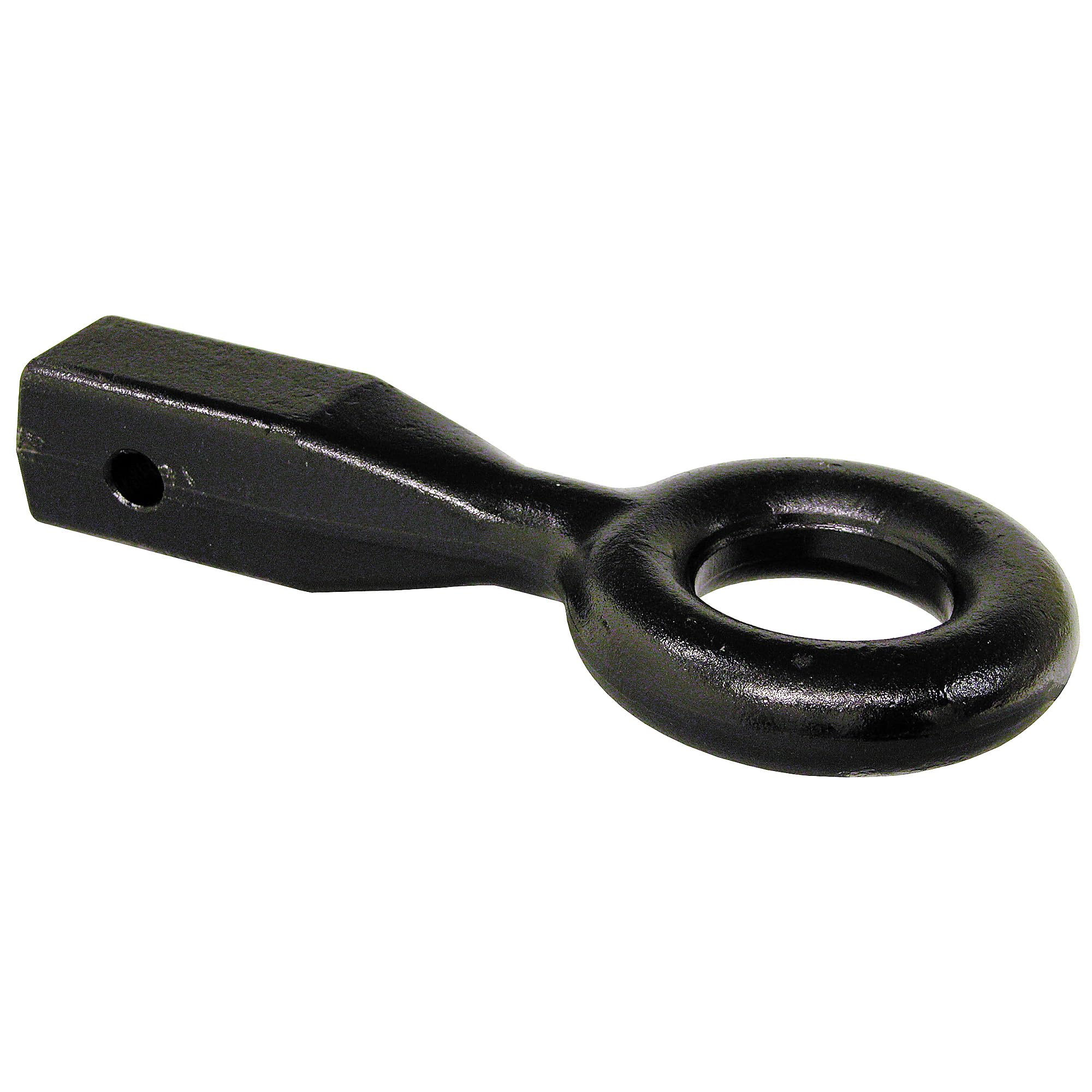
2. Buyers Products RM1225E Forged Receiver Mounted Tow Eye
One forged ring of steel rated at 12,000 pounds, built to pull a stuck truck out of trouble.
This is the outlier on the list, and that is the point. The folding extender at position four is rated at 500 pounds — this tow eye is rated at 12,000, a genuinely different class of tool for pulling, not stepping. The construction is one-piece forged steel rather than welded tube, which is why it can take straight-line load that would fold a stamped step. If you have ever buried a truck to the frame in mud, you already know the difference.
The 2-inch receiver fit means it slots into the same square hole your step does, front or rear on most setups. Owners say the forged shank seats firmly in the receiver and stays put under a hard pull. The black powder coat holds up to mud and weather. It goes in quickly and comes out just as fast, so it can live in the toolbox and appear when the job calls for it.
One trade-off worth naming: a forged ring like this is for straight-line pulling only, and you need a proper shackle and strap to attach safely. It is not a step, not a carrier, not a bumper guard. Treat it as a dedicated recovery tool and it will serve you for years. That focused purpose is exactly why it belongs in a serious hitch kit.
Single-job tool: forged one-piece construction and a 12,000 lb rating make this a recovery accessory rather than an everyday step — if pulling is what you need, this is the piece that will not let you down.
Reach for this if: you drive off-road or tow a trailer and want a pull point you can trust.
Look elsewhere if: you are shopping for something to stand on or haul gear with.
3. MaxxHaul Trailer Hitch Riser
A solid steel block that lifts your rack or carrier six inches so it clears the ground and the bumper.
If your bike rack drags on driveway ramps or your cargo carrier sits too low behind a lifted truck, this is the fix. The riser provides 6 inches of rise or 6 inches of drop to level out whatever you bolt behind the receiver. The triple pin hole design lets you fine-tune shank length and reduce bumper interference, which is the part most buyers underestimate. It fits Class III and IV 2-inch receivers and is built from solid alloy steel, not stamped sheet.
At 16 pounds, this is the heaviest accessory in the shortlist, and that heft is why it works. Alloy steel with a black powder coat resists rust and road grime for years of outdoor use. The kit includes two 5/8-inch hitch pins, so you can install it the same afternoon it arrives without hunting for hardware. Owners consistently call the riser beefy and solid — the square bar seats cleanly and does not flex under a loaded rack.
The one thing you have to understand: this is not for towing trailers, and the maker says so clearly in the listing. It is designed to improve bike racks, cargo carriers, and mobility carriers, and to support up to 500 lbs of tongue weight in that role. A few owners have used it for towing anyway, and that is a category mistake rather than a defect. Treat it as a leveling device and it will do its job without drama.
Why it earns a spot
- 6″ of rise or drop corrects an uneven hitch mount
- Triple pin holes prevent bumper contact
- Solid alloy steel with powder coat resists rust
- Two 5/8″ hitch pins included in the box
The limits to respect
- Not rated for towing — accessories only
- 16 lbs adds weight to an already-loaded rear end
- Best paired with a Class III or IV receiver
Best served for: lifted trucks and low-slung cars whose racks need height correction.
Wrong tool if: you intend to actually tow a trailer behind it.
4. Folding Trailer Hitch Adapter

The idea is clever — swing your empty basket up and out of the way — but it asks for a little patience.
You buy this one when your cargo basket or wheelchair carrier has to swing up against the bumper so you can park in a tight garage. The folding adapter uses four positions to change angle and height, and the length after folding 90 degrees is 16 1/4 inches. That makes it a genuinely useful piece for anyone whose carrier is too long to leave hanging off the back.
Solid steel with a powder coat handles the rust and corrosion side, and the 500 lb maximum capacity covers most basket loads. The build quality is the strongest thing about it — the steel feels substantial and installs with the included wrench in a few minutes. At 10 pounds it is lighter than the MaxxHaul riser, which matters if you swap it in and out of the receiver. That difference is enough to notice when you are holding it one-handed behind the bumper.
The caveats are the reason this one sits below the top picks. The folding action will not swing up without a bit of modification while it is loaded, and the fit in the receiver is looser than you might expect. Hole alignment can take a couple of tries. It is still a solid option for occasional use, but expect to spend a little time dialing it in, and do not count on folding it loaded.
Fair trade-off: a well-built folding extender whose clever design needs occasional fettling — if you want fold-away convenience and do not mind a little slop, it earns the space.
Pick it if: your carrier needs to swing up between trips and you can live with a slightly loose fit.
Skip if: you want a rigid, tight-tolerance extender for daily hauls.
5. Auto Dynasty Tow Hitch Step
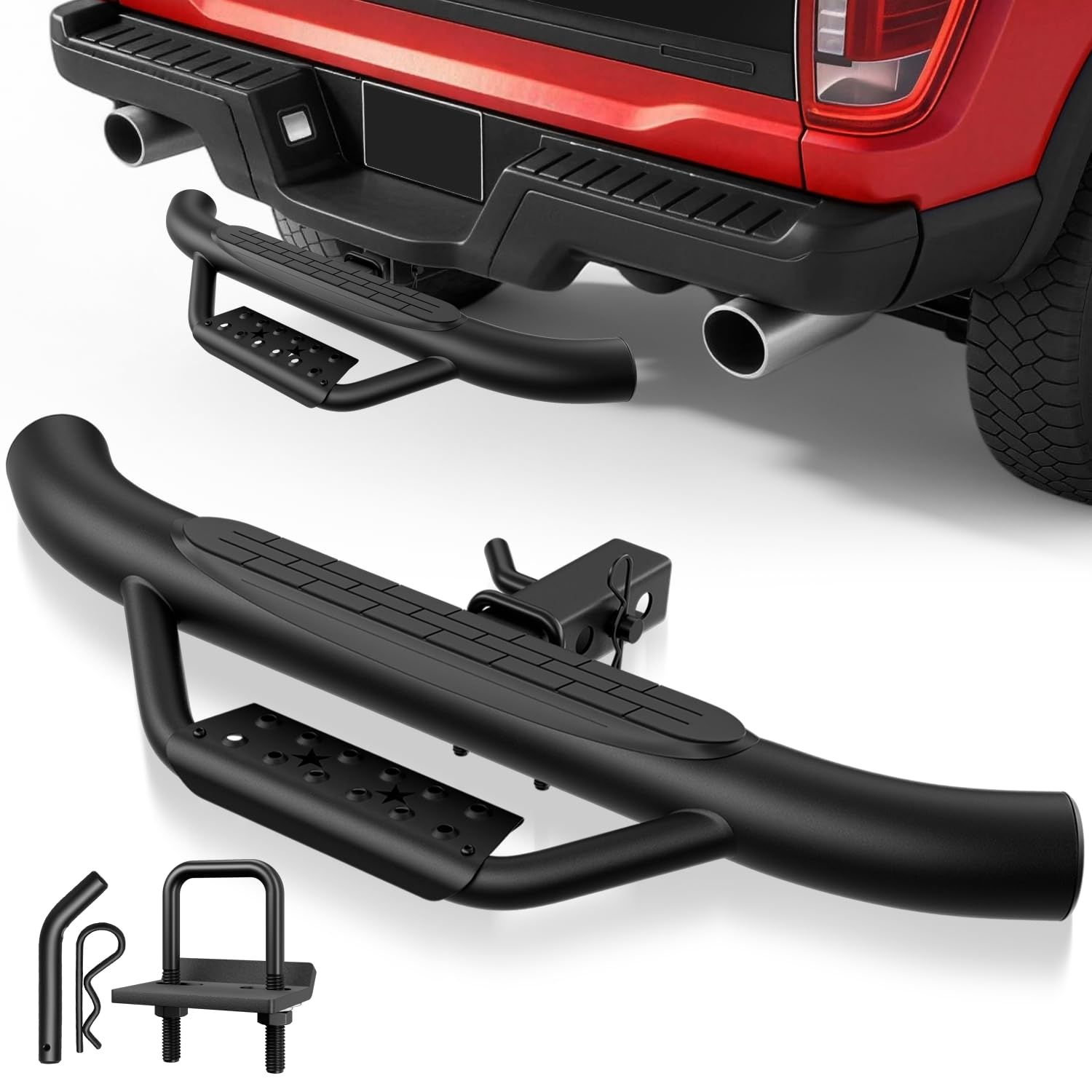
A 36-inch-wide bar that you can share with a passenger, capped with a raised non-slip rubber pad.
Where the Double Layer step focuses on reach, this one focuses on width. The bar measures 36 inches across, with a 4-inch tube diameter and a 1.5-inch lowered step section that carries the raised pad. That extra real estate is the difference between a solo entry and loading a kid on one side while you steady a hiking boot on the other.
The step is rated for 350 lbs and made from high-quality alloy steel with dual-stage textured black powder coat, so rust and road wear are handled. Installation is plug-and-play — no drilling, no modification — and the kit includes all the mounting hardware plus a 4-inch round step bar. Upgraded locking pins and extra stabilizers replace ordinary clip pins, which tightens the connection and cuts the rattle.
Owners like how the black powder coat finishes off a blacked-out truck. The trade-off worth knowing is stability: a 36-inch bar is long, so the receiver connection has more leverage on it than a compact step. It also is not a tow-rated piece — it is a step and bumper guard, which is what the listing promises.
What the step brings
- 36″ wide step with raised non-slip rubber pad
- 350 lbs rated support for shared entry
- Dual-stage powder coat resists weather wear
- No-drill install with upgraded pins and stabilizers
The realistic limits
- Long bar can feel less rigid than a compact step
- Step use only — not a towing accessory
- Wide footprint changes the rear look, for better or worse
Ideal for: families loading kids and gear who want a wider landing pad on the bumper.
Think twice if: you prefer a tight, compact step that barely changes the rear silhouette.
6. MaxxHaul 70107 53″ x 19-1/2″ Hitch Cargo Carrier

Fifty-three inches of steel basket that eats luggage, coolers, and firewood without hogging roof space.
If your problem is not access but capacity, this is the answer. The carrier throws a 53 x 19 x 5 inch outer basket behind your hitch with a 51 x 17-1/2 x 4-1/2 inch usable inner floor. That is enough for a weekend’s bags for a family, and it keeps your back seat clear and your roof rack open. It fits any 2 x 2-inch hitch receiver, so it slides onto the same mount your step does.
Steel construction with a 500 lb distributed maximum does the heavy lifting, and the frame holds weight without sagging when loaded properly. Assembly and takedown are the thing most owners love — the carrier comes apart and goes back together quickly enough that you are not dreading the storage job. That quick assembly is why it is the best-selling carrier style here — 4.5+ stars across thousands of owners, the most reviewed pick in this guide.
The honest caveat, and it appears in feedback on this model: durability is a mixed bag, with some owners seeing rust sooner than they expected if the coating gets scratched. Touch up bare metal and keep it out of standing water and it will serve you. The basket uses rail alignment that needs a few minutes to seat squarely, so assemble it on a flat surface rather than a driveway slope.
Built for: road trips, camping runs, and any haul where the trunk runs out of space.
Handle with care if: you will not touch up chips — paint scratches invite rust over time.
7. WeatherTech BumpStep

A compact 12-inch bumper shield that takes the hit so your tailgate does not have to.
This one is for the driver who parks in tight city spots and keeps backing into things. The BumpStep is designed as much for protection as for stepping, and the maker calls it out plainly: it defends against rear end dents and scratches. The 12-inch wide platform doubles as a step to reach a roof rack, brush off snow, or tie down a kayak.
The 300 lb maximum is the lowest step rating on this list, so size your expectations accordingly: this is a standing assist, not a heavy loading platform. At 3.67 pounds it is the lightest accessory here — the difference when you lift it out is immediate compared to the 13.2-pound Double Layer step. It fits a standard 2-inch receiver with standard hardware and installs without fuss, with sturdy construction that absorbs impact in the parking lot.
Because it sits close to the bumper, this is the pick for drivers who want less visual bulk than a 36-inch bar. Owners like the compact look next to the standard-size version and how quickly it goes on. Neither is a dealbreaker, just a nudge to check the clearance before you buy.
What it protects: a compact 12-inch bumper shield rated to 300 lbs for step use, with a light 3.67-pound build.
What it is not: a platform for heavy loads or for anyone whose bumper sits low behind the receiver.
Best paired with: city parking, tight garages, and roof-rack reaches that need a small, discreet step.
Not the right call if: you want a wide platform to share with a passenger.
8. Stark USA 6-Inch 2-in-1 Tow Hitch Vise

Turns an empty receiver into a 6-inch work vise that goes wherever the repair job does.
This is the odd one, and that is the appeal. The Stark USA vise mounts to a standard 2-inch hitch receiver so you can clamp a pipe, a chainsaw bar, or a length of lumber right at the job site. The 6-inch jaws and the heavy-duty metal body are built for automotive maintenance, pipe cutting, chainsaw sharpening, metal fabrication, and general repair. It also, notably, pulls off the truck and remounts to a workbench for stationary use.
At 29 pounds it is far and away the heaviest thing on this list, and you feel that when you are sliding it into the receiver. That heft is the point: a vise needs mass to hold up against cutting, drilling, and grinding. The dual-mount design is the feature you will use most — contractors, mechanics, farmers, and DIY owners can take the shop to the roadside without dragging out a bench.
You need to know what you are buying. This is not a step, a carrier, or a tow device; mount it in the receiver for a mobile workstation only. Check that your receiver opening is clear and that the vise jaws open wide enough for the stock you plan to clamp. If your job involves road-side repairs or a contractor lifestyle, no other accessory here comes close to this kind of utility.
What makes it different
- 6-inch jaws hold pipe, lumber, and metal bars
- 2-in-1 hitch and bench mount for mobile or stationary use
- Heavy-duty steel body built for metalwork and repairs
- Fits standard 2″ hitch receivers
Weight to respect
- 29 lbs makes it a permanent-ish install
- Not for towing, stepping, or hauling gear
- Needs a clear receiver opening to seat fully
Suits you if: you fix things on-site and need a real clamp without hauling a workbench around.
Go elsewhere if: your hitch is meant for stepping or cargo only.
9. VEVOR 60 x 24 x 6 in Folding Hitch Cargo Carrier
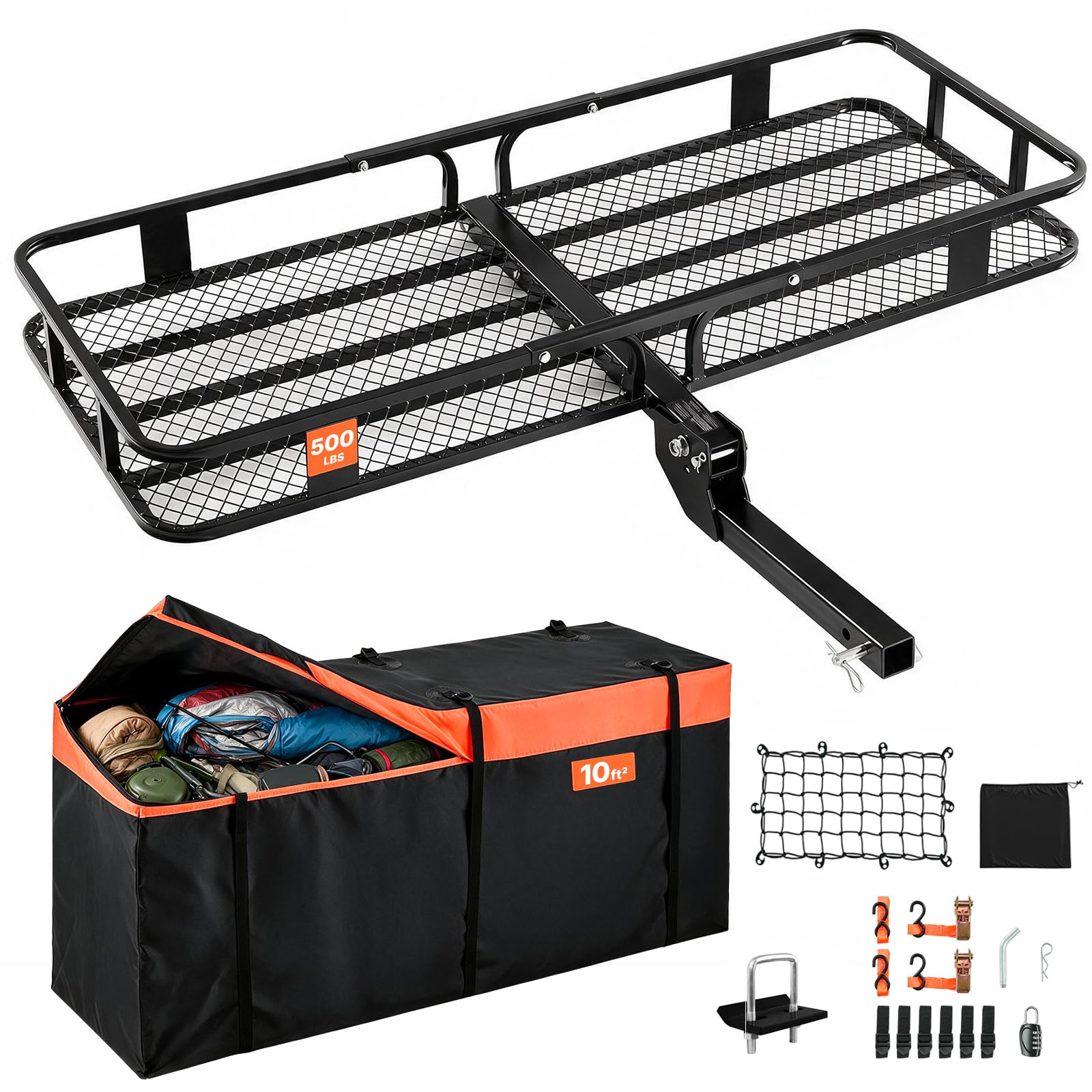
A big folding basket that arrives with the bag, net, straps, and lock already in the box.
The VEVOR measures 60 x 24 x 6 inches and carries up to 500 lbs, making it the largest carrier in this shortlist. It features upgraded 5mm supporting tubes and a hook stabilizer, so the basket stays steady over rough pavement. It fits any vehicle with a 2-inch hitch receiver, and it folds up when empty so your rear end is not hanging out in a parking lot overnight.
Where the MaxxHaul 70107 is a bare basket, this one ships as a full kit. You get a cargo net, two ratchet straps, a waterproof cargo bag, a coded padlock, four reflective plates, and a storage bag for the soft parts. The black powder coat handles weather, and the waterproof bag takes care of rain on the road. That one-box completeness is the difference between leaving money on the counter and getting everything you need on the first order.
Assembly is the honest caveat. The carrier goes together well when the parts line up, but there is a chance of damage during the build if you over-torque the bolts. A few owners have had a support break during assembly, so follow the sequence and do not force anything. Once it is built and mounted, the bag does its job and the reflective plates help a lot on dark roads.
The value read: the biggest basket on the list with the most extras in the box — 60 x 24 inches of steel plus a waterproof bag, net, straps, and lock.
Buy it for: family trips and gear-hauls where a full kit saves a second shopping trip.
Slow down during build if: you tend to overtighten — the frame can take a bend before it takes a load.
Know the Specs
Receiver Size and Fit
Every accessory on this list is built for a 2-inch receiver, which is the standard square tube on most Class III and Class IV hitches. If your vehicle has a smaller tube, none of these will seat properly. Check the receiver opening and the pin holes before you order anything — a 2-inch accessory will not wobble into a 1.25-inch hole.
Load Rating vs. Tongue Weight
A step rated for 350 lbs means the platform supports that much weight when you stand on it. A riser rated at 500 lbs refers to tongue weight — the downward load of what you mount on it. A tow eye rated at 12,000 pounds is a pull force for straight-line recovery. The same number does not mean the same thing across accessories, so match the rating to the job.
Non-Slip Pads and Traction
Wet steel is slick. A raised rubber pad, textured holes, or a plastic non-slip surface is what keeps your boot from sliding off in rain or mud. The better steps combine a textured pad with holes that let water drain away. Look for the pad and the drain holes together — one without the other is a false sense of traction.
Lock Pins and Stabilizers
A receiver hitch accessory that rattles is annoying, and loose hardware under load is worse. An upgraded anti-theft lock pin holds the accessory in place and makes it harder to remove without the key. Additional stabilizers reduce the movement inside the receiver. Both matter more than most buyers realize until the first long drive.
Common Questions
Will these accessories fit my vehicle’s hitch receiver?
Can I tow a trailer with the MaxxHaul hitch riser?
What is the difference between the Double Layer Tow Hitch Step and the Auto Dynasty 36-inch step?
How much weight can a hitch cargo carrier hold?
Why does the Stark USA vice mount on a hitch?
Will a hitch step block my license plate or reverse sensors?
Is a folding hitch extender as sturdy as a fixed one?
What is the difference between a 500 lb carrier and a 12,000 lb tow eye?
Do the cargo carriers require assembly?
Will a hitch accessory rust if I leave it outside?
The Bottom Line
For most people, the best trailer hitch attachments pick is the Double Layer Tow Hitch Step, because it solves the daily job — getting into the bed without a scramble — with a 350 lb platform, five adjustment holes, and a stabilizer that kills the rattle. If you haul gear instead of standing on the bumper, grab the MaxxHaul 70107 Cargo Carrier with its 53-inch basket and 500 lb capacity. And if you pull, rather than step or haul, the Buyers Products RM1225E Tow Eye is the one to reach for — forged steel, 12,000 pounds of straight-line pull, and nothing else fighting for your attention.
How we choose
We do not accept paid placement. Every pick is matched to a real buyer and a real use-case; we do not hands-on test units.
Sources
Specifications: manufacturer listings and product documentation. Review insights: verified customer reviews, as of November 2026. Pricing: not shown on this page (it changes often); check the current price via the retailer link.
As an Amazon Associate, Tactical Gear Guy earns from qualifying purchases. This does not affect which products we feature.