Specs are compiled from manufacturer listings and verified buyer reviews and can change over time — please confirm the key details on the product page before buying.
If your toes feel pinched by mile three, the shoe is the problem, not your feet. A wide-toe-box trail runner lets your toes splay on every footstrike, and that room keeps them from jamming forward on long descents. Below are eight trail shoes with a genuinely roomy forefoot, sorted by what each does best so you can match the pair to your terrain and stride.
This guide is built by comparing the manufacturers’ published specifications and the patterns across verified customer reviews, so you get each pick’s real strengths and trade-offs instead of marketing spin.
Toe room is only half the story. Drop, stack height, and outsole rubber decide whether a roomy shoe still feels stable on rocks — and that balance is exactly what separates the picks below. I ranked these trail running shoes with wide toe box by verified owner feedback and published specs so you can choose with confidence.
Top Picks

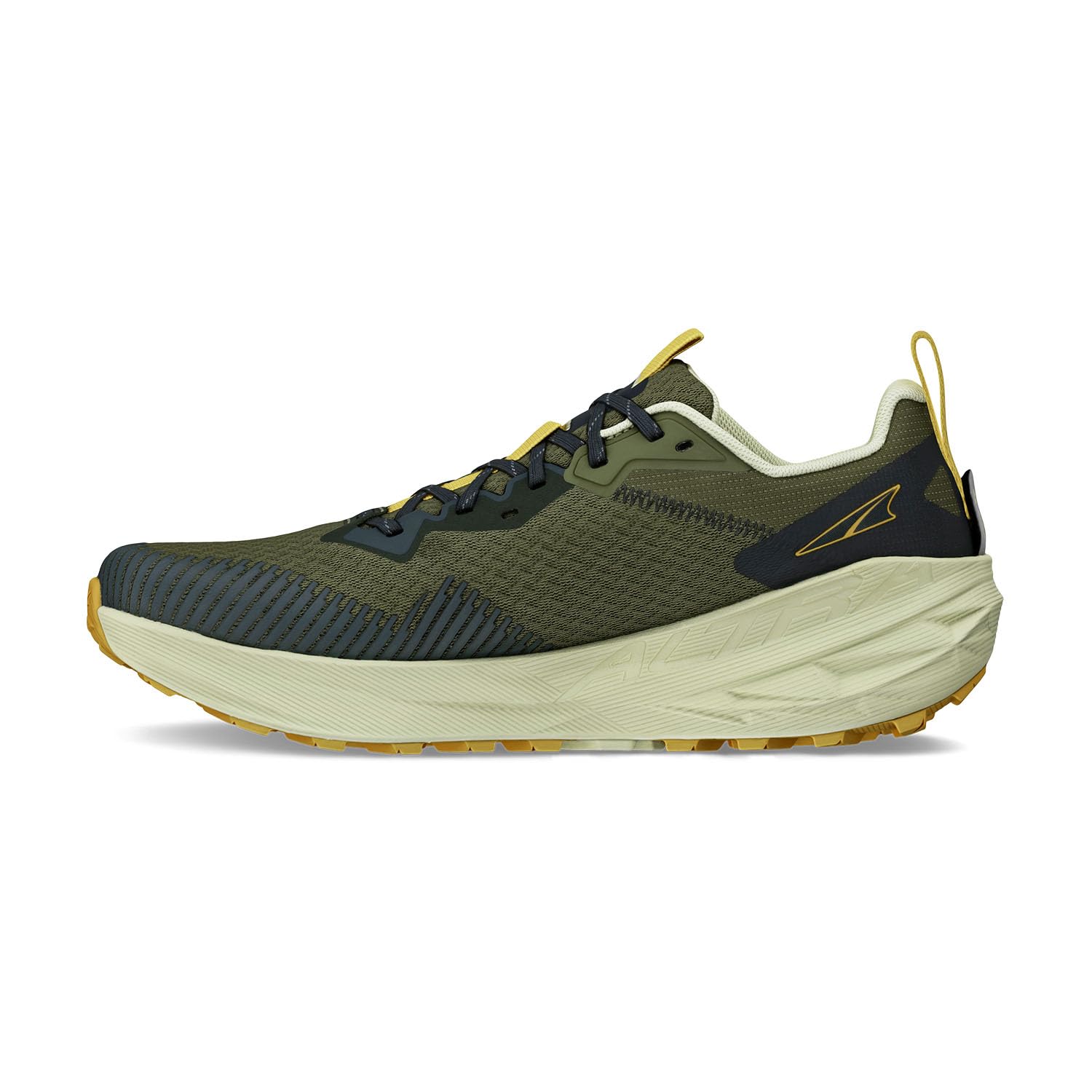

How To Choose The Best Trail Running Shoes with Wide Toe Box
A wide toe box is the whole point of this list, so start there. The front of the shoe should let your toes sit flat and spread out, with no pressing at the big-toe joint or the little toe. That space is what you feel on long descents when your foot slides forward.
Toe box shape vs. overall shoe width
These are not the same thing. A shoe can be snug through the midfoot and still give your toes room up front — several picks here are built exactly that way, with a roomy front and a secure middle. When you try a pair on, wiggle your toes while standing. If they can spread, the toe box is working.
Drop and what it does to your stride
Drop is the height difference between heel and toe, measured in millimeters. A 0mm drop (heel and toe level) puts you in a flat, natural position, while a 5mm drop gives a little more under-heel cushioning. Neither is better — a flatter shoe asks more of your calves and ankles, so build into it slowly.
Stack height and rock protection
Stack height is how much foam sits between your foot and the ground. More foam means more cushioning but less ground feel. On rocky, rooty trails, look for a rock plate — a thin stiff layer inside the midsole that spreads the impact of a sharp stone so it does not bruise the sole of your foot.
Outsole rubber and lug pattern
The outsole is the bottom rubber. Sticky compounds grip wet rock, and a deeper lug pattern bites into loose dirt. If your trails mix rock and road, a moderate lug that rolls smoothly matters more than maximum bite.
Side-by-Side Comparison
| Model | Best For | Drop | Weight | Outsole | Amazon |
|---|---|---|---|---|---|
| The North Face Women’s Altamesa 300★ Best Overall | All-day comfort on mixed trails | — | — | — | Amazon |
| ALTRA Men’s Experience Wild 2Best Value | Natural stride on a budget | 4mm | 10.4 oz | MaxTrac | Amazon |
| Topo Athletic Women’s Terraventure 4Rock-Ready Pick | Rocky technical trails | 3MM | 10.1 oz (W7) | Vibram | Amazon |
| Flux Footwear Adapt Trail Runners | Barefoot-style walking and light trail | Zero | — | — | Amazon |
| Topo Athletic Women’s Ultraventure 4 | Long runs with max cushion | 5MM | 8.6 oz (W7) | Vibram XS Trek EVO | Amazon |
| ALTRA Men’s Olympus 6 | Max cushion and roomiest fit | 0 mm | 10.2 oz | Vibram Megagrip | Amazon |
Detailed Reviews
1. The North Face Women’s Altamesa 300 Trail Running Shoe
Our pick — 4.5+★ from 150+ verified ratings; the strongest balance of quality and price.
A roomy-toed women’s trail shoe that keeps comfort and quality in the same sentence.
The Altamesa 300 is the pick for a woman who wants a light trail shoe with a midsole that springs back rather than packing down, and gets a roomy front without buying a boxy shoe. North Face builds it around a high rebound midsole — foam that bounces back under each step instead of going flat — so a long day on mixed dirt and gravel feels less like a slog.
Comfort is what owners praise most, and the build quality backs it up. Blisters are the natural worry with any new trail shoe, and this one tends to avoid the rubbing that causes them. The clean upper passes in town straight off the trail.
The honest catch is sizing. The fit runs a bit big, so a half size down suits many women better than the size you wear in a road shoe. Arch support splits opinions — if you run in custom insoles or want firm support under the midfoot, plan to swap the stock footbed rather than assume it will suit you.
What works on the trail
- High rebound midsole gives back energy on long descents
- Roomy toe box with a light overall build
- Comfort that holds up across a full run without rubbing
What to weigh before you buy
- Runs big — sizing down is often the smart move
- Arch support is a split verdict, so test with your own insoles
Reach for this if: you want one light, roomy trail shoe that handles mixed terrain and looks tidy off the dirt too.
Look elsewhere if: you need firm built-in arch support or typically wear the size your road shoe gives you.
2. ALTRA Men’s Experience Wild 2 Trail Running Shoe
The most affordable way into a genuinely roomy, natural-feeling trail shoe.
Altra’s whole design language starts with a FootShape toe box, and the Experience Wild 2 brings that roomy front into a light, performance-leaning trail shoe. The 4mm drop (heel sits just slightly higher than the toe) sits between a flat shoe and a classic cushioned one, so it encourages a quicker roll through your stride without asking your calves to do all the work.
The numbers worth knowing: a 28mm/32mm stack height, a compression-molded EVA midsole, and a grippy MaxTrac outsole built for grip and durability on mixed terrain. There is a built-in GaiterTrap, a small hook-and-loop tab that lets you clip on a trail gaiter without straps or bungees. The upper is mesh, refreshed for better breathability, and the TPU overlay over the toe adds protection against rocks.
Here is the trade-off to weigh: durability divides owners. Some report it holding up well, others report the shoe coming apart after three months. It is note the toe box itself draws mixed feedback — some find the room exactly what they wanted, others want more. Comfort and fit are the clear strengths, and if you catch it at a sale it reads as strong value.
Who it fits: a runner who wants Altra’s roomy front and natural stride without paying premium prices, and who does not mind a shoe that may need replacing after a season.
The honest limit: durability is the recurring question mark here, and the toe box, while roomy, is not the widest on this list.
The verdict: it delivers a light, grippy, roomy-toed ride at the entry point of the range, then asks you to be realistic about how hard you run it.
Not the one for: runners who put down big trail mileage and want a shoe to survive multiple seasons.
3. Topo Athletic Women’s Terraventure 4 Trail Running Shoes
For the woman who runs sharp, rocky ground and wants her toes spared.
Topo’s trail workhorse is the shoe you want on terrain that bites back. The key piece is the ESS rock plate, a thin stiff layer inside the midsole that spreads the point of a sharp stone so it does not jab the sole of your foot. Pair that with a Vibram outsole (a rubber compound known for grip and wear) and rough ground stops being a negotiation.
The fit is where this shoe earns its place on a wide-toe-box list. The anatomical toe box lets your toes spread naturally, and the site says it handles four-mile hikes over rough terrain with ease — a real test for a shoe that needs to stay planted. A 3MM drop keeps you close to a natural position, and at 10.1 oz (W7) it is light enough to move quickly. Gaiter compatibility adds debris protection if you run dusty or grassy routes.
What to plan around: durability is the one thing owners split on, with some reporting the shoes falling apart over time. Tread gently and use it primarily for running rather than as a do-everything shoe and it tends to hold up better. One more small point — the drop is lower than the Pursuit 2’s 0MM, closer to flat, so build into it gradually.
Where it shines: rocky, technical trails where the rock plate and Vibram grip do the heavy lifting for you.
What you give up: long-term durability confidence — the shoe may need replacing sooner than a burlier build.
Best for: a trail runner who wants a light, nimble shoe with genuine rock protection and a wide, anatomical front.
Think twice if: you want a shoe to take years of abuse or you are new to low-drop shoes and prefer to ease in.
4. Flux Footwear Adapt Trail Runners
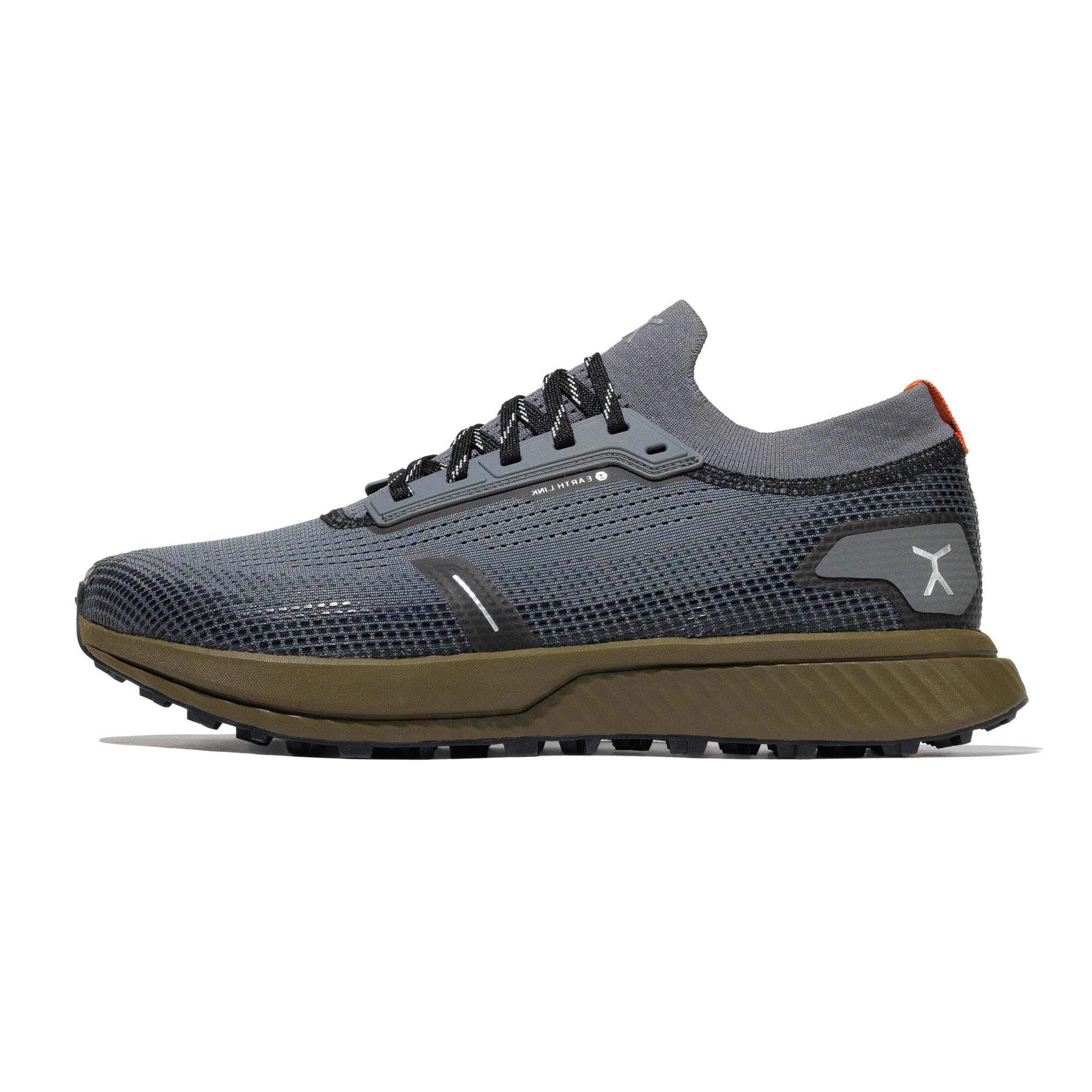
A barefoot-style trail shoe that lets your toes do what they were built to do.
The Adapt is built for the person who wants to feel the ground, not be insulated from it. The zero-drop design keeps heel and toe level, and the wide toe box lets your toes align and spread, so foot function and comfort have a chance to work together. Flux also builds in Earth-Link tech, a grounding connection meant to give a barefoot feel without giving up comfort. That is a barefoot-feel promise, not a safety rating, and the maker says so directly.
Owners praise build quality first and comfort second, calling it well-made and easy on the foot. For hiking and light trail duty it is a simple, solidly built choice.
Here is what to know before you click: the fit is the big question mark. Flux says the Adapt Trail Runners fit small for most, and recommends sizing up a half size. Some buyers report them running far smaller than expected, so measure your foot rather than trusting the number on your old shoes. If you want a shoe that insulates you from roots and rocks, this also is not that shoe — it is for the runner who wants feel.
What makes it worth a look
- Zero-drop platform for a flat, natural stance
- Wide toe box built for toe spread and alignment
- Construction quality that owners consistently respect
Where it can trip you up
- Fits small — the maker advises sizing up a half size, and some owners mention more
- Barefoot feel means less underfoot shielding on rough ground
If feel is the goal: this is the shoe for letting your toes move naturally over light trail and dirt paths.
The trade-off to accept: minimal underfoot protection and a fit that demands you measure up before ordering.
5. Topo Athletic Men’s Pursuit 2 Running Shoes

The high-cushion long-distance option for a wide forefoot.
Go long, stay cushioned. The Ultraventure 4 runs on a 35 x 30 mm platform, which is a lot of foam underfoot for a trail shoe, and that stack pairs with a ZipFoam midsole for a response that keeps going. It is built for long runs on mild to moderate terrain — the kind of trail where you want the ground smoothed out, not sharpened.
The width story is the headline: Topo’s roomy toe box handles wide feet particularly well, and owners with wider feet report the toe box gives their toes the space to breathe. The 5MM drop adds more under-heel cushioning than the flatter shoes here, which suits runners who want a naturalish stride without a fully flat platform. The Vibram XS Trek EVO outsole handles multi-surface runs, so moving from trail to road stays smooth. The fit, traction, and arch support all draw steady praise, and the 8.6 oz (W7) weight keeps the package light for its stack height.
The caveat: durability draws the most consistent concern of any trait here, with owners reporting the shoes breaking down over time. Treat this as a long-run shoe rather than a daily abuser and it holds up better. In short bursts and on gentler trails, the cushioning and wide fit do exactly what you want.
Best for: long runs on moderate trails for a wide-footed woman who wants cushioning and a wide toe box in the same shoe.
The honest catch: long-term durability is the weak spot — customers note wear, so do not expect it to be the shoe you take everywhere.
Pick it if: your feet run wide and your runs run long, and you want a cushioned, grippy ride you can trust for the miles.
Look elsewhere if: you need a shoe to survive repeated hard seasons — the wear reports on this one are the sober note.
6. ALTRA Men’s Olympus 6 Trail Running Shoe
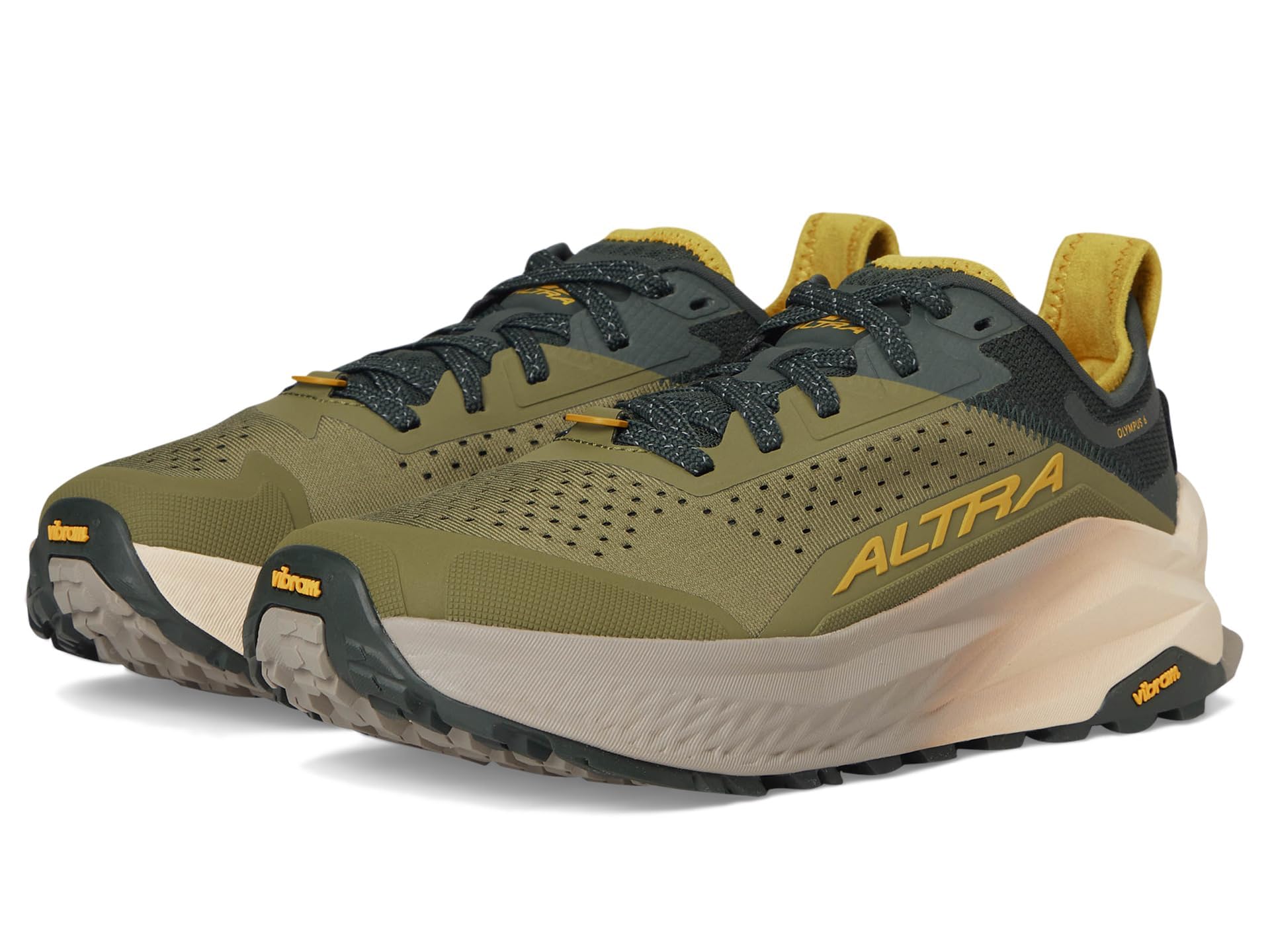
Altra’s plushest trail shoe, with the roomiest toe box the brand makes.
If your main complaint is that no shoe is wide enough up front, the Olympus 6 is the one to try. It runs on Altra’s Original FootShape fit — the brand’s roomiest toe box, with space through the midfoot and plenty of room for toes to move freely. The platform is a max-cushion 33mm/33mm with a soft, responsive midsole foam, so long days on the trail feel more forgiving underfoot.
Grip comes from a Vibram Megagrip outsole with an updated lug pattern for traction and stability on technical terrain. A premium Achilles pillow adds a softer step-in feel at the back of the heel. There is a GaiterTrap — a hook-and-loop tab for strapless gaiter attachment — to keep debris out.
The trade-off here is real: the shoe’s fit and comfort draw mixed feedback, with some owners finding the toe box wide enough and others finding it too narrow for their foot. Heel comfort is the more consistent gripe, and durability is also split, with some reporting it holds up and others citing breakdown. If you know Altra’s roomy fit works for your feet, this is the most cushioned way to get it — but you have to be a genuinely wide-footed runner to benefit.
The strongest case for it
- Altra’s roomiest toe box, with room through the midfoot too
- 33mm/33mm max cushion that softens long days on the trail
- Vibram Megagrip with an updated lug pattern for traction
The honest downsides
- Fit divides people — some find the toe box narrower than expected
- Heel comfort and durability both draw split feedback
For the genuinely wide foot: it is the biggest toe box Altra makes, paired with max cushioning that you feel on every step.
skip it if: you want a firm, planted ride or you need a shoe that will not need replacing after a few months.
Know the Specs
Toe Box Width
The toe box is the front section of the shoe where your toes sit. A wide toe box means there is enough space for your toes to spread out flat rather than bunching together. It is measured, but you feel it more than you read it: your big toe and little toe should not press against the sides, and your toes should be able to wiggle when you stand. Several shoes here use brand-specific names for this — Topo’s “roomy toe box,” Altra’s “FootShape fit,” and Flux’s “wide toe box” all describe the same idea.
Drop
Drop (also called offset) is the difference in height between the heel and the toe, measured in millimeters. A 0mm drop puts heel and toe at the same level, while a 5MM drop raises the heel slightly. Drop is not a quality ranking — it is a preference and a loading question. A flatter platform asks more of your calves and ankles, so build into it slowly if you are coming from traditional shoes. A larger drop gives more under-heel cushioning for long days out.
Stack Height
Stack height is how much foam sits under your foot, measured in millimeters. More stack means more cushioning and less ground feel. Less stack means better ground feel and often a lighter shoe. In the picks above you see numbers like 28mm/32mm, 33mm/33mm, and 35 x 30 mm — the higher the number, the more shoe between your foot and the trail. On rocky trails, more stack combined with a rock plate is the way to keep sharp stones from reaching your foot.
Outsole and Rock Plate
The outsole is the rubber layer on the bottom of the shoe. Vibram and MaxTrac are both outsole materials chosen for grip and wear, and each has its own character. A rock plate is a thin stiff layer built into the midsole that spreads the impact of a sharp rock over a wider area. It matters most on rocky, rooty terrain, where a sharp stone under a less-protected shoe can bruise the sole of your foot and end your day.
Common Questions
Will a wide toe box make my trail shoes feel loose overall?
Is a zero-drop trail shoe bad for my calves?
How do I know if a trail shoe has a wide enough toe box for my feet?
How long should trail running shoes last before they need replacing?
Are wide toe box shoes good for hiking as well as running?
What is a rock plate and do I need one?
Do these trail shoes work with gaiters?
Can I run on pavement in trail running shoes?
Are the Flux Adapt Trail Runners true to size?
What is the difference between the Topo Terraventure 4 and the Topo Pursuit 2?
The Bottom Line
The crowd favorite here is the The North Face Women’s Altamesa 300, a 4.5+ star women’s trail shoe that pairs a roomy toe box with a lightweight, high-rebound build and comfort that holds up on the trail. If you run rocky ground and want more protection, the Topo Terraventure 4 adds a rock plate and Vibram grip. And if a genuinely wide front is your main priority, the ALTRA Olympus 6 gives you the brand’s roomiest toe box with max cushioning.
How we choose
We do not accept paid placement. Every pick is matched to a real buyer and a real use-case; we do not hands-on test units.
Sources
Specifications: manufacturer listings and product documentation. Review insights: verified customer reviews, as of November 2026. Pricing: not shown on this page (it changes often); check the current price via the retailer link.
As an Amazon Associate, Tactical Gear Guy earns from qualifying purchases. This does not affect which products we feature.