Specs are compiled from manufacturer listings and verified buyer reviews and can change over time — please confirm the key details on the product page before buying.
You want ankle coverage on wet, rooty trails, but you do not want a clunky mountaineering brick strapped to each foot. That is the whole problem with trail running boots for men. The four picks below all wrap a running-shoe ride in a mid-cut boot build, so you get protection without the slog — and the honest differences between them come down to weight, drop, and how the waterproof layer actually holds up.
This guide is built by comparing the manufacturers’ published specifications and the patterns across verified customer reviews, so you get each pick’s real strengths and trade-offs instead of marketing spin.
These are the four most convincing pairs of trail running boots for men you can put on your feet.
Top Picks

How To Choose The Best Trail Running Boots for Men
A trail running boot is a strange animal, and that is exactly why the wrong pick hurts. You are asking for ankle coverage and a locked-down heel, but you still want a ride that lets you pick up the pace on smooth singletrack. Most buying mistakes happen because someone chases waterproofing alone and ends up with a stiff, heavy brick.
Start with the drop, not the colourway
Drop is the height difference between the heel and the toe of the shoe. A zero-drop boot puts heel and toe on the same level, which asks your calves and Achilles to do more of the work. A 5mm drop eases that load slightly, which suits men coming from a traditional running shoe. Neither is better — but pick deliberately, because your legs will notice on the third climb of the day.
Decide how much rock protection you actually need
A rock plate is a thin stiff layer tucked under the footbed that spreads the point of a sharp stone instead of letting it jab your arch. If your local trails are packed dirt and smooth gravel, you can skip the extra stiffness. If they are scree, talus, or root-tangled, a plate like the full-length ESS layer is worth the small loss in ground feel.
Treat waterproofing as a trade, not a free upgrade
A waterproof membrane keeps rain and puddles out, but it also slows the escape of sweat and heat. That is why some men find a waterproof mid boot clammy on a warm climb. If you run mostly dry, fast trails, a water-resistant upper breathes better. If you cross bogs and creeks year-round, the membrane earns its place — just know that water that gets in over the collar drains slowly.
Fit the toe box to your descent, not your mirror
Your toes slide forward when you drop off a ridge. A roomy toe box gives them somewhere to go without jamming into the front. That single fit decision is behind most of the comfort split between these four boots.
Side-by-Side Comparison
| Model | Best For | Drop | Weight | Outsole | Amazon |
|---|---|---|---|---|---|
| ALTRA Lone Peak All-WTHR Mid 2★ Best Overall | Roomy fit on wet trails | — | — | MaxTrac | Amazon |
| Hoka Speedgoat 6 Mid GTX | Sloppy, wet conditions | — | — | Vibram Megagrip with Traction Lug | Amazon |
| Topo Athletic Trailventure 2 WP | Technical rock and root | 5 mm | 15.9 oz (M9) | Vibram Megagrip | Amazon |
| ALTRA Lone Peak 9 Waterproof Mid | Natural stride, light carry | 0 mm | 13.45 oz | MaxTrac | Amazon |
Detailed Reviews
1. ALTRA Men’s Lone Peak All-WTHR Mid 2 Trail Running Shoe
Our pick — 4.0+★ from 200+ verified ratings; the strongest balance of quality and price.
The mid-cut Lone Peak that treats a rain cloud as a minor inconvenience.
Start here if you want the roomiest toe box of the four. The original FootShape last gives you a loose, roomy fit through the toe, so your foot spreads the way it does barefoot — which is what keeps long descents comfortable instead of pinched. The ankle collar adds the support a low-cut trail shoe simply cannot, without turning the ride into a hiking-boot trudge. Reviewers rate comfort highest, with build quality and overall fit close behind.
Underfoot you get the responsive ALTRA EGO midsole, a foam that pushes back a little rather than settling flat, paired with the grippy MaxTrac outsole for traction on loose and wet ground. It all sits on a water-resistant upper built to shrug off a few drops of rain. It suits a neutral, natural foot position with light ankle coverage for damp mornings.
The honest catch is the toe box itself. Some men praise the roomy fit, while others find it not as wide as the Lone Peak reputation led them to expect — so if you have been sizing down to compensate, try your normal length first. Water resistance and long-term durability also split opinions, and both are fair caveats rather than reasons to walk away.
What sets it over
- Roomiest, most natural toe fit of the four — toes spread instead of crowding
- Mid-cut ankle collar adds support a low trail shoe cannot
- Responsive EGO midsole plus grippy MaxTrac outsole for wet, loose ground
Where it gives ground
- Some men find the toe box narrower than the family name suggests
- Water resistance is not a hard waterproof guarantee
Go here first: men who want a roomy, natural fit with ankle coverage and a bit of rain protection.
Look elsewhere: if you need a fully waterproof boot for standing water and creek crossings.
2. Hoka Mens Speedgoat 6 Mid GTX
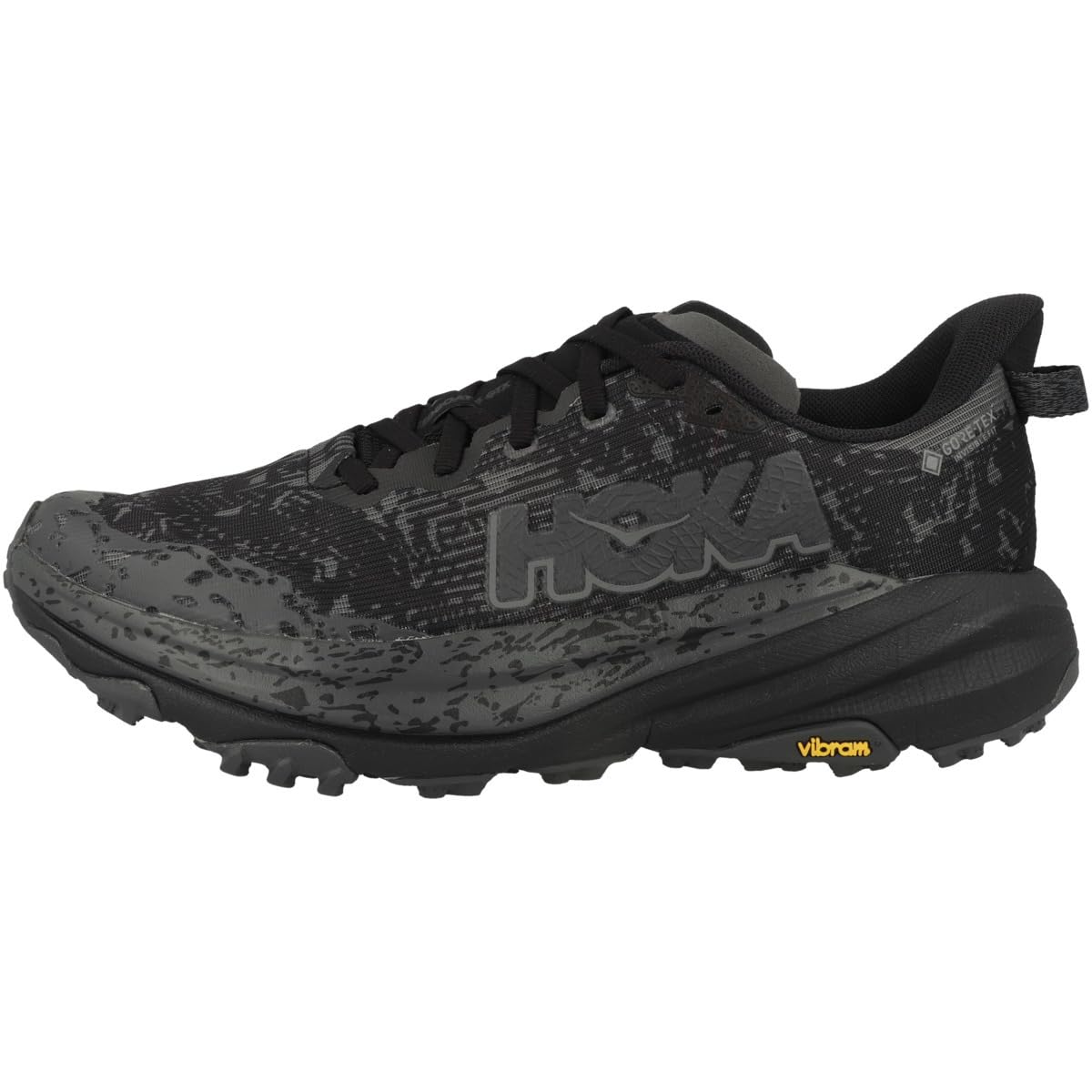
A trail shoe built for the days you would rather not leave the house.
The Speedgoat 6 Mid GTX is the option you reach for when the weather is genuinely awful. Its GORE-TEX membrane is a fully waterproof layer built to lock water out, and that is the one job this boot does better than anything else on the list. Add Vibram Megagrip with Traction Lug — a rubber compound with a tread designed for loose soil — and you get bite on soft, slick ground where a smoother outsole would skate.
Hoka also moved to a more flexible, running-friendly collar on this version, which matters because a stiff boot collar can rub on the ankle over a long day. There is a protective toe rand out front to guard against kicked stones, a foot-cradling heel bolster for a locked-in feel, and a late-stage MetaRocker sole that rolls you through the stride. The upper is 100% recycled polyester mesh, and the laces use 70% recycled nylon and 30% recycled polyester.
Here is the trade a buyer needs to weigh honestly. The waterproof layer is excellent, but comfort and fit draw genuinely mixed reactions, and men consistently report the sizing runs small. Durability is the real sticking point — the recurring gripe is that the outsole can come apart with use. This boot is at its best when you size up and treat it as a wet-weather specialist rather than a single pair for everything.
Where it wins: that GORE-TEX membrane and Vibram Megagrip with Traction Lug make this the strongest wet-condition tool in the group. If your trails stay soaked for weeks at a time, nothing here matches it.
Where it costs you: the sizing runs small and the outsole has been known to separate under hard use, so size up and do not expect this to be your longest-wearing pair.
Right call for: men whose trails are wet and loose most of the year and who want maximum protection from the elements.
Wrong call for: anyone who wants to buy once and wear for years — check the sizing and manage durability expectations.
3. Topo Athletic Men’s Trailventure 2 WP Trail Running Boots

Rock protection and a roomy toe box, at the cost of some weight.
This is the cushioned, rock-plated option for sharp, root-tangled ground. A full-length ESS rock plate — a thin, flexible shield that spreads the point of a stone — runs the whole length of the foot, so sharp rocks and roots stop being a lottery. Cushioning sits on a 33 x 28 mm platform, with a 5mm drop from heel to toe that eases the load on your calves compared with a zero-drop design. Reviewers praise the fit above all, then comfort, and the anatomical toe box lets your toes spread on descents.
The waterproofing comes from a full eVent inner-bootie — a sealed sock-like layer inside the shoe that blocks water while letting air move. External TPU heel counter and a ZipFoam midsole keep the ride stable, and the Vibram Megagrip outsole delivers traction on wet, slippery terrain. An OrthoLite insole adds underfoot comfort with odour resistance. Weighing 15.9 oz (M9), this one is noticeably heavier than the Altra Lone Peak 9 at 13.45 oz, though that mass buys you the full rock plate.
What you should know before ordering is that the platform runs warm and the fit is designed roomy. Waterproofing and durability draw mixed reports — a minority find them less than fully waterproof or quick to wear — so it is worth being realistic about heavy, sustained soaking. Traction, support, and stability all hold up on technical ground, which is the whole point of a boot like this.
Why men rate the fit so highly
- Full-length ESS rock plate shields the whole foot from stone bruising
- Roomy anatomical toe box leaves room to spread
- 5mm drop eases calf load on long climbs
The trade-offs to weigh
- At 15.9 oz it is the heaviest pick here — versus the 13.45 oz Lone Peak 9
- Waterproofing and durability reports are mixed
Pick this one when: rocky, root-tangled trails and long descents are your normal terrain.
Pass if: you chase the lightest possible carry or run mostly dry, fast ground.
4. ALTRA Men’s Lone Peak 9 Waterproof Mid Hiking Shoe
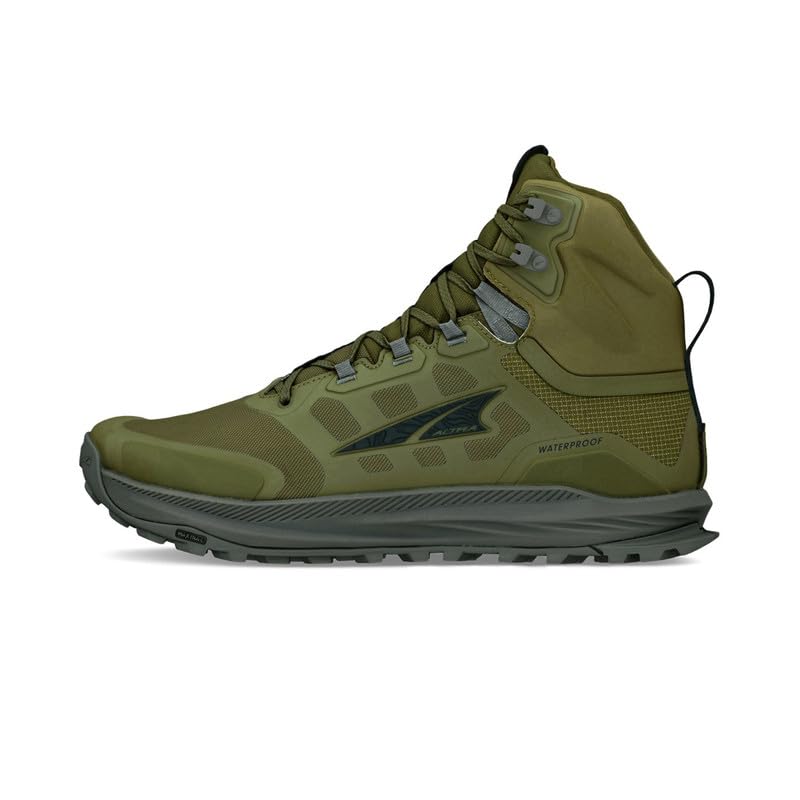
Zero-drop and light as a low shoe, but with a waterproof mid-cut build.
This is the zero-drop pick for a barefoot-style stride with mid-cut ankle coverage. The zero-drop platform puts your heel and toe on the same level at 25 mm, which asks your calves to work more but keeps your stride natural. Weight sits at 13.45 oz, the lightest boot here — versus the Topo Trailventure 2 WP at 15.9 oz. A Hydroguard waterproof membrane and no-sew overlay handle wet ground, and the roomy toe box lets your toes spread as you move.
Underfoot you get the Altra EGO midsole for a responsive feel and a MaxTrac outsole built for grip, traction, and durability across terrain. A Stoneguard insert adds underfoot protection over rocks and debris — flexible but firm, so you still sense the ground through the sole. The enhanced lacing and molded heel collar lock things down. Reviewers rate build quality highest, then fit and comfort, with the 13.45 oz weight drawing its own praise.
The one thing to watch is the water resistance. Some men find it truly waterproof, while others say it falls short in a real soaking — a fair split rather than a defect. An occasional pair arrives with the toe lining peeling back, and the colour has not matched the advertised black for everyone. Get the fit right and break these in gradually if zero-drop is new to you.
The spec that defines it: 25 mm stack height and a 0 mm drop make this the most natural-feeling boot on the list, and 13.45 oz of it is easy to carry all day.
Best match for: experienced trail men who want a zero-drop platform, a light carry, and ankle coverage.
Second-guess it if: you are new to zero-drop or count on a fully waterproof barrier in a downpour.
Know the Specs
Heel-to-Toe Drop
Drop is the height gap between the heel and the toe. A 0 mm drop sits level, a 5 mm drop lifts the heel slightly. Lower drop asks more of your calves and Achilles. Higher drop feels closer to a traditional running shoe. Pick one level and stick with it as you build mileage.
Waterproof Membranes
A membrane is a sealed layer inside or above the upper that blocks water while letting some air through. GORE-TEX, eVent, and Hydroguard all do this job in the picks above, though breathability and durability vary. Water can still enter over the collar, so a waterproof boot is not a swimming shoe.
Outsole Grip and Traction Lug
The outsole is the rubber bottom you plant on the trail. Vibram Megagrip and MaxTrac are the compounds used here, and Traction Lug refers to specific tread shapes for soft ground. Deeper, sharper lugs bite loose soil better; a smoother pattern clears mud less reliably.
Rock Plates and Stack Height
A rock plate is a thin stiff layer under the footbed that spreads point pressure from sharp stones. Stack height is how much cushioning sits under your foot, in millimetres. More stack means more cushion but less ground feel. A rock plate protects without adding mush.
Common Questions
Should I size up in trail running boots for men?
Is a zero-drop trail boot harder on my calves?
Do I need a rock plate in my trail boots?
Are waterproof trail boots too warm for summer?
Can I run in a mid-cut trail boot or only hike?
How long do trail running boots last?
Vibram Megagrip vs MaxTrac outsole which grips better?
How should trail boots fit at the toe box?
The Bottom Line
For most men, the winning pick among these trail running boots for men is the ALTRA Lone Peak All-WTHR Mid 2 — a roomy, natural-foot fit with ankle coverage and rain-ready protection that suits far more trail days than it rules out. If your trails are soaked and loose most of the year, grab the Hoka Speedgoat 6 Mid GTX for its GORE-TEX barrier and Vibram Megagrip bite. And for rocky, root-tangled terrain where underfoot protection matters most, the Topo Trailventure 2 WP and its full-length ESS rock plate is the one to reach for. The Hoka buys you a GORE-TEX barrier; the Topo buys you a full-length ESS rock plate — pay for either only if your ground demands it.
How we choose
We do not accept paid placement. Every pick is matched to a real buyer and a real use-case; we do not hands-on test units.
Sources
Specifications: manufacturer listings and product documentation. Review insights: verified customer reviews, as of November 2026. Pricing: not shown on this page (it changes often); check the current price via the retailer link.
As an Amazon Associate, Tactical Gear Guy earns from qualifying purchases. This does not affect which products we feature.