Specs are compiled from manufacturer listings and verified buyer reviews and can change over time — please confirm the key details on the product page before buying.
If you are building a rack for real rock, the gear that keeps you alive is the piece you can place fast in an awkward stance. That means cams, nuts, and offset chocks — the protection you actually slot into a crack — and not the sport-climbing quickdraws that clip to bolts already drilled into the wall.
This guide is built by comparing the manufacturers’ published specifications and the patterns across verified customer reviews, so you get each pick’s real strengths and trade-offs instead of marketing spin.
Traditional protection splits into two families: active gear with spring-loaded lobes, and passive gear you wedge into a constriction. Both earn a place on your harness, and mixing them gives you options when a crack changes shape halfway up. Here is a practical shortlist of traditional climbing gear.
Top Picks
How To Choose Traditional Climbing Gear
Active gear has spring-loaded lobes that expand outward against the crack walls when you pull the trigger and release it. Passive gear has no moving parts — you slot a shaped piece of metal into a constriction and it locks in place. A complete trad rack carries both, because each one covers spots the other cannot handle.
Read the strength rating before the size range
Every nut and cam is stamped with a strength rating in kilonewtons (kN — a metric unit of force, where roughly 10 kN sits well above the load a falling climber puts on a well-placed piece). A nut rated 7kN to 10kN and a cam rated 11 kN to 20 kN tell you how much force the piece is built to hold. Check that number before you check the price, because it is the whole point of carrying it.
Match the running range to your local rock
Active cams list a placement range, usually in millimetres, and that window tells you which cracks the piece will fit. A wider range per cam lets you cover more widths with fewer pieces, while a narrow, specific range suits the crack widths you actually climb. Passive nuts work to their own size bands, so bring a spread of widths rather than six of the same one.
Count the grams when you are hauling it uphill
On a multi-pitch route or an alpine approach, the weight of the rack hangs off your harness all day. Passive aluminum nuts are the lightest option, hollow-framed cams sit in the middle, and a full cam set is the heaviest thing on the loop. If you hike hours to the base, buy the lightest pieces that still hold the rating you need.
Side-by-Side Comparison
| Model | Best For | Type | Strength | Weight | Amazon |
|---|---|---|---|---|---|
| BLACK DIAMOND Camalot C4★ Best Overall | All-around trad rack | Active cam (set) | — | 840 g | Amazon |
| Wild Country Superlite Offset RocksMost Versatile | Flares and constrictions | Passive offset nut (set of 6) | — | 5.66 oz | Amazon |
| BLACK DIAMOND Classic Stopper Set #5-11Top Performer | Crack constrictions | Passive nut (set of 7) | — | 281 g | Amazon |
| Camp USA Dyneema Tricam Set | Hybrid nut-and-cam placements | Hybrid tricam (set of 4 sizes) | 7kN-20kN | 177 g | Amazon |
| Totem Climbing Cam – Yellow 0.80 | Holding power in a narrow head | Active cam (single) | — | — | Amazon |
| Totem Cam -.5 | Demanding trad pitches | Active cam (single) | — | — | Amazon |
| Wild Country Friend Rock Climbing Cams | Reduced rope drag on long routes | Active cam (set) | — | 9.34 oz | Amazon |
Detailed Reviews
1. BLACK DIAMOND Camalot C4
Our pick — 4.5+★ from 200+ verified ratings; the strongest balance of quality and price.
The rack cornerstone that swallows awkward widths and still cleans out fast.
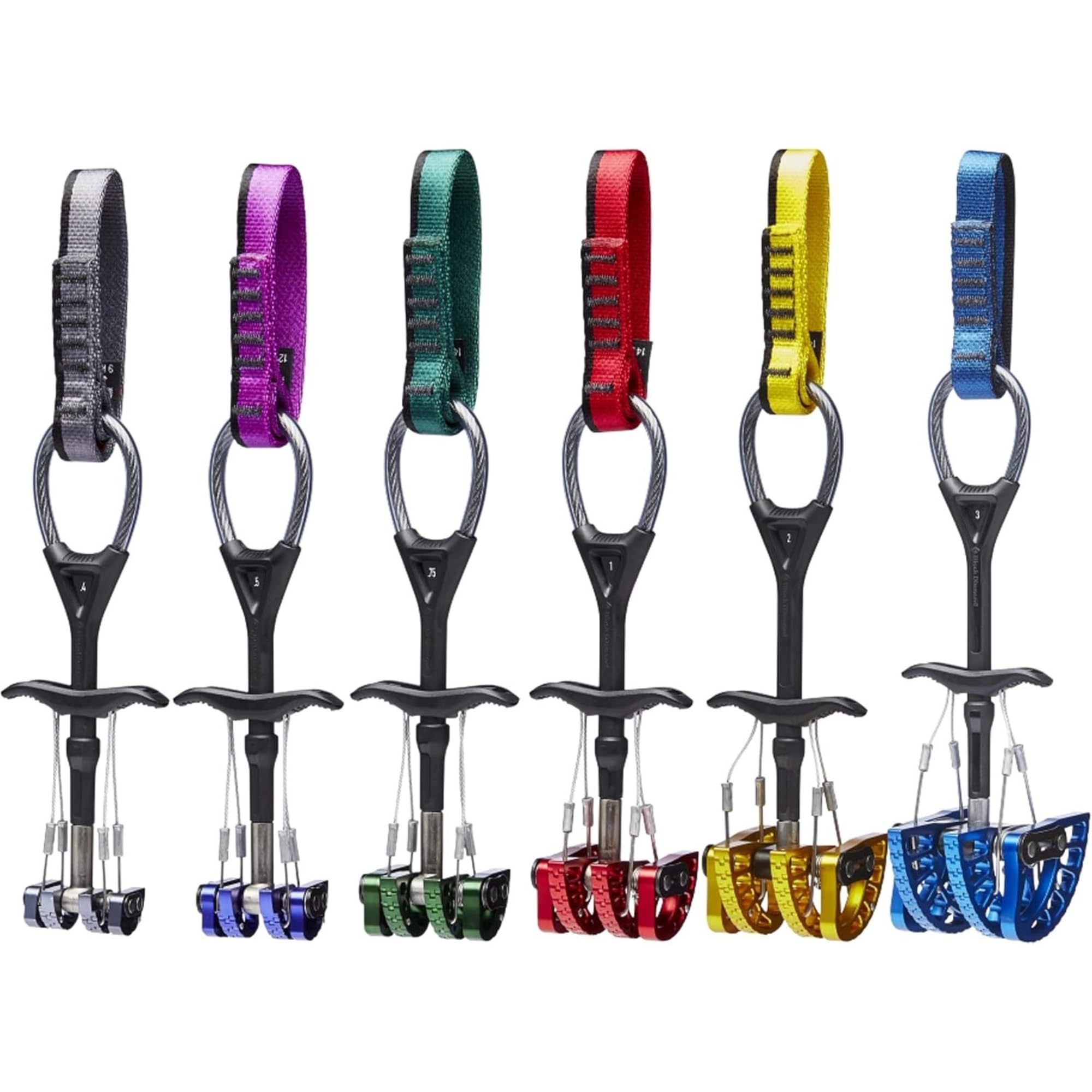
The Camalot C4 earns the top spot because its double-axle lobes let one set cover a wide spread of crack sizes with minimal re-racking on the wall. The double-axle construction on each lobe opens a broad expansion range, so a single cam can fit more widths than a single-axle piece. Fewer sizes on your harness means fewer fumbles on lead, and you spend less time hunting the right number.
You can place and pull this cam with one gloved hand, thanks to the updated trigger geometry and wider thumb loop. Color-coded slings and lobes let you grab the right size at a glance mid-lead. The build uses hot-forged lobes and Dyneema slings (a strong synthetic webbing that saves weight). At 840 g for the set, this is the heaviest single item in this article — the Wild Country Classic Rocks set comes in at 100 g — but that weight buys you the covered range of a full active rack.
What earns its place on the harness
- Double-axle lobes open a wide expansion range for flexible placements in varied cracks
- Updated trigger and wider thumb loop make one-handed placements and cleaning easier
- Color-coded slings and lobes speed up size selection on the wall
- Built for long-term use in trad, alpine and big-wall environments
Where you feel it
- At 840 g the set carries real heft on a long approach
- Premium build puts it in the top tier of any rack budget
Pick this for: climbers building a complete active rack who want wide coverage per cam and fast handling.
Look elsewhere if: you are gram-counting for a long alpine walk-in and can trade range for lighter passive pieces.
2. Wild Country Superlite Offset Rocks
Six hollow, offset chocks that reach into the flares a standard nut slides right out of.
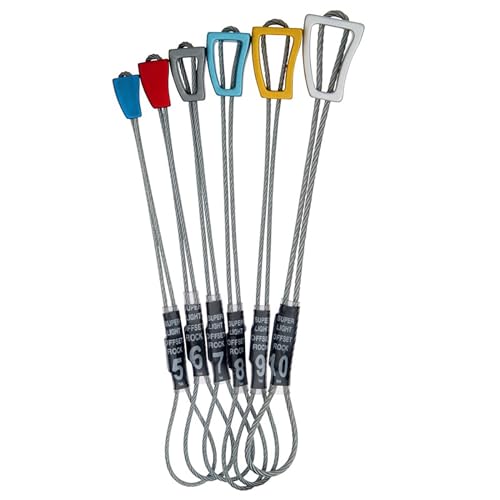
Here is the problem offset nuts solve: a standard rock profile is symmetric, so in a tapered crack it only contacts one side. The Superlite Offset Rocks have a lopsided side profile that wedges into that taper and sits flush against both walls. That two-wall contact is what lets you commit weight without bouncing on the piece first.
The hollowed-out construction strips metal without cutting durability or strength, and it shows in the carry weight — the set runs 5.66 ounces. Compare that to the Wild Country Friend cam set at 9.34 ounces, and you see how much weight passive gear saves you. Six sizes come anodized in distinct colors, so grabbing the right one off a shared carabiner is quick when the crack narrows and your feet are getting tired.
The trade-off is scope. Offset nuts shine in flared and irregular placements, but a straight parallel-sided crack still wants a standard profile or a cam. Rack these alongside a set of regular nuts rather than instead of them.
The placement advantage: the offset side profile slots into tapered and flared cracks that defeat a symmetric nut.
Rack it as a supplement: these cover the awkward spots, so pair them with standard nuts for parallel cracks.
Reach for these if: your local rock throws flares and constrictions at you and you want a light passive option to cover them.
Pass if: your routes are all clean parallel cracks where a standard nut set does the job.
3. BLACK DIAMOND Classic Stopper Set #5-11
Seven precision-cut stoppers for the constrictions where a cam just will not sit.
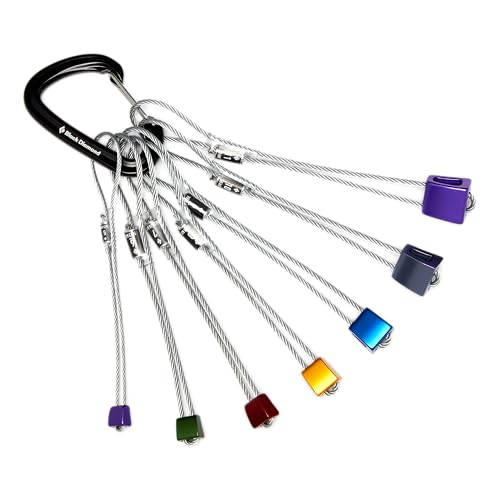
Some placements have no room for lobes — a narrow slot behind a flake, or a constriction that pinches down tight. That is where a stopper earns its keep. This set covers sizes 5 through 11, the common crack widths and constrictions you meet on granite, sandstone, and alpine rock. The precision-cut aluminum heads give you honest tactile feedback, so you feel the piece seat as you set it.
Seven pieces sit at 281 g total, which keeps the rack reasonable while covering the mid-to-large stopper band. The anodized heads and color-matched cable swages let you spot the right size fast on lead, and the galvanized steel cables hold their shape through repeated cleaning and loading.
Here is the catch to weigh: this set only spans sizes 5 through 11. It pairs well with the ten-nut Wild Country set that runs 1 through 10, but on its own it leaves the small-nut gaps open. Treat it as half of a passive rack, not the whole thing.
Why leaders keep these on the loop
- Sizes #5–11 cover common crack widths and constrictions on varied rock
- Color-coded heads and swages speed up size selection on lead
- Galvanized steel cables hold shape through repeated cleaning and loading
- Precision-cut aluminum heads give clear tactile feedback when setting
What to plan around
- Covers sizes 5–11, so small-nut placements need a separate set
- Pairs best with the ten-nut starter set rather than standing alone
Made for: trad leaders who want dependable passive protection for constrictions and flared slots.
Not the whole answer if: you still need the small sizes below #5.
4. Camp USA Dyneema Tricam Set (0.5-2.0) – Multi, one Size

One piece that works as a passive chock or an active cam, depending on the slot.
Tricams are the hybrid in the trad toolbox — you can set one as a chock in a constriction or load it like a cam against a wall. That dual personality lets four tricams cover placements that would otherwise need both a nut set and a cam. The set spans four sizes (0.5, 1, 1.5, and 2), with placement ranges from 16 – 28 mm up to 29 – 41 mm, so it covers the narrower cracks you meet on alpine lines.
Strength scales with size. The smallest 0.5 holds 11 kN as a cam and 7 kN as a chock, the 1 holds 13 kN and 10 kN, and the 1.5 and 2 reach 20 kN and 17 kN. Weight follows the same ladder — 1 oz, 1.2 oz, 1.7 oz, and 1.9 oz — so the small ones barely register on your harness. The Dyneema slings save weight over steel cable, and the aluminum heads are built for trad and alpine use.
The honest note: tricams ask for a slightly different setting feel than a plain nut, and the smallest 0.5 with its 7 kN chock rating wants careful placement in marginal rock. Learn the set on easier ground before you trust it on a committing lead.
The hybrid edge: each tricam loads as a passive chock or as an active cam, so four pieces cover placements a single-purpose nut cannot.
Learn it first: the setting technique differs from a plain nut, and the 0.5 chock rating is the low end of this set.
Best for: climbers who want lightweight versatility and fewer pieces to cover narrow alpine cracks.
Choose a simpler nut if: you want a placement you can set on instinct without learning a new technique.
5. Totem Climbing Cam – Yellow 0.80

A single cam built around grip — narrow head, flexible stem, and a load that sits on two lobes.
The Totem Yellow 0.80 is the cam you reach for when the placement is awkward and you need every bit of bite. Its Direct Loading system focuses the holding force where it counts, and the narrow head slips into tight spots that a bulky cam cannot enter. The flexible stems and strong springs cut down on the walking that plagues a loose cam under rope movement.
What makes it distinctive is that it can load on just two lobes, which opens placements a three-lobe cam cannot take. It also cleans out smoother than most, so you are not fighting the trigger on a tired second. Aluminum construction keeps the piece honest in weight while still delivering the grip.
Where it falls short of the sets is scope — this is one cam, one size. Compare that to the Black Diamond C4 set, and you see the difference: a full set covers a spread of cracks, while this single piece does one width exceptionally well. Buy it to fill a specific gap in your rack, not to start one.
The case for one great cam
- Direct Loading system concentrates holding power in awkward placements
- Narrow head eases placing and cleaning in tight spots
- Strong flexible stems reduce walking under rope movement
- Loadable on just two lobes to reach placements a three-lobe cam misses
Know before you buy
- One cam, one size — not a rack on its own
- Premium single-piece build means you still need other sizes
Worth it for: climbers with a starter rack who want one high-grip cam to cover a specific problem width.
Look to a set instead if: you are still assembling a rack from scratch.
6. Totem Cam -.5
The small-crack specialist for climbers who want hold over everything else.
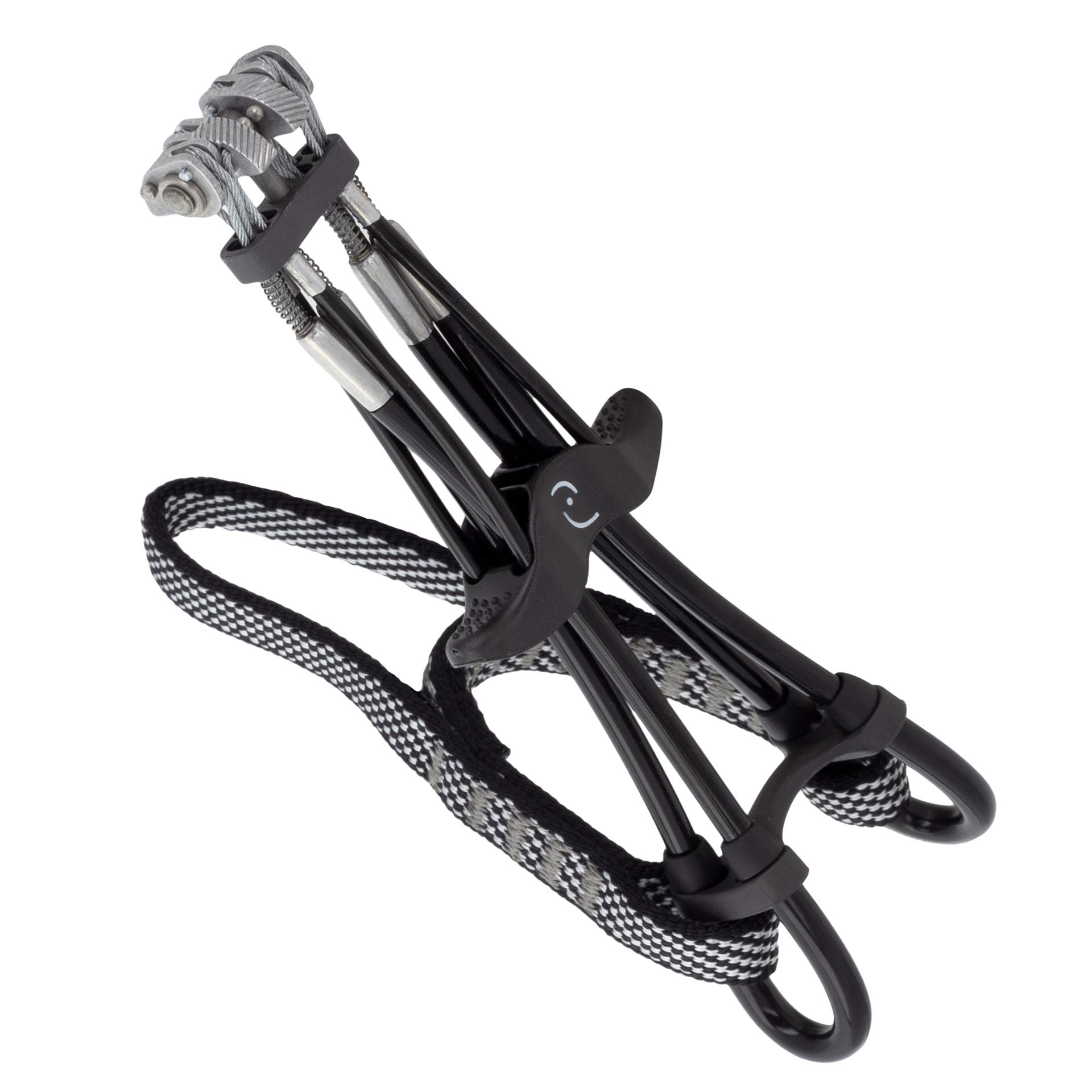
This is the.5 size in Totem’s cam line, and it carries the same patented Direct Loading Camming Device system as its larger siblings. That design aims the holding force straight into the rock, which matters most in small sizes where lobe contact is minimal. The aluminum body keeps the piece ready for demanding trad pitches.
Totem builds this piece for climbers who want broad placement possibilities from a compact cam. The single-unit format means you slot it in as one targeted answer to a narrow crack, not as a full rack. If you already run the Yellow 0.80 above, this.5 fills the size below it and gives you a two-piece small-crack kit that addresses widths the big sets skip.
The hard truth about single cams is cost-to-coverage. One piece at a premium price covers one size band, and the Black Diamond C4 set gives you multiple sizes in one go — 840 g of them, versus this single cam. Buy this only after your main rack is sorted and you know the exact width you keep coming up short on.
Where it wins: the Direct Loading system and compact profile suit small, demanding placements.
The real cost: one cam, one size, at premium pricing — it fills a gap rather than building a rack.
Suits you if: your rack is built and you need a small-crack specialist to round out the low end.
Skip the single cam approach if: you still need broad coverage from your spend.
7. Wild Country Friend Rock Climbing Cams

The original camming device, rebuilt to cut rope drag on wandering routes.
The Friend is the first camming device ever made for trad climbing, now redesigned, and it keeps the 13.75° camming angle that made it place and clean so predictably. That angle is the geometry the lobes use to press into the crack walls, and it is why the piece seats predictably every time you pull the trigger. Dual axles widen the placement range, and Wild Country hollowed them out to trim the carry weight.
On a long pitch, the extendable Dyneema sling is what sets this apart. On a wandering route, you can extend each placement to keep the rope running straighter, which cuts drag and keeps your lead line manageable. The full set runs 9.34 ounces, so it stays reasonably light for a cam rack. Dark, multicolor finishes help you match the sizes on the wall.
The only size caveat worth flagging: the dual-axle design covers plenty of range, but no cam set fits every crack. On long, rambling routes the extendable sling cuts more rope drag than any single size choice in the set.
Why long-route leaders like it: the extendable Dyneema sling cuts rope drag on wandering pitches, and the proven 13.75° camming angle places and cleans fast.
Where it stops: it is still a cam set, so the flared and pinched placements that offset nuts and tricams grab will still want passive gear.
The right call for: multi-pitch trad leaders who fight rope drag on routes that never run straight.
Not your priority if: your climbs are short and straight, where the sling extension earns less.
Know the Specs
Strength Rating in kN
The kilonewton rating tells you how much force a piece is built to hold, and it is the number that matters most for safety. Passive nuts here range from 7kN to 10kN, while cams and tricams reach 11 kN to 20 kN. A higher number does not make a badly seated placement safe — placement quality comes first — but it tells you the load the piece is engineered to hold.
Camming Range in Millimetres
Active cams list a placement window in millimetres, and it defines the crack widths the piece will fit. A wider range per cam means fewer pieces cover more sizes, which lightens your rack and speeds up selection on lead. Passive nuts work to their own size bands instead, so you carry a spread of widths rather than one repeated size.
Common Questions
What is the difference between active and passive trad protection?
Do I need both cams and nuts on a trad rack?
What does the kN rating on a climbing nut or cam mean?
Why do offset nuts hold better in flared cracks than standard nuts?
How much does rack weight matter on a trad climb?
Is a tricam a nut or a cam?
Should I buy a single cam or a full cam set first?
How do I stop a cam from walking out of a placement?
What size range should a first passive rack cover?
The Bottom Line
If you are building a real rack, the traditional climbing gear winner is the Black Diamond Camalot C4. Its double-axle construction covers the widest spread of crack sizes in one set, and the color-coded lobes make size selection fast when you are mid-lead and engaged. Pair that active side with the Wild Country Classic Rocks Set 1-10 — ten passive pieces at 100 g cover the constrictions a cam cannot reach, for the least weight and spend on this list. And if you want grip over coverage, the Totem Yellow 0.80 is the single cam to slot in when the placement is awkward and every bit of hold counts.
How we choose
We do not accept paid placement. Every pick is matched to a real buyer and a real use-case; we do not hands-on test units.
Sources
Specifications: manufacturer listings and product documentation. Review insights: verified customer reviews, as of November 2026. Pricing: not shown on this page (it changes often); check the current price via the retailer link.
As an Amazon Associate, Tactical Gear Guy earns from qualifying purchases. This does not affect which products we feature.