Specs are compiled from manufacturer listings and verified buyer reviews and can change over time — please confirm the key details on the product page before buying.
If you are tired of earbuds dying mid-commute, the answer is simpler than the marketing suggests: a corded pair still delivers the most reliable sound for the money. This guide covers nine wired studio and audiophile headphones, from an entry-level monitoring workhorse to an open-back set built for long listening sessions. Every pick here plugs into a 3.5mm jack or a 1/4-inch adapter, so there is no pairing, no charging, and no lag.
This guide is built by comparing the manufacturers’ published specifications and the patterns across verified customer reviews, so you get each pick’s real strengths and trade-offs instead of marketing spin.
You will see what each pair is actually built for — tracking in a studio, editing on a laptop, or simply hearing your music with more space around it. The breakdown below makes the choice obvious for anyone shopping for the top wired headphones.
Top Picks


How To Choose The Best Top Wired Headphones
The first decision is not brand, it is purpose. A pair tuned for studio tracking keeps your playing out of the microphone and tells you the truth about a mix — even when that truth is ugly. A pair tuned for listening at home goes the other way: it flatters the music and spreads the sound out around your head. Get that split right and the rest of the spec sheet falls into place.
Closed-back or open-back — pick by where you listen
A closed-back design seals the earcup around your ear, so sound stays in and outside noise stays out. That makes it the right tool for recording, for a shared office, and for a noisy room. An open-back pair leaves the rear of the driver uncovered, which lets air move and gives your music a wider, airier sense of space. The trade-off is real: open-back models leak sound outward, so they belong in a quiet room where nobody is trying to sleep next to you.
Will your phone actually drive it?
Impedance is the electrical resistance a headphone presents to whatever is feeding it, measured in ohms. A low figure (think 42 ohms) means a phone or laptop can push it to a healthy volume without help. A high figure means you will want a headphone amp or an audio interface to get the same loudness. If you plan to use a desktop interface, this matters far less — but on a phone it decides whether you hear everything.
Driver size and cable — the two things that outlast the novelty
A bigger driver (the speaker cone inside each earcup, measured in millimeters) generally moves more air, which tends to translate into deeper bass and more headroom. Cable construction is the other long-haul decider: a detachable cable means a frayed cord is a cheap replacement rather than a dead pair of headphones. Fixed cables are fine, but you are locked in.
Side-by-Side Comparison
| Model | Best For | Driver Size | Design | Cable | Amazon |
|---|---|---|---|---|---|
| Audio-Technica ATH-M50X★ Best Overall | All-round studio and daily listening | 45 mm | Closed-back, swiveling cups | Detachable, three included | Amazon |
| Audio-Technica ATH-M20xBudget Champion | Cheapest entry into studio monitoring | 40 mm | Closed-back | Fixed, single-side exit | Amazon |
| Shure SRH440ARecording Ready | Recording and monitoring with a locking cable | — | Closed-back, collapsible | Detachable, locking | Amazon |
| Sony MDR7506 | Field work and long cable runs | 40 mm | Closed-back, foldable | Fixed, 9.8 ft | Amazon |
| Philips Fidelio X2HR | Wide open sound for gaming and film | 50 mm | Open-back | Detachable, 3 m | Amazon |
| AKG Pro Audio K371 | Travel-ready studio monitoring | 50 mm | Closed-back, folding | Detachable, three included | Amazon |
| Sennheiser HD 505 | Long listening sessions in a quiet room | — | Open-back, velour pads | Fixed, 1.8 m | Amazon |
| beyerdynamic DT 770 Pro X | Recording with zero bleed | 45 mm | Closed-back | Detachable, mini-XLR | Amazon |
| MEZE AUDIO 105 AER | Pure audiophile listening, low impedance | 50 mm | Open-back | Detachable, Kevlar OFC | Amazon |
Detailed Reviews
1. Audio-Technica ATH-M50X Headphones
Our pick — 4.5+★ from 33,500+ verified ratings; the strongest balance of quality and price.
A corded closed-back that stays honest on a mix and comfortable on a commute, no amp required.
Start with what wins people over: sound. Owners keep coming back to these: 4.5+ stars across 33,000+ ratings. The 45mm drivers (the speaker cones inside each cup) use rare earth magnets and copper clad aluminum voice coils, and that hardware is why the bass lands deep and accurate instead of muddy. A lot of closed-back pairs in this class get boomy — these do not.
The practical shape matters as much as the tuning. The circumaural design (cups that sit around your ears rather than pressing on them) blocks a good chunk of room noise, so you can hear detail over a humming laptop fan or a busy classroom. The 90-degree swiveling earcups flip one flat so you can monitor with one ear while the other listens to a room — a small thing that gets used constantly in real recording sessions. Three detachable cables come in the box, which means a worn cord is a swap, not a purchase.
The catch is durability, and it is worth knowing before you buy. Long-term wear reports are genuinely split — plenty of pairs survive years of daily use, and a smaller group finds the hinges give out sooner than expected. Go easy on the folding hinges and the set lasts years.
Where it earns its keep
- Deep, accurate bass with clean highs from the 45mm drivers and rare earth magnets
- Sound isolation that holds up in genuinely loud rooms
- Three detachable cables so a frayed cord never ends the pair
- Swiveling cups for one-ear monitoring
What to weigh up
- Hinge and headband wear is the recurring long-term question
- The clamp and weight take some getting used to for all-day wear
Go for it if: you want one corded pair that records, mixes, and commutes with you, with a sound signature most ears read as right.
Think about it first if: you need feather-light all-day wear or an open soundstage — a velour-padded open-back will sit easier.
2. Audio-Technica ATH-M20x Headphones
The cheapest honest entry into closed-back studio monitoring.
Here is the honest comparison that matters: the M20x runs 40mm drivers against the M50X’s 45mm, and 40mm against the Fidelio X2HR’s 50mm. Smaller cones move less air, so you get a tighter, less room-filling presentation than either bigger pair. What you do get is 40mm drivers with rare earth magnets and copper clad aluminum voice coils, tuned specifically for enhanced low frequency — meaning the bass is present and warm, not flat and clinical.
The isolation is the sleeper feature. Because the cups contour around your ears, these work as a genuine noise barrier for the price of a couple of coffees and a sandwich. The single-side cable exit keeps the cord out of your way, and it is built tangle-free so it does not knot itself into a nest in your bag. If you are tracking guitar or mixing a podcast on a laptop, this is where most people should start.
Owner consensus is genuinely warm for such an affordable set — clear sound, reliable performance, and people describing them as the best they have owned. The divisive point is cable length: some love the 6ft run for moving around a room, others find it long enough to snag on a chair arm.
Verified sound level: the 96dB/mW output sound pressure level (how loud it gets for a given push of power) means a phone drives these to a comfortable volume without an amp.
One realistic trade-off: that 6ft fixed cable cannot be replaced — if it fails, the pair retires with it.
Reach for these if: you are buying your first monitoring pair and want the Audio-Technica tuning without stretching.
Look up instead if: you need detachable cables or deeper bass — the M50X covers both.
3. Shure SRH440A Over-Ear Wired Studio Headphones for Recording
A locking cable and a collapsible frame — built for the person who packs their headphones into a bag every day.
What the Shure gets right is workflow. The closed-back, over-ear shape reduces ambient noise while keeping your mix contained, so a click track does not leak into the room. The cable locks in place with a detachable connector, which means it will not pull loose mid-take the way a friction-fit plug can. And because the whole thing collapses, it lives in a gig bag without needing a dedicated hard case.
Comfort leans toward the long session — lightweight construction, an adjustable headband, and cushioned earcups that owners describe wearing for hours without discomfort. The tuning is described as balanced and detailed with extended frequency response, which is the right character for monitoring and critical listening rather than for flattering a bad recording.
One real-world note on longevity: the build and reliability picture is split, with a portion of long-term use pointing to the cable connection as the weak link over time. That is the reason to buy this for its locking mechanism and collapsible travel, not as a lifetime buy-and-forget.
The travel argument: collapsible plus a locking detachable cable is a combination most pairs in this range skip.
The honest limit: if the cable connector ever fails, that same connection is the part to check first.
Pick this one when: your headphones travel between a studio, a laptop, and a bag every day.
Choose differently if: you want a fixed-cable tank that never gets unplugged anyway.
4. Sony MDR7506 Professional Large Diaphragm Headphone

A 9.8 ft fixed cord and a folding frame — the broadcast staple that lives in a camera bag.
The headline number here is reach: a 9.8 foot cord that ends in a gold plated plug, plus a 1/4 inch adapter in the box. If you need to stand back from a mixer or move around a room while monitoring, that length is the reason to pick this over the M50X’s three short cables. The cord is fixed, though — there is no swapping it when it wears.
Inside, 40mm drivers with neodymium magnets cover a 10 Hertz to 20 kilohertz frequency response, which is the full span of audible sound. The closed ear design does the isolating, and it does it well enough that the noise reduction is one of the things people rave about. The whole set folds into a soft fabric case, so it travels without a separate bag.
Where it needs honesty: the earpads are the wear point. Pads flaking and splitting is the recurring long-term note, and while the rest of the build is described as rugged, the pads are the part you will likely replace first. Comfort and clarity, meanwhile, are top-tier for the price.
Why engineers keep one in the bag
- 9.8 ft fixed cord gives real freedom to move
- Neodymium magnets and 40mm drivers with a 10 Hz–20 kHz range
- Closed design that blocks out the room
- Folds into the included soft case
The parts that wear
- Earpads flake and split before anything else
- Fixed cable cannot be replaced if it fails
Made for: camera ops, DJs, and editors who need reach more than they need swappable cables.
Less ideal if: you move constantly between gear and want a detachable cord.
5. PHILIPS Fidelio X2HR Headphone

50mm drivers behind an open back, for a soundstage that spreads a game or film around your head.
This is the widest-sounding pair on the list, and the numbers explain why. The 50mm high definition neodymium drivers sit inside engineered double layered ear-shells with pre-tilted speaker plates, and the acoustic open-back architecture lets air escape behind the driver. That combination produces a soundstage that spreads instruments out rather than stacking them on your forehead. Compared with the 40mm ATH-M20x, those 50mm cones move considerably more air — a 50mm driver against the M20x’s 40mm, and you hear the difference as depth and separation.
The comfort setup is equally deliberate: replaceable memory foam ear-pads with a breathable velour finish, plus a lightweight self-adjustable hammock headband in 3D mesh with a genuine leather outer. Adjustable rather than clamped means it settles onto your head instead of squeezing it. The Hi-res Audio certification and extended response frequencies tell you the tuning is aiming at detail.
The open back is also the caveat. Sound leaks out both ways, so this is a quiet-room headphone — not something for a train carriage. Build quality drew a mixed reaction over time, so handle the hinges with respect, and note that the cable is a 3.5mm detachable oxygen-free run at 3m long, with a 6.3mm adapter and cable clip included.
What it does for gaming and film: that open architecture and pre-tilted plate placement give directional cues and a sense of space that a closed cup cannot match.
The quiet-room caveat: everybody nearby hears your music, and you hear them.
Your pick if: spacious, cinematic sound for single-player games and films matters more than isolation.
Not your pick if: you listen in shared or noisy spaces where leakage is a problem.
6. AKG Pro Audio K371 Headphones

Closed-back isolation and folding cups, wired three different ways for studio, laptop, and phone.
The cable kit is the first thing an owner notices: a 3m coiled cable, a 3m straight cable, and a 1.2m straight cable, plus a 3.5mm to 6.5mm adapter and a carrying pouch. That covers a recording room, a desk, and a pocket in one box. The 50mm closed-back drivers match the Fidelio X2HR for size, but the sealed design here is about keeping your sound in — the right character for monitoring and mixing without a room full of people hearing your playback.
On the ears, the sound is described as meticulous with instrument separation, and the soft ear cushions are comfortable enough for extended wear. The folding design keeps it compact on the road, and the lightweight build means a long session does not become a chore.
The durability picture is the one place to slow down. Earpad wear and ear cup materials come up repeatedly in long-term use, so treat this as a monitoring tool to be looked after rather than a bombproof commuter pair. The cable options themselves are also divisive — some love the choice, others find the fit of the connections fussy.
The case for it: three cables and a folding frame make this the most versatile closed-back option here for moving between jobs.
The case against: wear on the earpads and cup materials is a known long-haul concern.
Worth choosing if: you want a single closed-back set that adapts from studio cable to laptop cable to phone cable.
Worth skipping if: you want a set you can throw in a bag without thinking about the pads.
7. Sennheiser HD 505 Wired Open-Back Audiophile Headphones

Reduced clamp and plush velour pads that stay comfortable past the two-hour mark.
You can wear these for hours without your head feeling squeezed. That comes from reduced clamping force (how firmly the earcups press against your head). Most wired headphones clamp hard enough to remind you they are there after two hours. The HD 505 pairs a lightweight headband with reduced clamp and plush velour ear pads, and buyers report all-day comfort again and again. The velour is the soft, fabric-wrapped kind rather than pleather, so it breathes instead of getting sticky.
The sound is built on an advanced laminate diaphragm aimed at crisp highs, clear mids, and controlled bass, inside an open-back shell that gives a natural, airy soundstage. This is the pair for acoustic and classical listening, and it works well as a gaming headset with clarity. The 1.8-meter cable ends in a 3.5mm plug and a drawstring bag is included. Because the cable is fixed, you will not be swapping it, but the HD 505 is compatible with all HD 500 series cables and accessories.
Weight and fit are clearly tuned for long sessions — light, comfortable, and not over-tight around the ears. The honest limit is the open-back design itself: it leaks, so keep it in a quiet room. Enclosure material is plastic, so the premium feel comes from the pads and headband rather than the cups.
Where it sings
- Reduced clamping force and velour pads for all-day comfort
- Open-back soundstage that suits acoustic and classical music
- Controlled bass with crisp highs from the laminate diaphragm
- Compatible with all HD 500 series cables and accessories
Where it limits you
- Open back leaks sound both directions
- Fixed 1.8m cable cannot be swapped for a longer run
- Plastic enclosure material rather than metal cups
Made for: the desk listener who wants a light, breathable pair for long music, work, or gaming sessions at home.
Look elsewhere if: you need isolation in a busy room or a detachable cable for field work.
8. beyerdynamic DT 770 Pro X (48 Ohm)
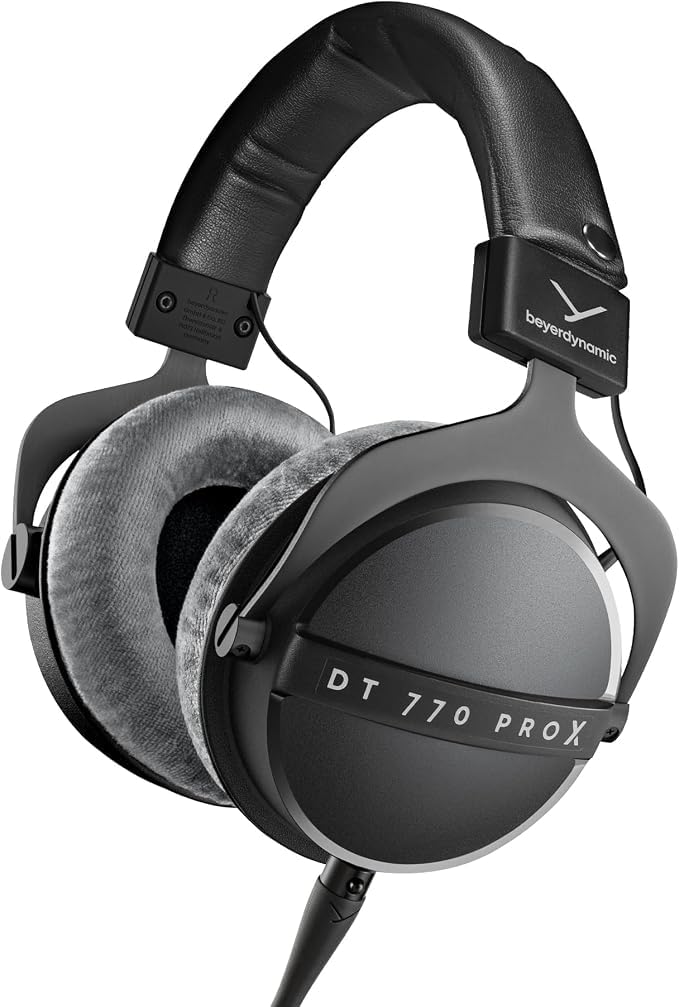
A closed-back booth set: mini-XLR cable, replaceable velour pads, and a 45mm driver built to keep bleed out of the mic.
Isolation is the whole point here. The closed-back design keeps headphone bleed out of your microphone, which is the exact problem that ruins a take when a condenser mic picks up the click track through an open cup. Combined with the 48-ohm drive, this plugs straight into a laptop, interface, phone, or console with no headphone amp needed — a low load that a modest source can push.
The star hardware is the STELLAR.45 driver, a 45mm flagship transducer aimed at precise, high-resolution studio sound at any level. That puts it in the same driver-size class as the ATH-M50X’s 45mm, though the tuning here is aimed at studio truth rather than daily listening. The detachable mini-XLR cable swaps in seconds, and the velour ear pads are replaceable, which is a real longevity feature for daily use. A 3m cable and a bag come in the box.
The two honest notes: the fit comes in tight for some heads, and treble is divisive — a small number of units have been reported with buzzing in the right earphone. It is a handmade-in-Germany set built for the booth, not the bus.
Studio-grade sound: the STELLAR.45 driver carries this one, and comfort holds up across a full day.
The measurements to know: 48 ohms means easy driving, and the mini-XLR cable is replaceable in seconds.
Choose this if: you record, and bleed into a microphone is the problem you need gone.
Pass on it if: you have a large head or want a warmer, less bright treble presentation.
9. MEZE AUDIO 105 AER Headphones
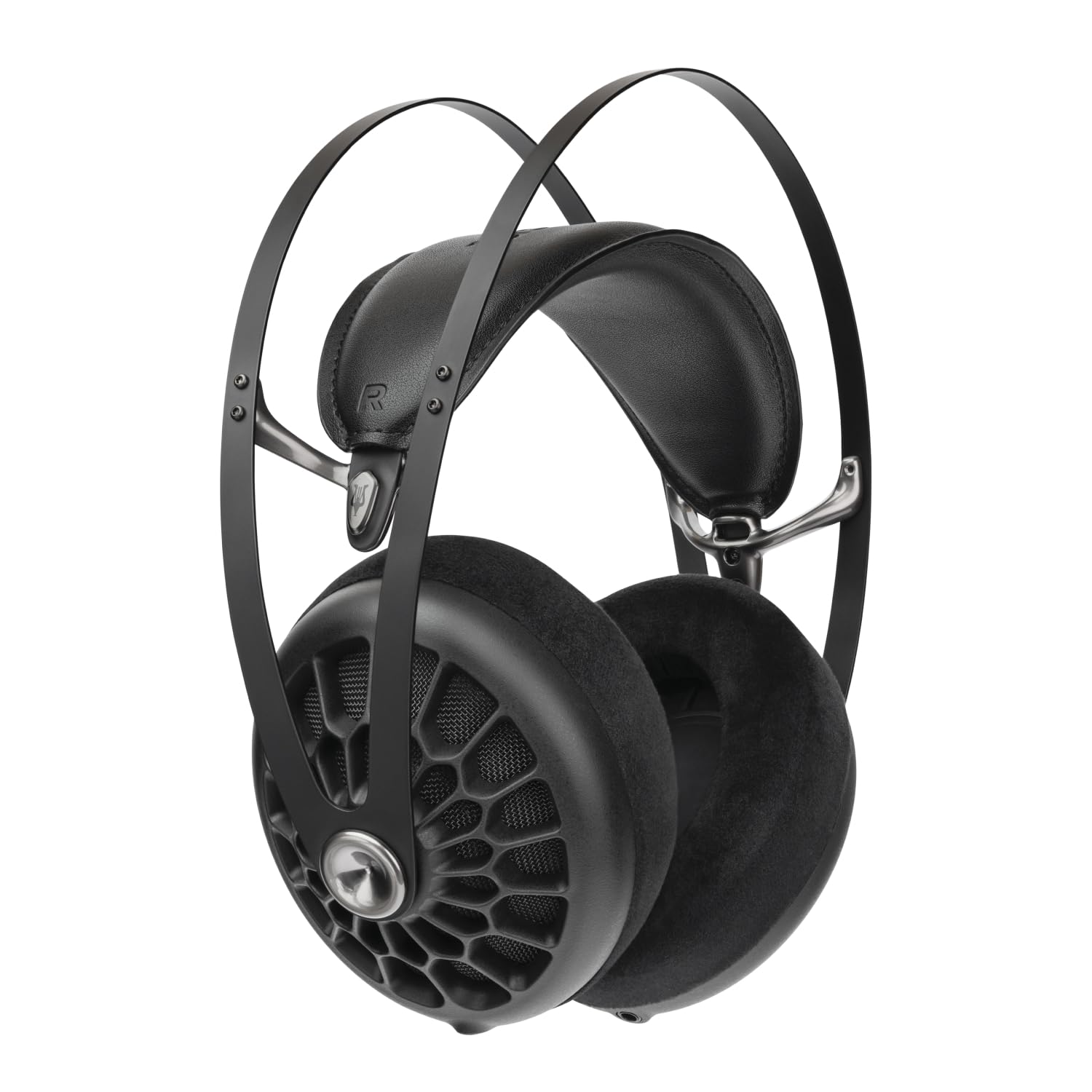
Warm, full-bodied open-back sound with a low 42-ohm load, so your phone can actually drive it.
Here is the defining number: 42 ohms. That low impedance means a phone or laptop reaches a healthy volume without a dedicated amp, which is exactly what an open-back audiophile pair usually asks you to buy separately. The 50mm dynamic drivers sit in an open shell tuned for a rich, refined sound with a slight emphasis on the bass and sub-bass — a warm, full-bodied presentation rather than a clinical one.
The build is the other reason this sits at the top of the list. Cast zinc alloy hardware with PVD coating, a stamped manganese spring steel headband, PC-ABS ear cups, velour ear pads, and a soft PU leather headband. Every component — cups, headband, cables, or even the driver — is made replaceable and held with fasteners rather than glue. In practice, that means a worn pad or cable is a fix, not a replacement pair.
What wins people over is the balance across the range, with treble and midrange coming in even, and comfort that runs 10+ hours in a stretch. The detachable 1.8m thread Kevlar OFC cable, gold-plated 3.5mm to 6.3mm adapter, and hard EVA carrying pouch round out the kit. The one recurring gripe is small fitment annoyances — some owners find the fit needs a fiddle to sit right.
The pick for you if: you want a warm, spacious listen straight from a phone, and you value being able to replace every part.
Better avoided if: you need isolation — an open back lets the room in.
Know the Specs
Driver size (millimeters)
The driver is the small speaker cone inside each earcup, and its size decides how much air it can move. A larger cone — 50mm, say — tends to deliver deeper bass and more headroom than a 40mm one, so kick drums and low notes hit with more weight. Smaller drivers can sound tighter and more controlled, which is why some studio pairs use 40mm cones deliberately. Neither is better in isolation; match the size to if you want weight or precision.
Impedance (ohms)
Impedance is the electrical resistance the headphone puts on whatever is feeding it. A low value, like 42 or 48 ohms, means a phone, laptop, or console can drive it to a comfortable volume on its own. A high value generally means you will want a headphone amp or an audio interface to reach the same loudness. If you record into an interface, this matters little; if you listen from a phone, it decides your experience.
Closed-back vs open-back
A closed-back cup seals around your ear, so sound stays in and noise stays out — the right choice for recording and shared spaces. An open-back cup vents the rear of the driver, which lets air move and spreads the music out around your head. The cost is leakage in both directions. Closed for work and noise, open for immersion in a quiet room.
Detachable vs fixed cable
A detachable cable — whether a 3.5mm plug or a mini-XLR — means a frayed or worn cord is a cheap swap, not a dead pair. Fixed cables offer fewer points of failure but lock you in for the life of the headphone. For anyone recording or traveling daily, a detachable cable is the spec that pays off years later.
Common Questions
Will a 42 or 48 ohm headphone work with my phone without an amp?
Can I use open-back headphones for recording vocals?
What does a detachable cable actually buy me?
How much difference does driver size really make?
Do I need a 1/4 inch adapter for studio gear?
Are velour earpads better than leather for long listening?
Which wired headphones are best for gaming on a console?
What is the difference between a 40mm and 45mm driver?
Will these headphones fold up for travel?
Can I replace worn parts instead of buying new headphones?
The Bottom Line
For most buyers, the top wired headphones winner is the Audio-Technica ATH-M50X because it covers studio work, commuting, and one-ear monitoring with three detachable cables and a 45mm driver that gets bass right. If you listen in a quiet room and want space around your music, the Philips Fidelio X2HR spreads a wider stage with its 50mm open-back design.
How we choose
We do not accept paid placement. Every pick is matched to a real buyer and a real use-case; we do not hands-on test units.
Sources
Specifications: manufacturer listings and product documentation. Review insights: verified customer reviews, as of November 2026. Pricing: not shown on this page (it changes often); check the current price via the retailer link.
As an Amazon Associate, Tactical Gear Guy earns from qualifying purchases. This does not affect which products we feature.