Specs are compiled from manufacturer listings and verified buyer reviews and can change over time — please confirm the key details on the product page before buying.
You only ever touch the road through four small patches of rubber, so the wrong set makes every commute louder, every wet corner looser, and every pothole feel like a tax. A top-tier tire does not have to mean the most famous name on the sidewall. What matters is the load index matching your vehicle, the wet-grip design, the noise control built into the tread, and how the tire behaves once it is half worn down. This guide walks you through eleven genuinely strong options and tells you which one fits your car, your climate, and your driving style.
This guide is built by comparing the manufacturers’ published specifications and the patterns across verified customer reviews, so you get each pick’s real strengths and trade-offs instead of marketing spin.
Below you will find a spec-by-spec table, plain-English explanations of every number on a tire sidewall, and honest notes on where each set shines and where it asks for a little patience. Shop for top tier tires by load rating first and brand name second, and the right set for your daily driver is closer than you think.
Top Picks


How To Choose The Best Top Tier Tires
Choosing a tire is mostly a matching job before it is a shopping job. Your vehicle already tells you the size you need, the weight it carries, and the top speed it will see. Get those right and the tire will fit, wear evenly, and keep you planted. Get them wrong and even an expensive tire will feel wrong from the first mile.
Start with the size stamped on your current sidewall
A size like 205/55R17 breaks into three parts. The 205 is the tread width in millimeters, the 55 is the sidewall height as a percentage of that width, and the 17 is the rim diameter in inches. The last number is the hard stop — a tire built for a 20 inch rim will not mount on a 17 inch wheel, and the reverse is just as true. Match all three numbers before you read another word of any listing.
Check the load index against what you actually carry
The load index is a code for how much weight one tire can support when inflated properly. A 95 carries less than a 105, and pairing a light-duty index with a heavy SUV is how you get a bulging, overheated tire on a summer road trip. If your door-jamb sticker calls for an XL, buy an XL. The Evoluxx Capricorn UHP, for example, rates at load index 105 and supports up to 2039 lbs per tire, which is why it suits trucks and SUVs rather than a compact sedan.
Match the tire to your weather, not to the season on the calendar
True all-season rubber is a compromise that leans toward mild climates. If your winters bring real snow and ice, look for a 3PMSF marking (the three-peak mountain snowflake symbol) or a dedicated winter set. If you mostly see rain and dry pavement, a straight all-season or touring tire will run quieter and last longer than a soft winter compound you never needed.
Think about treadwear and noise before you fall for the tread pattern
A treadwear number and a mileage warranty are the closest thing to a durability promise a tire maker offers. The Continental TrueContact Tour 54, for one, carries up to 80,000 miles of limited tread life coverage. Noise is the other long-game spec — harmonically tune pitch sequencing, like the GT Radial Maxtour LX uses, quiets the ride by breaking up the air whistle the tread makes as it rolls.
Side-by-Side Comparison
You can compare every set on the same three numbers: load index (a code for how much weight one tire can carry), load capacity (that weight in pounds), and tire diameter. All values below come straight from the manufacturer’s spec sheet, so the fit and the weight-carrying ability line up side by side at a glance.
| Model | Best For | Load Index | Load Capacity | Diameter | Amazon |
|---|---|---|---|---|---|
| Michelin Cross Climate 2 A/W 205/55R17★ Best Overall | Year-round sedan driving | 95 (XL) | 1521 pounds | 25.9 inches | Amazon |
| GT Radial Maxtour LX 235/50R19Best Balance | Quiet everyday touring | 99 (SL) | — | 27 inches | Amazon |
| Travelstar Ecosport GT 245/35R20 (set of 2)Sport Pick | Sport sedans on 20 inch rims | 95 (XL) | 1521 pounds | 26.8 inches | Amazon |
| Continental TrueContact Tour 54 235/55R19 | High-mileage comfort touring | 101 (SL) | — | 19 inches | Amazon |
| Evoluxx Capricorn UHP 255/45R20 (set of 2) | Heavy trucks and SUVs | 105 (XL) | 2039 pounds | 29 inches | Amazon |
| General Tire G-MAX AS-07 305/35ZR20 | Spirited daily driving | 107 (XL) | 2150 pounds | 28.4 inches | Amazon |
| Fullway HP108 215/55R16 (set of 4) | Budget four-tire swap | 97 (XL) | 1609 pounds | 25.3 inches | Amazon |
| Travelstar UN99 225/65R17 (set of 4) | Crossover all-season value | 102 | 1874 pounds | 28.5 inches | Amazon |
| Michelin Cross Climate 2 A/W 285/45R20 | Large SUV all-weather grip | 112 (XL) | 2469 pounds | 30.1 inches | Amazon |
| Pirelli Scorpion Verde All Season 285/45R20 | Luxury SUV quiet ride | 112 (XL) | 2469 pounds | 30.08 inches | Amazon |
| Travelstar ECO-MILE 4S 265/50R20 (set of 4) | All-weather CUV/SUV | 107 | 2149 pounds | 30.5 inches | Amazon |
Detailed Reviews
1. Michelin Cross Climate 2 A/W 205/55R17
Our pick — 4.5+★ from 250+ verified ratings; the strongest balance of quality and price.
A year-round tire that keeps its grip in snow, slush, and summer rain without a seasonal swap.
If you want one set to cover all four seasons, this is the tire that earns the top spot here — a 4.5+ star crowd favorite across 250+ ratings, and the numbers back it up. The Cross Climate 2 carries a 3PMSF rating (the three-peak mountain snowflake symbol that marks a tire tested for severe snow service) while still running as an all-season tire on dry pavement. That pairing is rare. It saves you the trouble of storing a second set of wheels and paying for a swap twice a year.
Where it wins buyers over is the sheer quality of the build. Michelin rates the load capacity at 1521 pounds per tire with a 95 load index and an XL load range, so it suits a mid-size sedan like a Subaru Forester without feeling under-spec. At 25.9 inches in diameter and 21.5 pounds, it is a lighter, easier-handling tire than the 62-pound Evoluxx Capricorn UHP. The tread design is aggressive — buyers who expected a loud, knobby ride report the opposite, and the tire stays very quiet on the highway for a tread this open.
The one honest catch is tread life. Michelin claims up to one extra year of tread life over its predecessor, but this all-weather compound still wears faster than a dedicated long-mileage touring tire. A couple of owners also report it picks up holes more easily on rough roads. If you cover huge highway mileage and rarely see snow, a touring tire will last you longer. If you want to stop thinking about weather entirely, this is the one.
Why It Takes The Crown
- 3PMSF rating handles light snow where a plain all-season struggles
- 1521-pound load capacity at load index 95 with XL range suits most sedans and small SUVs
- Runs quiet and smooth despite a fairly open tread block design
- Wet and dry braking both strong enough that buyers report it beats what came from the factory
Where It Asks For Patience
- Tread wears quicker than a long-mileage touring tire, so high-mileage drivers pay more over the years
- Not the cheapest tire in the segment, and the price is the first thing someone looking to save money notices
Reach for this if: you want one tire for all four seasons and live somewhere that gets occasional snow and heavy rain.
Look past it if: you drive tens of thousands of highway miles a year and put long tread life ahead of snow traction.
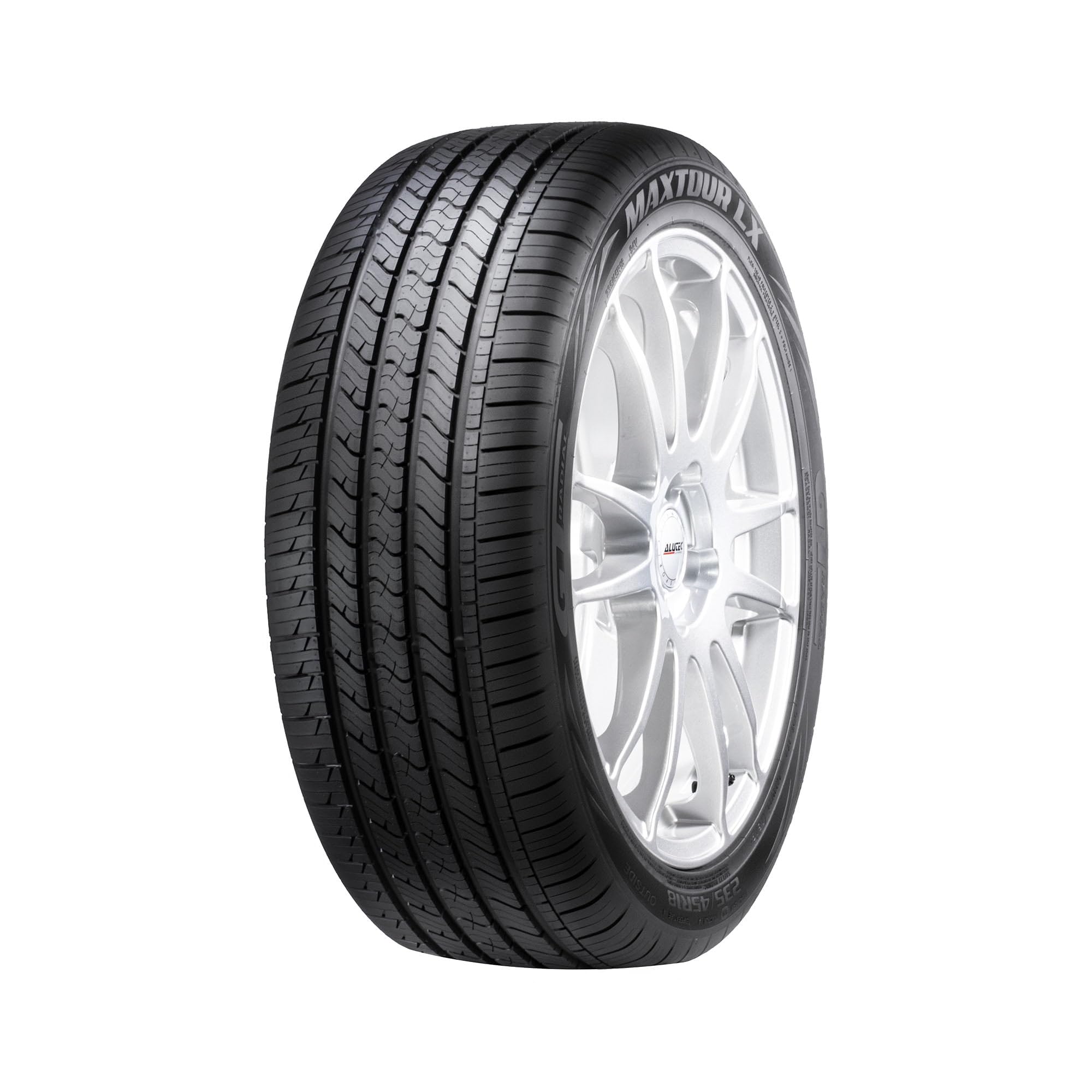
2. GT Radial Maxtour LX All Season 235/50R19 99H Passenger Tire
The touring tire that shushes the road while keeping a firm grip in heavy rain.
Not every driver wants an aggressive all-weather tread. If your commute is mostly highway plus the occasional summer storm, the GT Radial Maxtour LX fits that life neatly. What earns it a spot here is the noise engineering: harmonically tune pitch sequencing (a tread design that staggers the rubber blocks so they don’t all hit the road at once) cuts the steady hum you get from cheaper tires, so long highway runs stay quieter. Extra shoulder channels also push water out of the tread, so the tire is less likely to hydroplane (slide on a film of water) when you hit standing water.
It is a lighter 34-pounds tire at 27 inches in diameter with a load index of 99, rated as a standard load passenger touring tire. The asymmetric tread and full-depth siping mean the grip carries through as the tire wears, rather than fading when the tread blocks round off. Buyers with a daily street truck or a sedan report a smooth ride and quiet grip in wet weather, and it does all of that for a price well below the flagship brands. Buyers praise the quality-for-the-money combination most — this is where a mid-tier brand punches above its tier.
The trade-off is in the feel. A tire tuned for quiet and longevity gives up some of the sharp steering response you would get from a sport tire. One owner described the ride as firm and the noise heavier than they hoped during the first hundred miles — a fair note on a tire built to last. It also tops out at an H speed rating (certified up to 130 mph) rather than the higher W or Y on the performance picks. For a touring tire driven at posted limits, that is exactly the right rating.
Quiet-first build: the pitch-sequenced tread is the standout feature — it keeps cabin noise low on long drives where a loud tire tires you out.
Wet-road safety: extra shoulder channels and full-depth siping keep the water-channeling and grip intact as the tire wears, which is the difference between a safe rainy highway drive and a nervous one.
The smart buy if: you want smooth, quiet touring performance and highway manners without the flagship-brand premium.
Skip if: your car spends weekends at the track or you want the sharpest possible steering — a performance tire reads the road sharper.
3. Travelstar Ecosport GT 245/35R20
A low-profile 20-inch performance tire built for sport sedans that still see daily driving.
Low-profile tires on big rims are unforgiving, so the asymmetry and the semi-closed shoulders matter here. This set runs a 245/35ZR20 size with a W speed rating (certified up to 168 mph), so it holds up on a car that sees spirited driving. The asymmetric tread pattern spreads braking, cornering, and acceleration forces across different parts of the tread, keeping the car more controlled through a corner and under hard braking. The semi-closed shoulders quiet the outside of the tread, and the four grooves push water away so wet pavement stays planted.
At 26.8 inches in diameter and 1521 pounds of load capacity per tire, it fits a sports sedan or a luxury car with a 20 inch wheel. It is rated at a maximum pressure of 51 psi, higher than the 42 psi that the Evoluxx Capricorn UHP carries — a small but real difference for anyone loading up a heavier car. Buyers praise the build quality most, and the tires feel solid for the money. The 8.5J rim width also means these sit flush with the rim edge rather than poking out to catch curbs.
Two things to keep in mind. These are sold as a set of two, not four, so a full car needs two orders — and unlike the Michelin above, this is not a snow-rated tire. It is an all-season in the sense that it survives cold pavement, but its real home is a dry commute and a twisty road. The three-year road hazard warranty (since October 1, 2025) covers you if a road hazard damages the tire.
Engineered for control: the asymmetric tread and four-groove design give you responsive cornering and confident wet grip, which is the difference a performance tire makes on a sport sedan.
The real catch: it ships two tires at a time, so budget for a second set to cover all four wheels.
Pairs well with: a sports sedan or luxury car on 20 inch wheels and a driver who values cornering feel over all-out snow ability.
Worth knowing: this is a warm-weather-biased performance tire, so a dedicated winter set still handles real snow better.
4. Continental TrueContact Tour 54 235/55R19

Built to run 80,000 miles and still feel quiet and smooth on the highway.
For the driver who treats tires as a long-haul investment, the Continental TrueContact Tour 54 makes the case with a number no other pick here matches: up to 80,000 miles of limited manufacturer tread life coverage. That is the durability promise you are shopping for if you commute long distances and hate the idea of buying tires again too soon. The EcoPlus Technology (Continental’s fuel-saving tread compound and low-rolling-resistance design) adds a bit of range and stretches tread life while keeping wet stopping short.
At 19 inches in diameter and 29.2 pounds, it is a standard-load touring tire at load index 101 with an H speed rating. It runs quiet — the tread is engineered to muffle road noise from pavement imperfections, and that is exactly the quality that keeps a long road trip from being fatiguing. Buyers describe a smooth ride and great traction after thousands of miles of highway running. The fit is right for a mid-size SUV or passenger car on a 19 inch rim, and the tread stays composed in the light snow of a mild winter.
The honest caveat is the fuel-economy side. Continental’s EcoPlus tech is tuned to save fuel, but owners mention mixed results — some see a real gain in miles per tank, while a few notice slightly worse highway mileage than the tires they replaced. It is also a touring tire first, so if you want aggressive wet-weather or all-weather grip, the Cross Climate 2 above is the stronger all-season specialist. For mileage and quiet, this is the specialist.
The Long-Game Strengths
- Up to 80,000 miles of limited tread life coverage — the longest warranty of any pick here
- Tread design mutes highway noise, keeping long drives calm
- Load index 101 at 19 inches fits a wide range of mid-size SUVs and sedans
- Excellent wet braking for confident stopping in rain
The Honest Friction Points
- Fuel savings are mixed — a few drivers see no real gain in miles per tank
- Not as snow-confident as a 3PMSF-rated all-weather tire
Made for: high-mileage commuters who want a quiet, long-wearing touring tire and a warranty they can count on.
Not the best fit: heavy snow country or a driver chasing maximum wet grip — a purpose-built all-weather tire does those jobs better.
5. Evoluxx Capricorn UHP 255/45R20
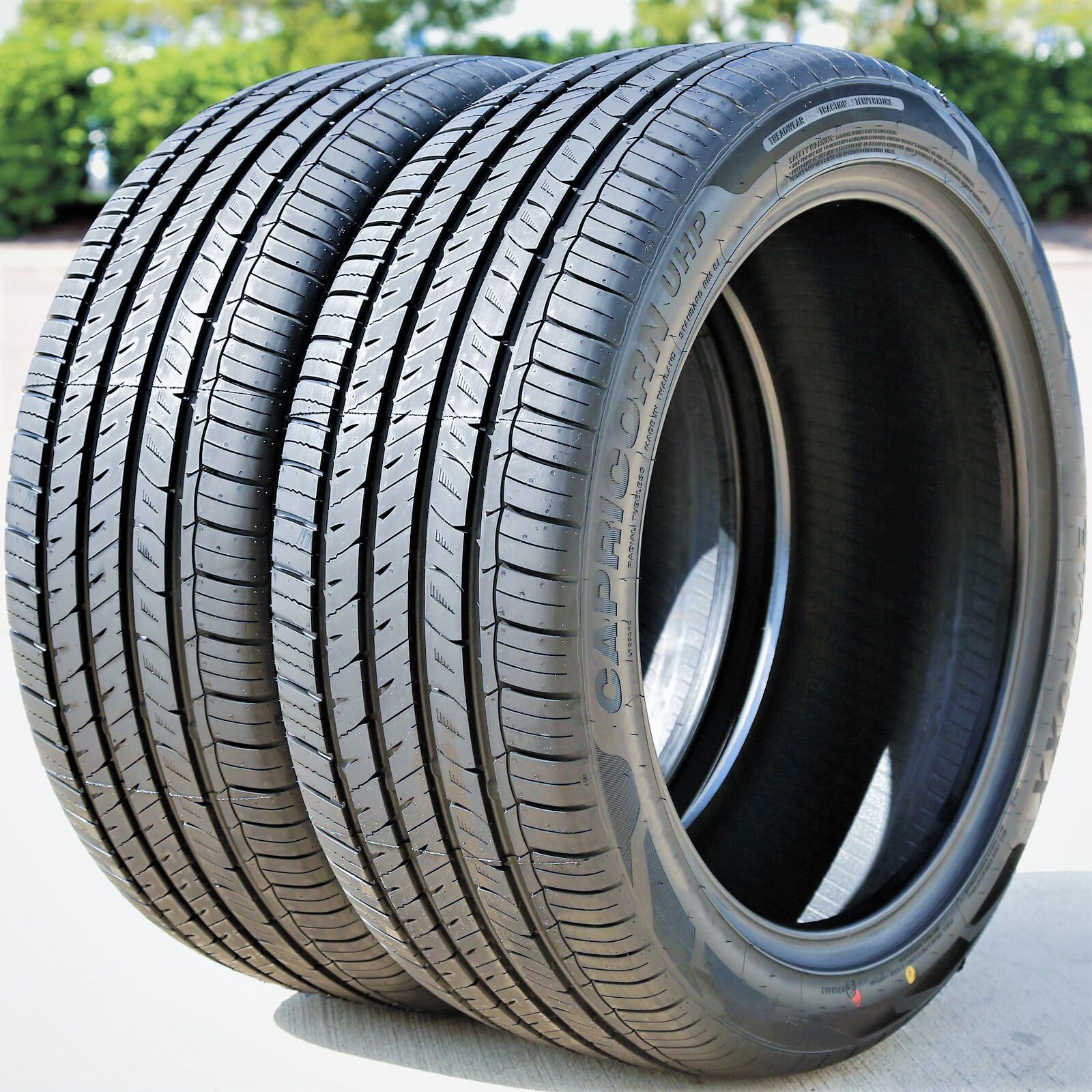
A 20-inch truck and SUV tire that shoulders up to 2039 pounds per corner.
This is the workhorse of the group, and the load capacity tells the story. With a load index of 105 and an XL load range (extra load, built to carry more weight), the Capricorn UHP supports up to 2039 pounds per tire, and the Y speed rating is certified up to 186 mph. Put those numbers next to the General G-MAX AS-07’s 2150 pounds and the two are close in weight-carrying ability — but this one comes with 40,000-mile treadwear coverage and a UTQG 480AA rating (a government-mandated treadwear, traction, and temperature grade, where a higher treadwear number means longer-wearing rubber).
It is a heavy, tough tire at 62 pounds and 29 inches in diameter, so it suits a full-size SUV or a light truck that actually works. What surprises buyers is the ride — this is not a jarring truck tire. The tread design and the rubber compound deliver a smooth, quiet ride that has some owners comparing it favorably in comfort to big-name tires. At four-plus inches of sidewall on a 20 inch rim, it absorbs bumps rather than transmitting them. Buyers with heavier vehicles and a long commute to a worksite get the most out of it.
Durability is the one spot to weigh carefully. Some drivers report the Capricorn UHP stays strong over the long haul, while a few have seen it wear within a single year of use, and an occasional unit has needed a warranty conversation after a failure. It is still sold as two tires, so a full car takes two orders. None of that cancels out the load rating or the value — it just means you should keep an eye on tread depth and treat it as a tire for lighter-weight heavy hauling, not a full commercial load.
The weight-it-can-carry story: 2039 pounds per tire at load index 105 makes it a natural fit for trucks and SUVs, and the ride soft enough that you forget you are on truck-rated rubber.
The thing to watch: tread life is mixed across owners — a few find it wears faster than they expected, so rotating on schedule matters here.
Choose it if: you drive a truck or full-size SUV and want serious load capability with a comfortable, quiet ride.
Pass on it if: your rig is very heavy and you want the absolute most load capacity here — the General G-MAX AS-07 carries a bit more.
6. General Tire G-MAX AS-07 305/35ZR20

Wide, aggressive, and built for the driver who likes a corner to feel like a corner.
This is the tire for someone who treats daily driving as a little more than point A to point B. It carries the highest load index of any pick here at 107, sharing the top load capacity of 2150 pounds with the Pirelli Scorpion, and pairs that with a 50,000-mile limited treadwear coverage. The 305 width and the 35-series sidewall on a 20 inch rim give it a wide, planted footprint, and the tread is tuned for strong wet and dry braking plus solid snow traction for an all-season. On the road, that translates to steering that goes exactly where you put it.
Compare it against the Evoluxx Capricorn UHP: this one is 31.1 pounds at 28.4 inches versus the Evoluxx’s 62 pounds at 29 inches, so it carries less rolling mass and feels more responsive at the wheel — with more load capacity to boot. The noise control is also worth calling out. Buyers describe it as quiet for a tire with this much grip, and a few note it balances easily and looks aggressive on the car. The price-per-tire value comes up again and again, especially since General shares parent-company technology with Continental.
The real question a buyer should ask is whether a wide 305 tire on a 20 inch rim matches their car. It is not a snow-country tire, and it is not the cheapest per corner here — but for a sport sedan or a crossover that wants performance without the premium price, it delivers. Buyers praise the build quality most, and it holds up over thousands of miles of spirited driving.
What you are paying for: 2150 pounds of load capacity, a 107 load index, and braking and cornering grip that feel sharp every time you lean on them.
The one thing to check: this is a wide, low-sidewall performance tire, so confirm your rim width and wheel-well clearance before ordering.
Built for: the driver with a sporty car on 20 inch rims who wants confident grip and a 50,000-mile treadwear promise.
Think twice if: you mainly drive in deep snow — the 305 width is tuned for dry and wet, not for pushing through drifts.
7. Fullway HP108 215/55R16
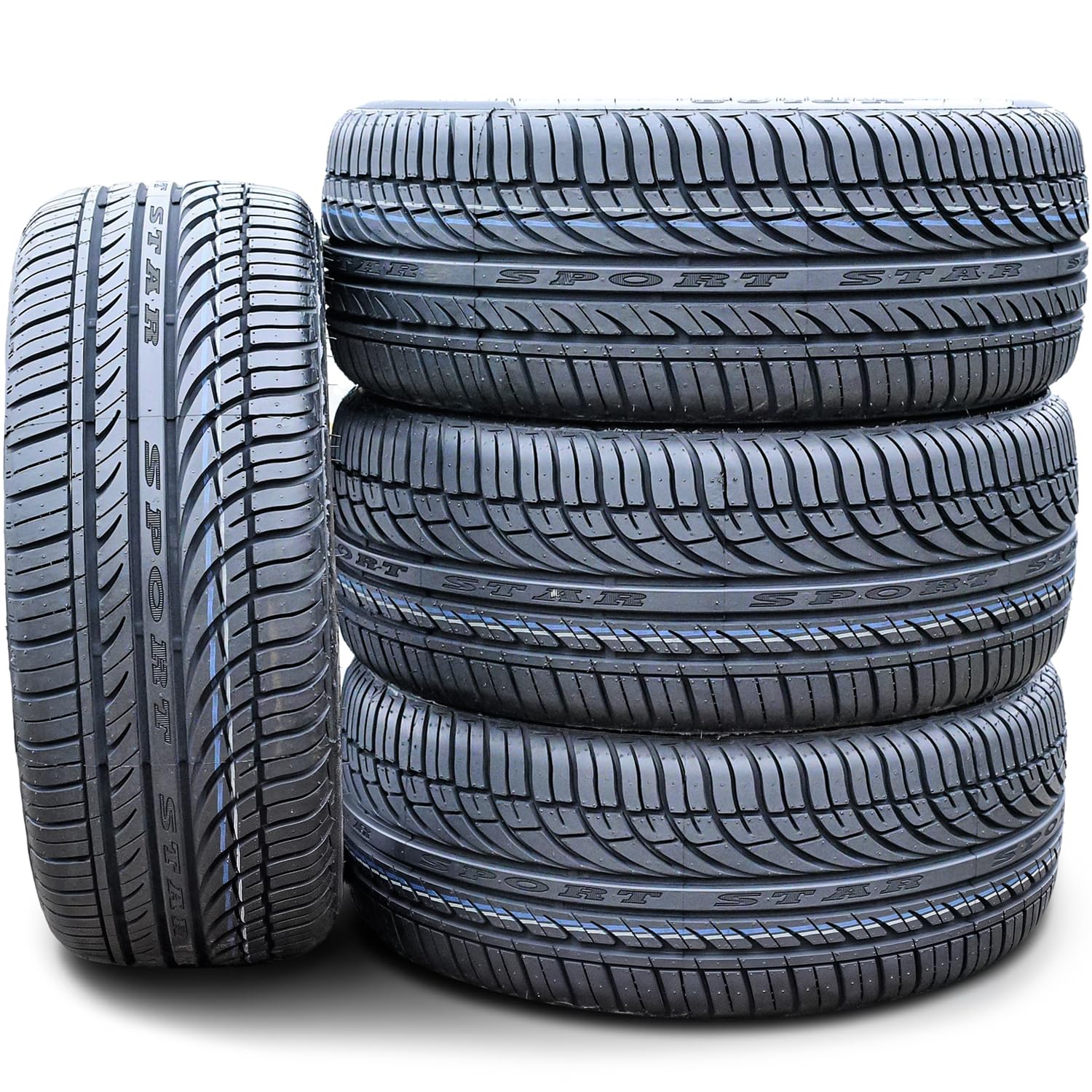
All four corners replaced in one order, without stretching the tire budget.
A set of four is the practical unit for a tire purchase, and the Fullway HP108 delivers it as one package. The 215/55R16 size on a 7 inch rim and 16 inch wheel is a common fitment for compact and mid-size sedans, and the 4-ply rated construction gives it a bit more tread toughness than a basic passenger tire. The 97 load index and 1609-pound load capacity per tire are enough for a normal loaded sedan. It is listed as a high-performance all-season, so it trades a little of the touring softness for a slightly firmer, more engaged feel.
Value is the whole point of this four-tire set. It is one of the more accessible four-packs in this category, and the buyers who own it flag the quality and the handling in wet weather as the reasons it earns its keep. The low noise level comes up too, which is a pleasant surprise on a performance-leaning all-season. And the fit is as expected on the 16 inch application.
The catch is that a tire at this price is not going to match a premium all-season on tread life or the last word in wet grip at high speed. It is a solid everyday tire for a light car, and buyers who mostly drive city and suburban roads will be happy with it. If you regularly push a heavier vehicle hard in the rain, spend up for a premium set — but for a commuter, this is a sensible, low-stress way to put all four new tires on at once.
Why It Makes Sense
- Four tires in a single order at a value-tier price point
- 4-ply rated construction for a bit more toughness in the tread
- Low road noise for a performance-leaning all-season
- Load index 97 at 1609 pounds supports most compact and mid-size sedans
Go In Eyes Open
- Wet grip at high speed trails the premium picks — fine for commuting, not for aggressive driving
- Tread life is a budget-tier trade-off compared with the longer-warranty touring tires here
A fit for: a compact or mid-size sedan owner who wants all four tires at the value tier without sacrificing the all-season basics.
Look elsewhere if: your car is heavy or you drive a lot of fast wet highway miles — a premium all-season handles both better.
8. Travelstar UN99 225/65R17
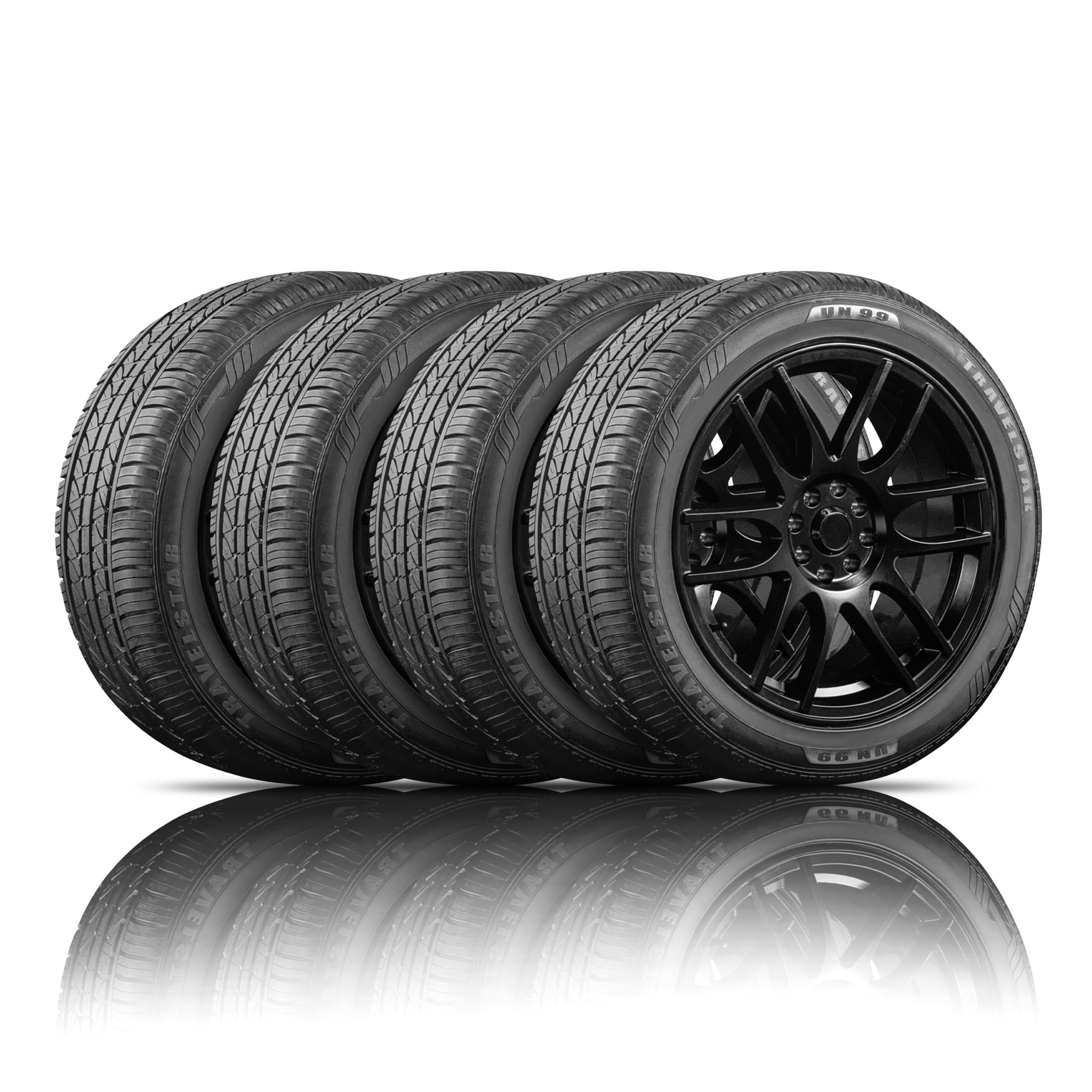
A 17-inch four-pack sized right for crossovers and small SUVs, with the paper to back it.
The 225/65R17 size on a 17 inch rim is among the most common fits for compact SUVs and crossovers, and this set of four delivers it at a value-tier position. Each tire carries a 102 load index and 1874-pound load capacity, plus a 4-ply radial construction (four layers of rubber and cord) for durability. The warranty package is the headline: a 5-year limited manufacturer’s warranty, a 50,000-mile limited tread wear-out warranty, and a three-year road hazard warranty. For a driver who wants protection on paper, that is a lot of coverage for a budget tire.
On the road, the tread features circumferential grooves — four wide channels that divert water to reduce hydroplaning — and an M+S rating for mud and snow. Customers note a smooth, quiet ride, good grip in rain, light snow, and cold pavement, and a van that rides like a new vehicle. The tune center rib sharpens steering response, and the symmetric tread pattern promotes even wear. The cold-weather confidence is a common theme in how owners describe it.
The honest limit here is wear. Some owners find the UN99 holds up very well over a year of use, while a few notice faster wear on their particular vehicle. That is the trade that comes with the lower tier — you get a lot of warranty and a comfortable, quiet ride, but not the long tread life of a premium touring tire. For a crossover that mostly sees school runs and highway miles, it is a sensible, feature-rich choice.
Coverage that stands out: a 5-year manufacturer warranty plus a 50,000-mile tread warranty and a three-year road hazard warranty is a strong safety net for a value-tier set.
What to keep in mind: durability is mixed — some owners see strong wear over time while a few find it goes faster, so rotate on schedule.
Good for: a crossover or small SUV owner on 17 inch wheels who wants four tires plus strong warranty protection.
Reconsider if: you need the longest possible tread life and want a premium touring tire’s durability track record.
9. Michelin Cross Climate 2 A/W 285/45R20
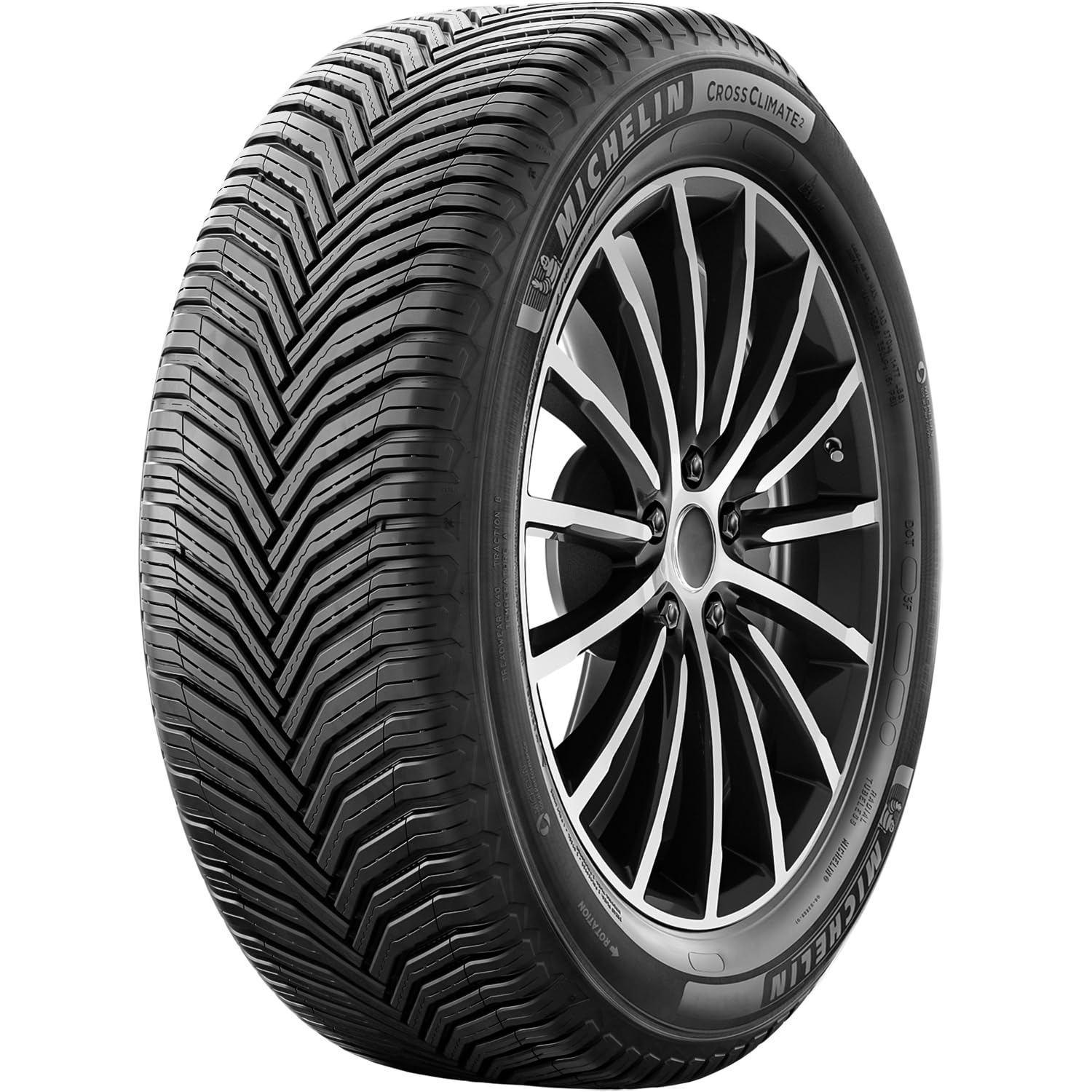
The Cross Climate formula scaled up to a 30-inch SUV tire that carries the load.
The smaller Cross Climate 2 takes the top spot in this guide; this 285/45R20 version is the same all-weather idea built for a heavier vehicle. It keeps the 3PMSF severe-snow rating (a certification for tires that pass a snow-traction test) and the year-round all-season tread, and it raises the stakes with a 112 load index, an XL load range, and a 2469-pound load capacity per tire. That matches the Pirelli Scorpion Verde’s load capacity exactly — two big SUV tires that carry the same weight per corner. Combined with the 30.1 inch diameter and 32.6 pounds, it is a serious size for a large SUV or crossover.
The dry and wet braking is the same short-stopping design as the smaller version — Michelin claims it stops shorter than four leading competitors, and its 3PMSF snow rating is the real reason to buy a Cross Climate 2. It is a tire that turns a snowy driveway into a light errand rather than a wait-out-the-storm event.
This is a newer size with a small review base, so the crowd verdict is still building compared with the flagship Cross Climate 2 above. That is not a knock on the tire — it is the same design with a longer track record in the larger sizes among SUV drivers. The trade is still tread life: like the smaller version, it wears faster than a touring tire, and this bigger size is the premium slot of the range. For a large SUV in a mixed-weather climate, it is the most confident all-season choice in this group.
The Case For It
- 2469-pound load capacity at load index 112 makes it a true large-SUV tire
- 3PMSF snow rating gives it genuine winter capability where a plain all-season falls short
- Short wet and dry stopping backed by Michelin’s competitor comparison
- Same proven Cross Climate 2 design as the guide’s top pick, scaled up
The Other Side
- Tread wears faster than a dedicated touring tire over years of ownership
- Premium-slot pricing and a small review base compared with the smaller size
The right size if: you own a large SUV that needs a 285/45R20 tire and you want one set to handle rain, snow, and dry pavement.
Look to the Pirelli instead if: you want more owner feedback behind the purchase and a quieter, luxury-tuned ride.
10. Pirelli Scorpion Verde 285/45R20

The big-SUV tire tuned to keep the cabin quiet and the fuel bill a little smaller.
If you drive a luxury SUV, the thing you notice most is what you hear. The Pirelli Scorpion Verde answers that with its PNCS (Pirelli Noise Cancelling System — a foam layer inside the tire that absorbs the hum the tread makes) and a pitch-sequenced tread pattern. For a 285/45R20 tire at 30.08 inches in diameter and 41 pounds, it rides remarkably quietly. The four longitudinal grooves force water out of the tread to keep control in the rain, and dense siping adds biting edges for wet and light-winter stability.
It is a direct peer of the Michelin Cross Climate 2 in this size: both carry load index 112, XL load range, and 2469 pounds of load capacity, and both are built for a 285/45R20 fit. The difference is the personality. Pirelli tunes this one for low rolling resistance — the reduced effort the tire needs to roll means less fuel burned per mile — so it is the more efficiency-minded choice for a big vehicle. It is also positioned on the premium luxury vehicle list, from the Alfa Romeo Stelvio and Audi Q7 to the Porsche Cayenne and Volvo XC60, which is a pointer to how it is aimed.
The honest trade-off: durability is the recurring question. Some reviewers point out blowouts or early failures on rough roads, and it is not as snow-confident as the 3PMSF-rated Cross Climate 2. If your winters are serious, the Cross Climate is the safer call. If you mostly drive highway and city in a heavy luxury SUV and want a quiet, low-effort-rolling tire that fits a 22 inch-rim vehicle like the Expedition EL, this one delivers.
Quiet and efficient: the noise-cancelling system and low-rolling-resistance design make it a calm, efficient choice for a heavy SUV.
Where it gives ground: it is not a 3PMSF winter-rated tire, and durability is mixed on rough roads — a fair note for a luxury tire you will want to protect.
Built around: a luxury SUV on a 285/45R20 fit where a quiet cabin and lower rolling resistance matter more than a snow rating.
Choose the Cross Climate 2 instead if: you get real snow and want the extra winter-rated confidence.
11. Travelstar ECO-MILE 4S 265/50R20
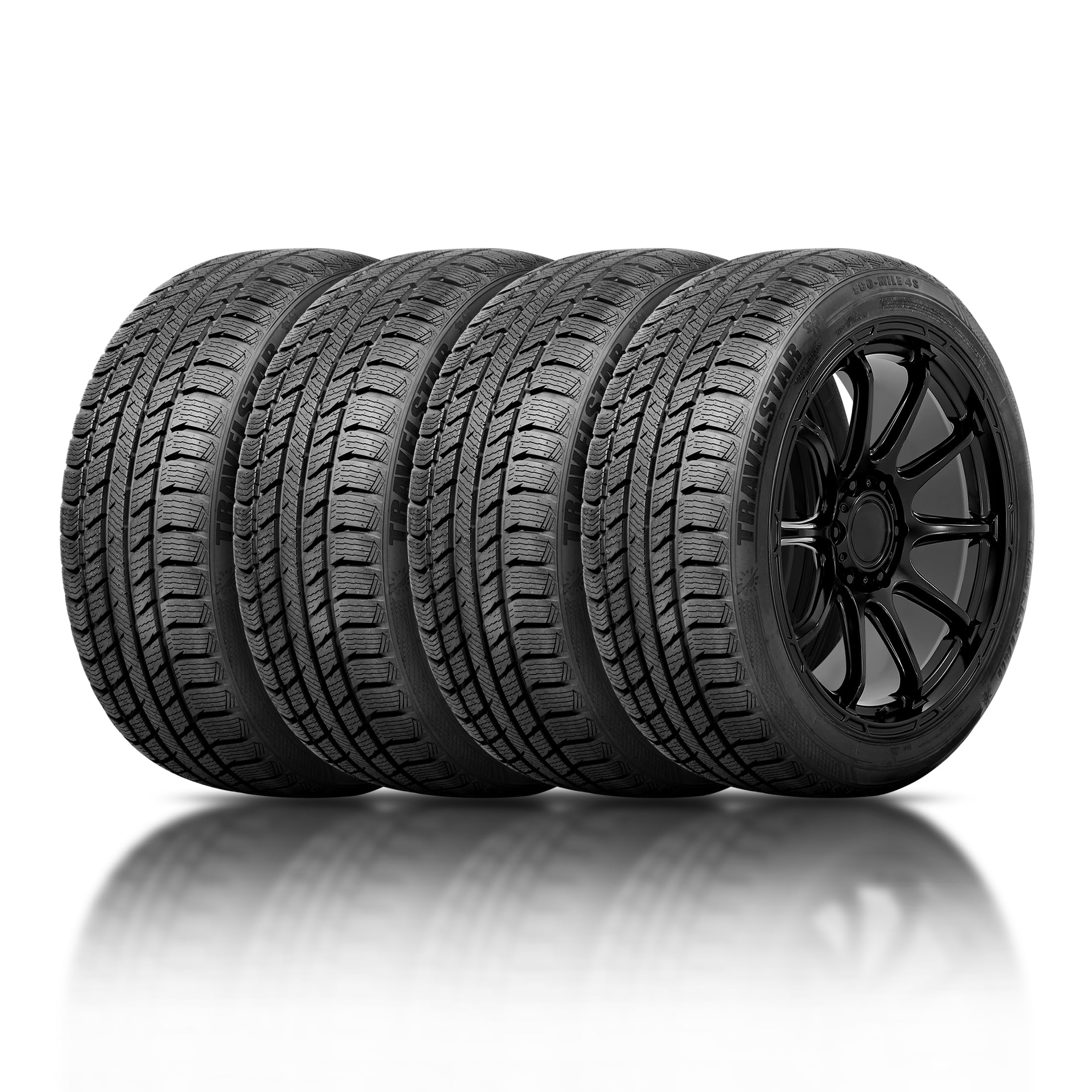
A four-pack of all-weather SUV tires that keeps its grip when the temperature drops.
All-weather is the middle ground between an all-season and a true winter tire, and this set of four leans into that with a 3PMSF rating — the three-peak mountain snowflake marking that signals tested severe-snow traction. For a crossover or SUV owner who does not want to store a second set of wheels, that badge is the reason to look here. The 265/50R20 size sits on a 20 inch rim, and the 107 load index with 2149-pound load capacity per tire covers a fully loaded five-seat SUV without strain. A maximum pressure of 51 psi gives a little headroom for heavier loads.
The value package is backed by paper: a 60,000-mile limited tread wear-out warranty, a three-year road hazard warranty, and a five-year manufacturer warranty. The road hazard coverage covers bulges, air leaks, and blowouts within three years of purchase and before 4/32 inch of treadwear, so you have a path to repair or replacement if a pothole gets the better of a tire. The road-oriented tread design keeps dry and wet grip predictable for daily commuting, and the stable, comfortable ride suits city streets and longer road trips alike.
This is the newest size in the group, so the long-term owner record is still building — pair that with the price position at the premium end of this list and you have a set that makes the most sense for an SUV that sees real winter weather. If you drive a CUV in a place where snow is routine and you want all four corners covered in one order, this is the all-weather four-pack to consider. If you mostly drive dry highways, one of the lower-tier sets above will do the job for less.
Year-round confidence: the 3PMSF rating and the all-weather rubber give you grip in light snow and cold pavement without a seasonal swap.
What to weigh: the owner record is still thin for this size, so the long-term durability story is not yet written the way it is for the touring picks.
Made for: a CUV or SUV on a 265/50R20 fit in a cold-weather climate who wants four all-weather tires plus strong warranty protection.
Better to look at the touring picks if: your climate is mild and you would rather have maximum tread life than a snow rating.
Know the Specs
Every number on the sidewall is there to answer a real question about fit, safety, or comfort. Here is what each one means in plain terms so you can read a listing with confidence.
Load Index and Load Range
The load index is a code that tells you how much weight one tire can carry when it is inflated to the right pressure — the higher the number, the more weight. A 95 tire and a 107 tire look similar on the wall but carry very different loads. The load range, such as SL (standard load) or XL (extra load), is the strength class of the tire’s internal construction. If your vehicle sticker calls for XL, an SL tire may not carry the load safely. Check both, not just one.
Size Numbers and Rim Fit
A size like 245/35R20 reads width in millimeters, sidewall height as a percentage of the width, and rim diameter in inches. The rim number is the hard fit — a 20 inch tire will not mount on a 19 inch wheel. The width and sidewall height together set the look and the ride feel: a shorter sidewall on a wider tire feels sharper but transmits more road bumps, while a taller sidewall absorbs more. Confirm rim width as well — a tire can be the right diameter and still stretch or pinch on the wrong-width rim.
Speed Rating
The letter after the load index, such as H, V, W, or Y, is the top speed the tire is certified to handle under load. Higher letters are built for higher speeds — Y is the highest of the common ratings. A higher speed rating does not mean you should drive faster; it means the tire’s construction is stiffer and its heat tolerance is better, which can add control at normal speeds. Match or exceed the rating your vehicle maker specifies.
3PMSF and All-Season
A plain all-season tire is a compromise tuned for mild cold, rain, and dry pavement. The 3PMSF symbol (three-peak mountain snowflake) is a separate, tested snow rating: the tire has met a threshold for traction in snow. It is not a dedicated winter tire, but it is a meaningful step up over a plain all-season when snow appears. If you face real winter weather, a 3PMSF tire or a true winter set is the safer buy.
Treadwear, Traction, and Temperature Grades
UTQG is a government-mandated three-part grade. The treadwear number is a relative wear promise — a higher number should last longer, though it depends on your driving. Traction grades wet stopping, and temperature grades resistance to heat buildup at speed. The AA in a rating like 480AA is the highest wet-traction grade. Use the treadwear number to compare tires of the same type, not across different categories.
Siping and Tread Pitch
Siping is the pattern of small slits cut into the tread blocks — each slit adds a biting edge for wet and winter grip. Full-depth siping means those edges stay sharp as the tire wears, not just for the first few thousand miles. Pitch sequencing is the deliberate staggering of tread blocks around the circumference to break up the air hum; a well-sequenced tread runs quieter, which matters on long drives.
Common Questions
How do I find the right tire size for my car?
What does the load index number mean and why does it matter?
Is a 3PMSF tire the same as a winter tire?
Can I mix different tire brands on the same car?
How long does a set of all-season tires usually last?
Do low-profile tires like 245/35R20 ride rough?
What is the difference between an all-season and an all-weather tire?
Do I need a wheel alignment when I install new tires?
Can I run 20-inch tires on a car that came with 17-inch wheels?
Are wider tires like 305/35ZR20 better than narrower ones?
The Bottom Line
For most drivers, the top tier tires winner is the Michelin Cross Climate 2 A/W 205/55R17 because it pairs a 3PMSF severe-snow rating with quiet, controlled dry and wet grip in one set you can run all year — and its 4.5+ star crowd verdict is the strongest in this guide. If you want long-miles-per-dollar durability, grab the Continental TrueContact Tour 54 and its 80,000-mile tread coverage. And if you drive a large SUV that needs a 285/45R20 fit, the Michelin Cross Climate 2 A/W 285/45R20 brings the same all-weather confidence to the bigger footprint. Whichever you pick, buying on the load index and the fitment first is the habit that keeps a new set feeling right for years.
How we choose
We do not accept paid placement. Every pick is matched to a real buyer and a real use-case; we do not hands-on test units.
Sources
Specifications: manufacturer listings and product documentation. Review insights: verified customer reviews, as of November 2026. Pricing: not shown on this page (it changes often); check the current price via the retailer link.
As an Amazon Associate, Tactical Gear Guy earns from qualifying purchases. This does not affect which products we feature.