Specs are compiled from manufacturer listings and verified buyer reviews and can change over time — please confirm the key details on the product page before buying.
If you sit at a desk all day, the right chair decides whether you finish with a clear head or a knot between your shoulder blades. The short answer: mesh-back chairs with adjustable lumbar support and arms that flip up out of the way give you the most comfort per dollar for a home office. Below are eleven chairs worth your attention, sorted by what each one actually does well for a real working day.
This guide is built by comparing the manufacturers’ published specifications and the patterns across verified customer reviews, so you get each pick’s real strengths and trade-offs instead of marketing spin.
You will see which backrest shapes suit long sittings, how seat height ranges decide who the chair fits, and where cheap gas lifts tend to give out first. If you want a shortcut before the deep dive, start with the picks below and read the best top ten desk chairs breakdowns in order. best top ten desk chairs: the list below leans on real specs and honest trade-offs so you can choose once and sit well for years.
Top Picks

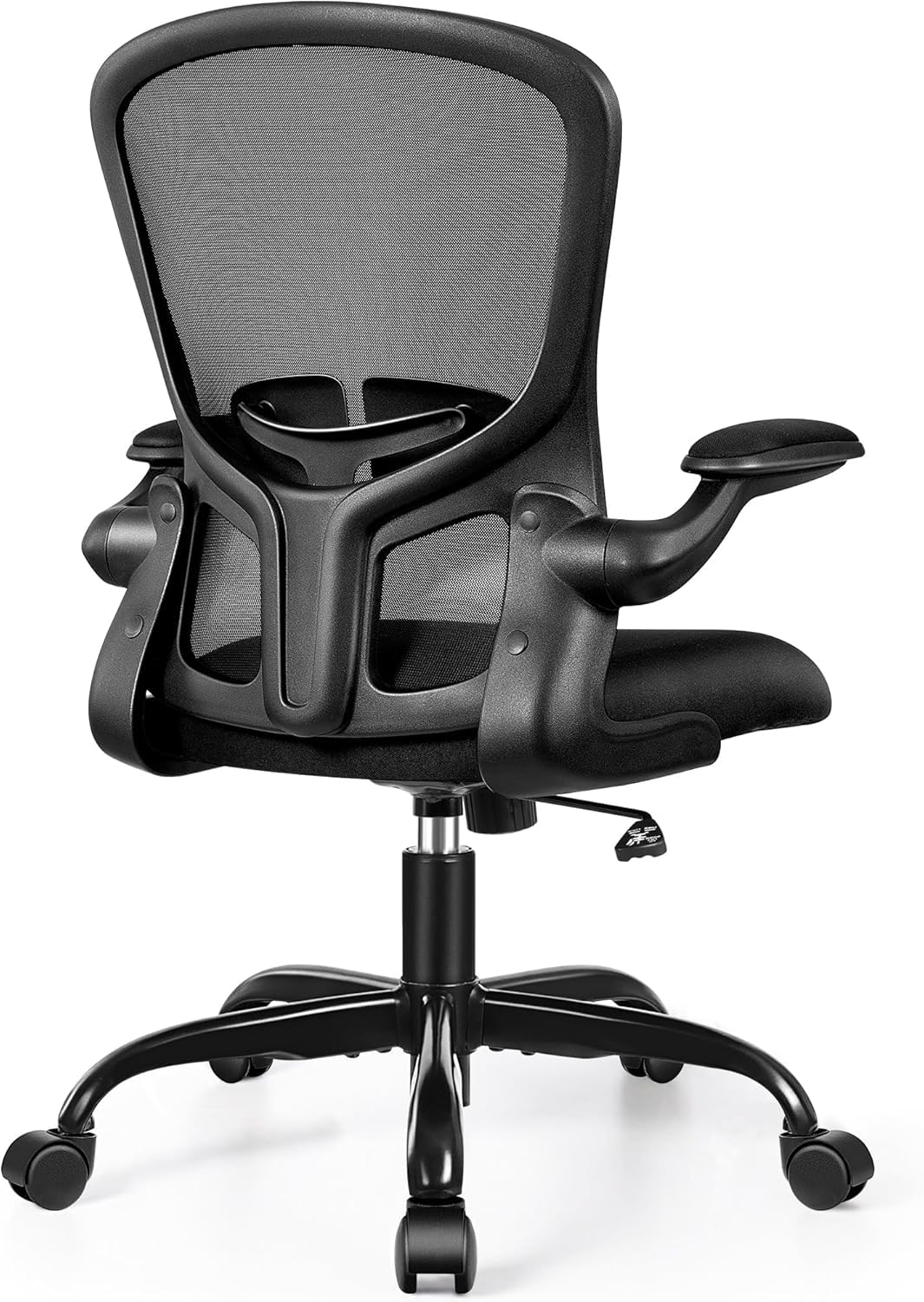
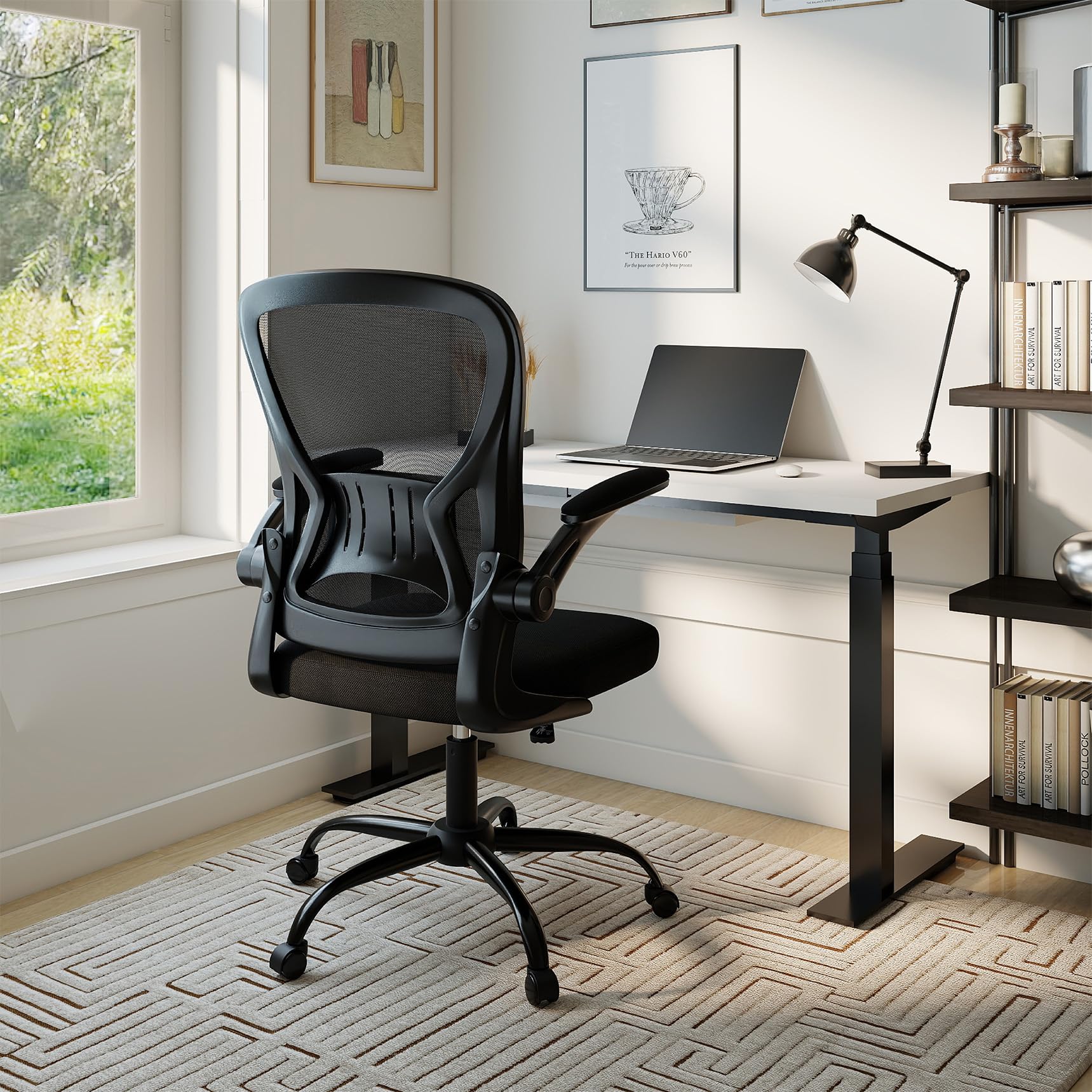
How To Choose The Best Top Ten Desk Chairs
You will sit in a desk chair for hours a day, so the boring spec-sheet numbers — seat height range, weight rating, lumbar travel — decide whether it lasts years or months. You do not need to memorize engineering terms. Check four things, in this order.
Match the seat height range to your desk first
The seat’s highest and lowest settings decide whether your feet touch the floor and whether your forearms land level with the keyboard. If the seat tops out low and your desk is high, your shoulders ride up all day. If the seat sits too high for your leg length, your thighs go numb. Check both the minimum and maximum seat height on any chair before anything else.
Understand what lumbar support actually is
Lumbar support is the padding or curve that presses into your lower back to keep its natural inward bend. A fixed curve in the backrest gives you one shape and hopes it fits. A pad you can slide up, down, or in and out lets you tune that pressure to your own spine. For long sittings, the sliding kind is worth having.
Weigh mesh against upholstery
A mesh back lets air move across your back, so you stay cooler through a warm afternoon. Upholstered backs, like PU leather or foam, feel softer against the body and show wear differently. Mesh seats are firmer; cushioned seats soften pressure on the sit bones. Neither is wrong: mesh if you run hot, upholstery if you want a plush feel.
Check the weight rating and the base before you buy
The weight capacity tells you how much load the frame, base, and gas lift are built to carry. A five-point base spreads that load across more contact points than a smaller star base. If you are near the top of a chair’s rating, give yourself margin and pick a model with a steel or metal frame.
Side-by-Side Comparison
| Model | Best For | Seat Height Range | Weight Capacity | Back Style | Amazon |
|---|---|---|---|---|---|
| X XISHE Mesh Ergonomic with Flip-Up Arms★ Best Overall | Best overall daily sitter | 18.8″–22.63″ | — | Mesh back, PU seat | Amazon |
| FelixKing Ergonomic PC Desk ChairBest for Small Spaces | Compact spaces | 3.94″ height adjustment | — | Breathable mesh | Amazon |
| Youhauchair Adjustable Mesh ErgonomicBest Padded Arms | Padded arm comfort | — | 300 lbs | Mesh back | Amazon |
| TRALT Ergonomic with Adjustable Lumbar | Heavier sitters | 18.5″–21.3″ | 330 lbs | Mesh back, sponge cushion | Amazon |
| Ergalithic 330LBS Mesh with 3D Lumbar | Adjustable lumbar focus | 4″ height adjustment | 330 lbs | Mesh back | Amazon |
| Ergalithic Mesh with Headrest | Neck and head support | — | 330 lbs | Mesh back | Amazon |
| Staples Dexley Ergonomic Mesh Task Chair | Tall sitters | 17.4″–21″ | 275 lbs | Mesh back and seat | Amazon |
| YFO Home Office Chair in Brown Leather | Style-focused desk setup | — | — | Solid back, leather | Amazon |
| GABRYLLY Ergonomic with Footrest | Reclining and napping | — | 300 lbs | Mesh back, high-back | Amazon |
| MOLENTS BIFMA X5.1 Mesh Chair | Wide seat and tall adjustment | 19.5″–23.3″ | — | Mesh back | Amazon |
| FLEXISPOT ErgoX Premium | Highest weight limit | 20.1″–22.4″ | 400 lbs | Mesh back | Amazon |
Detailed Reviews
1. Office Chair PU Leather Flip-up Armrest
Our pick — 4.5+★ from 700+ verified ratings; the strongest balance of quality and price.
A mesh-back sitter that adjusts from 18.8 to 22.63 inches and folds its arms away when you stand up.
Owners keep coming back to the build. The recurring theme in the review pages is that this chair feels better made than whatever it replaced, which is a plain way of saying the metal frame and the thick sponge seat hold their shape. What wins people over most is exactly that solid feel: this is the sort of chair you buy once and stop thinking about.
The seat glides from 18.8 to 22.63 inches on a gas lift, so a short sitter and a tall sitter can share the same chair without either of them sitting with knees bunched up. The PU leather seats and armrests wipe clean with a cloth, handy if you eat lunch at your desk. The arms flip up to 90 degrees so the whole thing tucks under the desk and clears floor space in a tight room.
Two limits to know before you click buy. The armrests adjust for flip position but not height, so if your elbows land at an odd height this is not the chair for fine-tuning. And the chair can creak a little as you get out of it — a minor noise, not a structural alarm. Read that as “this is a working chair, not a silent swivel.”
Why it earns the top slot
- Seat height range of 18.8″ to 22.63″ fits a wide spread of body heights
- Curved backrest and thick high-density sponge cushion for full-day sitting
- 90° flip-up arms let the chair slide fully under the desk
- PU leather seats and arms wipe clean; mesh back keeps air moving
Where it stops short
- Arm height is fixed — you cannot raise or lower the pads
- Occasional creak when shifting weight on and off the seat
- Rocking motion, not a deep recline, for breaks
Reach for this if: you want one well-built chair for a home office and you share the desk with someone of a different height.
Look elsewhere if: you specifically need armrests that move up and down, or a reclining back for naps.
2. FelixKing Ergonomic PC Desk Chair
A bedroom-office chair that tucks under the desk and reclines 30 degrees when the workday ends.
The FelixKing keeps the footprint tight in a way you notice in a small room. A 25.6-inch backrest spread and a 30-inch arm height give it a broad, planted stance, and the arms swing up 90 degrees so the chair disappears under the desk when you are not sitting. Owners point to the S-curve mesh back as the part that lets them stay in it for more than eight hours without heat building up behind them.
Height gives you 3.94 inches of travel on the gas lift, which is a normal working range rather than a wide one. The chair spins a full 360 degrees and rocks back 30 degrees for a break. The frame is FSC-Certified wood, which tells you the structure comes from responsibly sourced timber. Setup is the part that most people get through without swearing, and the retractable arms are the feature that keeps coming up in owner write-ups.
Read the fit notes before buying. The chair can feel like it tilts forward under some sitters — a quirk of the pressure-distribution shape rather than a broken part. And a few tall users find the seat bottoming out for them. If you are over six feet and want a lot of legroom, look at a chair built for taller frames. If you are a normal-sized home worker in a compact room, this is a sensible buy.
Room-first sizing: the flip-up arms and 360-degree swivel make this the easiest chair here to push under a desk in a spare bedroom.
The trade-off to own: some sitters feel a slight forward lean and taller users want more seat. Try a taller-model chair if either applies.
Good fit for: a student or home worker who needs a chair that vanishes into a small room between sessions.
Pass if: you are unusually tall and need an oversized seat and a lot of leg reach.
3. Youhauchair Adjustable Mesh Office Chair
Breathable mesh up top and padded arms down below — a chair for long, warm afternoons at the keyboard.
The Youhauchair’s party piece is the padded armrests on a flip-up frame. You get soft support under your forearms while you type, and the arms still swing up 90 degrees so the chair slides away under the desk. A 19.69-inch backrest width and a 27.17-inch arm height keep the frame upright and compact. That arm height is a little lower than the FelixKing’s 30-inch setting, which suits shorter torsos better.
The back is a ventilated curved mesh over high-resilience foam that holds its shape. The 300-pound weight rating sits on a five-point base and an SGS certified gas lift cylinder, which is the piston that raises and lowers the seat. Nylon casters roll quietly in a full 360-degree circle. Setup runs about 15 minutes with the included tools, and the chair rocks back 30 degrees for a stretch.
The honest catch is the durability picture over the long haul. The wheel mounts are the part to watch — they are the piece that wears if you drag the chair rather than roll it. And the arms sit wider than most chairs, so a narrow desk cavity or a slim sitter may find them in the way. Treat it as a great value chair for a normal office, not a lifetime heirloom.
Arms that earn their keep: padded pads for typing plus the flip-up movement — a combination you rarely get at this tier.
What to know: the arm spread is generous, so measure your desk opening if space is tight.
Pick this one if: soft arm support matters to you and you want a chair that rolls quietly on hard floors.
Think twice if: your desk cavity is narrow or you plan to push the chair around rather than roll it.
4. TRALT Ergonomic Office Chair with Adjustable Lumbar Support
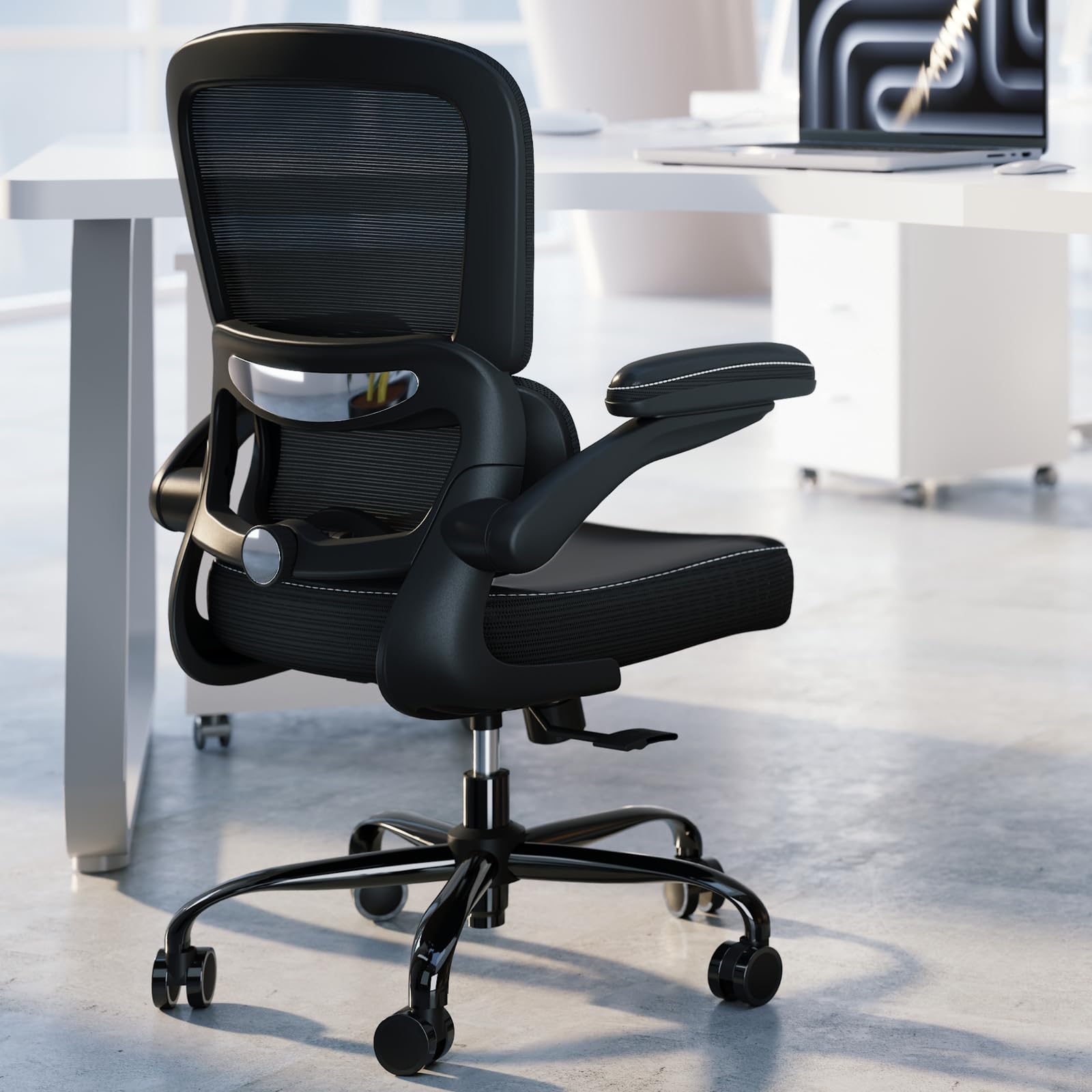
A 330-pound-rated seat with a sliding lumbar pad and a wide base for bigger frames.
Most budget mesh chairs stop at 300 pounds. The seat is wider than average at 20 inches across and 17.3 inches deep, sized for bodies roughly between 5’5″ and 6’2″. The seat height runs 18.5 to 21.3 inches, so the top setting is a touch lower than the X XISHE’s 22.63 inches, which is fine for most desks but tight if you sit at a tall standing-desk converter.
A 3.5-inch high-density sponge cushion sits over the metal frame. Owners describe living in it for six or more hours straight without the seat going flat underneath them. The leather face wipes down easily, and the mesh back lets heat escape so you are not peeling yourself off the chair at three in the afternoon. The lumbar pad slides so you can park it right where your lower back wants pressure. Setup runs roughly 25 to 30 minutes with the tools provided.
The main fit note is that a firm leather cushion is not the softest thing to sit on for a full shift. That is a design choice for support, not a defect. If you like a plush, pillowed seat, this chair is firmer than you may expect. The armrests are the standard fixed-height style, so do not buy it expecting to dial in your elbow angle.
What the heavier build gets right
- 330 lbs weight rating with a metal frame and base
- 20″ W x 17.3″ D wide seat spreads weight evenly
- Adjustable lumbar pad that slides to your lower back
- 3.5-inch high-density sponge cushion resists sagging
What to plan around
- Firm leather cushion, not a plush seat
- Standard fixed armrests, no height dial
- Top seat height at 21.3″ is on the lower side for tall desks
Worth grabbing if: you carry more weight than a standard 300-pound chair is rated for and want a wide, firm seat under you all day.
Skip the search here if: you want a soft, giving cushion or you sit at an unusually high desk.
5. Ergalithic 330LBS Mesh Office Chair
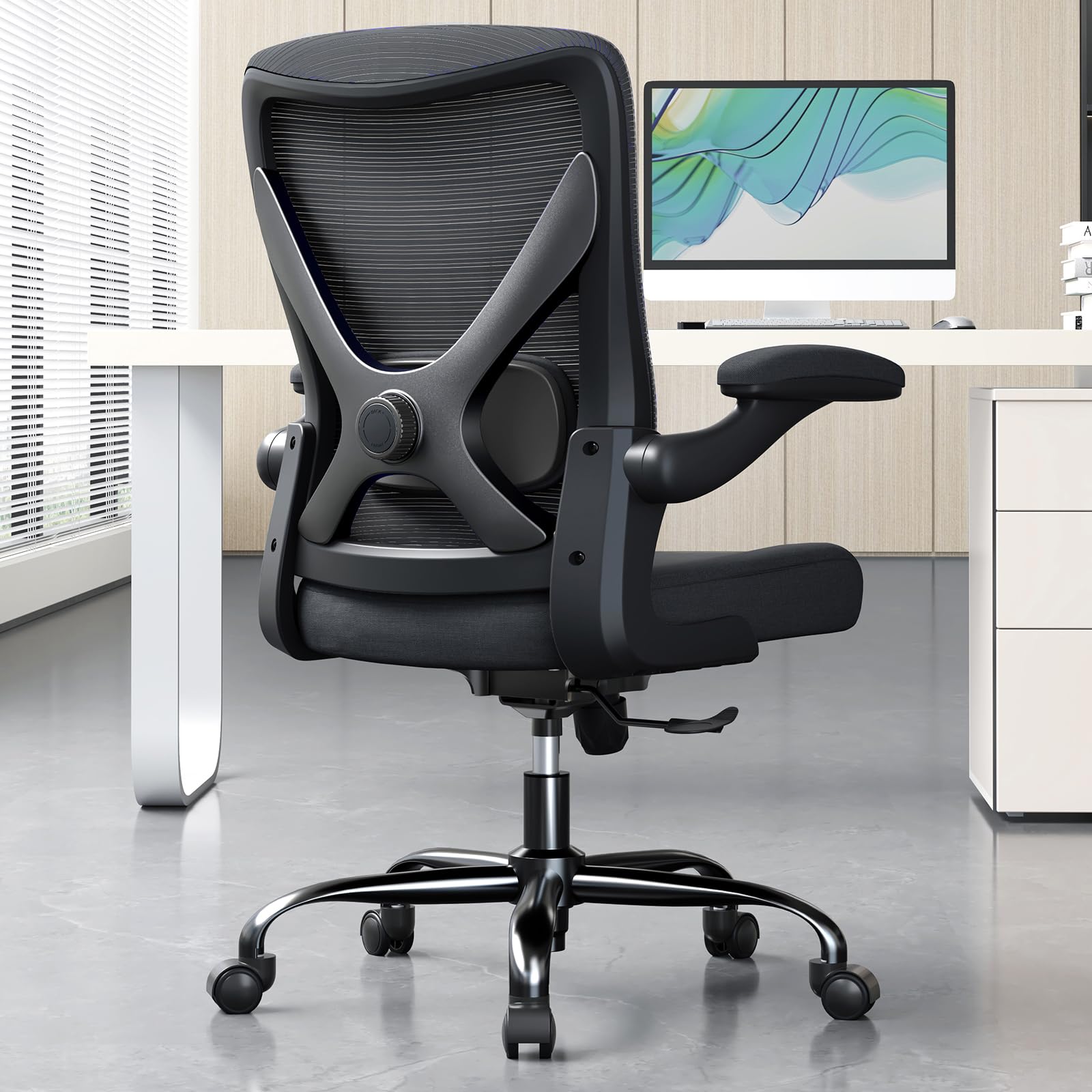
The lumbar pad here moves 1.8 inches up and down and 1 inch in and out — real tailoring, not a fixed bump.
If your lower back has a specific spot that aches, a pad you can move to meet it changes everything. This Ergalithic chair lets you slide the lumbar pillow 1.8 inches vertically and push it 1 inch in and out, so you can dial it onto exactly the curve your spine wants. The rocker travels 90 to 120 degrees with a lock at 90 degrees, and the seat rises through a 4-inch height adjustment. That lift range is close to the FelixKing’s 3.94 inches, both on the tighter side of the eleven here.
Owners tend to mention the build and the comfort before anything else, and the five-year warranty is the backup plan if something does give out. A 330-pound weight rating sits over a five-point metal base, and the flip-up arms clear the chair away under the desk. The extra-wide seat gives bigger sitters more room to spread out. A few people find the arm pads a little thin, so if you rest your elbows hard all day, plan on a cushion.
The chair is not quite as plush as the TRALT’s wide seat for all-day sitters. It is a firm, supportive sit rather than a soft one. The 4-inch height range also means it is not the best pick if you are very tall and need a towering seat. For most working adults it lands where the desk does.
Why the lumbar dial matters: a 1.8-inch vertical and 1-inch depth range lets you put support exactly where your back bends, which fixed bump-outs cannot do.
One small gripe to know: the armrest padding is a touch thin — add a pad if your elbows bear weight all day.
This is your chair if: your lower back needs a support pad you can steer into the right spot, not a one-shape-fits-all bump.
Move on if: you want a deeply cushioned, plush seat or need a tall seat height for a high desk.
6. Ergalithic Ergonomic Office Chair Headrest
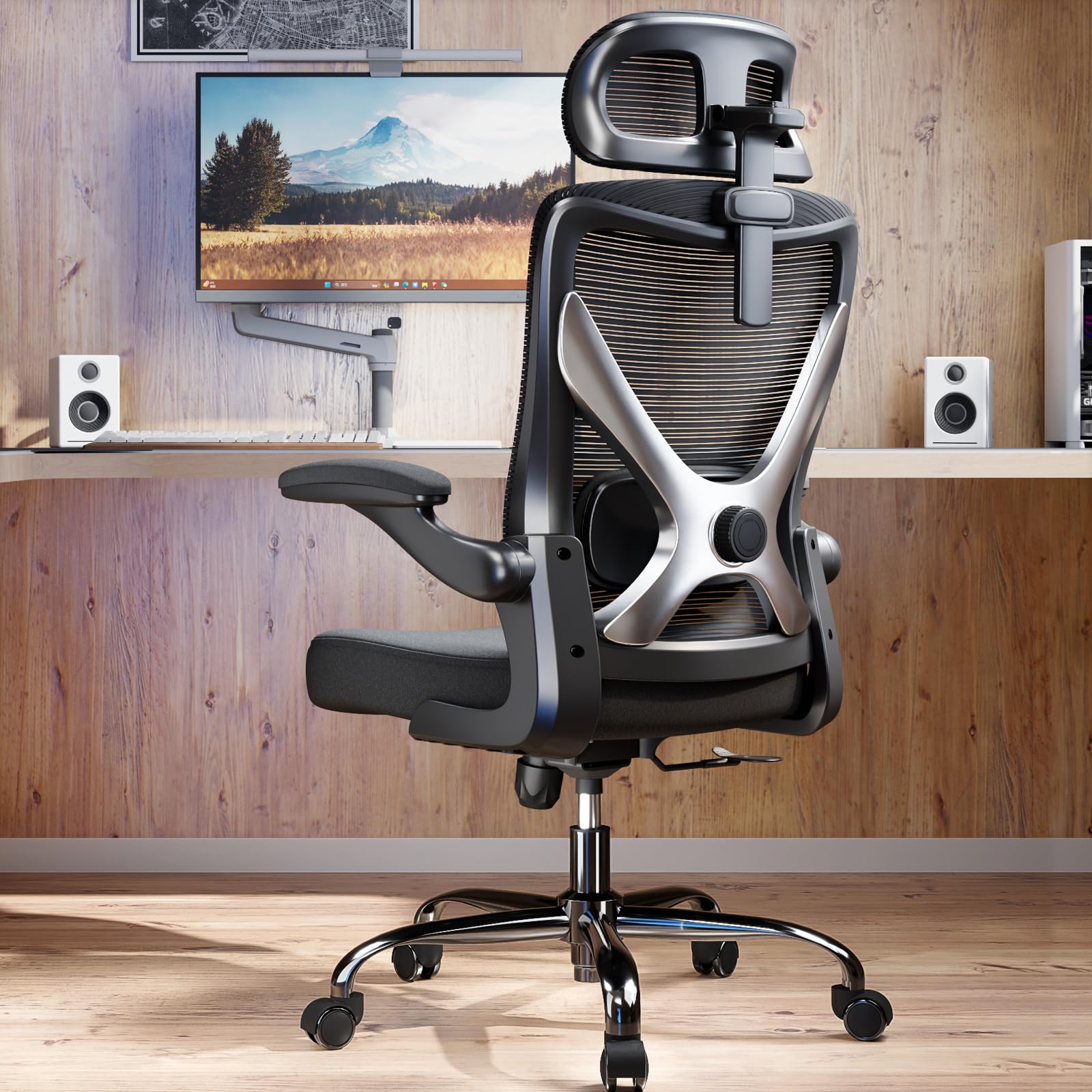
The pick for neck-strain sitters — a 3D headrest that moves in three directions plus a sliding lumbar pad.
Neck support is the part most budget chairs skip. This Ergalithic model builds in a 3D headrest that moves in three directions, so you can tip it to sit under your neck rather than behind your skull. The lumbar pillow gets the same treatment — 1.8 inches up and down and 1 inch in and out. Owners describe the effect in plain terms: less strain across the neck and back after a full day at the screen. The chair is rated for users from 4.9 to 6.2 feet, which covers the vast majority of adults.
The rocker lets you lean back 90 to 120 degrees, with a firm stop at 90 degrees if you want to lock upright for focused work. The back is breathable mesh over 330 pounds of capacity, and the base is five-point. The flip-up arms let the chair slide under the desk, and the five-year warranty is the manufacturer’s promise on the moving parts.
Two parts of the spec are mixed in the owner feedback: the sturdiness feel and the adjustability of the arms are areas where opinions split. Read that as a chair that fits most people well but may need a couple of small tweaks for the fussy sitter. It is also not the cheapest pick here, so if head and neck support is not near the top of your list, a simpler chair will do the same job.
Where the headrest earns its place
- 3D headrest with three-direction movement for neck support
- Sliding lumbar pillow for lower-back tailoring
- 330 lbs capacity with a five-point base
- 90–120° rocker with a firm 90° lock
Fine print to weigh
- Sturdiness feel and arm adjustability are mixed in owner feedback
- Pricier tier than a basic mesh chair
- Headrest is more useful for long sittings than short ones
Best matched to you if: you have neck strain from long screen sessions and want a headrest plus lumbar support that both move.
Think about a simpler chair if: your office work is in short bursts and a headrest would just sit unused.
7. Staples Dexley Ergonomic Mesh Task Chair
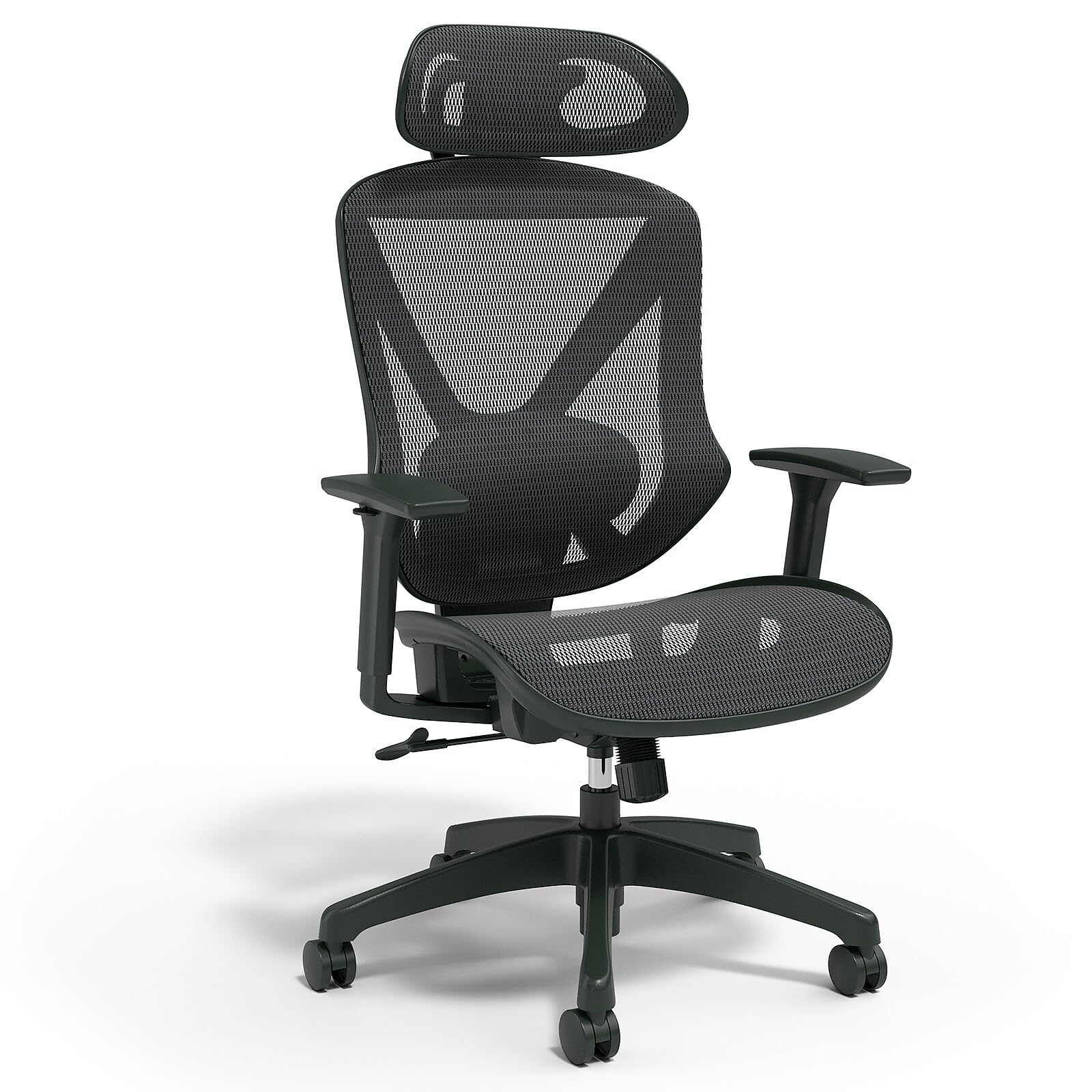
A 23.8-inch back with a height-and-angle-adjustable headrest, built to a published safety standard.
Tall sitters struggle with most chairs because the backrest ends mid-shoulder blade. The Dexley’s back stands 23.8 inches high and 19.1 inches wide, and the headrest adjusts for both height and angle. The seat runs 20.1 inches wide and 18.3 inches deep on a 17.4 to 21-inch seat height range. The weight rating is 275 pounds based on a 5-10 hour workday, which sits below the 330-pound TRALT and the 400-pound FLEXISPOT. If you are a big person, note the lower ceiling.
The tilt mechanism is where this chair out-thinks the cheaper options. A swivel-tilt mechanism pairs with a three-position tilt lock and a tension knob that controls how hard it is to lean back. That is real seat engineering. The chair also meets or exceeds ANSI/BIFMA standards, a published safety and durability benchmark for office furniture. Owners reason that it looks like a pricier chair, and the breathable mesh seat and back keep air moving in both directions.
The recurring gripe is noise — the chair can squeak and creak over time, even after greasing the moving parts. That is a comfort detail, not a structural failure. The chair also arrives needing assembly, which takes a little while on your own. If a silent office matters more to you than the tilt tuning, weigh that up.
The tall-back advantage: a 23.8-inch backrest and an adjustable headrest give taller sitters real support where most chairs run out of material.
The honest caveat: the 275-pound rating is lower than several rivals here, and the chair tends to develop squeaks.
Suits you when: you have a long torso and want a backrest that actually reaches your shoulder blades.
Try a different chair if: you weigh near or above 275 pounds, or silence in a shared room is non-negotiable.
8. YFO Home Office Desk Chair in Brown Leather

Brown leather, rubber casters, and arms you can leave off entirely for a cross-legged sit.
The YFO is the chair you buy when the desk sits in your living room and you want furniture, not equipment. The brown leather stitching gets compared to a custom high-end car interior, and the rubber casters roll silently over wood, carpet, and marble without marking any of them. The seat is 22 inches wide and 20 inches deep with an 8.3-inch arm height, which is generous for a leather task chair. A spring-pack cushion under the sponge keeps the seat soft through a long afternoon.
The clever part is the 2-in-1 build. You can fit the armrests or leave them off and use the chair as a cross-legged seat at a low table. That flexibility is unusual in this price tier. Assembly takes about an hour alone, and the tools come in the box. Rubber casters last longer than cheap plastic ones, which the maker pitches as a savings on replacement wheels down the line.
Now the catch, and it is a real one. The backrest is a solid panel with no adjustment, so you sit it or you do not. If your lower back needs support, this is not a lumbar chair, and one owner wished for a little more give in the back. The seat height also runs low, so shorter sitters may feel they are reaching up to the desk. If those trade-offs sound fine for the look you want, this chair delivers.
The style and comfort case
- Brown leather with stitched panels that owners compare to high-end car interiors
- Rubber casters glide silently over wood, carpet, and marble
- 22″ wide x 20″ deep seat with a spring-pack cushion
- Armrests can be left off for a cross-legged sit
The limits to consider
- Solid backrest with no lumbar adjustment
- Low seat height — shorter sitters may feel they are reaching up
- Armless option means no arm support when you want it
Choose it for: a home study or living-room desk where the chair is part of the decor and you want silent wheels on bare floors.
Not the one if: your lower back needs adjustable support or you need a seat that rises high for a tall desk.
9. GABRYLLY Ergonomic Office Chair Footrest
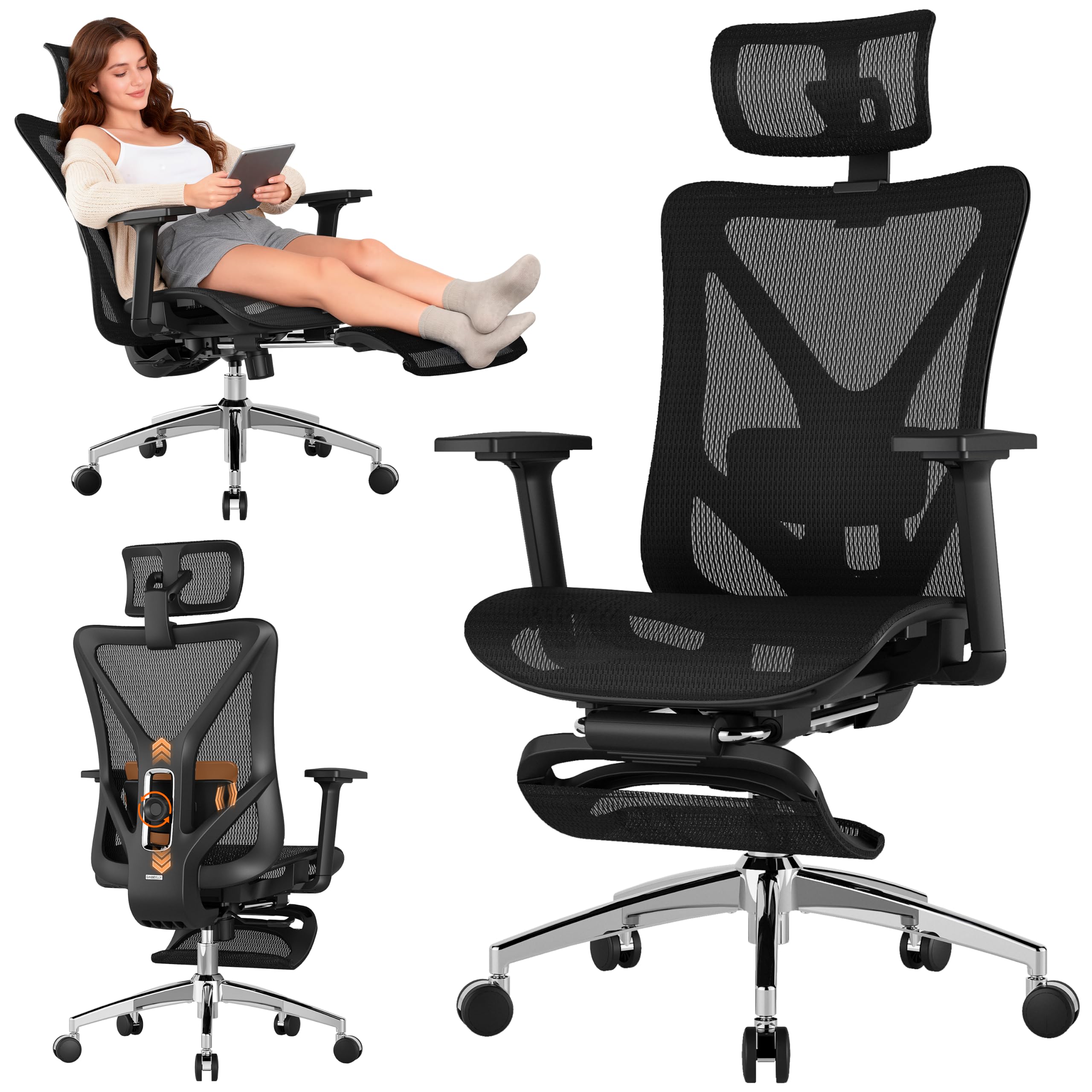
A 135-degree recliner with a retractable steel footrest that turns your desk into a napping station.
This is the chair for the person who works late and takes a break in the seat rather than leaving it. The back reclines to 135 degrees in three locked positions — 90, 110, and 135 — and a steel footrest pulls out to 18.1 inches for your legs. The frame is a high-back recliner built for users between 5’3″ and 6 feet, with a 27.5-inch leg spread that adds stability even with the footrest extended. A 300-pound rating sits on a steel base.
Lumbar support moves 3 inches vertically and 1.6 inches horizontally, so you can steer it to your lower-back curve. The mesh runs tight and breathes, which matters when you sit back for a long session — no sweat pooling behind you. The armrests are 3D adjustable in three directions and the headrest has three adjustment points. The chair is professionally tested to SGS and BIFMA standards, and the 3-year parts warranty covers the moving pieces.
The catch is in the small parts. The adjustable lumbar dial is harder to work than you might expect, and the wheel responsiveness is the most-discussed weak spot — the casters can feel stiff on carpet. Assembly runs 15 to 25 minutes, and a shorter gas lift is available from the maker if the seat sits too high for you.
The recline-plus-footrest combo: 135 degrees, three locked angles, and an 18.1-inch steel footrest — the only chair here that turns into a lounger.
What to expect: the lumbar dial is fiddly and the casters drag on carpet, but the seat and recline hold up.
Built for: the late-shift worker who wants to kick back with feet up between calls without buying a separate lounge chair.
Look at a simpler pick if: you only need an upright workstation or you roll across thick carpet all day.
10. MOLENTS Ergonomic Office Chair, BIFMA X5.1 Certified
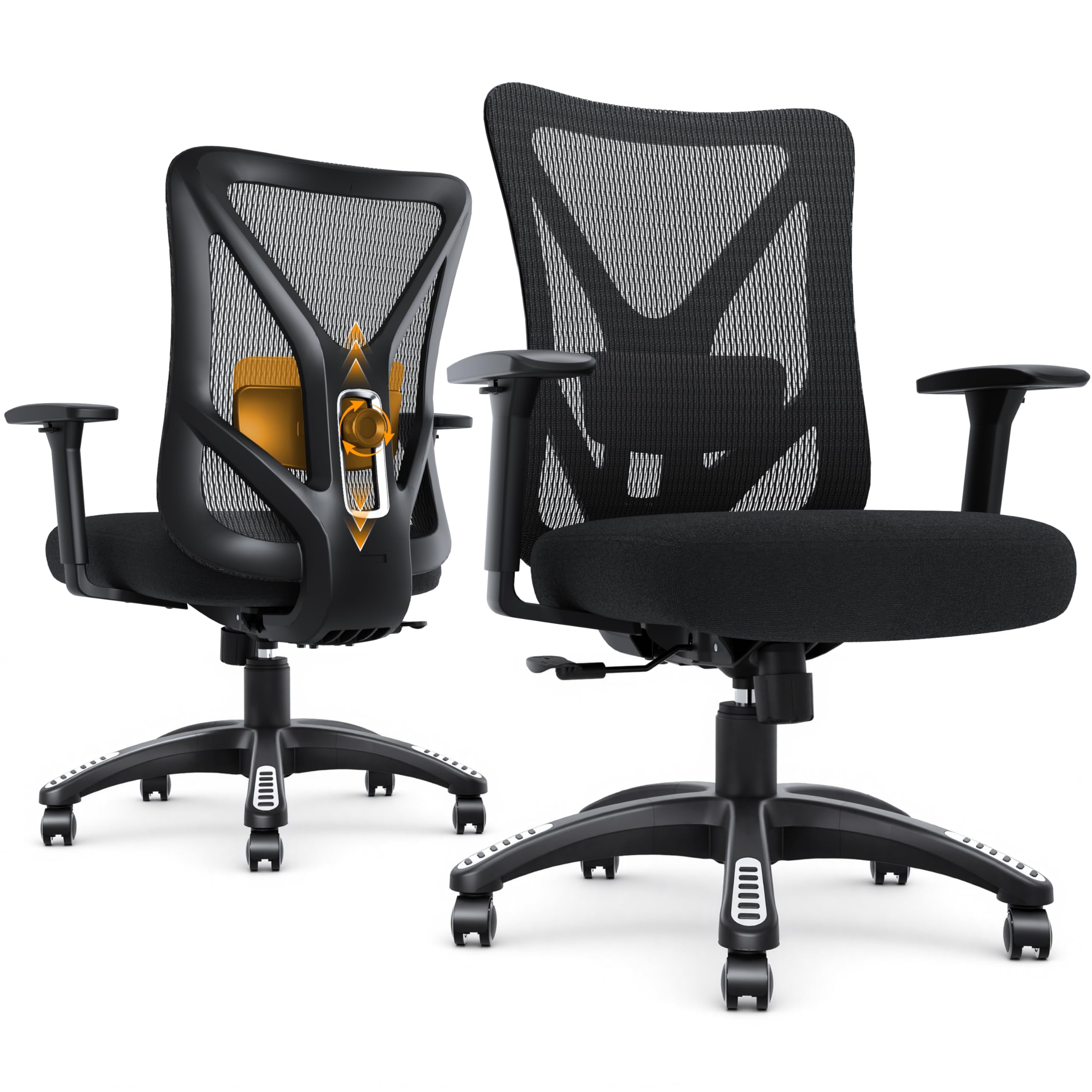
The tallest seat-height ceiling here, on a certified mesh chair with a full 27.6-inch width.
If your desk is tall or you are long-legged, the seat height ceiling matters more than anything else. The MOLENTS runs from 19.5 to 23.3 inches, which beats the X XISHE’s 22.63-inch top and the TRALT’s 21.3-inch ceiling. The overall chair measures 38.6 to 42.4 inches high and 27.6 inches wide, with a seat 19.8 inches wide and 18.9 inches deep. The BIFMA X5.1 certification is a published safety and durability standard for office chairs, which tells you it has been tested to a known benchmark.
The lumbar pad adjusts up and down and front to back, and the three reclining positions run 90 to 120 degrees. The mesh is a high-elastic breathable material that moves air across your back. The 3D armrests adjust in depth and can rotate, and the arm panel slides forward and back. The maker also offers a shorter or taller gas lift on request if the stock height does not suit you.
One recurring annoyance is the armrest panel. Some sitters find the sliding arm panel fussy, and a few report it as the chair’s rough edge. The good news is the maker will swap to a fixed panel if you ask. If you want a chair that stays put in one configuration, this is a small friction point. For the wide seat and tall adjustment, most people find it worth living with.
What makes the fit generous
- Seat height to 23.3″ — the tallest ceiling in this lineup
- BIFMA X5.1 certified for safety and durability
- 19.8″ wide seat on a 27.6″ overall frame
- Lumbar pad adjusts both vertically and in depth
The friction points
- Sliding armrest panel can feel fussy; a fixed panel is available on request
- Tilt stops at 120°, no deep recline for naps
- Slimmer lumbar travel than the Ergalithic models
Best for: tall or long-legged sitters who need a seat that rises high enough to meet their desk.
Less appealing if: you want a deep recliner or arms that stay locked in one place.
11. FLEXISPOT ErgoX Premium Ergonomic Office Chair
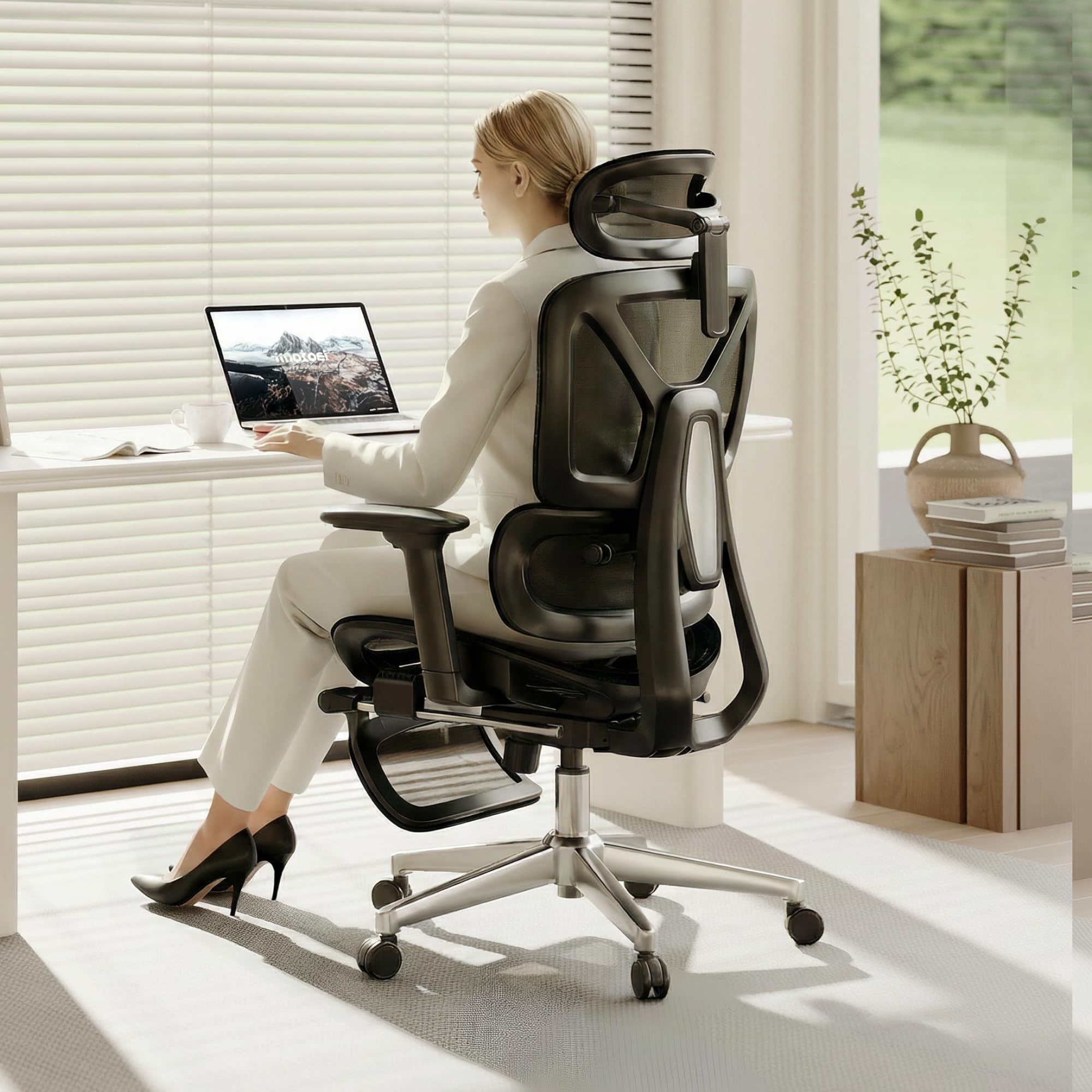
A 400-pound-rated frame with seat depth that adjusts from 17 to 20 inches — the most customizable seat in the group.
The FLEXISPOT is the heavyweight of the lineup. Its 400-pound limit tops the 330-pound TRALT and the 300-pound Youhauchair, and that load sits on a class 4 gas lift and a reinforced nylon frame. The seat also adjusts in depth from 17 to 20 inches, which is the feature that lets a short sitter and a long-legged one share the chair. The height runs 20.1 to 22.4 inches, sized for users between 5’1″ and 6’2″.
The ergonomic package is thorough. You get dynamic lumbar support, a 5-level adjustable back, a 3D adjustable headrest, a nap footrest, and tilt. The arms are 3D adjustable for height, forward and back, and swivel. You can pick a mesh seat for airflow or a foam seat for a cradled feel. The five-level back adjustment is the part that gives this chair more posture tuning than any other pick here.
The mismatch is in assembly and small-part polish. The included screws and Allen wrench feel cheap, and owner feedback splits on whether setup is straightforward. The headrest and footrest are reported as wobbly, so check the brackets are tight before you settle in. Its 4.0+ star score is the lowest of the eleven, though the 400-pound rating and the depth adjustment keep it a strong choice for the right buyer.
The standout spec: a 400-pound rating and 17 to 20-inch seat depth — the widest load and fit envelope in this lineup.
What to plan for: cheap-feeling hardware, and a headrest and footrest that need tightening. Budget a little time on setup.
The right call when: you need the highest weight rating here or you want seat depth that adjusts to your leg length.
Look elsewhere if: you want a fuss-free build with no wobble in the headrest or footrest.
Know the Specs
Seat height range
This is the lowest and highest point the seat can sit above the floor, adjusted by the gas lift. A range like 18.8 to 22.63 inches lets short and tall sitters share the chair. Check that the top setting rises high enough for your desk, and that the bottom setting lets your feet rest flat on the floor. If you cannot hit both, your shoulders creep up or your thighs go numb.
Weight capacity
The weight rating is the total load the frame, base, and gas lift are built to carry. Ratings here run from 275 pounds to 400 pounds. If you sit near the top of a chair’s rating, give yourself margin and pick a model with a metal or reinforced frame. A five-point base spreads the load across more contact points than a smaller star base, which adds stability when you lean back.
Lumbar support travel
A fixed lumbar bump gives your lower back one shape and hopes it fits. An adjustable lumbar pad slides up and down and often in and out, so you can park the pressure exactly where your spine wants it. Travel figures here run from 1.8 inches vertical on the Ergalithic models up to 3 inches on the GABRYLLY. More travel means finer tuning; less travel means a simpler chair that still supports the average back.
Mesh versus upholstery
A mesh back lets air move across your back so you stay cooler. Upholstered backs — PU leather, foam, solid panels — feel softer but trap heat and often lack adjustable support. Mesh seats are firmer and resist sagging; cushioned seats soften pressure on the sit bones. Pick mesh if you run hot, upholstery if you want softness.
Common Questions
What seat height do I need for a standard desk?
Will flip-up armrests let the chair fit under my desk?
How much weight will these desk chairs hold?
Is a mesh chair better than a leather chair for all-day sitting?
What does BIFMA or ANSI/BIFMA certification mean on a desk chair?
Can I adjust a desk chair for lower back pain?
Do these chairs work on carpet or only on hard floors?
How long does assembly usually take on these chairs?
Which chair has the most adjustable seat for different body sizes?
Can a desk chair recline far enough to nap in?
The Bottom Line
For most people, the best top ten desk chairs winner is the X XISHE Mesh Ergonomic Desk Chair because its 18.8 to 22.63-inch seat range fits a wide spread of body heights and its flip-up arms clear the desk when you stand. If your lower back needs a pad you can steer into the right spot, the Ergalithic 330LBS Mesh with 3D Lumbar gives you 1.8 inches of vertical and 1 inch of depth travel. And for the late-shift worker who wants to kick back with feet up, the GABRYLLY with Footrest reclines to 135 degrees on a steel footrest.
Check seat height range and weight rating first, then pick the comfort features that match how you actually sit. If you share the desk or sit long hours, take the X XISHE; if you need a 400-pound rating, take the FLEXISPOT; if you want a 135-degree recline, take the GABRYLLY.
How we choose
We do not accept paid placement. Every pick is matched to a real buyer and a real use-case; we do not hands-on test units.
Sources
Specifications: manufacturer listings and product documentation. Review insights: verified customer reviews, as of November 2026. Pricing: not shown on this page (it changes often); check the current price via the retailer link.
As an Amazon Associate, Tactical Gear Guy earns from qualifying purchases. This does not affect which products we feature.