Specs are compiled from manufacturer listings and verified buyer reviews and can change over time — please confirm the key details on the product page before buying.
Buying top rope climbing equipment is really one decision: what will actually catch you when you let go of the wall. That means a belay device you trust, a rope with the right diameter, and a harness that fits snugly enough to stay put on repeated top rope laps. Everything below is sorted by that single job.
One honest note before you read: this list uses flexible matching, so not every pick is the exact model number you may have searched for. Where a specific size, diameter, or length was short on data, the nearest same-type option in the same lineup serves the same purpose — and each pick is labelled with what it really is.
This guide is built by comparing the manufacturers’ published specifications and the patterns across verified customer reviews, so you get each pick’s real strengths and trade-offs instead of marketing spin.
You’ll see belay devices, harnesses, and dynamic ropes side by side, with the diameters, lengths, and weights that actually change how each one behaves at the top rope anchor. Each pick below is narrowed to one clear buyer, so you can skip the ones that don’t fit how you climb and choose the top rope climbing equipment that matches your setup.
Top Picks

How To Choose The Best Top Rope Climbing Equipment
Top rope climbing keeps the rope above you the whole way, which changes what gear matters. You are not clipping quickdraws on the way up. You are pulling rope through a device at the anchor, taking repeated falls on the same stretch of rope, and hanging in a harness for longer stretches than a lead climber does.
That shifts the priority order. First comes the belay device, because it is the thing that decides whether a fall gets caught smoothly or jerks to a stop. Second comes rope diameter, because a fat rope handles differently in a device than a thin one. Third comes the harness, where fit around the waist and thighs is the whole game.
Start with the belay device, not the rope
An assisted-braking device uses a cam that pivots and pinches the rope when a climber falls or weights it. That means less hand strength is needed to hold a hanging climber while they work out a move. For top rope sessions where someone hangs a lot, that comfort adds up fast.
Check the rope diameter range printed on the device before you buy. A device rated for a wide span covers more ropes. A device with a narrow range works beautifully with the ropes it was built for and poorly with anything outside it.
Match rope diameter to your device
Rope diameter is measured in millimetres, and it decides how much friction you feel when lowering. A thicker rope gives more surface for the device to bite, which feels secure but can make lowering stiffer. A thinner rope feeds more easily and packs smaller.
Look at the two numbers together: the rope’s diameter and the device’s rated range. A 10.5 mm rope sitting comfortably inside a device’s stated span is a safer pairing than a rope at the very edge of the range.
Treat harness fit as the deciding spec
A harness that is slightly too big will ride up on repeated top rope falls and leave you tugging at the waist belt at the anchor. Adjustable leg loops help, because they let you snug the fit around your thighs without changing the waist size. Check the manufacturer’s size chart against your actual waist measurement rather than your trouser size.
Side-by-Side Comparison
| Model | Best For | Type | Rope Range / Length | Weight | Amazon |
|---|---|---|---|---|---|
| PETZL GRIGRI★ Best Overall | All-round top rope and lead | Assisted-braking belay device | 8.5 to 11 mm | 175 g | Amazon |
| EDELRID GigaJulMost Versatile | One device for standard and assisted belays | Switchable belay device | 7.1 to 10 mm | 121 g | Amazon |
| Black Diamond MomentumBest Starter Kit | First harness for gym and crag | Harness package | — | — | Amazon |
| Edelrid Jul² Fuse Set | Beginners wanting a strong brake | Assisted-braking belay device | 8.9 to 11.0 mm | 196 g | Amazon |
| SOB Full Body Harness | Work at height and rescue use | Full body harness | — | 4.39 lb | Amazon |
| 10.5 mm UIAA Dynamic Rope 45M | Thick rope for learning and working | Dynamic rope | 45 m, 10.5 mm | 9 lb | Amazon |
| EDELRID Boa 9.8mm 60m | Long routes and varied walls | Dynamic rope | 60 m, 9.8 mm | 16 oz | Amazon |
| EDELRID Boa 9.8mm 70m | Tall walls and big crags | Dynamic rope | 70 m, 9.8 mm | 16 oz | Amazon |
Detailed Reviews
1. PETZL GRIGRI Rock Climbing Belay Device
Our pick — 4.5+★ from 1,500+ verified ratings; the strongest balance of quality and price.
A cam-assisted belay device that pinches the rope on a fall, so holding a hanging partner takes far less grip.
This is the pick to start with if you belay at a top rope anchor more than once a week. Its cam-assisted blocking system uses a pivoting cam that pinches the rope the moment a climber falls or puts weight on it. You are not relying on your grip alone to hold a hanging partner — the device takes that load.
What wins people over is the build. The side plates are aluminium and the cam and friction plate are stainless steel, weighing 175 g total. That is a device you can leave racked on your harness all session without noticing it. It is also the part buyers single out as good quality far more than anything else about it.
It fits nearly any setup because it runs all single dynamic ropes (ropes that stretch to soften a fall) from 8.5 to 11 mm, with the balance between 8.9 and 10.5 mm. That range is wider than the Edelrid Jul² Fuse Set, which starts at 8.9 mm and tops out at 11.0 mm on its own scale. The Grigri also covers thinner ropes down to 8.5 mm that the Jul² does not list. An ergonomic handle unblocks the rope progressively as you lower, so a descent feels controlled rather than sudden. Installation diagrams are engraved on both the inside and outside of the body, which cuts the chance of loading the rope backwards.
Why it earns the top spot
- Cam-assisted blocking takes the strain when a climber hangs or falls
- Runs single dynamic ropes from 8.5 to 11 mm, with 8.9 to 10.5 mm as the tuned band
- Aluminium and stainless steel build at 175 g
- Rope-loading diagrams engraved on both faces of the body
What to weigh before buying
- Assisted braking changes how you feed rope on lead, so it rewards practice
- Only works as intended inside its stated rope range
Reach for this if: you want one device that handles top rope sessions and lead belaying with the same hand movements.
Look elsewhere if: you climb exclusively on thin ropes below 8.5 mm, which sit outside the rated span.
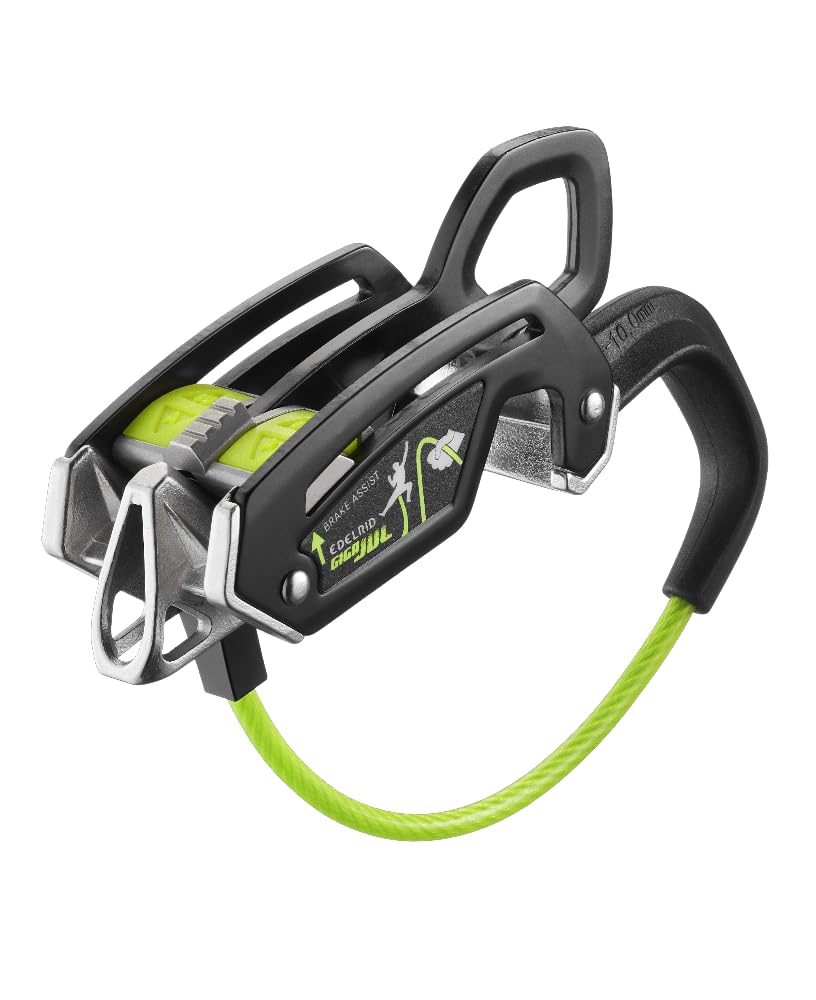
2. EDELRID GigaJul Belay Device – Slate
A switchable belay device that runs in assisted-braking mode or plain tube mode, so one unit covers both styles.
The GigaJul exists to end the argument about which belay device to own. It switches from assisted braking to a standard belay, so the same piece of kit covers a top rope lap and a plain tube-style belay depending on what the moment calls for. That versatility is exactly the trait buyers praise most in it, right behind how well it simply works as an ATC and descender.
The numbers tell you who it is for. It takes climbing ropes from 7.1 to 10 mm, which is a narrower band at the top end than the Petzl Grigri’s 11 mm ceiling. If your rack lives in thinner rope territory, that is not a problem — it is the point. An additional eyelet open up the device in top rope belay mode, and it can clip to anchors for assisted braking top rope setups.
At 121 g it is the lightest device on this list, well below the Edelrid Jul² Fuse Set at 196 g. The honest catch is reliability. That is the one trait buyers describe in mixed terms, and it is worth understanding why: a device that does two jobs asks you to be sure which mode you are in before you load it. Get comfortable with the switching and it does both jobs cleanly. Skip past that step and it will feel less predictable than a single-purpose device.
Where it earns its place: the widest job description of any device here — assisted braking, standard belay, and anchor clipping in one 121 g body.
The trade-off to accept: dual-mode operation means learning the mode switch properly before you trust it with a partner’s weight.
Built for: climbers who mix top rope and standard belaying and want one device on the harness loop, not two.
Not the fit for: anyone who wants a single-mode device they can load without thinking about which setting it is in.
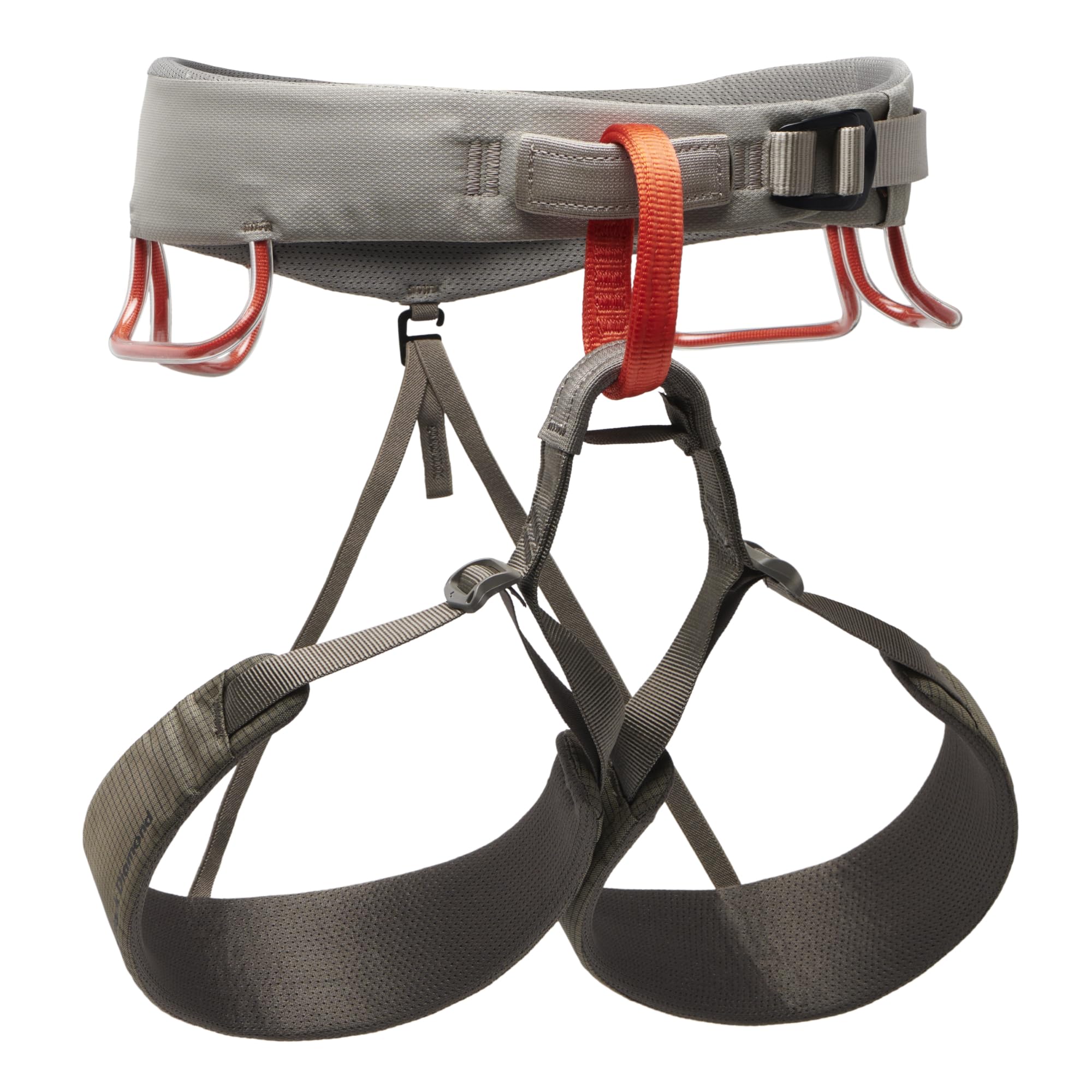
3. BLACK DIAMOND Men’s Momentum Rock Climbing Harness
A first harness package with adjustable leg loops, so you stop sizing yourself into a gym rental.
If you have been climbing top rope in a rental harness that never quite sits right, this package is the natural next step. It bundles the Momentum harness with the rest of what you need to get started, so you are not piecing a kit together one item at a time. The harness itself is Black Diamond’s most popular all-around model, built for gym sessions and crag days alike.
Comfort in the leg loops and waist belt is the thing people notice first, and it holds up across a full session rather than just the first climb. The adjustable loops let you snug the thighs independently of the waist, which matters on top rope where you fall and hang repeatedly.
Here is the honest part: fit is the trait buyers describe in mixed terms, with the recurring note being that it can run a little big. That is not a fault in the harness — it is a sizing decision you make before checkout. Measure your waist and compare it to the manufacturer’s chart rather than assuming your usual size. Get that right and the fit complaints never apply to you.
The smart buy for: a new top rope climber who wants a complete, comfortable first setup in one order.
Measure before you commit: the harness can run large, so check the size chart against your waist rather than your clothing size.
4. Edelrid Jul² Fuse Set with Bulletproof Triple Colourful

A stainless steel assisted-braking device with high braking effect and geometry tuned for first-time belayers.
What sets the Jul² Fuse apart is the body material. It is made from abrasion-resistant stainless steel with a geometry tuned for intuitive handling, including for people who have never belayed before. The braking effect is described by the maker as particularly high, which supports catching a fall in advance mode.
It handles all single ropes from 8.9 to 11.0 mm, including the larger diameters a lot of gyms and teaching walls still use. That is a slightly narrower bottom end than the Petzl Grigri’s 8.5 mm floor, so if you plan to run very thin ropes this is not the one. For standard 9.8 mm and 10.5 mm ropes, it sits comfortably mid-range.
Two handling touches are worth knowing before you buy. Holding the device open with your thumb lets rope feed faster on lead, which keeps clipping from feeling like a fight. And at 196 g it is the heaviest device on this list — noticeably more substantial than the 121 g Edelrid GigaJul. That extra mass is the trade for the stainless steel body, and it is weight you feel on the harness rather than in your hand.
The case for it: stainless steel construction and a geometry designed for intuitive handling make this the easiest device here for a new belayer to learn on.
The catch to know: at 196 g it is the heaviest pick on the list, and its 8.9 mm floor rules out the thinnest ropes.
Pick this one if: you are learning to belay and want the strongest braking assistance and the most forgiving handling.
Pass on it if: shaving grams off your harness matters more to you than a stainless steel body.
5. SOB Full Body Climbing Harness

A full body harness with a chest attachment point and a central seat point, built for work at height and rescue.
This is a different animal from a waist-and-leg-loop harness. It is a full body harness with thickened, widened protection around the waist, built for tree work, rock climbing, mountaineering, rescue, and work at height. A chest attachment point and a central seat attachment point both anchor the load, and the belt and leg loops adjust in length to fit different body shapes.
Workmanship is what buyers talk about most, and the word that keeps coming up is quality — impressive, durable, and worth the money are how the reviews read. The hardware backs that up: aluminium alloy carabiner clips described as CNC machined for small error and reliable quality, plus double back buckles for length adjustment. Weighing 4.39 pounds, it is a substantial piece of kit — which is exactly the point for a full body design.
The honest complication is ease of use. That trait splits the most of any aspect here, with some finding it simple to put on and others noting the straps loosen over time. A full body harness has more straps to manage than a waist harness, so budget a few minutes the first few times you suit up. If you only climb indoors on short top rope routes, its bulk is more than you need. For rescue work, tree work, or any situation where inverting is a possibility, the extra coverage is the reason you buy it.
For the climber who needs it: anyone working at height, doing tree work, or setting up rescue scenarios where full body coverage and an invertible design matter.
Skip it for pure gym laps: a lighter waist harness will be less fuss on short indoor routes.
6. 10.5 mm UIAA Dynamic Climbing Rope 45M (150FT)

A 10.5 mm UIAA-certified rope with a thick sheath, built to absorb the abrasion of a first season on top rope.
At 10.5 mm across 45 m, this is the thickest rope in the group. A thicker diameter gives your belay device more surface to bite, which is why a fat rope feels secure under a beginner’s hands. The sheath is built thicker too, and the maker describes that as adding overall durability — useful when you are dragging rope across abrasive top rope anchors.
The safety paperwork is worth reading. It carries a UIAA certified Safety Label under CHN 19-5205, and the maker lists a breaking strength of 25 KN. Kernmantle construction means the core is bundled yarn carrying the strength and shock absorption, wrapped in a protective sheath. At 9 pounds it is the heaviest rope on the list — noticeably more rope to carry than either Edelrid Boa at 16 ounces.
Here is the follow-up question a buyer will have. A 45 m rope suits shorter walls, and the maker notes modern climbing ropes typically run from 20 meters to 75 meters. So measure your gym’s wall height and the approach to your local crag before you commit. If your regular top rope anchor sits high, the Edelrid Boa at 60 m or 70 m covers it. If your walls are shorter and you want a rope that will take the learning-curve abuse, this is the one.
Why beginners like it: 10.5 mm diameter, a thick protective sheath, UIAA certification, and a stout build mean you are not babying a delicate rope through your first season.
Know your wall height first: at 45 m, this rope is short for tall crags and long approaches.
Right for: a new top rope climber on shorter walls who wants a certified, hard-wearing rope without paying for premium fibers.
Wrong for: tall walls and long routes — that is where the 60 m and 70 m Boa options earn their keep.
7. EDELRID Boa 9.8mm Dynamic Climbing Rope – Blue 60m
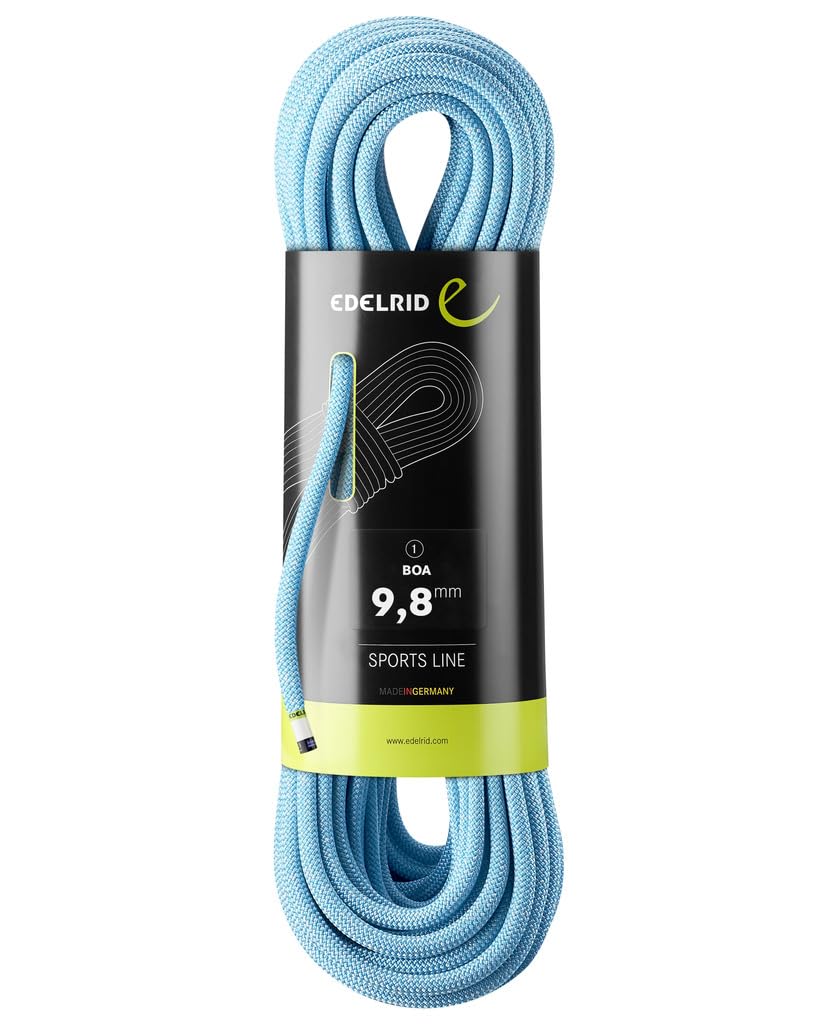
A 9.8 mm single rope in 60 m, with Thermo Shield treatment for smooth feeding through the device.
The Boa sits where most experienced top rope climbers end up: 9.8 mm diameter in a 60 m length. That combination covers a wide range of walls without the bulk of a fat beginner rope or the wristy feel of a very thin one. It is a single rope, which means you climb on it as one strand rather than managing a pair.
Thermo Shield treatment is the feature behind the handling. It is a heat-based treatment the maker applies to give the rope its feel through the device, and the difference shows up every time you lower someone. The narrower diameter is described by the maker as suitable across a wide range of activities, and it packs smaller than the 10.5 mm option — meaning less bulk in your bag on the walk in.
On the environmental side it carries a bluesign product designation, which the maker describes as compliance with the strictest standard for environmental protection, consumer protection, and occupational safety. It is made in Germany by a company with 150 years of rope making behind it. At 60 m it also runs 15 m longer than the 45 m option, so if your gym’s walls are the deciding factor, that extra length is what settles it.
Count on it for: gym and crag top rope sessions on standard-height walls, where 60 m of 9.8 mm rope covers the anchor with length to spare.
Think twice if: you climb very tall routes — step up to the 70 m version instead.
8. EDELRID Boa 9.8mm Dynamic Climbing Rope – Blue 70m
The same 9.8 mm Thermo Shield single rope in a 70 m length for tall walls and long crag routes.
Everything that makes the Boa easy to live with is here — the 9.8 mm diameter, the Thermo Shield treatment, the bluesign designation, and the single rope construction. The one variable is length: 70 m instead of 60 m. That extra reach is the reason to choose it, and the only reason.
Who needs it? Climbers whose regular walls run long, or who want one rope that handles tall crags without pairing it with a second length. The maker lists rope lengths from 20 meters up to 75 meters as the modern range, so 70 m puts you near the top of that spread. The narrower diameter also packs down reasonably well for the length.
The honest trade is bulk and handling on shorter routes. More rope in the system means more to manage at the anchor on a gym wall, and more to carry in. If your climbing is mostly indoor top rope on standard walls, the 60 m version covers it with less to haul. Choose the 70 m only if the walls in your life actually need it.
Who it is built for: climbers with tall walls or long crag routes who want the Boa’s smooth 9.8 mm handling in a length that reaches.
The honest limit: on short gym walls it is more rope than you need, and more to carry in and manage at the anchor.
Buy this instead of the 60 m version if: your regular routes need the extra length and you’d rather carry one rope that covers everything.
Stick with the 60 m if: your walls are standard height and you want less rope to manage.
Know the Specs
Rope Diameter and Device Range
Rope diameter, measured in millimetres, is the number that decides whether a belay device grips the rope cleanly. Every assisted-braking device lists a range it is built for — the Petzl Grigri runs 8.5 to 11 mm, the Edelrid GigaJul runs 7.1 to 10 mm, and the Jul² Fuse runs 8.9 to 11.0 mm. Pair a rope that sits inside that span and the device behaves as designed. Pair one outside it and the friction and lowering feel change. Always check both numbers before you buy a device and a rope together.
Rope Length and Wall Height
Rope length in metres decides which walls you can climb. A 45 m rope suits shorter walls; 60 m and 70 m cover standard and tall crags respectively. The maker of the 10.5 mm rope notes that modern climbing ropes often run from 20 meters to 75 meters, which gives you the scale to judge against. Measure your gym’s wall height and the approach to your local crag before choosing a length, because a rope that is too short simply can’t be used on a tall wall.
Assisted Braking Versus Standard Belay
Assisted braking uses a cam that pivots and pinches the rope when a climber falls or weights it, which reduces the hand strength you need to hold a hanging climber. Standard belay devices rely on your grip and a friction path alone. The GigaJul offers both modes in one body, while the Grigri and Jul² Fuse are assisted-braking designs. Neither approach is wrong — they suit different belaying habits, and the right pick depends on how you climb.
UIAA Certification and Safety Labels
A UIAA Safety Label on a rope indicates that the equipment complies with UIAA standards, which is a third-party check rather than a manufacturer claim. The 10.5 mm rope carries one under CHN 19-5205 and lists a breaking strength of 25 KN. Look for a visible label on any rope you buy, because it tells you the equipment has been tested against a published standard rather than just described as strong.
Common Questions
Will a 10.5 mm rope work in a Petzl Grigri?
Is an assisted-braking device required for top rope climbing?
What is the difference between the Edelrid GigaJul and the Petzl Grigri?
How long a rope do I need for top rope climbing?
Does a full body harness work for regular gym top rope climbing?
What does the UIAA Safety Label on a climbing rope mean?
How do I know which harness size to order?
Are the two Edelrid Boa ropes the same rope in different lengths?
Is a thicker rope better for learning to belay?
Do the straps on a full body harness need adjusting every session?
The Bottom Line
One piece of gear decides how safe a top rope session feels, and the PETZL GRIGRI is the pick. It is a cam-assisted belay device (a metal cam that grips the rope for you) covering 8.5 to 11 mm ropes at 175 g, which is why it sits at the top of this list.
Pair it with a rope that matches your walls: the 10.5 mm UIAA Dynamic Rope if you are learning on shorter walls, or the Edelrid Boa 60 m if your gym runs standard height. If you are still borrowing a rental harness, the Black Diamond Momentum package gets you a comfortable setup in one order.
One last thing worth knowing: the belay device is where your money does the most work in a top rope setup. Get that right first, then build the rope and harness around it, because a well-chosen device keeps its value across every rope and wall you climb on.
How we choose
We do not accept paid placement. Every pick is matched to a real buyer and a real use-case; we do not hands-on test units.
Sources
Specifications: manufacturer listings and product documentation. Review insights: verified customer reviews, as of November 2026. Pricing: not shown on this page (it changes often); check the current price via the retailer link.
As an Amazon Associate, Tactical Gear Guy earns from qualifying purchases. This does not affect which products we feature.