Specs are compiled from manufacturer listings and verified buyer reviews and can change over time — please confirm the key details on the product page before buying.
Here is the short answer before you scroll: for most kitchens, the right refrigerator holds temperature steadily, runs quietly, and never needs its freezer wall chipped free of ice. The Kenmore 18.1 cu. ft. top-mount hits all three, and it carries the strongest track record of the group. If a bottom freezer or a French door layout is what you actually want, the other picks below cover those shapes — but you will trade some reliability comfort for the layout.
This guide is built by comparing the manufacturers’ published specifications and the patterns across verified customer reviews, so you get each pick’s real strengths and trade-offs instead of marketing spin.
Below you will find the layouts, capacities, and defrost systems that actually matter at this level, plus the honest catch on each one. Every pick here lands inside the top rated refrigerators under $1000.
Top Picks
How To Choose The Best Top Rated Refrigerators Under $1000
A full-size fridge is a ten-year purchase you commit to in a single afternoon. Get the layout and the defrost system wrong and you will live with that choice every single day. Get the layout and defrost system right and the fridge fades into the background of your kitchen.
Match the layout to your kitchen, not to a photo
A top freezer puts the frozen food at eye level and gives you the most fridge space for the same footprint. A bottom freezer moves the drawer down low, so you bend for frozen pizza but reach fresh food standing up. A French door splits the top into two swinging doors with a wide drawer below — easy access, and more moving parts. Think about who reaches into the freezer most before you decide.
The defrost system is the hidden chore
Frost-free auto-defrost runs a small cycle that keeps ice from building up, so you never chip at the freezer wall. Manual defrost means you unload the freezer and melt the buildup yourself. On the sealed-in price band this guide covers, that difference shows up fast — frost builds along the back wall and eats usable space.
Measure the doorway before you fall for the fridge
Width and door swing are the two measurements that decide whether the fridge makes it through your doorway and past your counters. A 30-inch wide body slides into most apartment and small-kitchen slots, but the doors still need room to open. A reversible door lets you flip the hinge to the side that has clearance. Check both before you commit.
Side-by-Side Comparison
| Model | Best For | Capacity | Freezer Capacity | Defrost | Amazon |
|---|---|---|---|---|---|
| BLACK+DECKER BR1000HW 10 Cu. Ft.★ Best Overall | Small homes and apartments | 10 cubic feet | 2.8 cubic feet | Frost Free | Amazon |
| Kenmore 18.1 cu. ft. Top Mount | Most kitchens | 18.1 cubic feet | 4.77 cubic feet | Automatic | Amazon |
| Hamilton Beach 9.2 cu. ft. Bottom Mount | Dorms, offices, small kitchens | 9.2 cubic feet | 2.8 cubic feet | Manual | Amazon |
| Avanti 17.5 Cu.Ft. French Door | French door layout on a budget | 17.5 cubic feet | 5.1 cubic feet | Automatic | Amazon |
Detailed Reviews
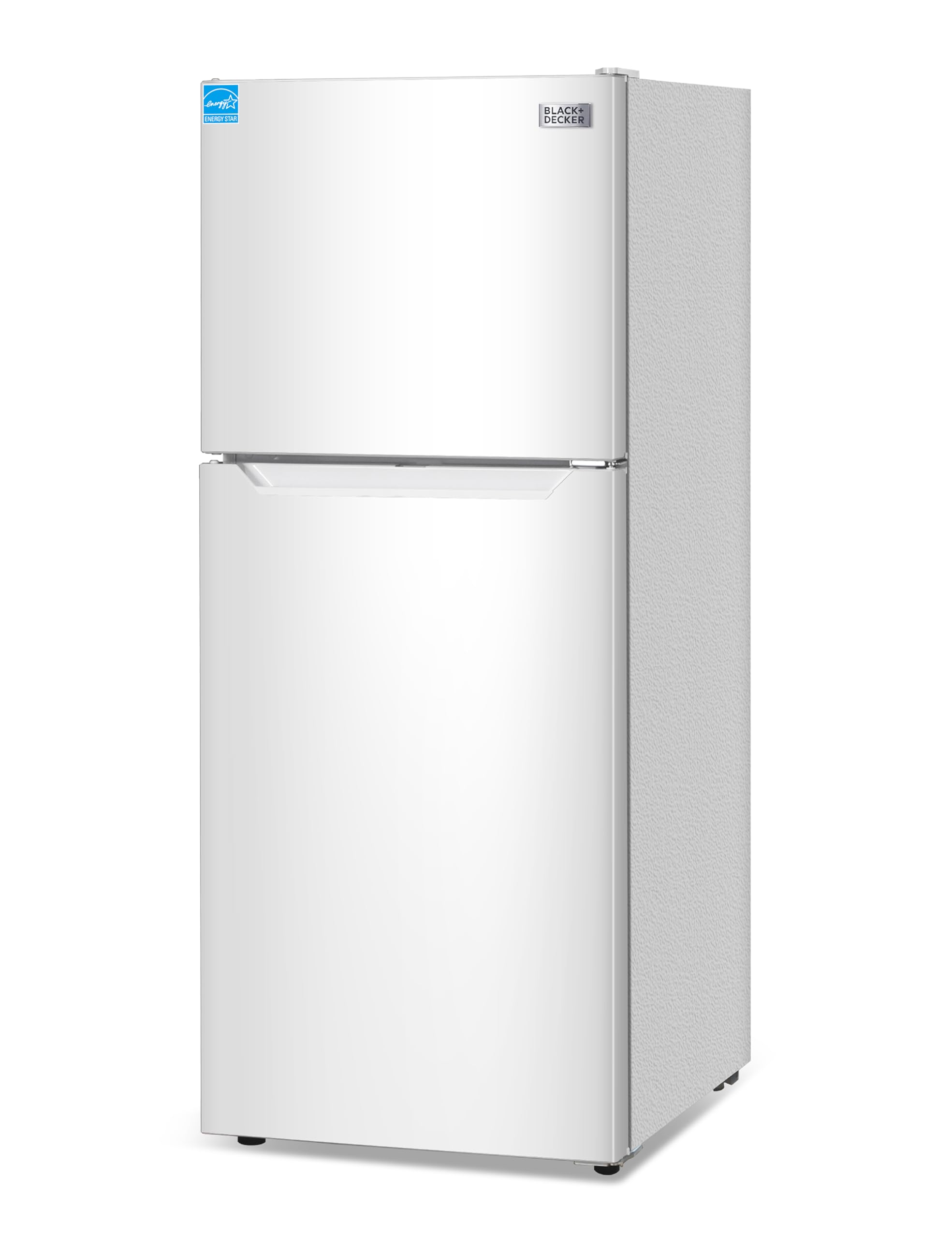
1. BLACK+DECKER BR1000HW Refrigerator
Ten cubic feet of frost-free cooling built for apartment kitchens and starter homes.
If your kitchen was designed before anyone owned a big fridge, this is the size that fits. The BLACK+DECKER offers 10 cubic feet total, split so you get 2.8 cubic feet of freezer on top and the rest as fresh food below. It is a full-size unit, not a mini, but it slips into the slot a compact kitchen actually leaves you.
The moving part that matters most here: it is frost-free with auto-defrost. Ice build-up never gets a chance to eat your freezer shelf, which is the exact chore that drags down the Hamilton Beach down the page. It also runs at 297 kilowatt hours per year — the lowest annual draw on this list — and carries Energy Star certification. The top freezer holds one removable wire shelf, and the door flips to either side to fit your counter run.
Honest note before you buy: quality and reliability feedback here runs mixed, with the split landing roughly even. Some owners love it, some describe a rough go of it. That is worth knowing on a fridge rated 3.5+ stars across 20+ ratings — treat the inspection window seriously, and buy where returns are easy.
What lands well: frost-free auto-defrost, the lowest annual energy draw on the list, and a 2.8 cu. ft. freezer with a removable wire shelf that clears space for a turkey or a sheet pan.
The trade to weigh: quality and reliability feedback is genuinely mixed, so the fridge you unbox carries more risk than the Kenmore above — but the adjustable temperature control lets you dial in both compartments independently.
Reach for this if: floor space is tight and you would rather not defrost a freezer by hand.
Look elsewhere if: you want a long-term set-and-forget appliance and a bigger capacity margin.
2. Kenmore 18.1 cu. ft. 30″ Wide Top Mount Refrigerator – White
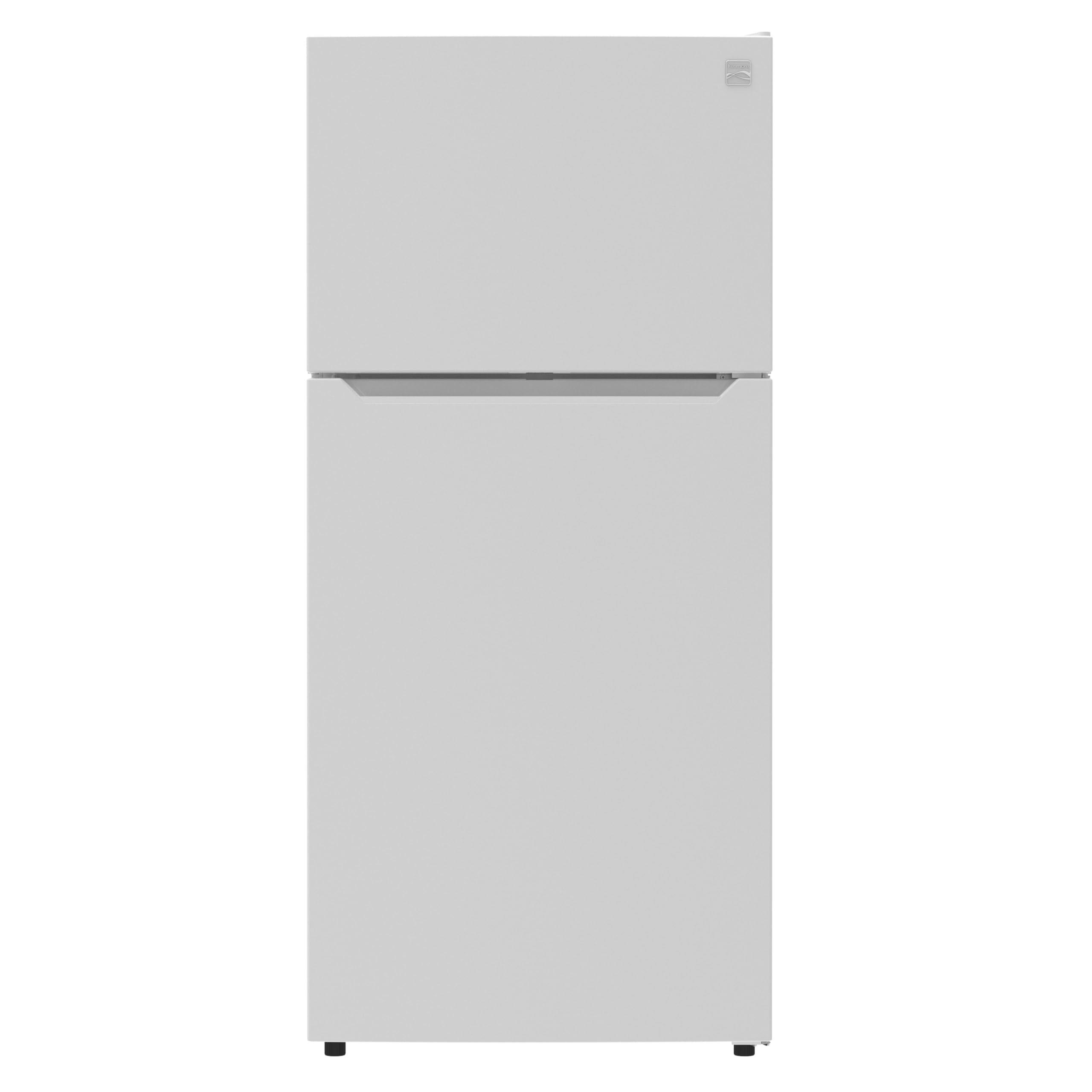
The fridge that quietly holds a full grocery run without crowding a small kitchen.
Eighteen cubic feet is the number that earns this the top spot. The Kenmore packs 18.1 cubic feet of standard-depth storage into a body just 30 inches wide, so a party tray and a week of produce can share the same shelves in a kitchen that was never built for a big appliance. That is nearly double the capacity of the Hamilton Beach below, which tops out at 9.2 cubic feet.
What wins people over is how reliably it just runs. It uses an inverter compressor — a motor that ramps gently up and down instead of kicking on hard — and owners describe a fridge they genuinely cannot hear working. The interior backs that up: 4 clear refrigerator door bins plus 1 gallon-sized bin, 2 full-width freezer door bins, and 2 humidity-controlled crispers that keep greens from wilting on day three. The freezer alone gives you 4.77 cubic feet, against the 2.8 cubic feet in the BLACK+DECKER.
The catch is the thermostat. A chunk of the temperature feedback swings both ways — some owners find the freezer spot on, others say it never gets properly cold. It is the one mixed signal on an otherwise well-loved machine, and worth listening for in the returns window. It also sips power at 367 kilowatt hours per year and carries a 5 Star BEE rating, so daily running costs stay modest.
Where it earns its place
- 18.1 cu. ft. inside a 30-inch-wide body — big storage, small footprint
- Frost-free automatic defrost means no ice-scraping weekends
- Reversible door flips to whichever side has swing room
- 4.77 cu. ft. freezer with 2 full-width door bins for organized frozen food
What to keep in mind
- Temperature control draws mixed reports — some find the freezer runs warm
- Matte white finish shows scuffs more than stainless
Best for: anyone with a 30-inch slot who wants maximum food space and a freezer that stays frost-free.
Think twice if: you need the freezer at chest height — this one puts it up top, not down low.
3. Avanti French Door Refrigerator 17.5 Cu.Ft.
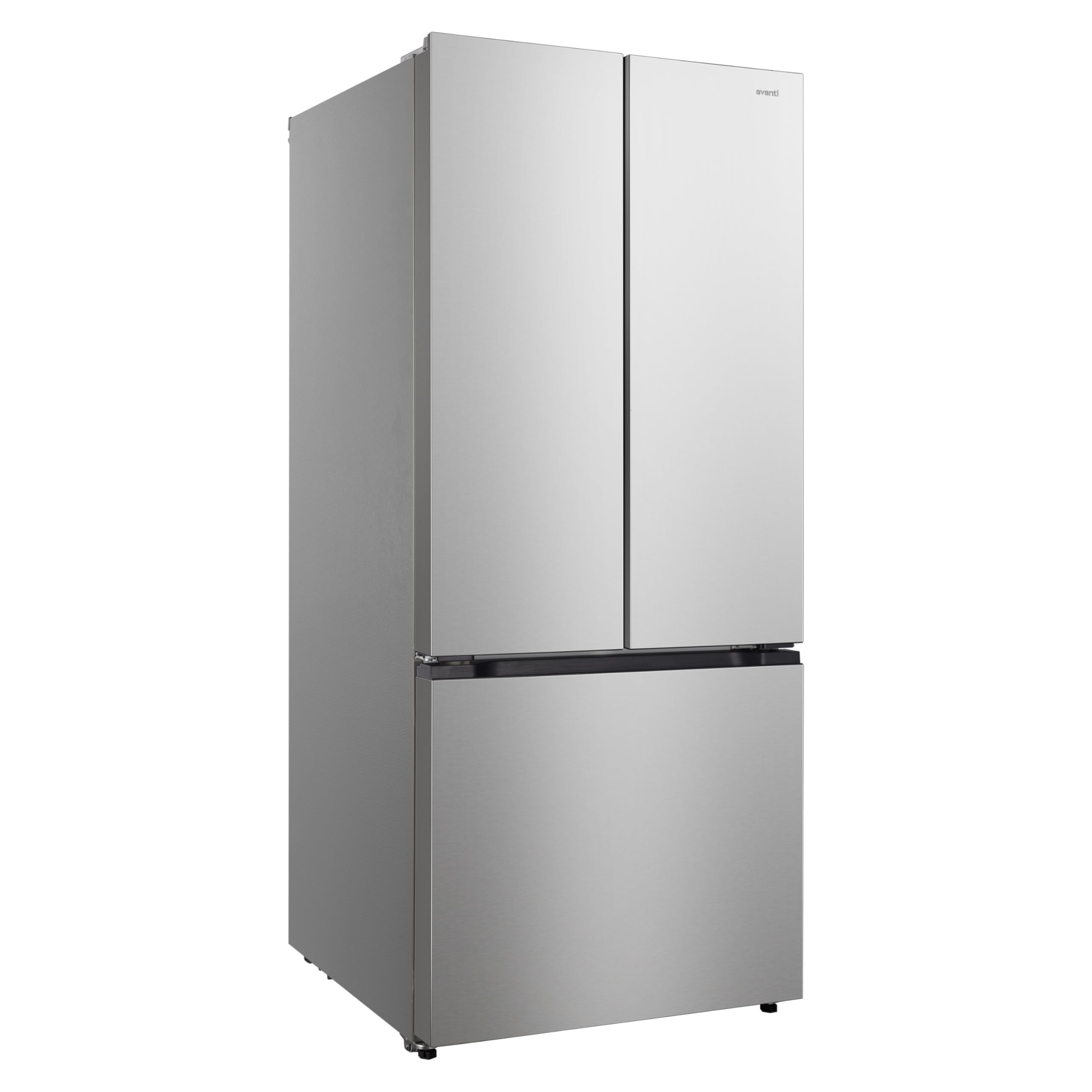
French doors and a wide bottom drawer, without stepping off the deep end on price.
Want the look of a French door but the slot is only 30 inches? This is one of the few that fits. The Avanti brings 17.5 cubic feet of space into that narrow body, split between fresh food above and a 5.1 cubic foot bottom freezer drawer — the largest freezer here, ahead of the Kenmore’s 4.77 cubic feet.
Daily access is the reason to pick it. The two French doors swing open to show three adjustable, removable glass shelves, so a sheet cake or a tall pitcher slides in without rearranging the fridge. Two clear-view crisper drawers keep produce separated. Frost-free automatic defrost handles the ice, and it is ice-maker ready, meaning a compatible automatic ice maker can be installed later if you want one.
Here is the thing to sit with: there is no customer feedback published for this model yet, and it is the newest, least-reviewed pick of the four. You would be buying into the layout and the stainless finish on specs, not on a track record. At 327 kilowatt hours per year it is efficient, and Energy Star certified, but the door-bin count of 6 is the only shelf detail the listing confirms beyond the glass shelves.
Why the layout wins
- French door design puts fresh food at eye level
- 5.1 cu. ft. bottom freezer drawer — the biggest freezer in this group
- Frost-free, so no manual defrost ritual
- Stainless steel doors and 6 door bins for daily grab items
The honest catch
- Least review history here — you lean on the specs, not owner experience
- Ice maker is not included; it is only ready for one
Go here if: the French door look and a big bottom freezer are worth trusting a newer model with a short track record.
Hold off if: you want settled reliability evidence before you spend on a major appliance.
4. Hamilton Beach 9.2 cu. ft Fridge
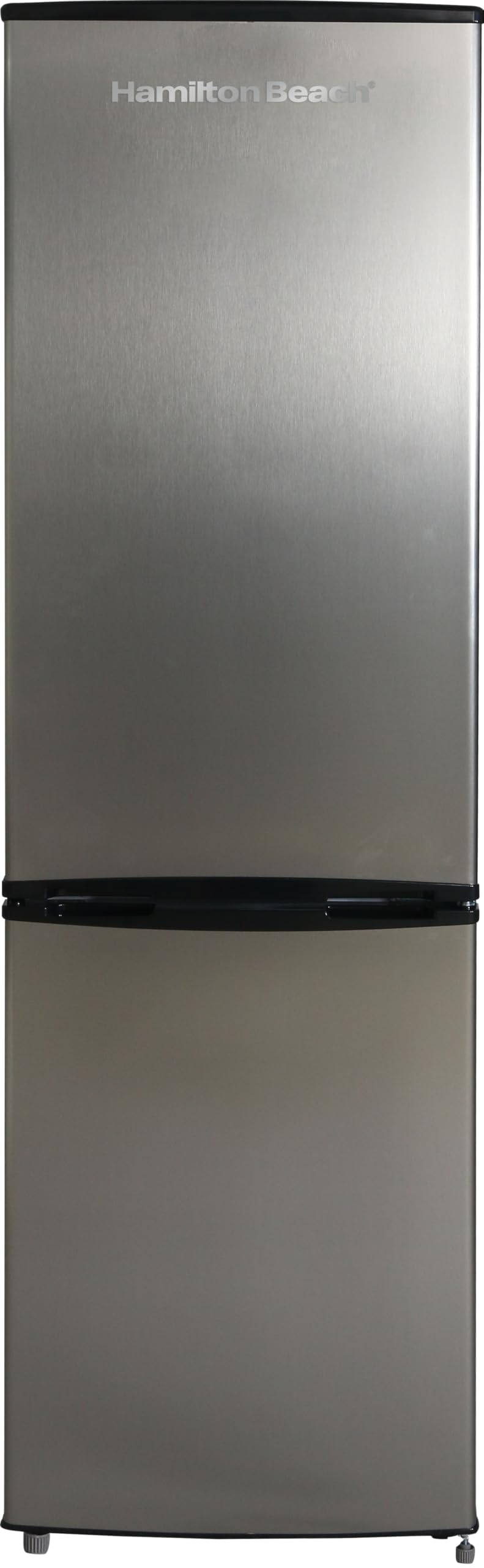
A bottom freezer that keeps fresh food at standing height in a small footprint.
The appeal is simple: reach your milk without crouching. The Hamilton Beach flips the layout so the 9.2 cubic feet of fridge space sits up top where you stand, and the freezer drops to the bottom in three differently sized sections. Dual-tone stainless helps it look better than the size suggests, and owners clearly agree — appearance and size are the two things that land best here.
Three removable glass shelves make cleaning a wipe-down instead of a project, and the crystal crisper with a tempered-glass cover keeps produce fresh. The freezer gives you 2.8 cubic feet, matching the BLACK+DECKER. The big contrast with the Kenmore is on the door: this fridge has a single door shelf rated for 355ml cans, while the Avanti above gives you 6 door bins.
The trade is frost. This is a manual-defrost freezer, and owners describe ice building up along the back wall and along the interior walls — which means pulling everything out every couple of months to melt it. Cooling performance also splits both ways; some find it plenty cold, others say it struggles. It draws 400 kwh per year, the highest on this list, and there is no BEE star rating on the spec sheet.
The honest read: the bottom-freezer layout, dual-tone stainless look, and glass shelves make it a smart fit for a dorm, office, or small rental kitchen — and it does look better than its size would suggest.
The one chore to accept: manual defrost is real work, and ice build-up is the most consistent complaint in the feedback. If you would rather never scrape a freezer wall, pay the layout premium for a frost-free model instead.
Pick this if: you want a bottom freezer and a stainless look at an entry-level price and do not mind the defrost routine.
Skip the defrost hassle if: frost-free operation tops your list — the Kenmore or BLACK+DECKER save you that chore.
Know the Specs
Capacity and Freezer Capacity
Capacity in cubic feet is the total measured volume inside, fridge plus freezer. What matters is how that volume divides between the fresh-food compartment and the freezer. A fridge with 18.1 cubic feet total gives you far more shelf room than 10 cubic feet, but you also lose the freezer when the crisper drawer eats space. Check the freezer figure as a separate number — 4.77 cubic feet of frozen space holds far more than 2.8.
Defrost System: Automatic vs Manual
Automatic defrost runs a small heating cycle so ice never builds up, and you never touch a scraper. Manual defrost means ice forms on the freezer walls and you have to empty and melt it periodically. In a hot kitchen, manual defrost costs you a weekend chore every couple of months — with the trade that fewer moving parts can mean a simpler machine.
Annual Energy Consumption
Measured in kilowatt hours per year, this is roughly what the fridge pulls from the wall in twelve months of normal use. A lower kilowatt-hour figure means a smaller bill each month. The picks here range from 297 kwh per year to 400 kwh per year, a gap that adds up across a decade of running. An Energy Star label and a BEE star rating both signal efficiency, but they do not run the same test.
Door Bins and Shelves
Door shelf count is how many racks hang on the door — more bins mean more room for condiments, jugs, and cans, but each one narrows your shelf depth a little. Adjustable glass shelves let you rearrange for tall items. More door bins and full-width glass shelves let a gallon jug and a party tray share the same fridge without a reshuffle.
Common Questions
Will a 30-inch wide fridge fit where my old one did?
Is frost-free the same as automatic defrost?
How much food does 10 cubic feet actually hold?
Do I have to defrost a manual freezer, and how often?
Will a French door fridge fit a 30-inch kitchen slot?
Does a higher refrigerator capacity mean a higher electric bill?
Can I add an ice maker to a fridge that did not come with one?
Is a bottom freezer harder to live with day to day?
What does Energy Star certification actually tell me?
The Bottom Line
For most kitchens, the top rated refrigerators under $1000 winner is the Kenmore 18.1 cu. ft. Top Mount because it pairs the biggest usable capacity in a 30-inch body with frost-free defrost and a strong reliability record — 4.0+ stars across 250+ ratings backs that up. If you want the French door look and a wide bottom freezer, the Avanti delivers it in the same 30-inch width, with the caveat that it has less owner history behind it. For a tight apartment slot, the BLACK+DECKER BR1000HW slides in frost-free at the lowest annual energy draw here. And if a bottom freezer at an entry-level price is the goal and you can live with manual defrost, the Hamilton Beach is the one that fits.
How we choose
We do not accept paid placement. Every pick is matched to a real buyer and a real use-case; we do not hands-on test units.
Sources
Specifications: manufacturer listings and product documentation. Review insights: verified customer reviews, as of November 2026. Pricing: not shown on this page (it changes often); check the current price via the retailer link.
As an Amazon Associate, Tactical Gear Guy earns from qualifying purchases. This does not affect which products we feature.