Specs are compiled from manufacturer listings and verified buyer reviews and can change over time — please confirm the key details on the product page before buying.
Cross country is won and lost on the corners — wet grass, loose dirt, a sharp turn into a muddy straight — and the shoe on your foot decides whether you drive through it or slide. This guide covers the raceday shoes that actually hold a line on uneven ground, with the spike-plate and lug details spelled out in plain terms so you can pick a pair in one sitting.
This guide is built by comparing the manufacturers’ published specifications and the patterns across verified customer reviews, so you get each pick’s real strengths and trade-offs instead of marketing spin.
You will see which shoes run narrow, which run small, and which spike setups suit soft courses versus firm ones. Here is a straight, no-nonsense read on the top rated cross country shoes so you can line up on the start line with the right pair.
Top Picks
How To Choose Top Rated Cross Country Shoes
The first fork in the road is spikes or no spikes. A spiked shoe uses a hard plastic plate under the forefoot with metal pins screwed in — that plate spreads the pins so they bite into grass and dirt instead of punching straight through. A spikeless shoe uses molded rubber lugs, which stay legal on courses that ban metal and keep working on pavement or gravel warm-ups. Pick the one your league and course allow, then worry about fit.
Match the outsole to the course you actually run
Soft, rain-soaked grass wants longer pins and more of them. Hard-packed dirt and dry turf want a shorter pin or a lug pattern, because long pins skitter on firm ground. If your season swings between surfaces, a spikeless lug shoe is the safer single purchase — it never needs pins swapped and it handles the warm-up walk to the line without grinding metal on asphalt.
Weight matters, but fit costs you more
Every shoe here is built light, and the difference of an ounce or two is felt over a full race. Fit failure costs more than weight. Cross country uppers are cut close and low, and several models in this category run small or narrow. Read the fit notes on each pick below before you lock in a size, and if you sit between sizes on a narrow-cut shoe, size up.
Check the spike count when the box arrives
Spiked shoes ship with pins and a wrench, and the number delivered can fall short of the number of plate holes. Count the pins and thread each one in before your first race. Do not wait for raceday to find out a hole is empty — a missing pin changes how the plate grips on a turn.
Side-by-Side Comparison
| Model | Best For | Outsole Type | Spike Plate | Category | Amazon |
|---|---|---|---|---|---|
| Brooks Draft XC★ Best Overall | Distance racing and team pride | Durable rubber lugs | None (spikeless) | Shoe | Amazon |
| Saucony Kilkenny XC9 (Men’s)Most Proven Racer | Firm-to-mixed course racers | Spiked | Yes | Shoe | Amazon |
| Saucony Havok XC3 | Aggressive front-running | Spiked | 6-pin plate | Shoe | Amazon |
| New Balance FuelCell XC7 V5 | Lightweight performance on any course | Rubber outsole | None specified | Shoe | Amazon |
| ASICS Resurgence XC | Training days and comfort | Spiked | Yes | Shoe | Amazon |
Detailed Reviews
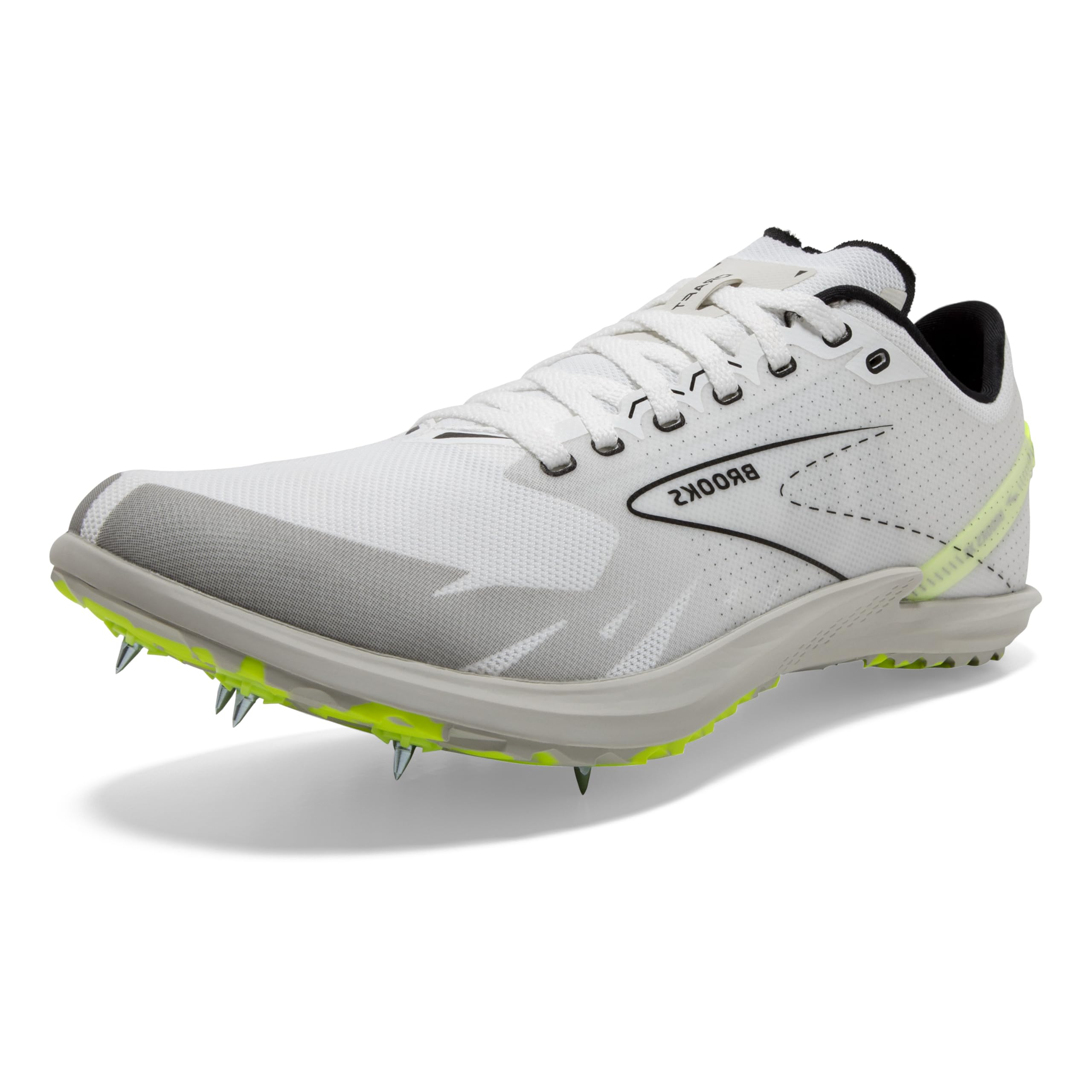
1. Brooks Draft XC Running Shoe
Our pick — 4.5+★ from 200+ verified ratings; the strongest balance of quality and price.
A lugged, spikeless racer that keeps your feet planted when the course turns to soup.
The Draft XC is the one pick here built for distance rather than a short, sharp kick. Brooks calls the cushioning BioMoGo DNA — a foam layer underfoot that stays springy rather than going flat over a full race — and it is meant to feel responsive from the start line to the finishers chute. Where a spiked shoe shines over two miles of grass and then fights you on the warm-up walk, this one runs on lugs and never needs a pin swapped. If your league bans metal, it is also simply the shoe you buy.
Traction is the headline. Durable outsole lugs are molded into the rubber so they bite on dirt and wet grass, and a wide midfoot gives you a broader platform to land on. That wider midfoot is the real difference on uneven terrain — a narrow base rolls, a wide base lets you catch yourself and keep moving. There is also a customizable heel piece you can write on: goal times, a mascot, a team cheer. It is a small thing, but for middle and high school runners it is the detail that makes the shoe feel like yours.
What wins people over is build quality: this is the crowd favorite of the group at 4.5+ stars across 200+ ratings, and the spikeless design stays useful through the whole season rather than one big meet. The catch is fit. Plenty of runners find it true to size and plenty find it runs small, so treat this one as a size-up candidate if you are borderline. A handful also note the outsole lugs can wear down with heavy use.
Why runners come back to it
- Durable outsole lugs grip wet grass and loose dirt without metal pins
- Wide midfoot gives a stable platform on uneven ground
- Customizable heel piece you can write goal times or a team cheer on
- BioMoGo DNA cushioning keeps a responsive feel over a distance race
Where it asks more of you
- Fit splits both ways — several runners find it runs small
- Lugs wear with heavy, repeated use rather than holding like new
- No spike plate, so it is not the pick for a course that wants metal bite
Made for: the distance runner who wants one shoe that lasts the whole season and stays legal on any course.
Try something else if: your league runs metal pins and you want the sharper bite of a plate.
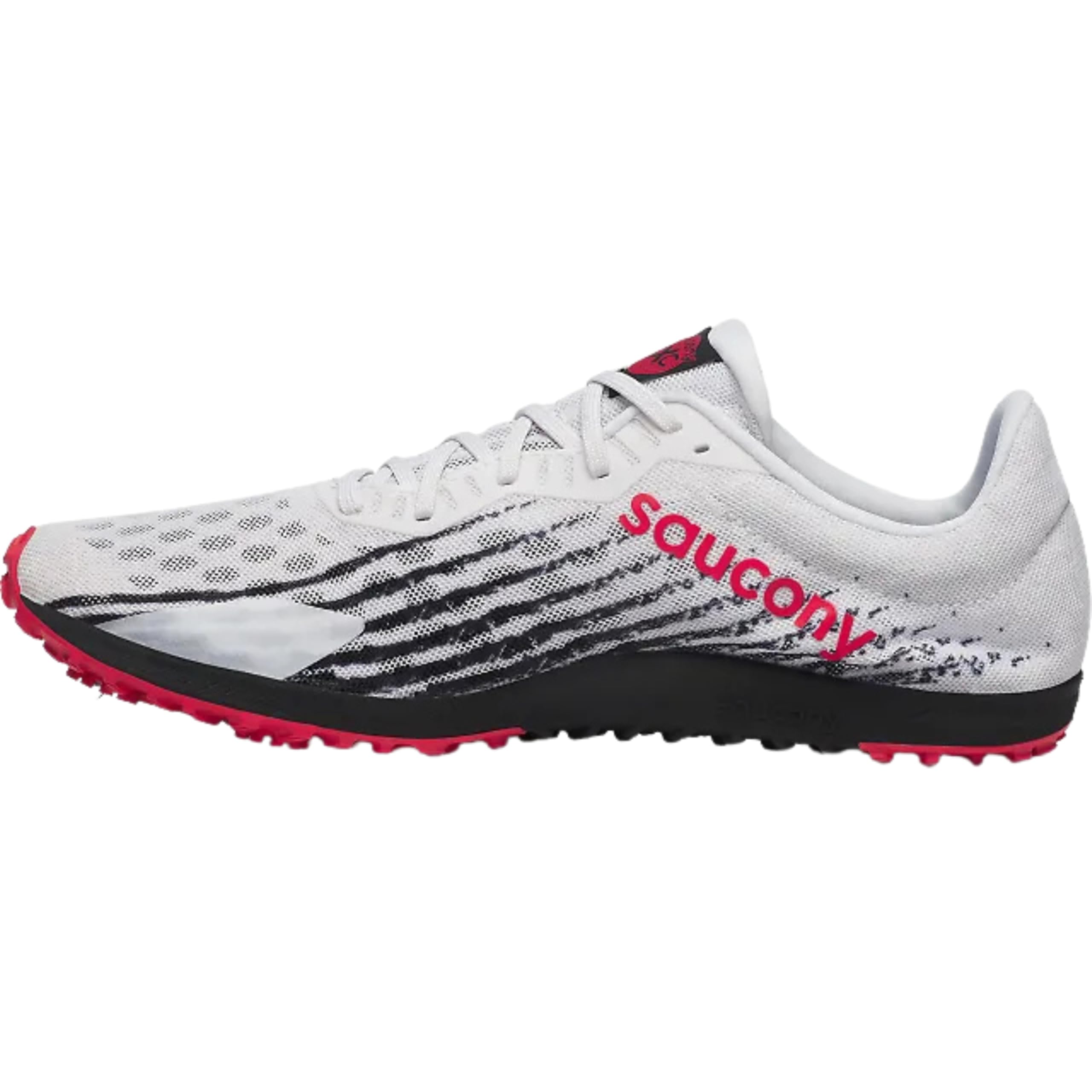
2. Saucony Men’s Kilkenny XC9 Spike Sneaker
The seasoned racer that runners migrate to after one season in something else.
This one has the widest following of the spiked shoes here because it works on both dirt and track. Owners run it on a dirt course and then take it to the track without rethinking their shoe choice. The pinned plate grips where it needs to, and the shoe keeps its light feel through the whole race — nothing on it is adding weight for no reason.
The build is what earns trust over a full season. Owners describe the upper and outsole holding up over a full season of training and racing, and they call it a good value for a racer, which is the closest a spike gets to an honest compliment. Owners repeatedly call it a clean, purpose-built racing shoe rather than a trainer you happen to race in.
Fit is the conversation that never settles. Half the field says true to size, the other half says it runs big, so if you are between sizes on this one, consider a half size down. The plate and pins are also worth checking on arrival — the pinned setup can arrive with fewer pins than plate holes, so count them before your first race. Reach for this if you want a proven spiked racer for mixed dirt and track; look at the Draft XC above if you need a legal spikeless option.
The racer’s read: light over the whole race, grips on dirt and track, and holds together across a full season of racing.
Plan for this: sizing runs big for a chunk of buyers and the pin count needs a check from the start — two small admin steps before raceday.
The right call for: a racer who wants one proven spiked shoe for a season that swings between dirt and track.
Pass it by if: you need a spikeless shoe or you sit between sizes and want a guaranteed fit.
3. Saucony Men’s Havok XC3 Spike Sneaker

Six pins, a hard plate, and a shoe that wants you to push the pace from the gun.
Six pins in the plate is the number that matters here — enough bite that the shoe digs in and lets you drive off the front foot on a soft turn. Saucony built this as its most aggressive cross-country spike, and every part of the design is pointed at one job: take off with power and push the pace straight through to the finish line. If you race a short, hard course and run it front to back, this is the shoe built for that.
Owners come away happy with the build quality and the fit — this is one of the picks here people describe as true to size, so you can order your normal size with more confidence than the narrow-cut options. They also point to the durability and the value as reasons the shoe keeps earning its place. Owners also call out the color, which matters when the team kit has to match.
One practical check before you line up: the shoe ships with pins and a wrench, and the reported pin count can land short of a full set, so confirm you have all of them threaded before the gun goes off. It is a five-minute job, but it changes how the six-pin plate grips on a corner. Want the sharp bite of a hard plate on a soft course? This is the pair. Want cushioned comfort for training miles? Look at the ASICS Resurgence instead.
Where it wins the race
- 6-pin plate delivers aggressive bite for fast, front-run races
- Fit comes in true to size more reliably than most of the group
- Durability and value both earn repeated mention
Worth a look first
- Shipped pin count can fall short of a full set — verify on arrival
- Built for short, hard efforts, not long distance comfort
Grab these if: your race is short, the course is soft, and you want the hardest bite in the group.
Skip if: you race long distance and want foam underfoot rather than a single aggressive plate.
4. New Balance Unisex Adult FuelCell Xc7 V5 Cross Trainer Shoes
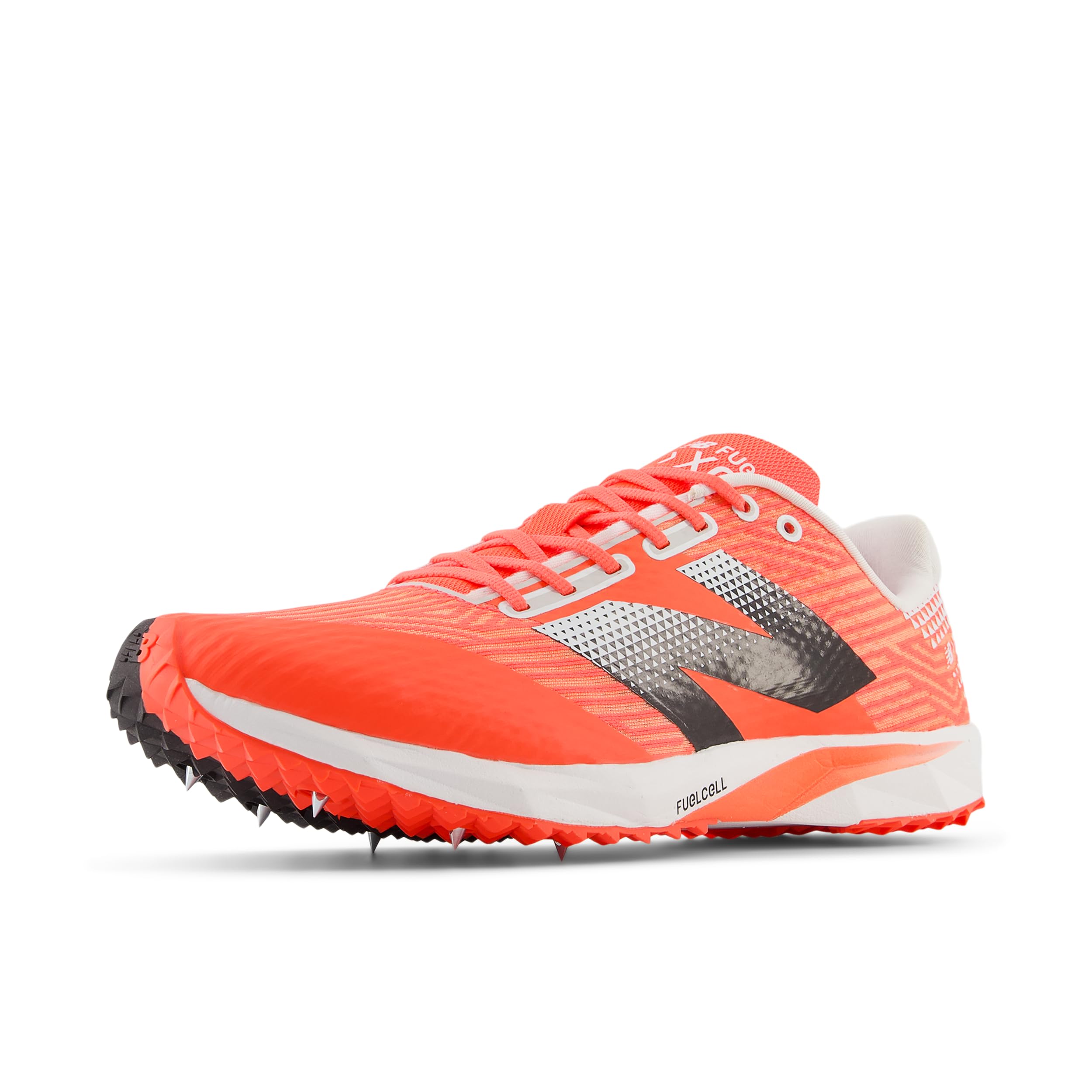
A light racer in loud colors that gets noticed at the start line before the gun.
New Balance built this for cross country athletes who want a light shoe that does not care what surface is under it — the shoe is designed for light performance on any cross country course. That makes it the easy pick if you are not sure what your league runs yet and you want one pair that covers dirt, grass, and turf without a special setup.
Comfort and color are what the reviews keep returning to. Owners call the shoe comfortable and light on the foot, and the bright colorways come up repeatedly — a real consideration when the team kit is loud and you want the shoe to match rather than clash. The upper does its job of keeping weight down, which is what you want in a race-day shoe on a course that rolls and pitches underfoot.
The honest trade-off is fit width. Some runners find it fits perfectly, and others note it runs very narrow — so if you have wider feet, this one is a size-up or a pass. There is also disagreement on how long the shoe lasts, which makes it a better pick for raceday than for grinding out daily training miles. For a light race shoe on a mixed course, it does the job at a friendly entry-level tier.
What you get: a light, comfortable cross country shoe with colorways that stand out on the start line.
Worth knowing: the fit runs narrow for a fair share of runners, and durability over long training blocks is the open question.
Best fit for: a runner with a standard-width foot who wants a light, comfortable racer that handles a mixed course.
Look elsewhere if: your feet run wide — this cut will crowd you.
5. ASICS Unisex Adult Resurgence XC Track & Field Shoes
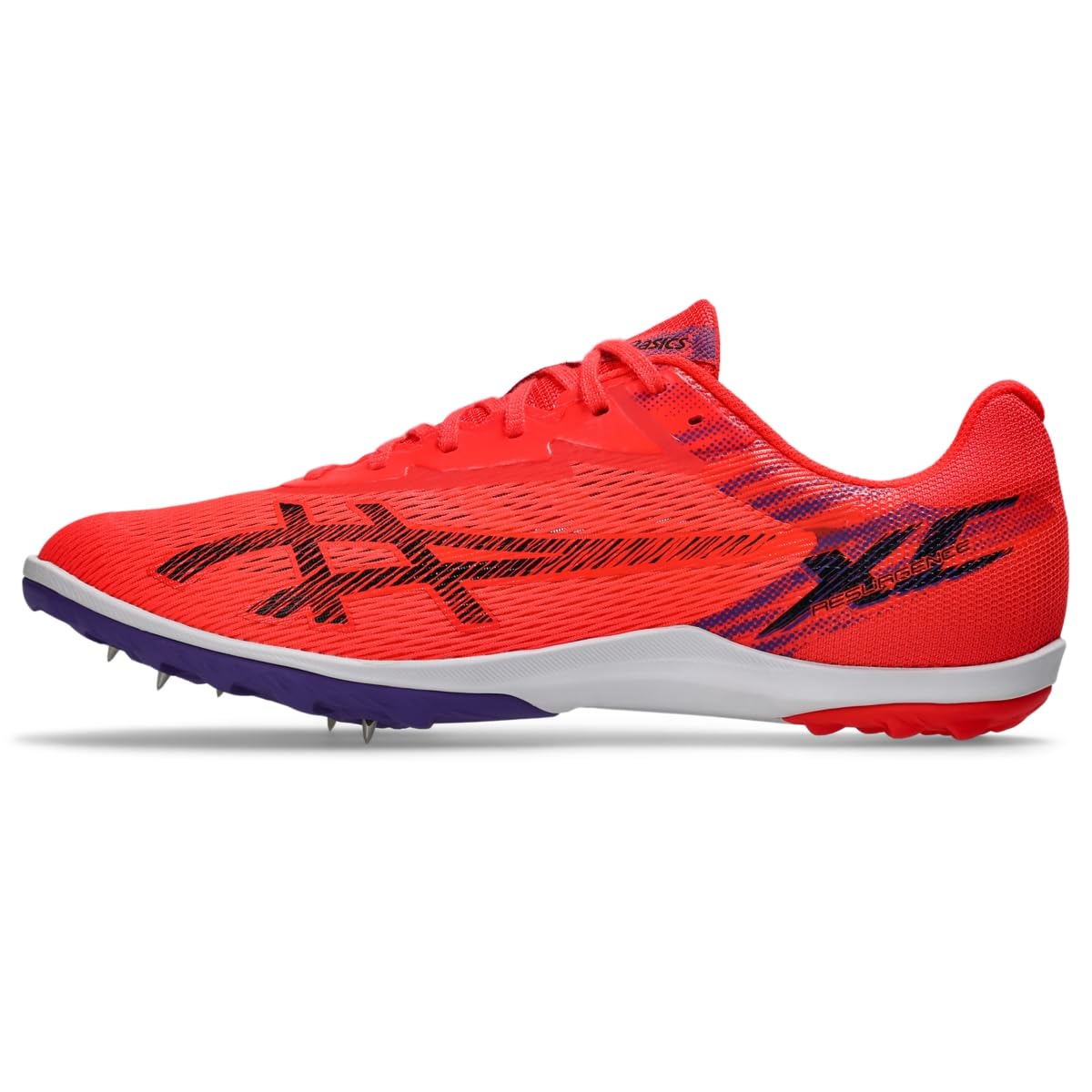
A cross country shoe that puts foam and airflow ahead of a stripped-to-the-bone race plate.
ASICS designed the Resurgence XC to help runners chase new personal bests with more comfort, and the spec sheet shows exactly how. The upper is built for ventilation and stability — air moves through so your feet stay cool while the structure still holds your foot in place on a hard turn. Underneath, a foam midsole softens the landing on each step, which matters on a course with rutted dirt and hard-packed sections where a firmer shoe punishes your legs.
The Resurgence XC is also one of the lighter entries here, and its racing weight keeps it from feeling like a trainer even with the extra foam.
The trade-off is straightforward: this is a comfort-and-breathability build rather than the most aggressive plate in the lineup. If you want the hard bite of a 6-pin plate on a soft course, the Havok above is the sharper tool. If you want to stay cool and cushioned through training and race day, this is the pair that does it. It is also a newer entry with a shorter track record than the Kilkenny, so give the sizing a careful read.
Pick it when: comfort and breathability rank above a stripped-down race plate for you.
Consider a different pick if: you want maximum bite on a soft course, where the Havok XC3 leads on grip.
Know the Specs
Spike Plate vs. Lug Outsole
A spike plate is a stiff plastic layer under the forefoot with threaded holes for metal pins — the plate spreads your weight so the pins bite into grass and dirt without punching through. A lug outsole uses molded rubber teeth in the same area instead. Spiked shoes grip better on wet, soft ground; lug shoes stay legal where metal is banned and work fine on dry, hard courses. Choose based on the rules and the surface you race on most.
What BioMoGo DNA and Foam Midsoles Do
A foam midsole is the cushioned layer between your foot and the outsole — it absorbs the landing and returns some of that energy on the push-off. Brooks uses a foam called BioMoGo DNA in the Draft XC for a springy feel over a race, and ASICS uses a foam midsole in the Resurgence XC for softer, smoother landings. More foam usually means more comfort and slightly more weight; less foam means a firmer, faster feel.
Why the Wide Midfoot Matters
The midfoot is the middle section of the sole under your arch — a wider midfoot spreads the footprint out for more contact with the ground. On uneven terrain, a broader base lets you catch yourself and keep moving; a narrow base rolls. The Draft XC uses a wide midfoot for stable footing on uneven ground, which is the detail you notice most on a rutted dirt corner.
Upper Breathability and Stability
The upper is the fabric that wraps your foot. A breathable upper lets air move so your feet stay cool through a hot race, while stability in the same upper holds the foot in place on a hard turn. The Resurgence XC is built to do both at once. A tight-knit upper usually adds more stability at the cost of airflow, so if your season is warm, breathability is worth weighing.
Common Questions
Are spiked cross country shoes allowed in high school racing?
How do I know if a cross country shoe runs small?
What is a 6-pin spike plate and why does it matter?
Do cross country shoes ship with spikes and a wrench?
Can I use a cross country shoe for road training or a track meet?
Is a lighter cross country shoe always faster?
How much foam is right for a cross country racing shoe?
Do wide feet work in the New Balance FuelCell XC7 V5?
Is a spikeless shoe good enough for a soft, muddy course?
The Bottom Line
For most runners, the top rated cross country shoes winner is the Brooks Draft XC because its durable outsole lugs and wide midfoot keep you stable on the uneven ground where cross country races are actually decided. If you race metal and want the widest following, the Saucony Kilkenny XC9 is the proven spiked racer. And for a short, hard course that wants maximum bite, the Saucony Havok XC3 with its 6-pin plate is the one to reach for.
How we choose
We do not accept paid placement. Every pick is matched to a real buyer and a real use-case; we do not hands-on test units.
Sources
Specifications: manufacturer listings and product documentation. Review insights: verified customer reviews, as of July 2026. Pricing: not shown on this page (it changes often); check the current price via the retailer link.
As an Amazon Associate, Tactical Gear Guy earns from qualifying purchases. This does not affect which products we feature.