Specs are compiled from manufacturer listings and verified buyer reviews and can change over time — please confirm the key details on the product page before buying.
You want a heart rate number you can trust mid-run, not a gadget that spikes to 180 while you stand still. That is the whole game with heart rate watches: the sensor has to keep reading your pulse through sweat, cold hands, and arm swing. Every pick below puts a real optical heart rate sensor (a light-based sensor that reads your pulse through your skin) on the back of the case. What separates them is how often they sample, how the software filters out motion, and how long they run before a charge.
This guide is built by comparing the manufacturers’ published specifications and the patterns across verified customer reviews, so you get each pick’s real strengths and trade-offs instead of marketing spin.
Some watches here read your pulse every five seconds and others stretch a charge across days, so the right answer depends on whether you train hard or just want a honest daily readout. Here is how to sort the top heart rate watches without getting buried in sensor jargon.
Top Picks
How To Choose The Best Top Heart Rate Watches
Before you buy, know this: a heart rate watch is only as good as the contact between its sensor and your skin. Everything else — the screen, the apps, the strap colour — sits on top of that one physical relationship. Nail the fit and the sampling rate and the readings hold steady through a hard interval. Get them wrong and you will see a flat line or a phantom spike no software can rescue.
Sampling rate and what it means for your training
Sampling rate is how often the watch flashes its green LED (a light that shines into your skin) and reads the reflected light. The Apple Watch Series 12 takes background heart rate readings every five seconds and measures HRV (heart rate variability — the tiny variations in the gap between beats that hint at stress and recovery) as often as every five minutes. That frequent sampling catches a sprint surge that a slower sensor smooths over, so your interval splits stay honest. If you train intervals or care about recovery, check sampling rate first.
Sensor contact: the fit problem nobody mentions
Optical sensors need a snug, flat patch of skin. Too loose and outside light leaks in; too tight and blood flow gets pinched. A silicone band helps because it grips without sliding, and a 22 mm band is a common width that keeps the case steady on most wrists. If the watch sits over a bony wrist bone or a tattoo, the reading gets noisier — that is a fit issue, not a broken watch.
Battery life versus how much you want tracked
Continuous health tracking drains a battery faster than a watch that only reads on demand. The Amazfit Balance 2 holds 658 milliamp-hours (mAh — the energy stored in the battery) and runs up to 21 days, so you can wear it for three weeks of continuous readings without hunting for a charger. The Garmin Instinct 3 Solar pairs a 300 mAh cell with a solar lens; the brand claims unlimited battery under sunlight. More capacity and smarter power management buy you more continuous readings between charges.
Side-by-Side Comparison
| Model | Best For | Heart Rate Approach | Battery Life | Battery Capacity | Amazon |
|---|---|---|---|---|---|
| Apple Watch Series 12 GPS 46mm★ Best Overall | Most accurate all-day readout | Reads every 5 seconds; HRV every 5 minutes | Up to 24 hours | — | Amazon |
| Fitpolo Smart Watch (2 Bands)Budget Champion | Budget fitness tracking | 24/7 heart rate, SpO2, sleep | Up to 7 days | 350 mAh | Amazon |
| Amazfit Balance 2Longest Battery | Long battery with real GPS | 24/7 heart rate, HRV, SpO2, stress | Up to 21 days | 658 mAh | Amazon |
| Apple Watch SE 3 GPS + Cellular 40mm | iPhone users staying connected | Real-time workout metrics, GPS heart rate | Up to 18 hours | — | Amazon |
| Garmin Instinct 3 Solar 45mm | Rugged outdoor tracking | Wrist heart rate, Pulse Ox, sleep | Up to 28 days | 300 mAh | Amazon |
| Google Pixel Watch 5 (41mm) | Android-first health tracking | Advanced sensors, sleep stages, Pulse detection | Up to 40 hours | — | Amazon |
| Withings Scanwatch 2 38mm | Analog looks with ECG | Continuous heart rate, 30s ECG, AFib detection | Up to 35 days | — | Amazon |
| Garmin Forerunner 570 47mm | Serious runners wanting readiness data | HRV status, training readiness, VO2 max | Up to 11 days | 300 mAh | Amazon |
| Samsung Galaxy Watch Ultra 47mm LTE | Android adventurers off-grid | Heart rate into Energy Score, Running Coach | — | 590 mAh | Amazon |
Detailed Reviews
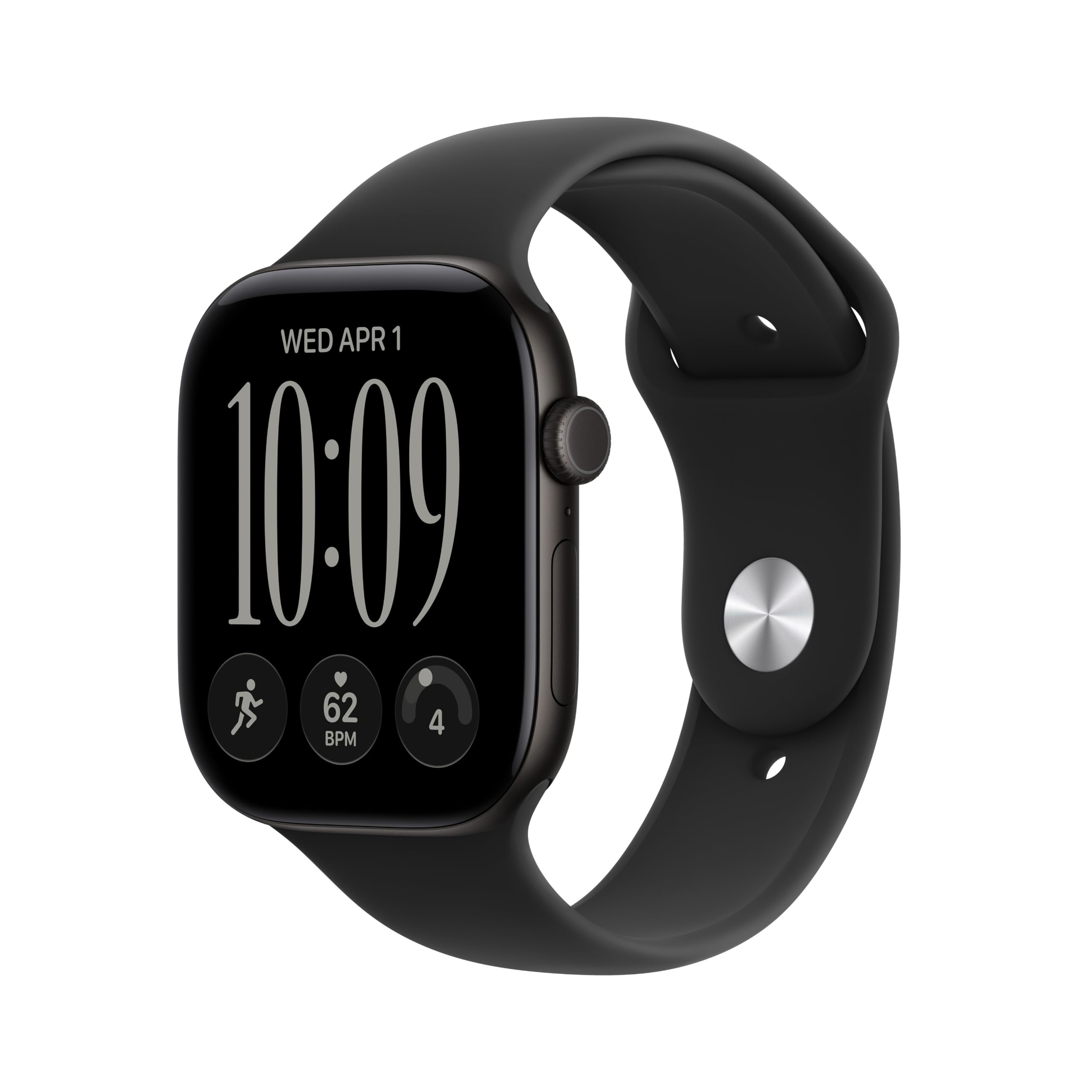
1. Apple Watch Series 12 GPS 46mm Smartwatch
Our pick — 4.5+★ from 500+ verified ratings; the strongest balance of quality and price.
The watch that reads your pulse every five seconds, so a hard interval never slips past it.
The number that decides this pick: background heart rate readings every five seconds. That is a constant pulse log, not a sample here and there, which means your warm-up, your sprint, and your cool-down all land in the data instead of one blurry average. HRV gets measured as often as every five minutes, giving you a stress-and-recovery signal through the day without any manual effort. It also tops this list on owner ratings: 4.5+ stars across 500+ reviews.
The health layer goes past the pulse. The Vitals app pulls together your overnight metrics into one view, there is a daily sleep score, cycle tracking, and blood oxygen readings. Readiness tells you whether to push or back off by weighing recent activity, vitals, and sleep. For training, Pacer, Heart Rate Zones, and Workout Buddy (which leans on Apple Intelligence via your nearby iPhone) keep you in the right effort band from running to strength work.
Battery is the honest catch: up to 24 hours of normal use, which the customer consensus stretches to roughly two days between charges. That is short beside the Garmin Instinct 3 Solar’s 28 days. The compensation is 15 minutes on the charger for up to 12 hours of normal use, so a quick top-up while you shower resets a full day. Safety features cover a hard fall or severe car crash, with automatic emergency-service contact and notifications to your emergency contacts.
Where this one pulls ahead
- Reads background pulse every 5 seconds and HRV every 5 minutes
- Readiness scoring blends recent activity, vitals, and sleep
- Ceramic Shield 2 on the aluminum case, rated tougher than any other smartwatch glass
The honest shortfall
- Up to 24 hours of normal use means a near-daily charge for heavy users
- The GPS-only version needs your iPhone or Wi-Fi for calls and texts
Made for: anyone who wants the most frequent heart rate readings and does not mind charging nightly.
Think twice if: a multi-day battery matters more to you than sampling frequency.
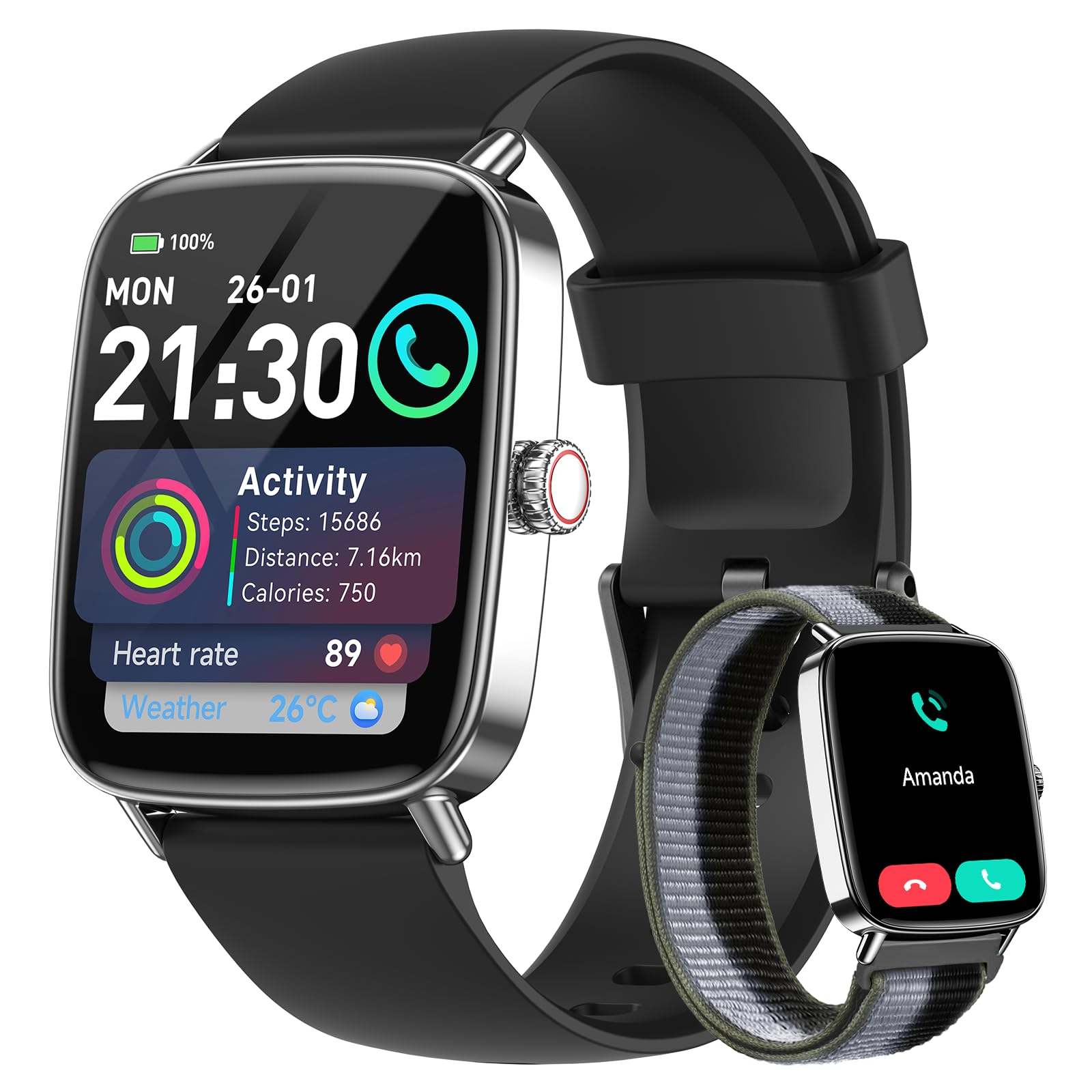
2. Fitpolo Smart Watch (2 Bands), 1.85″ HD Smartwatch
The entry-level readout that covers heart rate, sleep, and SpO2 without asking you to spend a lot.
If your budget is the binding constraint, the Fitpolo gets you a real heart rate sensor in a 1.85-inch HD touchscreen with a 60Hz refresh, so scrolling and glance-checking feel smooth rather than choppy. The pulse tracking runs 24/7 alongside sleep broken into deep, light, and awake stages, plus a stress reading the maker labels non-medical. The 350 milliamp-hour battery returns up to 7 days per charge, and the 2-hour charge time means an evening plug-in covers your week. That sits below the Amazfit Balance 2’s 658 mAh capacity, which is the clearest single reason it sits in the budget tier.
Where it earns its keep in daily life: Bluetooth 5.3 calling with a built-in DSP chip (a small processor that cleans up your voice on calls), so you can answer from your wrist while driving or mid-set. The 120+ sport modes cover running, cycling, yoga, hiking, and swimming, and an IP68 rating (protection against dust and water ingress) means rain or a splash is not a concern. Two bands ship in the box — a silicone sports strap and a braided one — so you can swap for the gym or the office.
Set expectations honestly. The multi-week battery champs here run up to 21 to 35 days on a charge, so a weekly top-up is the rhythm with this one. And the health sensors are a starting point for building habits, not a lab instrument. What wins people over most is the build quality — the aspect buyers bring up more than any other — and there is a 5-year warranty backing it, which is unusual at this end of the market.
Practical angle: Two bands, IP68 water protection, and 120+ sport modes make this a sensible one-watch daily driver for a first-time tracker.
The reality check: A 7-day battery and a 350 mAh cell mean you will charge it weekly, and the sensor data serves habit-building rather than serious training analysis.
Reach for this if: you want dependable pulse and sleep tracking plus Bluetooth calls at the lowest cost of entry.
Look elsewhere if: you need multi-week battery life or training-grade analytics.
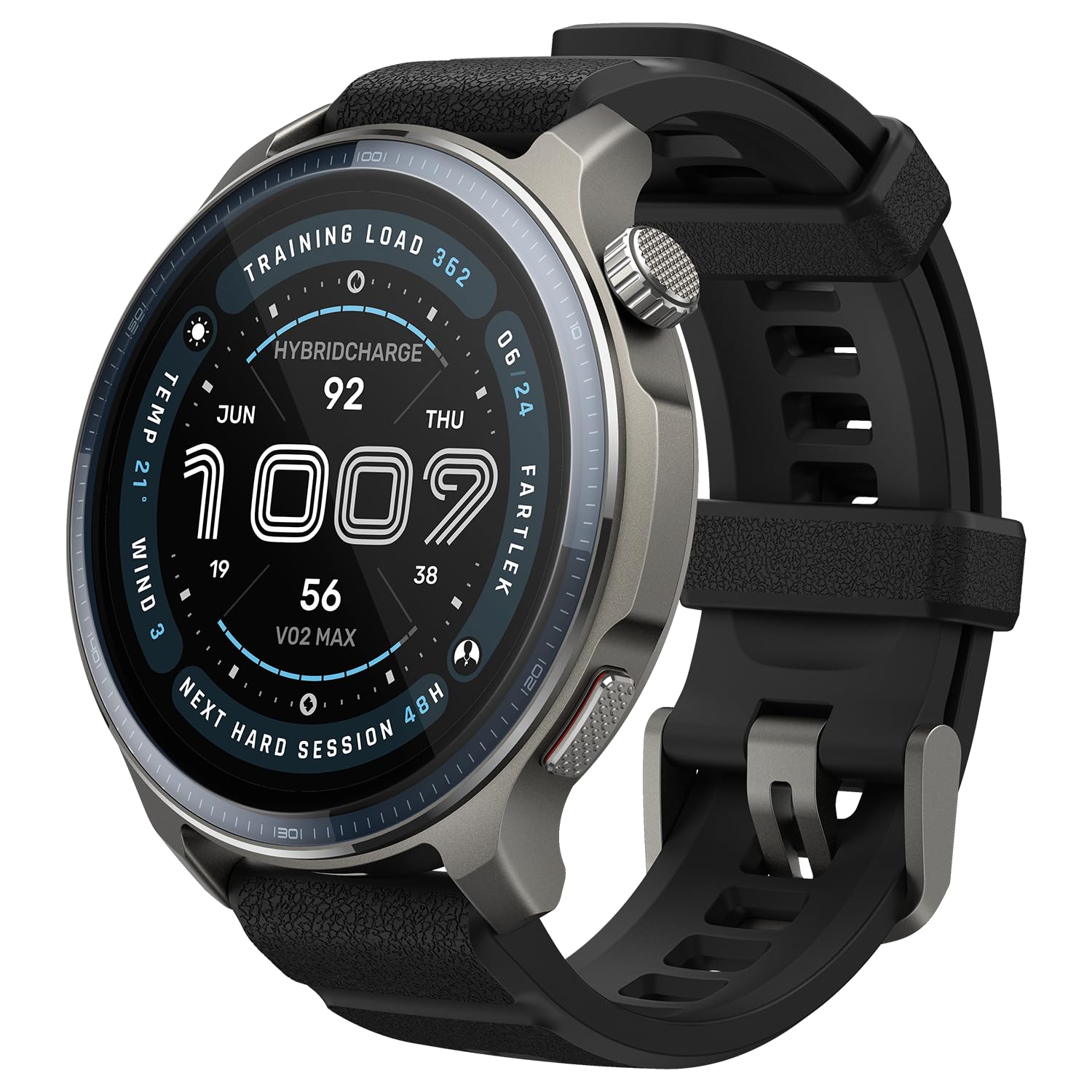
3. Amazfit Balance 2 Smart Watch, 1.5″ AMOLED Sapphire Glass
Three weeks between charges, wrapped in a sapphire screen that shrugs off scratches.
Here is the head-to-head that matters most on this list: the Balance 2 pairs a 658 milliamp-hour battery with up to 21 days of typical use, against the Fitpolo’s 350 mAh and 7 days. That capacity-and-runtime gap is the whole pitch in one line. Add 2-hour charging and you spend very little of your life tethered to a cable, which is exactly why the long-battery crowd loves it.
The heart rate side is serious for the money. The advanced sensor and algorithms monitor heart rate, sleep quality, blood oxygen, and stress around the clock, plus recovery metrics like HRV. Readiness-style energy tracking runs through the day, so you can see when to push and when to coast. The training layer is where it flexes: 180+ sports with advanced multisport tracking, including official HYROX Race, Simulation, Training, Virtual Pace, and PFT modes. Dual-band GPS pulls from six satellite systems for a fast, reliable fix, and you can download free maps with turn-by-turn directions.
Build quality is the thing buyers bring up most, and the 1.5-inch sapphire crystal glass plus aluminum body explains why. The 22 mm silicone band keeps the sensor steady on your wrist through a workout. Set against that, the recurring note across reviews is reliability — most units hold up fine, but a run of buyers flag it as mixed, so treat the touchscreen and firmware updates with a little patience. The pack ships a magnetic charging base but no USB Type-C cable, so have one ready.
Why it earns the long-haul slot
- 658 mAh battery rated for up to 21 days of typical use
- 24/7 heart rate, SpO2, stress, and HRV recovery metrics
- Dual-band GPS across six satellite systems with downloadable maps
What to weigh before buying
- Reliability reads as mixed in owner feedback rather than solid
- No USB Type-C cable in the box — you supply your own
Go here for: the best battery-to-health-tracking ratio on this list, especially if you train across many sports.
Pause if: you want rock-solid consistency from the start over the longest possible runtime.
4. Apple Watch SE 3 GPS + Cellular 40mm Smartwatch
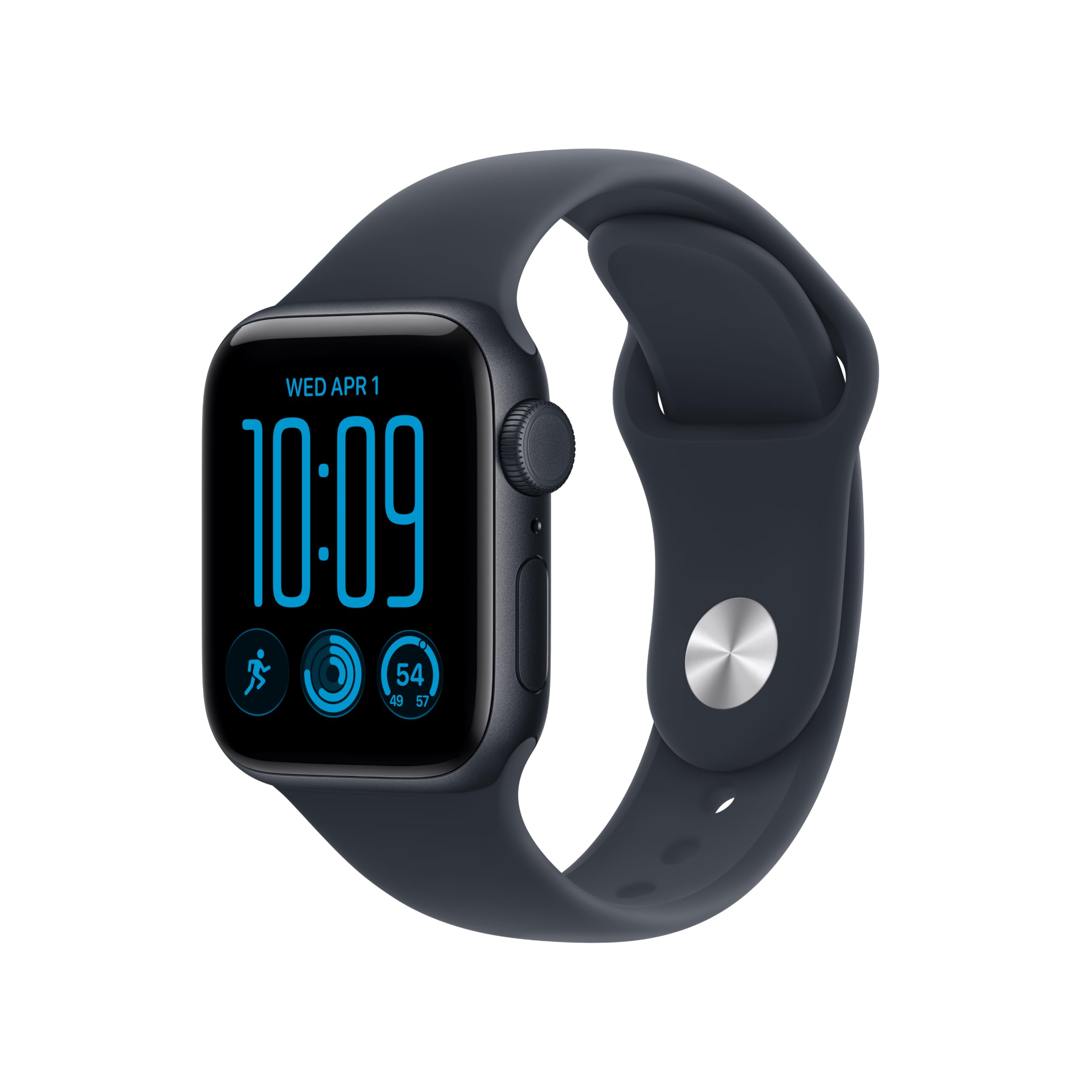
The 40mm Apple that keeps you reachable without your phone in your pocket.
The distinguishing feature over the Series 12 is the cellular build: with just the watch on your wrist you can take and make calls, stream music and podcasts, and listen through AirPods, no iPhone required. If you run phone-free or want to leave the handset at home, that is the whole reason to pick this watch. It handles a full fitness slate too — running, strength training, and your 10K-step days — with real-time metrics and Workout Buddy pushing you along.
Battery lands at 18 hours of all-day use, which the Series 12 outlasts at up to 24 hours of normal use. Consider that the trade for cellular freedom. The recovery is fast: up to twice as fast as SE 2, with 8 hours of battery in just 15 minutes, so a short charge before a workout gets you through. Functionality is what owners praise most, and the customer consensus lumps this in as a strong value pick, with GPS tracking, heart rate monitoring, and notifications all drawing steady approval. Siri AI is on hand for post-workout stretch ideas and wellness tips.
Safety here mirrors the bigger Apple: a hard fall or severe car crash triggers automatic help and notifies your emergency contacts. Parents get real use out of Apple Watch For Your Kids — call, text, and location sharing even when the child has no iPhone of their own. The 40mm case is the compact option if a 46mm feels like a dinner plate on your wrist, and you can dress it up across dozens of faces and bands. Screen size and battery life both read as mixed in owner feedback, so neither is the headline reason to buy this one.
Who it clicks with: iPhone households that want a phone-free watch line for runs or for a kid, with fall and crash detection as a quiet bonus.
Worth knowing: 18 hours of battery means charging is part of the daily routine, and the 40mm screen is on the smaller side.
Pick this one when: freedom from your phone matters more than multi-day battery.
Skip the cellular compromise if: you always carry your iPhone and would rather have the Series 12’s longer stamina.
5. Garmin Instinct® 3 Solar, Rugged GPS Smartwatch, 45mm

Built for the trail, with a solar lens that can stretch the charge far past a month of daylight.
Start with the case, because that is why this watch exists. It is a 45mm fiber-reinforced polymer body with a metal-reinforced bezel, water-rated to 10 ATM and designed to MIL-STD-810 for thermal and shock resistance. Throw it against a rock or dunk it in a river and it keeps going. There is even a built-in LED flashlight with variable intensities and strobe modes for night navigation. The 0.9-inch display carries a solar charging lens, and with all-day wear plus 3 hours per day outside in 50,000 lux conditions the maker claims unlimited battery life; the standard figure is 28 days. Either way, that is far beyond the daily-charge Apple watches above.
On the heart rate front you get wrist-based heart rate, advanced sleep monitoring, and Pulse Ox — a blood oxygen estimate the maker flags as non-medical and not available in every country. The rest of the toolkit is navigation-heavy: a 3-axis compass, barometric altimeter, and multi-band GPS with SatIQ, which tune positioning while watching battery life. Garmin Pay lets you leave cash and cards at home, and Connect IQ opens the door to new apps and watch faces. Sync to the Garmin Connect app for a deeper view of your health and fitness data.
Functionality is the aspect owners praise most, followed closely by that battery life, with durability and solar charging both drawing steady praise in their own right. The honest friction is the tiny 0.9-inch screen, which favors glanceable data over pretty graphics, and the value question splits some buyers who feel the premium over a standard Instinct is steep. It is a tool watch, not a lifestyle watch. If you hike, hunt, fish, or trail-run in rough terrain, that trade lands well.
What the outdoors crowd gets
- 28-day battery, with solar charging pushing toward unlimited under sunlight
- 10 ATM water rating and MIL-STD-810 thermal and shock resistance
- Built-in LED flashlight plus 3-axis compass and barometric altimeter
Where it asks you to adapt
- 0.9-inch display favors data over a big, colorful screen
- Value reads as mixed for buyers who expected more for the premium
Best matched to: hikers, trail runners, and field users who want a wrist tank that runs for weeks.
Look at the Apple or Pixel watches instead if: a large, sharp screen is high on your list.
6. Google Pixel Watch 5 (41mm) – Canyon – Wi-Fi
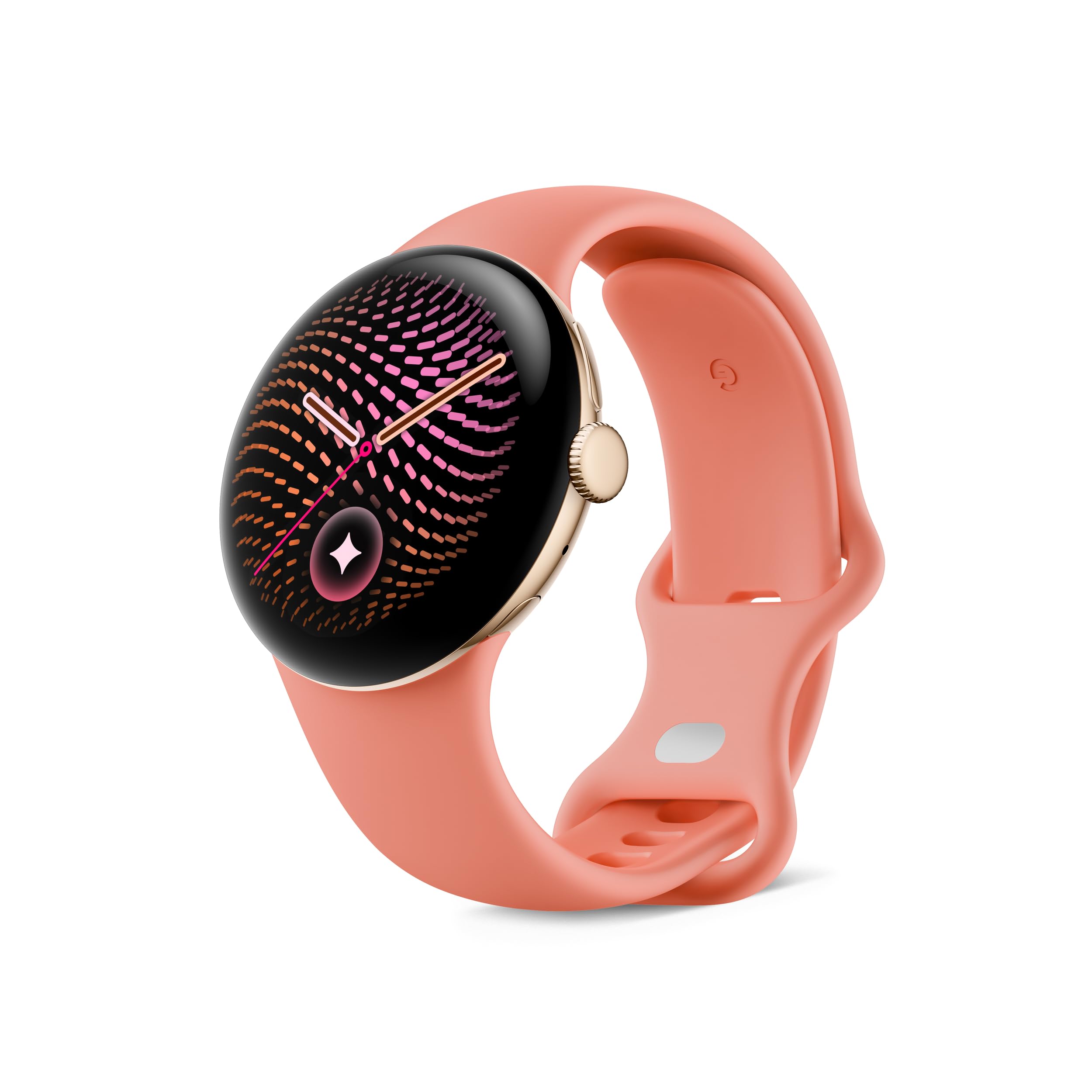
Pixel’s most accurate heart rate tracking, tuned to your activity and paired to an Android phone.
Google’s claim here is a sharp one: this is Pixel’s most accurate heart rate tracking, fine-tuned for your activity. The advanced sensors also feed a sleep layer that captures stages and breathing regularity, then rolls it into a personalized Sleep Score. It is a health-first watch for Android users rather than a compromise. Battery reaches up to 40 hours, comfortably ahead of the 18-hour Apple Watch SE 3, and it uses a USB-C Quick Charge dock at that 41mm size. Two band sizes ship in the box — small and large — so the fit lands on more wrists out of the gate.
Appearance is the runaway reason people reach for it, and the Canyon colour plays a big part. It sheds the tech-forward look in favour of something you would wear to dinner. Comfort is a recurring point of praise too, which matters for a heart rate watch because a comfortable strap stays put on your wrist through workouts. The health tracking breaks down into heart rate, sleep, and pulse detection, plus Google Health Coach for personalized fitness plans if you want guidance built in.
Two hard limits to walk in knowing. It is Android only — it does not work with iOS at all — so iPhone owners should look to the Apple picks above. Connectivity also splits opinion: Pixel-phone pairing is smooth, but Strava integration draws some friction in owner feedback. Beyond that, this is a clean, good-looking health tracker with fast charging, and the consensus places it as a standout among Android watches.
Its real strength: spot-on Pixel-phone integration, a comfortable 41mm body, 40-hour battery, and the brand’s most accurate heart rate tracking to date.
The one-wall warning: Android only, so if you carry an iPhone this is off the table entirely.
For Android owners who want looks and health: this is a natural fit, especially for Pixel-phone users.
Turn away if: you use an iPhone, or you rely heavily on Strava without workarounds.
7. WITHINGS Scanwatch 2 – Hybrid Smartwatch, ECG, 38mm Black

The one that looks like a real watch while quietly reading your heart for over a month.
This is the only watch here with analog hands, and that changes how it wears: a stainless steel case, sapphire glass (a scratch-resistant crystal), and a 38mm size that reads as a dress watch rather than a computer strapped to your wrist. The 35-day battery is the other standout — over a month of continuous heart rate tracking on a single charge. That dwarfs the Garmin Forerunner 570’s 11 days and the Apple watches’ daily-to-two-day cycle. If you hate charging gadgets, that number carries this watch.
The health piece leans on an ECG (electrocardiogram — a 30-second read of your heart’s electrical rhythm) and continuous heart rate tracking with AFib detection through the Withings ECG App, plus high and low heart rate notifications. Sleep tracking covers stages and breathing, there are over 40 sports with VO2 max and heart rate zones, and the maker adds a Vitality Score with one month of Withings+. HealthSense OS runs on-device machine learning for the health metrics. The connected GPS pairs with your phone, and the Withings App handles Android and iOS both.
Be clear-eyed on the trade. This watch earns 3.5+ stars — the lowest on this list — and middling marks on functionality, battery, and accuracy show it does not push sensor tech as hard as the sport watches. The design is a genuine strength: buyers bring up build quality most and looks right behind it, calling it a watch that doesn’t shout “computer.” Compatibility leans negative in owner feedback, so pair it with the app carefully during setup. Charm and stamina are where it wins; tracking depth is where it asks patience.
The case for the hybrid
- 35-day battery far outlasts the sport watches here
- 30-second ECG with AFib detection and continuous heart rate
- Stainless steel and sapphire glass in a 38mm analog case
The catch to own up front
- Accuracy and functionality read as mixed in owner feedback
- Compatibility issues surface during setup for some
Suits: anyone who wants heart rate, ECG, and a month-plus of battery in a watch that looks traditional.
Not for: data-hungry athletes who want the deepest sensor accuracy.
8. Garmin Forerunner® 570, 47mm, Aluminum, Black
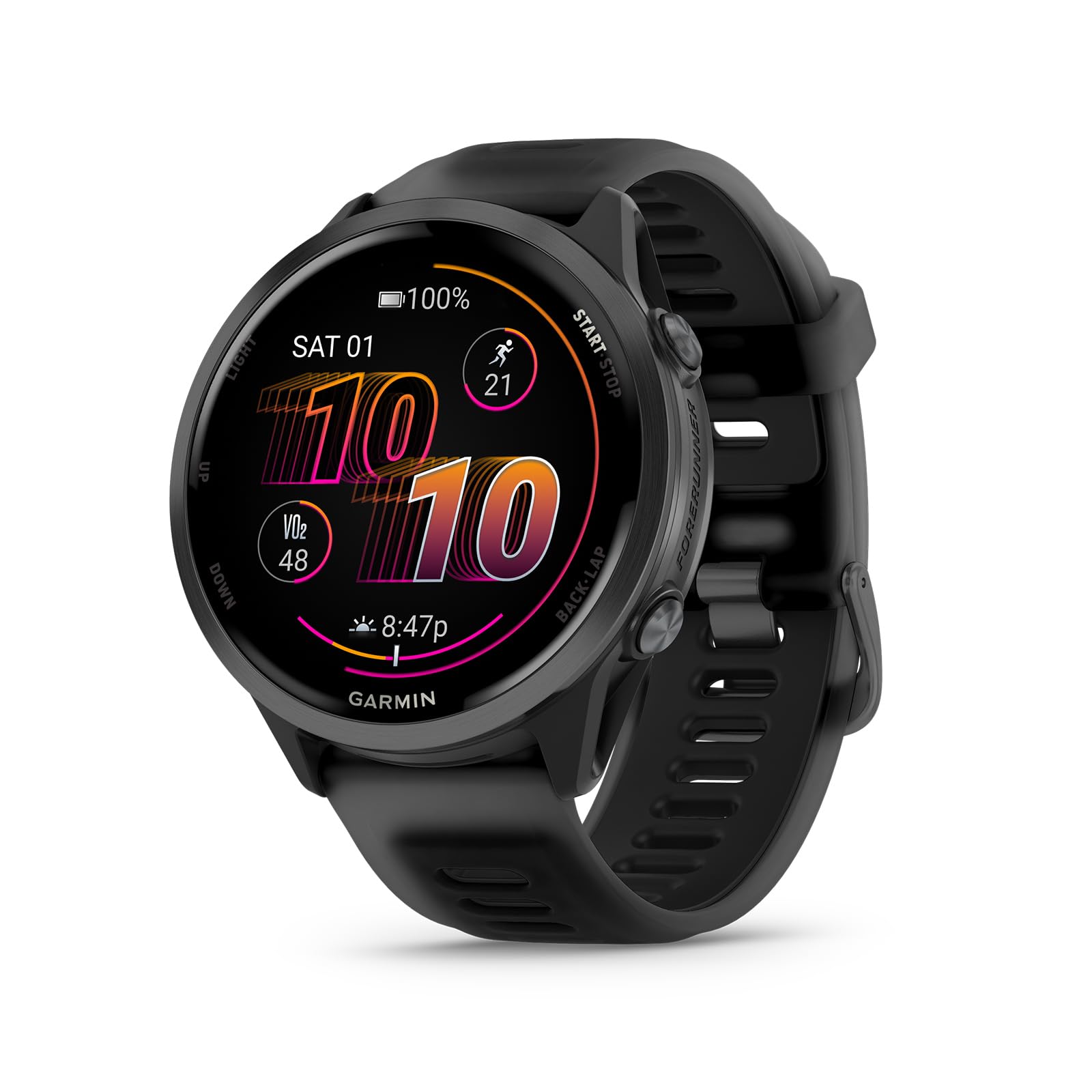
The runner’s watch that turns your pulse and sleep into a daily go-hard-or-rest verdict.
Training readiness is the feature that makes this watch. It combines sleep quality, recovery, training load, and HRV status (heart rate variability — small beat-to-beat changes that signal how recovered you are) into a single score telling you whether you are primed to push. That is the difference between a watch that reports your heart rate and one that tells you what to do with it. Stack training status on top — HRV status, recent exercise history, and VO2 max rolled together to say whether you are productive, peaking, or strained.
Battery drops to a sport-watch rhythm: up to 11 days in smartwatch mode and up to 18 hours in GPS mode. That is far shorter than the Instinct 3 Solar’s 28 days, but it is the cost of a 47mm aluminum case with Garmin’s brightest AMOLED touchscreen (a bright, colorful display) and button controls. Buyers report real-world endurance in the 9-10 day range, and GPS tracking draws strong praise for accuracy. The 300 mAh battery matches the cell in the Instinct, so the screen and GPS load are where the difference lives. A built-in mic and speaker let you take calls from your wrist when paired to your phone.
What serious runners love is the training depth: Garmin Coach plans for running and triathlon that adapt to your performance and recovery, personalized daily suggested workouts, and a morning report on sleep, recovery, and training outlook. Over 30 activity profiles cover running, triathlon, track, cycling, and open-water swimming. Sleep tracking here rivals dedicated trackers, and the training performance for runners earns steady praise. The catch is patience with the price and that 11-day figure — this is not a low-maintenance watch, but a training tool you engage with daily.
Best-use read: trail and road runners who want HRV-based readiness and adaptive coaching from a watch that still carries a bright AMOLED screen.
Where it falls short: 11 days of smartwatch battery trails the Instinct, and the price puts it among the premium options here.
Chase performance with this one: the readiness-plus-training-status combo is exactly what a structured runner needs.
If you want pure stamina: the Instinct 3 Solar beats it on days between charges.
9. Samsung Galaxy Watch Ultra 47mm, Titanium Silver, LTE
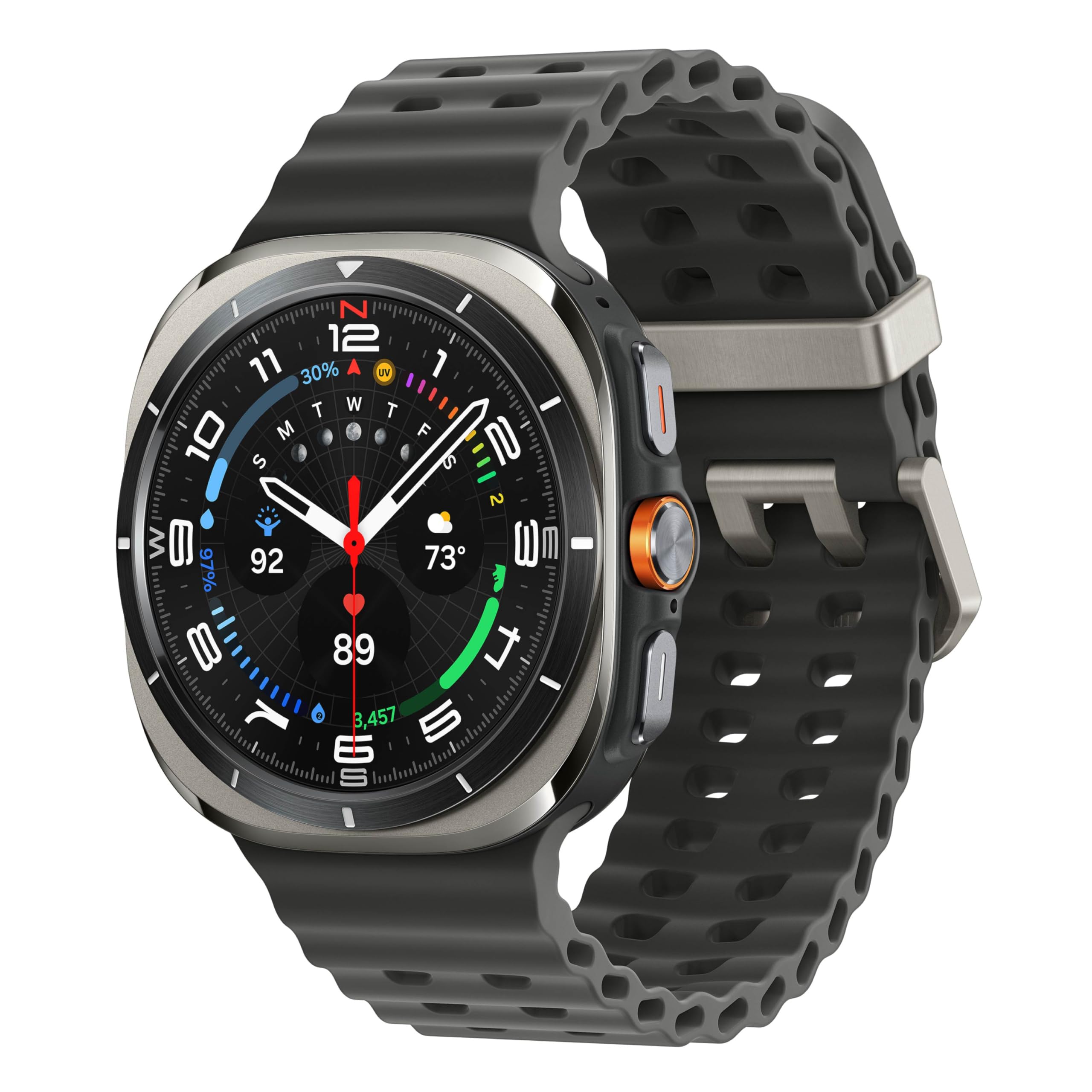
The titanium bruiser with a 590 mAh battery and an LTE line to the world.
It pairs with a durable titanium casing, 10 ATM water resistance, and dual-frequency GPS, so ocean swims and dusty trails are both on the menu. If you want a big, rugged Android watch that can call off-grid, this is built for exactly that.
The heart rate and health side runs through Energy Score with Galaxy AI, which analyzes yesterday’s sleep, activity, and heart rate to give you an overall wellness read several times a day. Advanced Sleep Coaching works the night before to shape tomorrow’s performance. Running Coach analyzes factors like age, weight, oxygen levels, and heart rate to guide your run. Blood pressure monitoring works after calibrating against a blood pressure cuff sold separately, and the readings land in the Samsung Health Monitor app.
Looks are what win people over — a large screen and a titanium frame that earn the most discussion in owner feedback. Battery life reads as mixed: some call it incredible, others find they are charging every two days for hours. That is the trade for a big screen and always-on features. It pairs with Samsung phones smoothly and with other Android phones too, but there is no iPhone path. For a rugged Android watch with LTE (built-in cellular) and a 590 mAh battery, this is the premium answer.
What the Ultra delivers
- 590 mAh battery — second in capacity only to the Amazfit Balance 2 at 658 mAh
- Durable titanium casing with 10 ATM water resistance
- Dual-frequency GPS and LTE connectivity for off-grid calls
What to budget for
- Battery life draws mixed owner feedback, with some charging every two days
- Android only, and it is the priciest pick here
Go big with this: Android adventurers who want the biggest battery, LTE calls, and a titanium shell.
Hold off if: you are on iPhone or your priority is the longest charge between top-ups.
Know the Specs
Sampling rate and HRV
Sampling rate is how often the watch reads your pulse — the Series 12 samples every five seconds, which means a quick sprint interval still lands in the data. HRV, heart rate variability, tracks the tiny gaps between beats that hint at stress and recovery, and the Series 12 measures it as often as every five minutes. For training, a faster sampling rate and richer HRV are what separate a watch that reports a number from one that reads your body.
Battery capacity and life
Battery capacity in milliamp-hours (mAh) is the stored energy, and battery life is how long it stretches that on your wrist. The Amazfit Balance 2 pairs 658 mAh with up to 21 days; the Garmins run 300 mAh for 11 to 28 days depending on the model. A larger cell helps, but screen brightness, GPS use, and continuous tracking all eat into the final number. Match the rating to your habits — a multi-week claim means fewer continuous readings per charge.
Common Questions
Will a heart rate watch work on a tattooed or hairy wrist?
Does the Apple Watch Series 12 work with an Android phone?
How accurate is the heart rate on the Amazfit Balance 2?
Which watch has the longest battery life here?
Is the Garmin Instinct 3 Solar waterproof enough for swimming?
Can the Withings Scanwatch 2 detect an irregular heartbeat?
Does the Garmin Forerunner 570 show heart rate during a run without a chest strap?
Is the Samsung Galaxy Watch Ultra compatible with an iPhone?
How often do I need to charge a heart rate watch?
Do these watches measure blood oxygen and stress?
The Bottom Line
For most buyers, the top heart rate watches winner is the Apple Watch Series 12. It reads your background pulse every five seconds and pairs it with HRV, readiness, and safety alerts that help you train and stay safe — the highest-rated watch here at 4.5+ stars across 500+ owners. If a phone-free wrist and a smaller case matter more, grab the Apple Watch SE 3 with its built-in cellular. And for weeks between charges with serious training depth, reach for the Amazfit Balance 2 at 658 mAh and up to 21 days.
How we choose
We do not accept paid placement. Every pick is matched to a real buyer and a real use-case; we do not hands-on test units.
Sources
Specifications: manufacturer listings and product documentation. Review insights: verified customer reviews, as of November 2026. Pricing: not shown on this page (it changes often); check the current price via the retailer link.
As an Amazon Associate, Tactical Gear Guy earns from qualifying purchases. This does not affect which products we feature.