Specs are compiled from manufacturer listings and verified buyer reviews and can change over time — please confirm the key details on the product page before buying.
The short answer: a sharp, bright image comes from the glass, not the price tag. What separates a good cheap binocular from a foggy disappointment is the glass inside and how much light reaches your eye — not the label on the box. This guide covers the budget binoculars that actually deliver on both, with the trade-offs spelled out so you can pick the right pair for your trip, your stand, or your backyard.
This guide is built by comparing the manufacturers’ published specifications and the patterns across verified customer reviews, so you get each pick’s real strengths and trade-offs instead of marketing spin.
Below you’ll find nine pairs sorted by what they do best, from featherweight travel compacts to a 50mm light-grabber built for the night sky. Each one is here because it earns its place for a specific buyer, and every claim comes straight from the spec sheet. Here are the Top Budget Binoculars worth your money.
Top Picks


How To Choose The Best Top Budget Binoculars
The two numbers on every binocular box are the whole shopping decision in shorthand. The first is magnification — how many times closer the view looks. The second is the objective lens diameter in millimeters — the size of the front glass that gathers light. Everything else, from the prism type to the coatings, is about making that gathered light arrive at your eye clean and bright.
Magnification is a trade-off, not a score
A higher magnification number sounds better and usually is not. Every step up in power also magnifies the shake of your hands, so a 15x pair held freehand can feel like watching through a paint shaker. An 8x or 10x pair is far easier to hold steady for long glassing sessions. If you plan to sweep the night sky, lower power actually wins because it shows you a wider slice of sky at once.
The objective lens decides your low-light ceiling
Divide the objective size by the magnification and you get the exit pupil — the little circle of light that hits your eye. A 50mm objective at 7x gives a wide, forgiving exit pupil that stays usable as dusk falls. A 30mm objective at 15x gives a narrow one that gets dim fast. If most of your viewing happens in flat midday light, a smaller objective keeps the binocular light and pocketable.
Coatings and prisms are where cheap binoculars hide their corners
Fully multi-coated lenses have anti-reflective layers on every glass surface, which means less light bounces away and more reaches your eye. BAK4 prism glass is the better grade for a bright, round image; cheaper glass tends to soften the edges. You will see both named on the better budget options, and it is the single clearest signal of where the money went.
Side-by-Side Comparison
| Model | Best For | Magnification | Objective Lens | Exit Pupil | Amazon |
|---|---|---|---|---|---|
| URBANCOAST 12×32 Compact★ Best Overall | All-round compact | 12x | 32 mm | 2.67 mm | Amazon |
| occer 15×30Best Value | Long-distance reach | 15x | 30 mm | 2 mm | Amazon |
| Celestron Cometron 7×50Top Performer | Night sky | 7x | 50 mm | 7.1 mm | Amazon |
| Bushnell PowerView 2 | Wide field scanning | — | — | 5 mm | Amazon |
| Tanaview 10×50 | Hunting & cruise | 10x | 50 mm | — | Amazon |
| Cronyoptics 10×42 | Everyday all-rounder | 10x | 42 mm | 5.25 | Amazon |
| Bushnell PowerView 10×42 | Value glass upgrade | 10x | 42 mm | — | Amazon |
| Nikon Trailblazer II 8×25 | Pocket travel | 8x | 25 mm | 3.1 mm | Amazon |
| Vortex Triumph HD 10×28 | Rugged trail carry | 10x | 28 mm | 2.8 mm | Amazon |
Detailed Reviews
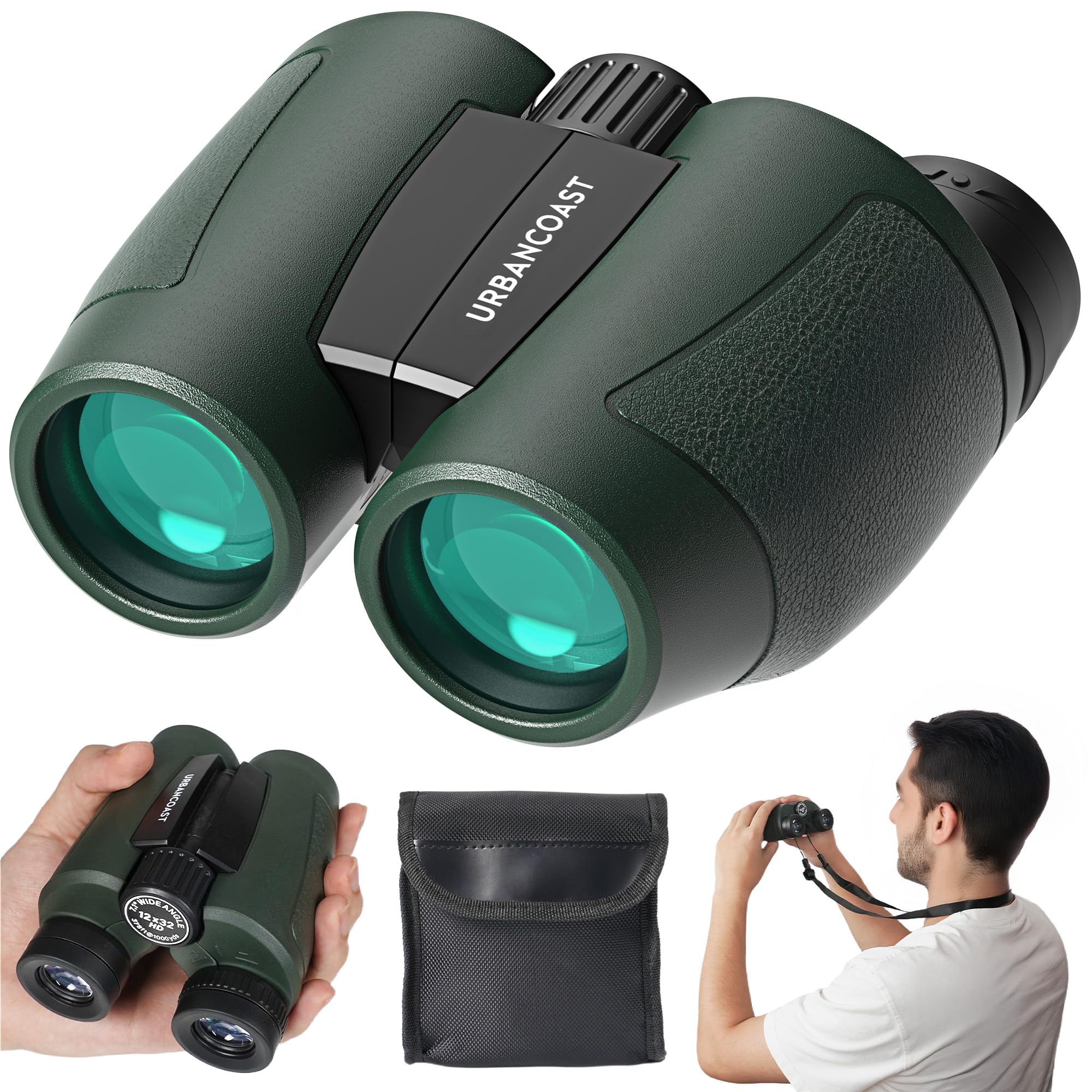
1. 12×32 Compact Binoculars
The do-everything compact that punches well above its size and its price.
The 32mm objective lens is the reason this one takes the top spot. That is noticeably more light-gathering glass than the 25mm tubes most compacts use, so you get a fuller, brighter picture whether you are scanning a coastline from a cruise deck or tracking a bird across open sky. BAK4 roof prisms — the higher grade of glass — plus fully multi-coated lenses keep the colors true and the contrast strong in shade.
At 343g (12oz) it slips into a jacket pocket and hangs comfortably through a long hike without your arms tiring. The 7.1-degree apparent angle of view gives you a genuinely wide window: compared with the occer 15×30 at 3.47 degrees, this pair shows roughly twice the slice of the world in a single glance. That matters when something is moving and you need to find it fast instead of hunting for it through a narrow tunnel.
What wins people over is the optical quality, and the clarity follows close behind — the image lands crisp and true rather than washed out. Rain and fog are handled by the rubber-armored, waterproof body, and twist-up eyecups with 14mm of eye relief mean glasses wearers get a full view without pressing the lenses to their frames. The catch is the 2.67mm exit pupil: it holds up well in daylight and decent dusk light but will not carry you into deep twilight the way a bigger 50mm objective would. It also ships with a case, strap, lens cloth, and covers, so it is ready the day it arrives.
What earns it the crown
- 32mm objective lens pulls in more light than typical 25mm compacts
- BAK4 prisms and fully multi-coated lenses keep colors true
- 343g (12oz) body rides in a pocket without arm fatigue
- 7.1-degree apparent view is wide enough to find fast-moving targets
- Waterproof, fog-resistant, and shock-resistant housing
Where it asks a little in return
- 2.67mm exit pupil runs out of light in deep dusk
- 12x takes a steadier hand than an 8x for long glassing
Grab this one if: you want one compact pair for travel, birds, and ballgames without stretching the budget.
Think twice if: your viewing is mostly after sunset — the narrow 2.67mm exit pupil will dim before the sky does.
2. Occer 15×30 Binoculars
Maximum magnification for the money when you need to reach way out there.
If you need to see far away, this pair delivers. A 15x magnification (how much closer things look) pulls a clear image from more than 650 feet away. That is more than double the reach of the 7x Celestron Cometron, and you notice it when you glass a far ridge or a bird on a distant branch. The 30mm objective lens (the front glass that gathers light) and 16mm large eyepiece give you a 368ft field of view at 1000 yards (how wide an area you see at that distance). The fully multi-coated glass (every air-to-glass surface has multiple coatings) pushes light transmission up to 96.48% for a bright, realistic image even in lower light.
What wins people over is the overall quality, with clarity a close second — the 15x view reads sharp and complete rather than muddy. A discreet army-green shell helps it blend in when you are birding, and the whole kit includes a case, cleaning cloth, neck strap, and eyepiece cover. It is light, packs into a trail bag easily, and the low-light night vision handling means it still works as evening settles in.
The honest trade-off is the focus mechanism, which customers describe in mixed terms — some find it smooth, others have had to fiddle with it. Treat the focus wheel gently and it rewards you. Worth knowing too: there is no image stabilizer here, so brace your elbows on a railing or your knees to get the most from that 15x pull. For whale watching from a deck or a concert in the cheap seats, it gets you close without the front-row ticket.
The reach advantage: a 15x magnification in a small, lightweight body is the headline — this is the pair you hand someone who wants to see something small and far away.
One gut-check: the high power and small 2mm exit pupil mean daylight and open country are its home turf, not deep woods at dusk.
Reach for this if: you want the most magnification your budget allows and will brace your hands for it.
Look elsewhere if: you need a rock-solid focus wheel above all else, or plan to glass into thick twilight.
3. Celestron Cometron 7x50mm Astronomy Binoculars
The star-sweeper: big glass and low power that drink in the night sky.
Here is the number that matters for the night sky: a 7.1mm exit pupil. That big circle of light is what lets a beginner pick out faint stars and comets that a small daylight compact simply cannot show. The 50mm objectives gather far more light than the 30mm occer — the gap here is a 67% larger light-gathering lens — and multiple layers of anti-reflective coating sharpen the contrast once darkness falls.
Low 7x magnification is a feature, not a compromise. The 6.8-degree field of view sweeps a wide, generous slice of sky at once, so panning the Milky Way or finding a constellation feels natural instead of like looking through a straw. A built-in tripod adapter socket lets you lock it onto a standard tripod for shake-free sessions. It is equally at home by day — a 26.2-foot close focus makes it useful for birdwatching and scenic viewing, not just astronomy.
What wins people over is the build and the value: a sturdy aluminum body, a comfortable weight for handheld use, and a 7×50 image that pulls far more stars than your bare eyes can. The honest limit is that 7x cannot show you planetary detail the way a telescope would, and it comes with a Celestron Limited Lifetime US Warranty and US-based tech support.
Why it lands here: a 7.1mm exit pupil and 50mm objectives make this the most light-hungry pair on the list for its money — the thing that opens up the night sky to a first-time stargazer.
The trade-off: 7x keeps the image steady and the field huge, but it will not zoom in on the moon’s craters the way a higher-power optic does.
Best for: backyard astronomers and anyone starting out with the night sky who wants to see dramatically more stars.
Skip if: you want serious planetary detail — this is a wide-field sweeper, not a lunar microscope.
4. Bushnell PowerView 2 Binoculars
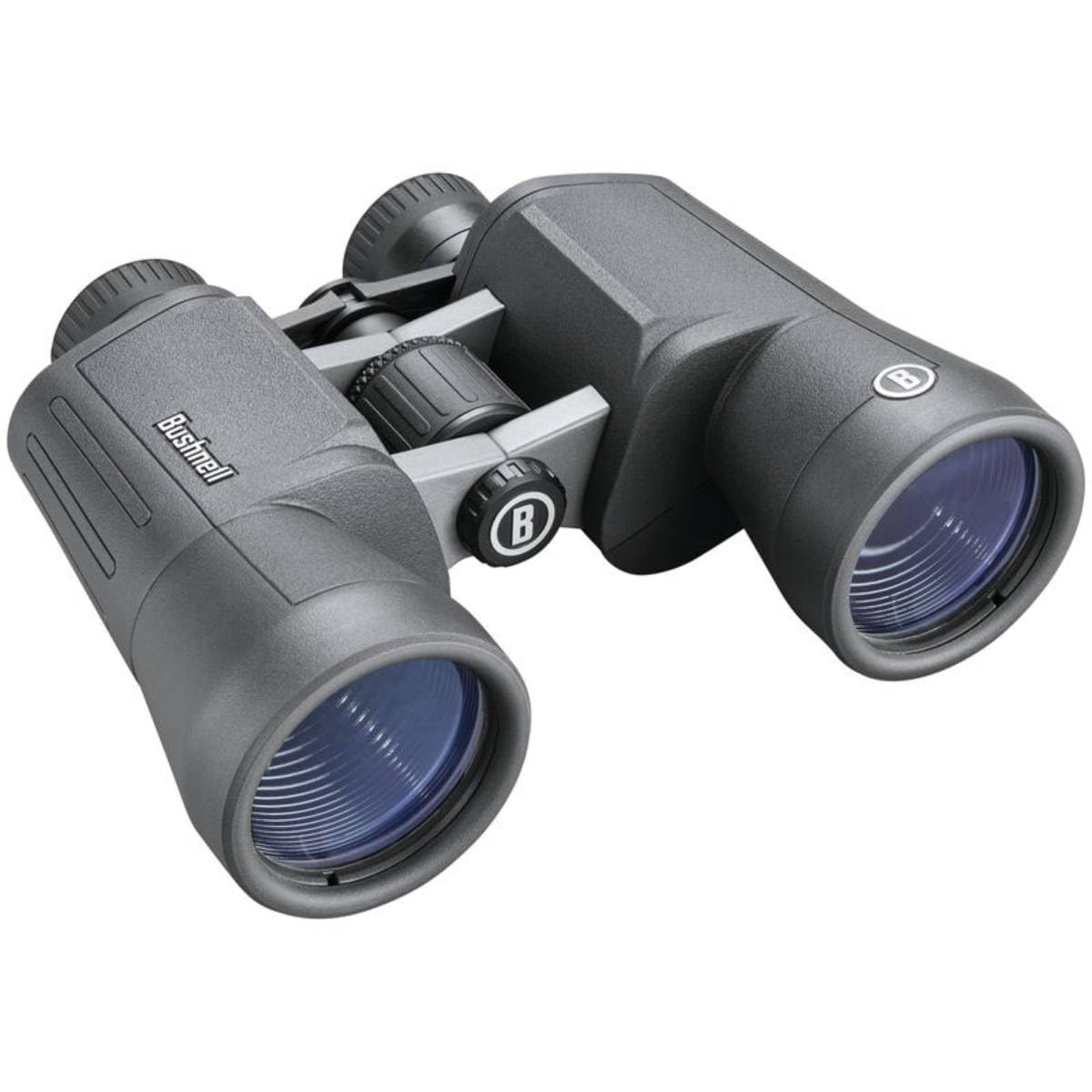
A panoramic window on the world with a grip built for one-handed glassing.
Few budget binoculars give you a view this wide. The 60-degree apparent angle of view (how wide the image looks through the eyepiece) is the standout spec here. Against the 7.1 degrees of the 12×32 URBANCOAST, that is a dramatically roomier window — the difference between seeing one bird and seeing the whole tree it sits in. Multi-coated optics (coatings on some glass surfaces) pull in plenty of light for a clear, vibrant image even when clouds roll in. A 5mm exit pupil (the light circle your eye sees) keeps that image comfortable to hold your eye to.
The chassis is what will surprise you. An aluminum alloy frame holds shape without adding bulk, and soft-touch rubber along the sides and bridge gives a confident, non-slip grip that lets you steady the binocular one-handed. An ultra-smooth focus wheel snaps your subject into definition fast. This is the pair to grab for wildlife watching, a hike, or a sporting event where the action is spread across a wide field.
What wins people over is the overall quality — this multi-coated glass feels a step above its price and draws praise for being nicer than far more expensive marine models. The one thing to size up honestly: the diopter adjustment range runs from 1 to -3, which is narrower than some, so check it suits your eyes before committing. Beyond that, it is a durable, good-looking all-rounder that delivers on the wide-field promise.
Reasons it stands out
- 60-degree apparent view gives a genuinely panoramic field
- Aluminum alloy chassis stays durable without bulk
- Soft-touch ergonomic grip steadies one-handed use
- Ultra-smooth focus wheel snaps subjects sharp quickly
The fine print worth reading
- Diopter range of 1 to -3 is narrower than some competitors
- Not the smallest body if pocket carry is your goal
Your pick if: a wide, sweeping view and a solid one-handed grip top your list for trails and ballgames.
Keep looking if: your eyes need a wider diopter correction range to focus cleanly.
5. Tanaview 10×50 Compact Binoculars
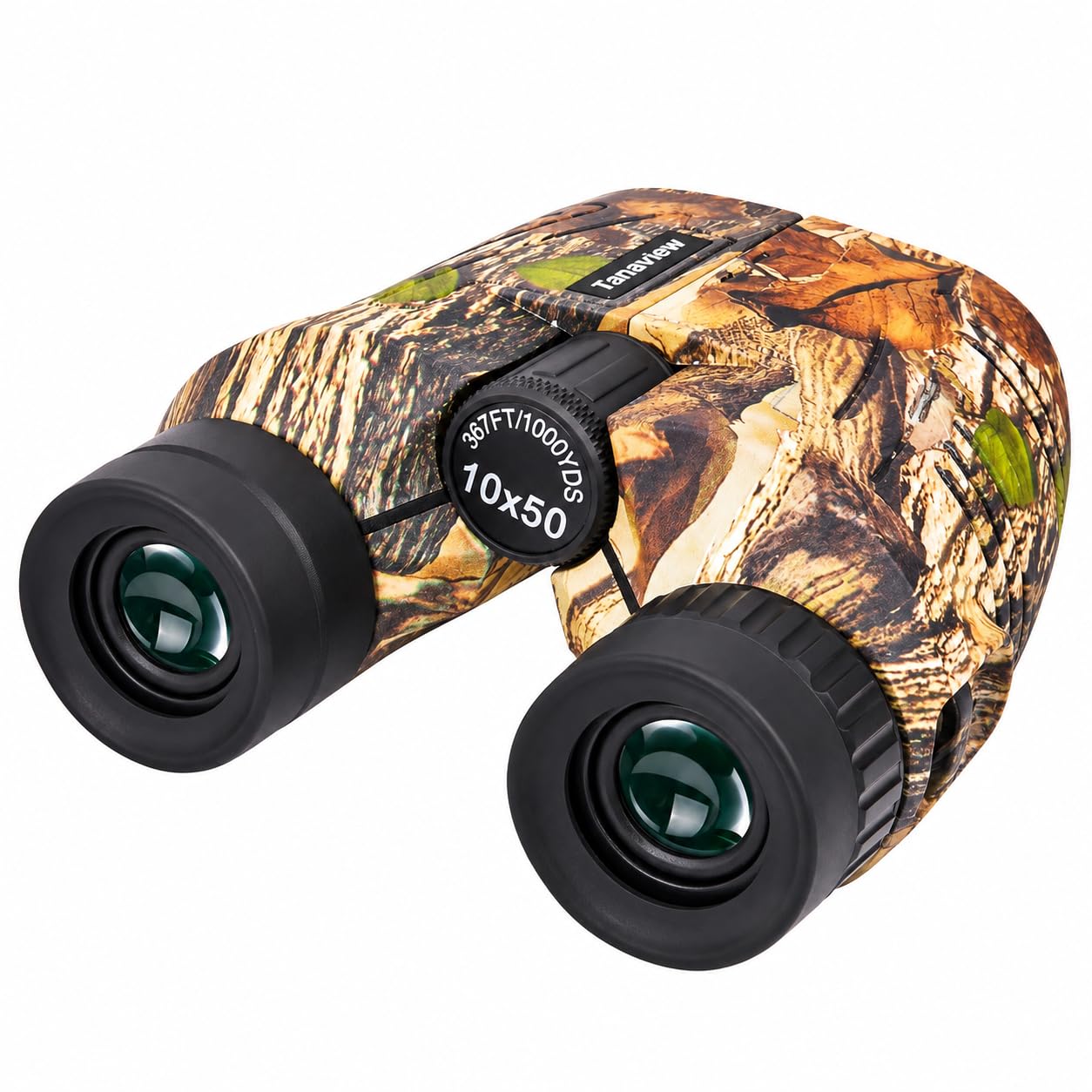
A 50mm light-gatherer that reads detail a thousand yards out.
This pair earns a hunting slot because of its 50mm objective lens (the large front glass that gathers light). With 10x magnification, you get a bright, detailed read at 1000 yards — enough reach to glass a treeline or a far slope without squinting. The 7.5-degree viewing angle (how wide an area you see) keeps the field reasonably wide for tracking movement. Fully multi-coated lenses (multiple coatings on every glass surface) with a green FMC broadband film on the objective plus a blue FMC coating on the eyepiece brighten the picture across the glass surfaces.
What wins people over is the quality for the money — owners describe this 10×50 standing right alongside far pricier models. The rubber-armored, ergonomic body gives a steady grip and shock resistance, and the rubber eye relief keeps glasses wearers comfortable. It handles birdwatching, camping, football games, and cruises just as readily as a hunting stand. A dioptric adjustment ring and strap mount round out the setup, and it slips into a travel case for the truck.
Be clear about the low-light limit: this is low-light night vision, which means it pulls detail in fading light but cannot see anything in complete darkness. Magnification also draws a mixed reception — some find the 10x reach ideal, others wish it steadied easier — so brace against a rest for longer glassing. Feed those two facts into your expectations and it is a faithful, bright companion in the field.
The field advantage: a 50mm objective with 10x power and an 18mm eye relief gives hunters and glasses wearers a bright, comfortable view well past the 1000-yard mark.
The honest caveat: low-light vision is real but partial — it will not resolve a target in full dark, so plan your last light accordingly.
Made for: hunters and outdoor users who want big 50mm glass and a grip that holds steady in the cold.
Not for: anyone expecting to glass after full dark or wanting the steadiest handheld image without a rest.
6. Cronyoptics 10×42 Binoculars

The classic 10×42 that does a bit of everything without complaint.
Ten-by-forty-two is the spec that made this configuration the workhorse of backyard optics, and this pair executes it well. The 42mm objective with 10x power delivers bright, detailed images with a 7-degree field, and the 5.25 exit pupil is forgiving enough to keep the view comfortable as the light drops. A roof prism design keeps the whole thing compact while still producing solid optical performance.
At 1.2 pounds it rides along on a long hike without dragging on your neck, and the smooth center focus wheel plus a right-eye diopter adjustment let you dial in a sharp picture quickly. Twist-up eyecups with 18mm eye relief keep glasses wearers in the game. What wins people over here is the quality, with the optics a close second — the 10×42 holds clarity and natural color across lighting conditions, with enough shock and water resistance to survive real weather.
Where it earns the “most versatile” tag is the tripod compatibility: mount it for stable stargazing sessions, or handhold it for birds and wildlife. The kit arrives complete with eyecups, a cleaning cloth, a carrying case, and a 12-month warranty. The main thing to know is that 1.2 pounds is light for the class but heavier than the little pocket compacts, so if featherweight carry is everything, look to the Nikon or Vortex below.
The all-rounder argument: a 5.25 exit pupil and 42mm objective is the balanced middle ground — bright enough for dusk, compact enough to carry, steady enough to mount on a tripod.
Weigh this in: 1.2 pounds is fine on a neck strap but noticeably more than a pocket-sized 8×25.
Choose this if: you want one dependable pair that handles birds, hikes, and a little stargazing equally well.
Pass on it if: you insist on pocket-slim portability above all else.
7. Bushnell PowerView 10×42 Compact Roof Prism Binoculars

Bushnell’s mid-size workhorse with glass that outshines its tier.
A 10x magnification paired with BK-7 prism glass and multi-coated lenses is the recipe here, and it produces crisp images with strong light transmission and brightness. The wider front lens gathers a clear, comprehensive picture of your subject and the country around it, which is exactly what you want for bird watching or scanning a field. Bushnell has been building sports optics since 1948, and this mid-size model carries that experience in a compact, all-purpose body.
What wins people over is the overall quality — the 10×42 image reads crisp and easy to focus, and it holds up even in low light. The rubber armor is none too fussy: a non-slip coating for durability and shock absorption, with a diamond-cut texture along the sides for a secure grip. It comes ready to go with a neck strap and carry pouch, a cleaning cloth, and lens caps, so there is no scrambling for accessories on day one.
It is a compact, lightweight travel companion, and its versatility for bird watching is a genuine plus. One caution: it is a compact roof-prism (a straight-barrel design), so it will not give the wide, rich sweep of a big 50mm night-sky binocular — that is a different tool for a different job. For a sharp, dependable daytime pair that punches above its price bracket, this is a smart buy.
Why owners keep coming back to it
- BK-7 prism glass with multi-coated lenses for bright, crisp images
- Rubber armor with diamond-cut grip texture absorbs shock
- Comes complete with strap, pouch, cloth, and lens caps
- Compact and lightweight for easy all-day carry
Set your expectations here
- Compact roof-prism design can’t match a 50mm for deep twilight viewing
- 10x takes a steadier hand than a lower-power pair
Right for you if: you want proven Bushnell glass in a compact daytime package that is ready from the start.
Look to the 50mm options if: low-light or night viewing is your main reason for buying.
8. Nikon Trailblazer II 8×25 Binoculars
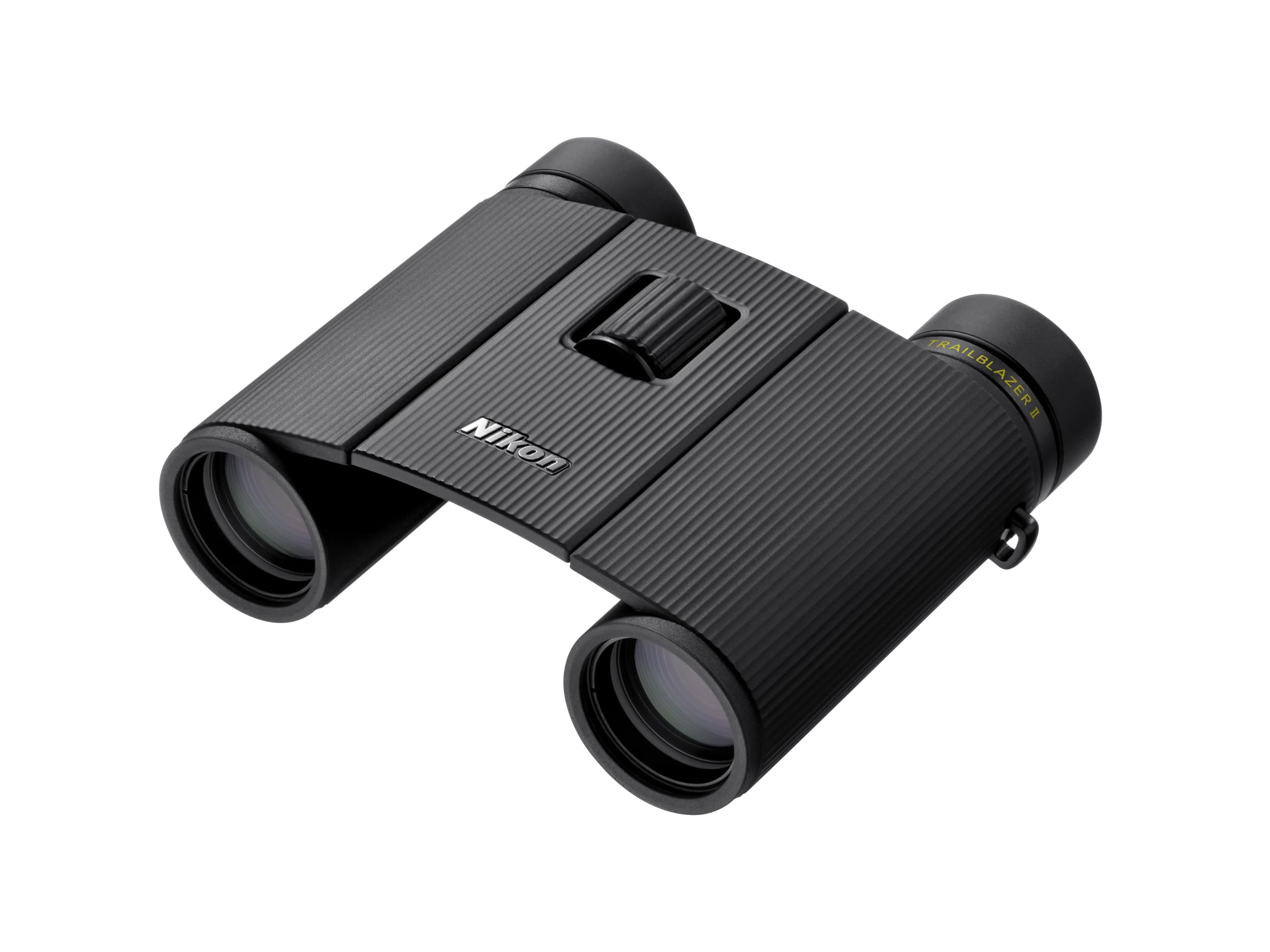
The one you forget you are carrying until something worth seeing appears.
An 8x magnification and 25mm objective are what make this the true pocket option on the list. That smaller glass means a narrower 435-foot field of view, but it also means a body that rides in a hip-belt pocket and never weighs down your pack. Multilayer-coated lenses with a large objective diameter keep the image bright and clear for the size, and the turn-and-slide rubber eyecups with multi-click positioning let you find the right eyepoint fast.
What wins people over is the build — the 8×25 feels well-made in the hand, and owners single out how naturally it fits a hip belt or a glove compartment. Long eye relief keeps the whole field visible even for glasses wearers, and the rubber armoring gives shock resistance plus a firm, comfortable grip. For a hike where you might spot something far off, it delivers a clear enough view that distant wildlife reads obvious, not blurry.
The honest trade-off is the 3.1mm exit pupil and the smaller field — this is a daylight travel tool, not a low-light glassing binocular, and the high magnification crowd will find 8x modest for reaching distant game. Recognize what it is: a compact, waterproof, fogproof companion for the traveler who wants a capable pair in a tiny package, and it rewards that role well.
What it is built for: genuine pocket carry — 8x power in a waterproof, fogproof, rubber-armored frame that tucks into a hip-belt pocket.
Where it stops: the small 3.1mm exit pupil and 25mm objective mean it shines in daylight and fades after sunset.
Made for the traveler: if small and light beats everything and your viewing happens in daylight, this is a sharp little companion.
Not the tool for: serious low-light glassing or anyone who wants a big, bright 50mm view.
9. Vortex Triumph HD 10×28 Binoculars
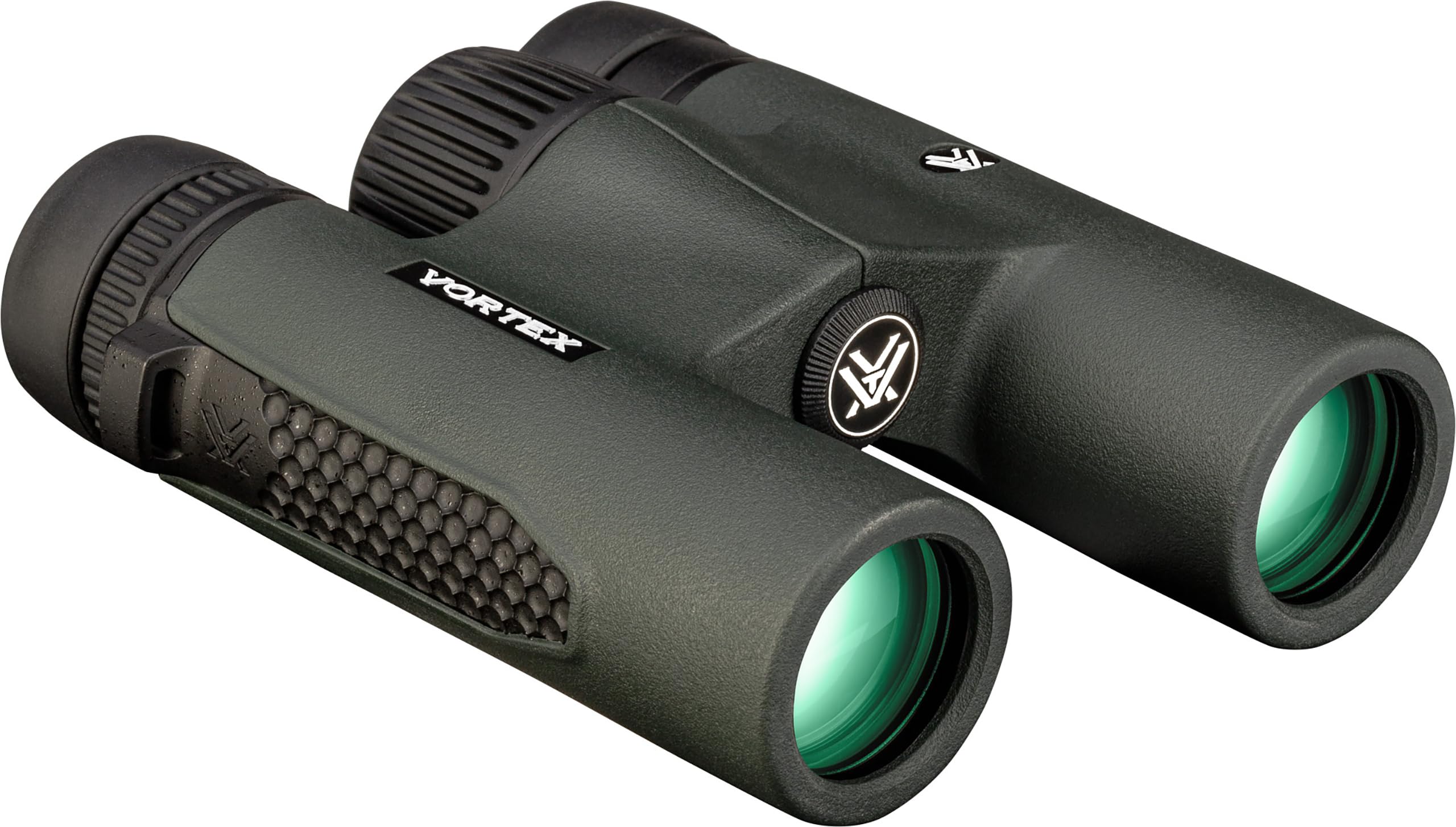
A compact trail companion that shrugs off weather and rough handling.
A 10x magnification over a 28mm objective is the compact package here, and the HD optical system with fully multi-coated lenses is what it brings to the glass. tune elements deliver sharp resolution and strong color, cutting chromatic aberration — that colored fringe you sometimes see on high-contrast edges — for edge-to-edge clarity. Nitrogen purging makes it both waterproof and fog-proof, so a sudden downpour or a cold morning will not cloud your view.
What wins people over is the build quality — the polycarbonate chassis with full rubber armor feels shockproof and secure in the hand, and the whole thing stays light and portable enough to store in a glove compartment. It is tripod adaptable with adjustable rubber eyecups and an adjustable diopter, so you can dial in your most comfortable viewing position. It ships with a neck strap and a deluxe carry case for fast access on the trail.
The standout reassurance is the backing: an unlimited, unconditional, lifetime VIP Warranty that is fully transferable and covers repair or replacement if the unit becomes damaged or defective. On a compact 10x like this, the 2.8mm exit pupil is a daylight first — bright and clear when the sun is up, dimmer as dusk closes in. For a rugged hunt-and-hike companion that is built to take knocks and keep going, it delivers.
The durability story: a nitrogen-purged, rubber-armored, shockproof body backed by a transferable lifetime VIP Warranty makes this the most reassuring pair to knock around in the field.
The daylight limit: a 2.8mm exit pupil on a 28mm objective keeps it crisp by day but not a low-light specialist.
The right call if: you want a compact, near-indestructible trail pair with a warranty that follows the binocular, not just the original owner.
Look elsewhere if: your glassing is mostly at dawn’s last light — a bigger objective pair serves that better.
Know the Specs
Magnification and the shake factor
The first number, like 10x, is how many times closer the image appears. It sounds like a pure upgrade, but higher power also magnifies hand shake. A 7x or 8x pair steadies easily freehand; a 15x wants a rest or a tripod to stay sharp. For wide sweeps of a field or the night sky, lower power often gives you a more usable picture than maximum reach.
Objective lens and exit pupil
The second number, like 42mm, is the diameter of the front glass gathering light. Divide that by the magnification and you get the exit pupil — the light circle at your eye. A 50mm objective at 7x gives a generous 7.1mm exit pupil that stays bright as dusk deepens; a 30mm at 15x gives a slim 2mm that dims fast. Match the exit pupil to your light conditions, not to the biggest magnification on the shelf.
Prisms and lens coatings
BAK4 prism glass is the better grade for a bright, round image with crisp edges. Fully multi-coated lenses put anti-reflective layers on every glass surface, so less light bounces away and more reaches your eye. FMC coating on a budget pair is a strong sign the maker spent money on the optics rather than the box art.
Waterproofing, fog-proofing, and eye relief
Rubber armor absorbs knocks; nitrogen purging or a sealed body keeps moisture and fog out of the tubes. Eye relief is the distance between the eyepiece and your eye — 15mm to 18mm keeps the full view visible for glasses wearers without pressing the lenses to your frames. Check the diopter range too, since a narrow one can leave some eyes without a sharp focus.
Common Questions
What does 10×42 mean on a pair of binoculars?
Are budget binoculars good enough for bird watching?
Is higher magnification always better in binoculars?
What is the exit pupil and why does it matter?
Can these binoculars be used with glasses?
Are these binoculars waterproof and fog proof?
What is the difference between BAK4 and BK-7 prisms?
Can I mount these binoculars on a tripod?
Do small compact binoculars work for stargazing?
How do I focus binoculars so both eyes see clearly?
The Bottom Line
For most people the top budget binoculars winner is the URBANCOAST 12×32, because that 32mm objective and BAK4 glass give you a brighter, wider, more versatile view than the typical entry compact. If the night sky is your reason for buying, the Celestron Cometron 7×50 and its 7.1mm exit pupil is the one to reach for. And for a rugged trail carry you can knock around with, the Vortex Triumph HD and its transferable lifetime warranty is the sensible pick. Match your choice to how and when you actually glass, and any of these will serve you well for a long time.
How we choose
We do not accept paid placement. Every pick is matched to a real buyer and a real use-case; we do not hands-on test units.
Sources
Specifications: manufacturer listings and product documentation. Review insights: verified customer reviews, as of November 2026. Pricing: not shown on this page (it changes often); check the current price via the retailer link.
As an Amazon Associate, Tactical Gear Guy earns from qualifying purchases. This does not affect which products we feature.