Specs are compiled from manufacturer listings and verified buyer reviews and can change over time — please confirm the key details on the product page before buying.
You do not need a full shop to start forging. What you need is a heat source that actually reaches forging temperature, a pair of tongs that hold hot steel without slipping, and something solid under your hammer. Get the forge, the tongs and the anvil right and the rest is practice. Get them wrong and you spend your evenings fighting slipping jaws and cold steel instead of shaping metal.
This guide is built by comparing the manufacturers’ published specifications and the patterns across verified customer reviews, so you get each pick’s real strengths and trade-offs instead of marketing spin.
The picks below cover propane forges from 1 to 3 burners, five- and six-piece tong sets, and one 132-pound anvil, sorted by what each does well. Here is the honest shortlist of the best tools for blacksmith work, from a starter mini forge to a 132-pound steel block that will outlive your hammer.
Top Picks
How To Choose The Best Tools for Blacksmith
A forge is the heart of a blacksmith setup, and the spec that decides whether it works for you is not the chamber length on the listing — it is whether the burner can actually push the steel to forging temperature and keep it there. A single-burner unit reaches 2600°F in a compact chamber and sips propane; a triple-burner unit heats a longer chamber for bigger stock but burns more fuel to do it. Match burner count to the longest piece of metal you plan to put in the fire.
Burner count versus workpiece size
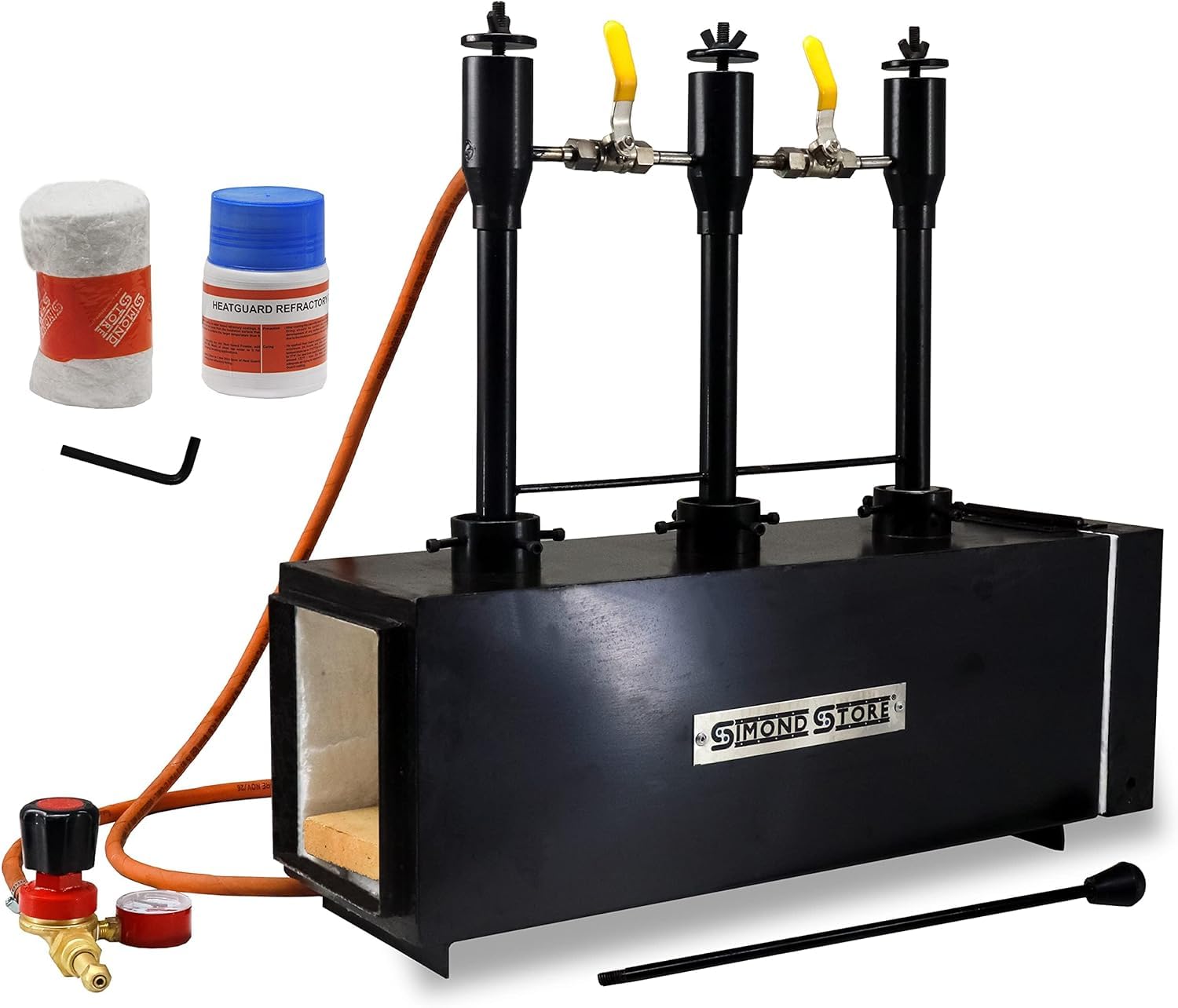
Long stock needs a long hot zone. The triple-burner forge here has an internal chamber of 5.8” (H) x 5.8” (W) x 24” (L), which lets you lay a longer billet across three flames so the whole piece heats evenly. A single burner in a 9.8 x 8.5 x 7.5 inch chamber is perfectly suited to knife blanks, horseshoes and small hardware. If you buy more fire than you need, you pay for it in propane every session.
Insulation layers decide how hard the forge works
Heat you lose through the walls is heat you paid to burn. Look at what sits between the flame and the steel shell: a forge with 30 mm thermal insulation cotton, a 30 mm thermal insulation brick and a layer of refractory cement holds temperature better than a bare shell. Ceramic fiber blanket rated to 2600F does the same job in a lighter body. The more insulation, the less the burner has to run to keep the chamber hot.
Why tong jaws are stock-specific
One pair of tongs cannot grip everything. Flat tongs are built for 3/16 inch flat stock, square jaw tongs for 1/2 inch square stock, and bolt tongs use a deep V groove for 1/2 inch round stock. Blade tongs cover flat stock from 1/8” to 3/8” thick and up to 1 3/4” wide, which is the range most knife makers live in. A wolf jaw pair handles flat, square and round stock when you want one grip that covers a bit of everything.
Anvil weight and hardness in plain terms
An anvil works by refusing to absorb your hammer blow — the mass sends the energy back into the steel. A 132 lbs/60 kg anvil at 55 HRC (a hardness scale where higher numbers resist denting) gives you enough mass that the tool does not walk across the bench under heavy hammering. The horn shape matters too: a round horn for bending and smoothing, a flat horn for straight work, plus hardy and pritchel holes for punching and twisting.
Side-by-Side Comparison
| Model | Best For | Max Temp | Burners | Weight | Amazon |
|---|---|---|---|---|---|
| Portable Propane Blacksmith Forge Triple Burner★ Best Overall | Big chambers and long stock | 2600°F | 3 | 52 pounds | Amazon |
| Nelyrho 2 Burner Propane Forge KitBest Value | Knife blanks and horseshoes | Approximately 2600°F | 2 | 12.54 pounds | Amazon |
| VEVOR Cast Steel Anvil 132 Lbs | Heavy hammering and shaping | — | — | 132 lbs/60 kg | Amazon |
| ATkrou 1 Burner Mini Propane Forge Kit | Small projects and short sessions | 2600°F | 1 | 5.57 kg | Amazon |
| VEVOR Propane Forge Portable Single Burner | Starting out on a budget | 2600°F | 1 | 7.1 kg | Amazon |
| Blacksmith Tongs Set 6-Piece Carbon Steel | Extended forging sessions | — | — | — | Amazon |
| Yoursme 5-Piece Forging Tongs Kit | Beginners building a first tong rack | — | — | 4.01 kg | Amazon |
Detailed Reviews
1. Portable Propane Blacksmith Forge Triple Burner, 2600F Rated
Our pick — 4.5+★ from 800+ verified ratings; the strongest balance of quality and price.
Three burners and a 24-inch chamber give you a hot zone long enough for real billets.
If your work has outgrown knife blanks and you are laying longer stock into the fire, this is the forge that keeps up. Three burners spread heat across an internal chamber measuring 5.8” high, 5.8” wide and 24” long, so a long billet gets an even soak instead of a hot spot in the middle and cold ends. That chamber length is the whole reason it takes the top spot: it works for hammers, tongs, welding tools and full knife profiles without you having to shuffle the steel around mid-heat.
What wins people over is the shell and insulation, which feel built for hard use rather than a kit that rattles after a month. It is the crowd favorite here at 4.5+ stars across 800+ ratings, and the quality of the construction is the thing buyers talk about above everything else — the shell and insulation feel like a forge that was meant to be used hard, not a kit that rattles after a month. Assembly is straightforward, and the unit is rated to 2600°F, which is enough to bring most common forging steels up to working temperature.
The honest catch is consistency. Buyers report it heats fast but the temperature inside the chamber is not always even, so you learn to move the workpiece rather than trusting one spot to hold the same heat. Some also note the clips on the burner assembly are the first thing to give trouble. Neither turns this into a bad forge — it turns it into a forge you learn. Weight is the other reality: at 52 pounds it is a shop fixture, not something you carry to a friend’s garage on a whim.
What earns it first place
- A 24” internal chamber, 5.8” x 5.8” in cross-section, fits long billets and full knife profiles.
- Three burners rated to 2600°F deliver enough heat for hammers, tongs and welding tools.
- Construction quality is the most-praised trait — it feels built for repeat sessions.
- Assembly is simple enough that beginners get fired up the same day.
Where it asks more of you
- Chamber temperature is not perfectly even, so you rotate the workpiece as you heat.
- Burner clips are the weak point over time — handle the assembly gently.
- 52 pounds makes it a fixed shop forge rather than a portable one.
Buy this one if: you forge longer stock, run a shop bench, and want a chamber big enough to grow into.
Think twice if: you need to move the forge between locations — the 52-pound body and 24-inch chamber are built to stay put.
2. Nelyrho 2 Burner Propane Forge Kit, Max 2600°F, Knife Making
Two burners, a 12.54-pound body, and one less thing to adjust before you strike.
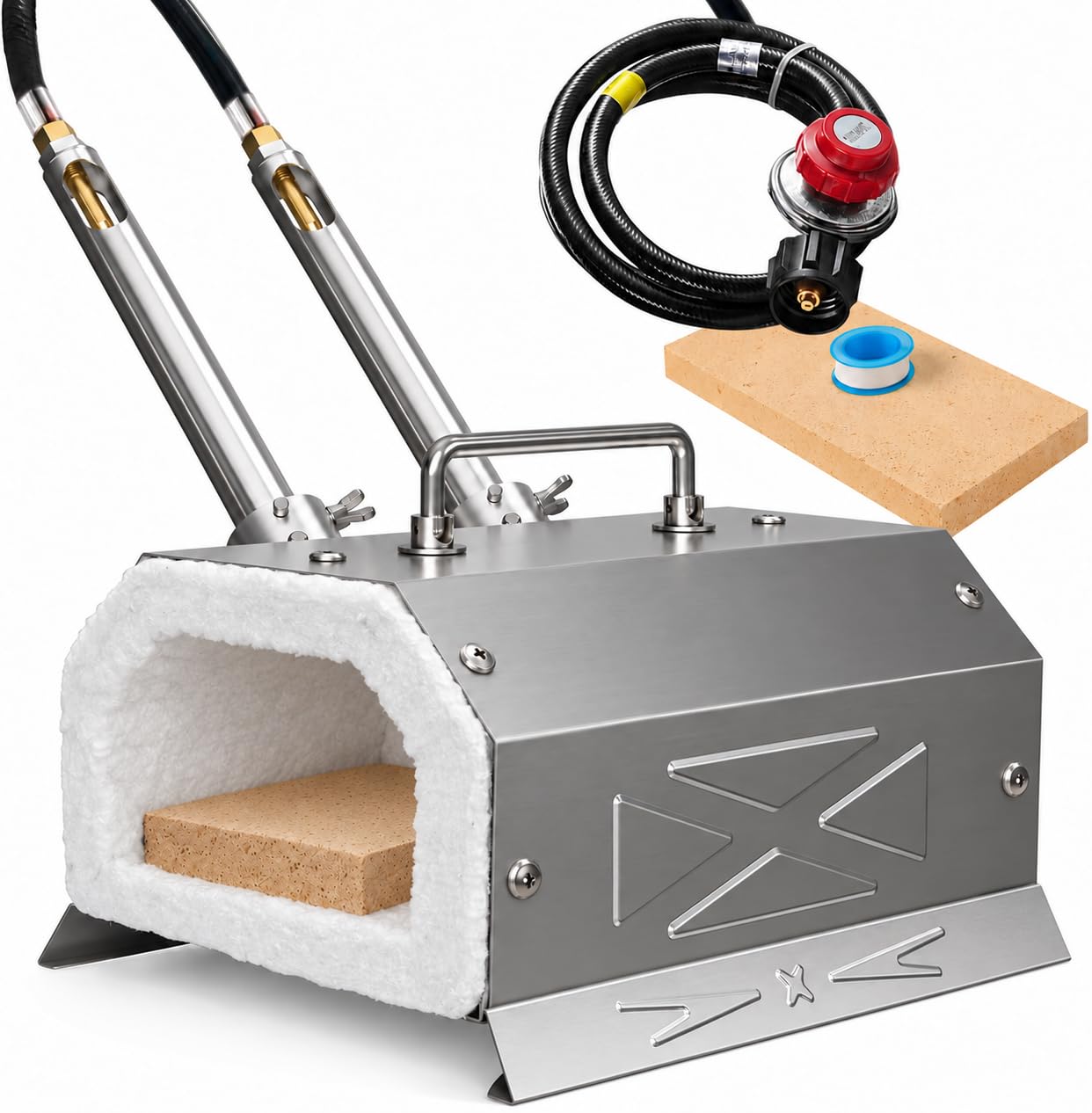
Here is the weight contrast that matters most in this lineup: this forge weighs 12.54 pounds while the triple-burner pick above sits at 52 pounds. That 4.1x gap is the difference between a forge bolted to a bench and a forge you can carry out to the driveway, cool down, and tuck into a corner of the garage. The top handle is there precisely for that — once the body has fully cooled, you move it by hand.
What it does in the fire is just as useful. Two burners bring the chamber to approximately 2600°F in 10 minutes at 15 PSIG (pounds per square inch of gas pressure, the number your regulator reads), measured at the burner flame outlet inside the chamber. Those figures come with a real caveat the maker states plainly: actual heating time and temperature vary with workpiece size and conditions. In practice that means a knife blank gets hot fast and a thick block takes longer, which is true of every forge here.
Beginners get a genuine break on setup. The air intakes are fixed, so there is no air gate to fiddle with before you light up — you connect the included 0–30 PSIG adjustable regulator and go. The hose and regulator are CSA certified, and the kit ships complete with two burner tubes, two brass gas nozzles, a propane hose splitter, an extended 9 × 4.5 × 0.8-inch fire brick and PTFE tape. What is not in the box: a propane tank, tongs, hammer, anvil and protective gear, all of which you supply yourself. The chamber is compact enough that long stock needs the front and rear openings rather than the door.
Where it shines: compact, light and quick to light. The stainless steel shell with ceramic fiber insulation does the heat-retention job without the bulk of a full-size shop forge, and the fixed intakes remove the one adjustment that trips up first-timers.
The flip side: the two-burner chamber is a small-project chamber. If you routinely heat bar stock longer than the fire brick, look at the triple-burner forge instead — this one asks you to feed the steel through the openings in stages.
Right call for: the hobbyist forging knife blanks and horseshoes who wants 2600°F capability without a permanent shop installation.
Pass it by if: you already know you will be heating long billets — the compact chamber will frustrate you more than the savings help.
3. VEVOR Cast Steel Anvil, 132 Lbs/60kg Single Horn Anvil
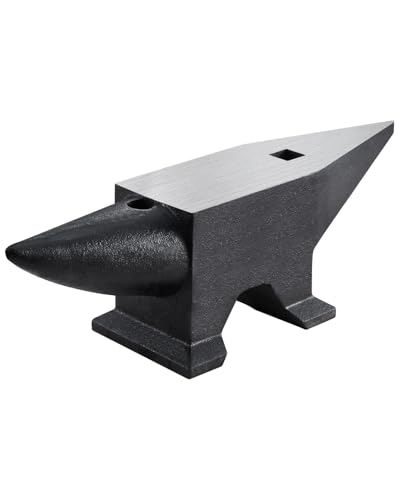
A 132-pound block of drop-forged steel that turns your hammer blow back on the workpiece.
Nothing in this lineup changes your forging as much as mass under the hammer. This anvil is 132 lbs/60 kg of drop-forged, high-grade steel rated at 55 HRC, and that hardness is what keeps the face from denting under repeated strikes. The solid base keeps it planted, and the fully polished surface — corrosion-proofed through a quenching treatment with a spray coating to slow oxidation — gives you a face that stays clean enough to read your hammer marks.
The working features are what turn an anvil into a tool rather than a paperweight. A round horn handles smoothing and bending, the flat horn takes straight shaping, and the hardy hole and pritchel hole earn their keep on punching and twisting accessories. The wide countertop and flat surface give you a generous work area that takes long sessions of thumping without complaint. It is a metalworker’s anvil in the classic sense — riveting, flattening, forging and forming all fall inside its remit.
What owners praise most is simply that it is solid: heavy-duty, fit for a lifetime of work, and sized so it does not eat your whole bench — the compact footprint earns its own share of goodwill for a tool this heavy. There is a real caveat on the holes. The pritchel hole has been reported as misshapen on some units, so if punching is central to your work, inspect that hole carefully when the crate arrives. Check it on day one rather than after you have already built a bench around it.
Why it earns a top slot: 55 HRC hardness, a 132 lbs/60 kg body and both horns give you a serious forging surface — the kind of tool that outlasts the rest of your kit.
This is your anvil if: you hammer heavy and want a face that holds its shape and a base that stays put.
Look elsewhere if: punching and twisting through the pritchel hole is core to your work — inspect that hole the moment it lands.
4. ATkrou 1 Burner Mini Propane Blacksmith Forge Kit, 2600°F
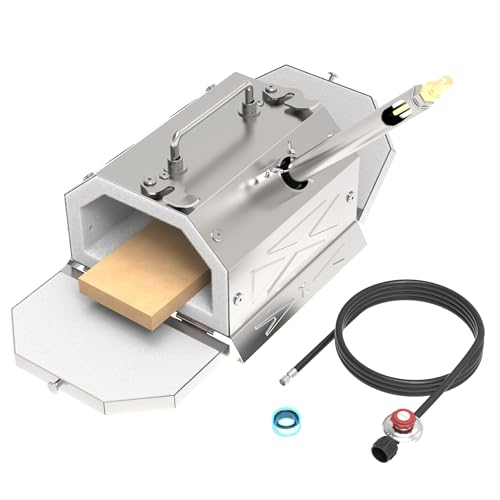
The double-door trick: shut both doors and the same burner brings steel up faster on less gas.
Most budget forges make you choose between losing heat out an open mouth and choking the flame. This one has two doors you can close, which traps heat in the chamber so the steel comes up quicker and you burn less propane doing it. The body is heavy-duty stainless steel with a plasma surface treatment — a finish applied to the steel so it copes with high-temperature work — and the interior is lined with a 1400 grade ceramic fiber blanket rated up to 2600F to hold that heat where the work is.
It is the setup that suits someone dipping a toe in at 5.57 kg. Reliability lands as one of the strongest themes in owner feedback, and the quality of the unit holds up alongside it — a solid little starter forge for small projects that does not demand a dedicated shop. The manufacturer also gives you real operating guidance rather than leaving you to guess: apply refractory cement and cover it with ceramic fiber, and keep one door open during extended high-temperature use to prevent overheating and maintain airflow. After the session, disconnect the hose or burner so residual heat cannot damage them.
Know the limits before you buy. Heat output draws mixed reactions — plenty of owners say it brings metal up fast, while others find it will not get hot enough for forging certain steels. The chamber is also described as small, and durability is a weaker theme than quality in the feedback. For small knife projects and beginner practice this is a fair tool; for heavy forging of thick stock, it is not the forge you want.
What makes it a smart first forge
- Double doors let you close the chamber and heat steel faster while saving propane.
- 1400 grade ceramic fiber blanket rated to 2600F keeps the interior hot.
- Plasma-treated stainless steel body stands up to high-temperature use.
- At 5.57 kg it is easy to set up, store and move between sessions.
Keep your expectations honest
- Heat output splits opinion — fine for small project steels, not enough for everyone.
- The chamber is genuinely small, so long stock is out of the question.
- You need to apply refractory cement and follow the door-open guidance for long burns.
Start here if: you are learning on knife-sized steel and want a small, well-insulated forge that is cheap to run.
Not for you if: your plan involves thick stock or long billets — the small chamber and modest heat ceiling will hold you back.
5. VEVOR Propane Forge Portable, Single Burner 2600°F

Out of the crate and into the fire — the key parts are already bolted on.
The 3-minute preheat is the number to know here. This single burner reaches a maximum of 2600°F, enough for most metals, and the maker says you can begin forging after three minutes of preheating. It arrives as integrated construction — every key accessory pre-installed — so once you connect it to a propane tank you are ready to make blacksmithing work immediately. For anyone who dreads a build manual, that alone is worth a serious look.
The insulation is where the money went: 30 mm thermal insulation cotton, a 30 mm thermal insulation brick and a refractory cement layer. Inside are 30 mm of thermal insulation cotton, a 30 mm thermal insulation brick, and a layer of refractory cement on top — three layers working to keep heat in and reduce energy leakage, which is what lets a single burner do more than its size suggests. The body is high-quality cold rolled plate with a high-temperature baking enamel finish, and the burner is 45# steel in a hexagonal design for stability.
The chamber is 9.8 x 8.5 x 7.5 inches — a small forge, and buyers treat it as exactly that: a great little starter option for knife making and small forging jobs. Heat distribution is even and the temperature rises quickly. The pipe interface fits the mainstream propane tanks in common use, and the special handle design makes carrying it out to forge convenient. Where it falls short is scale: it is a small-project tool, not a production chamber, and the weldless build is worth checking over on arrival.
The case for it: ready-to-run construction, three insulation layers and 2600°F from a single burner make this the least fussy entry into forging.
The trade-off: a 9.8 x 8.5 x 7.5 inch chamber caps how big a workpiece you can heat — long stock simply does not fit.
Grab it if: you want to forge the day it arrives without turning a single bolt.
Leave it if: your workpieces run larger than a knife blank or a horseshoe.
6. Blacksmith Tongs Set, 17 Inch Carbon Steel, 6-Piece
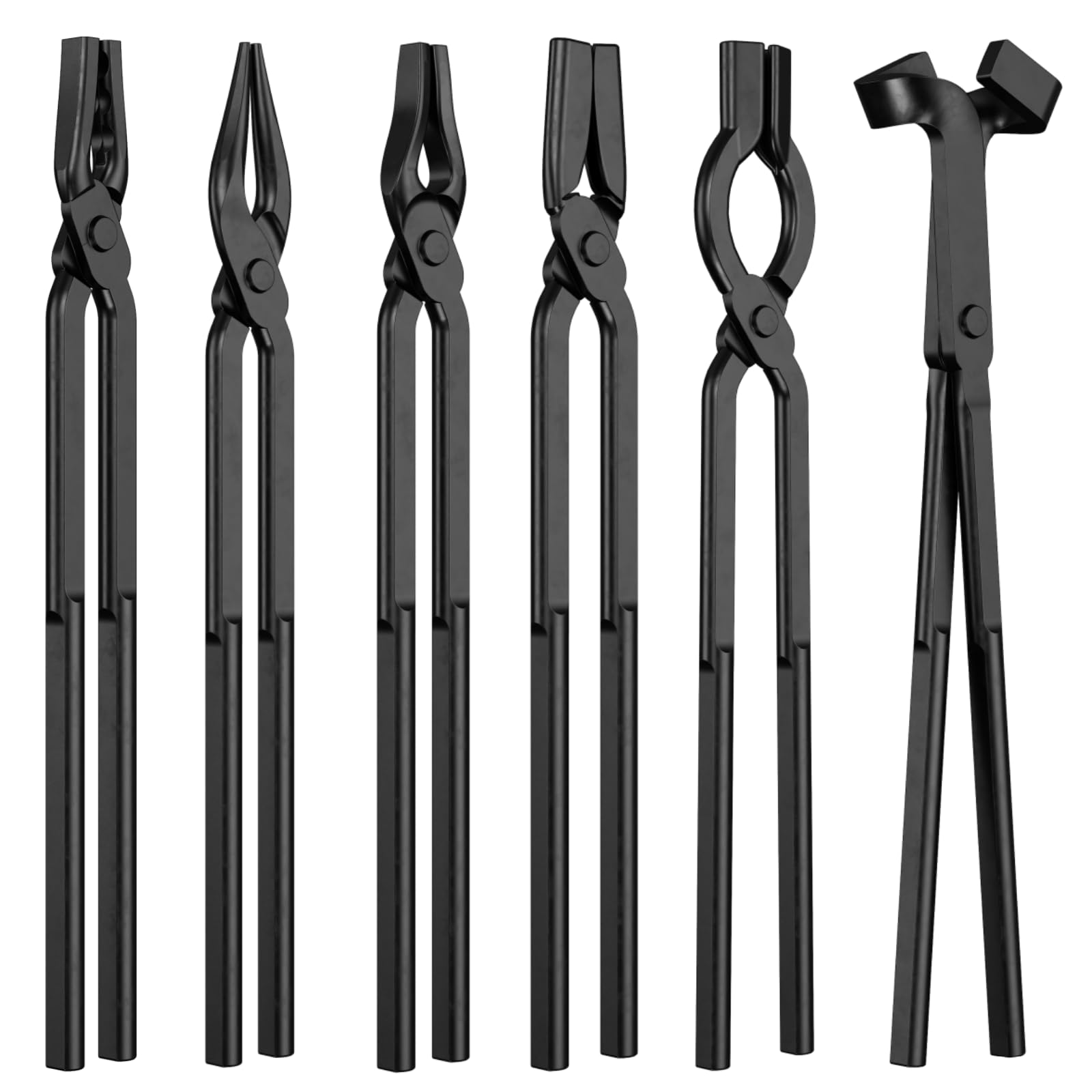
Heat-treated carbon steel tongs built to keep your hand steady through a long session.
These are 17-inch carbon steel tongs, and the length is the point: the extra reach keeps your knuckles further from a 2600°F chamber than a stubby pair will. The build uses a precision heat treatment — heating, quenching and tempering — to balance hardness against toughness, so the jaws resist deformation while still taking a hammer blow without cracking. The maker describes a dense, uniform grain structure from expert forging, which is the sort of internal quality you cannot see but do feel in how the jaws hold up over months.
The grip is where these separate from a cheaper set: an ergonomic carbon steel handle balanced to cut fatigue over long sessions. An ergonomically tune design with weight balance and an ergonomic handle is aimed squarely at reducing fatigue in extended use, and the handle is carbon steel with an ergonomic grip. Six pieces run 17 inches long and 8 inches wide overall, and the set meets manufacturing and safety standards.
Be realistic about the depth of proof here: this set is new enough that long-term owner feedback has not built up the way it has for the forges in this lineup. What you are buying is a well-specified premium tool — heat-treated carbon steel, a 17-inch reach and six pairs — rather than a set with a decade of abuse behind it. If you want the deepest track record, the five-piece set below costs less and carries a much longer history.
For the dedicated craftsperson: six pairs, 17 inches of reach and heat-treated carbon steel jaws that balance toughness with hardness.
Worth it for: the smith who forges for hours and wants ergonomic handles and a long reach at the fire.
Second-guess it if: you are just starting out and would rather build experience on a cheaper kit first.
7. Yoursme 5-Piece Forging Tongs Kit

Five jaw shapes for the price of one, finished in linseed oil to keep rust off.
Every tong in this five-piece kit is forged from heavy-duty alloy steel and finished with linseed oil to protect against rust and corrosion. They articulate fully and hold the workpiece with real vise-like grip during heavy hammering. That grip strength is the trait the set is known for, and it is why this remains the sensible first tong purchase even though it is the cheapest way into the category.
What you get is coverage rather than a single do-everything pair. Flat tongs take 3/16 inch flat stock with a smooth jaw face that will not scratch your work. Square jaw tongs handle 1/2 inch square stock. Bolt tongs use a deep V groove for 1/2 inch round stock and hold deadlocked under heavy pounding. Blade tongs cover flat stock from 1/8” to 3/8” thick and up to 1 3/4” wide — the knife-making range. Wolf jaw tongs hold flat, square and round stock when you want one pair for mixed work.
For context on how much steel that is, the whole five-piece set weighs 4.01 kg while the VEVOR single-burner forge above weighs 7.1 kg — you are carrying a tong rack that is around half the mass of the forge itself. These measure 17.13 inches long and 3.94 inches wide. An occasional pair arrives with a jaw that is not perfectly aligned, so check each set against your stock sizes on day one while swaps are easy.
Why beginners keep buying it: five distinct jaw types in alloy steel with a rust-protecting linseed oil finish, covering flat, square, round and blade stock in one purchase.
The catch to know: jaw alignment can vary from unit to unit, and these are working tongs rather than polished showpieces — expect forge marks.
The sensible starter buy: grab it if you need every common jaw shape on day one without spending premium money.
Skip only if: you already own dedicated blade tongs and want one long-reach premium pair instead of a full rack.
Know the Specs
Burner count and chamber size
Burner count tells you how much heat the forge can pour into a chamber, and chamber size tells you what will fit inside it. A three-burner unit with a 24-inch chamber heats long billets across an even hot zone, while a single burner in a 9.8 x 8.5 x 7.5 inch chamber is built for knife blanks and small work. Match the two to your longest workpiece, then accept that more burners mean more propane per session.
Max temperature rating
Every forge in this lineup is rated to 2600°F or approximately 2600°F, which is the number that matters because forging common steels needs heat at the high end of a propane flame. A rating is a ceiling, not a promise about your workpiece: the maker of the two-burner kit notes that actual heating time and temperature vary with workpiece size and operating conditions. Thin stock heats in a few minutes; a thick block takes longer in any forge.
Insulation and refractory layers
Insulation is what stops your fuel money from leaking through the walls. Look for specific layers — 30 mm thermal insulation cotton, a 30 mm thermal insulation brick and refractory cement, or a 1400 grade ceramic fiber blanket rated up to 2600F. More insulation means the burner cycles less to hold temperature, and one forge’s double doors let you close the chamber to heat steel faster while saving propane.
Tong jaw geometry
Tongs are sized by the stock they grip, not by how they look. Flat tongs fit 3/16 inch flat stock, square jaw tongs fit 1/2 inch square, and bolt tongs with a deep V groove hold 1/2 inch round stock. Blade tongs span flat stock from 1/8” to 3/8” thick and up to 1 3/4” wide. Wolf jaw tongs cover flat, square and round stock together, which is why a mixed rack saves you hunting for the right pair mid-heat.
Common Questions
What propane tank fits these blacksmith forges?
How long does a propane forge take to reach forging heat?
Which tongs do I need for knife making?
Is a single burner forge hot enough for forging steel?
What does 55 HRC mean on an anvil?
Do I need refractory cement on a new forge?
Can I forge without an anvil?
How do I stop my forge insulation from breaking down?
Is a two-burner forge better than a three-burner?
What tools do I still need to buy after the forge?
The Bottom Line
For most people setting up a shop, the tools for blacksmith winner is the Portable Propane Blacksmith Forge Triple Burner because its 24-inch, triple-burner chamber heats long stock evenly and its build quality is the trait owners praise above all else. If you want a lighter, more portable two-burner kit that lights quickly and skips the air-gate adjustment, grab the Nelyrho 2 Burner Propane Forge Kit.
Start with the fire and the tongs together. A 2600°F forge is useless without tongs sized to your stock, and tongs are useless without a chamber to heat steel in.
How we choose
We do not accept paid placement. Every pick is matched to a real buyer and a real use-case; we do not hands-on test units.
Sources
Specifications: manufacturer listings and product documentation. Review insights: verified customer reviews, as of November 2026. Pricing: not shown on this page (it changes often); check the current price via the retailer link.
As an Amazon Associate, Tactical Gear Guy earns from qualifying purchases. This does not affect which products we feature.