Specs are compiled from manufacturer listings and verified buyer reviews and can change over time — please confirm the key details on the product page before buying.
Buying toddler tap shoes is really about two things: a fit that survives a whole season of class, and a tap plate that actually makes the right sound. Get the size wrong and your little dancer will be hobbling through “shuffle-step” with pinched toes. Get the tap wrong and the shuffle comes out as a dull thud instead of a clean click. This guide sorts the real contenders by how forgiving the fit is, how well the taps hold up, and how easy the shoe is for a small child to fasten alone before class starts.
This guide is built by comparing the manufacturers’ published specifications and the patterns across verified customer reviews, so you get each pick’s real strengths and trade-offs instead of marketing spin.
You will see the sizing quirks named openly, because narrow toe boxes and runs-small reputation are the single biggest headache in toddler dance footwear. Here is a clear, no-nonsense ranking of the best toddler tap shoes for class, recital and first steps.
Top Picks


How To Choose The Best Toddler Tap Shoes
Toddler feet grow fast and a tap shoe is stiffer than the sneakers your child lives in, so the fit question matters far more than the brand name. Start with a measured foot length in inches or centimeters and match it to the maker’s own chart. Then decide how your child will get the shoe on and off, because a ribbon tie that looks adorable in a photo is a knot a three-year-old cannot undo during a bathroom break.
Measure the foot, do not buy the usual size
Several makers in this category openly warn that their shoes run small or narrow, and a tap shoe cannot stretch much because the toe box is reinforced. The Beginner Tap Dance Shoe listing, for example, publishes a full foot-length chart from 6 1/2 inches up to 9 3/4 inches so you can size by measurement instead of guessing. Stand your child on paper, mark the longest toe, and bring that number to the chart.
Fastening that a toddler can manage
A ribbon tie means two hands, a loop and a bow, which is a lot to ask of a young beginner. A velcro closure or an easy-strap Mary Jane lets a child put the shoe on alone and lets a teacher adjust it in seconds between numbers. If your dancer is closer to four and loves the ribbon look, tie it once and slip the shoe on around it; if class is a rush every week, velcro is the kinder choice.
What makes the taps sound right
The tap plates are what separate a tap shoe from a plain leather flat, and they need to be screwed or riveted on solidly so they do not work loose. A scored rubber skid pad behind the tap gives grip and keeps a small dancer from sliding during turns. Some shoes also add a rubber sole patch for the same reason, steadying the foot on a slick studio floor.
Side-by-Side Comparison
| Model | Best For | Fastening | Upper Material | Weight / Footbed | Amazon |
|---|---|---|---|---|---|
| Capezio Girls Jr. Tyette Tap Shoe★ Best Overall | First-time tappers needing a padded start | Grosgrain ribbon tie | Patent leather or PU leather | 6.6 ounces; foam padded footbed | Amazon |
| Linodes Upgraded Easy Strap Tap ShoeBest for Self-Dressing | Kids who dress themselves fast | Easy strap Mary Jane | Patent or PU leather | —; padded sole | Amazon |
| Leo Girls’ Rhythm Tap | Arch support on a slim foot | Velcro closure | Patent leather | 4.6 ounces; padded insole | Amazon |
| Beginner Tap Dance Shoe (Jazz Tap) | Sizing by exact foot length | — | — | 7.05 ounces; — | Amazon |
| Capezio Girls Future Star Tap Shoe | Snug support for young dancers | — | — | 8.82 ounces; light toe box | Amazon |
| Bloch Dance Children’s Tap-On Leather Tap Shoes | Leather-footed beginners | Tap-on leather | Leather | 1.54 pounds package | Amazon |
Detailed Reviews
1. Capezio Girls Jr. Tyette Tap Shoe
Our pick — 4.5+★ from 13,500+ verified ratings; the strongest balance of quality and price.
The padded ribbon-tie tap shoe most often recommended for a first season of class
The Jr. Tyette earns the top spot on the strength of its comfort build: a foam padded footbed, a padded collar and a small curve cut at the back of the heel, called an Achilles notch, so the shoe does not dig in during heel drops. It comes in shiny black patent leather, caramel PU leather or white PU leather, with a ribbon tie across the center front and a star printed cotton lining inside. At 6.6 ounces it stays light on a small foot, and a rubber sole patch under the ball gives grip on a slick studio floor.
What wins people over is the build: the leather and stitching hold through a full season of weekly class. The leather and stitching hold up through a whole season of weekly class, and the padded collar keeps complaints about rubbing to a minimum, which is unusual in a shoe this stiff. Parents also like that the ribbon tie gives that classic tap look without a hard buckle to fight with. The ratings back that up: 4.5+ stars across 13,000+ reviews is a serious vote of confidence for a toddler product.
Here is the honest catch. Capezio’s sizing chart runs small and the toe box is narrow, so a wide toddler foot can feel pinched. Measure the foot in inches and go up a half size rather than trusting the child’s everyday sneaker size. The ribbon tie also means a bow to retie after every bathroom trip, so a very young beginner may need help. Compare it to the Leo Rhythm below on weight — 6.6 ounces versus 4.6 ounces — and the Leo is lighter, but the Jr. Tyette packs in more heel padding.
Why this one leads the pack
- Foam padded footbed, padded collar and Achilles notch for comfort through class
- Rubber sole patch steadies the foot on a slick floor
- Patent, caramel or white PU leather across three colorways
- Build quality holds through a full season
Before you pick a size
- Sizing runs small and narrow, so measure the foot in inches
- Ribbon tie means a bow to retie for a young beginner
Best fit for: a first-time tapper whose parents want maximum padding and a classic look.
Measure first: a wide toddler foot will want a half size up.
2. Linodes Upgraded Unisex-Child Easy Strap Tap Shoe
The one that lets a three-year-old slip into tap shoes without a fight
The Linodes Mary Jane is built around a single idea: a child should be able to get the shoe on alone. The easy strap replaces a ribbon tie, and the padded heel collar protects the Achilles tendon while a padded sole cushions each step. You get shiny black leather or a caramel tan PU leather upper over a synthetic lining that keeps the shoe light and flexible for a beginner’s movements. The sound boards sit on screwed-on taps, so the plates are fixed firmly rather than pressed on. What buyers praise most is the quality, with ease of use a close second — the shoes go on fast and stay put.
Where this pick needs a caution is size. The shoes run small, and the fit reports divide sharply between those who find them right and those who do not. Order by measured foot length and go up a size if your child is between sizes or has a wide foot. It is a smaller listing than the Capezio Jr. Tyette above, so there is less of a track record to lean on, but the feedback is consistent on quality and easy-on convenience.
The daily-win detail: an easy strap plus a padded collar turns shoe-up into a ten-second job your dancer can do solo before class.
Reach for this if: your child dresses alone and you are tired of retying ribbons.
Order a size up: the shoes run small, so measure the foot first.
3. Leo Girls’ Rhythm Tap
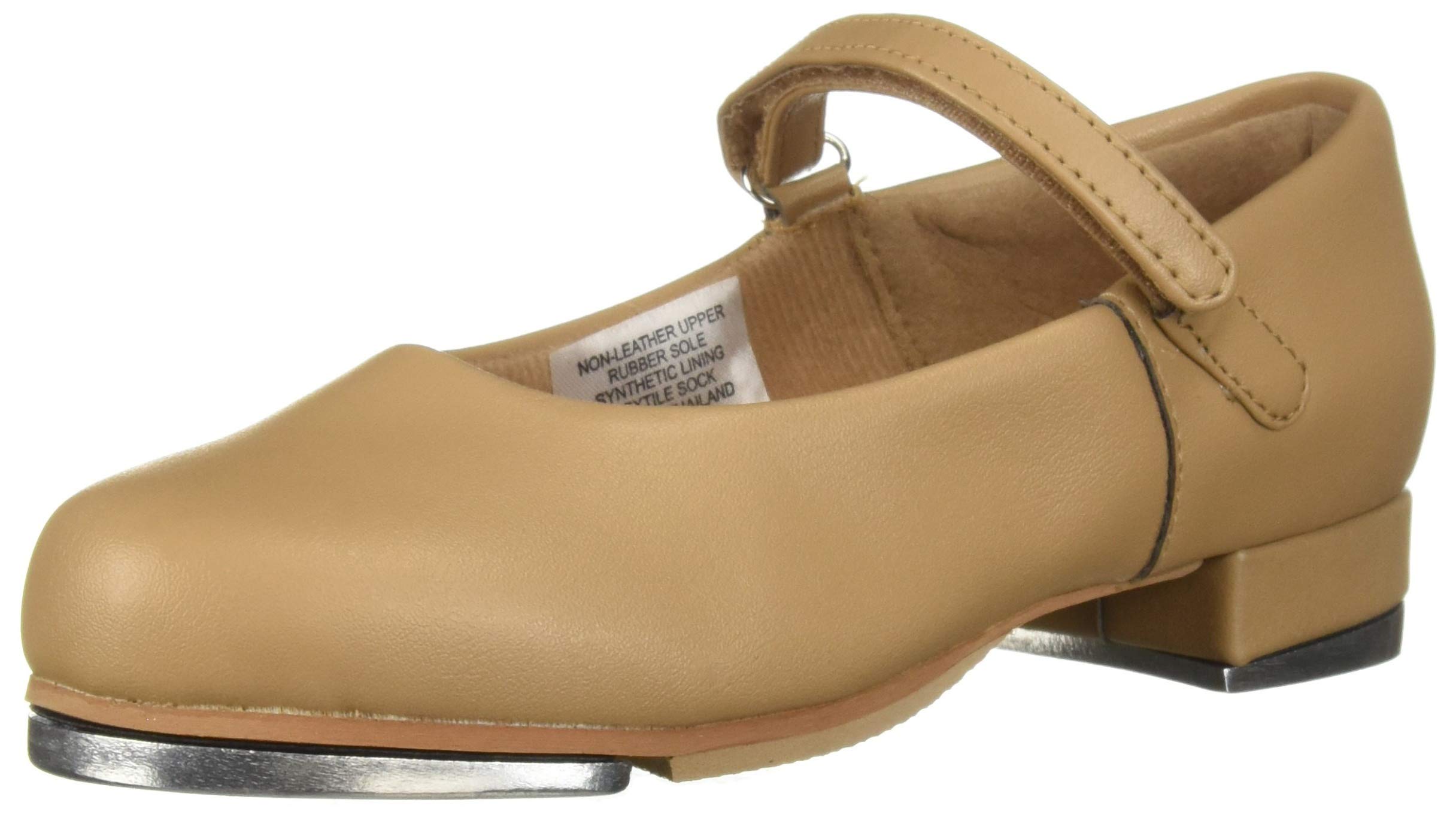
Light at 4.6 ounces, with a raised instep for extra arch support
At 4.6 ounces this is the lightest shoe on the list, and on a small dancer that lightness shows in how freely the foot lifts and lands. The patent leather upper carries a raised instep that gives extra arch support, and a scored rubber skid pad sits behind the tap for stability on turns. The velcro closure adjusts to fit a range of foot shapes, and the padded insole softens each step. What wins people over is the quality — buyers call it comfortable and very pretty, with feminine styling aimed at the young and tween dancer.
The trade-off lives in the strap. The velcro closure is easy to adjust, but the strap and its hardware are the parts most likely to show wear, and the fit runs narrow for some children. Durability feedback splits, with the strap coming loose on some pairs. Treat the velcro as the wear point and check it before each class. Compared to the Capezio Jr. Tyette, the Leo weighs 4.6 ounces against 6.6 ounces, so it feels lighter and closer to barefoot, but the Tyette has more heel padding.
Where it shines: the raised instep puts support under a flat toddler foot, which matters for a child who taps for a full class.
Watch the strap: velcro is the one part likely to loosen over a season, so give it a tug before class.
Good match for: a slim-footed dancer who needs arch support and loves the patent leather look.
Try another if: your child has a wide foot, since the fit runs narrow.
4. Beginner Tap Dance Shoe

The pick for parents who want to size the shoe by exact foot length
This pair earns its place on the strength of its published chart. The listing spells out a full foot-length guide that runs from 6 1/2 inches to 9 3/4 inches in half-centimeter steps, so you can match the shoe to a measured foot instead of guessing a size. At 7.05 ounces it is solidly built, with a durable construction that holds up under regular class wear. The shoes are described as comfortable and good value for a beginner, and the durable build is one of the qualities buyers mention most.
The honest limitation is fit consistency. Some buyers find the shoes perfect, while others report them running as much as 1.5 sizes too large. A few pointed out that the pair looks worn on arrival, so check the taps and the finish at the door. That combination means you should size carefully, using the chart and not the label. Compared to the Leo Rhythm at 4.6 ounces, this pair weighs 7.05 ounces and feels beefier underfoot — heavier, but built to take knocks.
What parents get right here
- Full foot-length chart from 6 1/2 to 9 3/4 inches
- Durable build that holds up under regular class wear
- Comfortable and good value for a beginner
What to check on arrival
- Fit runs inconsistent, with some reporting 1.5 sizes too large
- A few pairs arrive looking worn, so inspect the taps
Worth choosing if: you want a measured fit and a tough shoe for a beginner.
Bring a tape measure: fit is inconsistent, so rely on the chart, not the size label.
5. Capezio Girls Future Star Tap Shoe

A snug, supported fit for the small dancer who wants a locked-in feel
The Future Star leans into a snug fit rather than room, with a firm heel counter that holds the back of the foot steady and a light toe box for support. A non-slip rubber pad under the ball keeps a young dancer from sliding through turns. Capezio built this one for kids who are ready to work, and the shoe is described as well suited to young dancers and stylish besides. What buyers praise most is the quality, with comfort a close second.
The catch is sizing. The fit is the most debated point here, with a number of parents finding the shoe narrow and not true to size. If your child has a wide foot, go up or look elsewhere. The package runs 8.82 ounces against the Jr. Tyette’s 6.6 ounces, so it is the heftier of the two Capezios — more support underfoot, less of that feather-light feel. For a child who taps in a studio with a slick floor, the snug fit and non-slip pad together keep the foot planted.
The support read: a firm heel counter and light toe box hold a small foot in place while the non-slip pad keeps turns steady.
Pick this for: a narrow-footed young dancer who wants a locked-in, supported feel.
Wide feet beware: sizing runs narrow and not true to size, so try up a half size.
6. Bloch Dance Children’s Tap-On Leather Tap Shoes

The leather tap-on from a dance brand that started with handmade pointe shoes
Bloch has been in technical dance footwear since 1932, when Jacob Bloch founded the brand in Sydney and built it on handmade pointe shoes. The children’s tap-on takes that technical background into a leather upper that hugs the foot. Tap-on refers to the way the shoe slips on and the taps sit under the sole, and the leather outer gives a bit more structure than a synthetic PU option. This is the pick for a parent who wants a recognizably serious dance shoe on a toddler’s foot.
The limitation is fit data. This pair has the thinnest published record of the group by far, so you are relying on the brand’s dance heritage and the leather build rather than a thick stack of feedback from a season of class. The sensible move is to order by measured foot length and confirm the return policy before you commit, since Bloch’s chart defines the sizing rather than a child’s everyday sneaker size. The package runs heavier than the Capezio picks here, at 1.54 pounds, which is a shipping weight rather than a per-shoe figure. Given the leather and the brand’s technical roots, it is the option to consider when you want a sturdier upper than a PU shoe offers.
Build pedigree: a leather upper from a brand that has made technical dance footwear since 1932.
The gap to know: the thinnest feedback of the group, so order by measured length and keep the receipt.
For the leather-first buyer: a parent who wants a sturdier upper on a first tap shoe.
Reduce the risk: size by measured foot length and check the return window first.
Know the Specs
Foot-Length Sizing Versus Label Size
A toddler’s everyday sneaker size is a poor guide for a tap shoe, because the reinforced toe box cannot stretch to fit a narrow foot. The reliable number is the measured foot length in inches or centimeters, matched to the maker’s own chart — the Beginner Tap Dance Shoe listing publishes a full chart from 6 1/2 inches to 9 3/4 inches for exactly this reason. Measure heel to longest toe, then size by that figure. When a listing warns that it runs small or narrow, add a half size rather than trusting the sneaker label.
Ribbon Tie Versus Velcro and Easy Strap
The fastening decides how independent your child is at class. A grosgrain ribbon tie gives the classic tap look, but it is a bow to retie after every bathroom trip, so a very young beginner needs help. Velcro and easy-strap closures adjust to a range of foot shapes and let a child put the shoe on alone. If your dancer is closer to four and loves the ribbon look, tie it snug once and slip the shoe on around it. If class is a weekly rush, velcro or a strap is the kinder choice.
What the Tap Plate and Sole Patch Do
The tap plate is what makes the shoe a tap shoe, and it needs to be fixed firmly — screwed or riveted on — so it does not work loose over a season. A scored rubber skid pad behind the tap, and a rubber sole patch under the ball, both add grip so a small dancer does not slide during turns. Capezio’s Tele Tone toe and heel taps go further, giving a deeper, resonating sound than a plain plate. For a beginner, the firm-fixed plate and the grip patch matter more than the tone.
Padding, Collar and Heel Support
A tap shoe is stiffer than a sneaker, so the padding is what keeps a small foot comfortable through a full class. Look for a foam padded footbed and a padded collar, plus an Achilles notch — a small curve cut at the back of the heel — so the shoe does not dig in during heel drops. A firm heel counter holds the back of the foot steady, and a padded insole softens each step. Those details decide whether a child wears the shoe without complaint or fights to take it off.
Common Questions
How do I size toddler tap shoes when every listing runs differently?
Are ribbon ties or velcro straps better for a toddler tap shoe?
Do toddler tap shoes run small or narrow?
How long should a pair of toddler tap shoes last?
What is the difference between a tap-on shoe and a ribbon tie tap shoe?
Why do tap shoes have a rubber patch under the sole?
Does the tap plate make a difference in sound for a beginner?
Can a toddler wear tap shoes to class without breaking them in first?
How do I know when to size up a toddler tap shoe?
Are leather toddler tap shoes better than PU leather for a beginner?
The Bottom Line
For most families, the winning pair of toddler tap shoes is the Capezio Girls Jr. Tyette Tap Shoe because it pairs maximum padding — foam footbed, padded collar, Achilles notch — with a build that holds through a whole season. If you want your child to put the shoes on alone, reach for the Linodes Easy Strap Tap Shoe; and if the tap sound matters more than a replace-as-they-grow budget, the Capezio Fluid Tap Shoe gives the richer Tele Tone plate and softer leather. Wherever you land, measure the foot in inches before you order — the fit is the one thing that decides whether a tap shoe gets worn or sits in the bag.
How we choose
We do not accept paid placement. Every pick is matched to a real buyer and a real use-case; we do not hands-on test units.
Sources
Specifications: manufacturer listings and product documentation. Review insights: verified customer reviews, as of November 2026. Pricing: not shown on this page (it changes often); check the current price via the retailer link.
As an Amazon Associate, Tactical Gear Guy earns from qualifying purchases. This does not affect which products we feature.