Specs are compiled from manufacturer listings and verified buyer reviews and can change over time — please confirm the key details on the product page before buying.
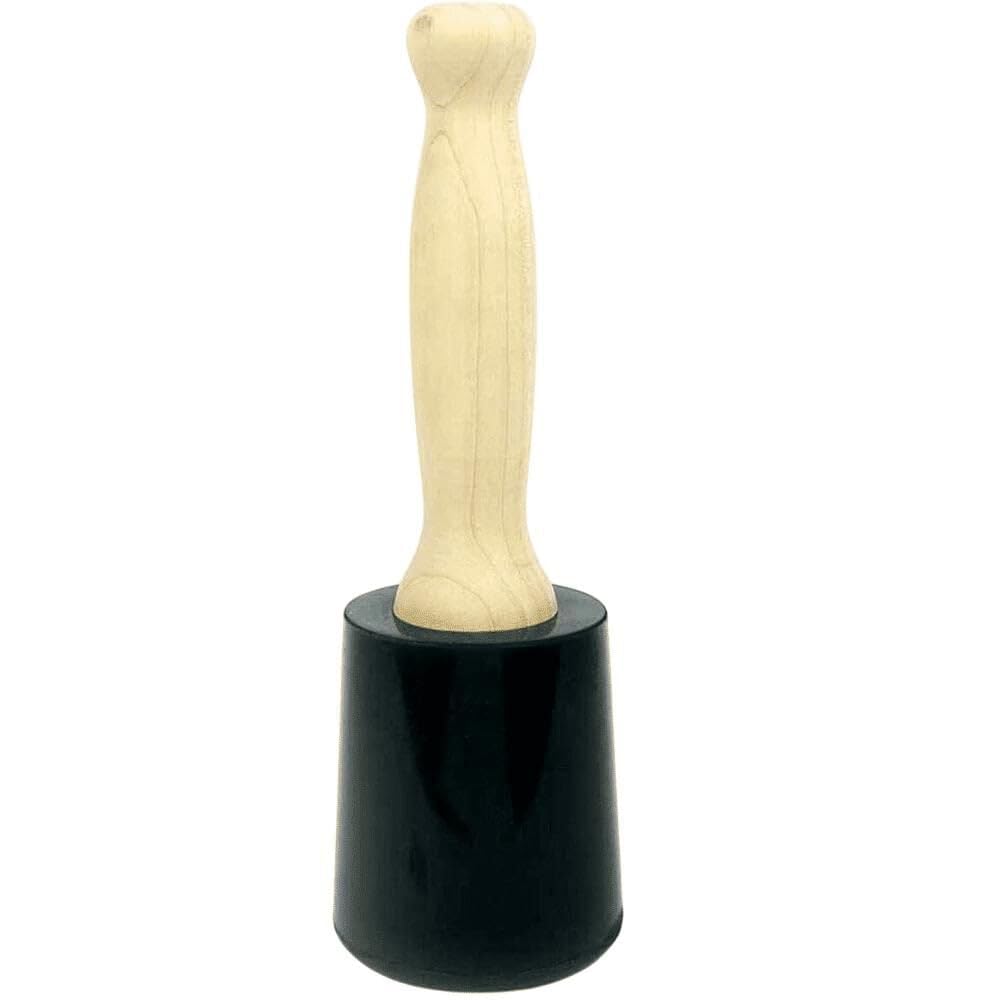
Timber framing lives or dies on clean joinery, and the honest truth is that most beginners buy the wrong tools first — a big box-store saw that wanders off the line, or a chisel that needs hours of flattening before it cuts true. This list focuses on the hand tools that actually decide whether your mortise and tenon fit tight: a mallet that absorbs the blow, a pull saw that slices on the backstroke, and chisels tough enough to clean up oak without crumbling at the edge. If you just want the short answer, the wood-handled WD202 mallet is the standout overall pick — a 30-ounce head that stays comfortable through a long day of joinery work.
This guide is built by comparing the manufacturers’ published specifications and the patterns across verified customer reviews, so you get each pick’s real strengths and trade-offs instead of marketing spin.
You will see how blade steel, handle shape, and tooth geometry change the way each tool behaves on green timber or dry hardwood. From mallet to slick, here is the honest shortlist of timber framing tools worth your bench space.
Top Picks


How To Choose The Best Timber Framing Tools
Timber framing is a heavy-handed craft, and the tool you reach for has to survive being struck, levered, and driven through thick stock all day. Before you compare models, get clear on the four things that decide how a tool performs on real beams and logs.
Blade steel and edge retention
The single biggest factor in chisel and saw performance is the steel. Look for a hardness figure quoted on the Rockwell C scale, written as Rc — the higher the number, the longer the edge resists dulling in dense wood. Narex chisels are hardened to Rc 59, a solid working hardness that holds an edge without turning brittle. A harder edge lasts longer between sharpenings, but it chips more easily if you twist a chisel in a deep mortise.
Pull saw versus push saw geometry
A Japanese pull saw cuts as you draw the blade toward you, which keeps the thin blade under tension and lets you steer it with fingertip control. That thin kerf — the width of the slot the teeth cut — means less wood removed and less effort per stroke. For cutting tenons and dovetails, the pull stroke gives you a straight line you can trust.
Mallet head material and shock
You will be swinging a mallet thousands of times over a frame, so shock absorbency matters as much as weight. Polyurethane heads soak up the rebound that a solid wood head passes straight into your wrist. A 30-ounce head is enough to drive a wide chisel without forcing you to swing hard.
Handle shape and grip
Oval, contoured, and leather-wrapped handles all change how a tool sits in your palm during long paring cuts. A slick, the long-handled chisel used for cleaning up large surfaces, needs weight and balance so you can control a fine cut with the mass of the tool rather than muscle.
Side-by-Side Comparison
| Model | Best For | Blade/Head Material | Handle | Type | Amazon |
|---|---|---|---|---|---|
| WD202 Mallet, 30-Ounce★ Best Overall | Striking chisels and froes | Polyurethane (PU) | Wood | Mallet | Amazon |
| Temple Tool Co. Japanese Pull Saw 9.5 RyobaBest Pull Saw | General joinery and stock sizing | High Carbon Steel | Wood | Pull Saw | Amazon |
| Narex Bevel Edge Chisel Set, 4 pcsBest Value Set | Everyday bench chisel work | Alloy Steel | Wood | Chisel Set | Amazon |
| Narex 50 mm Cabinetmaker’s Chisel | Wide paring and pairing joints | Alloy Steel | Beech Wood | Chisel | Amazon |
| KAKURI Timber Framing Saw 14″ | Crosscutting logs and beams | Alloy Steel | Wood and PP Cane | Pull Saw | Amazon |
| Narex 6 pc Set in Wooden Box | Building a full chisel roll | Alloy Steel | Wood | Chisel Set | Amazon |
| Robert Sorby #285 Timber Framing Chisel | Heavy timber clean-up | Alloy Steel | Leather | Chisel | Amazon |
| Robert Sorby #289 Timber Framers’ Slick | Large-surface paring | Alloy Steel | Ash Wood | Slick | Amazon |
| Narex Richter Bevel Edge Chisel Set of 5 | Premium bench set | Alloy Steel | Ash Wood | Chisel Set | Amazon |
Detailed Reviews
1. WD202 Mallet, 30-Ounce
Our pick — 4.5+★ from 250+ verified ratings; the strongest balance of quality and price.
The 30-ounce head that soaks up the shock so your wrist does not have to.
What wins people over here is the build — owners rate it among the better mallets on the market and report it still looks nearly new after heavy use. The head is polyurethane (PU), a dense rubbery plastic that absorbs the blow instead of passing the jolt straight into your arm. That matters when you are driving a 2-inch chisel through oak all afternoon.
The 30-ounce head weight is the number to note. That is heavy enough to power a wide chisel or split a shingle cleanly, but owners describe it as not too heavy to swing and say it helps save arm strain across a long session. The contoured wood handle keeps it comfortable in hand for repeated strikes.
The one honest catch is the price relative to a plain shop mallet — a handful of buyers question the value, so it is best viewed as a buy-once tool. If you only swing a mallet a few times a year, a cheaper head will do. If joinery is your weekly routine, this earns its place.
Where It Shines
- Polyurethane head absorbs shock instead of your wrist
- 30-ounce weight drives wide chisels without a hard swing
- Contoured wood handle stays comfortable over long sessions
- Buyers report it looks nearly new even after heavy use
What To Weigh
- Costlier than a basic wooden shop mallet
- A few buyers question whether the value matches the outlay
Reach for this if: you drive chisels and froes regularly and want a mallet that absorbs the blow and lasts.
Think twice if: you only need an occasional strike tool and a plain wood head would cover it.
2. Temple Tool Co. Japanese Pull Saw
One blade, two tooth patterns — rip on one edge, crosscut on the other.
Why this earns a top spot is the range it covers: a ryoba has rip teeth on one side for cutting along the grain and crosscut teeth on the other for cutting across it. That makes it a general-purpose saw for sizing stock as well as cutting large and medium joinery. Owners say the high carbon steel blade slices like a hot knife through butter and arrives sharp out of the wrap.
The blade is high carbon steel, and the maker reports it is handcrafted in a historic Japanese city by artisans with over 100 years of saw manufacturing history. The pull stroke lets the blade stay thin, which is why it steers so precisely through a tenon cheek.
Compare it to the KAKURI large framing saw above in spirit: the KAKURI runs 28.7 inches long for felling and beam work, while this one measures just 3 inches by 3 inches by 10 inches — compact enough for bench joinery and dovetails. The trade-off is scale; this saw is not built to crosscut a full beam. Reach for it for joints, not for logs.
Size that travels: at 3 inches by 3 inches by 10 inches it slips into a toolbox, and the included case keeps the fine teeth protected between jobs.
Best fit: bench joinery — tenons, dovetails, and cutting boards to length.
Not for: two-foot-diameter logs or timber beams that need a long framing blade.
3. Narex Bevel Edge Chisel Set
Hardened to Rc 59, sharp at the box, and priced like a starting set.
Four sizes cover the bulk of frame joinery: 6 mm (1/4″), 12 mm (1/2″), 20 mm (13/16″) and 26 mm (1 1/32″). The blades are made from highly alloyed Cr-Mn steel hardened up to Rc 59, and the set meets DIN 5139, a German standard for woodworking chisels. Made in the Czech Republic by a small manufacturer.
The quality of these blades is what carries the set — owners call them top-notch and say they take and hold a very sharp edge right from the start. The oval handles feel good in hand during long paring. For a first serious chisel set, that combination is hard to argue with.
Flatness is where opinions split. Some find the backs pretty flat and easy to flatten, but a few report they are not quite flat and take real work to true up. That is a one-time job on arrival, not a recurring problem. Plan an afternoon with a lapping plate, and the edges reward you afterward.
The honest benchmark: size for size, this four-piece set costs less than the six-piece Narex box set — 4 Count versus 6 Count — but you give up the two extra blade widths and the wooden presentation case.
Picks this up when: you want a proven Rc 59 edge without a big outlay.
Expect this: some flattening work on the backs before the first cut.
4. Narex 50 mm Cabinetmaker’s Chisel

A two-inch edge for hogging off material and cleaning wide faces flat.
Where a narrow chisel cleans a mortise, this 50 mm (2″) wide blade planes a broad surface in one pass. The steel is fine-grained, tempered chrome-manganese, hardened to Rc 59, ground at a 25 degree bevel. That bevel angle is a good all-round compromise — steep enough to hold an edge, shallow enough to pare cleanly.
The lacquered Beechwood handle sits well in the hand; owners describe it as feeling great in use. It runs 12 inches long and 2 inches wide, so there is real mass behind a wide cut.
Be ready to tune it on arrival. Flatness draws split opinions — some find it very flat, others say it is not exactly flat, and a few report chipping during first use. That is a fit note, not a verdict: a wide blade takes more flattening work than a narrow one, and the payoff is a 2-inch edge that levels a frame face fast.
For the frame builder: who needs a wide edge for surface clean-up and shoulder work.
Heads up: budget flattening time before first use, and keep the bevel out of twisting cuts.
5. KAKURI Timber Framing Saw
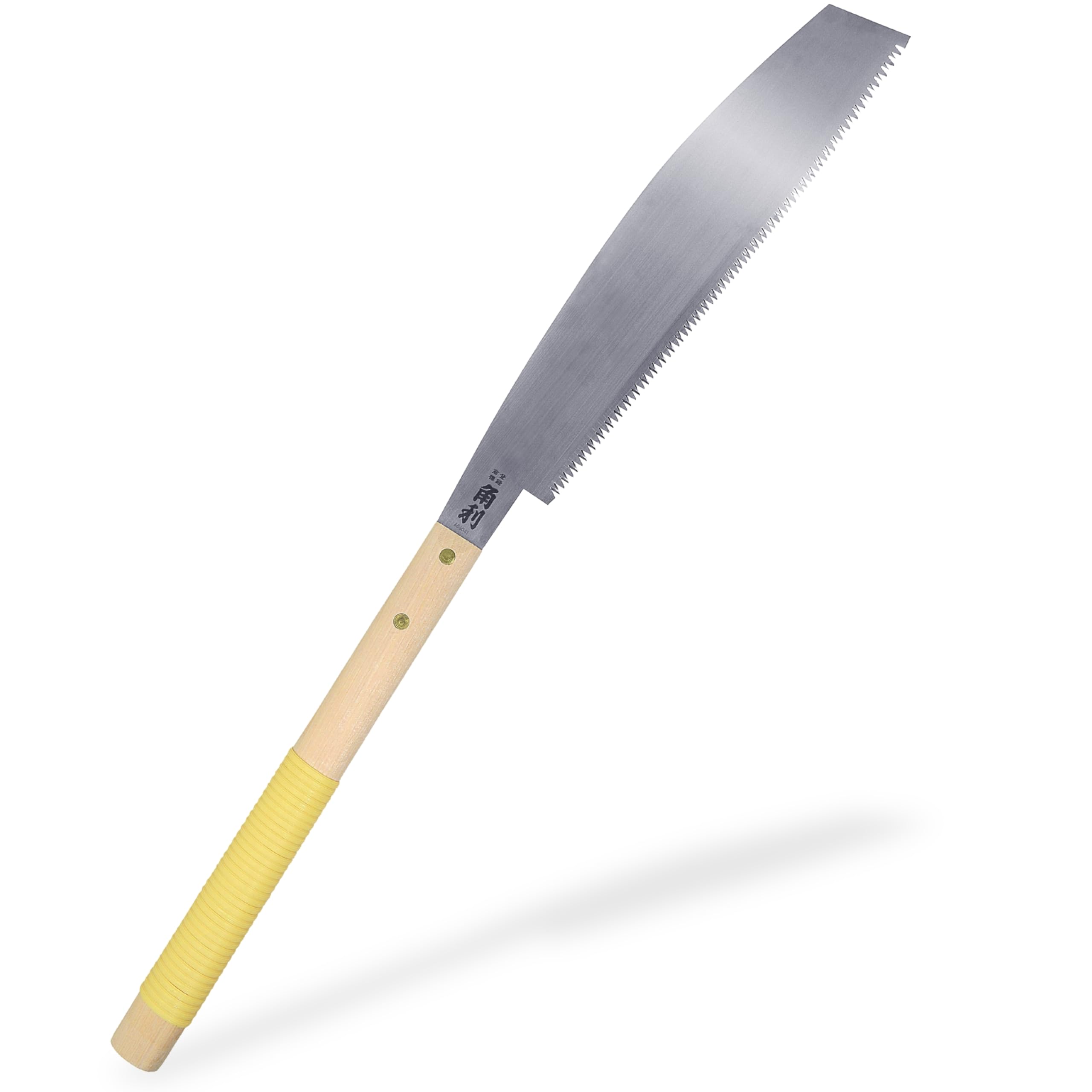
A 14-inch Japanese blade built to crosscut beams, logs, and green timber.
This is an anahiki pull saw — Japanese for a large crosscut saw — and it is aimed at rough woodworking, not fine joinery. The blade runs 14 inches (360 mm) long, with 6.4 teeth per inch; coarse teeth clear waste fast in a big cut. It weighs 8.5 oz, so it swings easily despite the length.
The blade is Japanese steel with a rust-resistant coating for outdoor work, and the handle is wood wrapped in PP cane for a secure, non-slip grip during intense sawing. The blade quality earns the most praise here, and owners mention it handles pine, oak, and green wood, plus beams and tree limbs.
Do not expect fine joinery from a saw with 6.4 teeth per inch — this one is for knocking a log down to size. The handle is built for grip under force, and the pull stroke gives control even in a long crosscut.
Reach for it when the stock is huge: at 28.7 inches overall it spans a beam for a steady two-handed cut, where the smaller 9.5-inch ryoba cannot.
Made for: felling, bucking, and crosscutting round and square timbers, logs, and large tree limbs.
Look elsewhere if: you need a fine-tooth saw for a tight tenon shoulder.
6. Narex 6 pc Set in Wooden Presentation Box 853053

Six Narex sizes in one stained-beech box — the whole bench in one case.
Six blade widths run 6, 10, 12, 16, 20 and 26 mm, cut from fine-grained, tempered chrome-manganese steel hardened to Rc 59 and ground at a 25 degree bevel. The handles are stained European Beech, and it all arrives in a wooden presentation box.
Where it earns its spot is in cleaning up joinery — owners say it works particularly well for paring mortises and tenons, and the edge is easy to keep sharp. Case quality is a bright spot too; the wooden box gets called beautifully made. The set weighs 1.6 pounds in total.
The one weak point to know about is the case itself. While the chisels are reported to last, some find the wooden case does not hold up as well over time. If you plan to rack the chisels on a wall or keep them in a roll, that complaint never reaches you. Six sizes versus the four in the smaller Narex set is the real upgrade here.
The full set math: this 6 Count set gives you two more blade widths than the 4 Count set for a bigger outlay, and the extra sizes cover wider cleanup work.
The smart buy for: a first complete chisel set that covers mortises, tenons, and general bench work.
Fair warning: treat the wooden presentation box gently, or skip it in favor of a wall rack.
7. 2″ Robert Sorby #285 Timber Framing Chisel

A 20 1/4-inch framer’s chisel built with the reach to clean deep joints.
At 20.25 inches long, this Sorby reaches into places a bench chisel cannot. That length is the reason it exists — a timber framer’s chisel runs a long handle so you can pare a mortise wall without laying your knuckles on the timber. The blade is alloy steel with a bevel edge, and the handle is leather-wrapped at 680 g. Owners describe the quality as excellent and exactly as expected.
Function carries weight in the notes here — it works well, and the build quality gets called out. The 2-inch blade width does the bulk of the cleanup work on frame faces.
The honest variable is the factory edge. Some find it holds an edge well and is sturdy, but a few report blemishes on the edge from the start. Expect to hone it before you trust it on a finish face. That is a quick touch-up, not a rebuild.
The fit for: framers who need reach and mass in a single long chisel.
Worth knowing: plan to sharpen the factory edge before you cut a finished joint.
8. 3-3/8″ Robert Sorby #289 Timber Framers’ Slick

A 3-3/8-inch slick for shearing uneven surfaces down to a true face.
A slick is a huge, long-handled chisel used to clean up uneven surfaces on large projects — timber frames and boat building in particular. The blade here is high carbon alloy steel with a high-alloy hardness for holding a razor edge, and it is slightly hollow ground so it hones easily. The back face is rounded off to remove sharp corners, which makes it kinder to your hands in a long paring cut.
The offset blade gives clearance for deep mortises or long paring strokes, and the weight and balance let the tool do the work. At 27.5 inches long and 4.7 pounds, it is a two-handed tool. The contoured ash handle gets called out for a secure grip, and owners describe the high-alloy blade as razor sharp.
The trade-off is price — some buyers find it pricey, though plenty call it worth it. For a slick this size, that reflects the material and the sheer mass of steel. If you clean up big frames, this is the tool; if you build small boxes, it is overkill.
Hollow-ground edge: the slight hollow grind means less steel touches the stone each time you hone, so touch-ups stay fast between long cleanup sessions.
Made for the big jobs: timber frames and boat work where a massive chisel levels a broad surface.
skip it if: bench-sized joinery is all you do — the mass and the outlay go to waste.
9. Narex Richter Bevel Edge Chisel Set of 5

Five Richter-pattern chisels in ash, finished to a flawless shine.
The set covers 1/4″, 3/8″, 1/2″, 3/4″ and 1″, and each chisel arrives lightly coated in corrosion-inhibiting oil inside a presentation gift box. The handles are the traditional Richter pattern, made from ash for lightness and strength, very smoothly finished and held with a splitproof ground steel ferrule marked with the Richter logo and trimmed with a thin leather bolster.
What sells these is the finish — owners rate the alloy steel blades among the best on the market, sharp straight from the box with a shiny, flawless finish. The blades are alloy steel, the set weighs 3 pounds, and the whole kit comes gift-boxed.
The mixed note is on durability and the box. Some report issues where others find it excellent, so treat the presentation box as packaging rather than a permanent home. For a premium set, the chisels themselves are the point; store them on a rack or in a roll and the case question fades.
For the buyer who wants: a polished, prem-ium five-piece set with traditional ash handles.
Plan on: giving the chisels a proper home, since opinions on the storage box vary.
Know the Specs
Rockwell Hardness (Rc)
Rc is a hardness score for steel — the higher the number, the longer the edge resists dulling. The Narex blades here are quoted at Rc 59, a solid working hardness for hardwood joinery. A harder edge cuts longer between sharpenings, but it also chips more readily if you lever or twist the blade.
Teeth Per Inch (TPI)
TPI counts the teeth in one inch of blade. The KAKURI framing saw runs 6.4 TPI — coarse teeth that clear waste fast in a big crosscut. A fine-tooth saw cuts smoother but slower, which is why 6.4 TPI coarse teeth suit beams and logs rather than delicate joint shoulders.
Kerf
Kerf is the width of the slot a saw cuts. A pull saw keeps its thin blade under tension on the backstroke, so the kerf stays narrow and less wood is removed. That narrow kerf is why a pull saw tracks a tenon cheek more precisely than a stiff push saw.
Bevel Angle
Bevel angle is the slope ground into the cutting edge. Narex grinds these chisels at 25 degrees, a common all-round angle that balances edge retention against how cleanly the blade pares. A shallower bevel pares cleaner but dulls faster than a steeper one.
Common Questions
What is the difference between a timber framing chisel and a bench chisel?
Is a 30-ounce mallet too heavy for driving chisels?
Do I need to flatten a new Narex chisel before using it?
What is a ryoba saw and what does it cut?
Can a 14-inch pull saw cut through a large timber beam?
What is a slick and when do I need one?
How do I keep a leather-handled timber chisel from slipping?
Does a chisel set with more pieces really matter for framing?
Can I use a Japanese pull saw for western-style carpentry?
The Bottom Line
For most hands working timber, the winner among these timber framing tools is the WD202 Mallet — a polyurethane 30-ounce head that takes the shock out of thousands of strikes and reads like a buy-once tool. If you want a saw that carries joinery in one blade, grab the Temple Tool ryoba, whose rip and crosscut teeth handle stock and joints together. And for a starter chisel roll that will not break in, the Narex four-piece set delivers Rc 59 edges in the sizes that matter most — start there, then add a slick when the frames get big.
How we choose
We do not accept paid placement. Every pick is matched to a real buyer and a real use-case; we do not hands-on test units.
Sources
Specifications: manufacturer listings and product documentation. Review insights: verified customer reviews, as of November 2026. Pricing: not shown on this page (it changes often); check the current price via the retailer link.
As an Amazon Associate, Tactical Gear Guy earns from qualifying purchases. This does not affect which products we feature.