Specs are compiled from manufacturer listings and verified buyer reviews and can change over time — please confirm the key details on the product page before buying.
You have seen the videos: someone folding a leg under themselves, spinning in a wide chair, typing for nine hours without standing up. The problem is that a chair that looks good on camera and a chair that actually holds your back through a full workday are often two different chairs. This guide separates them, pick by pick, using published specs and what long-term owners actually report after the novelty wears off.
This guide is built by comparing the manufacturers’ published specifications and the patterns across verified customer reviews, so you get each pick’s real strengths and trade-offs instead of marketing spin.
The chairs below split into two camps: mesh ergonomic workhorses with real lumbar adjustment, and wide-seat criss-cross models built for cross-legged sitting. One of them is the crowd favorite — 4.5+ stars across 400+ owners — and it takes the top slot on lumbar adjustment alone. If you want a chair that survives the trend and your lower back, this is the shortlist for the tiktok office chair.
Top Picks

How To Choose The Best TikTok Office Chair
Most people buying a viral chair get the order of priorities backwards. They pick the widest seat or the prettiest fabric first, then discover the armrests do not clear the desk, or the seat pan cuts into the back of their knees. Start with fit, then move to features. Every chair in this list is a real ergonomic or wide-seat model with published dimensions, so you can check your own body against the numbers before you commit.
Measure seat depth before you measure anything else
Seat depth is the distance from the front edge of the cushion to the backrest. If it is too long, the front edge presses behind your knees and you slide forward to escape it. If it is too short, your thighs hang off the cushion with no support. A sliding seat pan, like the one on the ProtoArc EC200, lets you move the cushion through 1.97 inches of travel so your back can stay against the lumbar pad while your thighs stay fully supported. That 1.97 inches of travel is what keeps the lumbar pad against your back instead of your thighs taking the load.
Understand what a flip-backrest really does
A flip-backrest is a rear panel that folds forward for upright lumbar support and folds backward to open up the seat. When it flips back, the seat becomes usable in a cross-legged pose. The FelixKing criss-cross model opens its backrest to reveal a 24.4-inch wide, 21-inch deep seat — genuinely roomy. But that same open posture removes the lumbar support you get in the upright position. If you sit cross-legged for an hour and work upright for seven, weigh that trade-off honestly.
Armrests: check the desk clearance, not just the cushioning
Flip-up arms exist so you can push the chair entirely under a desk or vanity. If your desk sits low, fixed arms may keep the chair too far back and force you into a stretched typing position. The arm height on these chairs varies a lot — the MOLENTS sits at 33.9 inches of arm height, while the FelixKing criss-cross is at 20 inches. Measure the gap between your seat and the underside of your desk before you buy.
Mesh or leather — pick by climate and use, not looks
Mesh backs and seats move air, so they stay cooler through a full workday. Bonded and PU leather wipes clean in seconds and holds a crisp shape, but traps heat over long sessions. If you work in a warm room or sit for eight hours straight, a full-mesh back and seat stay cooler than bonded leather. If your chair doubles as a vanity seat or lives in a shared room, the leather and velvet models clean up and look better.
Side-by-Side Comparison
| Model | Best For | Seat Width | Seat Depth | Recline Range | Amazon |
|---|---|---|---|---|---|
| MOLENTS Ergonomic Mesh Chair★ Best Overall | All-day desk work | 19.8 in | 18.9 in | 90°–120° | Amazon |
| FelixKing Criss Cross ChairBest Wide Seat | Cross-legged sitting | 24.4 in | 21 in | Reclining, adjustable | Amazon |
| Humergo Chair with FootrestBest Recline Range | Work-to-lounge sessions | — | — | 90°–145° | Amazon |
| GTPLAYER Big and Tall | Bigger frames | — | — | 90°–150° | Amazon |
| YFO Leather Desk Chair | Floors that scratch | 22 in | 20 in | Adjustable recline | Amazon |
| Dowinx Big and Tall | Extended sitting | — | 20.1 in | 90°–135° | Amazon |
| ProtoArc EC200 | Sliding seat fit | — | Adjustable (1.97 in travel) | 90°–130°, 4 locks | Amazon |
| FiveWillowise Criss Cross Chair | Vanity and lounge | — | — | 90°–135° | Amazon |
| SIHOO B100 PRO | Long-hour ergonomics | — | — | 110°/125°/135° | Amazon |
| Sharper Image S600 | Massage and heat | — | — | — | Amazon |
| LiberNovo Omni SE | Dynamic full-body support | — | Adjustable by fit chart | 105°–160° | Amazon |
Detailed Reviews
1. Ergonomic Office Chair BIFMA X5.1
Our pick — 4.5+★ from 400+ verified ratings; the strongest balance of quality and price.
The chair that treats your lower back like a moving part, not an afterthought
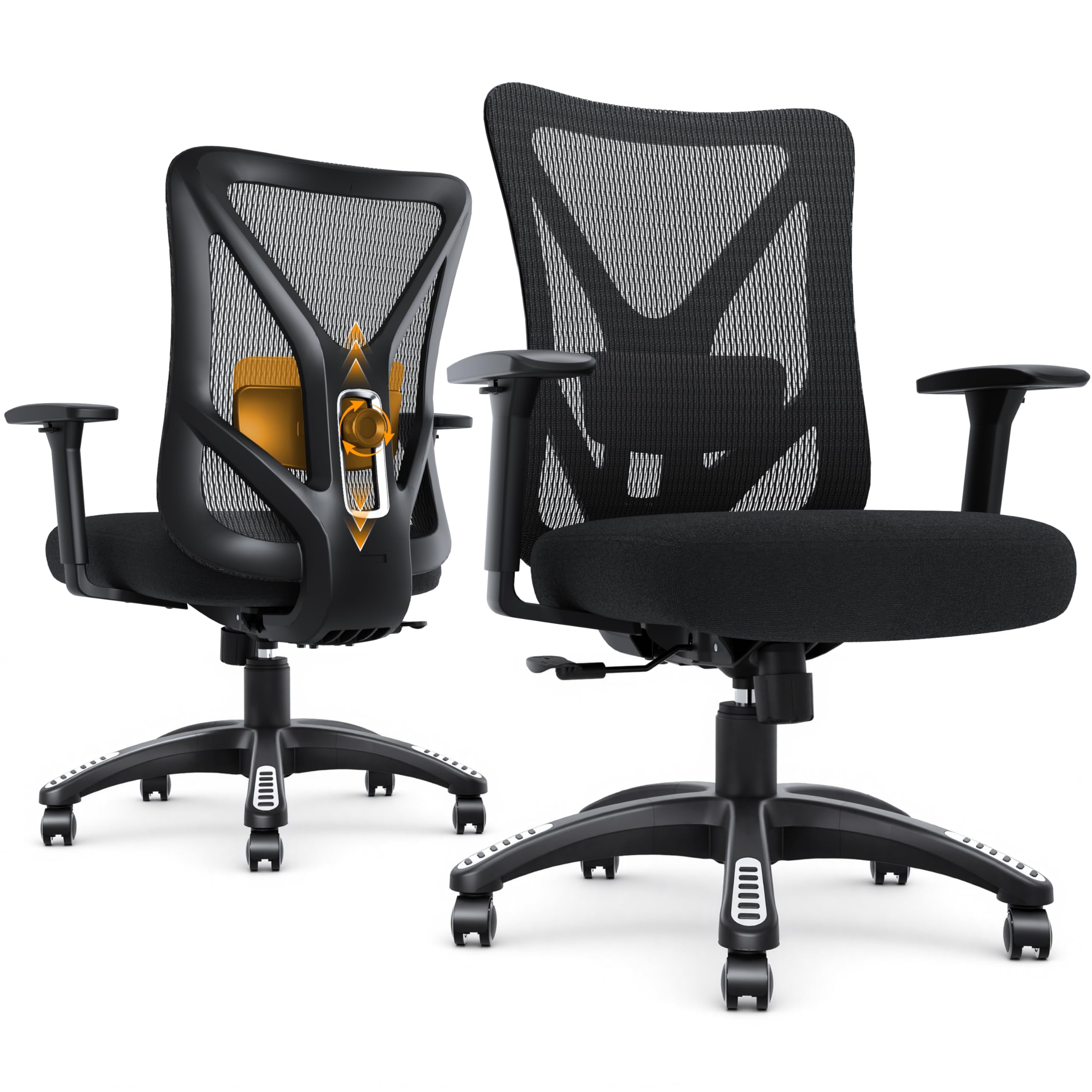
The MOLENTS chair’s defining feature is its lumbar pad, and it earns the top spot because of it. That pad adjusts up and down, and forward and backward, so you can shove it exactly into the curve of your lower back. If your back aches after four hours upright, slide the pad up, down, forward or back until it fills your lower-back curve. Owners treat the build quality as the chair’s strongest suit; the frame runs to BIFMA X5.1, a published durability standard for office seating.
The seat pan measures 19.8 inches wide and 18.9 inches deep, and the backrest is 19.7 inches across. That is a standard-width fit, not a wide criss-cross seat. If you want to sit with a leg folded under you, the FelixKing criss-cross opens to 24.4 inches wide and 21 inches deep — 4.6 inches wider and 2.1 inches deeper than this chair. So know which posture you actually work in before you pick.
The 3D armrests slide forward, back and side to side, and the mesh back and seat keep air moving through a full day. Assembly runs about 15 minutes with the included tools, one person, no drama. The MOLENTS maker does flag one thing you should decide before ordering: the armrest panel slides and rotates by design. If you want a fixed panel, that is a different chair.
What the MOLENTS gets right
- Lumbar pad adjusts in four directions — vertical height and depth — so it fills your specific lower-back curve.
- Certified frame and base run to BIFMA X5.1, a recognized durability standard for office chairs.
- Three-position tilt from 90° to 120° swings you from typing to leaning back without a second chair.
- Full mesh back and seat keep you cool; the seat pan is 19.8 in wide with 18.9 in depth of thigh support.
Where it asks you to adapt
- The 3D arm panels slide and pivot by design — the maker says to contact them if you want a fixed panel instead.
- The seat is standard width. Cross-legged sitters should look at the wide criss-cross models below.
- Seat height tops out around 23.3 in, and the maker notes a taller gas lift is available on request for different heights.
Worth it if: you work upright for long stretches and want your lumbar support to move to where your back actually needs it.
Look elsewhere if: your main reason for this purchase is sitting cross-legged — the wide-seat criss-cross picks below fit that posture better.
2. Criss Cross Office Chair with 2-in-1 Flip Backrest
One flip and the backrest opens up a genuinely roomy seat
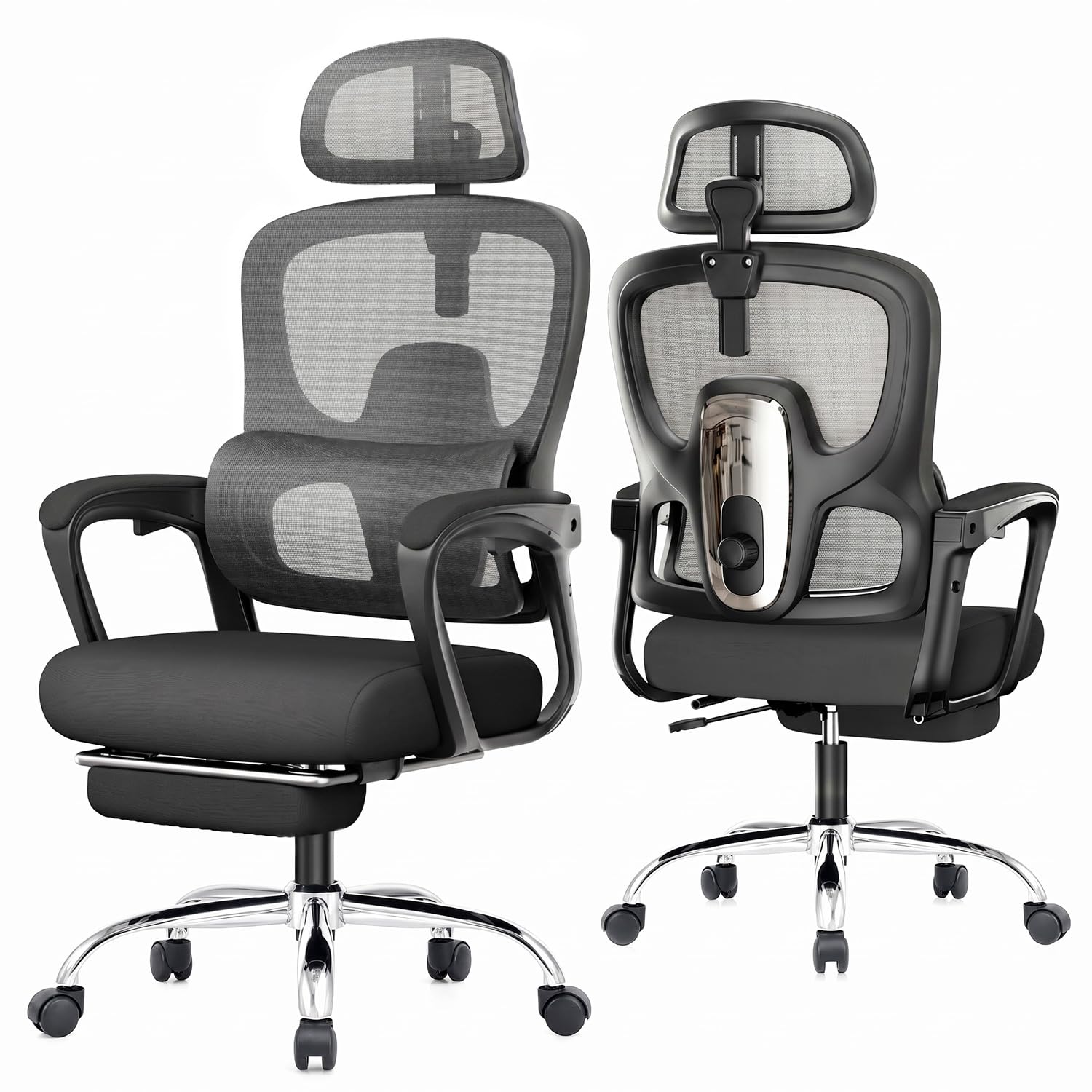
The seat that folds flat is the trick here. This FelixKing chair has a rear panel that folds forward for upright lumbar support and folds backward to open up extra cross-legged room. The numbers tell the story: a 24.4-inch wide, 21-inch deep seat, against 23.6 inches of backrest width. That seat is 4.6 inches wider than the MOLENTS chair, and 2.1 inches deeper, so a folded-leg sit is realistic. The dual-layer cushion (spring plus hybrid cotton) and side mesh panels keep it from getting stuffy during long sessions.
Assembly is the easy part: it takes about 15 minutes and most components come pre-attached. The steel frame and heavy-duty base are rated to hold 250 lbs. The PU leather is scratch-resistant and wipes clean, which is why it fits a vanity or beauty-studio setup as well as a desk. Height adjusts across a 35.4 to 39-inch range, and the arms flip up so the chair slides flat under a desk or vanity table.
What wins people over is the look. This is a chair people actually want in the room, and buyers describe the plush padding as comfortable for long sittings. The honest trade-off is postural: at a full upright 90° with the backrest flipped out, the lumbar support that makes the upright position comfortable is gone. Sit cross-legged here and you get space; sit upright for eight hours and you get a plush seat with less back guidance. The height adjustment is also the one feature that draws mixed notes, so check your desk height against that 35.4 to 39-inch range.
The real pivot: buy this for posture variety, not for strict upright ergonomics. Flip the backrest forward and it is a supportive desk chair; flip it back and it is a lounger with enormous seat space.
Pick it if: you spend part of the day cross-legged, or you need a chair that slides under a vanity with the arms flipped up.
Give it a pass if: you sit straight-backed for the entire workday and depend on lumbar pressure — the mesh chairs on this list hold that line better.
3. Ergonomic Office Chair with Footrest
A 145-degree recline and a footrest that turns a desk chair into a break room
The 90° to 145° recline is the widest swing on this list short of the premium LiberNovo. That matters because it turns the chair into two pieces of furniture. Lock it upright to type, then pull the 2-inch padded footrest out and lean back to recharge. The lumbar pad adjusts 2 inches vertically and 1.5 inches in depth, so you can dial in the pressure point while upright and then lean back without a bar digging into your spine.
The seat is a high-density anti-sagging sponge contoured to spread hip pressure, and the racing-mesh back rest keeps airflow moving all day. The maximum recommended load is 360 lbs, and the seat height sits at 21 inches. Linkage armrests move with the recline rather than fighting it, which is why the chair can actually be used at the full 145°.
People who buy this chair for its quality and its flexibility — a home study chair, a video-call chair, a lean-back-and-think chair — keep it in rotation. The recurring gripe is durability of the frame and connectors, so treat the joints as the part to inspect when it arrives. At 30 lbs it is lighter than it looks, which makes rolling it between rooms easy and also means the build is not a tank.
The case for the Humergo
- 90° to 145° recline locks at any angle — the widest working range below the premium tier.
- 2D lumbar pad adjusts 2 in vertically and 1.5 in in depth for targeted lower-back pressure.
- 360 lb maximum recommended load with a 21 in seat height.
- Linkage armrests follow the recline so your elbows get support even leaned all the way back.
The honest caveats
- Durability of the joints draws mixed reports — inspect the frame connectors on arrival.
- At 30 lbs it is light for a recliner, so the seat is not armored like a heavy executive chair.
- Footrest adds depth to the footprint once extended, so leave space to swing it out.
Made for: anyone who works and then reclines in the same chair — writers, gamers, and people who take real breaks.
Not the one if: you want a rugged heavy-duty frame above all else; this one is built around movement and lightness.
4. GTPLAYER Big and Tall Office Chair

A wide, winged seat that hugs without clamping you in
Big and tall sizing is the whole point of this GTPLAYER. The seat is widened and the side wings are removed so nothing digs into your hips. The wraparound wing-back still gives you that hugged feeling from the top, which is the part most wide seats lose. Pocket-spring lumbar support keeps the back elastic rather than foam-flat, and the embossed four-leaf clover PU leather is the detail that makes it look like a designer piece rather than a gaming rig.
The recline runs 90° to 150° with an integrated footrest, so it doubles as a lounger after hours. The gas lift is SGS-certified Class 3, and the base is BIFMA-certified metal — both published standards for load and durability. Assembly takes 20 to 30 minutes. Buyers report they can sit in it for 10+ hours, and the spacious seat earns its keep for bigger sitters.
Two things pull the shine down slightly. The back support is the one area that splits opinion: the lumbar and head pillows work for some sitters and feel weak to others. The other note is durability and value, which draw mixed-but-not-negative reports. Neither is a reason to avoid the chair — they are a reason to be honest about the price. If you are built big and want visible support and width, this is the chair that fits that brief.
The big-frame read: width and height are the headline. The widened seat with no side wings means bigger hips stop pushing against the frame edge, while the wing-back still delivers the cozy enclosure.
Made for: heavier or taller sitters who need real width and a 150° recline for breaks.
Not ideal if: you want a firm, predictable lumbar push — the back-support feel is the most mixed part of this chair.
5. YFO Home Office Desk Chair with Rubber Casters

Rubber casters and a seat you can convert by leaving the arms off
The wheels are the sleeper feature. These rubber casters are built for wood floors, carpets and marble, and buyers describe them as gliding like roller blades — smooth, quiet, and without scratching delicate floors. If your chair lives in a room with a good floor finish, that alone can be worth the purchase. The leather also earns its share of admiration, with the stitching and color drawing comparisons to a high-end car interior.
The seat is 22 inches wide and 20 inches deep with a wooden board, soft sponge and a highly elastic spring pack underneath. So it gives you both the soft give of foam and the steady support of springs. The armrests are removable by design, so you can run it as a cross-legged chair with no arms in the way, then add them back for upright work. That is genuinely rare in this price tier.
Two honest notes. The backrest is 15.8 inches across, so it is narrow against a wide seat — a bigger-shouldered sitter should check that. And while the build gets praise for sturdiness, a small share of sitters flag the seat surface as smaller than expected; confirm the 22 × 20-inch cushion against your own build. Beyond that, the chair is easy to put together and the brown leather looks better than its tier suggests.
Floor-first reasoning: if quiet, scratch-free rolling matters as much as cushioning to you, the rubber casters are the feature to lead with. The 2-in-1 armrest design and 22-inch seat width are the second reason it earns a spot.
Reach for it when: your chair rolls across floors you care about, or you want a cross-legged option that still supports upright work.
Leave it on the shelf if: you have broad shoulders, since the 15.8-inch backrest is narrower than the seat beneath it.
6. Dowinx Big and Tall Office Chair with Pocket Spring Cushion
Sofa springs under your seat, so the cushion moves with your weight instead of flattening
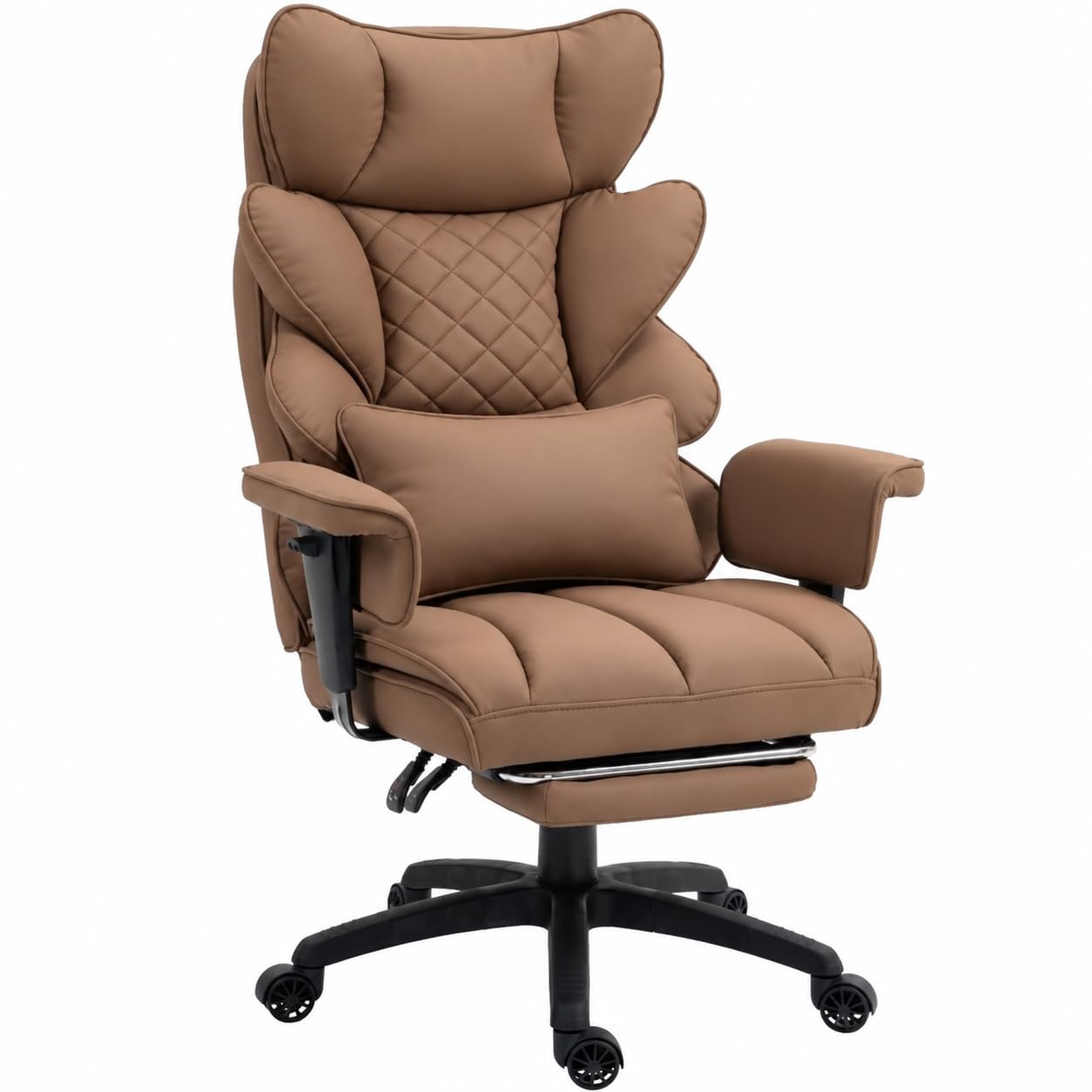
Individual pocket springs are the feature that sets this Dowinx apart. Each spring in the seat works on its own, so it bends to your weight and posture instead of collapsing into one flat plank. That is the same construction used in sofa cushions, and it is why the seat feels more supporting the longer you sit. The backrest layers a soft cushioning pad over a supportive shell, and the recline ranges from 90° to 135° for working or leaning back.
The chair is sold in two fabric versions: PU leather for a sleek, wipeable surface, or tech cloth for a breathable one. The padded armrests adjust to height so your elbows sit level with the desk. The frame is metal, and the maker backs it with a one-year repair service. Assembly is straightforward, and owners mention it holds up to a 220 lb person without flexing.
What buyers like most is the value-to-sturdiness ratio: it feels more solid than the usual gaming chair, and the brown finish reads as professional rather than adolescent. The seat depth sits at 20.1 inches, so tall sitters get thigh support without cutting off behind the knees. Nothing here is a headline gap — the honest caution is that the styling is loud in the gaming sense, so decide whether that fits the room.
Seat-first verdict: pocket springs are the reason to pick this over a foam-only chair. Your weight disperses across independent coils, and 90° to 135° of recline lets the same chair serve a workday and a weekend.
This one is for you if: your last chair bottomed out and you want a seat that pushes back against your weight.
Pass if: you want a clean, low-key office look — the embossed gaming styling is a strong taste call.
7. ProtoArc EC200 Ergonomic Office Chair
A seat that slides forward so your back never leaves the pad
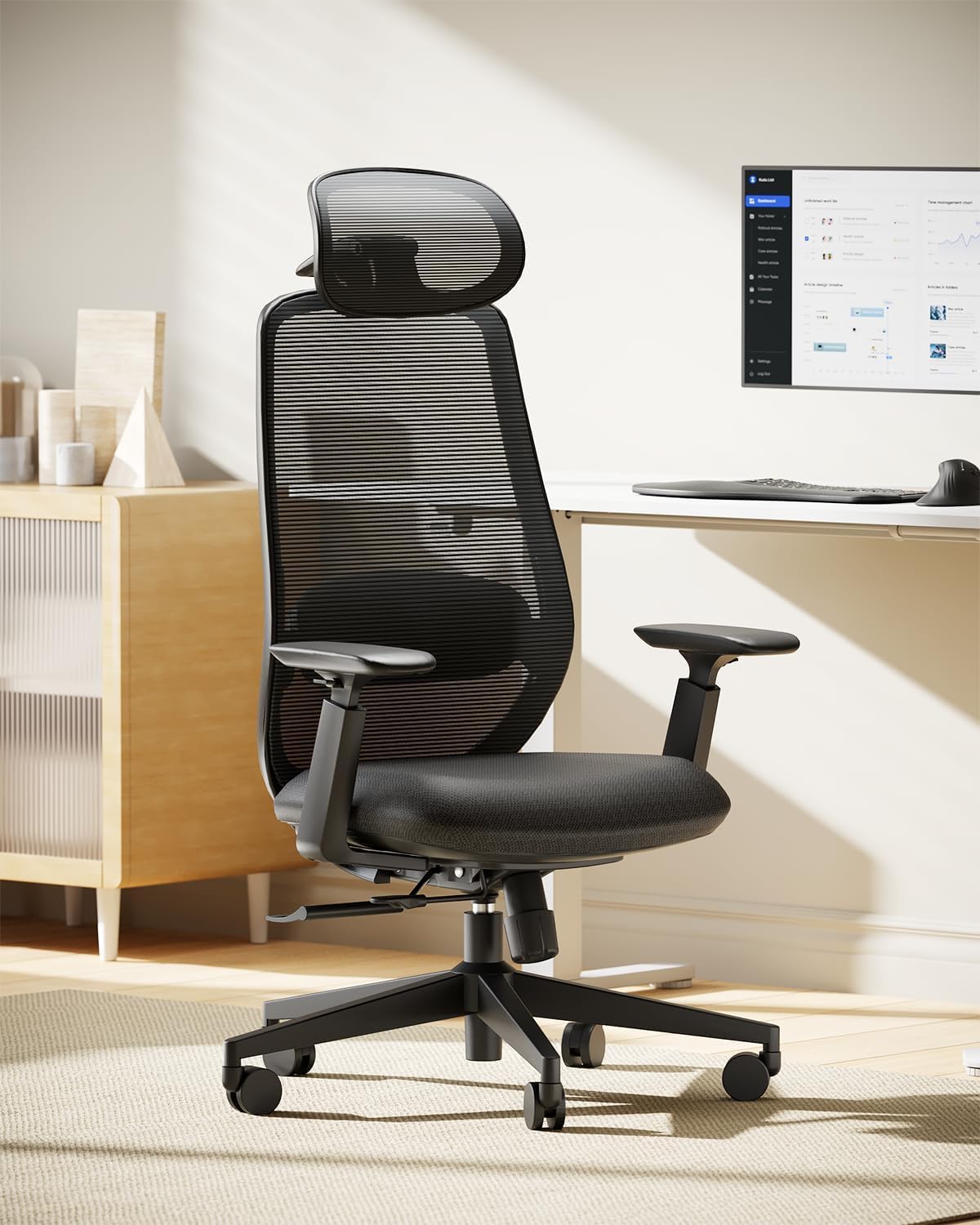
The EC200 is calibrated for a specific body: 5’4″ to 6’0″ tall and under 220 lbs. That is not a marketing line — the seat depth moves through five positions with 1.97 inches of travel. You can slide the cushion forward for longer thighs, or back for shorter ones, and your spine stays against the lumbar pad the whole time. That is the fix for dangling legs and knee pressure, and it is rare in this segment.
The lumbar pad moves 2.36 inches vertically and 0.8 inches in depth, so it fills your lower-back curve in either upright or reclined positions. Recline has four lock stages: 90° for work, 105° for reading, 120° for calls, 130° for relaxing, plus a tilt-tension knob to tune how hard it resists you. The gas lift is TÜV-tested Class 4, and the cushion is 55D high-density foam — firm enough that it resists sagging across years of daily use.
The honest part is the cushioning feel. The lumbar support and the headrest are the two places buyers split; some find the headrest very hard. If you like a plush pillow behind your neck, this chair will feel firm by comparison. Where it wins is structure: BS EN 1335 and BIFMA X5.1 backing, a nylon frame, and about 20 minutes of assembly. Bedroom corners and studio apartments are the target, so it is sized to work in smaller spaces than the big recliners.
Why the sliding seat wins
- Five-position sliding seat with 1.97 in of travel — real thigh support for different leg lengths.
- Lumbar pad adjusts 2.36 in vertically and 0.8 in in depth.
- Four lock stages from 90° to 130°, with a tension knob to tune the recline resistance.
- 55D foam cushion resists sagging; Class 4 TÜV-tested gas lift and BS EN 1335 / BIFMA X5.1 backing.
What to expect
- Firm, not plush — the headrest draws particular note for its hardness.
- Built for 5’4″–6’0″ and under 220 lbs; outside that range, fit suffers.
- Narrow 17 in backrest width compared with wide-seat models.
Best fit match: a sitter inside the 5’4″–6’0″ window who wants the seat pan to move to their body, not the other way around.
Think twice if: you want a soft, pillow-like seat — the firm foam and headrest are the price of that long-term shape retention.
8. FiveWillowise Criss Cross Chair with Flip Arms
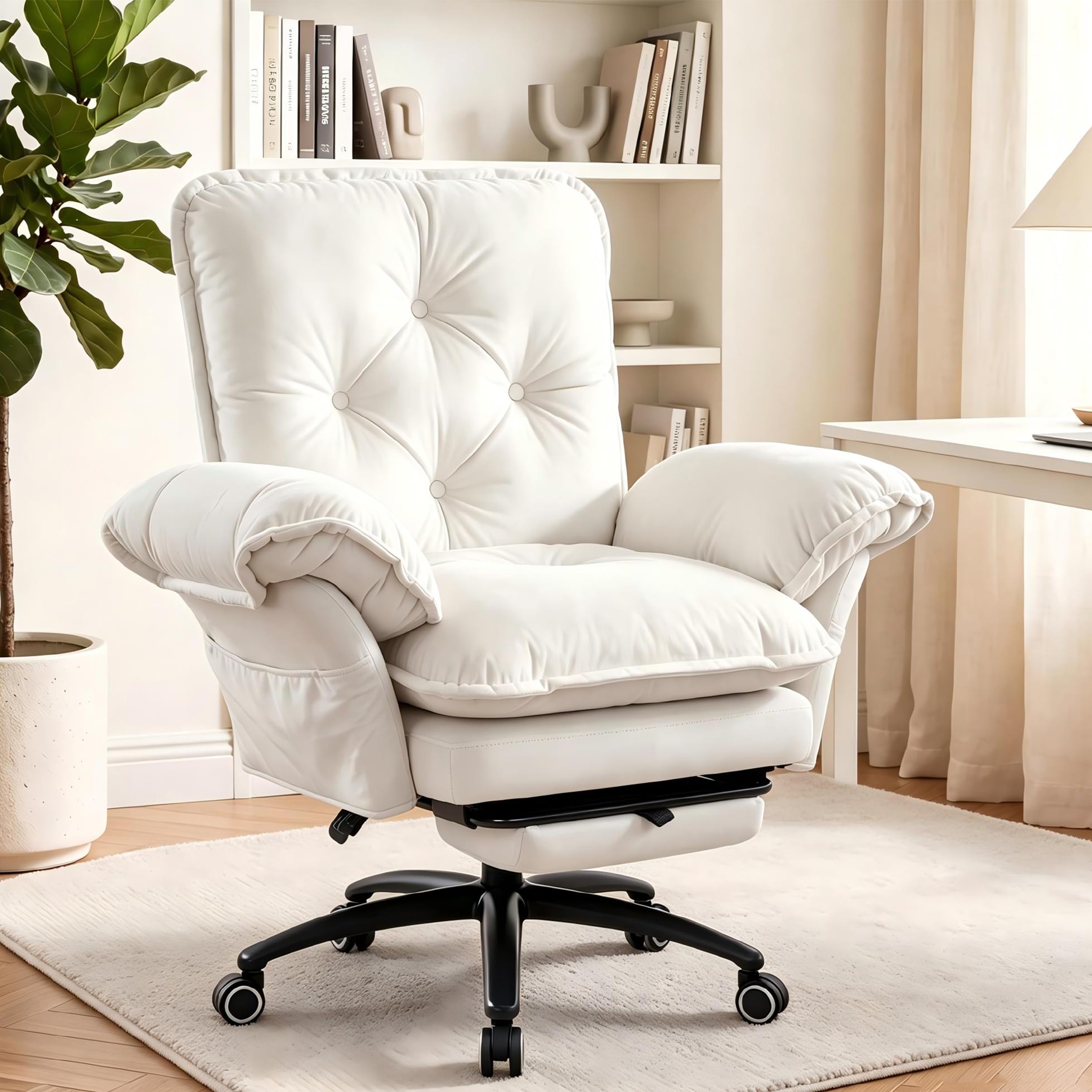
Five arm positions and a velvet back that looks like it belongs in the room
The arms flip through five positions from 90° up to 180°, which makes this the most flexible chair for sitting cross-legged, sitting with a pet, or pulling up to a vanity. The high backrest reclines from 90° to 135° and pairs with an integrated footrest, so the chair serves work and lounge duties. Dutch velvet covers a thick double-layer cushion and a high fluffy back, and the beige tone is what makes it look at home in a bedroom or studio.
The 360° swivel casters roll quietly on hardwood and carpet, and the reinforced metal base keeps the chair stable as you turn. Assembly runs 10 to 15 minutes with all the tools included. The look is the standout: the tufted fabric and soft texture are the qualities people praise most, and long sittings feel tolerable rather than punishing.
Here is the catch to weigh. With the backrest flipped out and the arms up at 90°, you lose the lumbar support a mesh chair supplies for upright sitting. That makes the FiveWillowise a poor primary ergonomic chair for a full 9-hour workday, but an excellent secondary chair for a vanity, a reading corner, or mixed sitting. Stability also earns mixed notes from time to time — the reinforced base helps, but do not expect the stance of a heavy executive model.
Style-plus-use case: this chair is sold on comfort under your eyes, not on clinical ergonomics. Its 5-position arms at 90° to 180° and 90° to 135° recline do actual work, but the velvet and the look are why it gets bought.
A good fit for: a bedroom desk, a vanity setup, or a third chair whose job is to be comfortable and look good.
Not the chair for: your primary eight-hour work seat, since upright lumbar support is the weak point here.
9. SIHOO B100 PRO Ergonomic Mesh Office Chair with Footrest
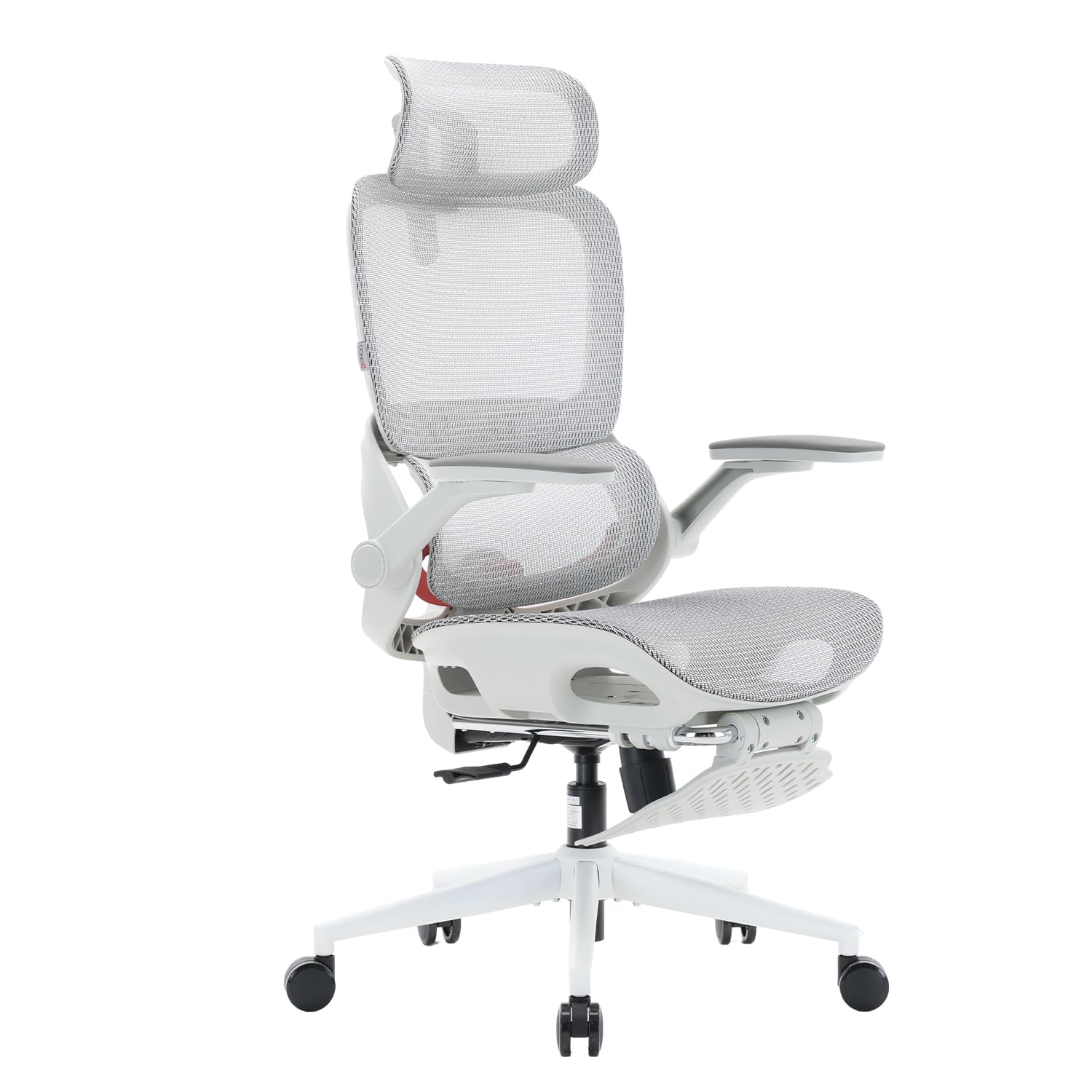
The split-back chair that chases your spine as you lean
Elastic lumbar support with a dual-back design is the reason this SIHOO lives at the top of the premium tier. The backrest moves with your spine instead of holding one stiff shape — lean forward to focus, sit upright in meetings, and the pad follows. The armrests are 4D, so you can rotate, adjust, or flip them to slide under a desk. There is a retractable footrest for breaks, and three recline angles at 110°, 125° and 135°.
The covering is full mesh on the back and seat, so airflow runs through the chair even through a late-night session. The frame is reinforced metal and the gas lift is Class 4 SGS-certified, rated to support up to 300 lbs. The headrest is 3D and ultra-wide to cradle the neck, and the seat cushion is widened to spread weight. The maker backs it with 36-month coverage and 30-day returns, which is the longest support window on this list.
The honest split is adjustability and firmness. Both draw mixed reports: some sitters want more range from the arm and tilt controls, and some find the seat firmer than expected. With a mesh seat that is normal — the trade is a firm, long-lasting surface over a plush one that flattens. Long-session customers note it easily handles an 8-to-9-hour workday, and the back and neck support is what most people notice first.
Where the money goes: into the adaptive lumbar and 4D arms rather than decorative material. If your daily stint at the desk is measured in hours, not minutes, that is the right place to spend.
Choose it when: you want ergonomic seats, neck support, and recline all in one package for serious desk hours.
Second-guess it if: you need a soft, sink-in cushion — the mesh seat is built firm on purpose.
10. Sharper Image S600 Ergonomic Chair
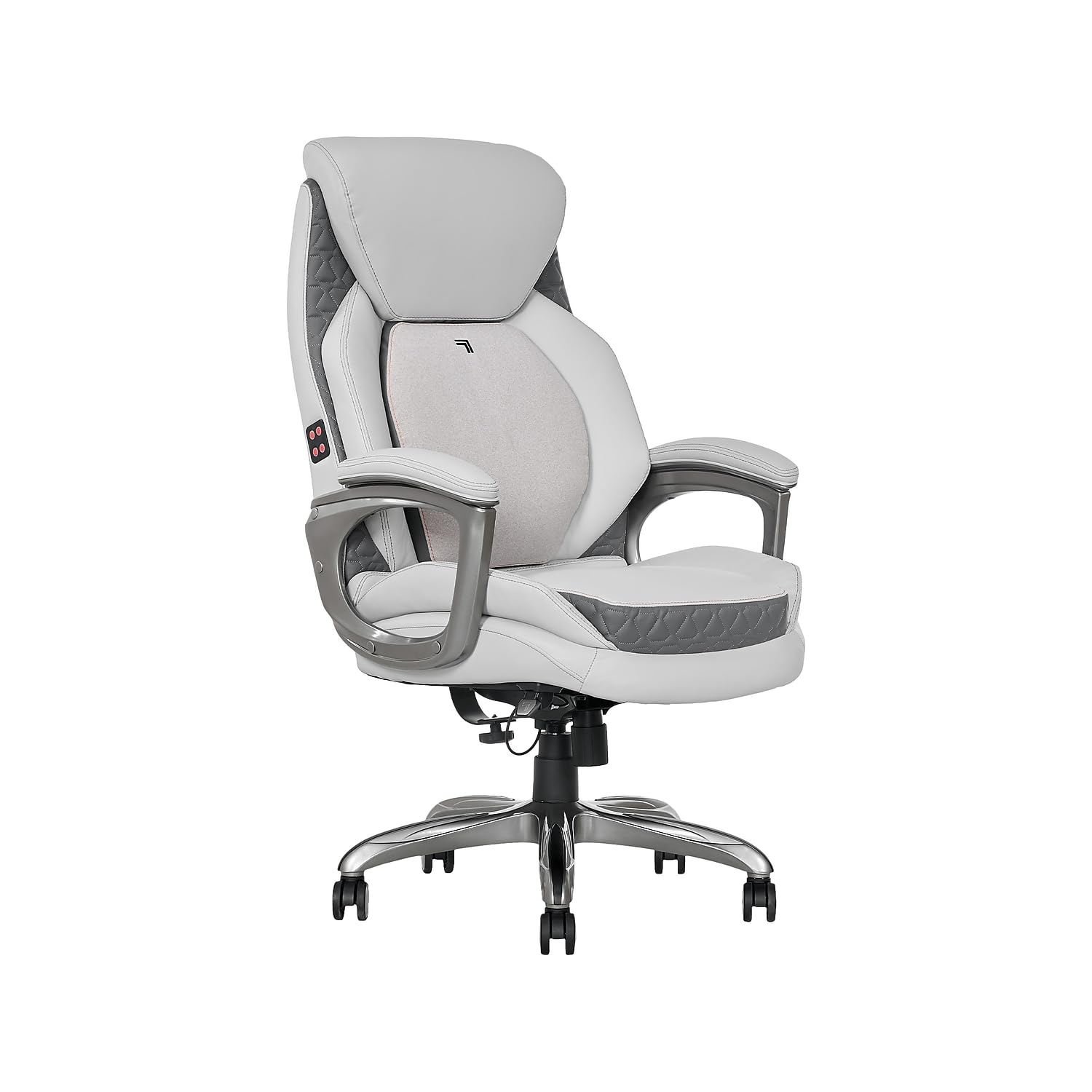
A heated massage in a leather executive shell, with lumbar that follows your moves
The headline is the built-in heated massage, with multiple modes for longer work sessions. The second feature is TrueWellness “active lumbar,” which shifts with your posture so the lower back stays supported as you move rather than only in one fixed spot. Bonded leather over multilayer high-density foam covers the seat, and the cushioned armrests adjust from 26.75 to 29.75 inches so your elbows line up level with the desk.
The footprint is real: the overall height ranges from 45.25 to 48.25 inches, with a 27.75-inch width and 30-inch depth. That is a big chair — it wants room around the desk. The 360° swivel casters handle mobility, and the off-white and gray bonded leather is the sort of surface that wipes clean. Buyers describe it as high quality and comfortable for long hours of sitting, and the massage and heat are the details that keep it in use after the novelty would normally fade.
Be clear about what this chair is. It is a comfortable executive office chair with massage and heat bonuses — not a firm clinical ergonomic seat. If your priority is adjustable seat depth or 4D arm travel, the SIHOO or ProtoArc beat it on those specs. If you want a chair that feels soft, looks expensive, and offers heat and massage on demand, this is the one that fits that brief.
Comfort-first read: bonded leather and high-density foam make it soft and easy to wipe down. The active lumbar handles moving postures, and the heated massage is the feature you notice every day. The rest is a well-built executive shell.
Worth it if: you want an executive-style seat with heat and massage as part of your daily routine.
Keep looking if: you need fine ergonomic adjustment — arm travel, seat depth, and lumbar range are a step behind the mesh specialists above.
11. LiberNovo Omni SE Dynamic Ergonomic Office Chair
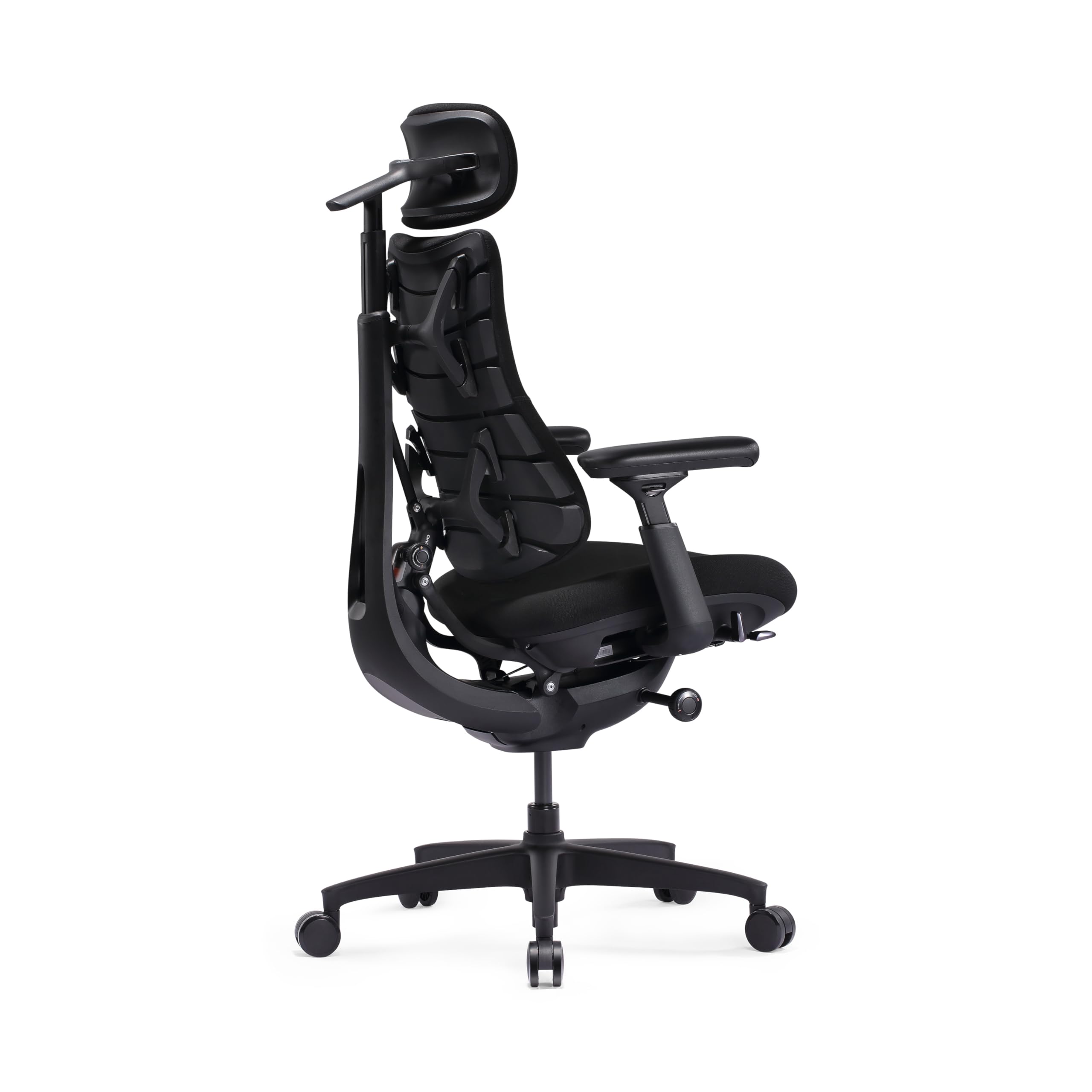
Headrest, back, seat and arms all move, so the chair follows you instead of you following it
Five recline positions from 105° to 160° are the reason this LiberNovo commands the highest seat in this article. The headrest, backrest, seat and armrests are all part of a dynamic support system, so they travel with your body when you shift, lean, or recline. The headrest and backrest also tilt separately to keep your gaze steady on a screen, and the armrests slide up to 100 mm. That last detail is what makes using a laptop at 160° actually practical.
The backrest is a bionic FlexFit design with manual lumbar adjustment, and the chair is deliberately sized by a fit chart — you check the “Ergonomic Fit Recommendation” table against your height and weight before buying. The construction uses aerospace-grade frame panels. The cushion is multi-density foam, which spreads pressure for long sessions. The backrest width is 17.72 inches, and it uses an upholstered, swivel form factor.
This chair asks two things of you. First, the cushioning split is real: some sitters find it very cushy, others want it firmer, so know which you prefer. Second, assembly reports are split, which means it is worth setting aside a patient hour with the included guide. Add the optional LiberNovo footrest to make the deep 160° recline comfortable on your legs. What you get in return is the most adjustable seating position on this list, which is the argument for the spend.
What makes it the flagship
- Five reclines from 105° to 160° — the deepest working range in this article.
- Headrest, back, seat and arms move together, with a differential headrest tilt that holds your screen gaze.
- Armrests slide up to 100 mm for close laptop work at deep recline.
- Manual lumbar adjustment plus a published fit chart to match chair to your body.
Before you commit
- Cushion feel is polarizing — very soft to some, too soft to others.
- Assembly experiences split; allow a patient session with the included guide.
- The 160° recline wants the optional footrest to be useful for long sessions.
It rewards you if: you work in many positions through the day and want a chair that moves with each one.
Think carefully if: you want a simple fixed chair, or you need a firm, predictable cushion feel.
Know the Specs
Lumbar Adjustment Range
Lumbar adjustment describes how far the pad behind your lower back can be moved. On the MOLENTS chair it travels up and down plus forward and back; on the ProtoArc it covers 2.36 inches of height and 0.8 inches of depth. That travel lets the pad sit in your specific curve instead of pushing on a random spot. A pad that cannot move is a pad that fits one body shape. If your back aches after a few hours, check the lumbar pad’s vertical and depth travel before anything else.
Recline Lock Positions
Recline positions tell you how far the back can tip and how many fixed stops it holds. This list runs from three-position models like the MOLENTS at 90° to 120°, up to the LiberNovo at five positions from 105° to 160°. A wider range lets the chair double as a lounger for breaks. A narrower range keeps the chair’s posture honest for typing. If you take real breaks at your desk, lean toward a chair with a footrest and a recline past 120°.
Seat Width vs Seat Depth
Seat width is side-to-side room for your hips; seat depth is the front-to-back span that supports your thighs. The criss-cross models run wide — the FelixKing measures 24.4 inches wide and 21 inches deep — so a folded-leg sit fits. Standard ergonomic chairs like the MOLENTS sit around 19.8 inches wide and 18.9 inches deep. Neither is better; they suit different sitting styles. Match the depth to your leg length so the front edge does not press behind your knees.
Armrest Types and Desk Clearance
Armrests come in fixed, height-only, 3D and 4D forms, and the differences matter for how you type. A 3D arm slides forward, back and sideways; a 4D arm also rotates. Flip-up or fold-away arms let the chair tuck fully under a desk. Arm height varies widely — 33.9 inches on the MOLENTS, 20 inches on the FelixKing criss-cross, 8.3 inches on the YFO. Measure the gap under your desk before you choose an arm style.
Load Rating and Frame Certification
Load rating is the maximum weight a chair is built to hold, and certification is the standard it was tested against. The Humergo lists a 360-pound maximum recommended load; the SIHOO supports up to 300 lbs; the FelixKing base holds 250 lbs. BIFMA and SGS marks are published durability standards for the frame, base and gas lift. A certified lift and base matter more than a padded armrest when you plan to keep the chair for years.
Mesh vs Leather Upholstery
Mesh is a woven fabric that lets air pass through, so it stays cool and holds its shape. Leather and bonded leather are wipe-clean surfaces that look richer but trap heat. Full-mesh chairs like the MOLENTS and SIHOO suit long, warm workdays. Bonded leather and velvet models like the Sharper Image and FiveWillowise suit shorter sittings and prettier rooms. Neither wears out faster by design — they simply suit different climates and uses.
Cushion Density and Springs
Cushion density is how firmly the foam resists compression, and it decides whether a seat sags after a year. The ProtoArc uses 55D high-density foam, which resists bottoming out through daily use. The Dowinx and GTPLAYER use pocket springs, individual coils that spread your weight the way a sofa does. Firmer foam keeps its shape; springs feel softer and more responsive. If your last chair flattened, look for a density or spring spec rather than a plush-looking photo.
Common Questions
Will a criss-cross chair actually let me sit cross-legged without my knees hitting the desk?
How do I know if a chair’s seat depth fits my leg length?
Is a mesh office chair cooler than a leather one for long workdays?
Do flip-up armrests really let the chair slide fully under a desk?
What does a lumbar support actually do, and is adjustable better than fixed?
How long does an office chair usually take to assemble, and do I need extra tools?
Can a heated massage chair replace a proper ergonomic desk chair?
What is the difference between a 3D and a 4D armrest?
Is a big and tall chair worth it for an average-height sitter?
Do caster wheels scratch wood floors, and are rubber ones better?
The Bottom Line
For most people shopping for a tiktok office chair, the answer is the MOLENTS Ergonomic Mesh Chair. Its lumbar pad moves in four directions, the frame is certified to BIFMA X5.1, and it handles a full workday without turning into a heat trap. That is the pick for anyone whose lower back, not their camera angle, is the priority. It is also the pick whose owners most consistently report sitting in it day after day.
If sitting cross-legged is the whole reason you clicked, start with the FelixKing Criss Cross Chair. Its flip backrest opens a 24.4-inch wide, 21-inch deep seat that a folded leg actually fits, and it wipes clean as a vanity seat too. For a long-session ergonomic upgrade with a firmer build and 4D arms, the SIHOO B100 PRO is the premium step. And if you want the most positions a chair can give you, from 105° up to 160°, the LiberNovo Omni SE is the flagship choice.
Nothing in this category replaces checking your body against the published numbers. Seat depth, seat width and arm height are the three specs that decide whether a chair disappears under you or fights you all day. Check those three numbers against your own body and the chair will still fit after the trend that led you to it has passed.
How we choose
We do not accept paid placement. Every pick is matched to a real buyer and a real use-case; we do not hands-on test units.
Sources
Specifications: manufacturer listings and product documentation. Review insights: verified customer reviews, as of November 2026. Pricing: not shown on this page (it changes often); check the current price via the retailer link.
As an Amazon Associate, Tactical Gear Guy earns from qualifying purchases. This does not affect which products we feature.