Specs are compiled from manufacturer listings and verified buyer reviews and can change over time — please confirm the key details on the product page before buying.
If a smart ring leaves a dent in your finger by morning, it has already failed — and thickness, not sensor count, is what causes that. The rings below stay genuinely slim on the finger: the slimmest here measures 2mm, and the lightest runs from about 2.3g. You will also see how each one handles the trade-offs slimming usually creates, mainly battery life and sensor contact.
This guide is built by comparing the manufacturers’ published specifications and the patterns across verified customer reviews, so you get each pick’s real strengths and trade-offs instead of marketing spin.
Thin is easy to claim and hard to deliver, so each pick below is judged on its actual build, battery life, and how it sits through a night’s sleep. Read on for the thinnest smart rings that stay comfortable without giving up the tracking you bought them for.
Top Picks

How To Choose The Best Thinnest Smart Ring
Start with your finger, not the spec sheet. A ring that is 2mm thick and about 2.3g disappears on the hand, while a slightly thicker model can press against the neighbouring finger overnight. Check the profile first, then work down to battery and sensors.
Profile and weight decide whether you actually wear it
Ring thickness is measured in millimetres, and the difference between 2mm and 2.2mm is small on paper but noticeable on a finger that swells slightly in warm weather. Weight matters just as much for overnight wear — anything close to 3g or more tends to announce itself when you roll onto your hand.
Battery life versus how much room the cell takes
A slimmer shell means less room for a battery. That is why you see figures like 4 days on one model and 12 days on another. Longer runtime usually means a slightly chunkier ring, so decide whether you would rather charge more often or feel the ring less.
Sizing kits are not optional
Every brand here uses its own sizing standard, and none of them match standard jewellery sizes. Order the sizing kit first, wear the dummy ring for a full day, and only then buy. Getting this wrong is the single most common reason a smart ring gets returned.
Side-by-Side Comparison
| Model | Best For | Thickness | Weight | Battery Life | Amazon |
|---|---|---|---|---|---|
| VERTU Cor Ring★ Best Overall | Thinnest and lightest feel | 2mm | From about 2.3g | Up to 7 days | Amazon |
| RingConn Gen 2Longest Runtime | Longest runtime | — | Just 2 grams | Up to 10–12 days | Amazon |
| QALO SR-2 SlimBest for Swimmers | Swimming and showers | 2.2mm | — | 7 days | Amazon |
| ZivaOne Ultra | Guided breathing sessions | 2.2mm | — | Up to 7 days | Amazon |
| femometer Ring Air | Cycle and temperature tracking | 7mm profile | 3.3g | 7 days | Amazon |
| RENPHO Lynx | Beginners on a budget | — | — | 7 days | Amazon |
| Oura Ring 4 | Deep sleep data | — | — | Up to 8 days / 5 days listed | Amazon |
| Amazfit Helio | Stress tracking | — | — | 4 days | Amazon |
| Samsung Galaxy Ring | Android phone owners | — | — | — | Amazon |
Detailed Reviews
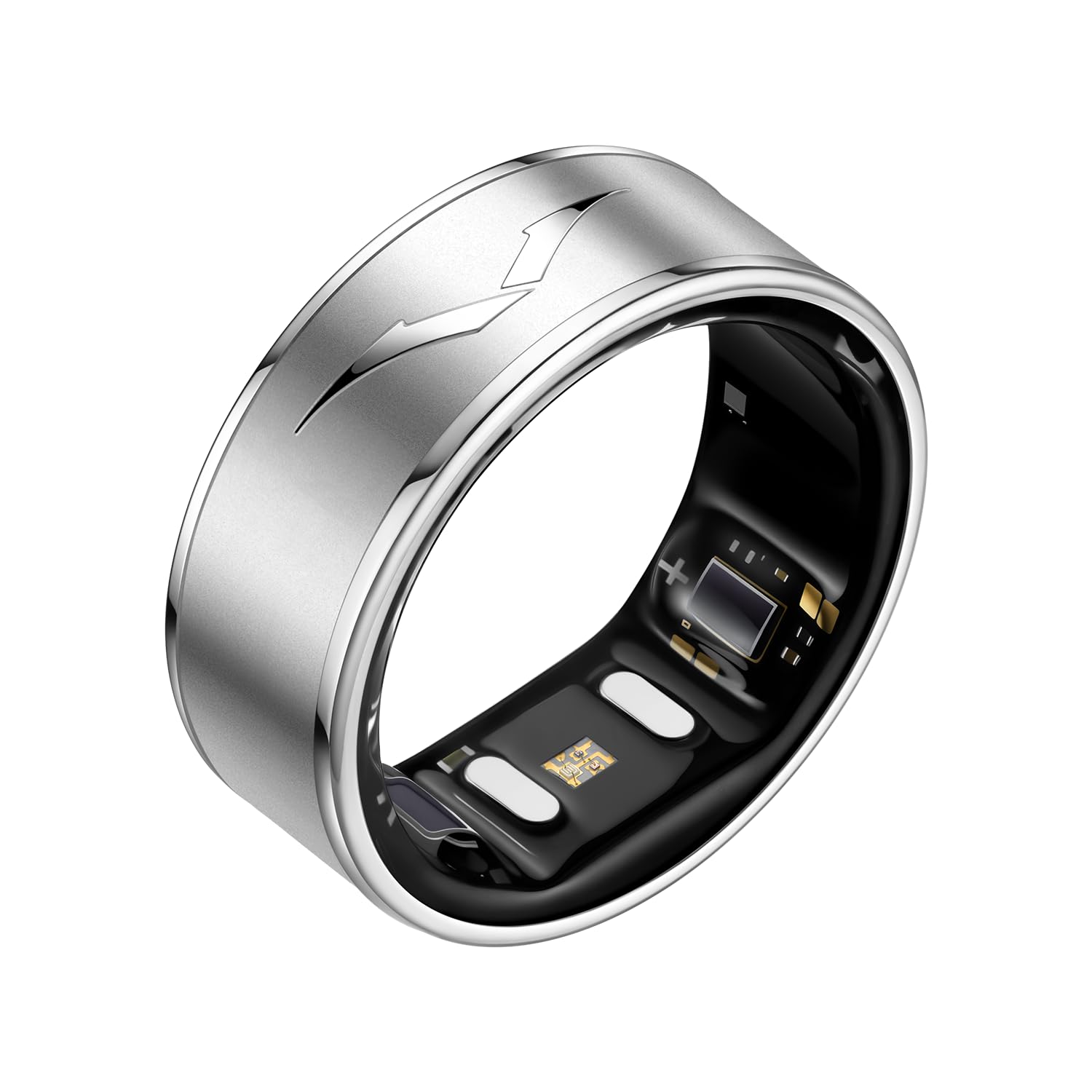
1. VERTU Cor Ring Smart Ring Size 11
At 2mm thick and from about 2.3g, it’s the slimmest, lightest ring here.
The Cor Ring wins this list on pure profile. It measures 2mm thick and starts from about 2.3g, which is the slimmest and lightest combination of anything here. That matters most at night, when a thicker band digs into the finger beside it. It also means you can wear it through a full day and overnight without the urge to take it off.
For that slimness you get real tracking: sleep data, heart rate trends, HRV (the tiny variation between heartbeats that hints at recovery), skin temperature trends, steps, and calorie estimates. There is no monthly or annual subscription for the app, which is unusual at this end of the market. Water resistance sits at 5ATM — fine for showers, hand-washing, and getting caught in rain, though not built for deep swimming. Battery life reaches up to 7 days, and that figure varies with ring size, settings, and battery age.
The trade-off is fit and setup rather than hardware. VERTU uses its own sizing standard, so you need the separately sold official sizing kit before ordering — the kit is not the ring and is not included. Get that wrong and the sensors won’t sit against your skin consistently. The brand also layers on a private consultant wellness service, which some buyers will value and others will simply ignore.
Where it pulls ahead
- Slimmest build on this list at 2mm, with weight from about 2.3g
- No monthly or annual subscription for app features
- Sleep, HRV, skin temperature, and activity all tracked from one ring
- 5ATM rating covers showers and everyday splashes
What to plan around
- Requires the separately sold VERTU sizing kit before you buy
- Up to 7 days of battery depends on ring size and settings
- Fewer buyers have worn it than the big-name alternatives, so long-term wear data is thinner
Reach for this if: you want the least noticeable thing on your finger and a setup that never bills you monthly.
Think twice if: you plan to swim laps — 5ATM is the daily-wear ceiling here, not a dive rating.
2. RingConn Gen 2 Smart Ring Size 10
At 2g on the finger with up to 12 days between charges, it’s the best comfort-to-runtime ratio here.
Most slim rings make you choose between a light build and long battery life. The RingConn Gen 2 mostly sidesteps that. It weighs just 2 grams (weight varies by size) and still runs up to 10–12 days, with the larger sizes 12–14 reaching the top of that range. That is a much longer stretch than the 7 days the femometer Ring Air or the VERTU Cor Ring deliver. Pair it with the included charging case and the ring can go well beyond a single charge cycle before you need a wall outlet.
You get a full night of sleep tracking from a 120 milliamp-hour battery (milliamp-hours measure how much charge a small cell holds). It watches your breathing patterns overnight, plus heart rate, HRV (heart rate variability, the small gaps between beats that hint at recovery), blood oxygen, stress, and activity. Water resistance runs up to 100 meters, so you can swim and shower without taking it off. The app has no subscription fee, and OTA updates (over-the-air software pushes) can add new features after you buy.
The honest catch is sizing. RingConn uses its own standard that doesn’t match US jewellery sizes or other health rings, so the sizing kit is effectively mandatory. Do that step properly and this is the most practical slim ring for someone who hates charging gadgets.
Why it holds second place: a 2g body with up to 12 days of battery is the best comfort-to-runtime ratio in this group, and the charging case extends it further for travel.
The one snag: the proprietary size chart trips people up — order the kit, wear the sample overnight, then commit.
Best match for: frequent travellers and anyone who resents a nightly charging ritual.
Not for: buyers who want to skip the sizing-kit step and order a ring today.
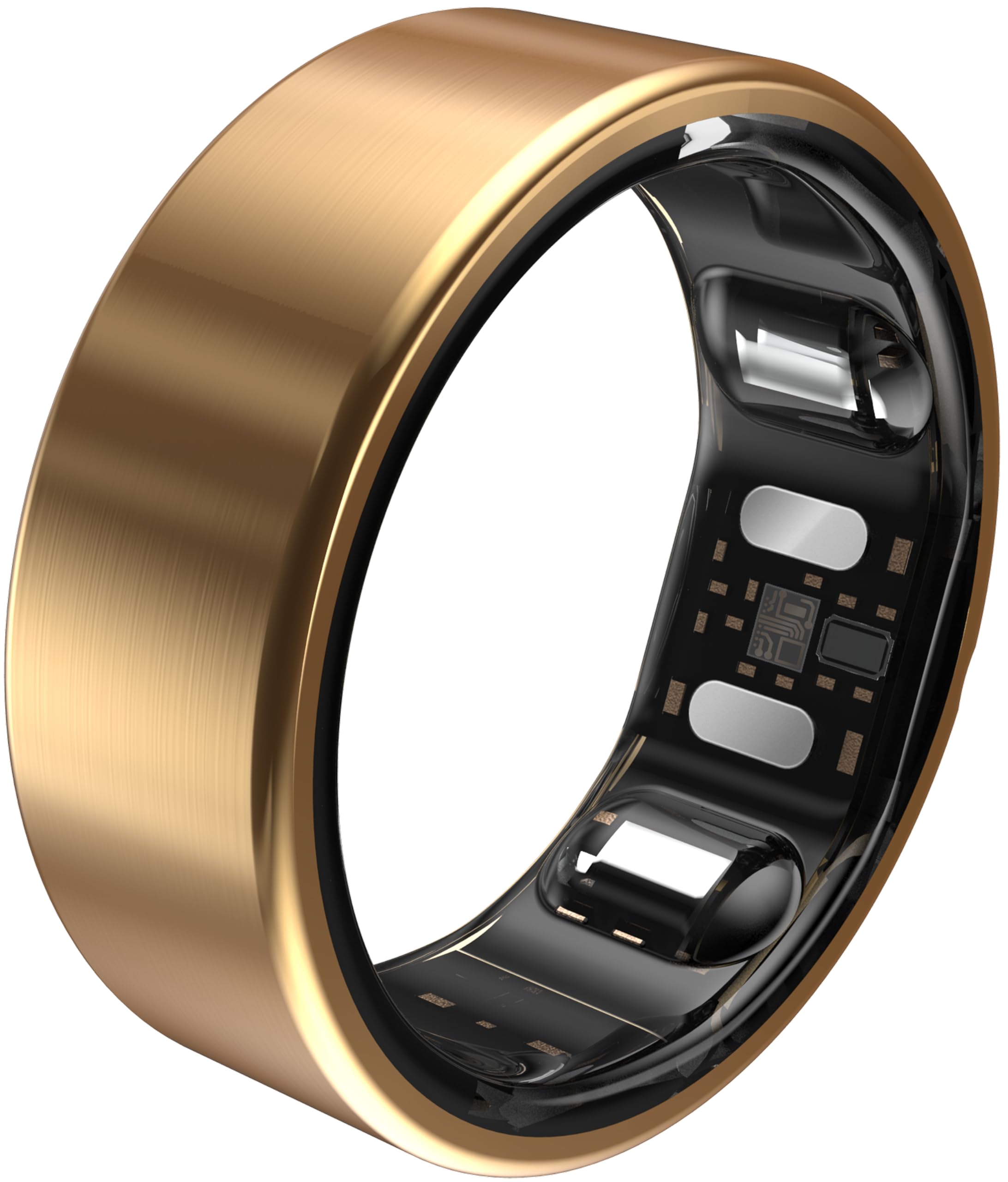
3. QALO Slim Smart Ring Gold 10
A 2.2mm titanium band rated to 100 meters, so you can swim laps and shower without removing it.
Water is where the QALO SR-2 Slim separates itself from the VERTU Cor Ring. It is rated waterproof up to 100 meters, against the VERTU’s 5ATM daily-wear rating, so laps, showers, and sleep tracking in the same ring are all on the table. The profile is 2.2mm — a hair thicker than the 2mm VERTU — and the band is titanium alloy with an 8mm width, so it reads as a proper ring rather than a plastic tracker.
The feature list is genuinely broad for the profile: all four sleep stages with a daily Sleep Score, heart rate, HRV, SpO2 (blood oxygen saturation), stress, temperature trends, steps, distance, and multiple activity modes. Women’s health tracking covers all four cycle phases. The app runs free with no subscription. Battery is rated at 7 days from a 14.5 milliamp-hour cell, with a 2-hour charge time.
Battery longevity over months is the thing to watch. Buyers report the charge stops holding after roughly two months of use, which is the recurring gripe across the reviews. The fit also runs snug because of raised sensors on the inside of the band, and QALO recommends sizing up and using its sizing kit. Neither issue makes it a bad ring — it makes it a ring for someone who wants the water rating and will keep an eye on the charge.
The real draw: 100-meter water resistance and a free app in a 2.2mm titanium band is a narrow combination at this level.
Worth knowing: the raised internal sensors mean a snug fit — size up, and plan on replacing it sooner than a longer-life model if the cell degrades.
Buy it if: you swim or shower in your ring and want cycle tracking alongside it.
skip it if: you want a ring you can hand down — the cell’s long-term stamina is the weak link here.
4. ZivaOne Ultra Smart Ring Black 7
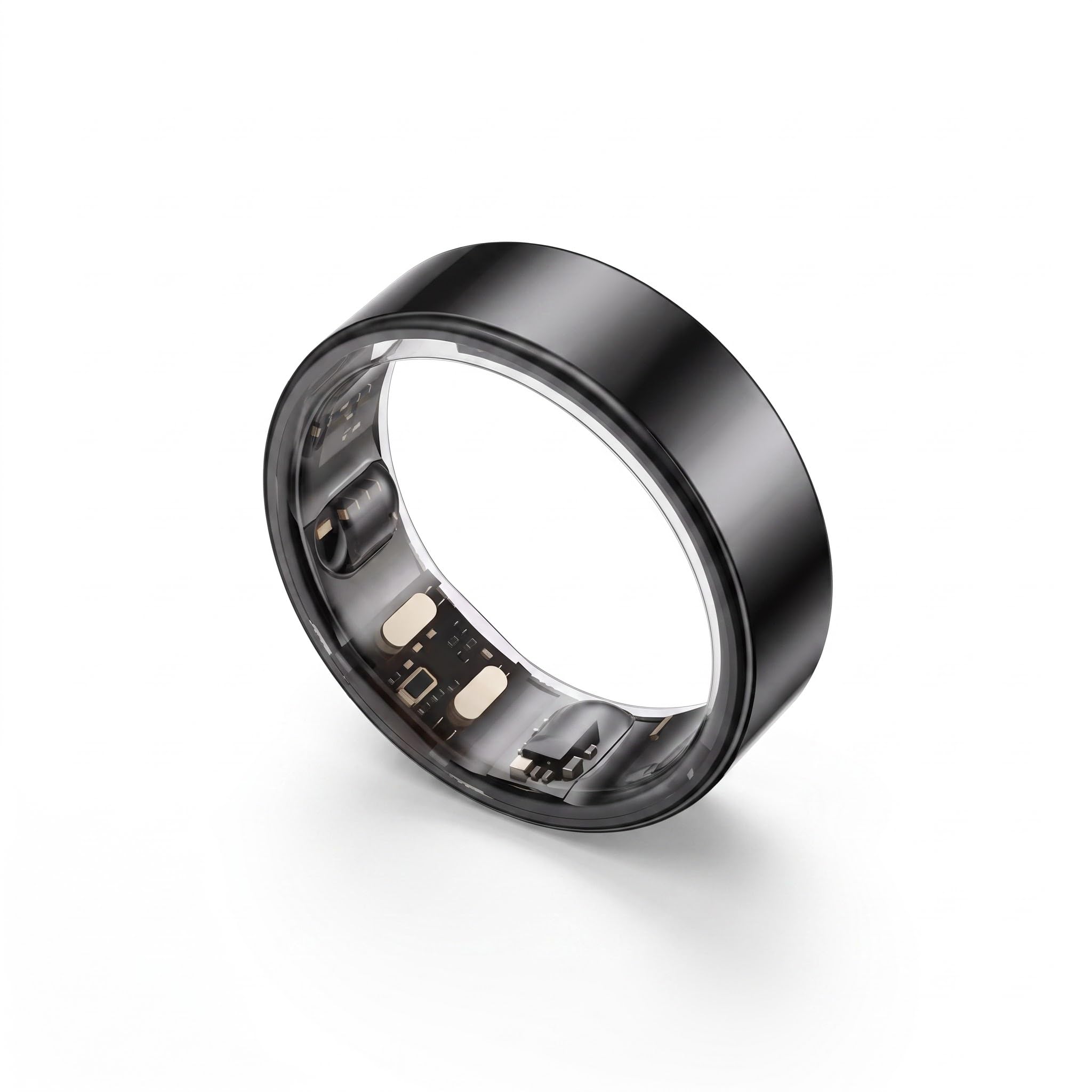
A 2.2mm titanium ring with five guided breathing practices and before-and-after heart-rate data.
ZivaOne takes a different route from the data-dump approach. The ring is 2.2mm titanium with a 2.2mm band width and gives up to 7 days of battery, plus 5 ATM water resistance for swimming and showering. That profile sits right alongside the QALO, and the aerospace-grade titanium case adds a bit of heft in the hand without adding thickness.
The breathing tools are what set it apart. The app carries five guided practices — 4-7-8 Calm, Box Breath, Bhramari, Just Sit, and Anulom Vilom — and after each session you see your heart rate from start to end. After 10 practice days you can compare your sleep and stress on practice days against other days. If you want a ring that nudges a habit rather than just reporting a number, this is the pick that tries.
Baseline tracking is all here: stress, sleep, heart rate, HRV, blood oxygen, skin temperature, and activity. There is no monthly fee. Charging takes 3 hours, which is on the slow side compared with the femometer’s 1.5-hour top-up, so plan to charge while you shower or eat rather than in a rush.
What makes it different: five named breathing practices with before-and-after heart-rate data and a 10-day sleep comparison is a genuinely distinct feature set at this profile.
The slow bit: a 3-hour charge is the longest here — top it up on a schedule rather than on demand.
Choose this one if: you want a breathing practice built into your ring and you’re fine plugging in for three hours.
Look elsewhere if: you want the fastest possible charge before work.
5. femometer Ring Air, Ultra-Thin Smart Ring, Silver, Size 12
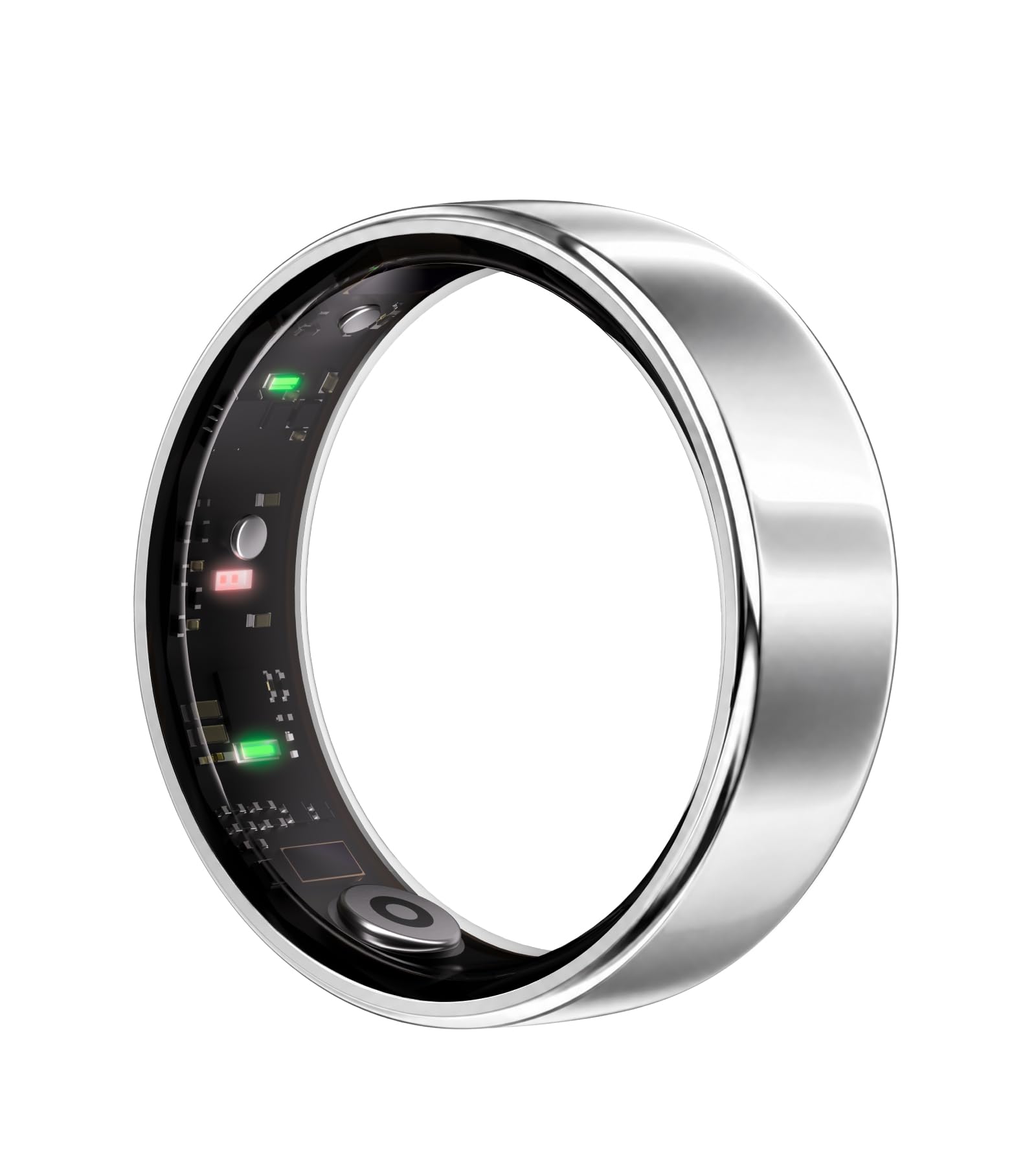
Triple temperature sensors feed cycle analysis, ovulation prediction, and hot flash detection in a 7mm profile.
Most smart rings treat temperature as a side metric. The Ring Air makes it the centrepiece. It carries triple temperature sensors along with PPG (the light-based pulse sensor used to read heart rate) and a 3-axis accelerometer that detects movement. That combination feeds basal body temperature, heart rate, blood oxygen, sleep, and stress readings — and from those it draws menstrual cycle analysis, ovulation prediction, and hot flash detection.
The physical specs are sensible for daily wear: 3.3g in weight, a slim 7mm profile, a PVD-coated exterior that resists scuffs, and a smooth epoxy resin inner surface against the skin. Battery life reaches 7 days, with a quick 1.5-hour charge and 0.74 watt-hours of capacity. No subscription is needed for the app. On runtime it is twice the Amazfit Helio’s 4 days, which is the kind of gap you feel when a ring dies mid-week.
Accuracy and syncing are the two areas to know about. Buyers on the whole like the sleep tracking and the battery, but data sync has drawn mixed feedback — a few report the app drops the connection, so keep the ring’s orientation right and the app updated. It is also the heavier of the thin picks at 3.3g, comfortably above the 2.3g VERTU.
Why women’s-health users gravitate here: triple temperature sensors plus cycle analysis and ovulation prediction is a more targeted toolkit than most slim rings offer.
Set it up carefully: sync reliability depends on correct orientation and a current app — do both and most of the fuss disappears.
Suits: anyone tracking cycles, ovulation, or temperature trends who wants the readings built in rather than bolted on.
Less suited: minimalists chasing the very lightest ring — this one sits at 3.3g.
6. RENPHO Lynx Smart Ring Size 10

The lowest-priced titanium ring here, with an included charging case for travel top-ups.
If you are testing whether a smart ring fits your life at all, the Lynx is the sensible first step. It covers sleep, blood oxygen, stress, heart rate, steps, distance, and calories, plus walking and running activities. The titanium exterior survives 24/7 wear and the ring is rated 5ATM waterproof, so swimming and hiking are both fine. It also qualifies for HSA/FSA spending, which is a practical bonus the pricier VERTU doesn’t mention.
The included charging case is the standout convenience. It gives the ring an extra charge while storing it safely, which is exactly what you want on a trip. Battery life itself is rated at 7 days. The Renpho Health app syncs with Apple Health and Google Health Connect and charges no subscription. A small detail that matters: the orientation marker marked with a plus sign has to face your palm for accurate sensing.
Setup is the sticking point. RENPHO uses its own sizing standard, so you need the official RENPHO sizing kit before buying, and that step is easy to skip. Do it properly and you get a lot of tracking for the money in a titanium body.
Where the value sits: titanium, 5ATM water resistance, a 7-day battery, and a charging case — all with no subscription and HSA/FSA eligibility.
The new-owner trap: order the official sizing kit first; standard jewellery sizes will not match.
Go for it if: you want to try a titanium smart ring without committing to flagship money.
Hold off if: you want the thinnest possible profile — RENPHO doesn’t publish a thickness figure for this one.
7. Oura Ring 4 Smart Ring — Silver, Size 10

Over 50 tracked metrics and self-adjusting sensors make it the most detailed sleep tracker here.
Oura tracks more than 50 health metrics, spanning sleep, activity, stress, heart health, and women’s health, and its Smart Sensing adjusts continuously to keep the readings accurate day and night. What wins people over is the sleep side. It handles night-shift schedules without falling apart, and the stress-pattern recognition gives you a picture of your day rather than a raw number.
Battery life comes in two figures in the listings — up to 8 days in one place and 5 days in the spec table — so plan on charging roughly weekly to be safe. A full charge takes 80 minutes. No screen and no vibrations means the ring simply sits there, which is the point of the titanium case and slip-on fit. You need the Oura Ring 4 Sizing Kit first, because the sizing is unique and won’t match a regular ring.
Two caveats sit around the hardware. Membership is required for the deeper features: the first month is included for new members, then 5.99 per month, tied to your account rather than the ring. And the long-term picture is mixed — durability and value draw mixed-to-negative feedback, with battery drain and charge retention among the recurring gripes. The data quality is excellent; the longevity question is real.
The case for it: over 50 tracked metrics and self-adjusting sensors make this the most detailed sleep picture in the group.
The cost of entry: a monthly membership for full features, and a durability record that isn’t as strong as the software.
Pick this if: sleep insights are the whole reason you want a ring and a monthly fee won’t bother you.
Look past it if: you want no ongoing cost and a longer ownership runway.
8. Amazfit Helio Smart Ring — Water-Resistant, iOS/Android

A titanium ring with an EDA stress sensor plus HRV and VO₂ Max, which most rivals skip.
The Helio makes its case with its sensor mix. An EDA sensor (which reads the tiny changes in skin conductance that come with stress) pairs with heart rate variability to flag when you’re wound up, so you can spot a stressful day as it happens. The Zepp app shows that next to sleep stages and VO₂ Max (a fitness measure of how well your body uses oxygen). The titanium alloy shell keeps it light, and the tracking runs without a subscription.
Sleep and recovery is where it leans hardest: stages plus heart rate variability for recovery insights, and blood oxygen alongside heart rate. It’s a real package of health analytics for a titanium ring. Water resistance handles the daily wear and workout side without drama.
Battery life is the trade you make here: 4 days from an 18.5 milliamp-hour cell. The QALO and ZivaOne both run 7 days in a similar form. More seriously, owners mention charging failures and units giving out after around four months, which is the most-mentioned downside of this model. If you want a stress-focused ring and can accept a shorter runtime and a real reliability caution, it delivers the analytics.
The part that shines: an EDA stress sensor plus HRV and VO₂ Max in a titanium body is a deeper stress toolkit than most slim rings carry.
The part to weigh: 4 days of runtime and reported charging failures are enough to make the longer-life picks look safer for everyday reliability.
Best for: people who prioritize stress and recovery data over long stretch-between-charges time.
Not ideal if: you want the fewest possible charging interruptions and the most proven longevity.
9. Samsung Galaxy Ring Size 5
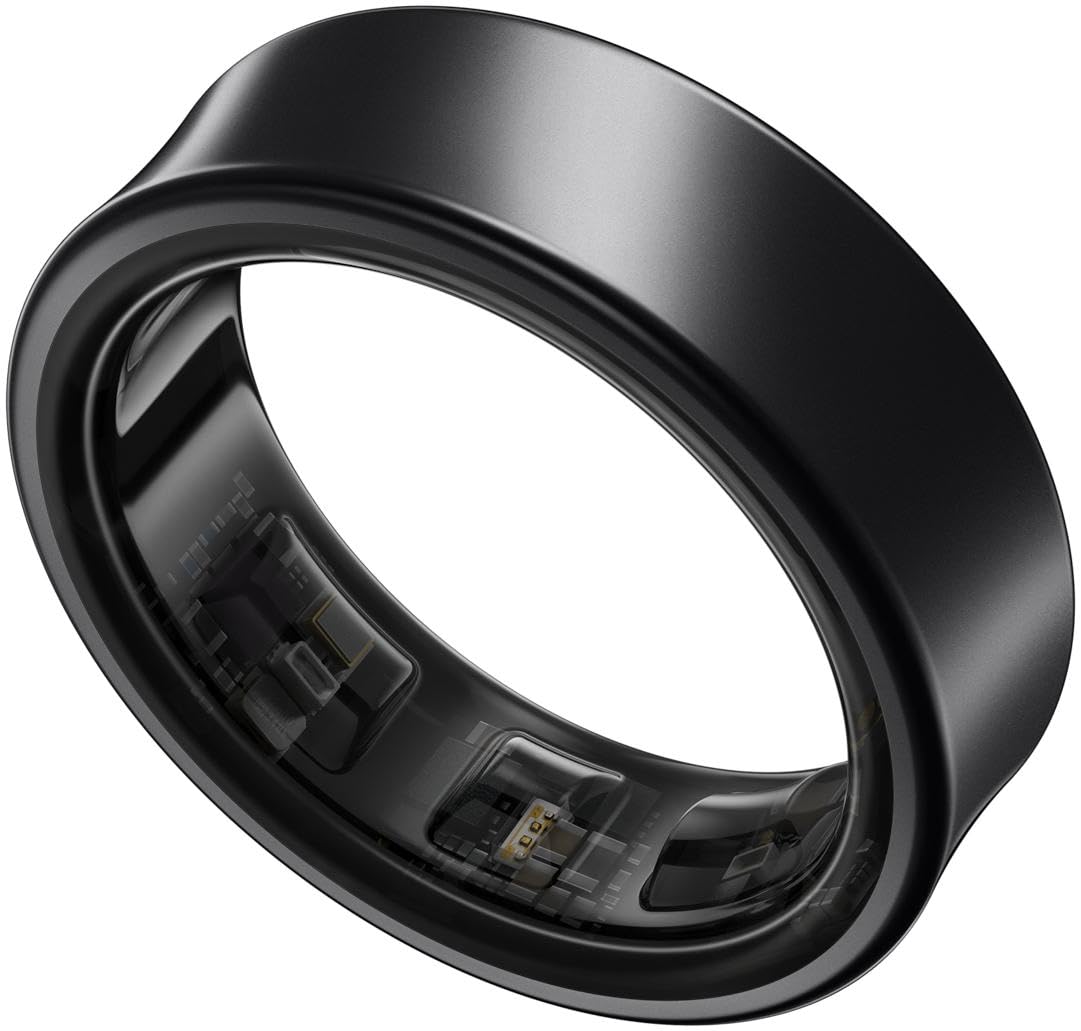
A titanium smart ring for the Android crowd, with Samsung Health and an AI sleep tracker built in.
The Galaxy Ring is the one to look at if your phone is already Android and you’d rather not manage another app ecosystem. It works with Android 11.0 and above and ties into Samsung Health, with an AI sleep tracker handling the overnight analysis. The case is titanium, so it holds up to daily knocks, and the package includes a charging case and USB Type-C cable.
There is no published thickness or weight figure for this model in the listing, so if the slimmest possible profile is your top priority, the 2mm VERTU and 2.2mm QALO give you a number to compare. What the Samsung does offer is the shortest path to fitness and sleep tracking if you already live inside Samsung’s ecosystem — no app juggling, and wireless charging in the case. It’s a size 5 here, so the sizing kit matters as much as it does for the rest of the field.
Two things to weigh: it works only with Android 11.0 and above, so iPhone owners should not consider it at all. It’s also the most premium-priced ring here, with no published thinness spec to justify that position on this particular list.
The draw: Samsung Health integration and an AI sleep tracker in a titanium case, with the cable and charging case in the box.
The limit: Android 11.0 and above only — and no published thickness means you can’t benchmark it against the 2mm leaders.
Fits: Android 11+ owners who want their ring talking to Samsung Health from day one.
Doesn’t fit: anyone on iPhone, and anyone buying purely on the slimmest possible profile.
Know the Specs
Thickness in Millimetres
This is the measurement across the outside of the band, and it drives how the ring feels against the fingers beside it. A 2mm ring (the VERTU Cor Ring) is the slimmer choice; a 2.2mm ring (the QALO SR-2 Slim or ZivaOne) is a fraction more substantial. Anything thicker tends to press when your hand swells at night.
Battery Capacity and Life
Capacity is measured in milliamp-hours — how much charge the cell holds — and life is measured in days. A 120 milliamp-hour cell can run up to 12 days, while a 14.5 milliamp-hour cell runs about 7. In a slim body, a bigger cell is the main reason a ring ends up heavier.
Water Resistance Ratings
5ATM covers showers, hand-washing, and splashes. A 100-meter rating handles swimming and longer water exposure. If you swim regularly, the second figure is the one to look for.
Sensor Contact and Sizing
Every brand here uses its own sizing standard, so a “size 10” from one maker won’t match another. The sensors need steady skin contact, so a loosely fitted ring gives weaker readings. That’s why a sizing kit is the first purchase, not the last.
Common Questions
How thin can a smart ring actually be?
Will a thin smart ring track my sleep as well as a thicker one?
Do these smart rings require a monthly subscription?
Can I swim with a smart ring?
Why do smart ring sizes differ from normal ring sizes?
Is a titanium ring better than a plastic one?
How long does a smart ring battery last per charge?
Does a thin smart ring work with an iPhone?
Can I use HSA or FSA money to buy a smart ring?
Do thin smart rings track blood oxygen and heart rate?
The Bottom Line
For most buyers, the thinnest smart ring winner is the VERTU Cor Ring. At 2mm thick and from about 2.3g, it’s the least noticeable thing you can put on your finger — and with no subscription attached, it earns its place at the top. If you want the ring that stays off the charger longest, the RingConn Gen 2 runs up to 12 days in a 2g body. And if sleep data is the whole reason you want a ring, the Oura Ring 4 tracks more than 50 metrics and adjusts to you across the night, as long as you’re fine with its monthly membership.
How we choose
We do not accept paid placement. Every pick is matched to a real buyer and a real use-case; we do not hands-on test units.
Sources
Specifications: manufacturer listings and product documentation. Review insights: verified customer reviews, as of November 2026. Pricing: not shown on this page (it changes often); check the current price via the retailer link.
As an Amazon Associate, Tactical Gear Guy earns from qualifying purchases. This does not affect which products we feature.