Specs are compiled from manufacturer listings and verified buyer reviews and can change over time — please confirm the key details on the product page before buying.
If your feet go cold and sore two hours into a hike, the fix is usually the sock, not the boot. Thick hiking socks work by putting a real layer of cushioning between your foot and a stiff boot sole, and by holding warmth even when the trail turns wet. The picks below range from full-plush mountaineering socks to a six-pair merino pack you can rotate all week. The Darn Tough Vangrizzle leads the list at 4.5+ stars across 900+ ratings, earning that spot on merino wool content and cushioned footbed alone.
This guide is built by comparing the manufacturers’ published specifications and the patterns across verified customer reviews, so you get each pick’s real strengths and trade-offs instead of marketing spin.
Below you will find nine pairs sorted by what they actually do well, from cold-weather mountaineering wool to a low-cut merino pack built for warm-weather trails, plus the fit quirks worth knowing before you buy. A thick sock with the right wool content and cushioning keeps your feet warm and blister-free from the trailhead to the summit.
Top Picks
How To Choose The Best Thick Hiking Socks
Most buyers assume thicker means warmer and that is only half true. A thick sock that traps sweat will chill your feet the moment you stop moving, so the material blend and the ventilation matter as much as the loft. Get those two right and the rest is fit.
Wool content and the blend around it
Pure wool cannot stretch or hold its shape on a foot, which is why every sock here is a blend. Darn Tough and Fox River lean on merino, Carhartt’s men’s Arctic sock lists 50% merino wool blended with 14% virgin wool and 36% synthetics, and the Tough Land pair leads with 60% baby alpaca wool. Higher wool content generally means better warmth per ounce and less odor after a long day.
Cushioning placement, not just pile height
Look at where the padding sits. Full-plush cushioning runs the whole sock, while targeted cushioning pads the heel, arch, and ball of the foot where a boot sole presses hardest. For stiff leather boots and rocky descents, full cushioning is the safer bet. For a boot that already fits snug, targeted padding keeps the fit honest.
Getting the size right in a thick sock
A thick sock takes up volume inside the boot, so the wrong size shows up fast as bunching at the heel or pressure across the toes. Check the listed shoe-size range before you buy. If you are between sizes on a full-cushion sock, going up is usually the friendlier error. Some full-plush pairs are built to avoid forcing you into a bigger boot at all.
Height and the boot you wear it with
Crew and boot height clears the collar of a hiking boot and keeps debris out. Ankle and low-cut pairs suit trail runners, warm-weather hikes, and everyday wear. Match the height to the footwear you actually move in most, because a tall sock bunched under a low shoe is a blister waiting to happen.
Side-by-Side Comparison
| Model | Best For | Height | Wool Content | Cushioning | Amazon |
|---|---|---|---|---|---|
| Darn Tough Vangrizzle Boot Cushion★ Best Overall | Everyday trail hiking | Boot | Merino Wool | Cushioned | Amazon |
| Fox River Norsk Heavyweight CrewBest Value | Cold-weather warmth | Crew | Wool | Heavyweight | Amazon |
| Welwoos Merino Wool Ankle 6-PackWarm-Weather Pack | Warm-weather rotation | Ankle / Low Cut | 70% Merino Wool | Targeted | Amazon |
| Carhartt Women’s Heavyweight Wool Boot | Winter boots | Boot | Highest wool in Carhartt ladies’ line | Heavyweight | Amazon |
| SAMSOX Merino Wool Bozeman | Long cold days outdoors | Boot | Merino Wool blend | Full Plush | Amazon |
| Carhartt Men’s Arctic Heavyweight | Deep winter work | Boot | 50% merino + 14% virgin wool + 36% synthetics | Full foot and leg | Amazon |
| Tough Land Alpaca Wool | Warmth without bulk | Crew | 60% Baby Alpaca Wool | Full Cushion | Amazon |
| Darn Tough Mountaineering 1953 | Alpine and winter trekking | Boot | Merino Wool | Heavily padded | Amazon |
| Danish Endurance Merino Hiking | Year-round hiking | Crew | Merino blend | Heel-to-toe | Amazon |
Detailed Reviews
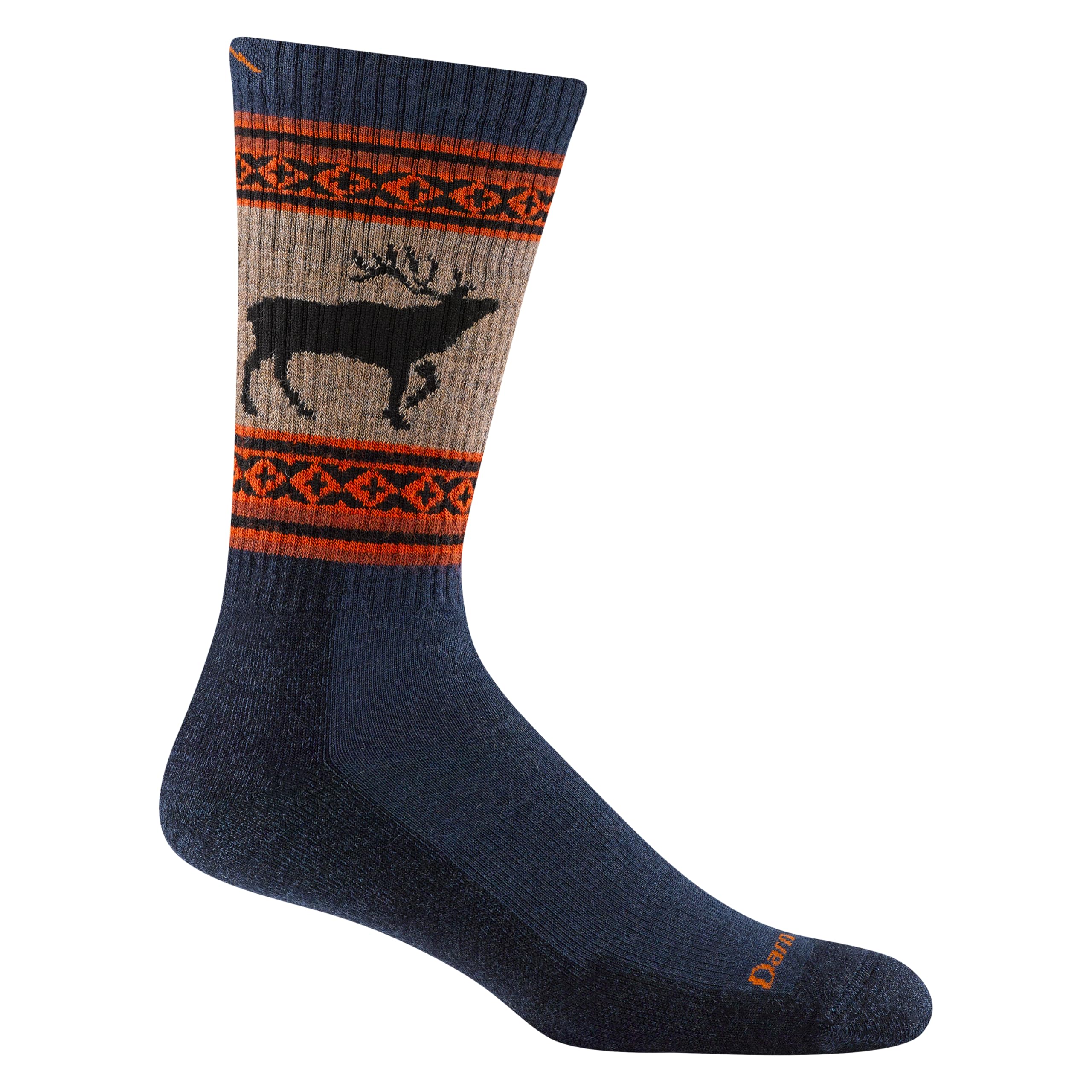
1. Darn Tough Vangrizzle Boot Socks
Our pick — 4.5+★ from 950+ verified ratings; the strongest balance of quality and price.
A boot-height merino sock with a cushioned footbed that owners say holds its shape for years of weekend trail use.
Start with what this pair is: a boot-height merino wool sock with cushioning built for a hiking boot. That combination is why it lands at the front of this list. Merino wool (a fine, soft wool from merino sheep that insulates even when damp) keeps your feet warm without the clammy feel of a synthetic sock after a long climb.
What wins people over is the build. Quality is the runaway theme in the feedback, with durability right behind it — these are socks owners describe as lasting for years of regular trail use. That tracks with a boot-height cut and a cushioned footbed that takes the rub instead of your heel. For a sock you pull on every weekend from spring through fall, that longevity is the whole argument.
The honest catch is the fit. Some hikers find the boot-cushion version snug across the instep, so if you have a wide foot or a boot that already runs tight, try one pair before committing to several. Warmth is real too — one buyer uses theirs comfortably in warmer temperatures, so it is not strictly a winter-only sock.
What earns the top spot
- Merino wool insulates and manages moisture on long climbs
- Boot height clears the collar of a hiking boot
- Cushioned footbed softens the press of a stiff sole
- Durability is the second most-praised trait among owners
Where it can pinch
- Boot-cushion fit runs snug for some wide-footed hikers
- Not a deep-winter sock on its own for sub-zero days
Go for this one if: you want one dependable merino boot sock for three-season trail hiking.
Try a single pair first if: your boots run narrow, since the boot-cushion fit is snug on some feet.
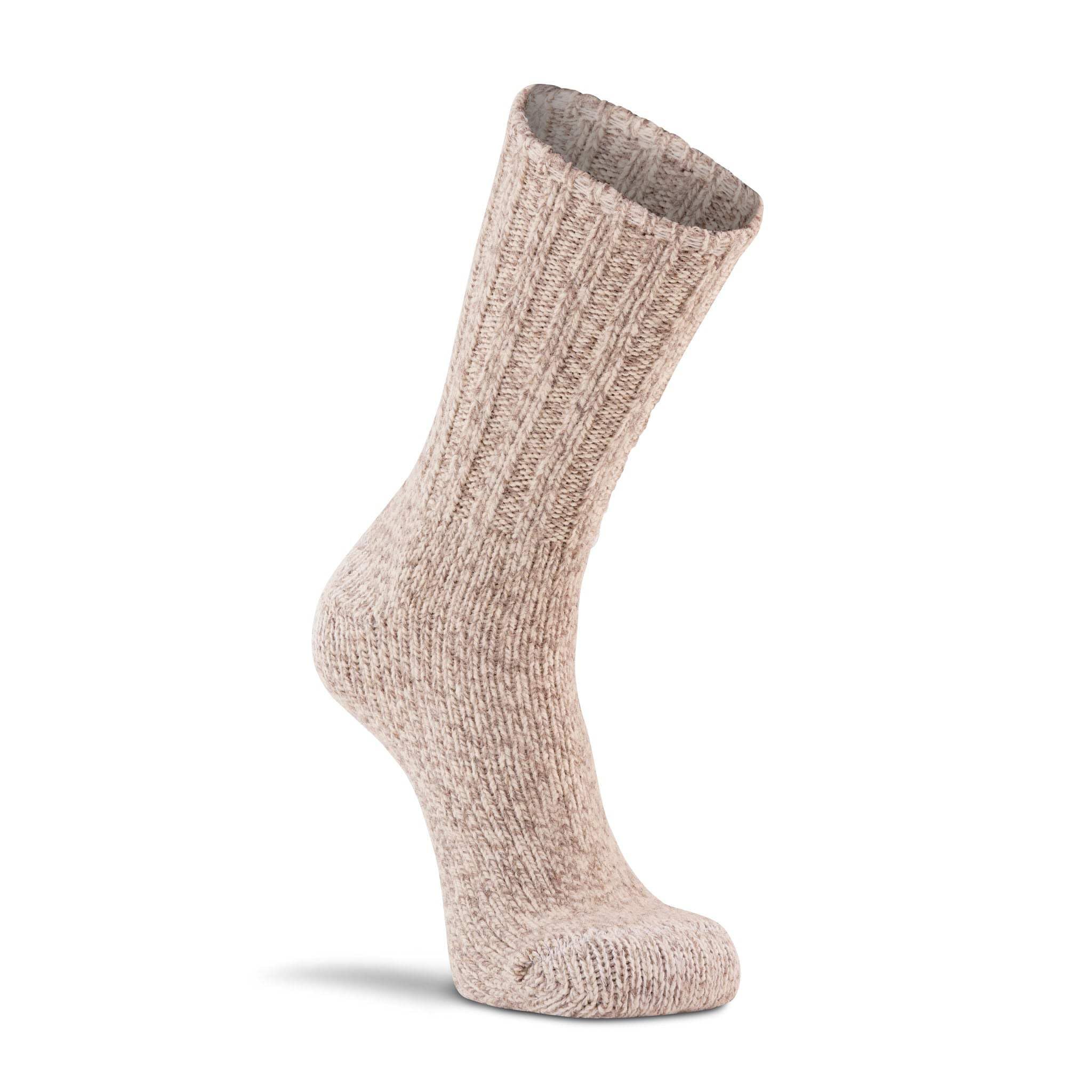
2. FOX RIVER Norsk Heavyweight Crew Hiking Sock
A heavyweight wool crew with a stretch nylon core that delivers real cold-weather warmth at an entry-level price.
This is the entry point for anyone who wants real heavyweight warmth without spending much. The Norsk is a crew-height sock built on a wool blend, with a stretch nylon core (a stretchy synthetic thread running through the sock) so it keeps its shape wash after wash. Wool provides natural insulation, and the breathable-knit construction is designed to keep feet dry.
Quality is the trait owners praise most, and warmth comes second. That ordering tells you something useful: this is not a flashy sock, it is a well-made one. It is soft and thick with good cushioning, and it works just as well on a cold morning around the house as it does in a boot. If your goal is a warm crew sock at a low entry cost, this delivers.
The one thing to plan around is how tight it goes on. These are snug to pull on for some feet, and sizing is the weakest point in the feedback — so check the size chart and do not assume your everyday shoe size translates. Warmth and fit are the two things to weigh here, and the warmth side is the winner.
The value read: heavyweight wool warmth at an entry-level cost, with a stretch nylon core that holds shape through repeat washes.
The trade-off: they pull on tight, so getting the size right matters more here than on a stretchier sock.
Reach for it if: you want heavyweight wool warmth on a budget and will check the size chart first.
Look elsewhere if: you want a roomy, forgiving fit — this crew runs snug to pull on.
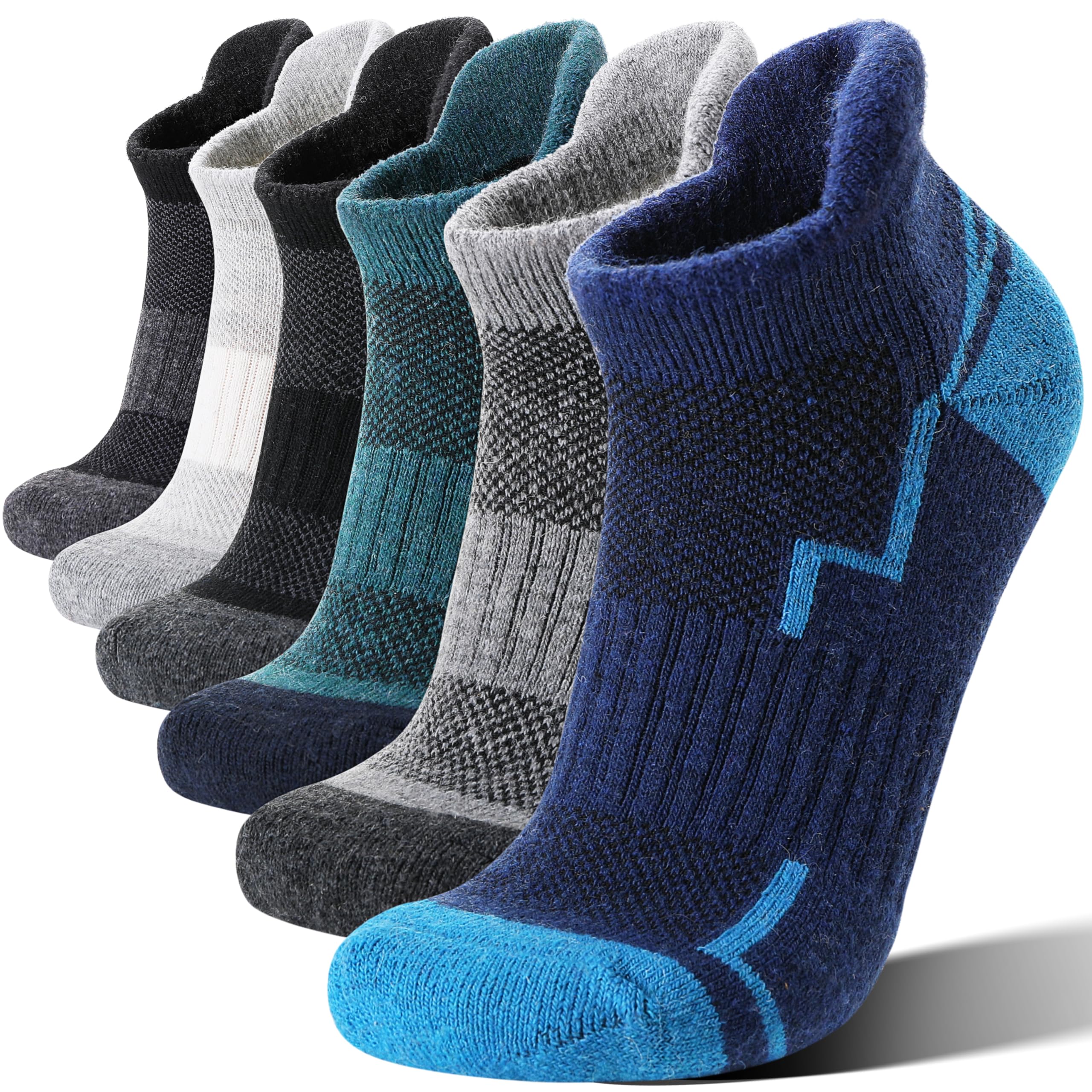
3. Welwoos 6 Pairs Merino Wool Ankle Hiking Socks
A six-pair pack of 70% merino ankle socks with targeted cushioning and an arch support zone for warm-weather hikes.
A six-pair pack changes the math: you get six ankle-height socks, each made of 70% merino wool (a soft, warm wool that resists odor), 23% polyester, 5% spandex (stretch), and 2% nylon. The sock has an arch support zone and targeted cushioning rather than full plush, so it suits warm-weather hikes and everyday wear where full padding would just hold heat.
Owners describe them as comfortable enough to wear all year, with cushioning that keeps blisters and sore feet in check and a fit that stays put as you move. Butter-soft is the phrase that keeps coming back.
Where to temper expectations: thickness and durability draw split opinions. These are ankle socks, so treat them as a light-to-mid cushioning option, not a substitute for the full-plush boot socks further up this list. For warm-weather mileage and a week of clean pairs, that trade is worth it.
Why the pack works: 70% merino wool with a stretchy spandex component and an arch support zone, times six pairs, keeps you in fresh socks all week.
Best not to over-promise: ankle height and targeted cushioning suit warm trail days more than sub-zero alpine boots.
Built for: warm-weather hikers who want merino cushioning and a full week of pairs in one purchase.
Not the pick if: you need full-plush boot padding for cold mountain days.
4. Carhartt Women’s Heavyweight Wool Boot Socks

Carhartt’s warmest women’s boot sock, carrying the highest wool percentage in the ladies’ line plus a reinforced heel and toe.
If you wear boots through a real winter, this is the sock to start with. It carries the highest percentage of wool in Carhartt’s women’s line, and that is the spec doing the work — more wool means more warmth held against your foot, so cold mornings in leather boots stop biting. A reinforced heel and toe add durability right where a boot grinds hardest.
Quality is the dominant note in how owners talk about these, and warmth follows close behind. They stay soft inside a boot, look good enough to wear as a sweater sock around the fire, and take to outdoor activity without complaint. It is a sock people reach for on the coldest days and then keep reaching for.
Fit needs a heads-up. Some women find this pair runs large, so if you sit between sizes, consider the smaller one. Value is the other split point — some feel it is a fair price for the wool content, others less so. Neither undercuts the warmth and cushioning that put it on this list.
The winter case: the highest wool content in the women’s range plus reinforced heel and toe make this a boot sock built for cold and wear.
The sizing note: it can run large, so shop by the size chart rather than assuming.
Pick this up if: your winter is long and your boots are leather, and you want maximum wool warmth in a women’s cut.
Size down a notch if: you land between sizes — this pair is known to run large.
5. SAMSOX Merino Wool Bozeman Boot Socks
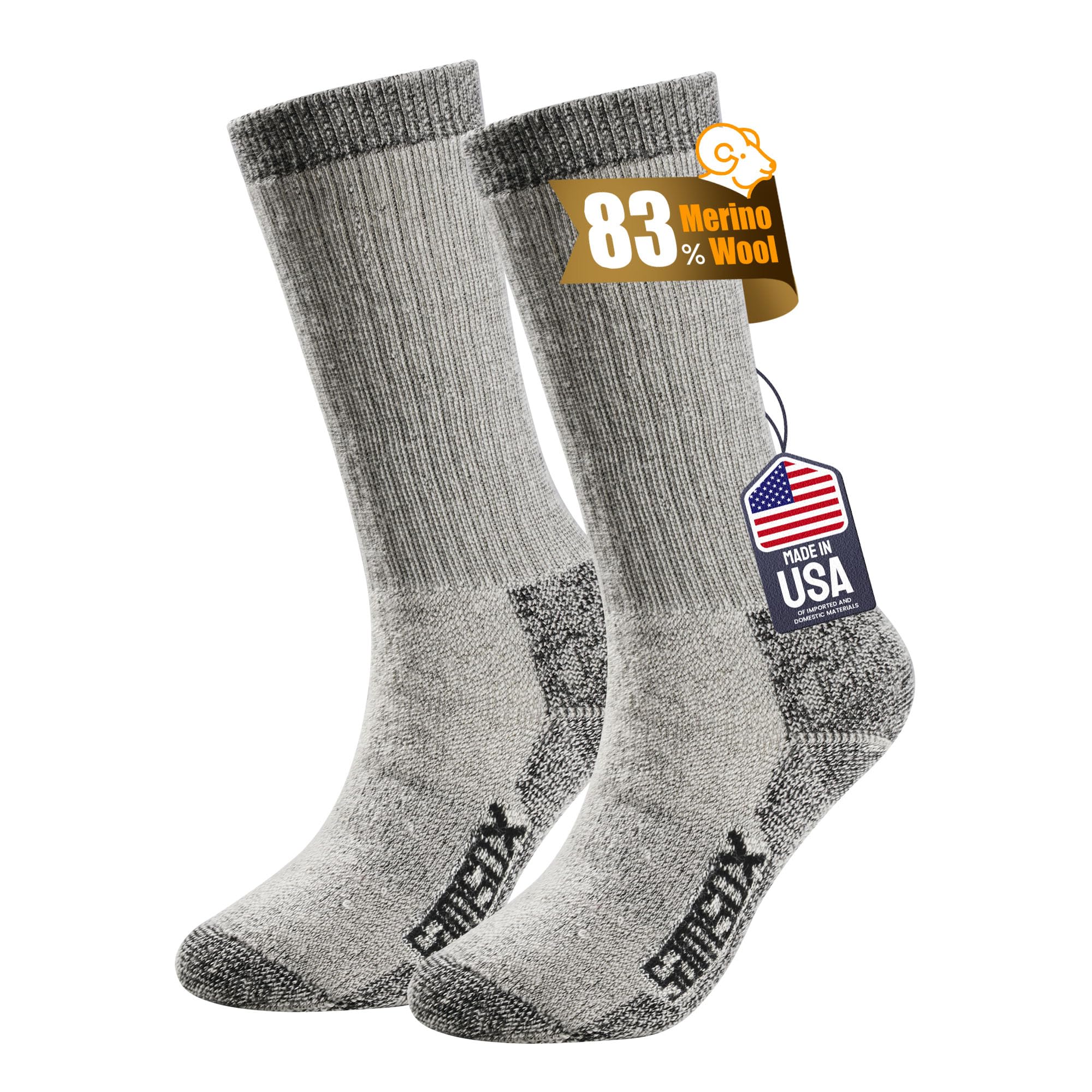
High-density plush cushioning from toe to cuff, with a flat toe seam and arch support for long hours in cold boots.
The Bozeman puts high-density cushion through the entire sock, not just the heel. That full plush padding pairs with a merino wool blend that regulates temperature and wicks moisture (moves sweat away from your skin), plus a reinforced heel and toe for durability and a flat toe seam that reduces bulk and irritation in the toe box. Arch support keeps the fit secure.
This one is made in the USA and aimed straight at cold days outdoors — birdwatching, wildlife photography, long sits in the blind. Owners point to its warmth most of all, with quality right behind. Wearers in genuinely cold climates like the northern plains put it to work and come back happy. The high wool content and plush inside lining are the details people single out.
Plan for this being a thick sock that wants room in the boot. The full cushioning takes up shoe volume, so if your hiking boots already fit snug, this is a deliberate choice rather than a casual one. It is the pair for the coldest, longest days outside.
Why it wins the cold test
- High-density cushioning runs the full length of the sock
- Merino wool keeps warmth while wicking moisture
- Flat toe seam cuts bulk and toe irritation
- Reinforced heel and toe add wear at the rub points
Where it asks more of you
- Full plush padding needs room in a snug boot
- Built for cold conditions, not warm-weather hiking
Suits you best if: you spend long cold hours outside and want full-length cushioning in a merino boot sock.
Think twice if: your boots are already tight — the full-plush build eats shoe volume.
6. Carhartt Arctic Merino Wool Boot Sock

A 50% merino blend with abrasion-resistant yarns in the heel and toe, built for sub-zero days in work boots.
The blend is the headline here: 50% temperature-regulating merino wool, 14% virgin wool, and 36% synthetics. That much merino keeps feet toasty in the coldest temperatures, while abrasion-resistant yarns in the heels and toes handle the wear a work boot puts in. Sweat-wicking technology works to keep feet dry, and mesh insteps plus ribbed channels on the legs allow breathability and ventilation.
Comfort is engineered into the whole leg. There is cushioning on the heels, arches, toes, insteps, and legs, with heel pockets and stretch tops to keep the sock in place as you walk. Sizes run Large (US men’s 9-11.5) and X-Large (US men’s 12-14.5), and it is made in the USA. Buyers regularly call it the best winter sock they own and single out the fit for big feet.
One honest note: durability draws mixed reports, which is a fair thing to weigh if you are hard on your gear. Even so, warmth and quality are what most owners lead with, and the wet-snow handling is often brought up. It is built for the coldest, wettest conditions.
Built for the deep freeze: 50% merino wool with padded coverage on heels, arches, toes, insteps, and legs.
Weigh this honestly: durability reports are mixed, so it may suit lighter wear better than hard daily abuse.
Choose it for: deep-winter days in work or snow boots, especially if you have larger feet that need the XL range.
Keep in mind: if you tend to wear socks hard and fast, the durability is the open question here.
7. Tough Land Alpaca Wool Crew Socks
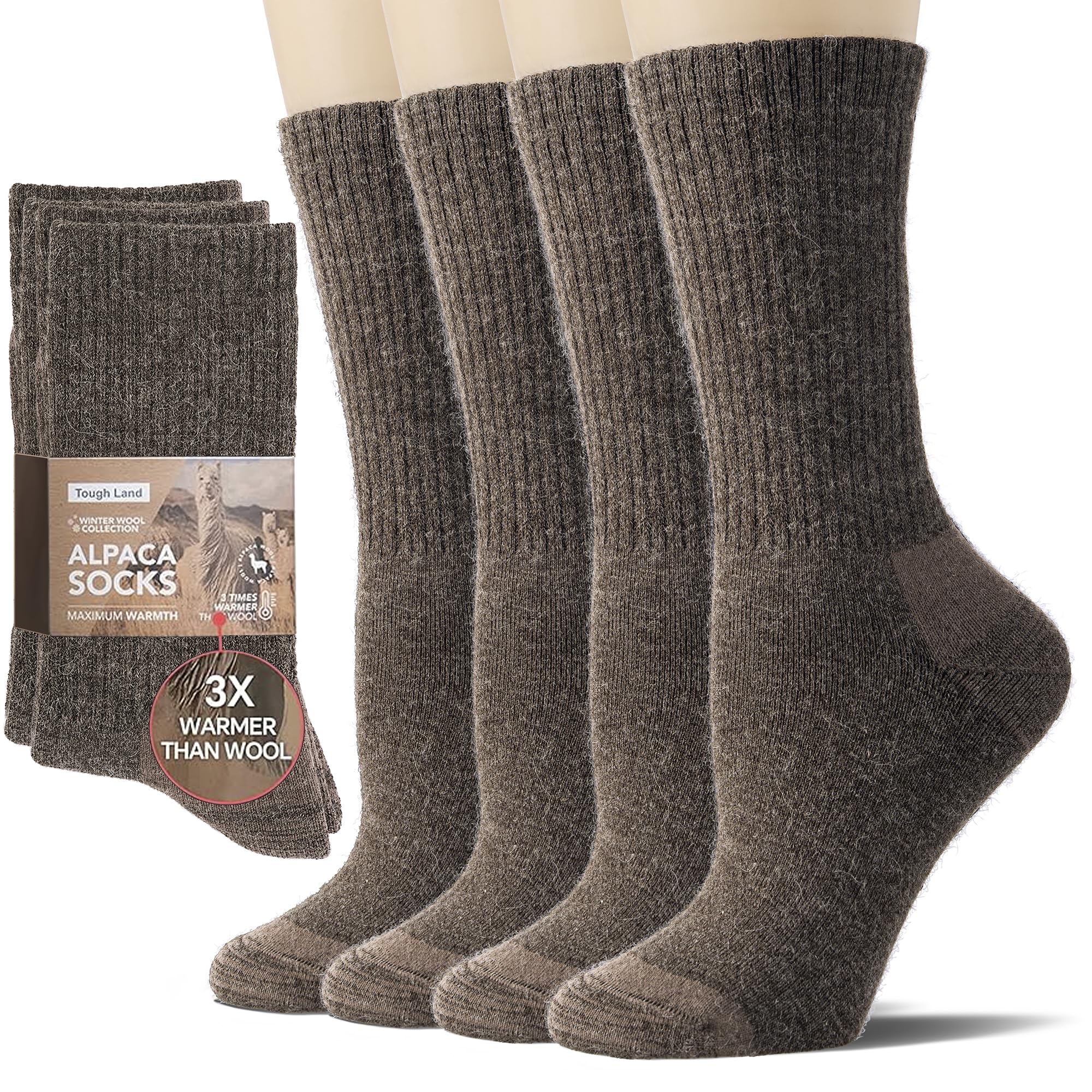
Alpaca warmth that skips the bulk, so your boots keep their fit.
Alpaca wool is the difference-maker here: Tough Land builds these from 60% baby alpaca wool, and the fiber’s smaller, flatter scales make it smoother against the skin than merino. The midweight design is meant to insulate without the bulk of a heavy traditional wool, so you get warmth without feeling like your foot is being squeezed — a real advantage if you do not want to upsize your boots.
Comfort is where these earn their keep, with warmth close behind. They are soft, non-itchy on the leg, and hold temperature without turning clammy. If ordinary wool socks feel scratchy to you, this is the pair to try first. The moisture-wicking and cushioning are there for hikes, but the softness reaches beyond the trail into everyday winter wear.
Be realistic about the blend. Thickness, fit, and durability all get mixed reports, and value is debated too. This is a comfort-and-warmth sock, not the toughest in the lineup — treat it as a soft everyday winter and hiking sock rather than a hard-wearing work sock.
The alpaca advantage: 60% baby alpaca wool gives a smoother, less itchy feel than merino and warms without adding bulk.
The honest caveat: thickness, fit, and durability are all reported inconsistently, so treat it as a comfort pick over a toughness pick.
Great match for: anyone whose skin reacts to wool and who wants warmth without upsizing boots.
Look elsewhere if: you need a hard-wearing work sock, since the durability here is uneven.
8. Darn Tough 1953 Mountaineering Sock

Sleet, freezing rain, sub-zero wind chills — this sock was built to stay out in it.
Where the Vangrizzle covers three-season trail days, this Mountaineering sock is aimed at the worst weather you hike in. It is a heavily padded merino sock at roughly 2 ounces per sock, with cushioning that owners describe as thick and well-padded — the extra cushioning in the footbed is called out specifically. The merino wool keeps warmth in a boot even when the weather turns.
What keeps people coming back is durability, with quality close behind. These are socks that hold up through harsh winter conditions instead of thinning out after a season. Warmth, comfort, and cushioning all get consistent praise, and the extra footbed padding makes a real difference on long days in stiff boots. Against the lighter Vangrizzle, this is the sturdier alpine choice.
One thing to size carefully: the fit runs tight for some hikers. If you want room across the instep, gauge your size before committing. It is also a dedicated cool-weather sock — for summer trail hikes, the lighter boot-cushion model above is the better call.
Why it earns its spot
- Heavily padded merino build for alpine and winter trekking
- Extra footbed cushioning softens long days in stiff boots
- Durability holds through harsh winter conditions
- Roughly 2 ounces per sock — insulated but not a lead weight
Where to take care
- Fit runs tight for some hikers across the instep
- Dedicated cool-weather sock, not a summer-trail choice
The sock for you if: you trek or climb in sleet, freezing rain, and sub-zero wind, and want heavy padding that lasts.
Try a different cut if: your instep runs wide — this one fits tight for some feet.
9. DANISH ENDURANCE Merino Wool Hiking Socks

Thick thermal merino with ventilation zones, built to keep you warm without overheating.
This is the all-rounder of the group, and the blend tells you why. The mulesing-free merino (a wool sourced without the practice of mulesing) is designed for lasting warmth, durability, and comfort, with heavy heel-to-toe cushioning that softens each step on rocky trails. Ventilation zones wick moisture and boost airflow, so the thermal warmth does not turn into sweaty, overheated feet on a long climb.
Anatomical left/right shaping and arch support help the sock stay put without slipping, and a smooth toe reduces rubbing. Buyers report staying warm in winter and cool even in 100+ degree weather, and the cushioning gets specific praise for arthritic feet. That range is unusual for a pair this thick.
Two things to watch. Fit runs mixed, with some reporting it runs big, and durability gets a split verdict — some hold up for a long time, others see seams start to come apart. Sizing accordingly and rotating pairs will get the most out of them. For a warm-weather-to-winter sock that handles a huge mileage range, it is hard to argue with.
The dual-season case: mulesing-free merino with ventilation zones and heavy heel-to-toe cushioning, so it warms in winter and stays cool in 100+ degree heat.
The fit reality: it can run big and the seams draw mixed long-term reports, so size down if you are between sizes.
Choose these for: year-round hiking, from snowy trails to hot summer climbs, with padding that eases rocky ground.
Check the sizing if: you run between sizes or want exact fit — this pair tends to run big.
Know the Specs
Wool content and blend
Wool content tells you how much insulation and odor control a sock holds, but no sock is 100% wool because wool alone will not stretch or hold its shape. Higher merino or alpaca percentages generally mean more warmth per ounce. The blend around it — spandex for stretch, nylon for durability, polyester for quick drying — decides how the sock wears over time.
Heel-to-toe cushioning
Cushioning is the padded layer between your foot and the boot sole. Full-plush runs the entire sock, while targeted padding covers heels, arches, and the ball of the foot. For stiff boots and rocky descents, full cushioning softens the impact. For a boot that already fits snug, targeted padding keeps the fit from going tight.
Sock height
Crew and boot height clear a hiking boot collar and keep trail debris out. Ankle and low-cut styles suit trail runners and warm-weather hikes. Match the height to your most-used footwear — a tall sock bunched into a low shoe rubs and blisters.
Reinforcement and seams
A reinforced heel and toe adds wear-resistant material exactly where a boot grinds hardest, so the sock holds up longer. A flat, smooth toe cuts bulk and irritation at the toe box. These small build details are what separate a sock that lasts a season from one that lasts for years.
Common Questions
How thick should hiking socks be for a stiff leather boot?
Will thick hiking socks make my boots too tight?
Is merino wool better than alpaca wool for hiking socks?
Do thick wool socks keep your feet dry on a long hike?
Can I wear thick hiking socks around the house or to work?
How do I know which size thick hiking sock to order?
Are thick hiking socks worth buying in a multi-pack?
Do thick wool socks cause blisters?
How long do thick merino hiking socks last?
Is full cushioning better than targeted cushioning for hiking?
The Bottom Line
The best all-round pick is the Darn Tough Vermont Vangrizzle, because its merino wool build and durable, cushioned design make it an everyday trail sock you can wear season after season. If you hike through a real winter, the heavier Darn Tough Mountaineering 1953 adds the padding and weather resistance the lighter model leaves out. For deep-winter work boots, reach for the Carhartt Men’s Arctic, and for a week of warm-weather pairs, the Welwoos six-pack covers the most ground for the money. Whichever one you choose, match the cushioning and height to the boots you actually wear.
How we choose
We do not accept paid placement. Every pick is matched to a real buyer and a real use-case; we do not hands-on test units.
Sources
Specifications: manufacturer listings and product documentation. Review insights: verified customer reviews, as of November 2026. Pricing: not shown on this page (it changes often); check the current price via the retailer link.
As an Amazon Associate, Tactical Gear Guy earns from qualifying purchases. This does not affect which products we feature.