Specs are compiled from manufacturer listings and verified buyer reviews and can change over time — please confirm the key details on the product page before buying.
You want headphones that plug in, stay plugged in, and block out the room around you — no pairing, no charging, no dropout at the wrong moment. A thick, black, wired over-ear pair does exactly that job. The short answer: the Sony MDR7506 is the safest all-round buy for most people, the Audio-Technica ATH-M20x is the best value, and the beyerdynamic DT 770 Pro X is the pick when you need to record in a noisy room. Below you get nine real pairs, sorted by what each one actually does well.
This guide is built by comparing the manufacturers’ published specifications and the patterns across verified customer reviews, so you get each pick’s real strengths and trade-offs instead of marketing spin.
Cable length, ear-cup seal, and driver size decide more of your daily comfort than any badge on the box. That is the lens I used to line up these picks. Every entry below is a black, wired, over-ear model you can plug straight into a laptop, interface, or phone, and each one earns its spot for a different reason — from a 9.8-foot studio cord to a detachable cable you can swap in seconds. Read on for the full breakdown of the best Thick Black Wired Headphones.
Top Picks


How To Choose The Best Thick Black Wired Headphones
A wired over-ear pair is a tool, not a fashion item. You are buying three things: a seal that keeps the room out, a driver that sounds right for your work, and a cable that survives daily plugging. Get those three right and the brand almost stops mattering.
Closed-back versus open-back
A closed-back ear cup is a solid shell that traps sound in and noise out. That is what you want for recording, commuting, or an open office, because the mic will not pick up your headphone bleed. An open-back pair like the Philips Fidelio X2HR lets air move through the cup grille. That gives a wider, airier soundstage, but it leaks audio both ways — the person next to you will hear your mix.
Driver size and what it really changes
The driver is the round speaker inside each cup, measured across in millimeters. A 40mm driver is the studio standard and keeps the cups light. A 50mm driver like the one in the Fidelio X2HR moves more air, which usually means more low-end weight — but the cups get bigger and heavier on your head.
Impedance and if you need an amp
Impedance is electrical resistance, measured in ohms, and it decides how hard the headphones are to drive. A low-ohm pair plugged into a phone or laptop usually plays loud enough without help. High-impedance studio sets often want a dedicated headphone amp to reach full volume and control.
Cable length and detachable connectors
A long fixed cable like the 9.8-foot cord on the Sony MDR7506 lets you walk around a studio desk without tugging the plug. A detachable cable — found on the Shure SRH440A, the FiiO FT1, and the DT 770 Pro X — means a frayed cord is a cheap swap instead of a dead pair of headphones.
Ear pads decide long-session comfort
The pads are the foam ring that touches your head, and they are the first part to wear out. Velour pads breathe better in long sessions; memory-foam leatherette seals tighter. Many studio models let you replace the pads, which stretches the life of the whole pair.
Side-by-Side Comparison
| Model | Best For | Driver Size | Connection | Ear Cup Design | Amazon |
|---|---|---|---|---|---|
| Sony MDR7506★ Best Overall | All-round studio and desk use | 40mm | Fixed 9.8 ft cable | Closed-back | Amazon |
| Audio-Technica ATH-M20xBest Value | Best value entry to studio sound | 40mm | Fixed single-side cable | Closed-back | Amazon |
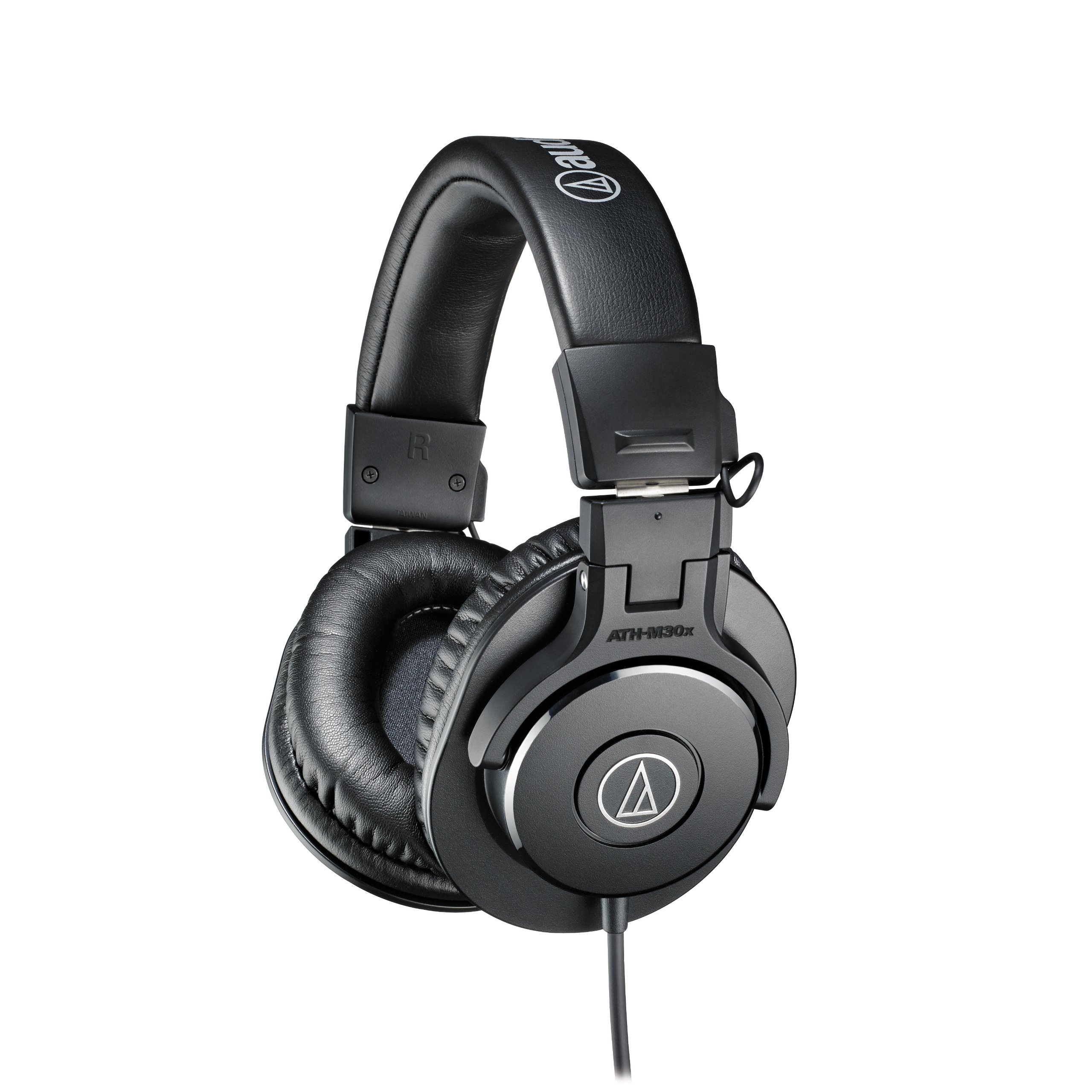
| Audio-Technica ATH-M30xTop Performer | Mid-range detail and portability | 40mm | Detachable cable | Closed-back | Amazon |
| Sennheiser HD 280 Pro | Heavy noise isolation | — | Detachable coiled cable | Closed-back | Amazon |
| Shure SRH440A | Recording and critical listening | — | Detachable locking cable | Closed-back | Amazon |
| Philips Fidelio X2HR | Wide open soundstage and gaming | 50mm | Detachable 3m cable | Open-back | Amazon |
| FiiO FT1 | Premium wood-cup hi-fi at home | 6cm | Detachable 3.5mm and 4.4mm cables | Closed-back | Amazon |
| Sony MDR-M1 | Lightweight long-session monitoring | 40mm | Detachable cable | Closed-back | Amazon |
| beyerdynamic DT 770 Pro X | Recording without headphone bleed | 45mm | Detachable mini-XLR cable | Closed-back | Amazon |
Detailed Reviews
1. Sony MDR7506 Professional Large Diaphragm Headphone
Our pick — 4.5+★ from 28,500+ verified ratings; the strongest balance of quality and price.
The foldable 40mm closed-back studio standard, with a 9.8-foot fixed cord for desk work.
This is the pair most broadcast and studio desks keep within reach, and the numbers explain why. Each cup holds a 40mm neodymium dynamic driver, which is the standard size for accurate monitoring rather than thumping bass. The frequency response runs from 10 Hz to 20 kHz, so you hear deep low end at one end and detail way up top at the other. The closed-back shell is a solid cup that keeps your audio in and the room out — helpful when you are tracking vocals or editing in a busy space.
Buyers consistently praise the foldable frame and long-term durability. The headband folds up for storage, and a soft fabric case rides along in the box. There is a 9.8-foot non-detachable cord ending in a gold-plated plug, plus a 1/4-inch adapter for mixing desks. That long cable is a real convenience at a studio table — you can roll your chair back and stay plugged in. The stiffest competition comes from the ATH-M20x below: same 40mm driver size, but the Sony adds a longer cable and a foldable frame, while the Audio-Technica keeps a lower entry point.
The honest catch is the ear pads. They are the first part to wear, and the durability feedback lands squarely on the pads rather than the drivers or the frame. Fit also splits both ways — some heads find the clamp snug and right, others feel it too big. If you have a narrow head, expect to test the fit before you commit. For everyone else this stays the default wired monitor.
What Earns It First Place
- 40mm neodymium drivers tuned for clear, detailed monitoring rather than hype.
- Closed-back cups that cut outside noise and keep your mix from leaking.
- Folds flat with a soft case — easy to toss in a gear bag.
- Extra-long 9.8-foot cord plus a 1/4-inch adapter for desks and mixers.
Where It Gives Ground
- Ear pads age faster than the rest of the headphones.
- The cable is fixed, so a frayed cord means a repair rather than a quick swap.
- Head fit is a coin flip on smaller heads due to the clamp size.
Reach for it if: you want one reliable wired pair for editing, tracking, or long desk sessions and you value a long cable.
Look elsewhere if: you need a detachable cable or have had trouble with tight headbands in the past.
2. Audio-Technica ATH-M20x Headphones
The cheapest way into 40mm closed-back studio monitoring, with rare-earth magnets and copper-clad voice coils.
Start with the engines: 40mm dynamic drivers built with rare-earth magnets and copper-clad aluminum wire voice coils. Those parts are the same class of hardware you find in far pricier monitors. The tuning leans toward the low end, so bass guitars and kick drums feel weighty rather than thin. The circumaural design means the cups surround your ears rather than press on them, which seals out a loud room.
Sound quality is the thing buyers talk about most, and the praise centers on a clear, loud, honest presentation. Value ranks close behind — plenty of people call it one of their best purchases. The cable exits from a single side and is described as tangle-free, which keeps the run out of your way while you work. For podcasting and guitar practice through an interface, it holds up fine. That is the same core job the M30x does one step up, but the M20x gets you in with the same driver size.
Two quirks to know before you buy. The cable is a fixed six-footer — enough movement for a desk, though it does not reach across a room. And the clamp splits opinion: a lot of ears find the cups pillow-soft, while tighter heads report pressure after a while. Neither is a deal-breaker at this level; it is a matter of head shape.
Where the money goes: rare-earth magnets and copper-clad voice coils in a 40mm driver — the same build recipe the pro models use.
Smart buy for: first-time studio users, podcasters, and anyone who wants clear wired sound without stretching the budget.
Think twice if: your head runs large and tight clamping bothers you on long sessions.
3. Audio-Technica ATH-M30x Headphones
The step-up Audio-Technica with the detail, the detachable cable, and a folding frame.
You get the same 40mm drivers with rare-earth magnets and copper-clad voice coils as the M20x. What changes is the tuning: this model is set for extra detail and clear mid-range, which matters if you are editing spoken word or mixing vocals you need to hear precisely. The circumaural cups seal around your ears, and the frame collapses down for travel.
The build quality is the headline. Overwhelmingly, buyers describe these as great and note they perform right alongside far more expensive brands. Comfort runs close behind — many say the cups barely register on their ears and stay fine for hours. The single-side cable exit keeps the run tidy. Unlike the M20x, this one has a detachable cable, so a damaged cord is a swap rather than a repair. It also ships with a protective case and a screw-on adapter.
The trade-off is fit. The clamp is on the tight side, and a share of users find it presses around the head after a few hours. Durability also splits — plenty report no signs of wear, a few hit an early failure. Treat the pads and hinge with ordinary care and you should be in the first camp.
The mid-range angle: tuned for detail and mid-range clarity, which is the difference between hearing a mix and guessing at it.
The pick when: you need sharper mid-range detail and a cable you can replace, and you do not mind a snug clamp.
Not for you if: you already find tight headbands uncomfortable or you want the widest possible soundstage.
4. Sennheiser HD 280 Pro Headphones

Up to 32 dB of noise attenuation, with replaceable earpads, headband padding, and cord.
If noise is your whole problem, this pair answers it head-on. The closed ear cups knock down up to 32 dB of outside sound, which is a real dent in a drummer’s monitor bleed or a busy live room. The frequency response is extended and voiced warm and natural rather than clinical, so long sessions are easier on the ear. The earpieces fold up for transport, and the cord is coiled with a reach of 3.3 to 9.8 feet.
Noise isolation is the thing buyers praise most here, and they point to very little leakage in return. Sound quality and overall build follow closely. The truly practical touch is serviceability: the earpads, headband padding, and audio cord are all easily replaceable, so the pair can be kept alive for years instead of tossed when one part fails.
Where it bites is comfort. The clamp comes down firmly to make that seal, and a chunk of users find it tight on the ears after a while — the isolation and the pressure come from the same design choice. Durability also draws mixed notes, so handle the frame with care. If maximum quiet is the point, you accept the squeeze.
Why Isolation Hunters Choose It
- Up to 32 dB of outside-noise attenuation from the closed cups.
- Warm, natural tuning that suits long monitoring sessions.
- Earpads, headband padding, and cord are all replaceable.
- Coiled cord stretches out to 9.8 feet when you need the reach.
The Compromise You Accept
- The firm clamp that seals sound out also squeezes tight heads.
- Durability splits — some units wear early, so treat the frame gently.
Built for: drummers, live monitoring, and anyone working in a genuinely noisy room.
Skip the squeeze if: you want a loose, barely-there fit — this clamp is deliberate.
5. Shure SRH440A Over-Ear Wired Studio Headphones for Recording

A transparent closed-back monitor with strong bass and a detachable locking cable.
Shure built this on the original SRH440 and kept the accurate, transparent voicing while updating the design, durability, and comfort. The closed-back, over-ear cups cut ambient noise and keep your sound contained, which is exactly what you want when a mic is live. The balanced, detailed signature with extended frequency response is meant for monitoring, mixing, and critical listening across music and spoken content. The bass response is the part buyers single out, alongside crisp highs and lows.
Comfort is the other strength. The lightweight frame, adjustable headband, and cushioned earcups let people wear them for hours without noticing. The cable is detachable and locks in place, so a snagged run does not kill the pair, and the whole thing collapses for storage. Buyers report the build quality and reliability receive mixed feedback – while some find them well-made, others report issues with the cable connection and stopping working after about 12 months of use.
That reliability split is the honest note to weigh. The cable connection and long-term lifespan are where the doubt sits, which is why the locking connector matters. If you want a confident set for the studio and do not mind keeping an eye on the cable, the sound and comfort here are the draw.
The recording angle: a detachable locking cable plus a collapsible frame make it a practical bag companion for sessions.
The caveat to weigh: long-term reliability is a mixed picture, so check the cable joint and keep it protected.
Good match for: recordists who want accurate bass-forward monitoring and a cable that stays locked.
Hesitate if: you expect a decade of service with no maintenance on the cable.
6. PHILIPS Fidelio X2HR Headphone

50mm open-back drivers that trade isolation for a wide, airy soundstage.
Here is the odd one out on purpose. The acoustic open-back architecture lets air move through the cup grille instead of sealing it shut, which gives a broad, spacious sound. The 50mm high-definition neodymium drivers with LMC diaphragms are the biggest on this list, and you feel that in the low end. Hi-res audio certification and extended response frequencies round out the spec sheet. Double-layered ear shells with pre-tilted speaker plates angle the sound toward your ear.
Sound quality is what buyers rave about, and gaming performance gets consistent praise — the wide stage helps you place sounds around you. The self-adjustable hammock headband with 3D mesh and a genuine leather outer band keeps the weight off your crown, and the replaceable memory-foam pads wear a breathable velour finish. The 3.5mm detachable oxygen-free cable runs 3m and ships with an adapter and cable clip.
Two things to understand. Open-back means it leaks — this is a desk or gaming-chair pair, not a commuter or recording set. And the construction splits: some find it very well built, others report fragility and breakage within months. The clamping force also runs firm on some heads. Buy it for the soundstage, not for rough handling.
The number that defines it: 50mm drivers — the largest here, and the source of that wide, weighty presentation.
Ideal for: gamers, home listeners, and anyone who wants a spacious open soundstage at a desk.
Cross it off if: you record with a live mic or commute — the open grille leaks audio both ways.
7. FiiO FT1 Headphones

Solid walnut cups and a roughly 0.1mm nano wood fiber diaphragm for home hi-fi listening.
The spec sheet here reads like a materials catalog, and it earns the premium tag. The diaphragm is a nano wood fiber composite with a base of 90-year-old spruce and a specific proportion of carbon fiber, coming in at roughly 0.1mm thick — light enough to move fast, stiff enough to stay controlled. FiiO’s W-shaped independent suspension design increases the effective vibrating area by 25.8% versus conventional diaphragms of the same size, so the driver stores more sound energy. The cups are North American black walnut solid wood, which cuts cavity resonance and gives each pair a one-of-a-kind grain.
Deep bass extension is what buyers praise most, and the wood-and-suede look draws plenty of admiration too. Comfort holds up for long listening, and noise isolation earns a nod for a closed-back wooden design. The headband uses a steel ball slide rail with an adjustment range from 0 to 11 notches, and the contact area is suede for breathability. You get two oxygen-free copper silver-plated cables — a 3.5mm single-ended and a 4.4mm balanced plug — each 1.5 meters with 392 strands and a 24AWG diameter.
The catch is build consistency. Some report cheap plastic components and cracked cups, so inspect the cups when the box lands. That is the trade-off for the wooden look and the detailed sound. Otherwise this is the pick for home hi-fi listening where the aesthetics matter as much as the curve.
What Makes It Premium
- Solid walnut ear cups that cut resonance and look distinct.
- Roughly 0.1mm nano wood fiber diaphragm for a light, responsive driver.
- Two cables in the box — 3.5mm single-ended and 4.4mm balanced.
- Deep bass extension that the listening community rates highly.
What to Watch
- Build quality is mixed, with some reports of cracked cups and plastic wear.
- Priced at the top of this group, so it is a home-listening investment.
The home hi-fi choice: wood cups, a balanced option, and deep bass for listeners who care how the gear looks.
Be ready to check: give the wooden cups a once-over on arrival, given the mixed build reports.
8. Sony MDR-M1 Professional Reference Closed Monitor Headphones

A roughly 216g closed-back reference monitor with replaceable earpads for all-day editing.
This is the lighter, more recent sibling to the MDR7506, and the difference shows on your head. The extreme light-weight design comes in around 216g, so the weight barely registers during a full day of editing. The 40mm dynamic driver is tuned for ultra-wideband playback, reproducing from 5 Hz to 80 kHz, and the closed acoustic structure keeps the isolation tight for precise monitoring. That wide range means you hear deep low end and fine detail in the same pass.
Comfort is the reason buyers stick with it — the soft, thick earpads give a reassuring fit across long sessions, and a good share of the feedback calls out exactly how light it feels. Sound quality earns clear-sound praise, and noise cancellation gets a nod for a closed set. Practical touches: two detachable cable lengths come in the box, the earpads are easy to replace, and a screw-in plug adapter lets you swap between 6.3mm and 3.5mm jacks. The cable connection uses a screw system for a secure hold.
The trade-off is volume of choice — with a smaller footprint of feedback, it is a newer set rather than a seasoned one, so you are buying on spec and design confidence. If light-on-the-head matters more than legacy, this is the Sony to pick over the 7506.
Comfort by the numbers: roughly 216g — light enough to forget you are wearing monitors through a long edit.
Choose it for: all-day monitoring where head weight and replaceable earpads matter most.
Look at the 7506 first if: you want the long fixed cord and the foldable studio classic.
9. beyerdynamic DT 770 Pro X Headphones
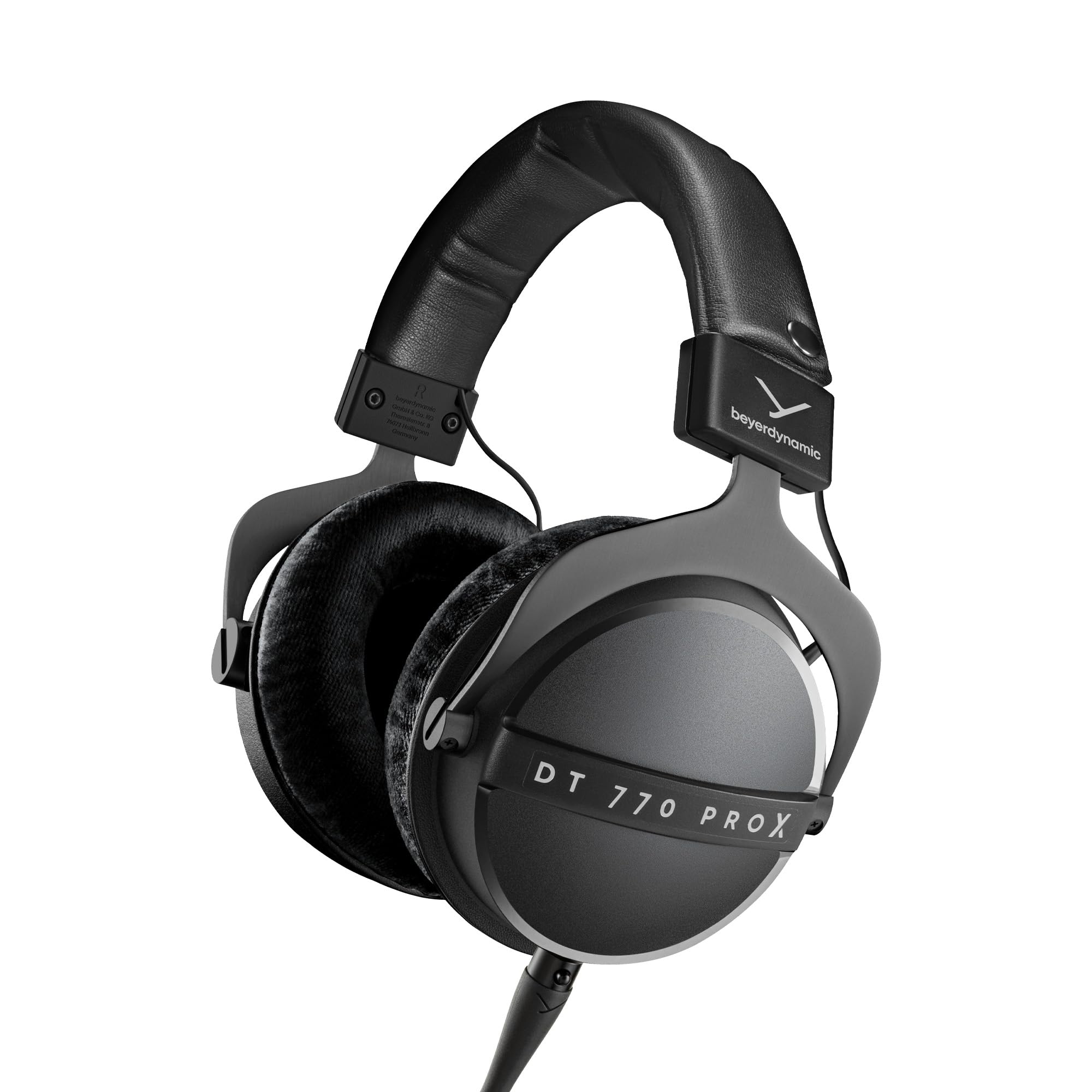
A 48-ohm studio tank that plugs into anything and keeps your mic clean.
The number that matters here is the 48-ohm drive. That low impedance means it plugs straight into any source — laptop, interface, phone, or console — with no headphone amp needed. Inside sits the STELLAR.45 driver, beyerdynamic’s flagship transducer for precise, high-resolution studio sound at any level. The 45mm dynamic driver sits between the 40mm standard and the 50mm giants, and the closed-back isolation keeps headphone bleed out of your mic while you record.
Studio-quality sound is what buyers praise most, and comfort lands right behind — many report wearing them all day without ear or head discomfort. The detachable mini-XLR cable is a genuinely useful feature for travel, since a damaged cord is a quick swap. Velour ear pads are replaceable for years of daily use, and the set ships with a 3m detachable cable, a 3.5mm to 1/4″ adapter, and a bag. It is handmade in Germany.
Two honest notes. The fit splits — some find it comfortable, others report a tight clamp. And treble is the divisive part: most like the precision, a few report buzzing in the right earphone, so test both sides when it arrives. If recording without bleed is your job, the isolation and the 48-ohm plug-and-play design make it an easy pick.
What Makes It a Recording Tool
- 48-ohm drive plugs into a laptop, phone, console, or interface with no amp.
- Closed-back isolation keeps bleed out of your live mic.
- Detachable mini-XLR cable and replaceable velour pads for daily use.
- STELLAR.45 driver for high-resolution studio sound.
Check Before You Commit
- Treble splits opinion, with a few reporting buzzing on the right side.
- Fit runs tight on some heads.
Made for: recordists who want a no-amp, closed-back pair that keeps the mic clean.
Test it on arrival if: you are sensitive to treble — spin a track you know and check both ears.
Know the Specs
Driver Size (40mm to 50mm)
The driver is the speaker disc inside each cup, measured across in millimeters. A 40mm driver keeps the cups lighter and is the studio standard. A 50mm driver like the one in the Fidelio X2HR moves more air, which often means deeper bass, but the cups grow larger and heavier. Bigger is not automatically better — it is a trade between weight and low-end presence.
Impedance (Measured in Ohms)
Impedance is electrical resistance, and it decides how hard the headphones are to drive. A low-ohm pair like the 48-ohm DT 770 Pro X plugs straight into a laptop, phone, or console without an amp. Higher-impedance studio sets often want a dedicated amp to reach full volume with control.
Closed-Back versus Open-Back
Closed-back cups are solid shells that seal sound in and noise out — the right call for recording and noisy rooms. Open-back pairs like the Fidelio X2HR let air through the grille for a wider stage, but they leak audio both ways, so you would not use them near a live mic.
Frequency Response (Hz to kHz)
Frequency response is the range of pitches the headphones can reproduce, from low bass to high treble. A wide range like 10 Hz to 20 kHz on the MDR7506 means you hear deep low end and fine detail. It does not guarantee the tuning you prefer, but it tells you the driver is not cutting off the extremes.
Cable Type and Length
The cable is either fixed into the cups or detachable. A fixed cord like the 9.8-foot one on the MDR7506 gives reach but needs repair if it frays. A detachable cable — on the M30x, Shure SRH440A, FiiO FT1, and DT 770 Pro X — means a damaged run is a cheap swap.
Replaceable Pads and Parts
The ear pads are the foam ring against your head and the first part to wear. Replaceable pads on the HD 280 Pro, Fidelio X2HR, MDR-M1, and DT 770 Pro X stretch the life of the whole pair, because you can swap the worn part instead of replacing the headphones.
Common Questions
Will these wired headphones work with a phone that has no headphone jack?
Do closed-back headphones really block out room noise?
Will open-back headphones like the Fidelio X2HR leak sound while I record?
Can I replace a damaged cable, or am I stuck if it frays?
Do I need a headphone amp for these monitors?
How long do the ear pads last before they need replacing?
Is a bigger driver always better for bass?
What is the difference between the Sony MDR7506 and the MDR-M1?
Can I use studio monitors like the DT 770 Pro X for gaming?
How do I swap between a 3.5mm phone jack and a 6.3mm studio mixer jack?
The Bottom Line
For most people, the best Thick Black Wired Headphones pick is the Sony MDR7506 because it combines a 40mm closed-back driver, a 9.8-foot cord, and a foldable frame that suits studio and desk work alike. If your priority is value, the Audio-Technica ATH-M20x delivers the same driver size for less. And for recording without bleed, reach for the beyerdynamic DT 770 Pro X — its 48-ohm drive plugs into anything and its closed cups keep your mic clean.
One nudge before you close the tab: the MDR7506 sits at 4.5+ stars, the top score in this group, and the review pages back it up with years of studio use. That combination of a high score and a long track record is why it holds the top spot. Buy it if you want a proven wired workhorse; step to the DT 770 Pro X if recording vocals is the daily job.
How we choose
We do not accept paid placement. Every pick is matched to a real buyer and a real use-case; we do not hands-on test units.
Sources
Specifications: manufacturer listings and product documentation. Review insights: verified customer reviews, as of November 2026. Pricing: not shown on this page (it changes often); check the current price via the retailer link.
As an Amazon Associate, Tactical Gear Guy earns from qualifying purchases. This does not affect which products we feature.