Specs are compiled from manufacturer listings and verified buyer reviews and can change over time — please confirm the key details on the product page before buying.
You need a backdrop that fills the back of a stage, not a fabric square that stops halfway across it, and that single requirement is where most buys go wrong. A backdrop that is too narrow leaves bare wall showing from the wings, and a single thin sheet lets stage lights punch straight through it. This guide covers three real stage backdrops, sorted by what they actually do — one wide black curtain, one printed Bethlehem Inn scene, and one three-dimensional stable built for live nativity pageants.
This guide is built by comparing the manufacturers’ published specifications and the patterns across verified customer reviews, so you get each pick’s real strengths and trade-offs instead of marketing spin.
The difference between a backdrop that reads as scenery and one that just looks like a sheet is usually width, material, and how firmly it stands up. Below is the shortlist that fits those three jobs, plus the plain-English specs that tell you which one your stage actually needs from the range of Theatrical Stage Backdrops.
Top Picks
How To Choose The Best Theatrical Stage Backdrops
Start with the width of your performance space, not the picture on the box. Measure the full span you want to cover, from wing to wing, then add extra so the edges tuck behind side curtains or lighting trees. A backdrop narrower than that span leaves bare wall visible the moment the audience looks past the performers.
Match the backdrop type to the performance
A fabric curtain is the general-purpose choice: it blocks light, doubles as a room divider, and rolls or folds for storage. A printed cardboard panel sets a specific scene, so it suits one story on one holiday. A 3D cutout costs more and arrives as many pieces, but it gives performers something to stand inside rather than in front of.
Check what blocks stage lighting
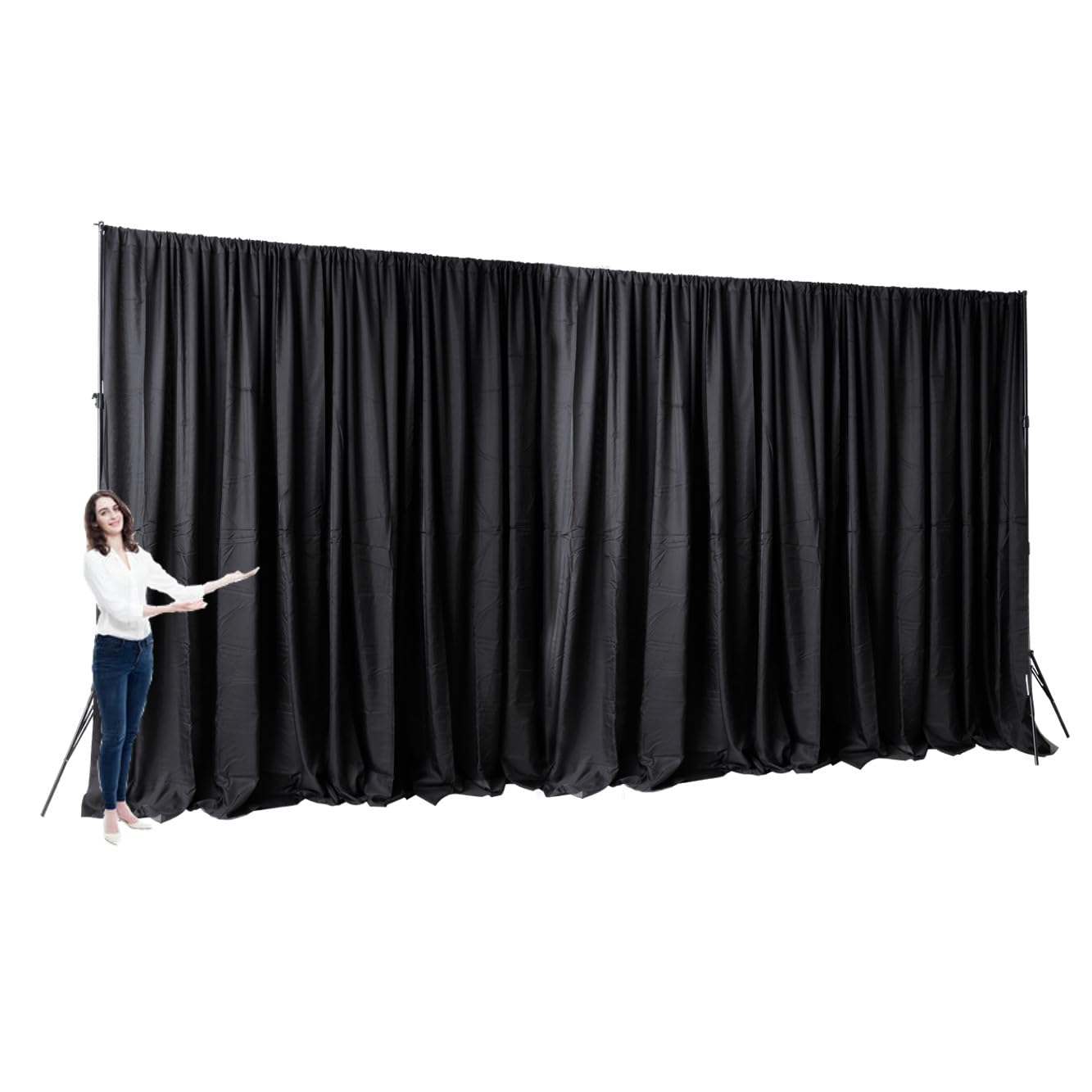
Stage lights are bright and they sit behind and in front of your backdrop. A single thin layer lets the light and the backstage crew show through as shadows. Two layers, with a dense base fabric under a sheer overlay, cut that see-through effect down. The King Mills curtain uses exactly that build — a dense polyester base topped with chiffon tulle — and the maker describes the result as semi-blackout with almost no see-through.
Think about setup, teardown, and storage
Ask who is hanging it and how often. A large fabric backdrop needs a rod, frame, or pipe-and-drape rig and usually more than one set of hands. A cardboard stand-up folds flat with a reinforced backing but needs a flat surface. A multi-piece 3D prop takes longer to assemble the first time and needs a labeled storage plan so next year’s build is not a puzzle.
Decide how many seasons it must survive
An annual pageant needs scenery that stores flat and comes back out without creasing or crushing. Corrugated cardboard holds up to repeated assembly if it is stored flat and dry. Fabric wins on packability because it washes and folds. Whatever you buy, plan the storage spot before the season ends.
Side-by-Side Comparison
| Model | Best For | Width | Material | Pieces | Amazon |
|---|---|---|---|---|---|
| King Mills Extra Wide Two Layers Stage Curtain★ Best Overall | Wide coverage and light blocking | 240 in | Polyester with chiffon tulle | 1 | Amazon |
| Fun Express Bethlehem Inn Backdrop | Christmas pageant scenery | 60 in | Cardboard | 1 | Amazon |
| Fun Express Nativity Stable 3D Stand Up | Live nativity with performers inside | 44 in | Cardboard | 27 | Amazon |
Detailed Reviews
1. King Mills Extra Wide Backdrop Curtains, 20x10FT
Our pick — 4.5+★ from 70+ verified ratings; the strongest balance of quality and price.
Twenty feet of one-piece black fabric that swallows stage light instead of letting it through.
The number that decides everything here is 240 inches — that is 20 feet of width in a single, unjoined panel, and it is the widest option on this list by a wide margin. For a community theatre, school hall, or trade show booth, that width means you can span a full stage opening without a visible seam in the middle. The curtain is 10 feet tall at 120 inches, so it clears the heads of performers and covers the wall behind them.
What wins people over is the build. A dense polyester base sits under a chiffon tulle overlay, which is the sheer decorative top layer, and the two together give you a semi-blackout effect — stage lights behind it do not read as a bright panel to the audience. The maker says almost no see-through, and the material spec backs that up: two layers of fabric stop the single-sheet glow you get from cheap black cloth. It is one piece, so there is no seam line running down the middle of your stage.
The generous sizing cuts both ways. At 3.39 kg — about 7.5 pounds — this is a real curtain with real weight to it, and a 20-foot span needs a stout rod or pipe-and-drape frame, not a flimsy tension rod. It is machine washable, though the maker specifies washing only the dirty part rather than the whole panel every time.
The case for the wide black curtain
- 240 inches wide in one continuous piece — no center seam across your stage opening
- Dense polyester plus chiffon tulle overlay blocks stage light from showing through
- Works double duty as a trade show backdrop, room divider, or photo backdrop
- Machine washable, so it comes back season after season
What to plan around
- A 20-foot span needs a substantial rod or frame and at least two people to hang
- 3.39 kg of fabric is not something one person drapes alone
Hang it if: you are covering a full stage opening or a large booth and need black, light-blocking fabric with no visible seam.
Measure first: confirm your rigging can carry a 20-foot panel before you commit — this is not a tension-rod curtain.
2. Fun Express Nativity Scene Bethlehem Inn Backdrop

A printed inn scene that turns an empty stage corner into first-century Bethlehem.
Buy this one when the story is the point and the backdrop needs to do the storytelling for you. The panel measures 72 inches long by 60 inches wide — roughly 6 feet 8 inches by 5 feet — and it carries a detailed Bethlehem Inn design printed on one side, with a reinforced brown cardboard backing behind it. It stands on any flat surface without tools, so a Sunday school volunteer can put it up in the minutes before a pageant starts.
Compared with the 3D stable below, this is the simpler build: 1 piece against 27 interlocking pieces, and a single flat panel against a structure performers stand inside. That makes it the faster, lower-hassle scene setter for a church play, a holiday photo booth, or a school Christmas program where the backdrop just needs to sit behind the action. Heavy-duty corrugated cardboard holds up to repeated assembly and flat, dry storage rather than surviving one season.
The honest limit is packaging, not performance. This ships as one flat cardboard panel, so it arrives as flat as the freight carrier treated it — store it flat and dry between seasons and it stays crisp. It is also a single-sided print, so the back is plain brown board and wants to sit against a wall or drape rather than float in open stage space.
Where it earns its keep: the printed Bethlehem scene does the visual work a plain curtain cannot, and the one-piece stand-up design means quick setup and takedown between performances or photo sessions.
The trade-off to know: one-sided printing and a brown cardboard back mean it reads best tucked against a wall or curtain, not free-standing in the middle of a stage.
Reach for this if: you are staging a Christmas pageant or holiday photo setup and want a recognizable scene up in minutes without tools.
Look elsewhere if: you need the backdrop to cover a full stage width or hide backstage — a single 5-foot-wide panel will not do that job.
3. Fun Express Nativity Stable Backdrop
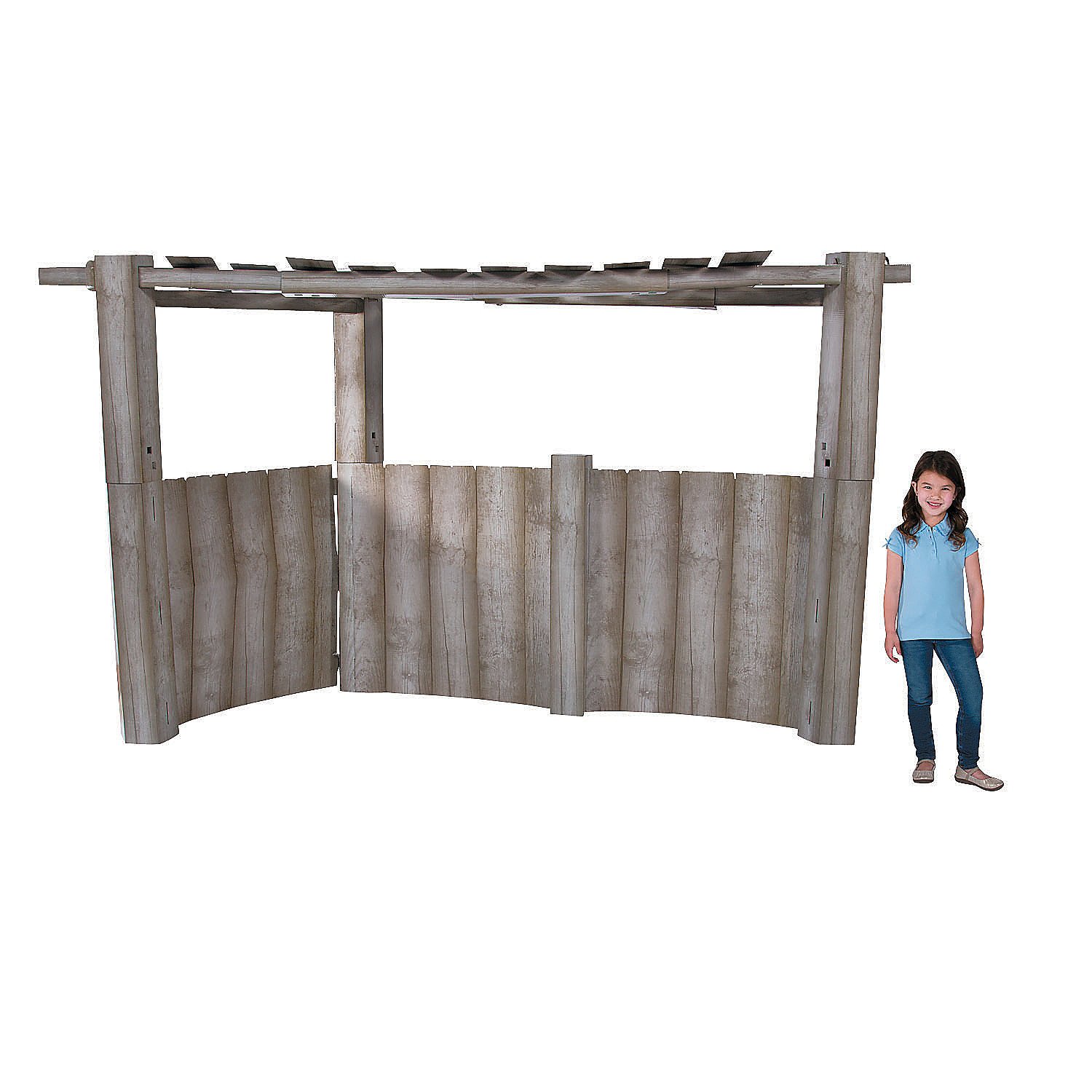
Twenty-seven cardboard pieces that assemble into a stable performers can actually stand inside.
Sized at 114 inches tall by 44 inches wide by 66 inches deep when fully assembled, this is the only pick here built as a three-dimensional structure rather than a flat panel. That depth is the whole reason to choose it: a live nativity with real people and animals needs space behind the front face, and a flat backdrop leaves everyone pressed against a wall. The 114-inch height gives you a tall, imposing manger front that reads from the back of a hall.
The assembly math tells you what you are in for. This one arrives as 27 interlocking pieces — the comparison against the Bethlehem Inn panel, which is a single piece, is the clearest way to see the difference. The pieces go together without tools, which sounds simple, and it is once you have done it one time. Front printing with brown backing keeps the visible face detailed while the back stays plain cardboard, so orient it toward the audience.
Corrugated cardboard is the material, and the maker bills it as durable enough for repeated performances while staying lightweight and portable. Cardboard does not love damp storage, so keep the pieces flat, dry, and labeled between seasons. The first assembly is where the time goes; after that it is a familiar build.
The spec that sells it: a 114-inch-tall freestanding stable with 66 inches of depth gives you actual performance space inside the scene, which no flat printed panel can match.
The prep it asks for: 27 interlocking pieces means a real first-time assembly session and a labeling plan for storage, so budget setup time before dress rehearsal.
Choose this one when: your production has live performers entering the manger scene and the backdrop needs to be a set, not a picture.
Pass on it if: you want scenery up in five minutes or you lack flat, dry storage for two dozen cardboard pieces.
Know the Specs
Width in inches and feet
Backdrop width is listed in inches, and dividing by twelve gives you feet. A 240-inch curtain is 20 feet across, which covers a stage opening; a 44-inch or 60-inch panel is closer to 4 or 5 feet and suits a scene corner. Measure wing to wing before buying, then add a foot or two so the edges tuck behind side drapes.
Layer count and light blocking
One layer of thin cloth lets stage lighting blow straight through and casts backstage shadows. Two layers — a dense base fabric under a sheer overlay — cut that see-through effect. The King Mills curtain pairs a dense polyester base with chiffon tulle and is described as semi-blackout.
Piece count and assembly
Piece count is how many separate parts arrive in the box. One piece means unfold and stand up. Twenty-seven interlocking pieces means a build session the first time, then a repeatable routine. More pieces buy you three-dimensional structure; fewer pieces buy you speed.
Material: fabric against cardboard
Fabric washes, folds, and hangs from a rod, so it survives many seasons. Corrugated cardboard holds a printed scene but needs flat, dry storage. Neither is better in the abstract — fabric suits repeated general-purpose use, cardboard suits one specific story told every year.
Common Questions
How wide a backdrop do I need for a small stage?
Will stage lights show through a fabric backdrop?
Can I hang the King Mills curtain without a pipe-and-drape rig?
How long does the cardboard scenery last?
Is the 3D stable big enough for people to stand inside?
Should I choose the Bethlehem Inn panel or the 3D stable?
Can the King Mills curtain be washed?
How many people does it take to set up a large backdrop?
Does a printed cardboard backdrop look right in a large hall?
Can the cardboard props be reused for different stories?
The Bottom Line
For most stages, the winning theatrical stage backdrops pick is the King Mills Extra Wide Two Layers Stage Curtain, because 240 inches of one-piece two-layer black fabric covers a full stage opening and blocks light without a center seam. If your production is a Christmas pageant that wants a printed scene up in minutes, the Fun Express Bethlehem Inn Backdrop is the one to reach for. And when live performers need to stand inside the scene rather than in front of it, the Fun Express 3D Nativity Stable is the set to build.
How we choose
We do not accept paid placement. Every pick is matched to a real buyer and a real use-case; we do not hands-on test units.
Sources
Specifications: manufacturer listings and product documentation. Review insights: verified customer reviews, as of November 2026. Pricing: not shown on this page (it changes often); check the current price via the retailer link.
As an Amazon Associate, Tactical Gear Guy earns from qualifying purchases. This does not affect which products we feature.