Specs are compiled from manufacturer listings and verified buyer reviews and can change over time — please confirm the key details on the product page before buying.
If your current shoes slide when you push off for a wide forehand, the outsole tread is usually the culprit, not your footwork. A tennis court shoe for men needs three things: a sole built for the surface you play on, a snug heel that stops your foot rolling over the edge, and a toe area that survives drag. This guide covers nine tennis court shoes for men that get those basics right, and tells you plainly which one fits your game and which one you should pass on.
This guide is built by comparing the manufacturers’ published specifications and the patterns across verified customer reviews, so you get each pick’s real strengths and trade-offs instead of marketing spin.
Each review names exactly where a shoe wins and where it gives something up. The short version: the Wilson Rush Pro Ace is the crowd favorite, and the best tennis court shoes for men come down to matching your court surface to the outsole.
Top Picks

How To Choose The Best Tennis Court Shoes for Men
Most men buy a tennis shoe that looks right and then find out on court that the sole is too soft or the toe box pinches. Get these four things in order before anything else, and the choice gets a lot simpler.
Match the outsole to the court you actually play on
An all-court or hard-court outsole — like the Duralast rubber on the Wilson Rush Pro Ace — is built to survive abrasive concrete and acrylic surfaces. A clay-specific shoe uses a different tread pattern that lets you slide into the shot. If you play mostly hard courts and buy a clay shoe, the soft clay tread wears fast on abrasive acrylic and concrete. If you play clay and buy a hard-court shoe, the stiff tread grips instead of letting you slide into the shot.
Decide if you need a wide toe box or a snug fit
A wide toe box gives your toes room to spread when you plant and push off. That is genuinely useful if you have wide feet, bunions, or a history of toe pinch. The catch is that a roomy shoe on a narrow foot lets your foot shift inside, which feels unstable on hard cuts. Wilson’s Rush Pro Ace runs wider than the Rush Pro 4.0, so a narrow-footed player should size accordingly.
Understand lateral stability and the 4D Support Chassis
Tennis is a side-to-side sport, so the shoe has to stop your foot rolling outward when you change direction. An asymmetrical chassis — like the 4D Support Chassis on the Rush Pro Ace — runs heel to toe and limits that roll. Read the description for anything that mentions lateral support or torsion control, not just cushioning.
Check toe-drag protection and outsole rubber before you buy
If you drag your toe on the serve, the toe area is the first thing to wear through. Adidas wraps its Adituff material around the toe on the Courtjam Control 3 for exactly this reason. Look for a named toe guard and named rubber compound (Duralast, Adiwear, AHARPLUS, Griptonite) rather than a generic “durable outsole” line.
Side-by-Side Comparison
| Model | Best For | Weight | Outsole | Fit Note | Amazon |
|---|---|---|---|---|---|
| WILSON Men’s Rush Pro Ace★ Best Overall | All-court play with roomy toes | — | All-court Duralast | Wide toe box | Amazon |
| WILSON Men’s Rush Pro LiteBest Comfort Pick | Comfort-first casual court play | — | — | Wide toe box | Amazon |
| adidas Courtjam Control 3Best Toe Protection | Hard-court players who drag toes | 2.43 pounds | Adiwear | Runs narrow | Amazon |
| New Balance FuelCell 996 V6 | Speed and flexibility | — | — | Mixed — runs tight for wide feet | Amazon |
| ASICS Game FlyteFoam | All-court ventilation | 1.44 pounds | Flexible outsole | Runs narrow | Amazon |
| Reebok Nano Court Sport | Multi-sport court players | — | Herringbone Griptonite | Snug entry | Amazon |
| ASICS Court FlyteFoam 3 | Ankle support and durability | 2 pounds | AHARPLUS | Runs narrow | Amazon |
Detailed Reviews
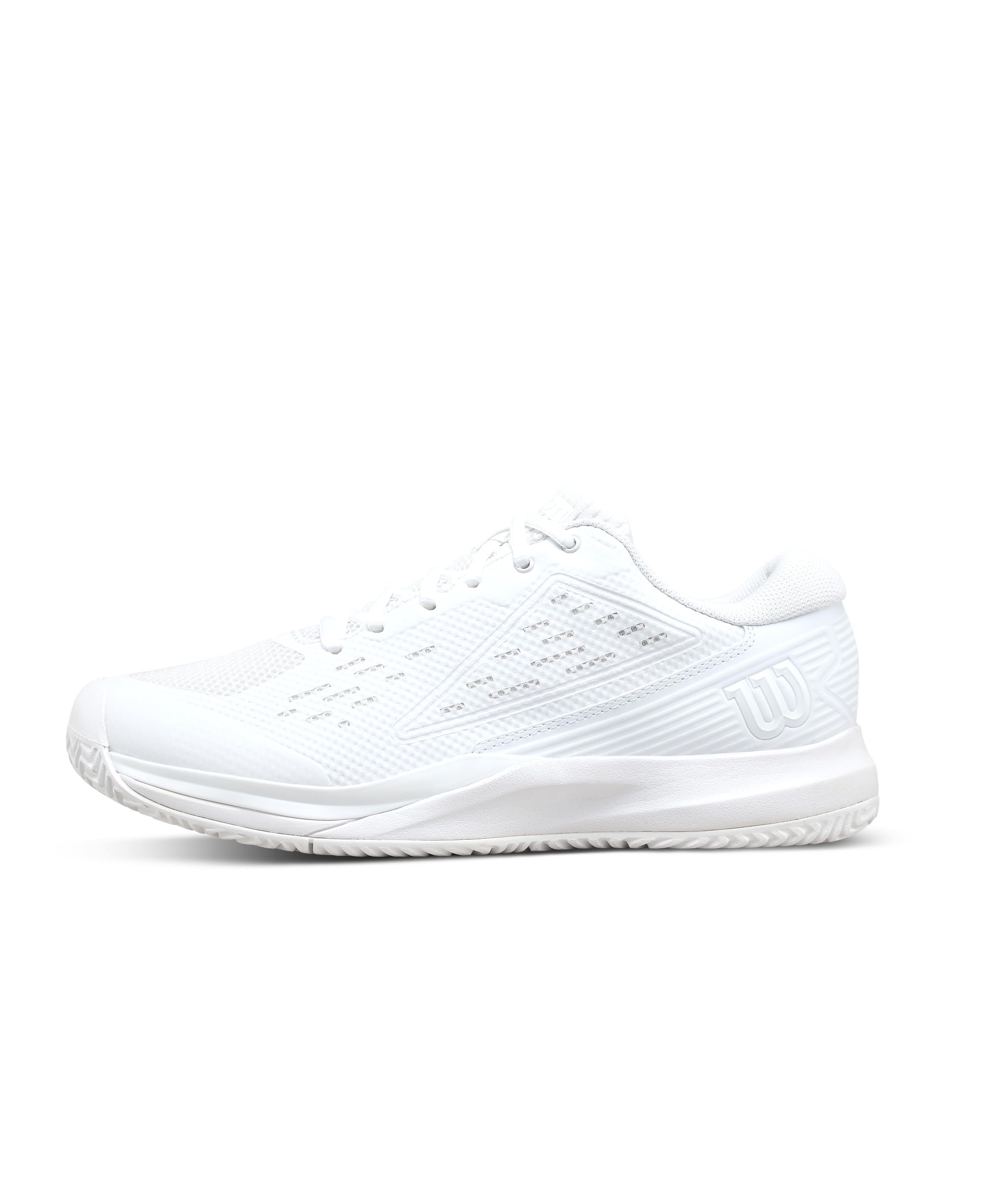
1. WILSON Men’s Rush Pro Ace Tennis Shoes
Our pick — 4.0+★ from 750+ verified ratings; the strongest balance of quality and price.
The all-court workhorse that gives wide-footed players room without giving up stability.
What sets the Rush Pro Ace apart is the 4D Support Chassis — an asymmetrical frame that runs from heel to toe and limits the sideways roll of your foot when you cut. In plain terms, it stops your ankle collapsing outward when you plant and pivot. The all-court Duralast outsole underneath is the same rubber Wilson used on the Rush Pro 3.0 and 3.5, built for hard-court abrasion.
If you’ve been squeezing into narrow tennis shoes for years, this one changes that. The upper is a breathable mesh that balances airflow with support, and the toe box is roomier than the Rush Pro 4.0. Owners with broad feet describe plenty of room to spread their toes, and that generous toe volume is what earned this shoe its following.
The cushioning comes from R-DST+ — a compressed EVA foam that rebounds rather than flattening out. That matters on a three-set day when your heels start taking a beating. The honest catch sits in the outsole wear: some players burn through the sole quickly, especially on rough hard courts, so heavy-footed players should plan for replacement sooner than with a premium model.
What earns it first place
- The 4D Support Chassis controls sideways roll on hard cuts
- Genuinely roomy toe box vs the Rush Pro 4.0
- Duralast all-court rubber made for hard-court abuse
- R-DST+ EVA returns energy instead of going flat
Where it gives ground
- Outsole wear is the recurring gripe on abrasive courts
- Runs wide — narrow-footed players should size down
- Recreational-focused build rather than a tournament-grade shoe
Reach for this if: you play hard courts two or three times a week and want a roomy toe box plus dependable lateral control without stepping into premium territory.
Look elsewhere if: you have narrow feet — the wide toe box will let your foot slide inside.
2. WILSON Men’s Rush Pro Lite Tennis Shoes
A curved sole and breathable mesh aimed squarely at players who want comfort on every step.
Wilson calls this the Lite version of the Rush Pro line, and the design leans hard toward easy comfort. The curved sole is the defining piece — it supports your foot through all three phases of a stride and smooths the roll from heel-strike to toe-off. If you feel a clunky heel-first landing in stiffer shoes, that rounded shape changes the feel.
The mesh upper and wide toe box follow the same philosophy. Compared with the Rush Pro Ace above, you give up the 4D Support Chassis and the all-court hard-court rubber, so the Ace is the better lateral performer on aggressive cuts. The Lite trades some of that control for a lighter, easier shoe — owners frequently call it lightweight and comfortable.
The catch here is stability. Without the chassis, some players find the support leaves them wanting on hard directional changes, and durability reviews split between holding up and wearing out in a few months. It suits the recreational player who values comfort over tournament-grade lockdown.
The winning trait: that curved sole and wide toe box make it one of the easiest shoes to wear right through a match without your feet complaining.
What you compromise: lateral support is softer than the Ace, and long-term sole life is inconsistent.
Suits you when: you play for fun and your feet matter more than razor-sharp court feel.
Skip it when: you’re a hard-cutting power player who needs locked-down side support.
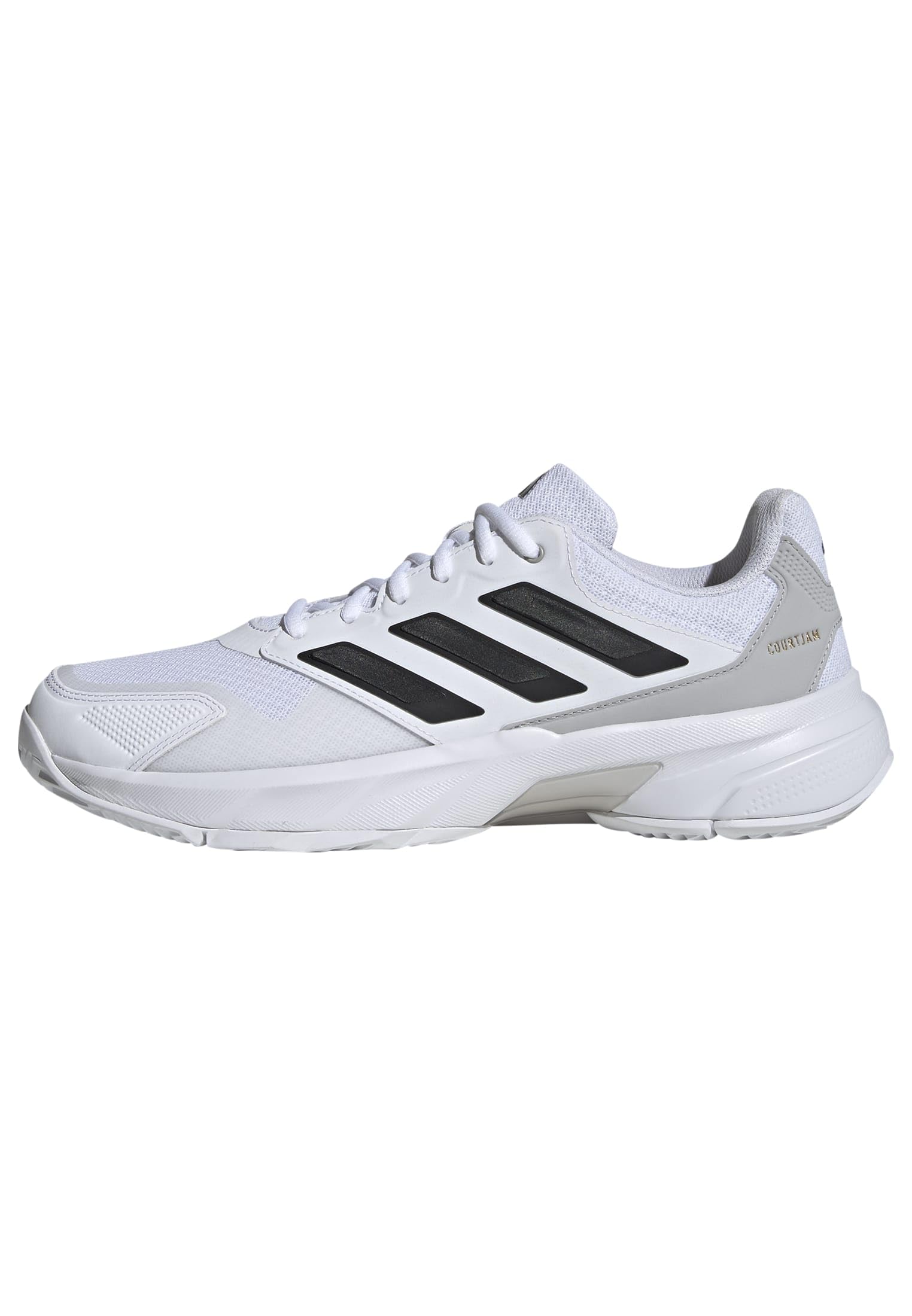
3. adidas Men’s Courtjam Control 3 Tennis Sneakers
Built for the serve-and-drag player — Adituff wraps the toe where other shoes wear through first.
Here’s a shoe that weights 2.43 pounds, and that extra mass buys you real protection. The Adituff material wraps around the toe area to shield against foot drag, which is the failure point on any shoe for a player who scrapes their toe on the serve. The Adiwear outsole underneath is tune for hard surfaces, so the grip holds up on acrylic and concrete.
Compared with the ASICS Gel-Challenger 14 at 1.44 pounds, the adidas carries a full extra pound — and you feel that on long matches. What you get for it is durability in the places that matter. The mesh upper stays light and airy, and Bounce cushioning in the midsole lets you make sharp cuts and quick direction changes.
The fit is where you need to be careful. Owners split on sizing, and the recurring note is that these run somewhat narrow and feel tight across the toe area. If you have wide feet, consider sizing up. Quality and comfort land well overall, though the toe guard area has drawn some criticism for not holding up as long as expected.
Why hard-court draggers like it
- Adituff toe guard protects the highest-wear zone
- Adiwear outsole built for abrasive hard courts
- Bounce cushioning keeps cuts responsive
- Breathable mesh upper stays airy
The trade-offs to weigh
- 2.43 pounds — heavier than the ASICS Challenger’s 1.44
- Runs narrow, so wide feet should size up
- Toe guard longevity is the recurring criticism
Right call for: hard-court players who drag a toe and want protection built into the shoe rather than taped on.
Think twice if: you have broad feet or you play long matches where that extra weight adds up.
4. ASICS Men’s Gel-Challenger 14 Shoes
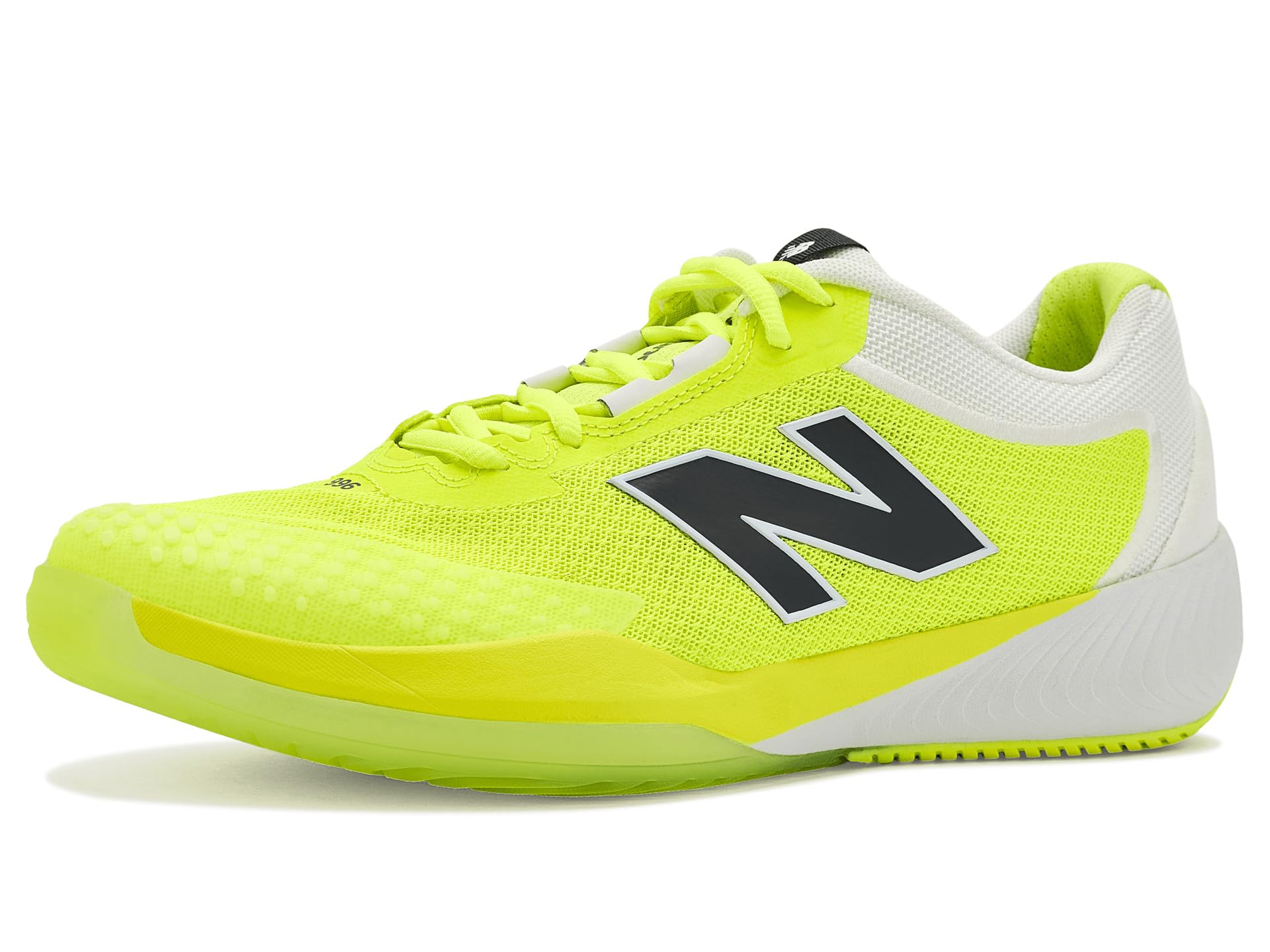
A speed-focused shoe with a taller collar and a tighter heel lockdown for stability.
New Balance built the 996 V6 for speed, endurance, and flexibility on court. The version 6 update adds a higher collar and a tighter heel lockdown — that extra collar sits higher around your ankle and the snug heel cup stops your foot sliding back when you push forward. For players who sprint to the net, that combo helps you feel planted.
The solid thing here is the sport suitability. Buyers report it works well for pickleball and intermediate tennis, and the quality of the build gets consistent praise. The FuelCell cushioning is where the shoe divides — some find it supportive and steady, while the harder-riding feedback says the sole and material feel too firm underfoot.
Fit is the bigger question mark. This shoe splits hard on fit — some find it wide, while others report it runs tight, particularly for wide feet. If you’re broad across the forefoot, this is not the safest bet. Comfort and durability also attract mixed notes, with some players flagging discomfort on long sessions and questionable long-term wear.
Where it shines: the higher collar and tighter heel lockdown give it a locked-in feel when you’re moving fast.
What to watch for: fit and cushioning are both polarizing — try before you commit if you have wide feet or want a soft ride.
Best for: quick, flexible players who want a higher-collar, heel-locked feel for moving around the court.
Not for: wide-footed players or anyone who wants plush cushioning underfoot.
5. ASICS Men’s Game FlyteFoam Tennis Shoes
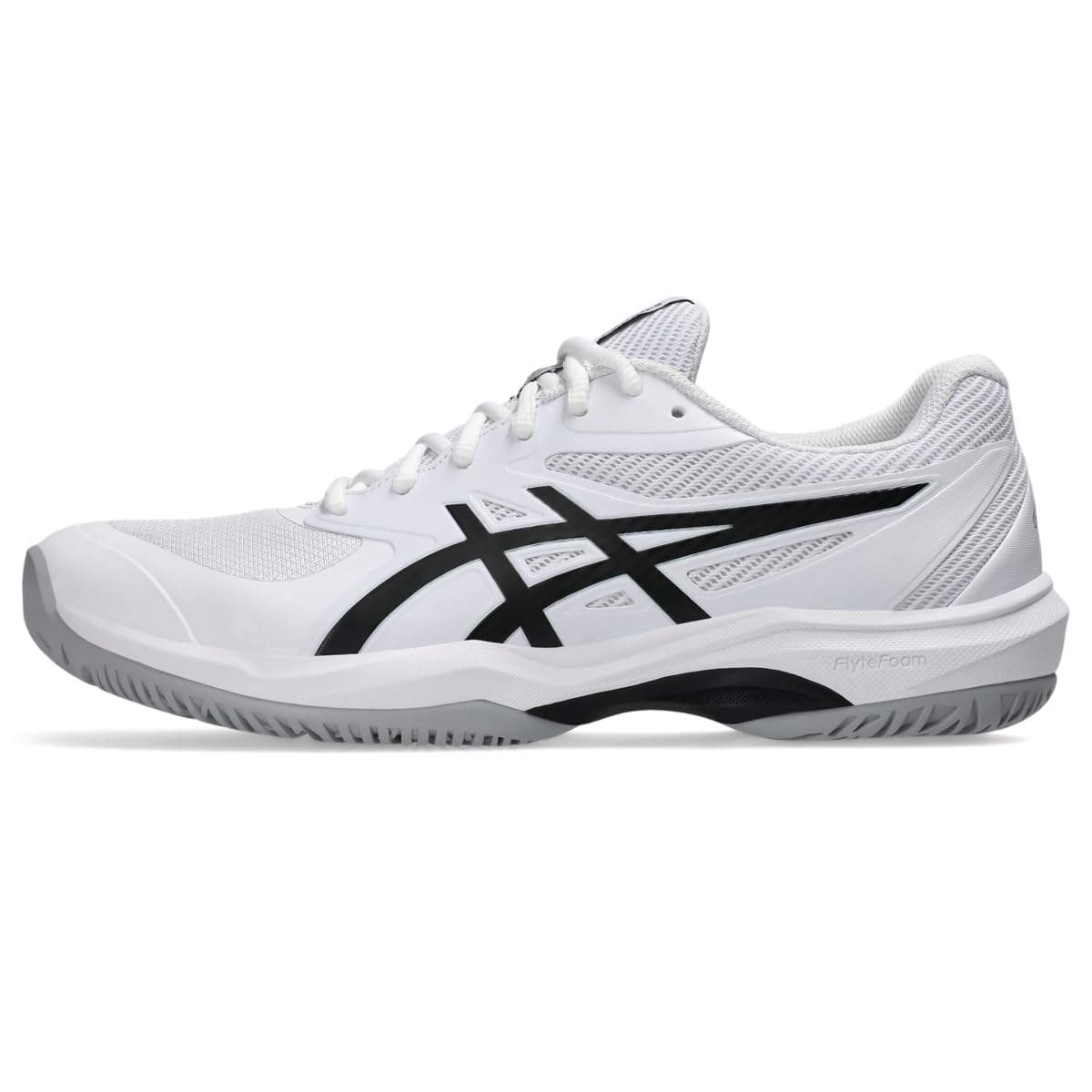
An open-mesh all-court shoe built to beat the heat on long summer matches.
This season’s Game FF focuses on two upgrades: ventilation and flexibility, and both deliver. The open mesh upper moves airflow across your foot so it stays cool, while synthetic leather overlays and a PU film add back some stability for abrupt transitions. At 1.44 pounds and 12.44 x 6.3 x 4.75 inches, it’s one of the lighter shoes on this list.
Underfoot, the FLYTEFOAM midsole gives lightweight cushioning, and the TRUSSTIC technology in the midsole firms up stability when you change direction. That combination makes it a versatile all-court shoe — owners mention it works for tennis and pickleball alike.
Two real caveats. The fit runs narrow, so a half size can feel larger than expected and wide-footed players may need to size up. And durability is the weak spot — some players report the shoe wearing out within a month of regular use. If you play three or four times a week on abrasive courts, budget for that.
The headline feature: that open mesh upper is the most ventilated build here, which matters on a hot day when your socks start sliding.
The honest drawback: wear-out reports inside a month mean frequent players should expect a short lifespan.
Go here if: you play in heat and want a light, well-ventilated all-court shoe.
Skip if: you have wide feet or you play enough to wear through soft shoes quickly.
6. Reebok Nano Court Sport Men’s Shoes
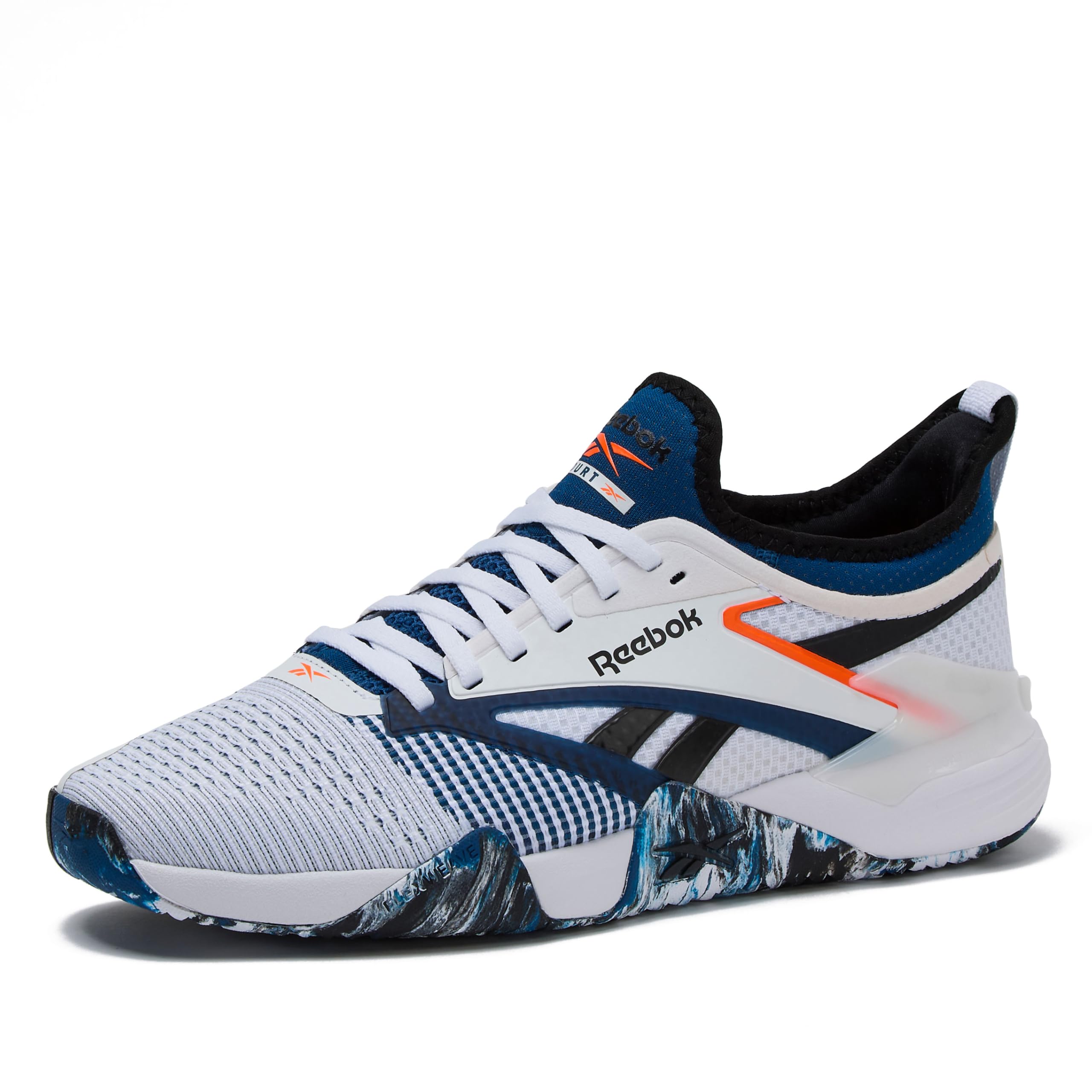
One shoe for tennis, pickleball, padel, and volleyball — but durability is the question.
The Nano Court is built for any game you play on a court, and that breadth is its whole argument. The herringbone Griptonite rubber outsole provides multidirectional traction and wraps up the sides to keep you planted during side-to-side movement. A herringbone pattern — a zig-zag tread — is grippy across many directions rather than one.
The Flexweave upper adds support where you need it, and the engineered knit mesh aims at long-wear comfort. Floatride Energy Foam in the midsole cushions all-game, and sizing runs from 7 to 14 in bold colors or classic black and white. If you split your time between pickleball and tennis, this is the shoe that lets you own one pair.
The trade-off is honest but real. Fit runs snug, and slipping your foot in feels tight at first. Durability is the biggest concern — several players report the shoes ripping apart after five weeks of use, and the value feedback reflects disappointment at the premium price against that lifespan. Buy this for versatility, not for longevity.
Where the versatility pays off: grips through a herringbone Griptonite sole that handles tennis, pickleball, padel, racquetball, badminton, and volleyball.
The deal to accept: at a premium price, the short lifespan on durability undercuts the value.
Ideal if: you play multiple racquet and court sports and want one pair that covers them all.
Reconsider if: you want one shoe that lasts multiple seasons — this one has short-life reports.
7. ASICS Men’s Court FlyteFoam 3 Tennis Shoes

The ankle-hugging, durable build for players who want their foot locked and supported.
Two technologies define this shoe. The MONO-SOCK construction wraps the upper around your foot like a fitted sock, which improves stability and cuts down on how much your foot moves inside the shoe. And PGUARD protects the outsole’s toe and heel areas to boost durability where it wears first. Together, they make this the most supportive, long-wearing build on the list.
The rest of the package backs that up. Forefoot GEL improves impact absorption and softens the feel at footstrike, TWISTRUSS helps with quick, cutting motions, and AHARPLUS rubber in the outsole improves durability. At 2 pounds, it carries a bit more weight than the ASICS Game FlyteFoam’s 1.44 pounds, and you feel that trade-off as extra stability.
The fit is the sticking point. These run narrow and snug — owners who fit narrow feet call them perfect, while broader-footed players describe them as too narrow and too tight. Comfort splits the same way, and weight is also polarizing, with some finding them light and others heavy. If you have narrow, low-volume feet, this is a serious recommendation.
Why the support stands out
- MONO-SOCK upper keeps the foot locked for stability
- PGUARD reinforces toe and heel for longer wear
- AHARPLUS rubber outsole for durability
- Forefoot GEL softens impact at footstrike
The compromises to know
- 2 pounds — heavier than the Game FF’s 1.44
- Runs narrow and snug; wide feet should look elsewhere
- Comfort is polarizing depending on fit
The one for narrow feet: if your foot is narrow and you want ankle stability plus toe and heel durability, this is the most complete match.
Wrong fit if: you’re broad-footed or prefer a roomy sensation — the snug MONO-SOCK will feel oppressive.
Know the Specs
Court surface and outsole type
The surface you play on decides the tread. Hard-court and all-court outsoles — like Wilson’s Duralast, adidas’s Adiwear, or ASICS’s AHARPLUS — use harder rubber to survive abrasive acrylic and concrete. Clay outsoles use a different tread that lets your foot slide and recover. Buying for the wrong surface is the most common mistake in this category: a hard-court sole on clay feels stiff, and a clay tread on concrete wears fast.
Weight — what the pounds actually buy
Weight is a trade-off, not a ranking. A shoe at 1.44 pounds moves easier and feels quicker around the court. A shoe at 2.43 pounds adds mass but tends to pack in more protection and stability. The 2.43-pound adidas Courtjam and the 2-pound ASICS Court FF 3 sit at the heavier end for durability and support; the 1.44-pound ASICS Game FF and Gel-Challenger sit at the lighter end for speed and breathability. Pick your priority first.
Lateral stability and support chassis
Tennis is a side-to-side sport, so the shoe must stop your foot rolling outward on a hard cut. Named stability pieces — the 4D Support Chassis on the Rush Pro Ace, the TWISTRUSS and MONO-SOCK on the Court FF 3 — all serve that same goal: keeping your foot centered and controlled when you plant. If you make fast side-to-side moves, choose a shoe that names its stability technology rather than just its cushioning.
Toe-drag protection and outsole rubber
If you drag your toe on the serve, the toe area is the first thing to wear through. Named guards like adidas’s Adituff and ASICS’s PGUARD exist to slow that wear. Below that, the rubber compound (Duralast, Adiwear, AHARPLUS, Griptonite) decides how long the sole survives against the court. A “durable” claim with no named material is a weaker signal than a shoe that names its rubber and its guard.
Common Questions
Can I wear running shoes for tennis instead of court shoes?
What’s the difference between clay court shoes and hard court shoes?
How do I know if I need a wide toe box tennis shoe?
How long should a pair of tennis shoes last on hard courts?
Do tennis shoes run true to size?
Is the ASICS Court FlyteFoam 3 good for wide feet?
What is PGUARD on the ASICS Court FlyteFoam 3?
Can I use tennis shoes for pickleball?
Which is better, the Wilson Rush Pro Ace or the Rush Pro Lite?
Why is the Reebok Nano Court not the best overall pick despite its premium build?
The Bottom Line
Your shoe has to match the court you play on and the shape of your foot. Get that wrong and you slide on clay or jam your toes on hard courts. The Wilson Rush Pro Ace earns the top spot for most men. It pairs a 4D Support Chassis (a frame that limits side-to-side roll) with a roomy toe box and a hard-court Duralast outsole (a durable rubber tread for hard surfaces). That mix suits the rec player who gets out a couple of times a week. Play on clay instead? The ASICS Gel-Challenger 14 gives you the right tread for that surface at 1.44 pounds. And if your foot is narrow and you want the most ankle support and durability here, the ASICS Court FlyteFoam 3 is the shoe built for you.
One last nudge: if you drag your toe on the serve, the adidas Courtjam Control 3’s Adituff guard is a specific, honest win worth considering before you decide.
How we choose
We do not accept paid placement. Every pick is matched to a real buyer and a real use-case; we do not hands-on test units.
Sources
Specifications: manufacturer listings and product documentation. Review insights: verified customer reviews, as of November 2026. Pricing: not shown on this page (it changes often); check the current price via the retailer link.
As an Amazon Associate, Tactical Gear Guy earns from qualifying purchases. This does not affect which products we feature.