Specs are compiled from manufacturer listings and verified buyer reviews and can change over time — please confirm the key details on the product page before buying.
Mounting a long lens on a Nikon is where cheap glass shows its cracks. A blurry 800mm shot is worse than no shot at all, because you carried the weight and came home with nothing. The honest answer up front: match the lens mount to your Nikon body and pick focal length by the distance you actually shoot at, not by the biggest zoom number on the box. This guide walks through the Nikon F-mount DSLR glass and the Nikon Z-mount mirrorless glass that hold up when you zoom in.
This guide is built by comparing the manufacturers’ published specifications and the patterns across verified customer reviews, so you get each pick’s real strengths and trade-offs instead of marketing spin.
Some of these lenses autofocus in near silence, others demand you turn a ring by hand. Knowing which lenses autofocus and which are manual before you buy is the difference between a keeper and a return. Below you will find a full breakdown of every telescope lens for nikon that genuinely earns its place in a camera bag.
Top Picks


How To Choose The Best Telescope Lens for Nikon
The first thing you need to settle is your mount, because that decision eliminates half the field before you look at anything else. Nikon DSLR bodies take the Nikon F-mount. Nikon mirrorless bodies — the Z 5, Z 6II, Z 7II, Z 8, Z f and their siblings — take the Nikon Z-mount. A lens built for one will not mount cleanly on the other without an adapter.
Match the mount to your camera body
Every lens here fits a Nikon, but they split into two camps. The F-mount group (the older screw-and-bayonet fitting) fits DSLRs like the D500, D750, D850, D3400, D5600 and D7500. The Z-mount group (Nikon’s newer fitting for mirrorless bodies) fits mirrorless cameras. Before you read another word, check the lens mount ring on your camera or the model badge on the front. That one check saves you from buying a lens that will not mount on your body.
Decide how much reach you really need
Focal length in millimeters tells you how much the lens magnifies a distant subject. A 55-300mm zoom covers a mid-range reach that suits kids’ sports and backyard birds. A 200-500mm zoom or a 420-800mm super-telephoto pulls in wildlife and stadium action from far off. The trade-off is that longer glass gets heavier on your shoulder and harder to hold steady by hand.
Autofocus or manual focus — pick honestly
Autofocus lenses use a motor to lock onto your subject while you hold the shutter half-pressed. Manual focus lenses make you turn a focus ring yourself, and that demand is real. If you photograph fast-moving birds or athletes, autofocus keeps you in the game. If you shoot stationary subjects off a tripod and want budget-friendly reach, a manual lens can work — as long as you go in knowing the work involved.
Check the aperture before you commit
Aperture is the size of the opening that lets light in, written as an f-number. A smaller f-number means a wider opening. An f/1.8 or f/2.8 lens gathers more light and blurs the background into soft shapes. A lens running f/5.6 or f/8.3 needs brighter conditions or a slower shutter speed to compensate. For portraits, the wide-aperture glass wins. For bright-day wildlife, the slower glass still delivers.
Side-by-Side Comparison
| Model | Best For | Focal Length | Mount | Focus Type | Amazon |
|---|---|---|---|---|---|
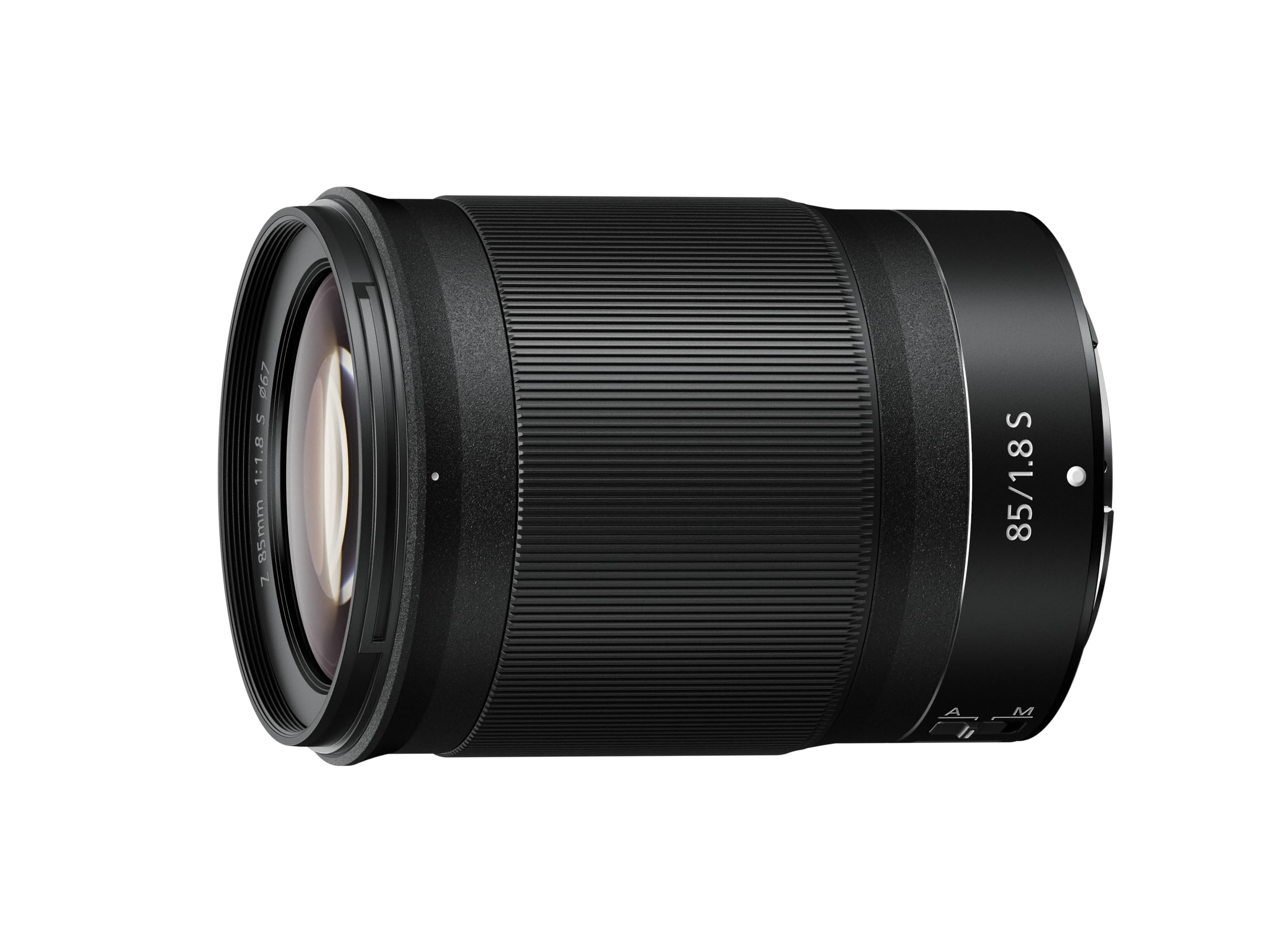
| Nikon NIKKOR Z 85mm f/1.8 S★ Best Overall | Portraits with creamy blur | 85 mm | Nikon Z | Auto/Manual | Amazon |
| High-Power 420-800mm f/8.3 HD ManualBudget Reach | Budget reach on a tripod | 420-1600mm | Nikon F | Manual Focus | Amazon |
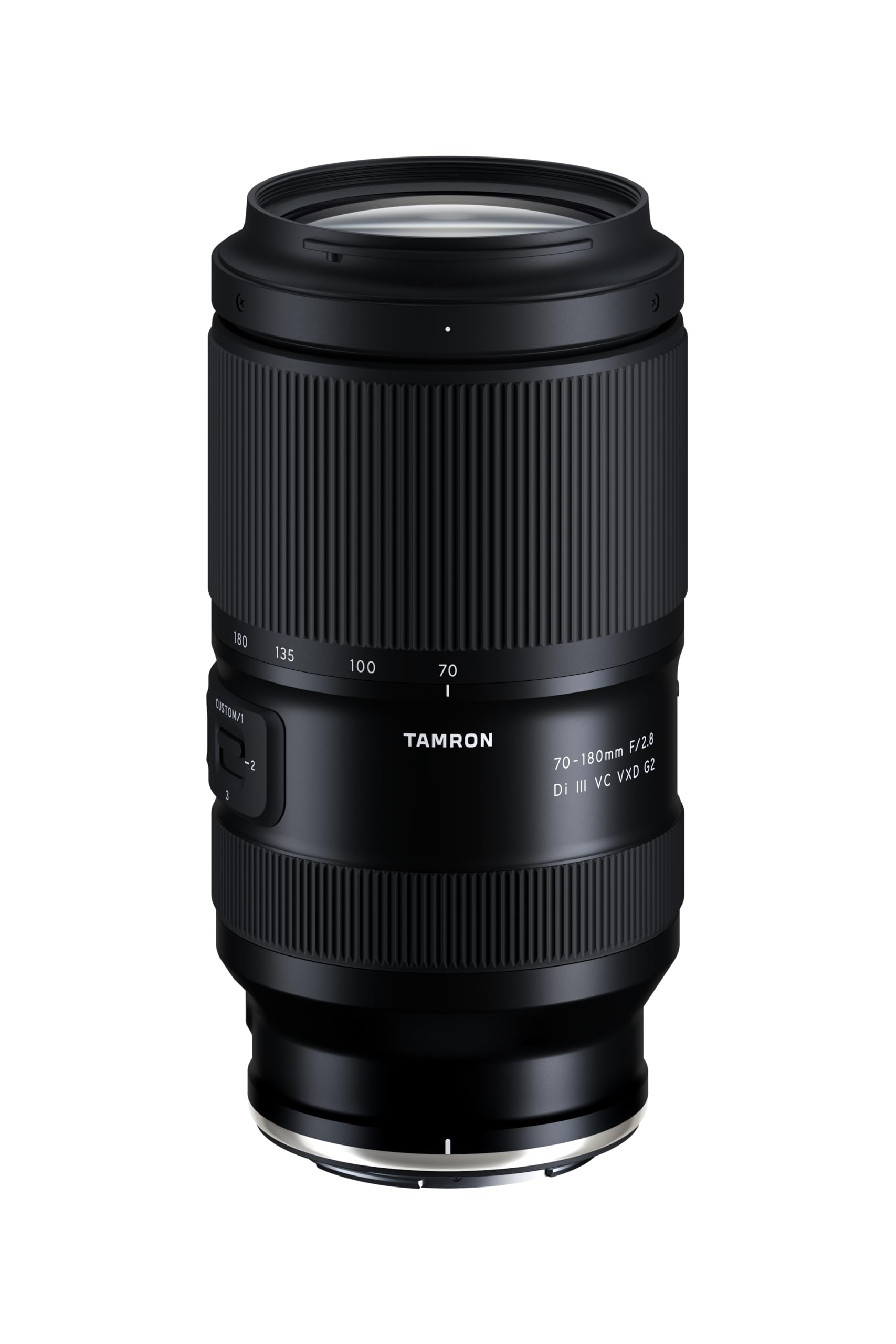
| Tamron 70-180mm F/2.8 Di III VC VXD G2 | Sports and action | 70 to 180 Millimeters | Nikon Z | Auto/Manual | Amazon |
| Sigma 70-200mm f/2.8 APO EX DG HSM OS | Event and portrait zoom | 70-200mm | Nikon F (FX) | Ring-type ultrasonic | Amazon |
| Nikon NIKKOR Z 100-400mm VR S | Teleconverter flexibility | 100mm to 400mm | Nikon Z | Auto Focus, Manual Focus | Amazon |
Detailed Reviews
1. Nikon NIKKOR Z 85mm f/1.8 S
Our pick — 4.5+★ from 650+ verified ratings; the strongest balance of quality and price.
The portrait prime that turns a backyard subject into a studio image.
For a Nikon mirrorless body, the 85mm focal length is the classic portrait reach — long enough to compress a face pleasantly without forcing you to shout directions from across the road. At f/1.8, the aperture opens wide to gather light, so a late-afternoon family shoot keeps its colour instead of going grainy. The nine-blade diaphragm keeps the blurred background round and soft rather than harshly geometric.
Optically, two ED glass elements (a glass type that corrects colour fringing) and Nikon’s Nano Crystal coating work together to keep edges clean and contrast high. The sealed body resists dust and moisture, which matters if you shoot on a damp morning. And the customizable control ring lets you set aperture or exposure straight from the barrel instead of hunting the camera body.
The one thing to weigh is autofocus behaviour, which draws a genuinely split reaction — most find it quick, but a portion find it frustrating in tougher conditions. Because this is a prime (one fixed focal length), you also cannot zoom to chase a bird that moves. If your subject runs, look at a zoom instead. Otherwise this is the strongest all-round portrait pick in the group, and the crowd favourite behind it sits at 4.5+ stars across 600+ ratings.
Where it wins
- f/1.8 aperture keeps handheld evening portraits usable
- Nine-blade diaphragm gives round, creamy background blur
- Dust-and-drip sealed barrel for outdoor sessions
- Customizable control ring for quick aperture changes
What to expect
- Fixed 85mm prime — no zoom to chase moving subjects
- Autofocus splits opinion in demanding light
- Z-mount only, no adapter-free fit on DSLR bodies
Made for: Nikon mirrorless shooters who want clean portraits and soft backgrounds without a tripod.
Think twice if: you need zoom reach for sports or wildlife — this prime stays at 85mm.
2. High-Power 420-800mm f/8.3 HD Manual Telephoto Lens
Absurd reach for very little outlay — if you accept the manual grind.
Here is the number that grabs attention: a focal-length description of 420-1600 millimeters, which is roughly 4.9 times the reach of the 85mm portrait prime above. That means a bird on a distant fence post fills your frame instead of shrinking to a speck. For the money, no autofocus lens in this group gets close to that magnification.
The catch is spelled out plainly by the maker: this is a manual-focus lens with no autofocus support, and the aperture is set by hand too. You turn the ring, watch the focus confirm in your viewfinder, and shoot — every single time. Off a solid tripod aimed at a still subject, that is manageable. Handheld with a moving animal, it is a coin toss. The lens fits Nikon F-mount DSLRs across a long list of bodies, from the D3400 to the D850.
What you cannot buy your way around is consistency. Reactions to the image quality and the Nikon D5000 compatibility split down the middle, with some shooters delighted and others disappointed. That is the nature of ultra-cheap super-telephoto glass. Go in expecting a tripod-bound manual lens that rewards patience, and it delivers 420-1600mm of reach for a modest sum.
Big reach, small cash: you get 420-1600mm of magnification, the widest zoom range in this guide, and the F-mount fit covers a wide spread of Nikon DSLRs.
The honest trade: no autofocus at all, and image quality that lands for some shooters but not others — treat it as a tripod-bound learning lens.
Reach for this if: you own a Nikon DSLR, shoot still subjects off a tripod, and want maximum zoom on a tight budget.
Look elsewhere if: you shoot moving wildlife or want any form of autofocus — this demands your hands on the ring.
3. Nikon AF-S DX NIKKOR 55-300mm f/4.5-5.6G ED VR
The do-everything zoom for a Nikon DSLR that still travels light.
Zooms out to 300 millimeters, which is a real telephoto pull for backyard wildlife and kids’ soccer from the sideline. The 5.5x zoom range means one lens covers everything from a grturn the background into smooth, rounded blur. And the optical stack is serious: 14 elements in 9 groups, with 4 ED elements and 2 high-refractive elements to keep purple and green fringing under control in high-contrast light.
This is also the heavier of the fast primes, at 1265 g — you feel it after a long handheld session. Viltrox’s quad HyperVCM motors drive autofocus speed, and the lens includes face and eye detection for tracking. A stepless aperture ring with a CLICK switch, two Fn buttons and an OLED display that reads out aperture and subject distance give you pro-level control. The metal body carries dust and splash seals plus a water-protected front element.
What makes this the value play in the fast-prime crowd is the optics for the outlay — the quality of the glass, the sharp frames and the exceptional autofocus precision earn the outright recommendation. The one soft spot: a portion of shooters find the autofocus hunts a little in dark environments. For daylight and studio portraits, that rarely surfaces.
Optical muscle: 14 elements in 9 groups plus 4 ED glass and a 135mm reach give you flagship-style sharpness and clean out-of-focus areas.
Weight tax: it weighs 1265 g, the heaviest autofocus prime here, so plan on a shoulder strap or tripod for long days.
Your move if: you want a fast 135mm autofocus portrait and event lens for a Nikon Z body without flagship pricing.
Hold off if: low-light autofocus is your top priority — a few find it hesitates in the dark.
4. Tamron 70-180mm F/2.8 Di III VC VXD G2
The zoom built for the sideline, holding f/2.8 all the way out to 180mm.
A constant f/2.8 aperture across the whole 70-180mm range is the reason action shooters care. It means you can shoot a subject running toward you and the light-gathering stays the same as you zoom — no dimming at the far end. Tamron’s VC mechanism steadies the frame in your hands, and the moisture-resistant construction plus fluorine coating on the front element shrug off a damp field.
The autofocus runs on a VXD motor designed for fast, quiet locking on moving subjects. Reach and speed together are what make this a genuine sports tool — the crowd here finds it of high quality and particularly suitable for athletics coverage. The six-year limited USA warranty through an authorized Tamron dealer is a nice safety net for a lens this serious.
One thing to size correctly: the autofocus and quality praise is near-universal, but this is a newer model with fewer shooters weighing in, so the track record is shorter than Nikon’s long-sold glass. That is a maturity question, not a quality knock — the early read is glowing. For a Nikon Z owner who wants a bright action zoom, this is a strong pick.
Ideal for: Nikon Z shooters chasing fast-moving subjects who want one bright, stabilized zoom that holds its aperture.
Consider the alternative if: you want the deepest possible field-proven history — this one is newer to the scene.
5. Nikon AF-S FX NIKKOR 200-500mm f/5.6E ED VR (Renewed)

An ultra-telephoto zoom for Nikon Z that tucks 500mm into a compact barrel.
Reaching 500mm in a body just 8.4 inches long — and only 11.3 inches when extended — is the trick this Tamron pulls off. That is a full-frame ultra-telephoto that fits in a smaller bag than most long glass. The optics use BBAR-G2 coating, a second-generation anti-reflection layer that boosts clarity and contrast, with aberrations tightly controlled across the frame.
For field work, the moisture-resistant construction and fluorine coating on the front shield the glass from drizzle and dust. Optical stabilization steadies the frame while the VXD motor drives autofocus. The crowd here finds the lens excellent, with razor-sharp images and strong value for the outlay — a combination that makes 500mm reach feel attainable on a Nikon Z body.
Two things to weigh honestly. At 4.1 pounds, this is a heavy lens and the weight draws real complaint — plan on support for long sessions. And the autofocus itself splits opinion, with some finding it not perfectly sharp on the mark. For stationary subjects that is minor. For fast flight shots, budget extra care. Those caveats aside, the image quality and compact reach make it an easy recommendation for Z-mount wildlife shooters.
Right for you: Nikon Z shooters who want a compact 500mm ultra-tele with stabilized, sharp optics for wildlife and distant subjects.
Be ready for: 4.1 pounds of heft and autofocus that a few find just short of perfect in fast conditions.
6. Sigma 70-200mm f/2.8 APO EX DG HSM OS

The seasoned f/2.8 zoom wedding and event photographers keep in the bag.
You get a 70-200mm focal range with a constant f/2.8 aperture (the same widest opening at every zoom length). That is the classic event and portrait spread: long enough to shoot a ceremony from the back row, and bright enough to gather light in a dim reception hall. On an APS-C body (a smaller sensor with a 1.5x crop) it works out to a 105-300mm equivalent, stretching the reach further. The ring-type ultrasonic motor (a fast, quiet focus drive) focuses quickly with full-time manual override, so you can adjust by hand without flipping a switch.
Optically, the FLD glass elements keep sharpness high and bokeh pleasing, and the build feels solid in the hand. Optical stabilization claims 4 stops with dual normal and panning modes, so a moving subject stays tracked as you sweep. Across the review pages this lens earns strong marks for image quality and the sharpness it delivers, and shooters who have owned it for years call it a go-to favourite.
Two honest points. It carries real weight at 3.2 pounds, so a full day on your feet is felt by evening. And focusing draws a mixed reaction — quick for many, slower for a few. Neither changes the fact that this lens produces the kind of sharp, well-blurred frames that keep event photographers loyal to it.
Proven glass: the 70-200mm reach, constant f/2.8 and FLD elements deliver sharp, clean shots and the 105-300mm equivalent crop on APS-C bodies.
Weight and focus caveat: at 3.2 pounds with focusing that splits opinion, budget for the heft and take the time to lock focus precisely.
Choose this when: you want a proven f/2.8 event and portrait zoom for a Nikon F-mount DSLR at a reachable price.
Keep looking if: focus speed on fast action is your make-or-break, given the mixed reports here.
7. Nikon NIKKOR Z 100-400mm VR S

Reach you can grow — 100-400mm now, 800mm with a teleconverter later.
On a full-frame Nikon Z body this zoom runs 100mm to 400mm. On a DX-format body it stretches to 150mm-600mm equivalent. The Vibration Reduction delivers up to 5.5 stops of compensation, which steadies the shot in weak light without needing a faster shutter. On full-frame bodies it stabilizes across 5 axes, and on DX bodies it works with 2-axis optical VR.
The real flexibility is the teleconverter compatibility. Attach the 1.4x Z series converter and reach climbs to 560mm, or the 2x to 800mm — with outstanding resolution, no loss of focus points and very little extra weight or length. That makes this a lens that grows with your ambitions. Two high-speed STM stepping motors focus in near silence, and the optics suppress colour bleeding and focus breathing for clean stills and video.
What earns the praise here is effectiveness — the frames stay sharp at all focal lengths and the lens works beautifully with the 1.4x converter. Focusing locks fast. The price of all that is the largest buy in this group, so it earns its place only if you genuinely need the teleconverter path and the stabilized reach. For dedicated wildlife on a Z body, that investment is justified.
Why it earns the top-tier spot
- 100-400mm now, up to 800mm with a 2x Z teleconverter
- Up to 5.5 stops of Vibration Reduction
- Dual STM motors for near-silent, fast focus
- Sharp at all focal lengths per user feedback
What you are buying into
- The biggest outlay of the group
- 3.2 pounds to carry on long outings
- Teleconverters sold separately
The one to buy if: you want a stabilized 100-400mm Z-mount zoom that stretches to 800mm with converters as your skills grow.
Look at cheaper glass if: you rarely shoot past 400mm — the reach investment only pays off if you use it.
Know the Specs
Focal length and equivalent reach
Focal length in millimeters sets how much a lens magnifies a distant subject. A longer number pulls distant objects closer, while a shorter number frames a wider scene. On a DX-format body the sensor is smaller, so the effective reach grows — a 400mm lens behaves like 600mm equivalent. That crop is why a DX body can feel like free extra zoom with the same lens.
Aperture and low-light ability
The f-number describes how wide the lens opening gets. A low number like f/1.8 or f/2.8 lets in more light and blurs the background more, which helps in dim conditions and isolation shots. A higher number like f/5.6 or f/8.3 needs more light to work, so it suits bright outdoor shooting. A constant aperture, such as f/2.8 throughout a zoom, keeps your exposure steady as you zoom in.
Vibration Reduction and stabilization
VR, or Vibration Reduction, is Nikon’s brand of image stabilization — it counteracts the small shakes from your hands so slower shutter speeds stay sharp. Measured in stops, so 4 or 5.5 stops of compensation means you can handhold in lower light. Some lenses build VR into the lens; others rely on stabilization built into the camera body. Knowing which you have tells you how steady your long shots will be.
Mounts, autofocus and teleconverters
The mount must match your camera: Nikon F for DSLRs, Nikon Z for mirrorless. Autofocus lenses use a motor — ultrasonic, STM or VXD — to lock onto subjects; manual lenses make you turn the ring yourself. A teleconverter is an accessory that multiplies the focal length, such as a 2x converter turning 400mm into 800mm, usually at the cost of some light. Not every lens accepts one, so check compatibility first.
Common Questions
Will a Nikon Z-mount lens fit my Nikon DSLR camera?
Does the High-Power 420-800mm lens autofocus on a Nikon DSLR?
How far can I zoom with a Nikon DSLR on a DX body?
Is a teleconverter worth adding to my Nikon Z lens?
Why does a lens with no image stabilization still work for me?
How heavy are these long Nikon lenses to carry?
Does a refurbished Nikon lens come ready to shoot?
What is the difference between f/1.8 and f/2.8 for portraits?
Can I use a Nikon F-mount lens on a Nikon Z mirrorless body?
The Bottom Line
If you shoot a Nikon mirrorless body and want portraits to look easy, the telescope lens for nikon winner is the Nikon NIKKOR Z 85mm f/1.8 S. Its bright f/1.8 aperture (a wide opening that lets in lots of light) and nine-blade rounded bokeh (soft, round background blur) come in a dust-sealed barrel. If you need stabilized reach that grows with you, grab the Nikon NIKKOR Z 100-400mm VR S, which stretches to 800mm with a teleconverter (a magnifying adapter). And for DSLR wildlife shooters who want a proven 500mm zoom, the Nikon AF-S FX NIKKOR 200-500mm is the one to reach for. Whichever route you pick, match the mount to your body first — F-mount for DSLRs, Z-mount for mirrorless — and you avoid a return slip later.
How we choose
We do not accept paid placement. Every pick is matched to a real buyer and a real use-case; we do not hands-on test units.
Sources
Specifications: manufacturer listings and product documentation. Review insights: verified customer reviews, as of November 2026. Pricing: not shown on this page (it changes often); check the current price via the retailer link.
As an Amazon Associate, Tactical Gear Guy earns from qualifying purchases. This does not affect which products we feature.