Specs are compiled from manufacturer listings and verified buyer reviews and can change over time — please confirm the key details on the product page before buying.
An 85mm lens flatters a face because it compresses features gently and throws the background into soft cream — but only if the glass behind that focal length is sharp enough when shot wide open. This guide solves the actual buying problem: which of these portrait primes and telephoto zooms earn their place on your camera, which mount they live on, and where the money genuinely buys you something a cheaper lens cannot. One quick note before we start: this list uses flexible, human-like matching for the portrait-telephoto range (roughly 85mm prime to 70-200mm zoom), so not every pick is the exact single number you typed in — the nearest same-type lens serves the same job.
This guide is built by comparing the manufacturers’ published specifications and the patterns across verified customer reviews, so you get each pick’s real strengths and trade-offs instead of marketing spin.
You will see which mount each lens locks onto, how the aperture blades shape the blur, and what the autofocus really does under pressure. The goal is simple: lock in the right mount, aperture, and focal length once, so you stop second-guessing the Best Telephoto Lens for Portrait Photography.
Top Picks


How To Choose The Best Telephoto Lens for Portrait Photography
The first thing to settle is your camera’s mount, because a beautiful lens that does not physically attach to your body is worth nothing. Sony E-mount bodies take Sony E and Sony FE glass. Nikon Z bodies take Nikon Z lenses. Canon EOS R bodies take Canon RF lenses. Panasonic LUMIX S bodies take Leica L-mount glass. Confirm that before anything else.
Focal length: 85mm prime versus a 70-200mm zoom
An 85mm prime gives you one field of view — tight enough to flatter a face, loose enough to include shoulders. A 70-200mm zoom lets you reframe without walking, which matters in a studio corner or a crowded event. The zoom trades portability for flexibility, and the prime trades flexibility for a wider aperture and a smaller, lighter body.
Aperture and what it does to your background
A lower f-number means a bigger hole in the lens, which pulls in more light and blurs the background harder. An f/1.4 lens separates your subject from a busy street more aggressively than an f/1.8. That same wide aperture also lets you shoot in dim rooms at a faster shutter speed, so you avoid a soft, shaky frame.
Blades, motors, and weather sealing
The diaphragm blades inside the lens shape the out-of-focus highlights in the background. Rounder blade counts keep those highlights circular rather than angular. The autofocus motor decides how quietly and quickly the lens locks onto a moving face. Weather sealing decides whether you can keep shooting when the light drizzle starts during an outdoor session.
Side-by-Side Comparison
| Model | Best For | Focal Length | Max Aperture | Mount | Amazon |
|---|---|---|---|---|---|
| Sony SEL85F18 85mm F/1.8★ Best Overall | All-round Sony portraits | 85mm | F1.8 | Sony E | Amazon |
| Samyang SYIO85AF 85mm F1.4Widest Blur | Widest blur on a budget | 85mm | F1.4 | Sony FE | Amazon |
| Panasonic LUMIX S 85mm F1.8L-Mount Pick | L-mount video and stills | 85mm | F1.8 | Leica L | Amazon |
| VILTROX AF 85mm F1.4 Pro | Pro control on Sony E | 85mm | F1.4 | Sony E / FE | Amazon |
| VILTROX AF 135mm F1.8 LAB | Flattering compression on Nikon Z | 135mm | F1.8 | Nikon Z | Amazon |
| Nikon NIKKOR Z 85mm f/1.8 S | Native Nikon Z portraits | 85mm | F1.8 | Nikon Z | Amazon |
| Sigma 85mm F1.4 DG DN | Sigma Art quality on Sony E | 85mm | F1.4 | Sony E | Amazon |
| Canon RF70-200mm F4 L IS USM | Lightweight RF zoom | 70-200mm | F4 | Canon RF | Amazon |
| Sigma 70-200mm F2.8 DG DN OS | Fast Sony zoom | 70-200mm | F2.8 | Sony E / L | Amazon |
| Nikon AF-S 70-200mm f/2.8E FL ED VR | Nikon DSLR workhorse zoom | 70-200mm | F2.8 | Nikon DSLR | Amazon |
| Canon RF70-200mm F2.8 L IS USM | Premium RF zoom | 70-200mm | F2.8 | Canon RF | Amazon |
Detailed Reviews
1. Sony SEL85F18 85mm F/1.8-22 Lens
Our pick — 4.5+★ from 800+ verified ratings; the strongest balance of quality and price.
The Sony 85mm f/1.8 that makes a whole face look easy — and keeps the background soft.
For a Sony E-mount shooter who wants one lens for headshots, weddings, and everyday portraits, this is the sensible place to start. The f/1.8 maximum aperture (the widest the internal hole opens) gives you a bright viewfinder and a softly blurred background, so your subject stands out from a cluttered room. The 10.4-ounce build is light enough to carry all morning without noticing it on the body.
Sharpness here comes from an ED glass element (a lens element that corrects colour fringing), which keeps the frame crisp from corner to corner rather than just in the middle. The 9-blade circular aperture keeps blurred background highlights round instead of angular, so fairy lights behind a bride’s head read as soft discs, not polygons. Autofocus runs on a Double Linear motor system — two motors that move the focus element fast and quietly — which helps on a moving toddler.
The trade-off: there is no optical image stabilization built into this lens, so in very dim light you lean on your camera body’s own stabilization or a faster shutter speed. What wins people over across the review pages is the consistent image quality — the f/1.8 rendering here feels closer to a much pricier portrait prime than its modest spec suggests.
What earns the top spot
- F/1.8 aperture and 9 rounded blades for smooth, circular bokeh
- ED glass keeps corners sharp, not just the centre
- 10.4 ounces — slips into a small camera bag
- Fast, quiet Double Linear autofocus for candid faces
Where it asks a little of you
- No built-in image stabilization on the lens itself
- One fixed 85mm view — no zooming to reframe
Reach for this if: you shoot Sony E-mount and want one dependable portrait prime with creamy background blur.
Look elsewhere if: you need a zoom to chase subjects across a room, or you shoot in near-darkness without body stabilization.
2. Samyang SYIO85AF 85mm F1.4 Lens
The f/1.4 aperture that separates a face from the background like a studio backdrop.
Sony FE shooters who want maximum background melt for headshots and weddings should start here. That f/1.4 opening is where it earns attention versus the Sony f/1.8 up top: the Samyang’s F1.4 versus the Sony’s F1.8 is a wider hole that lets in more light, so dim reception halls stay workable and the blur gets deeper. The 9-blade iris keeps that blur soft and rounded rather than harsh.
The weight story is the honest cost. This lens runs 839 g versus the Panasonic 85mm f/1.8 at 454 g — the Samyang is noticeably heavier in the hand, which matters over a long handheld portrait session. In exchange you get a weather-sealed build (sealed against dust and moisture, so a light drizzle outdoors is not an emergency) plus a 77 mm non-rotating front filter mount for a polarizer or ND filter.
Inside, 11 elements in 8 groups — including 4 high-refractive and 1 ED element — are tuned for edge-to-edge clarity. Autofocus on the Dual Linear Sonic Motor is described as nearly silent, though the general autofocus picture is mixed: some shooters report lightning-quick locks, others hit cases where it hunted. The safest bet is a well-lit portrait or event, not a fast-moving subject in low light.
What it buys you: an F1.4 portrait prime with weather sealing and a filter-friendly front, for headshots, weddings, and cinematic-style frames.
The honest catch: 839 g is heavy for a handheld day, and the autofocus reputation is not as consistent as the fixed-aperture optics deserve — bring good light and a steady hand.
Pick it for: the deepest possible background blur on a Sony FE body without paying flagship money.
Pass if: you shoot handheld all day and want a featherweight lens, or you rely on rock-solid tracking autofocus in poor light.
3. PANASONIC LUMIX S S-S85 85mm F1.8 Lens
Panasonic’s L-mount portrait prime that stays light all day and shrugs off bad weather.
LUMIX S shooters who split their week between stills and video get a lot from this one. First, the weight: at 454 g it is the featherweight of this group, which is why it pairs so comfortably with the Samyang’s F1.4 versus this lens’s F1.8 trade-off — you give up some aperture width to shed serious grams. That matters if your portrait sessions run long on your feet.
The lens suppresses focus breathing (the slight shift in framing as you pull focus), so it holds its composition during a rack-focus shot in video. A dust, splash, and freeze-resistant design means cold outdoor sessions and light rain are within its comfort zone. Compatibility is broad here — it mounts on L-Mount full-frame bodies across the LUMIX S series and beyond, and works with in-body stabilization for steadier handheld frames.
Lens quality and image quality are what buyers talk about most, with the f/1.8 rendering giving smooth defocus gradation and pleasing colour. The focus ring feels slower than the fast autofocus, which some shooters notice when manual-focusing video. For most portrait work, that slow focus ring is a small quirk, not a roadblock.
Why it fits a hybrid shooter: 454 g on the body, suppressed focus breathing for video, and a sealed build for rough weather.
One thing to know: the focus ring turns slowly, so manual pulls on video need a patient hand.
Go here if: you shoot LUMIX S and want a light, weather-ready 85mm for portraits and video alike.
Choose differently if: you need the widest possible aperture for darkness, or your camera body is not L-mount.
4. VILTROX AF 85mm F1.4 Pro FE Lens
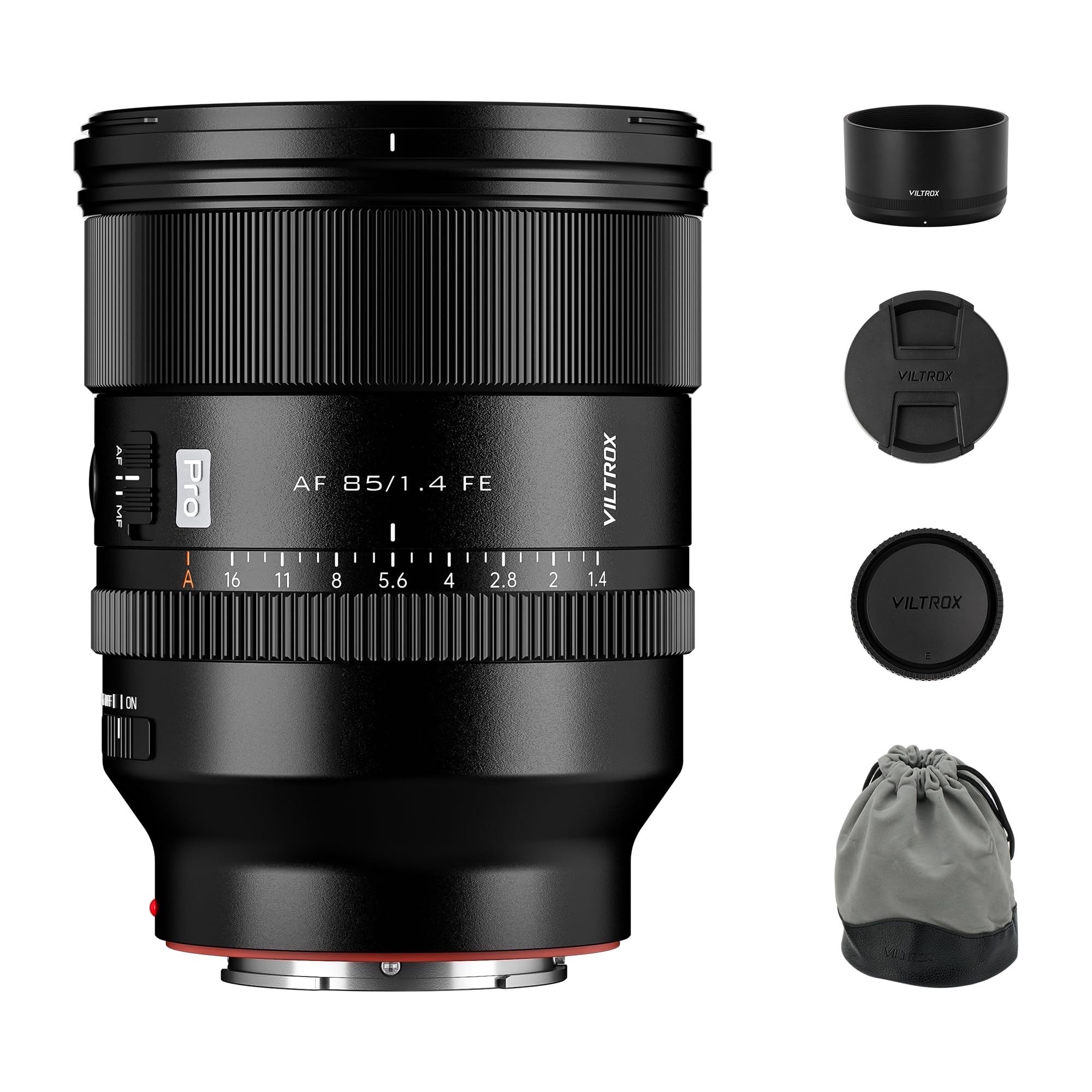
A pro-spec 85mm f/1.4 for Sony E with the switches and rings a working shooter wants.
For Sony E-mount photographers who want more hands-on control than a basic prime offers, this is the one to study. The 15-element, 11-group optical design (including 3 ED and 9 high-refractive elements plus 1 aspherical lens) is built to hold contrast and keep colour fringing low across the frame. The f/1.4 aperture does the portrait work — creamy background blur and a bright viewfinder even indoors.
What makes this pick different is the control layout: a stepless aperture ring with a click switch, a customizable Fn button, an AF/MF toggle, and a linear manual focus response that keeps video pulls smooth and silent. Dual HyperVCM motors (the autofocus motors) drive fast, precise focus with face and eye detection. The metal body is dust and splash-resistant with a water-protected front element, so a surprise drizzle is not fatal.
The consensus is that autofocus stays crisp in both photo and video, and the manual focus ring feels remarkably smooth. It is a heavier, more complex lens than a plain f/1.8, so first-time buyers should expect a steeper learning curve on the control ring. For a working hybrid shooter on Sony E, that control is the whole point.
The case for it: stepless aperture ring, customizable Fn button, AF/MF toggle, and linear focus for smooth video — plus a weather-sealed metal body.
Worth knowing: the ring-and-switch layout rewards a little practice; if you only ever shoot full-auto, you are paying for control you may not use.
This is your lens if: you shoot Sony E and want pro-style controls and weather sealing in an 85mm f/1.4.
Think twice if: you want the lightest possible prime or never touch manual settings.
5. VILTROX AF 135mm F1.8 LAB Lens
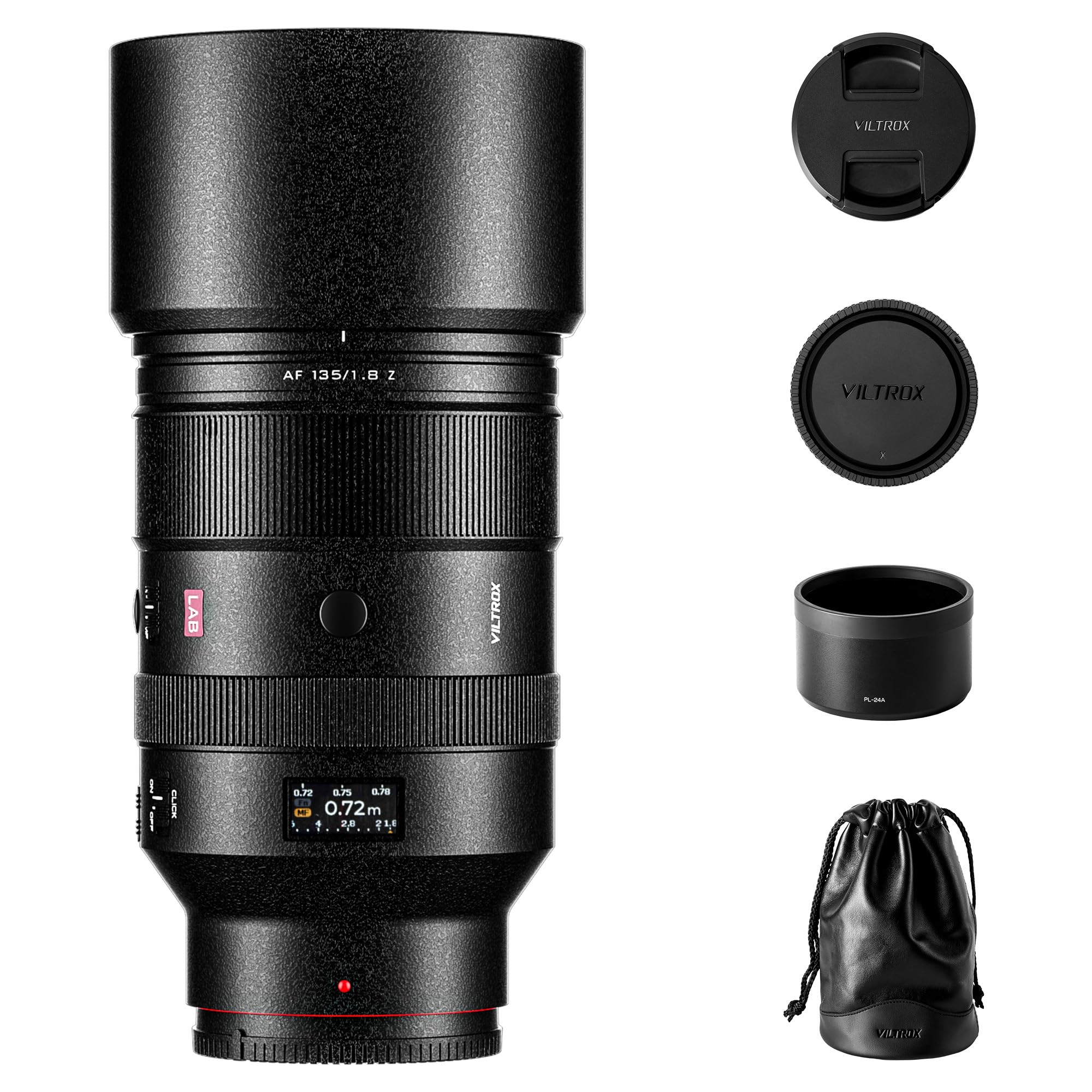
A 135mm f/1.8 that flattens features beautifully and melts the background to silk.
Nikon Z shooters chasing the flattering compression of a longer focal length have a genuine option here. At 135mm you stand further back, which relaxes your subject and compresses facial features in a way an 85mm cannot quite match. The f/1.8 aperture keeps that long reach usable in low light, and the 11-blade diaphragm produces a smooth, rounded bokeh that holds up even wide open.
Optically it is a serious build: 14 elements in 9 groups, including 4 ED and 2 high-refractive elements, tuned to cut purple and green colour fringing in high-contrast scenes. Quad HyperVCM motors drive fast tracking with face and eye detection, and an LCD display on the lens shows aperture and distance in real time — genuinely useful in a dark studio. It is also weather-sealed with a water-protected front element.
Here is the physical reality: at 1265 g this is a heavy lens to hold up for an hour of portraits, so a monopod or a break helps. Autofocus is described as fast and accurate generally, though one reviewer noted it can hunt in darker rooms. For portrait and event work in decent light, the sharpness and value hold up well against much pricier glass.
Where the 135mm shines
- 135mm compression flatters faces more than an 85mm
- F1.8 aperture with 11 blades for creamy background melt
- LCD display shows live aperture and distance
- Weather-sealed with a water-protected front element
The honest trade-offs
- 1265 g — a two-hand, monopod-friendly lens
- Autofocus can hunt in very low light
Choose it if: you shoot Nikon Z portraits and want the compression and blur of a longer focal length.
Reconsider if: you want a one-lens, handheld, all-day carry — this one wants support.
6. Nikon NIKKOR Z 85mm f/1.8 S Portrait Prime Lens for Z Series
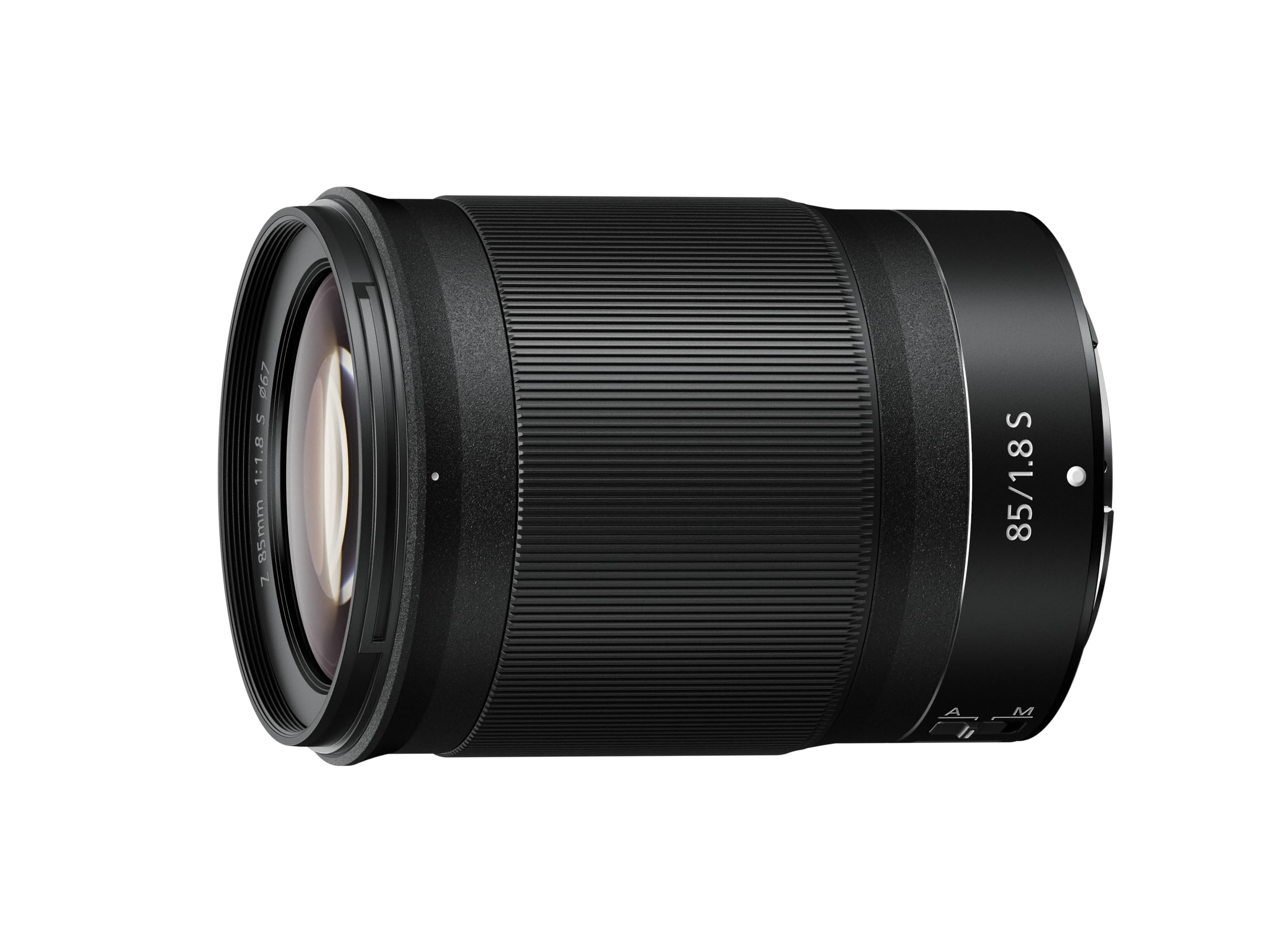
Nikon’s own 85mm S-line prime — sharp corner to corner with a case that fits in a palm.
If your body is a Nikon Z camera, this is the native-lens answer for portraits of every kind. The 85mm focal length with an f/1.8 aperture and a nine-blade diaphragm delivers that characteristic soft, rounded background blur, so family sessions and headshots look polished straight from the camera. Two ED glass elements and a Nano Crystal coating keep colour accurate and ghosting down when you point toward a window.
what separates it from the third-party picks above is the fit. It slots into Nikon’s own ecosystem with a customizable control ring on the barrel and full communication with the body. A dust- and drip-resistant seal with extensive sealing keeps out moisture on location. At 470 g it balances neatly on a Z body and stays comfortable across a longer session.
The consensus is that sharpness runs razor-thin from centre to corners, and bokeh is what buyers notice first. Autofocus is the one mixed story — some shooters find it fast and dependable, others find it slows them down on tricky subjects. A calm, well-lit portrait setting is where it performs most predictably.
The standout: two ED elements and Nano Crystal coating for clean, accurate colour and a nine-blade blur that stays round.
Fair warning: the customizable control ring is easy to nudge by mistake until you set it to your liking, and autofocus is not the fastest in this class.
Best matched to: Nikon Z shooters who want a native, sealed, featherweight 85mm portrait prime.
Less ideal if: you shoot fast-moving subjects and depend on the snappiest possible autofocus.
7. Sigma 85mm F1.4 DG DN Sony E (322965)

Sigma’s fast f/1.4 Art prime that keeps bokeh creamy and the body light at 630 g.
Sony E shooters who want flagship-style sharpness without flagship weight should look here. This f/1.4 portrait prime balances a wide aperture with a 630 g body that is far friendlier to carry than heavier rivals, so a full day of location portraits stays comfortable. The f/1.4 opening blurs backgrounds hard and keeps face detail crisp even when you shoot wide open.
This lens is the natural step up from the Sony f/1.8 above if you have outgrown a slower aperture and want more separation. The optical design earns its Art name — the rendering is described as crisp with stunning bokeh, and it holds up against pricier competitors in the same class. A focus mode switch, AFL button, and an iris ring with click and lock switches give you tactile control without hunting menus.
Dust and splash-proof construction adds a layer of protection for outdoor shoots. The autofocus is stepping-motor driven and earns solid marks for speed and accuracy in the portrait and low-light work it was built for. For Sony E portrait shooters, this is the balance of f/1.4 speed, 630 g size, and image quality.
Why it stands out: f/1.4 sharpness and creamy bokeh in a 630 g body, with an iris ring and AFL button for fast changes.
One consideration: like most fast primes, it is not built for the fastest action tracking — this is a portrait and low-light lens first.
Pick it if: you shoot Sony E and want a light, fast f/1.4 portrait prime with strong optics and tactile controls.
skip it if: you need the smallest possible lens or your priority is sports-speed autofocus.
8. Canon RF70-200mm F4 L IS USM Lens

Canon’s compact 70-200mm f/4 zoom that reframes portraits without moving your feet.
If your body is a Canon EOS R camera and you want one lens to cover portraits, events, and a little street work, this zoom is a strong fit. It is Canon’s shortest and lightest 70-200mm f/4, at 695 g, which matters when you carry it all afternoon. The constant f/4 aperture holds exposure steady as you zoom, and the zoom range lets you reframe from full-body to tight headshot without walking.
Sharpness and compactness are the two things buyers report most, and the separation between subject and background is genuinely usable for portraits even at f/4. Optical image stabilization with up to 5 stops of shake correction (built-in help against hand shake), rising to as many as 7.5 stops when combined with your camera body’s stabilizer, keeps handheld shots steady. Dual Nano USM autofocus is fast, smooth, and quiet enough to avoid drawing attention.
The honest note: an f/4 zoom cannot blur a background as aggressively as an f/1.4 or f/1.8 prime, so if maximum subject separation is the goal, a prime serves you better. As a versatile everyday lens that also does portraits, though, the handling and reach make it a practical workhorse.
What makes it useful: 70-200mm reach in a 695 g body, with 5-stop optical stabilization for handheld shots.
The catch to weigh: an f/4 maximum aperture means less background blur than a fast prime — versatility traded against separation.
Fits best: Canon RF shooters who want one light zoom for portraits, events, and street work.
Not the one if: your portraits live and die by the deepest possible background blur.
9. Sigma 70-200mm F2.8 DG DN OS for Sony

A constant f/2.8 zoom that reframes portraits and keeps up with a moving subject.
For Sony E-mount shooters who need one lens to shoot portraits and faster action, this zoom earns a spot. The constant f/2.8 aperture (stays wide across the whole zoom range) means you get creamy separation even at 200mm, plus enough light for indoor portraits. The 70-200mm range lets you frame a full-body shot or a tight headshot from the same spot.
A High-response Linear Actuator (HLA) motor drives the autofocus, and the consensus is that it keeps up well even for sports work, with very few misses. Optical image stabilization helps steady handheld shots at longer focal lengths. The build carries the weather resistance of Sigma’s Sports line — dust and splash resistant — so an outdoor event is fair game.
Be clear-eyed about the weight: at 1345 g this is a heavy lens that wants support or a strong arm, and that is the most-mentioned downside for a reason. For a photographer who needs one zoom for both portraits and movement, 1345 g is the honest price of that versatility. Those who shoot only still portraits are better served by a lighter f/1.4 prime.
The performance case: constant f/2.8 across 70-200mm with a fast HLA motor and optical stabilization — portraits and action in one lens.
Real-world weight: 1345 g is a two-hand carry, so budget for a strap or monopod on long days.
Worth it if: you shoot Sony E and need one f/2.8 zoom that handles portraits and fast subjects.
Keep looking if: you want the lightest possible kit or only ever shoot still portraits.
10. Nikon AF-S NIKKOR 70-200mm f/2.8E FL ED VR Lens

The Nikon DSLR zoom that stays sharp from 70mm to 200mm and never seems to miss.
If you still shoot a Nikon DSLR — a D500, a full-frame body, whichever — this f/2.8 zoom is the workhorse answer for portraits and events. It stays sharp at all focal lengths across the 70-200mm range, so you can go from a group shot to a tight headshot without a quality dip. The constant f/2.8 aperture blurs backgrounds generously and keeps the viewfinder bright indoors.
Diaphragm build uses 9 blades for rounded out-of-focus highlights, and the minimum focus distance of 1.1 m lets you get close for detail work. Optical VR (vibration reduction) helps against hand shake at the long end. The minimum aperture of f/22 gives you room to stop down for depth when you want a whole group in focus.
The fit is the thing to confirm: this is a DSLR lens, and it is built for Nikon DSLR bodies and the Nikon 1 series rather than mirrorless Z bodies. At 3.2 pounds it is a firm, supported two-hand lens. Buyers consistently praise focus speed and versatility — it is a lens that gets picked up for most shoots — though its weight is a real consideration for long handheld sessions.
What owners value: sharpness held across the whole 70-200mm range, quick focus, and the versatility to cover most shoots.
Two things to plan for: 3.2 pounds asks for support, and it is a DSLR-mount lens — check your body fits before buying.
A natural fit for: Nikon DSLR shooters who want one sharp, fast f/2.8 zoom for portraits and events.
Not for you if: you have moved to a Nikon Z mirrorless body or want a lightweight carry.
11. Canon RF70-200mm F2.8 L IS USM Lens

The f/2.8 RF zoom that pairs pro-level sharpness with a surprisingly compact body.
Canon EOS R shooters who want top-tier portrait separation from a zoom land here. The f/2.8 aperture blurs backgrounds deeply while the 70-200mm range lets you frame loosely or tight without changing position. It is compact and lightweight for a fast zoom, so a wedding day or a long portrait session does not feel like a workout.
Optical image stabilization with up to 5 stops of shake correction keeps handheld shots steady, and the Dual Nano USM autofocus is fast, smooth, and quiet enough to work close to a subject. The minimum focusing distance of 2.3 ft (0.7 m) lets you get in close for detail while the zoom does the rest. Clarity holds well across both the R and RP models, and the autofocus is described as consistently reliable.
The honest trade here is size in a different sense: an f/2.8 zoom is a substantial lens, and some shooters note its weight as a real factor across a full day. This is the premium end of the list, built for a working Canon RF photographer who needs one lens to do a lot, not a casual occasional shooter. For working Canon RF shooters, it delivers sharpness across the frame at every focal length.
The selling point: f/2.8 sharpness and deep background blur from a compact RF zoom, with 5-stop stabilization and swift Dual Nano USM focus.
The trade to size: it is a full-size professional zoom, so days on your feet call for a strap and a break.
This is for you if: you shoot Canon RF professionally and want a fast, sharp do-it-all zoom for portraits and events.
Not the best fit for: occasional shooters who want a small, light prime and one focal length.
Know the Specs
Focal length (what 85mm or 135mm buys you)
Focal length is how much the lens magnifies the scene and how far away you stand. An 85mm prime is the classic portrait length — close enough to flatter a face, loose enough for shoulders. A 135mm compresses features further and melts the background harder, but asks you to stand further back. A 70-200mm zoom covers that whole span, which is why event shooters love it.
Maximum aperture and bokeh
Maximum aperture is the widest the lens can open, written as an f-number. A lower number (f/1.4) opens wider than a higher one (f/1.8 or f/4), which means more light and a more blurred background. Aperture blades inside the lens shape those blurred highlights — more blades keep the bokeh rounder and softer.
Autofocus motor
The autofocus motor moves the glass to lock sharpness, and its quality decides how fast and quietly that happens. A linear or dual-motor system tends to focus faster and more silently than a basic screw-drive motor, which matters when you are shooting a moving child or a quiet ceremony. A slower motor can hunt in dim light, so match the lens to how you shoot.
Mount compatibility
The mount is the metal connection between lens and camera body. Sony E, Nikon Z, Canon RF, and Leica L each use different mounts, so a lens built for one will not fit another without an adapter. Always confirm your body’s mount before ordering — it is the single most common buying mistake in this category.
Image stabilization and sealing
Image stabilization (IS, VR, or in-body steadiness) helps counter hand shake at longer focal lengths or slower shutter speeds. Weather sealing — dust, splash, and freeze resistance — protects the internals on outdoor sessions. Together they decide how confidently you can shoot in real conditions rather than a controlled studio.
Weight and balance
Lens weight is measured in grams or pounds. A lighter lens is easier to handhold all day, while a heavy fast zoom stays stable on a monopod or tripod. On a long portrait session, even a couple hundred grams makes a difference in how tired your arm feels by hour three.
Common Questions
Will an 85mm lens fit my camera without an adapter?
Is f/1.4 worth it over f/1.8 for portraits?
How much difference does a 135mm make over an 85mm for faces?
Can a 70-200mm zoom replace an 85mm prime for portraits?
What is the minimum focusing distance and why does it matter?
Do I need a lens with image stabilization for portrait work?
How many aperture blades make rounder background bokeh?
Why do some portrait lenses weigh so much more than others?
Will a full-frame 85mm behave differently on an APS-C body?
Is weather sealing important for a portrait lens?
Should I choose a DSLR or mirrorless zoom for portraits?
The Bottom Line
For most Sony shooters chasing clean, flattering portraits, the Sony SEL85F18 85mm F/1.8 is the safest bet — its f/1.8 aperture, 9-blade circular bokeh, and 10.4-ounce build make it a lens you actually want to carry. Buyers back it: 4.5+ stars across 800+ ratings. If deeper blur on a heavier frame suits you, the Samyang SYIO85AF 85mm F1.4 pushes the aperture further. Want pro-level controls and sealing for hybrid video? The VILTROX AF 85mm F1.4 Pro earns the extra grams. And if your body is a Canon EOS R, the Canon RF70-200mm F4 L gives you zoom reach in a light 695 g frame — one lens that covers portraits and a whole lot more.
How we choose
We do not accept paid placement. Every pick is matched to a real buyer and a real use-case; we do not hands-on test units.
Sources
Specifications: manufacturer listings and product documentation. Review insights: verified customer reviews, as of November 2026. Pricing: not shown on this page (it changes often); check the current price via the retailer link.
As an Amazon Associate, Tactical Gear Guy earns from qualifying purchases. This does not affect which products we feature.