Specs are compiled from manufacturer listings and verified buyer reviews and can change over time — please confirm the key details on the product page before buying.
Here is the short answer: pick a vest by your teen’s weight range and chest fit, not by the brand on the tag. A vest that is the right size keeps their head up and stays put when they jump in. One that is too loose slides up around the neck and turns a fun lake day into a fight. Every pick below is a US Coast Guard-approved flotation device built for the youth and teen weight bands, so you can choose with confidence instead of guesswork.
This guide is built by comparing the manufacturers’ published specifications and the patterns across verified customer reviews, so you get each pick’s real strengths and trade-offs instead of marketing spin.
Your teen’s weight range decides which vest fits, and every vest below lists its own. Below you will find the fit notes, the closure types, and the honest trade-offs that separate a vest your teen will actually wear from one that sits in the boat locker, all in one place for the best teen life jacket.
Top Picks
How To Choose The Best Teen Life Jacket
Buying for a teenager is harder than buying for a small kid, because teen bodies come in wildly different shapes. One thirteen-year-old is 70 pounds and narrow; another is 115 pounds and broad in the shoulders. A vest that swallows one will strangle the other. The fix is to shop by two numbers — body weight and chest measurement — and treat the age label as a rough hint only.
Start With The Weight Band, Then Check The Chest
The weight range printed on the vest is the manufacturer’s guide for who it will float correctly. Youth vests typically cover 50-90 pounds, and teen vests stretch from 90 to 120 pounds. If your teen sits right at the top of a band, size up rather than squeezing them into the smaller vest. Chest measurement is the second check — a vest built for a 50-90 pound wearer is cut for a narrower torso, so a broad-shouldered teen may need the larger band even if the scale says otherwise.
Understand What Type III Approval Actually Means
A Type III personal flotation device (PFD) is the vest style designed to keep a conscious wearer floating face-up in calm water, and it is the standard for boating, tubing, and paddling. Every vest on this list carries that approval or its Transport Canada equivalent. That label tells you the vest has passed flotation testing — it does not tell you it will fit your teen. Approval and fit are two separate jobs, and you need both.
Look At The Closure And The Adjusters
Two things keep a vest from riding up: a front zipper or buckle that closes the shell tight against the chest, and adjustable side or shoulder straps you can cinch down. Vests with a zipper plus waist belts hold position better on slim teens. Open-side designs with buckles breathe better in hot weather and suit paddling, where arm mobility matters. Count the adjustment points — more points mean a closer fit on an odd-shaped torso.
Side-by-Side Comparison
| Model | Best For | Weight Range | Closure | Shell Material | Amazon |
|---|---|---|---|---|---|
| Stearns Life Jacket for Kids★ Best Overall | Everyday lake and pool days | 50-90 lbs | Buckle | Nylon | Amazon |
| Hardcore Coast Guard Type III PFDTop Value | Paddle sports and mobility | 50-90 lbs | Buckle | Polyester Cordura | Amazon |
| Onyx All Adventure YouthBest for Paddlers | Canoeing, kayaking, SUP | 55-88 lbs | Buckle | Nylon | Amazon |
| Connelly Boys Life Vest | Boys around 11 to 13 | — | Buckle | Nylon | Amazon |
| Connelly Teen Nylon Life Vest | Teens at the 90-120 lb band | 90-120 lbs | Buckle | Nylon | Amazon |
| Stohlquist Escape Youth | Adjustability and long wear | — | Buckle | Nylon, Oxford, Neoprene | Amazon |
| HyperLite Elite Youth | Wakeboarding and active sports | 50-90 lbs | Buckle/Zipper | Foam | Amazon |
| Full Throttle Youth Rapid Dry | Quick-dry comfort on the water | 55-88 lbs | Buckle, Zipper | Neoprene | Amazon |
Detailed Reviews
1. Stearns Life Jacket 50-90 Pounds
Our pick — 4.5+★ from 550+ verified ratings; the strongest balance of quality and price.
The dependable blue nylon standby that keeps a tighter teen secure from pool to lake.
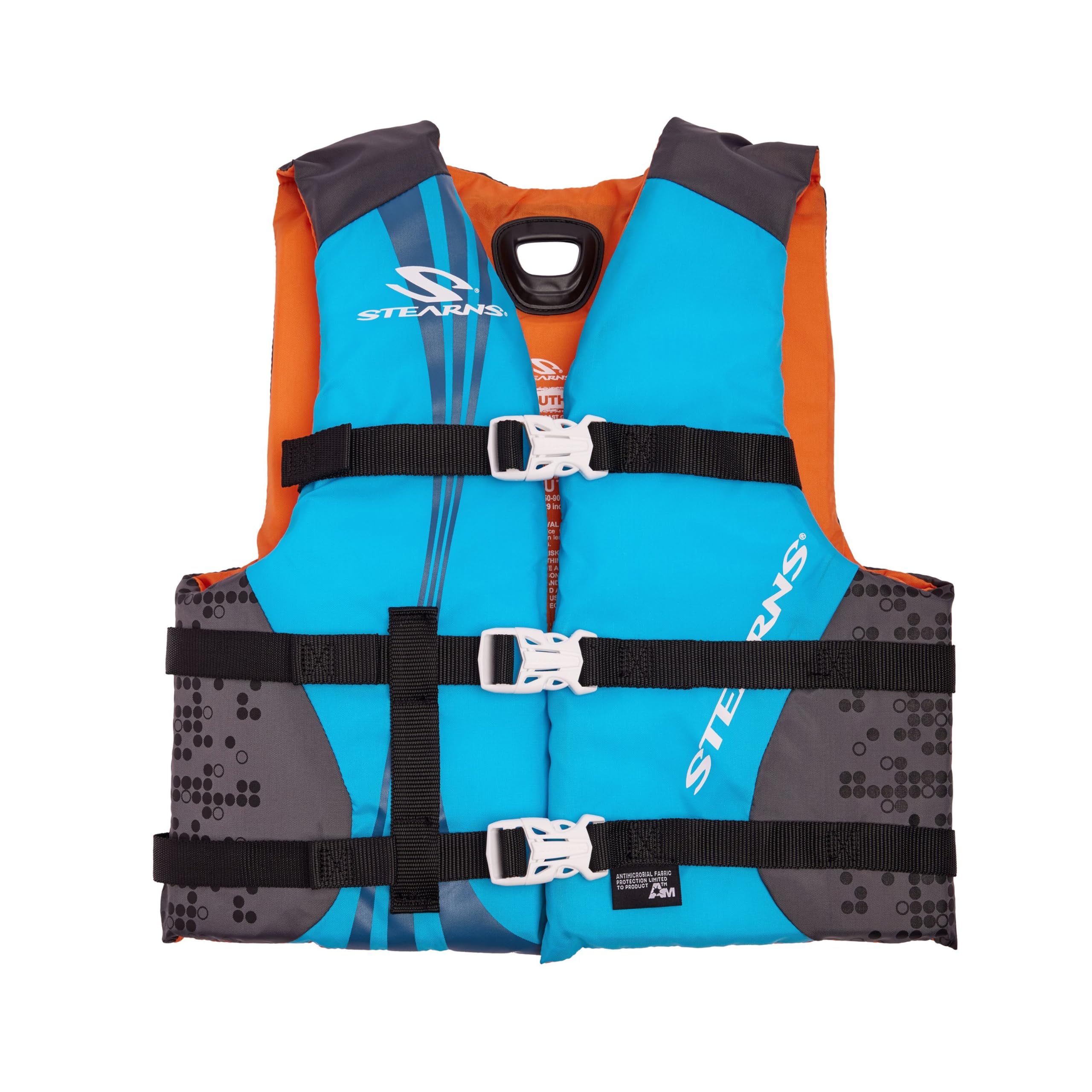
For a slimmer teen right in the middle of the 50-90 pound band, this Stearns vest is the safest bet on the list. It is USCG-approved as a Type III PFD, which means it is built to keep a conscious wearer floating face-up in calm water. The durable nylon shell takes scrapes against docks and swim platforms without tearing. At 15.2 ounces it is light enough that your teen will forget it is on between swims.
It is the crowd favorite for a reason — 4.5+ stars across 500+ owners. What wins people over is the nylon shell and stitching, which hold up season after season. The adjustable buckle closure lets you cinch the waist snug, and parents report it lands at a dependable, predictable fit for growing kids. The blue color looks sharp and stays that way.
The catch is sizing on the edges. Several buyers report the vest runs a little big, and on a very skinny chest the vest can ride up in the water. So measure your teen and stay inside the 50-90 pound band rather than squeezing them to the top. If your teen is pushing 115 pounds, look at the Connelly Teen Nylon below instead.
USCG-approved kid sizing
- USCG-approved Type III PFD for calm-water boating and swimming
- Durable nylon shell that shrugs off dock scrapes
- Adjustable buckle closure for a snug, repeatable fit
- Light at 15.2 ounces so it does not weigh a teen down
bulky shoulder fit
- Runs a little big on very slim chests — stay inside the 50-90 lb band
- Can ride up on a narrow torso if the waist strap is not cinched down
go for it if: your teen sits comfortably inside the 50-90 pound range and you want a durable, no-fuss vest for beach, pool, and lake days.
measure first if: your teen is at the very top of the band or very narrow through the chest.
2. Hardcore Coast Guard Type III PFD for Youth Child Teen Adult
The open-side paddle vest that lets a teen swing a kayak paddle without fighting fabric.
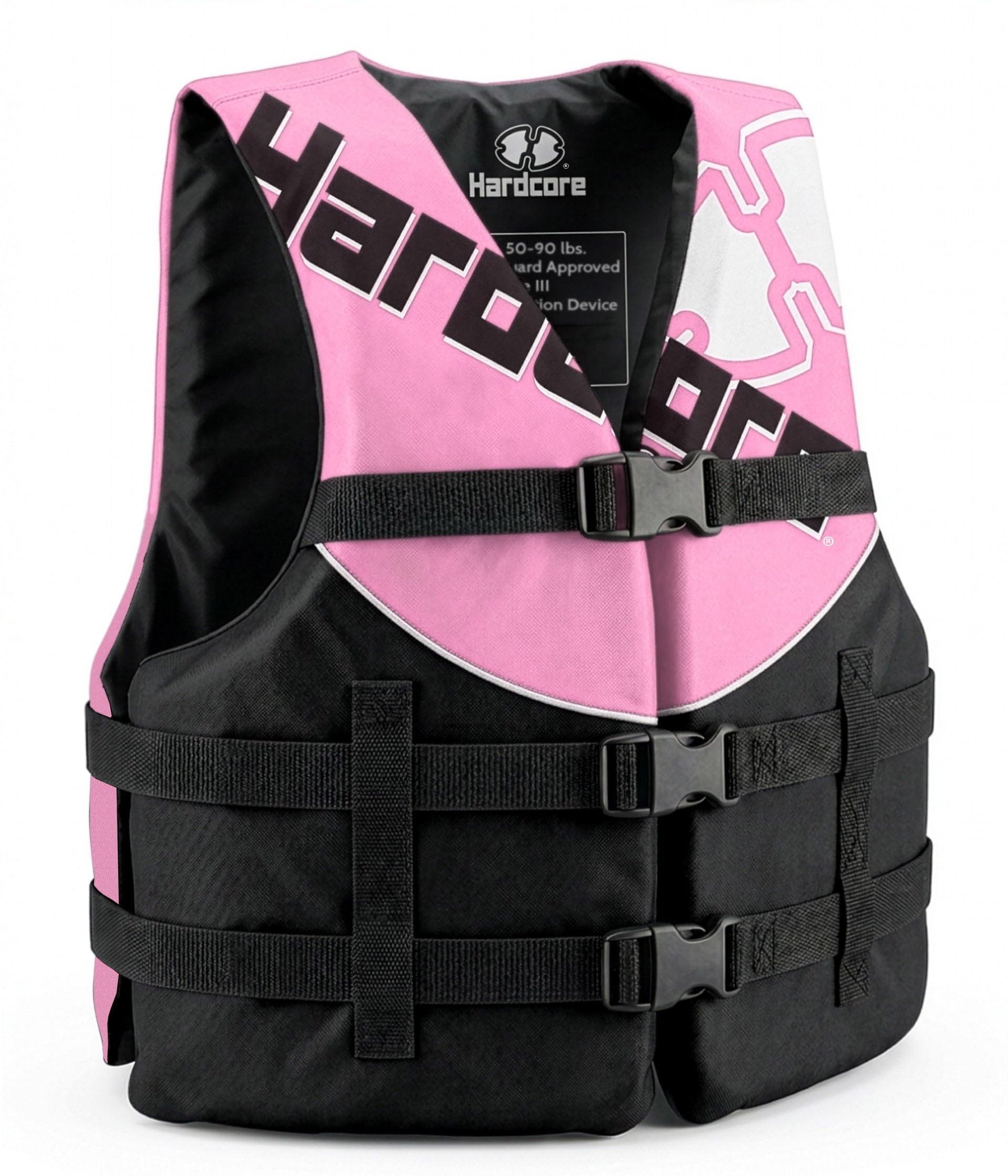
If your teen is a paddler, a wakeboarder, or a jet-ski rider, this Hardcore vest is built for the movement those sports demand. The open-side cut lets air in and arms out, so it feels less like armor and more like a light harness. It is UL listed and USCG-approved as a Type III PFD, and it uses closed-cell PE foam wrapped in a polyester Cordura shell. That foam keeps buoyancy even after a full day in the water.
The Cordura shell and stitching are what buyers praise most by a wide margin. The adjustable 1-inch straps with quick-release buckles are straightforward to dial in. This pink youth version fits the 50-90 pound band, so it runs smaller than the Stearns above. It is the budget-friendly choice of the group, and it holds its own against vests that cost more.
Comfort divides buyers: some teens wear it all afternoon without a word, while others find the open-side design stiff against the ribs. If your teen has a broader torso or runs hot, try it over a rash guard first. For a 60-75 pound paddler, though, this is the balance.
paddle-ready youth cut: open sides plus 1-inch adjustable straps keep the shell off the ribs and let arms swing free — the reason it works for kayaks and wakeboards.
snug chest fit: comfort is the mixed note in reviews, and the 50-90 pound cap means a heavier teen should look at a larger band.
pick it for the paddle: a lightweight teen who kayaks, tubes, or rides a jet ski and needs a vest that moves with them.
look elsewhere if: your teen is nearing 90 pounds or finds open-side seams stiff on a long day.
3. Onyx All Adventure Youth Life Jacket
Seven hinged panels turn a stiff foam vest into something a teen can actually paddle in.
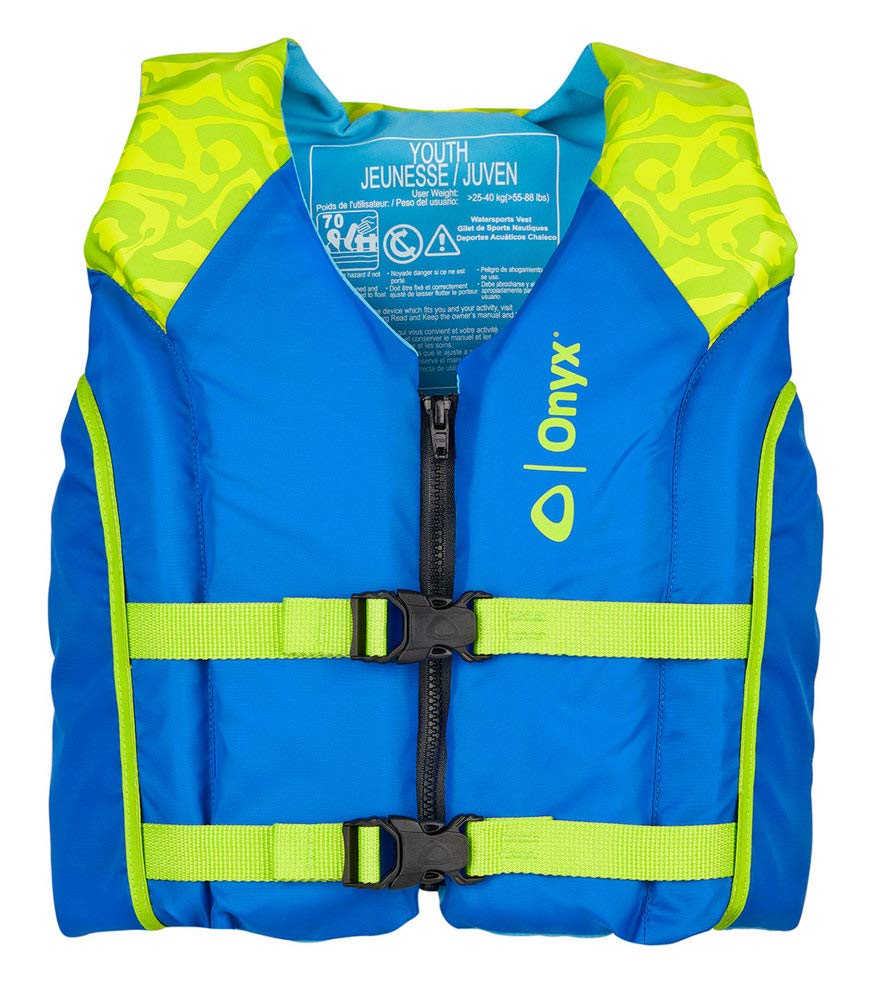
Seven segmented hinge points is the number that sets the Onyx apart. Each hinge is a cut in the foam that lets the vest flex with your teen’s torso, so their arms swing through a full paddle stroke without the vest pulling up at the shoulders. This is a canoe, kayak, SUP, and fishing vest first — but it also carries USCG approval for tubing, skiing, and personal watercraft. It is approved by both the U.S. Coast Guard and Transport Canada.
A zippered front with waist belts is what keeps this vest from riding up. The zipper closes the shell against the chest, then the belts cinch the waist. Bright colors boost visibility on the water, which matters when a teen is bobbing beside a moving boat. At just 12.8 ounces it is the lightest vest on this list, so it barely registers on a long paddle.
Its 55-88 pound band runs a touch narrower than the Stearns and Hardcore. Weighing your teen and comparing their chest is more important here than usual. If they land at 80 pounds and a mid chest, the Onyx delivers real mobility. Push past 88 and the fit stops being reliable.
built for the stroke: the seven hinge points and zippered front make this the most paddle-friendly vest here for a 55-88 pound teen.
mind the ceiling: 88 pounds is a hard cap, so a teen at the top of the band needs a larger vest.
4. Connelly Boys Life Vest

The Connelly cut that quietly lands right on eleven and thirteen-year-old bodies.
The Connelly boys vest is the one to reach for when your teen is a tween boy in that awkward eleven-to-thirteen stretch. It is built with vertically hinged segmentation, which is a series of flex points in the foam that let the vest bend with the torso while keeping the flotation panels where they belong. Belt closures hold the shell in place, and the fit lands squarely on growing boys rather than an adult frame.
The hinged foam and belt closures hold up over repeated seasons on the boat. Fit is the close second. Reviews specifically single out eleven and thirteen-year-old boys as the balance. Parents like that it just works, run after run, without fuss.
The uncomfortable part is the buckles. Some buyers find the clips and snaps stiff to open, especially for a younger child rushing to get in the water. Rides up at the neck are the other note on very slim or very tall boys. Neither is a defect — it is a fit note. A tween squarely in that age band will be fine.
tween sizing read: hinged foam and belt closures make this one of the few vests tuned to the eleven-to-thirteen boy body rather than an adult shape.
buckle placement note: the clips can be stiff to snap open, and the vest can ride up at the neck on a very slim frame.
right for a tween: an eleven to thirteen-year-old boy who needs a vest that fits his build and lasts multiple seasons.
think twice if: your child is very slim through the neck or struggles with stiff clips.
5. Connelly Teen Nylon Life Vest, 90 to 120 lbs

The rare vest built for the 90-120 pound teen band, where most families run out of options.
Most youth vests stop floating at 90 pounds. This Connelly starts there. It is rated for 90 to 120 pounds, making it the pick for a teen who has outgrown the kid vest but is not ready for an adult cut. That is a real gap in the market, and this vest fills it. It is U.S. Coast Guard approved, with hidden belts for mobility and quick-release buckles plus adjustable straps so you can tune the fit.
At 16 ounces it is heavier than the Onyx — the Onyx comes in at 12.8 ounces — but carries more flotation capacity for a bigger body. The 90-120 pound range is also 30 pounds wider than the 88 pound ceiling on the Onyx. That extra ceiling is why parents of heavier teens land here. Fit and comfort are what buyers praise; the purple-and-blue color scheme is a small bonus.
The one wrinkle: it runs small for its stated band. Plenty of owners mention the sizing is off, so a 115-pound teen may need to size up despite being inside the range. Measure the chest and check the fit chart before you commit. If your teen is right at 100-110 pounds, this vest is the correct home.
for the 90-120 band: a teen who has outgrown a 50-90 pound vest and needs a real step-up in capacity.
size up one notch: this vest runs small, so a teen at the top of the band should not assume the listed size fits.
6. Stohlquist Escape Youth Lifejacket
Eight adjustment points mean this vest grows with a teen instead of getting outgrown.
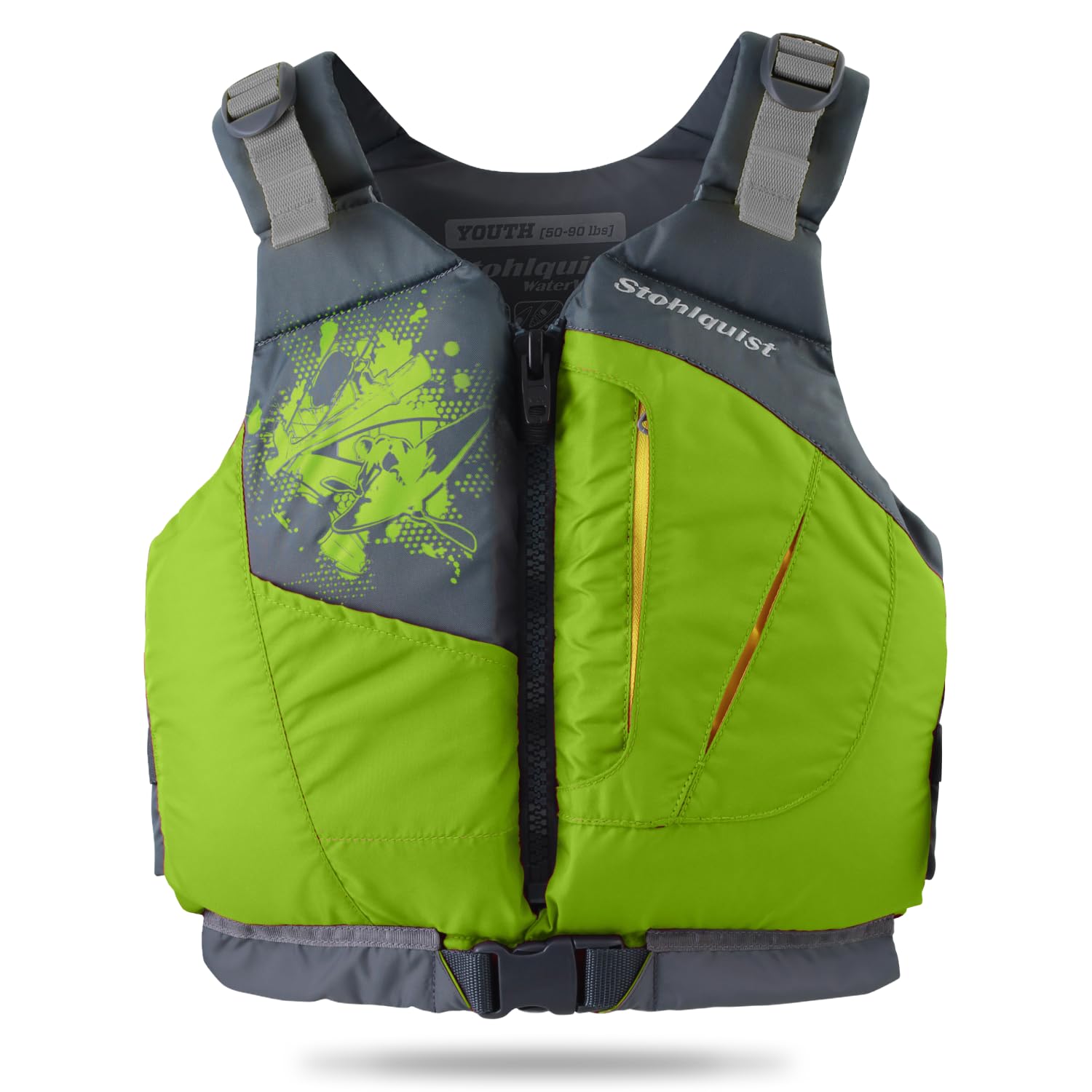
Eight points of adjustability is the number that makes the Stohlquist Escape stand out. Those eight buckles and straps at the sides and shoulders let you dial the fit to a teen’s exact torso, then tighten it further as they grow. That matters for a vest you want to keep more than one season. The soft, low-profile buoyancy foam is built to hug the body, and forward-pull side adjusters let your teen cinch the fit themselves.
The design leans toward long days. There is a zippered pocket for snacks or a phone in a dry bag, and a nylon inner flap wraps the waist buckle so it does not rub. The shell is a mix of nylon, Oxford fabric, and neoprene for a soft feel at the shoulders. The lime color is easy to spot on the water. Buyers praise the eight-point adjustability most, with the soft foam right behind it.
Stability is the honest trade-off. Some teens float without issue, others report the vest drifting up in the water. The foam can feel bulky on a very small frame. For a growing teen who needs a vest to last more than one summer, though, the eight adjusters are worth the compromise.
growth-spurt friendly fit
- Eight-point adjustability fits a growing torso and extends useful life
- Soft, low-profile buoyancy foam hugs the body
- Zippered pocket and nylon waist flap for comfort on long days
- Mixed nylon, Oxford, and neoprene shell for shoulder softness
mixed buyer reviews
- Stability is mixed — some report the vest riding up in the water
- Foam can feel bulky on a very small frame
best for a growth spurt: a teen mid-spurt who needs a vest that tightens down as their body changes.
skip the smaller sizes: a slight-built teen may find the foam bulky despite the adjusters.
7. HyperLite Elite Infant/Toddler, Child & Youth Life Jackets
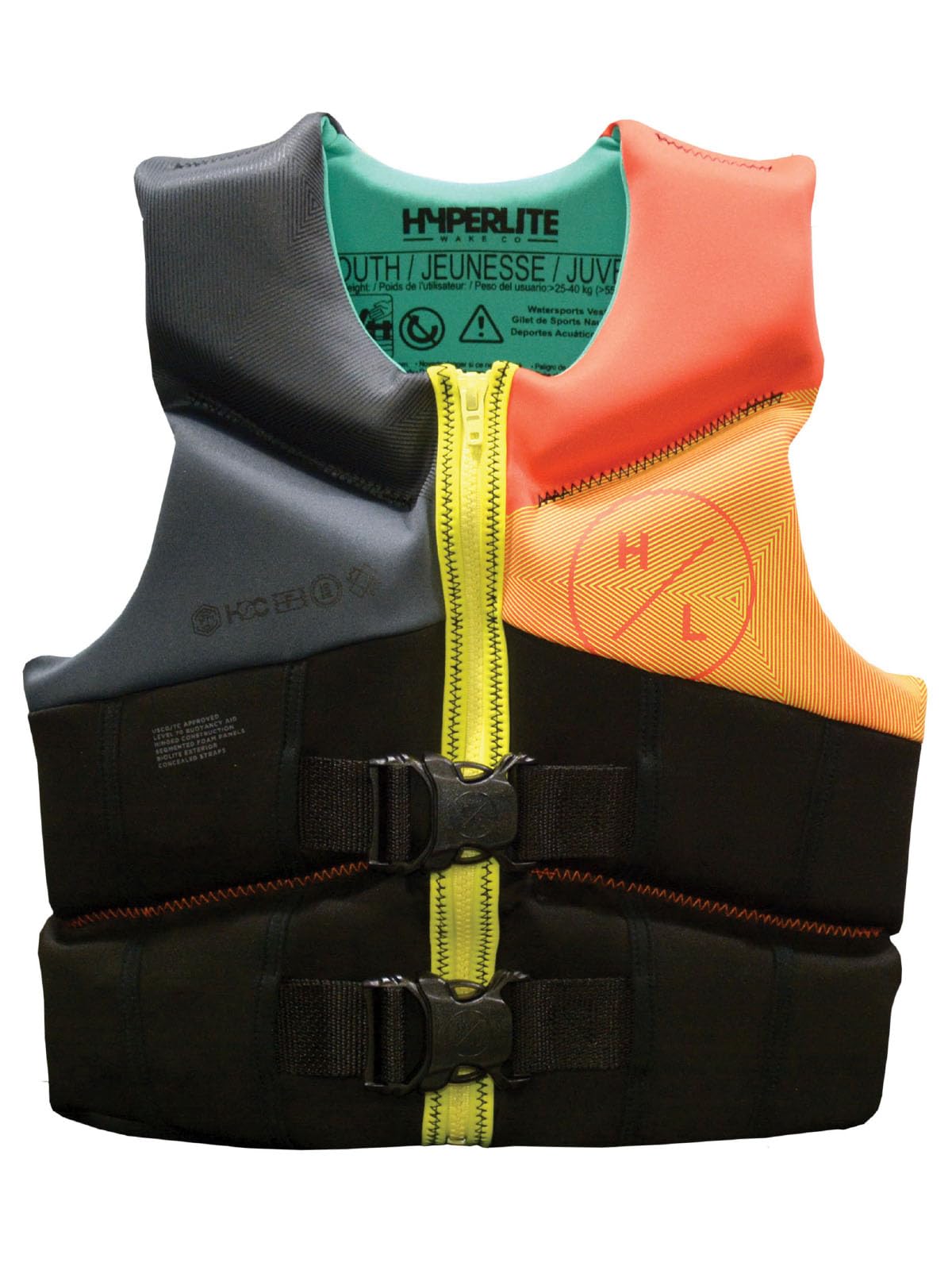
A wakeboard-first youth vest with hinged foam and oversized arm openings.
HyperLite built this youth vest for the active rider, and the design reflects that. Hinged construction with a lightweight profile lets the foam bend as your teen moves, and oversized arm openings give the shoulders room to swing. It is rated for 50-90 pounds, and the closure is a zipper plus buckles for a snug, layered fit. This is the vest to consider if your teen wakeboards, tubes, or paddles hard.
The materials are the standout: Fluid Flex, True Fit, and Biolite technologies — those are the maker’s labels for the foam and lining construction that keep the vest breathable and flexible through a long day on the water. The lining is neoprene, which is soft against wet skin. The vest weighs 1.4 pounds, so it has real substance while staying wearable. Buyers praise the hinged foam and oversized arm openings most by a wide margin, and the bright colors hold up without fading.
Sizing is the honest caveat. Several customers note the vest runs slightly too big, so a small-framed 55-pound teen may need the smaller end of the band. Check their weight against the 50-90 pound ceiling before ordering. For an athletic teen right in the middle, this vest delivers.
for the active teen: a wakeboarder or tuber in the 50-90 pound band who needs stretch and shoulder room.
watch the sizing: the vest runs slightly big, so a lighter teen should not size up.
8. Full Throttle Youth Rapid Dry Neoprene Life Jacket
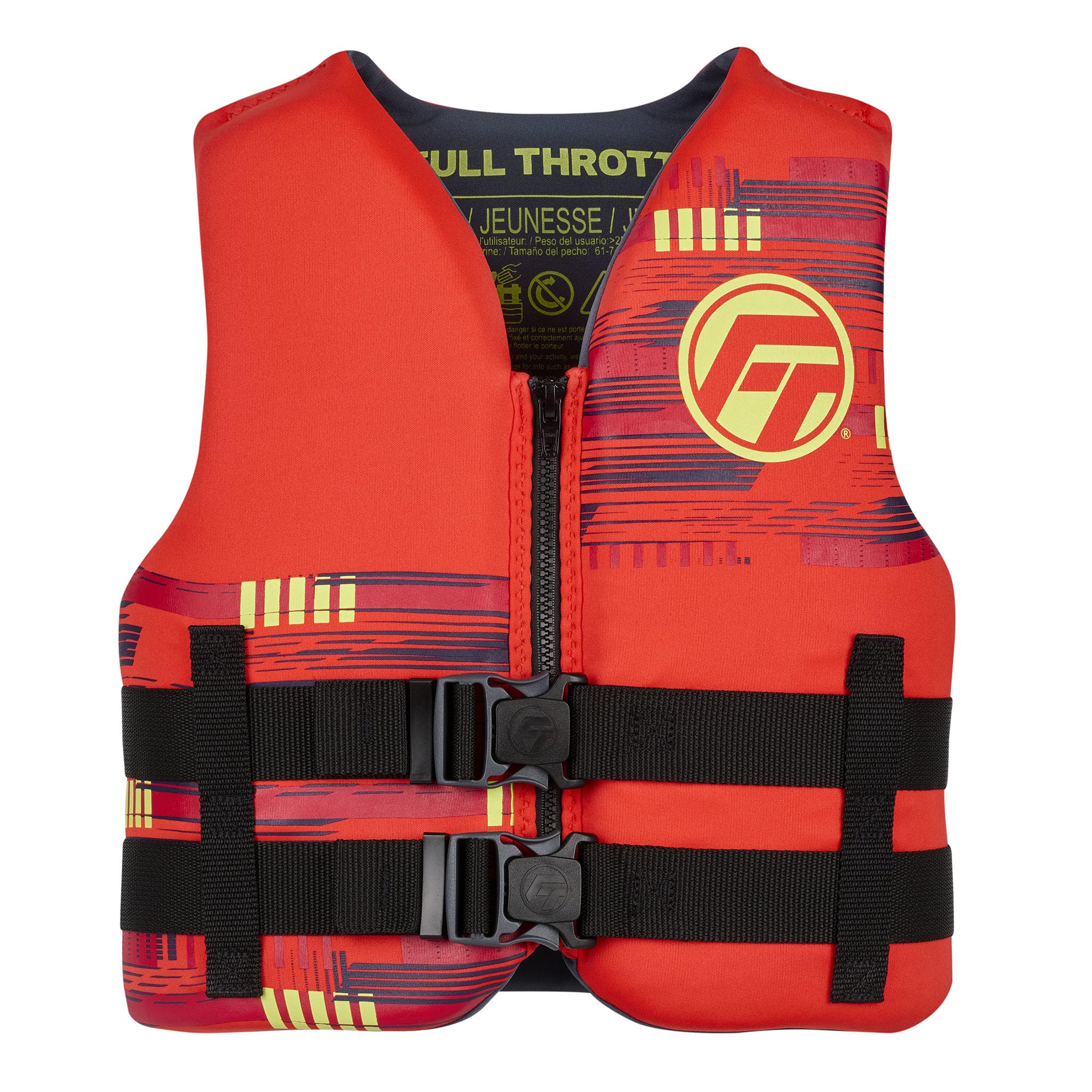
Neoprene that sheds water fast, so the vest is dry before the next boat run.
Rapid-Dry neoprene is the idea that sells this vest. The material is built to shed water quickly, so it dries faster between runs and does not stay soggy in a gear bag. It has a four-way stretch for mobility that most nylon vests cannot match. Full Throttle also double-approves it — U.S. Coast Guard and Transport Canada — which matters if you boat across the border. It is rated for 55-88 pounds.
The hardware is thoughtful. A front zipper closes the shell, adjustable waist belts cinch it down, and the Glide Loc buckle is designed to snap shut and release with one motion. Large armhole openings let your teen move freely. At 11.2 ounces it is the second lightest vest on this list, behind only the Onyx at 12.8 ounces. The Glide Loc buckle and four-way stretch neoprene are what buyers praise; design gets zero negative mentions.
The catch: sizing runs small. Plenty of reviewers point out the vest feels tight, so a 75-88 pound teen may need the larger end of the band. Neoprene also holds warmth, which is fine for a cool lake but can feel toasty on a hot July day. For an 55-75 pound teen who wants a stretchy, quick-drying vest, it works well.
neoprene rapid-dry shell: four-way stretch neoprene (fabric that stretches in all directions) and the Rapid-Dry material deliver the quickest re-dry in this group — useful for back-to-back boat runs.
stiff arm openings: sizing runs tight and neoprene holds heat, so measure before ordering and favor it for cooler water.
buy it for the material: a teen in the 55-88 pound band who wants stretch and fast drying on an active boat day.
reconsider if: your teen is at the top of the band or runs hot in warm weather.
Know the Specs
Weight Range And Chest Measurement
The weight band on the vest — 50-90 pounds for youth, 90-120 pounds for teen — is the manufacturer’s guide for who it will float correctly. Chest measurement is the second check. A vest cut for a 50-90 pound wearer is sized for a narrower torso, so a broad-shouldered teen may need the larger band even if the scale lands lower.
Type III Approval
A Type III personal flotation device is designed to keep a conscious wearer floating face-up in calm water. That is the standard for boating, tubing, and paddling. The U.S. Coast Guard and Transport Canada labels certify the vest passed flotation testing — they do not tell you it will fit a specific body. You need the approval and the fit, working together.
Common Questions
What weight range should I pick for a teenager?
Will a youth vest fit a slim, tall teenager?
Why does my teen’s life jacket ride up around the neck?
Is a Type III PFD safe for tubing and wakeboarding?
Neoprene or nylon — which shell is better for a teen?
Can a teen wear the same life jacket for a whole season?
How do I know if the vest is actually snug enough?
Is Transport Canada approval different from U.S. Coast Guard approval?
What should I do if the vest is dried out and stiff between seasons?
The Bottom Line
For most families, the teen life jacket winner is the Stearns Life Jacket for Kids 50-90 Pounds because it pairs a USCG-approved Type III build (a vest approved by the U.S. Coast Guard for general boating) with a durable nylon shell and a fit that lands reliably for teens inside the 50-90 pound band — and the crowd of buyers backs it up. If your teen has outgrown that band and is pushing toward 120 pounds, the Connelly Teen Nylon Life Vest is the only pick here rated for 90 to 120 pounds. And for the teen who paddles, tubes, or wakeboards hard, the Onyx All Adventure Youth and its seven hinge points (flexible joints that let the vest move with the body) are the mobility-first choice. Whichever you pick, size it by weight and chest first, then cinch it snug — that is what keeps a vest working.
How we choose
We do not accept paid placement. Every pick is matched to a real buyer and a real use-case; we do not hands-on test units.
Sources
Specifications: manufacturer listings and product documentation. Review insights: verified customer reviews, as of November 2026. Pricing: not shown on this page (it changes often); check the current price via the retailer link.
As an Amazon Associate, Tactical Gear Guy earns from qualifying purchases. This does not affect which products we feature.