Specs are compiled from manufacturer listings and verified buyer reviews and can change over time — please confirm the key details on the product page before buying.
A strut channel frame usually fails at the joint, not in the channel itself. A strut channel bracket is the small steel corner piece that ties two runs of channel together — and if it is thin, welded badly, or drilled with holes that do not line up, you get a sagging rack or a hoist that creeps. The short answer: buy brackets made from 3/16-inch steel, check the hole spacing against the bolts you already own, and pick a one-piece cold-bent corner instead of a welded gusset wherever the load is heavy. Each pick below is listed under the job it does best, so you can match the fitting to your joint in a couple of minutes.
This guide is built by comparing the manufacturers’ published specifications and the patterns across verified customer reviews, so you get each pick’s real strengths and trade-offs instead of marketing spin.
Thickness, hole size, and hole spacing decide whether a bracket actually fits your channel, so this guide walks through those numbers and then matches each fitting to a real job. Here are the strut channel bracket options worth your time, each matched to the joint it handles best.
Top Picks
How To Choose The Best Strut Channel Bracket
Almost every buying mistake here happens before the bracket is ever bolted on. You order a fitting that is thinner than the channel wall, or the pre-drilled holes sit at a spacing that fights your existing bolt holes, or you buy a welded corner for a load that wants a solid bent piece. Get these four checks right — thickness, hole diameter, spacing on center, and angle — and the bracket bolts on the first time.
Start with steel thickness, not pack count
Thickness is what the bracket leans on when weight pulls against it — 3/16-inch steel is the working standard for 1-5/8-inch channel, and thinner 1/8-inch fittings flex sooner. A thicker bracket costs more per piece, but it is the difference between a joint that holds and a joint you redo. If the listing does not state a steel thickness in inches or millimeters, skip it and buy from one that does.
Match the hole diameter and the spacing on center
Your bolts decide this one. Most fittings here use 9/16-inch holes for 1/2-inch bolts, and the holes are spaced on center — meaning from the middle of one hole to the middle of the next — at roughly 1-3/4 to 1-7/8 inches. That spacing has to agree with the slots in your channel. A bracket with the wrong spacing means drilling steel on site, which is exactly the job you bought a pre-drilled fitting to avoid.
Pick the angle that matches the joint
A 90-degree L bracket squares a corner. A 45-degree bracket braces a run that meets at an angle. A multi-hole wing fitting spreads the fasteners across a wide plate for three-way connections and heavier frames. Ordering the right angle up front saves you from forcing a 45-degree bracket into a 90-degree corner, where the joint never sits flush.
Decide between bent steel and welded steel
A gusseted L bracket adds a triangular brace across the corner, and the weld quality of that brace is what you are really judging. A one-piece cold-bent wing bracket skips the weld entirely, so there is no brittle seam to crack or start rusting. Both hold load; pick the gusseted weld for compression corners and the cold-bent wing for frames that flex or sit outdoors.
Side-by-Side Comparison
The three spec columns below are the same dimension on every row, so you can scan thickness against thickness and hole pattern against hole pattern without hunting.
| Model | Best For | Steel Thickness | Pack Count | Hole Size | Amazon |
|---|---|---|---|---|---|
| OTTFF 4 Pack 90 Degree Gusseted L Bracket★ Best Overall | Heavy corners and hoist mounting | 7/32″ | 4 Count | 9/16″ | Amazon |
| qurupizu 10 Pack 2-Hole L BracketBest Value | Contractors buying in bulk | 3/16″ | 10 Count | 1/2″-13 bolts | Amazon |
| LAICCUM 10 Pack 2 Holes 90° FittingPremium Pick | Solar and seismic bracing | Thicker than 3/16″ | 10 Count | 9/16″ | Amazon |
| heneng 6 Pack Strut Flat L Bracket | Long-reach flat plate joins | 3/16″ | 6 Count | 9/16″ | Amazon |
| qurupizu 8 Hole 90 Degree Wing Bracket | Three-way and right-angle frames | 3/16″ | 4 Count | 14mm | Amazon |
| OTTFF 6 Pack 45 Degree Angle Bracket | Angled bracing runs | 7/32″ | 6 Count | 9/16″ | Amazon |
| Shimeyao 4 Pcs 8 Hole Double Corner Wing Fitting | Multi-way structural frames | 5 mm | 4 Count | 14 mm (9/16″) | Amazon |
| heneng 12 Pack L Bracket Hardware | Big projects on a per-piece budget | 3/16″ | 12 Count | 9/16″ | Amazon |
Detailed Reviews
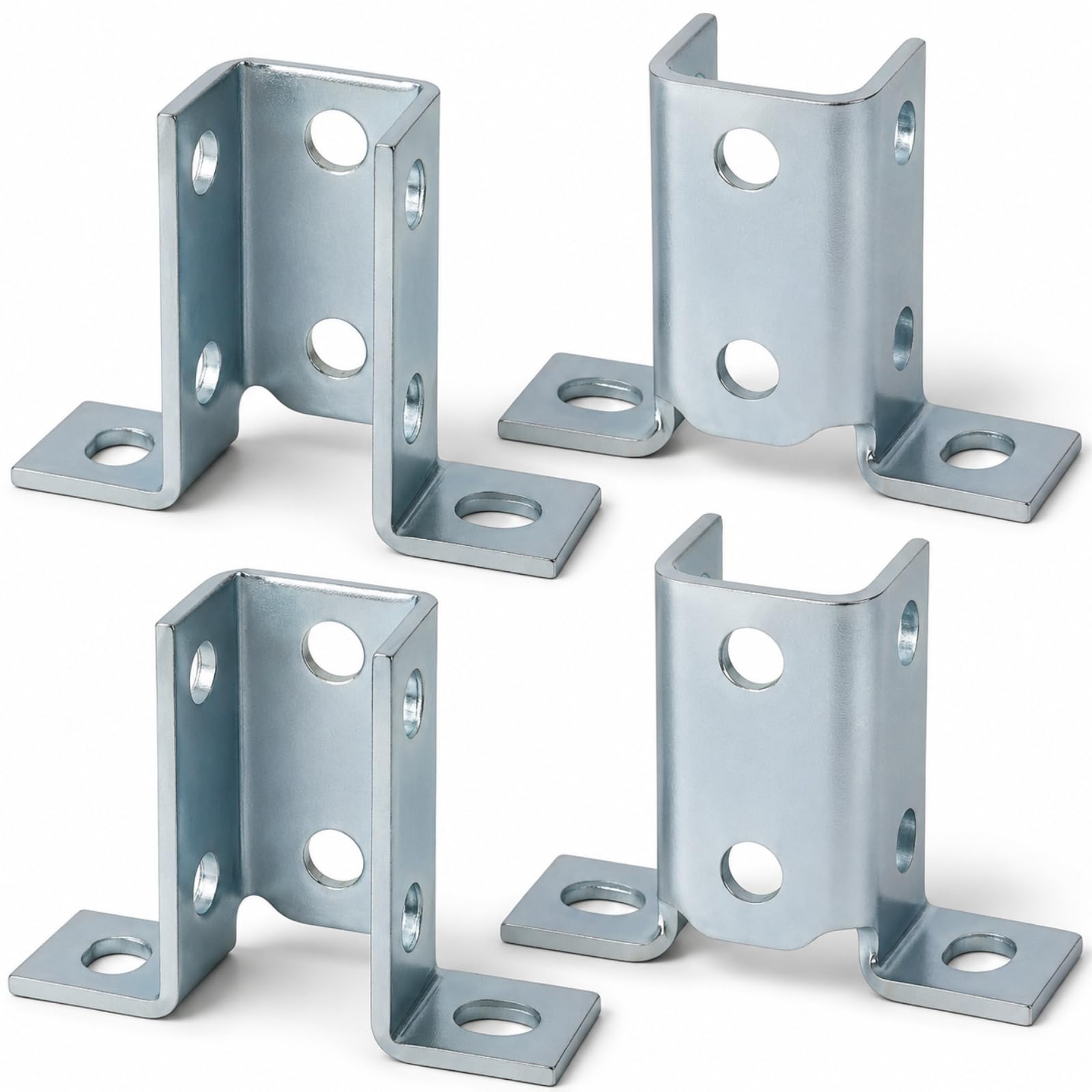
1. OTTFF 4 Pack 90 Degree Gusseted L Bracket
Our pick — 4.5+★ from 80+ verified ratings; the strongest balance of quality and price.
The 7/32-inch corner that carries a hoist without flinching.
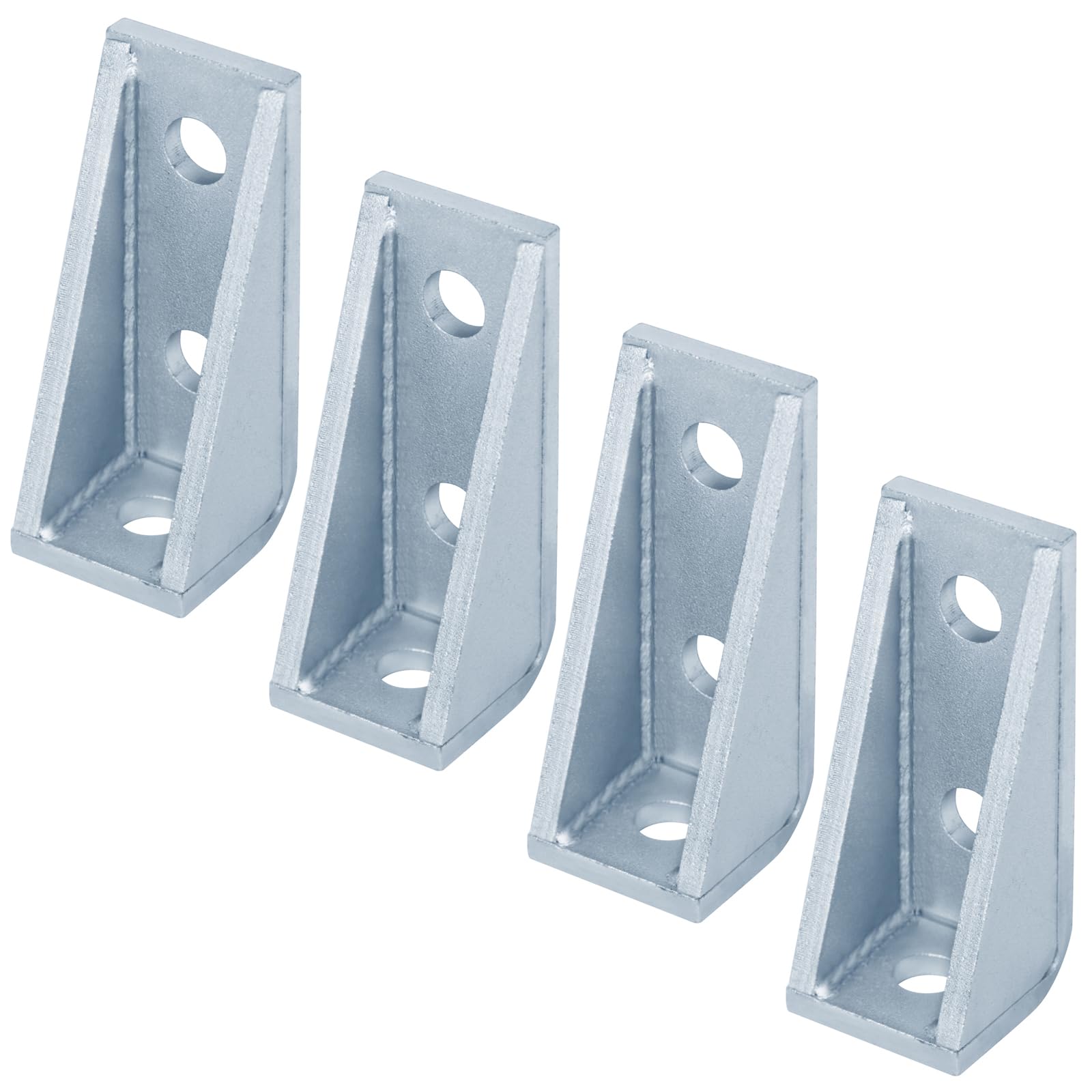
If you are hanging something that weighs real money, the thickness number is the one that matters. This bracket is 7/32-inch thick low carbon steel — thicker than the 3/16-inch fittings that make up most of this list. That extra steel is why it holds up under a suspended load. Owners who bolted these in for ceiling hoists and lifts keep using the same two words: strong and well made. The welds on the gusset hold up too, which is the part that usually fails first on a corner bracket.
Fitting is straightforward. Each of the 4 brackets carries 3 pre-drilled holes at 9/16-inch diameter for 1/2-inch bolts, spaced 1-7/8 inches on center, and the whole thing mounts to standard 1-5/8-inch strut channel. The electro-galvanized finish keeps the blue-bright steel from rusting in a garage or a damp basement. It is a 4-pack, which means you get one corner done properly or spread four corners across a small frame.
Here is the part worth saying out loud: a gusseted corner is strongest in compression, so orient the small end up where the load pushes down into the bracket rather than pulling it open. Get that right and it does not budge. The count is the trade-off — 4 brackets for a job that wants ten means ordering twice, which is why the bulk picks sit further down this list.
What makes it the pick
- 7/32-inch low carbon steel out-thicknesses the 3/16-inch fittings around it
- Gusseted corner with welds that hold under a hanging load
- 3 holes at 9/16-inch, spaced 1-7/8 inches on center, fit 1-5/8-inch channel cleanly
- Electro-galvanized finish resists rust indoors and out
The honest trade-offs
- 4 pieces only — a big frame needs more than one order
- Strength depends on mounting it small-end-up in compression
- Bolts are not included, so factor in your own 1/2-inch hardware
Reach for this if: you are mounting a hoist, a lift, or any corner where the load is heavy and you only need a handful of brackets.
Order two packs instead if: your frame needs more than four corners, because this listing ships 4 Count.
2. qurupizu 10 Pack 2-Hole L Bracket
Ten corners, no material shaved — the per-piece buy for a whole rack.
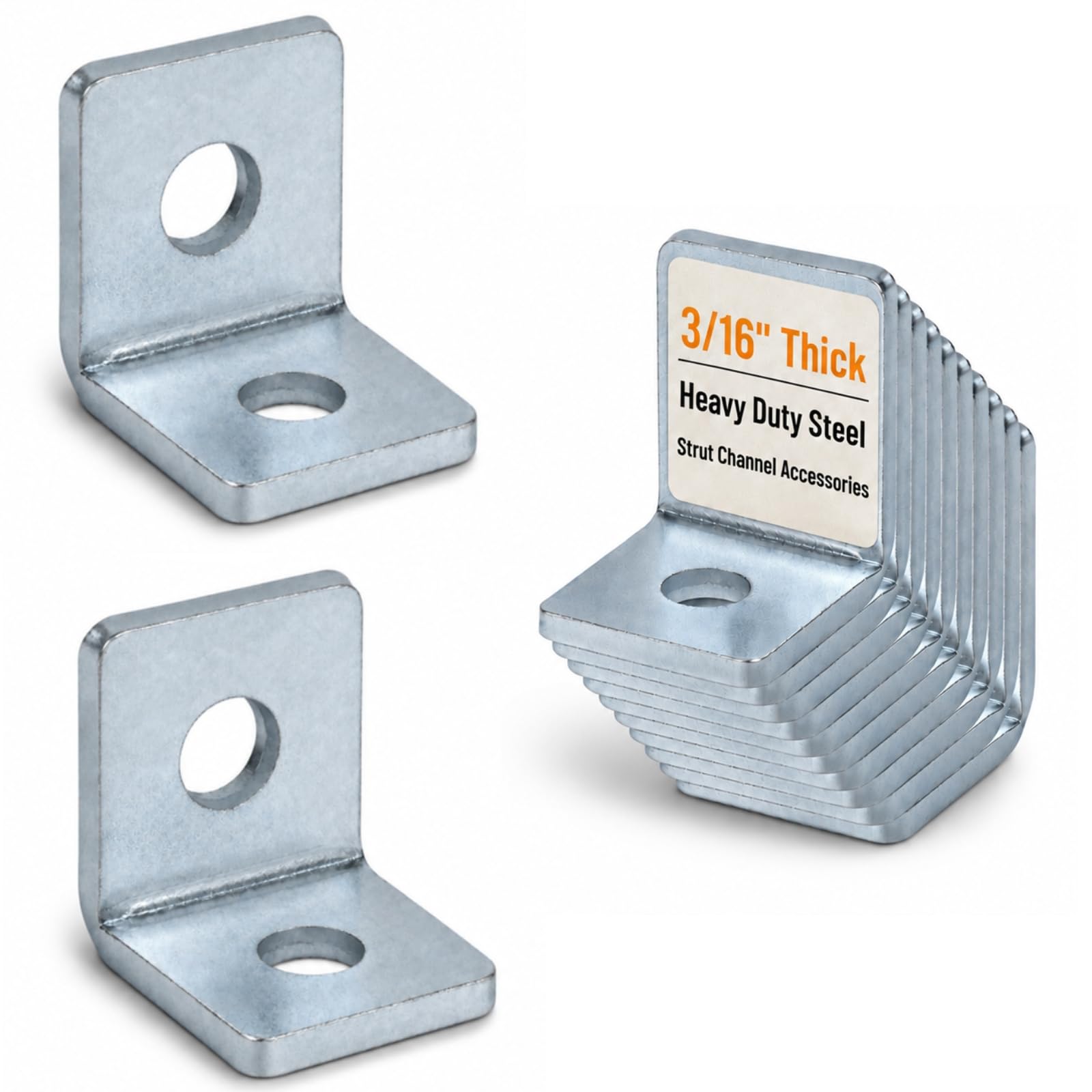
Where the top pick covers four corners, this pack covers ten. For a contractor running a tray, a rack, or a run of HVAC supports, that count is the whole argument. Ten versus four is the biggest pack gap on this list, and it lands at a per-piece figure that undercuts buying singles from a big box store. The steel is honest 3/16-inch with no material reduction, finished in galvanized zinc so it stands up outdoors as readily as inside a building.
The two-hole design is tune for alignment — the holes are spaced to drop straight onto 1/2-inch-13 bolts without fighting you. Edges come smooth and polished, which sounds like a small thing until you have handled a stamped bracket with a burr on it during a long install. These are meant to be handled on job sites, and they behave that way.
It is a simple fitting: 90-degree corner, two holes, standard 1-5/8-inch strut channel fit. What it is not is a heavy wing fitting for a three-way junction — for that you want a multi-hole bracket. If your job is squaring corners in volume, though, this is the pack that makes the math work.
Volume math: ten 3/16-inch galvanized corners per pack makes this the cheapest way to square a full frame without buying the same four brackets three times over.
Where it stops: two holes per bracket keeps it simple and light — a wide three-way connection needs a bigger plate, not this fitting.
Built for: the installer or serious DIY builder who needs ten matching corners and cares about per-piece value.
Step up when: your corner needs more than two fasteners across it, in which case a wing bracket spreads the load better.
3. LAICCUM 10 Pack 2 Holes 90° Fitting
Pickled steel with a clean surface — built for solar and seismic jobs.
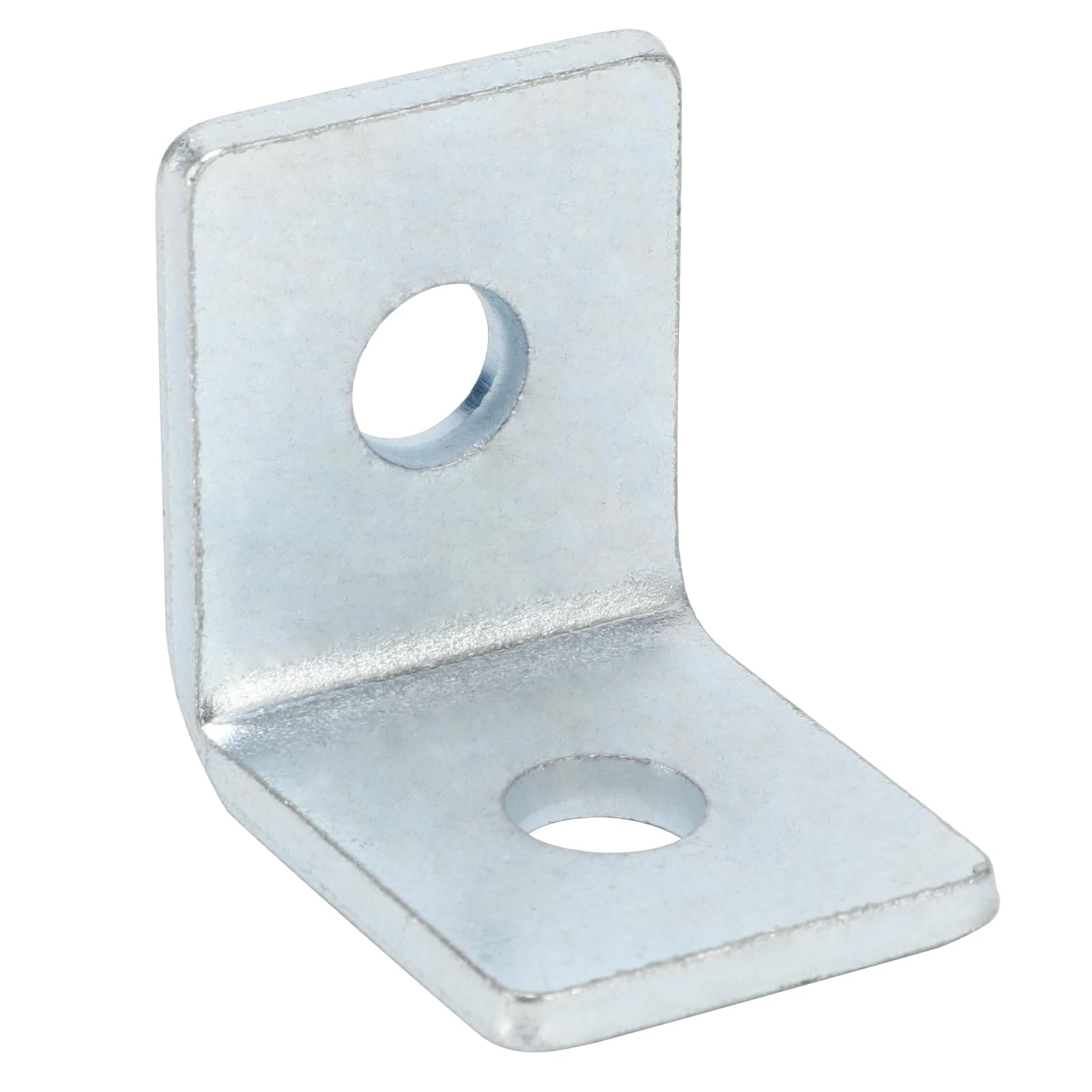
The material process is what separates this pack. The plates are hot-rolled, pickled, and oiled steel, and the pickling strips the mill scale off so the surface is smooth before the electro-galvanized coating goes on. A smooth surface is what lets the coating bond properly, which is the reason these are pitched at solar panel support, pipe and duct support, and seismic reinforcement — jobs that sit outdoors or need to stay put under stress. The listing states the steel is thicker than 3/16-inch, so it leans toward the heavy end rather than shaving material.
Each bracket carries 2 holes at 9/16-inch diameter, sized for 1/2-inch by 15/16-inch hex head cap screws and 1/2-inch nuts. Plan your hardware order, because nuts and bolts are not in the box. Owners put these up on trailer strut runs for ratchet strap tie-downs and describe them as heavy duty that attaches perfectly to the channel — the kind of fit you want when a strap is going to yank on it. Bulk buying here beats the big box store per piece when a whole project needs brackets.
Two brackets out of a ten-pack never getting used is a small waste, but it is a waste, and the hardware being separate adds a second order. That is the fair cost of buying this grade of steel in bulk.
Why the finish matters: pickled-then-galvanized steel takes a cleaner coating, which is the reason this pack is aimed at solar and seismic work where the joint has to survive weather and stress.
Budget in the bolts: the 9/16-inch holes take 1/2-inch cap screws and nuts that ship separately — size your hardware order before the brackets land.
Choose it for: solar racks, duct supports, and seismic bracing where the coating and the steel grade earn their keep.
Not the one for: a quick two-corner repair — a 4-pack covers that with less leftover stock.
4. heneng 6 Pack Strut Flat L Bracket
A flat plate that reaches 3-1/2 inches down the channel leg.
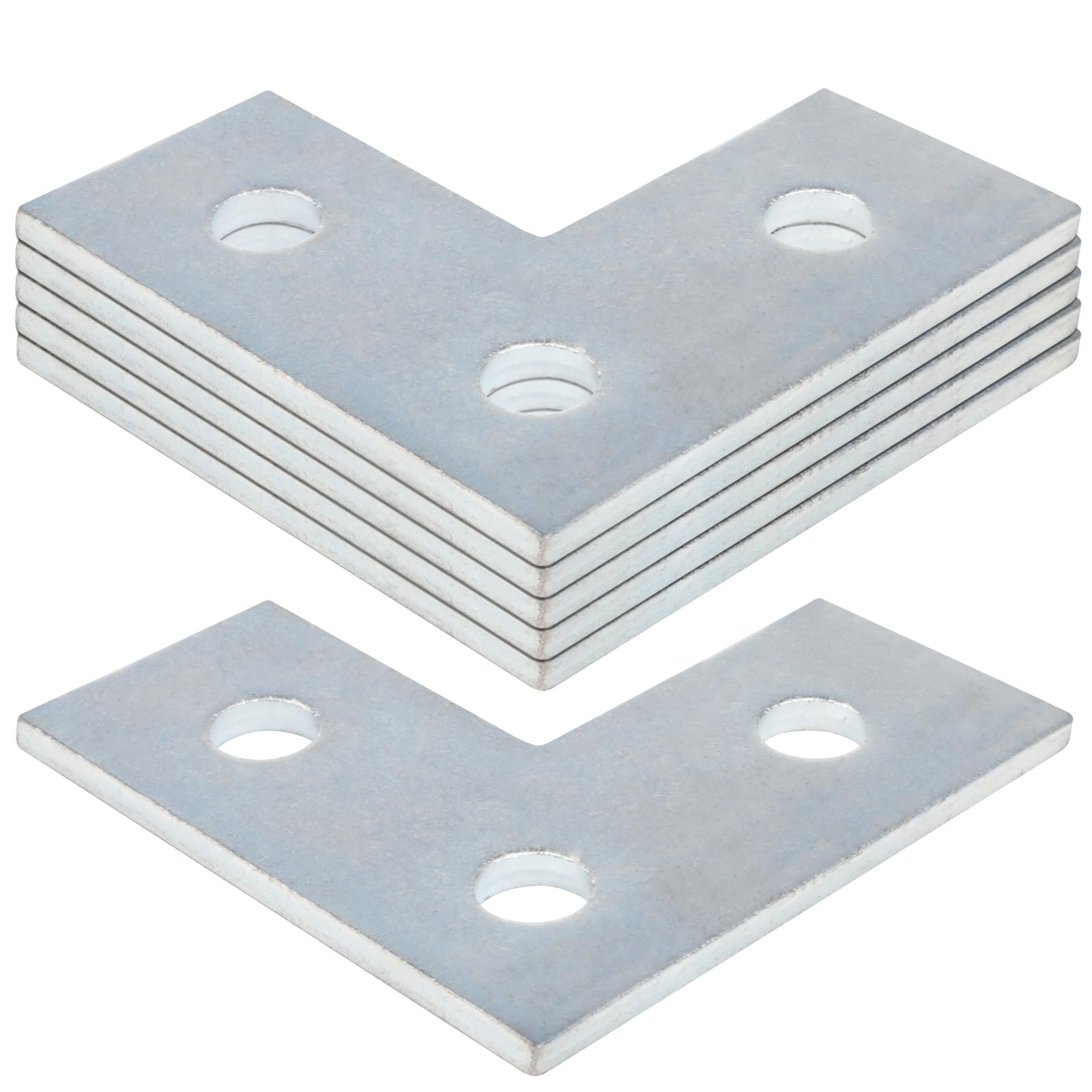
Most brackets on this list are short, square-ish corners. This one is a flat plate that runs long — 3-1/2 inches of length against a 1-5/8-inch width. That extra reach matters when you need to tie a channel leg down along a wall and want the fasteners spread out instead of bunched at the corner. Spread fasteners resist twisting better than clustered ones, which is why flat plates get used where a channel needs to sit tight against a surface.
Three pre-drilled holes at 9/16-inch take 1/2-inch bolts, spaced 1-7/8 inches on center and lined up to fit standard 1-5/8-inch channel. The steel is 3/16-inch carbon steel with an electro-galvanized finish, and the 6-pack gives you enough plates to work a run without over-buying. Bolts are not included, so match your hardware before you start.
The catch with a flat plate is that it is not a corner bracket — it does not gusset a joint the way the top pick does. It fastens flat against a surface; it does not brace a 90-degree turn. If your job is a flush wall mount, this is the right shape. If it is a corner under load, look elsewhere on this list.
Why the shape wins
- 3-1/2-inch length spreads fasteners further than a short corner bracket
- 3 holes at 1-7/8-inch spacing clamp a channel leg firmly to a surface
- 3/16-inch carbon steel with electro-galvanized rust protection
- 6 plates give a full run without leftover stock
Where it falls short
- Not a gusseted corner — this plate will not brace a 90-degree joint
- Bolts for the 1/2-inch holes ship separately
- Only useful where a flush mount makes sense, not for free-standing frames
Works best on: wall-mounted channel runs where a long flat plate can spread the load across the surface.
Wrong tool for: a corner that needs bracing, since the flat plate carries no gusset.
5. qurupizu Strut Channel 8 Hole 90 Degree Wing Bracket
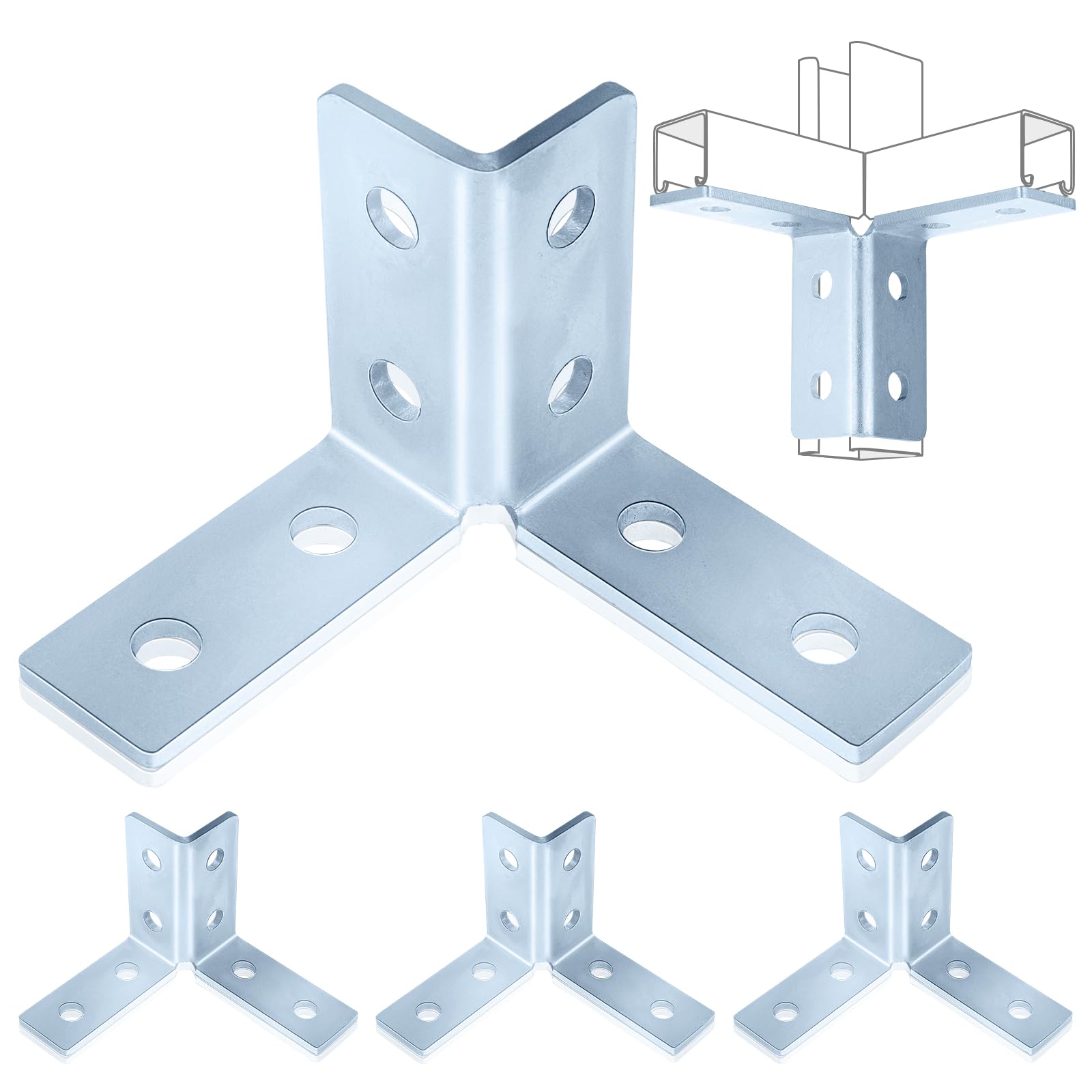
Eight holes and no weld seam — a corner you can bolt in any direction.
Here is a structural idea worth knowing: this bracket is bent from one piece of steel, not welded from two. The maker uses a cold-bending process, so there is no weld seam to crack under load and no seam edge to start rusting. On a corner that sees vibration or weather, that is a real advantage over a welded fitting. The wing shape adds rigidity across the corner, and the 8 holes give you fastening options on both vertical and horizontal planes.
The numbers are 3/16-inch thick galvanized steel, holes at 14mm to fit standard 1/2-inch bolts, and a 3-5/8-inch by 1-5/8-inch by 1-5/8-inch footprint sized for 1-5/8-inch strut channel. Eight holes means you can align to whatever the channel gives you instead of drilling a new hole to compensate. It is aimed at HVAC, plumbing, and outdoor solar installs, plus equipment racks and workshop frames.
Be clear about what it is not: a wing bracket is bigger and bulkier at the joint than a simple 2-hole L, and if you only need one corner squared, that bulk is wasted. For three-way junctions and rigid right-angle frames, though, the extra holes and the weld-free bend earn their place. The 4-pack covers a small frame neatly.
The bend, not the weld: a one-piece cold-bent corner removes the seam that normally cracks and rusts first, which is the reason this belongs on frames that flex or live outdoors.
Size up the joint: this plate is larger than a plain 2-hole L, so a single simple corner gets more bracket than it needs.
Best for: three-way junctions and rigid frames where eight holes and a weld-free corner do real work.
Think twice if: you are squaring one simple corner and do not want a bigger plate at the joint.
6. OTTFF 6 Pack 45 Degree Angle Bracket

A 45-degree open angle for bracing a run that does not meet square.
Not every joint is a right angle. When a strut run has to brace back at an angle — a diagonal support, a gusset off a post, a shelf that sits at 45 — forcing a 90-degree bracket to do it leaves a joint that never quite sits flush. This is a proper 7/32-inch open angle, built for exactly that job. It is the same heavy gauge as the top pick, so you are not trading strength for the angle.
The measurements are 3-3/8 inches on both legs with 4 pre-drilled holes at 1/2-inch for standard 1-5/8-inch strut channel, and 7/32-inch thick low carbon steel with an electro-galvanized finish. Six brackets per pack gives an angled frame a full set of braced joints. The 3.8-pound shipping weight tells you this is a substantial fitting, not a stamped sheet. Compare that to the 4-pack of 90-degree gusseted corners at 3.3 pounds and you can feel the difference in gauge as soon as you pick one up.
The honest limit is that a 45 does not square a corner. If your channel needs to turn 90 degrees, this bracket will not get you there cleanly. Buy it for angled bracing and you will be glad of the correct angle and the heavy steel; buy it hoping to force a square corner and you will fight it.
Why it earns a slot
- True 45-degree open angle for diagonal bracing and angled supports
- 7/32-inch low carbon steel — the heaviest gauge on this list alongside the top pick
- 4 holes at 1/2-inch fit standard 1-5/8-inch channel
- Six per pack gives an angled frame a full set of joints
Know before you buy
- It is not a 90-degree square — a right-angle corner needs a different fitting
- Bolts are not included with the brackets
- Angled bracing is a specialty job, so a straight frame may not need six of them
Made for: diagonal bracing and angled supports where a 90-degree bracket would fight the geometry.
Look elsewhere when: the joint you need to make is a clean 90-degree corner.
7. Shimeyao 4 Pcs 8 Hole Double Corner Channel Wing Fitting
Five-millimeter carbon steel tasked with structural, multi-way frames.
This one is built for the job site, not the garage. Five-millimeter steel thickness on a wing fitting means a dense, heavy corner, and the 8 slotted holes at 14mm are compatible with all 1-5/8-inch strut channels. The slotted shape lets you slide the fastener into position rather than hunting for a fixed hole. That flexibility is why these get specified for three-way channel cross-sections and multi-way structural frames rather than simple corners.
Each bracket measures 41mm wide and 94mm high, made from carbon steel with a galvanized surface. The maker lists it as resistant to acid, alkali, wind, and rain, and it is pitched at high-rise buildings, utility tunnels, subways, parking garages, and large structures — the kind of environment where a bracket is expected to outlast the install it sits in. Four pieces per set is the small number here; this pack is for the specific heavy joint, not for a whole run.
Two things to weigh. It is the largest and heaviest fitting on this list, which is wasted on a light shelf frame. And if you build a long run, four brackets buy you four joints — the bulk packs further up are the costlier-to-buy-differently choice when you want volume.
What it is built for: 5mm carbon steel with 8 slotted 14mm holes, sized for three-way cross-sections and heavier structural frames.
The trade-off: bulky and heavy, so a small light-duty frame pays for strength it does not use.
Pick it when: the joint is structural — a cross-section, a large frame, a tough environment — and you want the heaviest fitting on this list.
Skip it for: a small home frame, where the bulk and the four-count do not fit the job.
8. heneng 12 Pack L Bracket Hardware

Twelve 3/16-inch corners — the most brackets in a single box here.
If your project is big enough that you are counting brackets instead of picking them, this is the box that ends the count. Twelve versus the four in the top pick is the widest pack-count gap on this list, and each one is a 3/16-inch carbon steel L plate measuring 3-5/8 inches long by 1-5/8 inches wide. That length is longer than a square corner, so you get reach as well as count. The 12-pack at 5.9 pounds of steel shipped is a stack you will feel when it arrives.
Holes are pre-drilled at 1/2-inch capacity for 1/2-inch bolts, spaced 1-3/4 inches on center, which sets up cleanly on 1-5/8-inch strut channel. The electro-galvanized finish keeps the blue-bright steel from corroding on indoor and covered outdoor work. For a rack, a tray run, or a shelving build that eats brackets, buying one of these instead of three 4-packs is the sane way to shop.
Two things owners of a 12-pack should plan for: bolts are not in the box, so 24 fasteners at minimum are on your hardware list, and the spacers on this one are at 1-3/4 inches versus the 1-7/8 inches on the 6-pack flat plate — check that against your channel before you commit, because spacing is what makes a pre-drilled fitting worth having.
Best count per box: 12 brackets in 3/16-inch carbon steel with a 3-5/8-inch reach, so a whole run can be squared from one order.
Check the spacing first: 1-3/4-inch hole centers are tighter than the 1-7/8-inch flat plate, so confirm your channel before ordering a dozen.
Buy this for: large builds — racks, trays, shelving runs — where twelve matching corners in one box saves a second and third order.
Not the fit for: a two-corner job or a channel drilled at a wider spacing than 1-3/4 inches.
Know the Specs
Steel thickness and gauge
Thickness is measured in fractions of an inch, and it is the number that decides how much load a bracket carries before it bends. Standard 1-5/8-inch channel fittings run 3/16-inch, while the heavier picks on this list push to 7/32-inch or 5mm. A thicker bracket means a stiffer joint, which matters most where a load hangs or vibrates. Thinner 1/8-inch fittings exist for light use, and flex sooner under the same load.
Hole diameter versus hole spacing
Hole diameter and hole spacing are two different numbers, and buyers mix them up. Diameter is the size of the hole — most here are 9/16-inch for 1/2-inch bolts. Spacing on center is the distance from the middle of one hole to the middle of the next, and that has to match the slots in your channel. A bracket with the right diameter but the wrong spacing will still need drilling, so check both before you buy.
Angle: 45, 90, or wing
The angle defines the joint. A 90-degree L squares a corner, a 45-degree bracket braces a run that meets at an angle, and a wing or double-corner fitting ties a three-way cross-section together. Match the angle to the geometry of the joint and the bracket does its job; force the wrong angle and the joint never sits flush. This one choice causes more re-orders than any other.
Finish: galvanized and electro-galvanized
The finish is the coating that resists rust, and the label tells you which process was used. Electro-galvanized is the common standard here, giving indoor and covered outdoor fittings solid corrosion protection. Pickled and oiled steel is a preparation step that strips mill scale before coating, producing a smoother surface that bonds the coating better. For a garage frame, electro-galvanized is plenty; for a salt-air install, it is worth understanding what you have.
Common Questions
Will these brackets fit standard 1-5/8 inch strut channel?
What bolt size do these strut brackets take?
Is a gusseted L bracket stronger than a plain L bracket?
Does the bracket strength depend on how I mount it?
Will a 45 degree bracket work for a 90 degree corner?
How many brackets do I need for a frame?
Are these galvanized brackets safe outdoors?
What is the difference between a flat plate and a corner bracket?
Can I use strut brackets for a ceiling hoist?
Do wing brackets fit the same channel as L brackets?
The Bottom Line
For the best all-round strut channel bracket, the OTTFF 4 Pack 90 Degree Gusseted L Bracket wins on the number that holds a load: 7/32-inch steel and a properly welded gusset, built for hoists and heavy corners. If you are squaring a whole frame on a per-piece budget, the qurupizu 10 Pack 2-Hole L Bracket gives you ten 3/16-inch galvanized corners in one box. And for three-way structural frames that want a weld-free bend and eight holes, reach for the qurupizu 8 Hole 90 Degree Wing Bracket. One nudge: measure your channel’s hole spacing and count your corners before you order — that single step turns a bracket purchase into a one-time one.
How we choose
We do not accept paid placement. Every pick is matched to a real buyer and a real use-case; we do not hands-on test units.
Sources
Specifications: manufacturer listings and product documentation. Review insights: verified customer reviews, as of November 2026. Pricing: not shown on this page (it changes often); check the current price via the retailer link.
As an Amazon Associate, Tactical Gear Guy earns from qualifying purchases. This does not affect which products we feature.